Over a decade ago, I was in my mid-20s and working as a TV segment producer on a show for a major TV network. This stint allowed me to travel to some of the best places, including Cagayan, one of the most beautiful and underrated provinces in the Philippines. The trip was so memorable for me, I’d always wanted to return. I guess I manifested it because in 2019, I joined a familiarization trip organized by the Cagayan Economic Zone Authority (CEZA). I recall thinking that despite the passing years, Cagayan remained pretty much the same, generally unexplored and as splendid as I had remembered it.
Cagayan Province is located in the Cagayan Valley region in the northern part of the Philippines. Its capital isTuguegarao City. There are different stories as to the etymology of Cagayan. One is from the term “Catagayan,” meaning “the place where tagay grows.” Tagay is a type of plant that is endemic to the northern province. On the other hand, some linguists claim that the province’s name was derived from the local words for “river,” such as karayan, kayan, kayayan, and kalayan.
Cagayanos are mostly of Ilocano descent who migrated from the Ilocos Region. The second largest community is the Ibanag, while the minor population comprises the Malawis, Itawits, Gaddangs, Aetas, and Ibatans. The primary language in Cagayan is Ilocano, followed by Ibanag, Itawit, and Tagalog.
Dubbed the Land of Smiling Beauty, Cagayan is known for its Spanish colonial heritage and Sambali or Piat festival held annually to celebrate the Christianization of the Itawis. Thanks to its natural beauty and rich biodiversity, it’s also a major ecotourism destination, particularly attracting adventure seekers for its majestic caves, fishing expeditions, and hiking trails.
Content
1. Palaui Island
Palaui is a protected island in Santa Ana, Cagayan, covering an area of 7,145 hectares. In 1994, Palaui was declared a National Marine Reserve and was home to 90 migratory birds, 21 commercial species of fish, and about 50 hectares of corals. It gained worldwide popularity after being used as a filming location for two Survivor seasons; Survivor Blood vs. Water and Survivor Cagayan in 2013.


It was one of the places we visited during the familiariazation tour with CEZA. It took about 30 minutes to get to the island via boat from San Vicente Port.
Palaui is an excellent destination if you want to spend a day with nature. Some activities that you can do on the island are hiking, scuba diving, and enjoying the view of the rolling hills. The best attractions in Palaui are Cape Engaño Lighthouse, Anguib beach, Punta Verde, and Crocodile island.
We took a hike to the Cape Engaño Lighthouse (or Faro de Cabo Engaño). The lighthouse is not open to the public, but we were free to roam in the surrounding areas. And the view from that hill is worth the effort. There’s a 360-view of the sea and nearby islands; it was simply breathtaking.

Next we went to Punta Verde located on the other side of Palaui Island. It has an unsullied beach and numerous homesteads that accommodate tourists. If you want to see some props from the Survivor TV show, you can check out some at Punta Verde, specifically at Nature Village, where they were on display.
READ THE FULL STORY: Top Santa Ana, Cagayan Tourist Spots
2. Anguib Beach
Anguib beach, also known as Boracay of the North, is located in the municipality of Sta. Ana. The beach is often compared with Boracay for its cerulean blue waters and fine white sand. I didn’t know that Cagayan was hiding such a pristine beach that when I saw it, I was completely blown away. The beach remains largely unexploited, so ruggedly gorgeous that it can rival the more popular beaches in the Philippines.
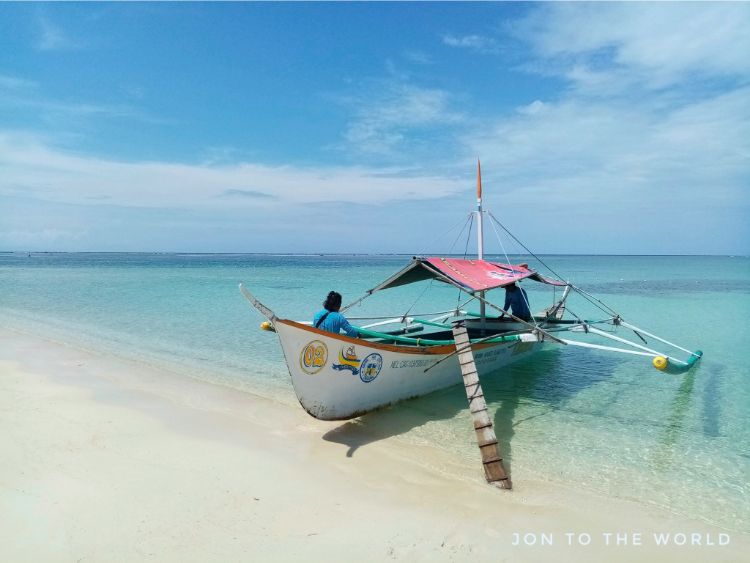

If you want to enjoy a beautiful beach away from the crowd, you should visit Anguib. The waters here are clean and filled with marine life making it ideal for swimming and snorkeling.
READ THE FULL STORY: Anguib Beach in Cagayan Experience
3. Callao Cave
Callao Cave is located in Peñablanca, Cagayan, about 24 km from Tuguegarao City. It’s known for the seven-chamber show caves that were first excavated in 1980. It’s part of the Peñablanca Protected Landscape and Seascape (PPLS), a protected area and national park.


Callao Cave is an important site in Cagayan not only for tourism purposes but also for its historical contribution. In 2007, a team of archaeologists excavated fossils of human sub-species called Callao Man or Homo Luzonensis from the late Pleistocene era from this cave. Today, tourists can visit seven chambers inside the cave, including the Chapel. This cave is perfect for beginners as it’s easy to navigate.
4. Pinacanauan River
The Pinacanauan River is a tributary of the Cagayan River that passes through the PPLS. The name means left-most in the local vernacular. It’s known for its fantastic views of karst formations and unspoiled waters.
You can go swimming or take a leisurely boat ride on this river. If you’re up for an adventure, you can do water rafting or kayaking, or ask the boatman to take you to Callao Cave where yo can go spelunking or see thousands of bats.
5. Nangaramoan Beach
Nangaramoan beach is located in Sta. Ana and it sits on the same shoreline as the other beaches, Anguib, Puzo, and Mapurao. With white golden sand, clear blue waters, and surrounded with lush greenery and rock formations, it’s no wonder it’s a favorite destination by the locals.


This is one of the beaches that you can visit in Sta. Ana. You can go on a day trip or stay overnight as there several resorts in the area. The shoreline is rocky, and the sand is coarse and filled with crushed corals, so be mindful of where you step. Nevertheless, you will enjoy the serene scenery and the picturesque beach.
6. Baggao’s Bluewater Falls and Cave
Baggao Bluewater Falls and Cave is a natural waterpark in the municipality of Baggao. It’s an underrated destination in Cagayan, where people can enjoy the waterfalls, swim in the natural pools, and explore the caves.
This park should be included in your itinerary if you’re looking for adrenaline-filled activities. Get ready to embark on an adventure where you can go trekking, river crossing, canyoneering, and spelunking.
7. Casagan Bridge & River
Casagan Bridge is located in Sta. Ana and it takes about 15 minutes to get there from the town properly. The bridge was built in 2018 on top of the Casagan Takuli River, which is the residents’ primary source of livelihood thanks to its abundant supply of edible shells and fish.


It’s one of the places we went to during the fam trip with CEZA. The bridge’s structure was made with planks of wood, steel cables, and chicken wire. It’s narrow, but light vehicles like motorbikes and bicycles can pass through it. I was able to walk over the bridge and take some photos; it swayed a little, but the bridge was sturdy, so there was nothing to worry about. This is a nice side trip when you visit Cagayan.
READ THE FULL STORY: Casagan River: A Scenic Attraction in Santa Ana, Cagayan
8. Buntun Bridge
Buntun Bridge crosses the Cagayan River from Tuguegararo city to Solana. The bridge was made with 14 Japanese steel spans. It took three administrations to complete the structure, beginning in 1959 under former President Carlos P. Garcia. Constructions continued during the term of former President Diosdado Macapagal, but it wasn’t until 1969 that it was finally finished and officially opened under former President Ferdinand Marcos.
At 1,369 m, it’s the second longest bridge in the Philippines after the San Juanico Bridge and the longest among river bridges in the country.
The bridge is the gateway to Tuguegarao City. It offers an unobstructed view of the Cagayan River; thus, the bridge became a tourist attraction in itself. It’s also a good vantage point for photographing the Sierra Madre and Cordillera mountains and the sunset.
9. Dumasag River
Dumasag River is located in Sitio Limbus, Barangay Rapuli, Sta Ana. The National Irrigation Authority originally intended the river to become a water resource for the rice fields in the area. Later on, it was developed into a tourist attraction due to its natural beauty.

Visit the Dumasag river and experience the slow and chill vibe of the province. You can go swimming here, slide down the makeshift waterslides, rent a tent, relax, and interact with the friendly locals.
10. Sierra Cave
The Sierra Cave is a living karst cave in Cagayan Valley situated in Peñablanca. It’s included in the 300 caves identified by the National Museum of the Philippines.
You will be amazed to see the beautiful limestone formations as well as the stalactites and stalagmites inside the cave. While the cave is generally easy to navigate, some tunnels are so narrow getting through them is going to be quite an experience. One such tunnel is Celica’s Passage, which is only 2 feet in diameter.
11. Buwacag Falls
Bucawag Falls is situated in Barangay Sta Clara, in the municipality of Sta. Ana. It’s part of Cagayan’s eco-50-hectare tourism site. The name “bucawag” means the deafening sound of flowing waters. The site is being preserved and managed by the Bucawag Eco-Tourism Association or BETA.

If you’re up for some physical challenge in exchange for the breathtaking views of the waterfalls and a refreshing dip in the natural pools, you should visit Bucawag. You will trek through the thick forest, past several rivers and different tiers of waterfalls. The trek is going to be challenging as the rocks are slippery, but there are safety ropes along the trail so you can definitely do it.
12. St. Peter’s Cathedral
St. Peter Metropolitan Cathedral is a Baroque church built in the 18th century. It is also known as Tuguegarao Cathedral, and you can find it at Barangay Centro 10, Tuguegarao City. The church used to be the seat of The Roman Catholic Archdiocese of Tuguegarao, founded by Dominican friars.

Whether religious or not, you will be astonished by the beautiful architectural design of the church. Made with sand, gravel, cement, mortar, steel, and bricks, the church has withstood the test of time, including World War II, where it suffered tremendous damage. It has since been restored and is now considered one of the most important historical landmarks in Tuguegarao city.
13. San Vicente Port (Santa Ana)
San Vicente Fish Port is an anchorage in Dugo, San Vicente Road, in the municipality of Sta Ana. This is the jump point for island-hopping activities, including the boat trip to Palaui Islands.

The port is not just a starting point for every island hopping activity but a destination in itself. There, you can watch the fishermen and boatmen as they go about their day. If you want a glimpse of local living, this is one of the best spots to do it.
14. Iguig Calvary Hills
Iguig Cavalry Hills is located on Cagayan Valley Road in the municipality of Iguig. It’s a known pilgrimage site in Cagayan, especially during the Holy Week or the Lenten Season. It was built in 1892, and it has 14 stations of the cross and a church called San Antonio de Galicia.
Even if you’re not Catholic, the Calvary Hills is an exciting tourist destination. It sits on top of a hill, offering a scenic view of gentle green slopes and the Cagayan River.
15. Basilica Minore of Our Lady of Piat
The Basilica Minore of Our Lady of Piat, also known as Basílica Menor de Nuestra Señora de Piat, is located at Poblacion, Piat. It’s considered the Pilgrimage Center of Northeast Luzon. The church dates back to 1604 and is home to Madonna Our Lady of Piat, a brown-colored image of the virgin mary that is over a century old. It’s also a pilgrimage site, attracting many devotees, especially during the Sambali Festival and the feast of Our Lady of Piat, both are celebrated in July.
The Basilica of Our Lady of Piat is one of the 18 minor basilicas in the Philippines; for this alone, it’s worth checking out. The church is made of bricks with a curved wooden ceiling. Its simplicity makes the church unique, as most old churches in Cagayan have more lavish interiors and designs.