Many Filipinos know kaong as the sweet, translucent fruit added to fruit salad, halo-halo and other desserts. We often see it inside a jar at the supermarket without thinking about the tall palm tree where it came from—or the people whose livelihoods depend on harvesting and processing it.
In Indang, Cavite, kaong is much more than a dessert ingredient.
Locally called irok, the sugar palm has long provided food, vinegar, sweet sap and income to families in the municipality. Its leaves and fibers can also be transformed into useful materials and festival decorations. Because nearly every part of the palm can serve a purpose, Indang proudly calls it the “tree of hope.”
The town celebrates this remarkable plant through the Irok Festival, held around Indang Day and the beginning of the Christmas season. The festivities bring together agricultural heritage, colorful street dancing, lanterns, local food, pageants, parades and the warm provincial atmosphere of December in upland Cavite.
For visitors, the festival is an opportunity to discover Indang beyond its farms, university campus and cool weather. It introduces you to a town where a familiar dessert ingredient carries a much deeper story about livelihood, resourcefulness and community pride.
Content
What Is the Irok Festival?
The Irok Festival is a cultural, agricultural and community celebration held in Indang, Cavite, usually beginning around the end of November and continuing into December.
The festival honors the irok tree, more commonly known as kaong or sugar palm. It showcases how the tree has contributed to the livelihood and food traditions of Indangeños while celebrating the municipality’s founding anniversary and the opening of the Christmas season.
Past festival programs have included street dancing, float parades, sports activities and lantern competitions using irok leaves. The grand parade has traditionally passed through or ended near the town plaza.
The 2025 celebration placed even greater emphasis on the sugar palm. It featured Christmas lights, colorful lanterns, a seven-meter Christmas tree and a food bazaar at the municipal grounds. Local products such as Kaong Pie and Kalamay Buna were also highlighted.
The festival therefore combines several identities.
It is agricultural because it honors a locally important palm. It is cultural because residents interpret the irok through costumes, food and performances. It is civic because it forms part of Indang Day. And it is distinctly festive because it welcomes the Christmas season with lights, lanterns and evening activities.
What Is Irok?
Irok is the local name for the sugar palm scientifically known as Arenga pinnata. It is more commonly called kaong in other parts of the Philippines.
The palm grows in several areas of tropical Asia, including the Philippines. In Indang and other upland areas of Cavite, it has long been valued for its fruit and sweet sap.
The Department of Environment and Natural Resources identifies kaong as a palm that produces two especially important food products: the chewy kaong fruit commonly used in desserts and vinegar made from its sweet sap. The agency also notes that the palm grows abundantly around Indang.
The fruit familiar to most Filipinos comes from young seeds found inside the palm’s fruit clusters. After careful processing, the seeds become the soft, slightly chewy kaong sold in syrup.
The sap can be collected and transformed into several products. It may be processed into vinegar, reduced into palm sugar or fermented into traditional beverages. Research on Philippine kaong has also examined differences in the amount of sap individual palms can produce, showing the agricultural importance of selecting and properly managing productive trees.
The palm’s dark fibers can also be used for cordage, brushes and other practical applications. Modern research has even explored sugar-palm fiber as a sustainable material for composite products.
All these uses explain why Indang does not see irok as an ordinary tree.
Why Is Irok Called the “Tree of Hope”?
During the 2025 festival, municipal representatives described irok as a source of livelihood whose usefulness extends from the tree itself to its fruit. The celebration promoted it as Indang’s tree of hope.
The name makes sense when you consider how many products can come from a single kind of palm.
Its fruit can be processed and sold for desserts. Its sap can become vinegar, sugar or beverages. Its leaves can be used for decorations and handicrafts, while its fibers have practical household and industrial applications.
More importantly, these products create work.
Someone must care for the trees. Skilled harvesters climb or work around the palm to collect sap and fruit. Other workers clean and process the seeds, cook vinegar, prepare sweeteners, bottle products, design packaging and bring them to markets.
One tree can therefore support several stages of livelihood.
For families with access to kaong palms, the tree may provide seasonal income alongside coffee, coconut, fruit trees or other agricultural activities. For small food businesses, processed kaong can become the starting point for jams, pastries, bottled sweets and other higher-value products.
That ability to create opportunities from a tree growing naturally in the local landscape is what gives irok its hopeful symbolism.
Indang and Its Agricultural Identity
Indang is an upland municipality located in central Cavite. It is surrounded by agricultural and rapidly developing communities such as Trece Martires, General Trias, Amadeo, Mendez, Alfonso and Maragondon.
Compared with the densely developed northern parts of Cavite, Indang still has areas characterized by farms, rolling terrain, rivers, springs and rural barangays. Its higher elevation also gives parts of the municipality a cooler atmosphere, particularly during the final months of the year.
Agriculture has long played a major role in Indang’s identity. A 2017 Indang Day celebration included an agricultural fair alongside street dancing, employment activities and a grand parade, reflecting the municipality’s focus on farming and agritourism.
Kaong fits naturally within this agricultural landscape.
Unlike an annual crop that must be replanted after every harvest, a mature palm can provide several useful products over time. It can also grow in sloping and riparian environments where some conventional crops may be more difficult to maintain.
UP Los Baños research has specifically examined kaong biodiversity and natural regeneration in upland Cavite, demonstrating the plant’s ecological as well as socioeconomic relevance to the region.
The Connection Between Irok Festival and Indang Day
The Irok Festival is closely connected with Indang Day, traditionally observed on December 1.
Indang was established as a separate town from Silang in 1655. Because historical records did not provide a firmly verified exact day of establishment, the municipal government eventually designated December 1 as Indang Day.
The municipality had already been celebrating Indang Day for decades before the current version of Irok Festival received wider media attention.
For example, the town’s 2017 founding-anniversary program ran from November 27 to December 1 and included street dancing, an agricultural fair and a grand parade.
A 2024 overview of Cavite festivals described Indang’s celebrations as running from November 30 to December 2, with the Irok Festival featuring floats, dancing, sports and lanterns made from irok leaves.
Interestingly, a GMA News report described the December 2025 event as Indang’s “first-ever Irok Festival.”
Those accounts appear inconsistent. The most reasonable interpretation is that irok-themed festivities existed in earlier Indang Day celebrations, while the municipality may have relaunched, expanded or formally branded the 2025 program as a new version of the Irok Festival.
Whatever the precise branding history, the central idea remains the same: Indang uses its founding-anniversary season to celebrate the people, products and traditions that define the municipality.
What to Expect During the Irok Festival
The activities are not exactly the same every year. Organizers may introduce new competitions, change the parade route or move major events to different dates.
However, several attractions are closely associated with the festival.
Irok-Themed Street Dancing
Street dancing transforms the quiet sugar palm into a colorful public performance.
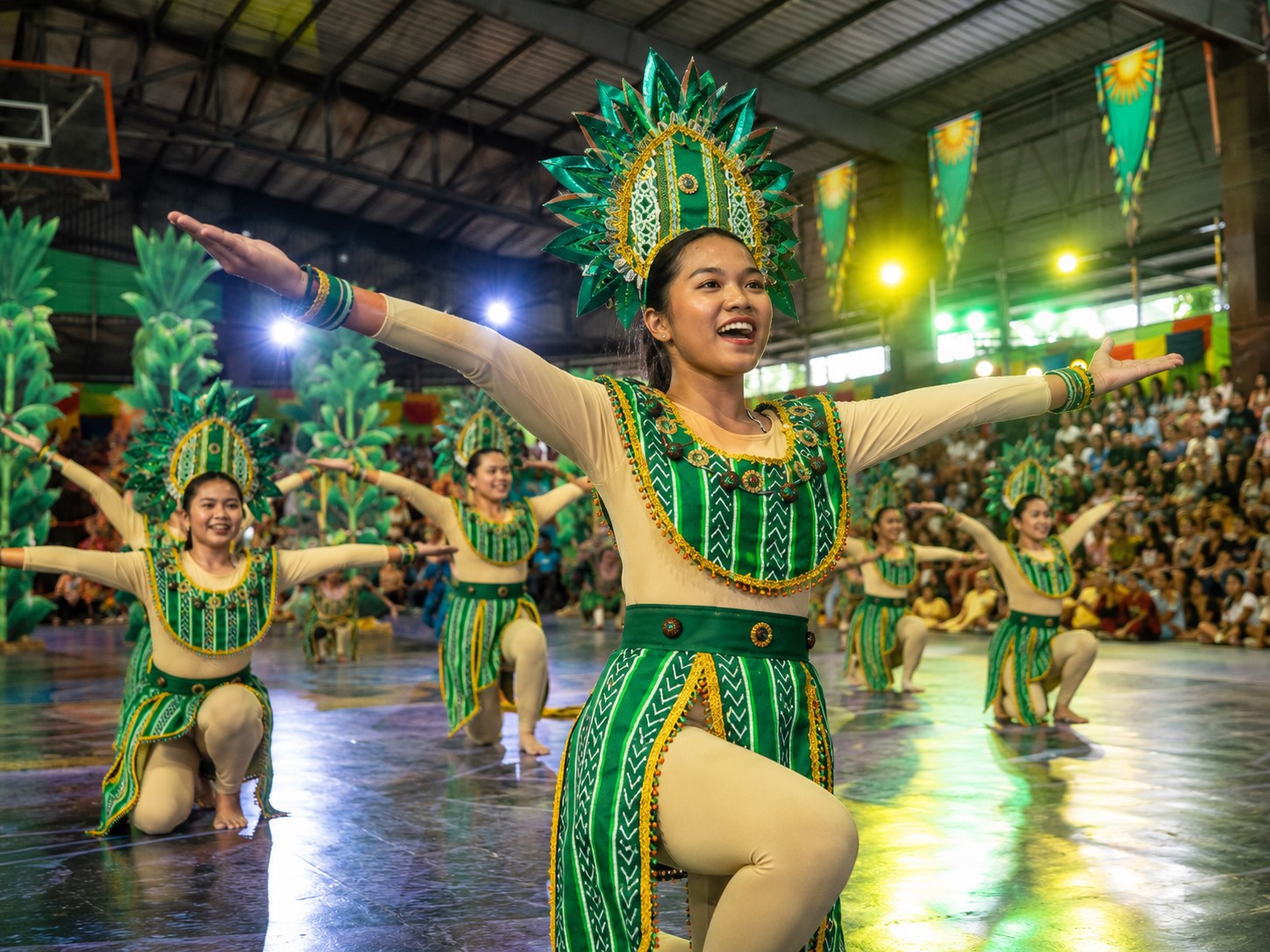
School and community groups wear costumes inspired by the leaves, fruit, fibers and sap of the irok tree. Green and brown naturally appear in many designs, while gold, red and yellow may represent ripe fruit, sweet sap and the warmth of the Christmas season.
Some performers may wear headpieces shaped like palm leaves. Others carry baskets of imitation kaong, jars of vinegar or props representing the different products made from the tree.
The choreography can tell the story of irok production.
A performance might begin with farmers working in the fields. Dancers representing young palms slowly rise, open their leaves and form a grove. Other performers act as harvesters, food processors or vendors before the entire group celebrates the finished products.
Street-dancing activities have appeared in both earlier Indang Day programs and the more recent Irok Festival celebrations.
For spectators, the performance makes the agricultural theme easy to understand. Instead of only seeing bottled kaong at a booth, you watch the full journey from tree to livelihood interpreted through music and movement.
Grand Parade
The grand parade brings together schools, barangays, municipal employees, civic organizations, agricultural groups and local businesses.
Floats may present scenes of farming, kaong processing and Indang’s history. Some are decorated with palm leaves, woven materials and oversized fruit, while others combine agricultural imagery with Christmas lights and ornaments.
The parade also serves as a wider celebration of Indang Day.
Not every participating group needs to focus entirely on kaong. Schools may display their achievements, community organizations may promote their advocacies and municipal offices may present programs for local residents.
Previous accounts have placed the grand parade around Indang’s town plaza and central municipal areas.
Visitors should check the latest route before traveling because temporary road closures may affect the town center and public transportation.
Float Competition
Floats give participating groups more space to tell the story of irok.
One float may resemble a sugar-palm grove, complete with farmers collecting sap. Another may show a giant jar of kaong surrounded by familiar Filipino desserts.
A more modern float could portray the transition from traditional harvesting to packaged food products, farm tourism and small-business development.
Christmas imagery also fits naturally into the designs because the festival takes place during the holiday season. Palm leaves, lanterns, stars and lights can transform a simple agricultural float into an illuminated evening attraction.
The most effective floats do not merely place a large mushroom—or in this case, a giant kaong—on a vehicle. They explain why the product matters to the community.
Lantern Competition Using Irok Leaves
One of the festival’s most distinctive activities is the lantern competition featuring irok leaves.
Lantern-making is already an important Filipino Christmas tradition. Using local palm materials gives Indang’s version a stronger connection to the town’s agricultural identity.
Residents and participating groups can weave, fold or arrange leaves around lantern frames. Lights inside the finished designs reveal the textures and patterns of the natural materials.
Earlier festival descriptions specifically identified a lantern contest using irok leaves as part of Indang’s celebration.
The activity represents resourcefulness.
Instead of treating fallen or harvested leaves as waste, artists transform them into decorations that brighten the town. It also challenges designers to work with a material that behaves differently from paper, plastic or fabric.
When displayed together at night, the lanterns give Irok Festival a warm and unmistakably Filipino Christmas atmosphere.
Christmas Tree and Lighting Ceremony
The festival has become closely connected with Indang’s official opening of the Christmas season.
The 2025 celebration included the lighting of a seven-meter Christmas tree, along with illuminated decorations and colorful lanterns. Municipal officials described the Christmas-lighting ceremony as one of the festival’s highlights.
This changes the atmosphere of the celebration after sunset.
During the day, visitors see agricultural exhibits, parades and local products. At night, the municipal grounds become a gathering place filled with lights, food and music.
Families can take photographs beside the Christmas tree, children can view the lanterns and residents can stay for evening entertainment.
The timing also makes Irok Festival a good alternative for travelers who enjoy Christmas destinations but prefer a community celebration over the heavier crowds of major shopping centers or Metro Manila attractions.
Christmas Food Bazaar
Food naturally plays an important part in a festival celebrating an edible palm.
Indang opened a Christmas food bazaar at the municipal grounds during the 2025 celebration. GMA News reported that it operated daily from noon until midnight during the festival period.
The bazaar gives local food businesses and entrepreneurs a place to sell meals, snacks, desserts and packaged products.
Kaong-related items are the obvious attractions, but visitors may also encounter Caviteño rice cakes, coffee, baked goods, grilled food, bottled condiments and familiar street-food favorites.
The exact vendors and operating hours can change every year, so do not assume that the 2025 arrangement will remain permanent.
Still, an evening visit is likely to be especially enjoyable. You can see the lights, sample local food and experience the festival after the daytime heat has eased.
Agricultural and Trade Fair
An agricultural fair allows growers and producers to participate directly in the celebration.
Farmers may display kaong fruit, seedlings, vinegar, coffee, vegetables, ornamental plants and other products associated with Indang’s rural economy.
Processed products are particularly important because they allow agricultural communities to earn more than they would by selling only raw materials.
A bottle of vinegar, packaged sweet kaong or carefully presented pastry can command greater value than unprocessed fruit or sap. These products also travel more easily and can introduce Indang’s name to customers outside Cavite.
Buying directly from legitimate local producers helps keep more of your festival spending within the community.
Ask where the product was made, how it should be stored and whether the ingredients were sourced in Indang. Most small producers appreciate customers who show a genuine interest in their work.
Pageants and Cultural Presentations
Pageants add another layer of entertainment to the festival.
The Municipality of Indang promoted Miss Indang–Irok Festival activities in 2025, while a separate Binibining Ikatlong Lahi program was also presented as part of the celebration.
Candidates may represent barangays or community groups and appear in creative costumes inspired by local agriculture, history and Christmas traditions.
Beyond glamour, pageants can provide young residents with a platform to discuss tourism, heritage, environmental protection and local livelihoods.
Evening cultural presentations may also feature singers, dance groups, school organizations and guest performers.
The lineup changes every year, so visitors who are attending mainly for a pageant or concert should check the official calendar carefully.
Sports and Community Activities
Sports have historically formed part of Indang’s festival program.
These activities give residents who are not involved in dancing, farming or pageants another way to participate. Basketball, volleyball, fun runs and other community competitions may be scheduled during the anniversary season.
The events encourage friendly rivalry among schools, barangays and local organizations.
They also extend the festival beyond a single parade day. Residents may begin participating several weeks before the main celebration, helping create anticipation throughout the municipality.
Kaong Products to Try
You may already be familiar with sweet bottled kaong, but the festival is an opportunity to discover how much more can be made from the sugar palm.
Sweet Kaong
The most familiar product is the chewy, translucent fruit served in syrup.
It is commonly added to fruit salad, halo-halo, ice cream and other desserts. Some versions are naturally pale, while commercially prepared products may be colored red, green or other festive shades.
Try locally processed kaong on its own before mixing it into another dessert. You may notice differences in sweetness, firmness and texture between producers.
Ask how the product should be refrigerated after opening and how long it can safely be stored.
Kaong Pie
Kaong Pie is one of the more creative products associated with modern Indang food entrepreneurship.
The 2025 festival highlighted it alongside other local delicacies.
The idea is similar to familiar Filipino fruit pies, but the filling uses locally sourced kaong. The chewy fruit provides a different texture from young coconut, pineapple or mango.
Depending on the producer, the filling may be creamy, lightly sweet or combined with coconut-based ingredients.
It makes an excellent souvenir because it takes a product people usually associate with jars and transforms it into something that can be shared like a pastry.
Sukang Irok
Sukang irok is vinegar made from the sap of the sugar palm.
The DENR identifies vinegar as one of kaong’s most important products, particularly in Indang, where the palm grows abundantly.
The vinegar can have a distinctive aroma and acidity that differs from cane, coconut or nipa vinegar.
It works well as a dipping sauce when combined with garlic, chili, onions or pepper. It may also be used in marinades, paksiw, adobo and other Filipino dishes requiring sourness.
When buying a bottle, check whether it is plain vinegar or already infused with spices. Also look for clear labeling, secure packaging and production information.
Palm Sugar and Sweeteners
Fresh kaong sap can be heated and concentrated into syrup or sugar.
Research on palm-sap sugar describes the process of boiling the sap until its moisture is reduced and the natural sugars become concentrated. It can then be used in confectionery and other food products.
A locally produced kaong sweetener may have a deeper, caramel-like character compared with refined white sugar.
Availability can vary because making palm sugar requires skill, time and a dependable supply of fresh sap.
Ask sellers about the product’s intended use. Some forms are better for beverages, while others are suitable for cooking or baking.
Kalamay Buna
Although it is not made primarily from kaong, Kalamay Buna is one of Indang’s most important traditional delicacies and frequently appears during the festival.
The sweet is associated particularly with Barangay Buna Lejos and is prepared using glutinous rice, coconut and sugar. DTI Cavite has described it as a delicacy passed down through generations, while other accounts identify it as Indang’s recognized One Town, One Product.
Kalamay Buna is rich, sticky and filling.
It is the kind of food best enjoyed slowly with coffee or tea. Because it is dense and sweet, a small serving may already be enough.
The 2025 Irok Festival placed Kalamay Buna beside Kaong Pie as one of the town’s products worth introducing to visitors.
Bringing home both gives you a taste of two different sides of Indang’s food culture: one built around the sugar palm and another rooted in its long tradition of rice-based delicacies.
When Is the Irok Festival Celebrated?
The festival is generally connected with Indang Day on December 1, although related activities may begin in late November and continue for several days or weeks.
Earlier descriptions placed the celebration from November 30 to December 2, while an older festival poster showed activities continuing until December 3.
The 2025 program extended deeper into December and combined Indang Day festivities with Christmas attractions, food booths and pageants.
As of July 2026, I did not find a complete official public schedule for the 2026 edition in readily accessible sources.
Travelers should therefore wait for announcements from the Municipality of Indang and the Indang Tourism Office before finalizing a trip.
Check the dates for the particular activity you want to attend because the parade, street-dancing competition, pageant, food bazaar and lighting ceremony may all happen on different days.
Where Is the Festival Held?
Major activities are normally held around Indang town proper, particularly the municipal grounds, plaza and covered-court areas.
The 2025 food bazaar and Christmas attractions were located at the municipal grounds, while earlier programs placed parades and public activities around the town plaza.
Some events may take place elsewhere.
Sports competitions may use schools or barangay facilities. Pageants may be held at the Indang Municipal Covered Court in Barangay Poblacion Tres, while parade groups may assemble along different roads before moving toward the central program venue.
Before traveling, identify the exact location of your chosen activity.
Showing a driver the official event poster or map is more useful than simply saying “Irok Festival,” especially when roads around the town center are closed.
What the Festival Feels Like
The Irok Festival has a warm and relaxed provincial atmosphere.
During the morning, dancers gather near schools and barangay halls. Costumes inspired by palms and fruit are adjusted, musicians test their instruments and parents carry water and food for the performers.
Around the municipal grounds, sellers begin arranging jars, pies, rice cakes and bottled vinegar. Agricultural groups display plants and produce while families explore the booths.
Then the parade begins.
Large green leaves rise above the crowd. Dancers move through the streets carrying fruit-shaped props, and decorated floats present scenes of rural Indang.
As evening approaches, the character of the festival changes.
The Christmas lights switch on, lanterns glow and the municipal grounds become busier. Families take photographs beside the giant tree while the smell of grilled food, coffee and sweet pastries fills the air.
The combination feels natural.
Agriculture represents the town’s roots, while Christmas reflects the season when families return home, reunite and celebrate together.
How to Get to Indang from Metro Manila
From PITX
PITX is one of the most practical starting points for commuters coming from Metro Manila.
The terminal’s route information includes services toward Trece Martires and Indang, although operators, gates and schedules can change. PITX advises passengers to use its current route finder or live schedule rather than depending on older terminal assignments.
Ask for a bus traveling toward Trece Martires–Indang or a route that can connect you with Indang town proper.
Some services may terminate at Trece Martires, requiring a transfer to a jeepney or other local vehicle bound for Indang. Other trips may continue closer to the municipality or Cavite State University.
Tell the conductor that your destination is the Indang municipal grounds or show the exact festival venue.
During a parade, the vehicle may stop outside the town center because of road closures. Be prepared to walk from the designated drop-off point.
Via Trece Martires
Trece Martires is a useful transfer point for travelers coming from several parts of Cavite.
The Trece Martires–Indang Road directly connects the city with Indang. Local jeepneys and buses commonly serve the corridor, although operating hours and loading points should be confirmed on your travel date.
This option may be practical when a direct PITX–Indang trip is unavailable.
Via Tagaytay or Mendez
Travelers coming from Tagaytay, Mendez or nearby upland communities can use local roads and public transportation heading toward Indang.
Ask whether the vehicle enters the town proper or passes only through an outer barangay. Indang covers a wide area, and some farm resorts or attractions can be far from the municipal center.
By Private Vehicle
Drivers from Metro Manila may approach Indang through Dasmariñas and Trece Martires, through General Trias, or through the Tagaytay–Mendez side depending on their starting point.
Use live navigation and check local traffic advisories on the day of the festival.
Parking near the municipal grounds may become limited during major activities. Arrive early and use only areas designated by the local government.
Avoid parking along parade routes, narrow residential streets or access points needed by emergency vehicles.
Helpful Tips for Attending the Irok Festival
Confirm the Current Schedule
The festival is evolving, and its duration has differed between editions. Check official announcements rather than relying on an old poster.
Attend in the Late Afternoon
A late-afternoon visit allows you to explore the food and agricultural booths while it is still light and remain for the Christmas illumination after sunset.
For the grand parade or street dancing, however, arrive before the announced starting time.
Bring Cash
Small producers, street vendors and local transportation providers may not all accept cards or electronic payments.
Carry smaller bills to make transactions easier.
Bring Reusable Shopping Bags
You may leave with bottled vinegar, sweet kaong, Kalamay Buna, plants or pastries.
A sturdy reusable bag keeps your purchases organized and reduces disposable-plastic use.
Pack Food Souvenirs Carefully
Use a sealed container for vinegar and syrup to prevent leaks. Keep pies and rice cakes away from direct heat, particularly when your journey home will take several hours.
Prepare for Cool Evenings and Possible Rain
December evenings in upland Cavite may feel cooler than Metro Manila, especially after rain.
Bring a light jacket and a compact umbrella. Comfortable shoes are also important because road closures may require considerable walking.
Respect Agricultural Displays
Do not touch competition entries, seedlings or processed products without permission.
Ask before photographing farmers and food workers at close range.
Keep the Festival Clean
Dispose of cups, food packaging and other waste properly.
A celebration honoring a useful tree should also encourage respect for the environment where it grows.
Visiting with Children
The Irok Festival can become an enjoyable agricultural lesson for children.
Many children know kaong only as a colorful ingredient in fruit salad. At the festival, they can learn that it comes from a palm and requires careful harvesting and processing before it becomes safe and enjoyable to eat.
Show them the products created from the tree.
Let them compare sweet kaong, vinegar, pastries and leaf-based decorations. Ask them to identify which part of the palm may have been used for each item.
The lanterns and Christmas lights make the festival especially appealing to younger visitors.
Choose a viewing area away from moving floats and crowded intersections. Bring water, snacks and identification containing a parent or guardian’s contact number.
Other Places to Visit in Indang
A festival trip can be combined with a few other stops around the municipality.
St. Gregory the Great Parish
St. Gregory the Great Parish is the principal Catholic church in Indang.
The Diocese of Imus lists September 3 as the parish’s patronal feast day and provides its regular worship schedule, although services may change during holidays and special celebrations.
The church stands within the traditional center of the municipality, making it an easy addition to a walk around the poblacion.
Visit quietly and dress respectfully, particularly when Mass, confession or another religious service is underway.
Cavite State University Main Campus
The main campus of Cavite State University is located in Indang.
The institution began in 1906 as Indang Intermediate School, later becoming an agricultural school, state college and eventually Cavite State University in 1998.
Its long relationship with agricultural education makes it especially relevant to a festival celebrating a local farm and forest resource.
The campus is an active educational institution rather than an unrestricted tourist park. Follow entry requirements and avoid entering academic or residential areas without permission.
Farms and Agritourism Establishments
Indang has developed a growing farm-tourism sector, with establishments offering gardens, agricultural activities, dining and accommodations.
The municipality’s tourism office publishes an official list of tourism establishments, which is useful because farm operating hours, reservation rules and public access can change.
A farm visit can help you understand the wider environment in which crops such as kaong, coffee, coconut and fruit trees grow.
Reserve in advance when required rather than assuming walk-in visitors will be accepted during a busy festival weekend.
Why the Irok Festival Matters
A traditional crop or forest resource can disappear from community life even when people continue buying the finished product.
Consumers may prefer cheaper imported or mass-produced goods. Younger residents may no longer learn how to collect sap or process fruit. Mature palms may be removed as land is converted for housing or commercial use.
When that happens, the loss is larger than the disappearance of one food ingredient.
Skills, stories, farming knowledge and local businesses can disappear with it.
The Irok Festival makes the palm visible again.
It places irok leaves on lanterns, fruit on food tables and farming stories in street-dancing performances. It encourages residents to see the tree as part of their heritage rather than something growing unnoticed beside a field or river.
The celebration may also inspire new products.
Kaong Pie shows how a traditional agricultural ingredient can be introduced in a modern form. Better packaging can help vinegar reach new customers, while farm visits can generate additional income without relying only on raw harvests.
Preserving heritage does not mean refusing to change.
It means carrying valuable knowledge forward and finding new ways for it to remain useful.
More Than a Dessert Ingredient
The Irok Festival changes the way you look at kaong.
After attending, the fruit inside a jar no longer feels like an anonymous supermarket ingredient. You begin to imagine the palm, the person who harvested it and the workers who transformed it into something ready to eat.
The same is true of vinegar.
A bottle of sukang irok represents sap collected from a living tree, carefully fermented and prepared by people who understand the process.
That connection between product, place and person is one of the most valuable things a local festival can create.
It gives consumers a reason to care about where their food comes from.
Final Thoughts
The Irok Festival is a fitting celebration for Indang, Cavite.
It honors a tree that provides fruit, sap, vinegar, sweeteners, fiber and livelihood. At the same time, it celebrates Indang Day and welcomes the Christmas season through parades, lanterns, lights, pageants and local food.
The festival is colorful, but its message is practical.
A community does not always need an extravagant symbol. Sometimes, the most meaningful source of pride is something that has been growing quietly in its own landscape for generations.
Visit Indang to watch the street dancers and glowing lanterns. Try Kaong Pie, bring home sukang irok and do not leave without tasting Kalamay Buna.
Most importantly, take time to appreciate the people behind the products.
The irok may be called the tree of hope, but that hope becomes real only through the farmers, harvesters, processors and entrepreneurs who continue finding ways to use it.
Through the Irok Festival, Indang reminds everyone that even a familiar fruit inside a Christmas dessert can carry the story of an entire community.