September is already a good month for fiesta lovers in the Philippines, but down in Sorsogon, one town gives the celebration a particularly local character.
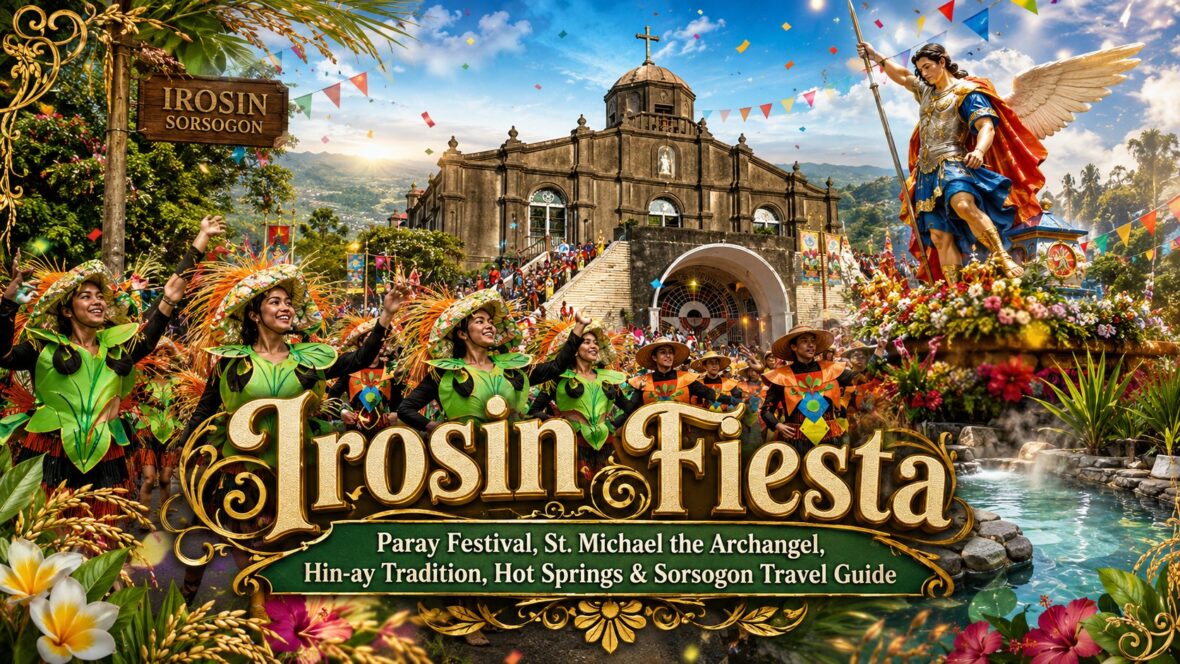
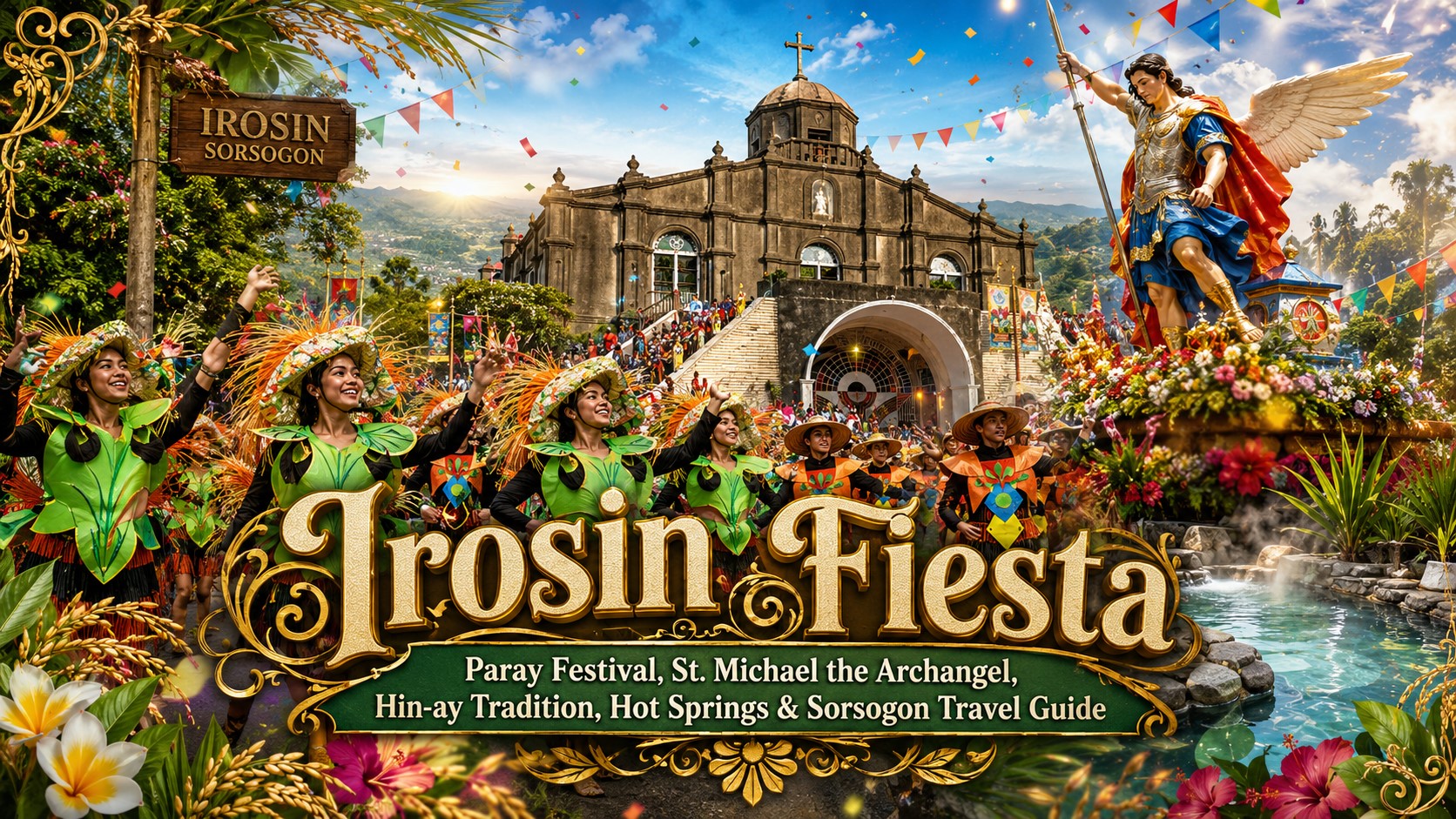
Irosin celebrates its annual town fiesta in honor of St. Michael the Archangel every September 29. Around the patronal feast, the municipality stages the Paray Festival, a celebration rooted in rice farming, thanksgiving, local culture and the devotion of Irosinians to Señor San Miguel.
You may also encounter another name when researching the fiesta: Hin-ay Festival.
That isn’t necessarily a mistake. Hin-ay is an older festival tradition associated with Irosin’s September celebration, while recent official tourism promotions use Paray Festival for the municipality’s contemporary fiesta activities. The Municipality of Irosin itself describes the town fiesta as the occasion where Paray Festival is showcased, culminating in the street presentation Viva San Miguel in honor of St. Michael the Archangel.
And Irosin is an interesting destination even without the festival. It sits inside a dramatic volcanic landscape at the foot of Bulusan Volcano, surrounded by rice fields, mountains, springs and waterfalls. It is also the only landlocked municipality in Sorsogon.
So if you’re heading to Sorsogon in September 2026, here’s a complete guide to the Irosin Fiesta, Paray Festival, St. Michael the Archangel and the places worth visiting while you’re there.
Content
When Is the Irosin Fiesta 2026?
The main patronal fiesta of Irosin is celebrated on September 29 in honor of St. Michael the Archangel.
In 2026, September 29 falls on a Tuesday.
Government festival references traditionally list the Irosin celebration around September 28–29, while previous presidential proclamations specifically identify September 29 as the date of the Paray Festival. The older Hin-ay Festival is likewise traditionally associated with September 28–29 and the feast of St. Michael.
| Irosin Fiesta 2026 | Details |
|---|---|
| Municipality | Irosin, Sorsogon |
| Main Fiesta Day | September 29, 2026 |
| Day | Tuesday |
| Patron Saint | St. Michael the Archangel |
| Current Cultural Festival | Paray Festival |
| Older Festival Tradition | Hin-ay Festival |
| Major Cultural Highlight | Viva San Miguel / street dancing |
| Main Theme | Faith, rice farming, harvest and local culture |
| Main Parish | St. Michael the Archangel Parish |
| Province | Sorsogon |
One important note for travelers: as of August 30, 2026, I could not verify a complete official day-by-day Paray Festival 2026 program online yet.
That doesn’t mean the celebration isn’t happening. Recent Irosin Tourism activity shows preparations for an upcoming production in August, while the municipality consistently celebrates the fiesta and Paray Festival around late September. The detailed schedule of pageants, concerts, competitions and street events, however, should be confirmed with Irosin Tourism once released.
September Is Fiesta Season in Irosin
Don’t think of September 29 as the only day anything happens.
Recent Paray Festival editions have involved weeks of community activities leading toward the patronal feast.
The 2023 program, for example, included cultural performances, sports tournaments, photography activities, a native delicacy competition, musical events, a quiz bee, Miss Irosin, a civic parade, drum and lyre competition, street dancing, concerts, an agri-tourism trade fair and barangay activities.
The following years continued to use the Paray Festival name. In September 2025, Irosin Tourism referred specifically to the “Kapiyestahan ni Senior San Miguel at Paray Festival” and described the celebration around faith, resilience and the town’s culture.
So if you’re coming mainly for the festival atmosphere, arriving during the final week of September is usually much better than showing up only on the morning of the 29th.
Who Is the Patron Saint of Irosin?
Irosin’s patron is St. Michael the Archangel, commonly called San Miguel Arkangel or Señor San Miguel locally.
His importance to Irosin goes back much farther than Paray Festival.
The official history of the municipality says that a settlement developed in the eastern portion of present-day Irosin, around what is now Barangay San Agustin. A chapel was established and St. Michael the Archangel was chosen as patron. The settlement became known as Visita de San Miguel.
Eventually, several visitas in the area petitioned to become their own parish. The request was approved in 1877, and on November 3, 1879, the settlements became a separate civil pueblo called Pueblo de Yrocin.
That means devotion to St. Michael isn’t simply something attached to the modern fiesta.
It is intertwined with the development of Irosin itself.
St. Michael the Archangel Parish Church
The St. Michael the Archangel Parish is located in Barangay San Pedro and belongs to the Roman Catholic Diocese of Sorsogon.
The parish site is especially interesting because of its elevated location.
Visitors climb toward the church from the town below, and the surrounding hill offers views over parts of Irosin. The municipality identifies the hilltop church as one of its notable tourism attractions because of the commanding view it provides over the urban area.
The story of the church building itself has changed dramatically over time.
Historical information preserved by Irosin Tourism says a major church structure was built in 1888 during the time of parish priest Fr. Esteban Rivera and local leader Anacleto Galarosa. The old structure reportedly had very thick walls, large wooden pillars, Spanish tiles and chandeliers connected with Mexico. It was eventually demolished in 1995 and replaced with the modern church standing there today.
So this isn’t one of those towns where you’ll find an untouched Spanish colonial church.
The importance of the site comes instead from its long religious history, its connection with St. Michael and its continuing role as the center of Irosin’s patronal celebration.
Little Baguio Beside the Church
While you’re at the parish, look around the hill rather than immediately heading back down.
Irosin Tourism refers to the area beside the church as Little Baguio. It includes a grotto dedicated to Our Lady of Lourdes and an elevated viewpoint overlooking the valley.
This is one of those small details that makes visiting during fiesta season more interesting.
Down below you have a busy town preparing for concerts, stalls, street dancing and visitors.
Up on the hill, you can get a wider perspective of the valley where all of it is taking place.
What Is the Paray Festival?
Paray Festival is the modern cultural festival associated with Irosin’s September fiesta.
Its name tells you what the celebration is really about.
“Paray” is associated with palay or unhusked rice, and that agricultural connection isn’t artificial.
Rice is one of Irosin’s most important crops.
The municipality reports that palay is its primary agricultural crop, grown across thousands of hectares and involving more than 2,000 rice farmers. In 2022 alone, local production reached roughly 6,787 metric tons. Irosin produces enough rice for local requirements while also sending surplus production to neighboring municipalities and provinces.
In other words, when festival performers wear costumes inspired by rice, farmers or the harvest, they’re representing an actual part of everyday life in Irosin.
They’re not just looking for a festival theme.
Why Rice Is So Important to Irosin
You understand Paray Festival better once you see Irosin from above.
The municipality sits in a broad valley surrounded by mountains.
Rice occupies roughly 2,192 hectares of Irosin’s alluvial plains, according to the municipal physical profile. Agricultural land dominates the municipality as a whole.
From viewpoints around the valley, those fields become one of the defining features of the landscape.
Depending on the season, you may see flooded paddies reflecting the sky, intensely green fields or rice turning yellow as harvest approaches.
September has traditionally been associated with the beginning of the wet-season rice harvest, which explains why a harvest-centered festival fits naturally into the fiesta calendar.
Harvest, Thanksgiving and Fiesta
The festival therefore works on two levels.
On the religious side, Irosinians honor St. Michael the Archangel.
On the agricultural side, they celebrate rice, farmers, productivity and the harvest.
Those two ideas actually fit together very naturally in the Philippine fiesta tradition.
A fiesta has always been partly about thanksgiving.
Families prepare food because there is something to celebrate. Farmers give thanks for another harvest. Communities honor their patron and gather relatives from elsewhere.
Paray simply brings that connection into the festival itself.
Viva San Miguel: One of the Fiesta’s Major Highlights
One of the cultural highlights associated with the modern Paray Festival is Viva San Miguel.
The official Irosin economic and tourism profile says the September Paray Festival culminates with the street play Viva San Miguel in honor of St. Michael the Archangel.
The symbolism is easy to understand if you’re familiar with traditional images of St. Michael.
He’s usually depicted as a warrior archangel defeating Satan or a dragon.
Festival performances take that familiar religious story and bring it onto the street through costumes, dancing, music and dramatic choreography.
The older Hin-ay Festival tradition also used this imagery. Government festival references describe a Mardi Gras presentation depicting the victory of the archangels over the Black Angel.
So even as festival names and formats evolved, this basic story of good overcoming evil survived.
What Do Paray Festival Dancers Wear?
Expect plenty of references to agriculture.
Previous Paray Festival groups have used green, yellow and gold prominently, along with rice stalks, farmer-inspired hats and other harvest imagery.
You’ll also see religious themes connected with angels and St. Michael.
The overall effect is different from a purely religious procession.
Paray combines agricultural imagery with a patronal-fiesta story, so a performance might move between rice farming, thanksgiving and the dramatic triumph of St. Michael.
Hin-ay Festival and Paray Festival: Are They the Same?
This is probably the most confusing part of researching the Irosin Fiesta.
You’ll find older tourism resources calling the celebration Hin-ay Festival.
You’ll find newer Irosin promotions calling it Paray Festival.
Both are relevant, but they shouldn’t be treated as completely interchangeable.
The Older Hin-ay Tradition
Hin-ay has long been listed as a September 28–29 festival commemorating the feast of St. Michael the Archangel while rediscovering Irosin’s cultural heritage.
Government festival information describes Hin-ay as tracing the struggles of the people of Irosin during different stages of the town’s history. Traditional activities included Mardi Gras, cultural shows, an agro-trade fair, a beauty pageant and food-related events.
There is another interesting historical connection.
The official history of Irosin says one of the early settlements in the area was itself called Hin-ay. This settlement later became associated with the visita under Bulusan before the eventual creation of the new parish and pueblo.
So the name has genuine roots in Irosin’s past.
The Modern Paray Festival
Paray eventually developed a stronger agricultural focus, particularly around rice.
Recent evidence is much clearer about which name the municipality itself now uses for its principal September cultural celebration.
Irosin’s official website calls it Paray Festival. National proclamations in 2021, 2022 and 2023 also referred to the September 29 celebration as Paray Festival, and Irosin Tourism was still using the name during the 2025 town fiesta.
For a 2026 travel article, therefore, Paray Festival is the safer name for the current celebration.
Hin-ay is still worth discussing because it explains an older layer of Irosin’s festival history.
What to Expect During Irosin Fiesta
The actual 2026 program may change, but recent editions give us a good idea of how broad the celebration can become.
Street dancing remains one of the activities visitors are most likely to associate with Paray Festival. Civic and school parades also bring large groups into the town center. Sports competitions, music, community performances and pageants normally spread participation beyond the main cultural contingents.
Agriculture remains visible through fairs and local products, while evening entertainment gives the poblacion a very different atmosphere after dark.
Then, underneath all of those municipal activities, the parish continues the religious celebration of St. Michael.
That’s why the fiesta can feel very different depending on what time of day you visit.
In the afternoon, you might be watching a dance competition.
Later, you’re buying food from a temporary stall.
The next morning, parishioners are heading uphill for Mass.
That mixture is the Philippine town fiesta in its most familiar form.
The Religious Heart of September 29
September 29 is the Feast of the Archangels in the Catholic calendar, traditionally honoring Michael, Gabriel and Raphael.
For Irosin, St. Michael is the central figure.
Parishioners attend religious activities connected with the feast, while families treat September 29 as the main town-fiesta day.
And this is where visitors should remember that Paray isn’t simply a tourism event.
For locals, there’s a difference between watching a dance performance inspired by St. Michael and actually participating in the religious feast.
If you visit the church during Mass or devotional activities, give parishioners space and treat the occasion accordingly.
Irosin: A Town Inside a Volcanic Landscape
Here’s where Irosin gets even more interesting.
Geographically, it is unlike any other municipality in Sorsogon.
Irosin is the province’s only landlocked town, sitting at the foot of Bulusan Volcano inside a valley enclosed by mountains and peaks. Its municipal government describes the landscape as a caldera-like valley with broad agricultural plains surrounded by higher terrain.
That volcanic environment helps explain another thing Irosin is famous for.
Hot springs.
Lots of them.
The Department of Tourism describes Irosin as Sorsogon’s hot-spring capital because of its location around the Bulusan volcanic system.
That makes the town unusually convenient for fiesta travelers.
You can spend one day walking through crowded streets and watching festival performances.
Then you can spend the next morning sitting in a naturally heated pool under coconut trees.
Not a bad combination.
Best Places to Visit During an Irosin Fiesta Trip
St. Michael the Archangel Parish Church
Start with the church because it puts the entire fiesta into context.
Visit during the daytime when you can also appreciate the elevated setting and views around the hill.
Valley View Park
Valley View in Barangay Salvacion offers one of the best perspectives of the landscape.
Irosin Tourism describes the viewpoint as overlooking the rice fields of the valley with Bulusan Volcano rising behind them.
If you’re writing, photographing or simply trying to understand why the town celebrates rice, go here.
Look down at the fields.
Suddenly the Paray Festival theme makes perfect sense.
San Benon Hot and Cold Springs
This is probably Irosin’s best-known tourism experience.
The municipality says most of its spring resorts are clustered around the Monbon-Bagsangan area, with San Benon among the most popular.
The Department of Tourism also recommends the hot springs as one of the major experiences in a Sorsogon itinerary.
If your body is tired after spending hours standing beside a street-dancing route, you’ll appreciate this place even more.
Irosin Lake
The municipality also identifies Irosin Lake in Barangay Patag as one of its natural tourism attractions. The lake covers roughly five hectares according to the municipal physical profile.
Waterfalls
For a more adventurous side trip, the local government identifies Naglahaw Falls and Malungoylungoy Falls as adventure-tourism destinations.
These aren’t necessarily places I’d squeeze into the same afternoon as a major fiesta event. Access conditions can vary, and September weather can make outdoor trips more difficult.
Give them their own time.
How to Get to Irosin from Sorsogon City
Irosin is roughly 43–45 kilometers by road from Sorsogon City.
Driving can take around 40–45 minutes in light traffic, although public transportation and fiesta traffic can make the journey longer.
Public transportation serving Irosin operates along the southern Sorsogon corridor through Juban.
If you’re commuting during fiesta week, ask at the transport terminal for the current jeepney, van or bus arrangement to Irosin. Avoid relying too heavily on an old fare or exact timetable because provincial public-transport operations can change.
Once you reach the town proper, tricycles are useful for local destinations and the spring-resort areas.
How to Get to Irosin from Legazpi
Travelers flying into Bicol usually arrive through the Legazpi/Daraga area.
The Department of Tourism’s Sorsogon guide recommends taking a Bulan-route bus from the Legazpi Grand Terminal for travel toward Irosin and gives a travel time of around two hours under its published itinerary.
Actual time will depend on traffic, stops and the specific service.
If you’re coming specifically for September 29, I would avoid planning to arrive only an hour or two before an event.
Travel the day before if possible.
Fiesta travel is much less stressful when you’ve already checked in and can simply walk or take a tricycle into the poblacion.
Coming from Manila
You have two common options.
By air, fly to the Bicol area and continue overland through Sorsogon toward Irosin.
By land, buses traveling toward southern Sorsogon, Bulan or Matnog may pass through or near the Irosin corridor depending on the operator and route.
Always confirm the exact drop-off before buying a ticket.
A bus labeled for southern Sorsogon doesn’t automatically mean it will enter the exact part of Irosin where you’re staying.
Where to Stay During Irosin Fiesta
Unlike some small fiesta towns, Irosin has a useful advantage: its spring-resort industry has created a decent amount of local accommodation.
The municipality recorded 12 resorts and seven hotels or lodging houses in its tourism profile, with many resorts concentrated around the Monbon-Bagsangan area.
Staying around the town proper is more convenient if nightlife and festival events are your priority.
Staying around the hot springs gives you a quieter environment and makes the fiesta feel more like a short vacation.
For September 28–29, advance reservations are still sensible. Fiesta visitors, balikbayans and guests can put more pressure on a relatively small local accommodation market.
What to Eat During Irosin Fiesta
Like any Bicol fiesta, expect the usual family tables filled with rice, meat dishes, noodles, desserts and whatever each household considers its fiesta specialty.
But I’d also look for local delicacies being promoted during municipal activities.
A previous Paray Festival program, for example, included an Irosin native delicacy presentation featuring suman karabasa.
Trade fairs and temporary food areas are especially useful if you’re a visitor without relatives in town.
They’re also a better way to discover local products than simply eating at a chain restaurant and leaving.
Weather During the Irosin Fiesta
Bring an umbrella.
That isn’t just generic September travel advice.
Irosin has a Type II climate with no pronounced dry season, and the municipal government reports rain on an average of 234 days each year.
Festival organizers know how to deal with this, but severe weather can still force changes.
The 2025 celebration provided a good example. Severe Tropical Storm Opong led authorities to postpone or cancel scheduled activities for safety before some festivities later continued.
So don’t assume that because a street-dance competition is printed on an early schedule, it absolutely cannot move.
Check official announcements the night before.
Is September 29 a Holiday in Irosin?
It has frequently been declared a special non-working day in previous years so residents can participate in the Paray Festival.
For example, presidential proclamations declared September 29 a special non-working day in Irosin in 2021, 2022 and 2023.
However, a previous year’s proclamation does not automatically make September 29, 2026 a special non-working day.
As of August 30, 2026, I would not advise publishing that claim unless a 2026 proclamation is officially issued.
The fiesta date is established.
The legal holiday status should be verified separately.
Best Time to Visit Irosin Fiesta 2026
If you only have one day, September 29 is the obvious choice because it is the feast of St. Michael the Archangel.
But for the better experience, I’d arrive around September 27 or 28 and leave on September 30.
That gives you a chance to experience the buildup, catch cultural activities, see the town at night, attend the main fiesta and then spend a relaxing morning at the hot springs before heading home.
If the final Paray Festival 2026 street-dance competition is scheduled on a different date, adjust your trip around that event.
For photography and cultural coverage, street dancing will probably be more visually interesting than arriving solely for the formal feast day.
Frequently Asked Questions About Irosin Fiesta 2026
When is Irosin Fiesta 2026?
Irosin’s main patronal fiesta is celebrated on September 29 in honor of St. Michael the Archangel. In 2026, September 29 falls on a Tuesday. Previous government festival references place the main celebration around September 28–29.
Who is the patron saint of Irosin?
The patron saint is St. Michael the Archangel, whose connection with the community dates back to Irosin’s early parish history.
What festival is celebrated in Irosin?
The municipality currently promotes Paray Festival as the cultural festival associated with the September town fiesta. The official municipal tourism profile says Paray Festival culminates in Viva San Miguel in honor of St. Michael.
What is Hin-ay Festival?
Hin-ay is an older Irosin cultural-festival tradition associated with September 28–29, St. Michael the Archangel and the rediscovery of Irosin’s heritage. Older government festival listings continue to use the Hin-ay name.
Are Hin-ay Festival and Paray Festival the same?
Not exactly. They are closely related parts of Irosin’s festival history. Hin-ay is the older name found in traditional festival references, while Paray developed into the rice- and harvest-centered celebration now promoted by the municipality for its September fiesta.
What does Paray mean?
Paray refers to rice or palay, making it an appropriate symbol for a municipality where rice farming remains a major livelihood.
What is Viva San Miguel?
Viva San Miguel is the street-play or street-dancing component associated with Paray Festival. It honors St. Michael the Archangel and draws on the traditional Christian image of the archangel’s victory over evil.
Is Irosin known for rice?
Yes. Rice is Irosin’s primary agricultural crop, and municipal data show that local production supplies the town while leaving surplus that can be sold outside the municipality.
What is Irosin famous for besides the fiesta?
Irosin is particularly known for its volcanic landscape and natural hot springs. Other local attractions identified by the municipal government include Valley View Park, Irosin Lake, the hilltop church and several waterfalls.
Is the complete Paray Festival 2026 schedule available?
As of August 30, 2026, I could not verify a complete official day-by-day 2026 schedule. September 29 remains the established patronal fiesta date, but visitors should wait for Irosin Tourism’s final calendar before booking around a particular parade, concert, pageant or street-dance event.
Final Thoughts
Irosin Fiesta is one of those celebrations that makes much more sense after you see the place itself.
You have St. Michael the Archangel, whose connection with the community reaches back into the town’s earliest parish history.
Then you have Paray.
Rice.
The crop covering the valley floor, supporting farming households and appearing again as costumes, symbols and stories during the festival.
And surrounding all of it is one of Sorsogon’s most unusual landscapes—a town sitting in an inland volcanic valley below Bulusan, with mountain viewpoints and natural hot springs only a short ride away.
That combination gives Irosin Fiesta a character of its own.
It’s religious without being only religious.
It’s agricultural without feeling like a trade show.
It’s a cultural festival, but it remains very obviously a town fiesta where families return home and the community gathers around its patron.
For 2026, keep September 29 as the most important date on your calendar. If possible, give yourself a few days around the feast so you can catch the Paray Festival activities as well.
Watch Viva San Miguel.
Look for the rice-inspired costumes.
Go uphill to the church.
See the valley from above and notice how much of it is covered by farms.
Then, after the noise of the fiesta, find a hot spring and stay in the water for a while.
That’s probably the best way to experience Irosin—not just as another stop in Sorsogon, but as a town whose landscape, livelihood, faith and fiesta all connect to one another.
The full 2026 event program is likely to become more useful as September approaches. I can keep an eye out for the official Paray Festival schedule and flag it once it’s published.