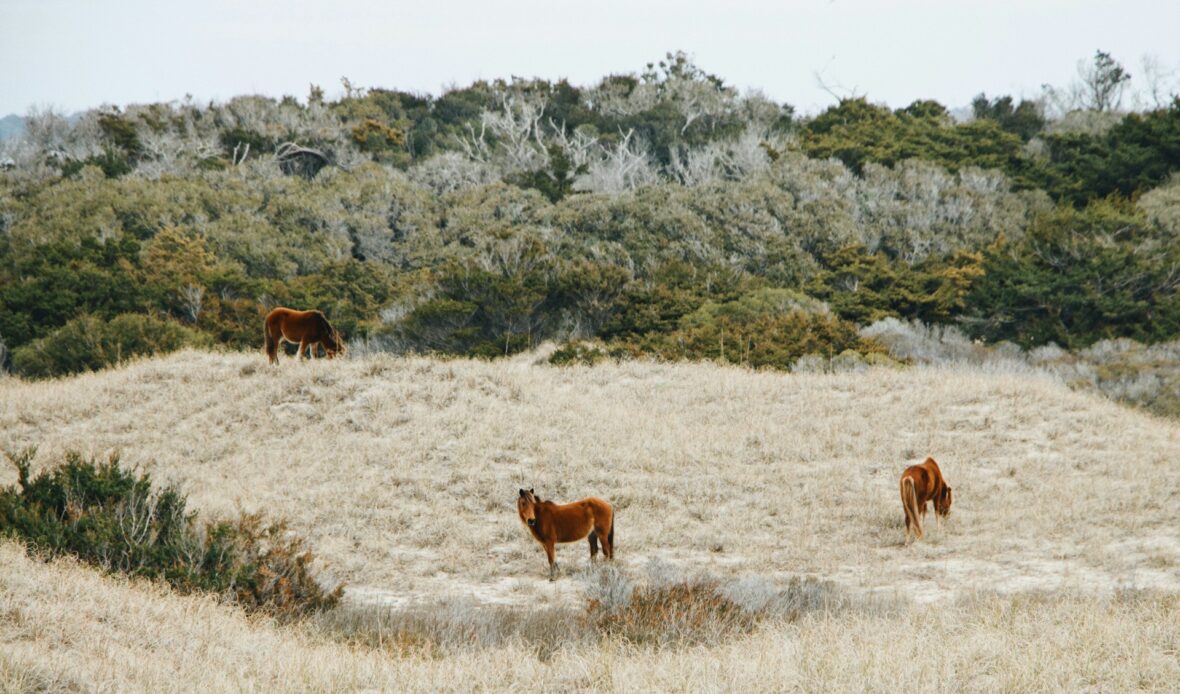
The horses grazing on Shackleford Banks may trace their ancestry back further than almost anything else on the Carolina shore. Visit NC links the herd to Spanish mustangs thought to have arrived in the 16th century, possibly from shipwrecks or early expeditions. That history changes how you should approach them. These Banker ponies have never been handled or fed by people, and they’ve survived for centuries on sparse grass and rainwater. They are wild animals living on a wild island, and a good visit starts with treating them that way.
Shackleford sits about 3 miles offshore from the Crystal Coast. The trip out is easy once you know the options.
Content
The Ferry from Beaufort or Harkers Island
You can reach the island only by private boat or passenger ferry. Visit NC says ferries leave from two places: the Beaufort waterfront and the Harkers Island Visitor Center. One Beaufort tour operator quotes a 25-minute ride from town, which makes Beaufort the natural pick if you’re already staying there and want to stroll Front Street for breakfast first. Harkers Island works better if you’re coming from Down East or plan to pair the trip with the Cape Lookout side of the national seashore.
If you have your own boat and know these waters, you can anchor and wade ashore. Check tides before you go. The sound side gets shallow fast.
The bigger decision is whether to join a guided tour or ride the ferry over and wander. Guides know where the herd tends to gather that week, and they’ll fill the walk with stories about the island’s fishing villages and the horses’ family bands. There are no vehicles on Shackleford, so every tour happens on foot either way. Going solo gives you freedom to linger at a tidal pool for an hour, but you’ll do your own scouting. First-timers usually see more horses with a guide; repeat visitors often prefer the quiet of going alone.
What to Pack for a Day Without Services
According to CrystalCoastNC.org, the island has no roads and no fresh water. Nothing. No snack stand, no restroom.
Pack more water than seems sensible, especially from June through August when the sand radiates heat back up at you. Bring a wide-brimmed hat and reef-safe sunscreen, plus insect repellent for the marsh, where biting flies can be relentless on still afternoons. Lightweight long sleeves do double duty against both sun and bugs.
There are no trash cans either, so carry everything out with you. A spare zip bag tucked in your daypack handles wrappers and the sandy leftovers from lunch.
Footwear matters more than people expect. Shackleford has no boardwalks or developed trails, and soft sand makes every step harder than it looks. Closed sandals with straps or old sneakers you don’t mind soaking beat flip-flops by a mile.
Marsh Edges and Dune Swales
Start by scanning the marsh. Horses are often seen grazing there, working through the cordgrass along the sound side of the island, and the open sightlines make them easy to spot from a distance. Walk the high ground just above the wet edges so you aren’t sinking into mud.
When the marsh is empty, look between the dunes. The low swales hold freshwater pools after rain, and horses come to drink and roll in the sand. Fresh hoofprints and manure piles tell you a band passed recently, so follow the direction they lead.
Midday heat sends the horses toward breezier spots. Early morning and late afternoon tend to be when they move around the most, which conveniently lines up with the softest light for photos.
Fifty Feet and a Long Lens
Keep at least 50 feet between yourself and any horse. That’s roughly the length of a school bus, and it’s the minimum. If a horse pins its ears or changes direction because of you, you’re too close. Back off slowly.
Touching or feeding the horses, or trying to ride one, is illegal and can bring fines, per CrystalCoastNC.org. That includes tossing an apple core their way. Stallions guarding their mares can kick or charge, and foals stay close to mothers who don’t appreciate visitors wandering between them. Never walk through the middle of a band.
Binoculars let you watch behavior that a cautious distance would otherwise blur, such as mutual grooming or a stallion herding stragglers. For photography, a zoom lens in the 200mm range or longer lets you fill the frame without creeping forward. Shoot low, from a crouch, to put the horses against the sky or dune grass rather than flat sand. Phone cameras struggle at this distance, so treat phone shots as snapshots and lean on binoculars for the experience itself.
Shelling and a Second Herd at Carrot Island
Shackleford’s ocean side is a shelling beach worth an hour on its own. After a storm or a strong tide, you’ll find whelks and the occasional sand dollar scattered along the wrack line. From the eastern end, the black-and-white diamonds of the Cape Lookout Lighthouse stand out across the water, a good spot to rest your legs before the ferry back.
If time is short, Carrot Island offers another herd right across Taylor’s Creek from the Beaufort waterfront. These horses are part of the Rachel Carson Reserve, and on clear days you can sometimes see them grazing from town. A short paddle or water taxi gets you closer, and the same distance rules apply.
The Crystal Coast’s own page on the wild horses on the NC coast is a smart read the night before, since it gathers ferry departure points and viewing distances in one place. Having those details fresh in your head makes the morning run smoothly.
One final tip: book the earliest ferry you can. You’ll get cooler sand and horses that are still actively grazing in the marsh before the day’s heat pushes them into the dunes.