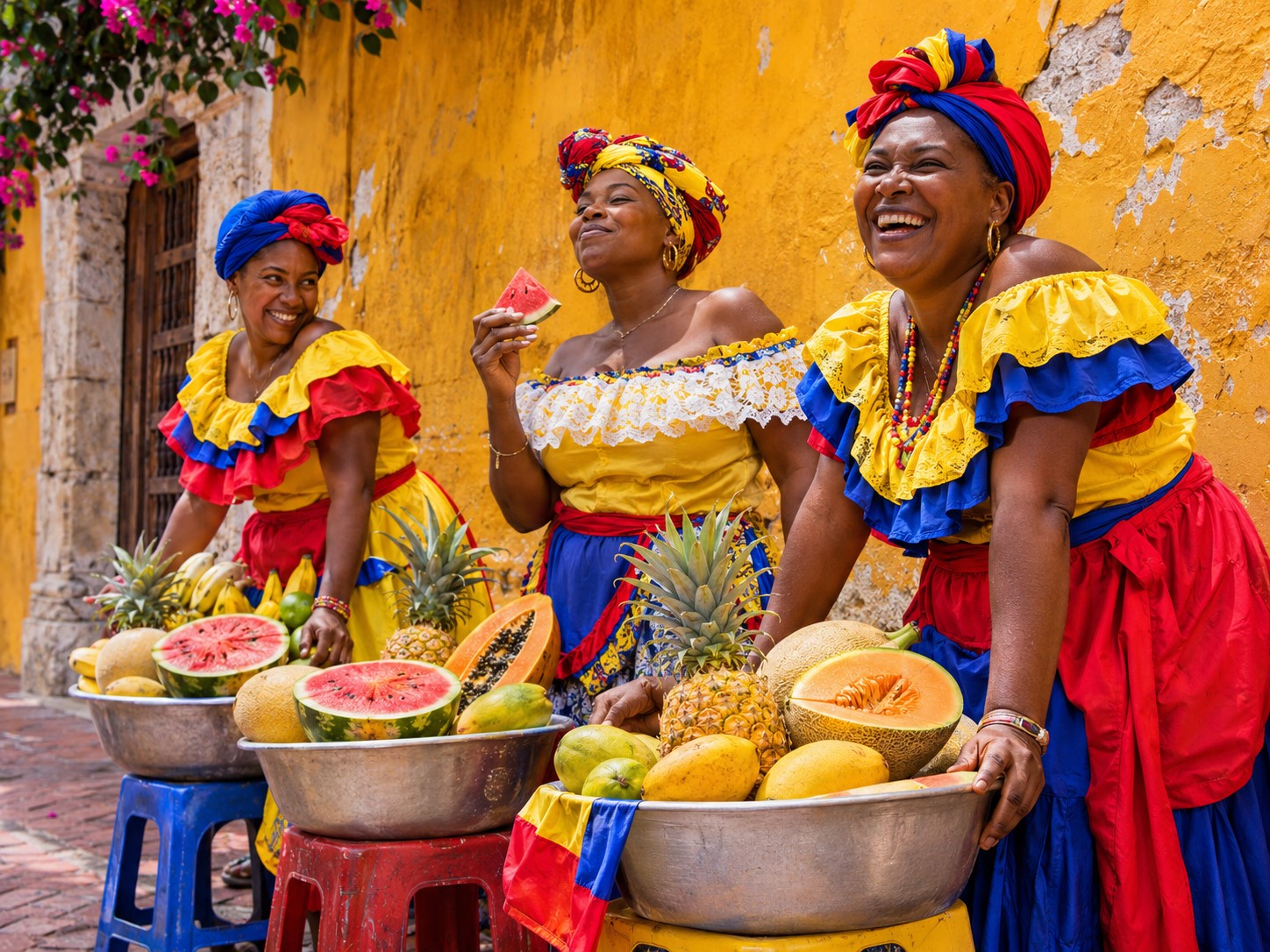
The five foods worth building a Cartagena trip around are arepa de huevo, fried red snapper with patacones and coconut rice, cazuela de mariscos, carimañolas and cocadas. Two of them are street snacks, two belong to a long lunch near the water, and the last one is for the walk back to the hotel.
Context helps. Cartagena sits on the Caribbean coast of Bolívar Department, it’s the largest of the world’s many Cartagenas, and it once served as capital of Cartagena Province under Gran Colombia. Those famous walls went up because the port was worth fighting over, and it was attacked again and again: a raid in 1697, the Battle of Cartagena de Indias in 1741, a long siege in 1815. Centuries of ships, sailors and enslaved Africans brought coconut, yuca, plantain and frying techniques together. The cooking still runs on exactly those ingredients.
Content
1. Arepa de huevo at a morning street stand
This is the one people remember. A disc of yellow corn dough is fried until it puffs, slit open along one edge, filled with a raw egg, sealed and dropped back into the oil. When it comes out, the egg inside is set and the outside is crackly and a little greasy, in the good way. Some vendors add seasoned ground beef too.
Eat it in the morning, standing up, from a stand with a crowd around it. A busy fryer means fresh oil. Ask for a squeeze of hot sauce or a spoonful of the vinegary onion and pepper mix that many stands keep in a jar on the counter.
Having someone walk you through the morning stands helps, and Cartagena food tours often start right at a fryer like this, with a guide explaining why the egg goes inside and which vendors locals queue for. It’s a pleasant way to get your bearings in the old city while you eat.
2. Pargo frito with patacones and coconut rice
The classic Cartagena lunch arrives as a whole red snapper, fried hard so the skin shatters and the tail is crisp enough to eat. Next to it you’ll find patacones, green plantains fried, smashed flat and fried again, plus a scoop of arroz con coco.
That rice deserves its own mention. It’s made by cooking coconut milk down until the sugars caramelize, so the rice turns light brown and tastes faintly sweet and toasty. Visitors try to recreate it at home and usually get it wrong.
Order this at lunch, near the sea. Beachfront kitchens in La Boquilla and casual spots in Getsemaní do it well, and the fish tends to be freshest earlier in the day. If you’ve never taken apart a whole fish, it goes like this:
- Pull the top fillet off along the backbone with your fork or fingers.
- Lift the spine out in one piece, starting from the tail.
- Eat the bottom fillet, checking for the fine bones near the belly.
- Don’t skip the cheeks, which are the sweetest bite on the plate.
A squeeze of lime over everything is standard.
3. Cazuela de mariscos in a clay pot
Cazuela de mariscos is what to order when the evening cools off and you want something rich. It’s a seafood stew built on coconut milk, usually holding shrimp, squid, clams and chunks of white fish, with tomato, onion and a little cumin in the base. Many kitchens finish it with cream or grated cheese and serve it still bubbling in the clay pot it was cooked in.
It’s heavy. One cazuela with a side of coconut rice and patacones can feed two people who also had an arepa that morning, so think about sharing.
Restaurants inside the walled city serve it most nights. Tables fill fast when the Cartagena Film Festival brings crowds into town, so booking ahead for dinner that week saves you from standing around hungry on a hot sidewalk.
4. Carimañolas from a corner fritanga
Carimañolas are torpedo-shaped fritters made from boiled, mashed yuca, stuffed with seasoned ground beef or salty white cheese and deep fried until golden. The yuca shell turns crunchy outside and stays soft and slightly chewy within, which sets it apart from anything made with wheat. Look for them at fritanga stands, the small frying counters on street corners and near markets, usually in the morning or late afternoon. Eat them hot. Add a dab of suero, the tangy coastal cultured cream, if the stand has it. One is a snack; three is lunch.
5. Cocadas under the Portal de los Dulces
Across from Plaza de los Coches, under the arches of the Portal de los Dulces, vendors line up glass jars and trays of sweets that have been sold in this spot for generations. Cocadas are the main event: grated coconut cooked with sugar or panela until it holds together in chewy, irregular rounds.
Flavors vary from stall to stall. Plain coconut is the baseline, then come versions cooked with guava, pineapple, tamarind or milk, plus dark cocadas made with panela that taste of molasses. Vendors are usually happy to let you point and mix, so a small bag of assorted pieces is the smart order.
They travel reasonably well, though Caribbean heat makes them sticky by afternoon. Buy a few to eat on the spot while sitting in the plaza. Pick up a wrapped box on your last day if you want some to survive the trip home.