The most memorable moment of Naic’s Pawikan Festival does not involve fireworks, enormous floats or celebrities performing on a brightly lit stage.
It begins quietly on the dark sand of Barangay Labac.
Hundreds of tiny sea turtles are placed at a carefully controlled distance from the shoreline. Volunteers, environmental workers and visitors watch as the hatchlings begin moving toward the water.
Some crawl quickly. Others pause, change direction and continue. The crowd is excited, but everyone is reminded to stay back and follow the instructions of the trained pawikan patrollers.
Then the first wave reaches the hatchlings.
One by one, the tiny turtles disappear into the sea.
It is a joyful scene, but it also carries a serious message. Every hatchling entering the water will face fishing gear, plastic pollution, predators, coastal development and numerous other threats.
The Pawikan Festival of Naic, Cavite, therefore, is not merely a festival using sea turtles as colorful decorations. It is a community conservation campaign brought to life through environmental education, coastal cleanups, public activities and the carefully managed release of hatchlings.
For visitors, the festival offers a different kind of travel experience. You can enjoy community performances and take part in public activities, but you also leave with a better understanding of why beaches, marine wildlife and coastal communities need protection.
Content
What Is the Pawikan Festival?
The Pawikan Festival is an annual environmental and cultural celebration held in Naic, Cavite, particularly in the coastal community of Barangay Labac.
The festival promotes the conservation of marine turtles locally known as pawikan. It brings together the local government, conservation volunteers, schools, environmental agencies, coastal residents and partner organizations.
Its most anticipated activity is the release of sea turtle hatchlings from the Pawikan Sanctuary in Barangay Labac. However, the festival also includes educational, fitness and community programs intended to make marine conservation understandable and accessible to the public.
The 15th Pawikan Festival was held on February 13, 2026. Its program included a fun run, coastal cleanup, cheering competition and the release of hatchlings at the Labac sanctuary. The celebration used the theme “Alagaan ang Pawikan, Pahalagahan ang Kaligtasan, Isalba ang Kinabukasan,” emphasizing protection of both wildlife and the future of the coastal environment.
Cavite Tourism reported that 500 sea turtle hatchlings were released during the 2026 festival.
Why Is It Called the Pawikan Festival?
Pawikan is the Filipino term commonly used for marine turtles or sea turtles.
The name distinguishes them from freshwater and land-dwelling turtles that Filipinos may refer to as pagong.
The Philippines is home to five of the world’s seven recognized marine turtle species:
- Green turtle
- Hawksbill turtle
- Olive ridley turtle
- Loggerhead turtle
- Leatherback turtle
All five marine turtle species occurring in the Philippines face threats to their survival and are covered by national conservation programs.
In Naic, the species most strongly associated with the festival and the Labac nesting area is the Olive ridley sea turtle, scientifically known as Lepidochelys olivacea.
The Olive ridley is classified as vulnerable internationally. Important threats include accidental capture in fishing gear, direct collection of turtles and eggs, damage to nesting beaches, pollution and disturbance from human activity.
Where Is the Pawikan Festival Held?
The festival uses several locations in Naic.
Activities such as runs, Zumba sessions, public assemblies and competitions may begin around Naic Town Plaza or other municipal facilities.
Educational programs and indoor competitions may be held at a covered court or public venue in the town center.
The conservation activities—including the coastal cleanup and hatchling release—take place at the Pawikan Sanctuary in Barangay Labac.
During the 2026 festival, participants began with a public fitness activity in town, continued with a cheer competition and environmental forum, and later traveled to the Labac coast for the cleanup and release ceremony.
This is important when planning your visit.
Naic Town Plaza and Barangay Labac are not the same destination. Some festivalgoers may need local transportation between the municipal center and the coastal sanctuary.
Always check the official program to identify the exact assembly point for each activity.
Barangay Labac and Its Pawikan Sanctuary
Barangay Labac is one of Naic’s coastal communities facing the waters west of Cavite.
The shoreline provides nesting habitat for marine turtles, particularly Olive ridleys. Female turtles come ashore to dig nests and deposit eggs in the sand before returning to the sea.
The community’s conservation work is led in part by the Samahan ng Labac Pawikan Patrollers.
Members patrol sections of the coastline, watch for nesting activity and help protect eggs from predators, flooding, disturbance and illegal collection. When nests are considered vulnerable, trained personnel may transfer the eggs to a protected hatchery under proper conservation procedures.
A 2024 report described around 20 patrollers walking the Labac shoreline at night. The group monitored nests and cared for eggs inside a hatchling facility until the turtles emerged.
The hatchery facility in Labac has been caring for turtle eggs since December 2014, while Naic’s organized conservation activities are traced by local sources to 2011.
These efforts happen even when there is no festival.
The public celebration may last only one day, but patrollers continue working throughout the nesting period.
How the Conservation Program Began
Naic’s coastal conservation activities developed because residents and environmental authorities recognized the importance of the nesting turtles found along the municipality’s shoreline.
Local accounts identify 2011 as the beginning of organized pawikan protection efforts in Naic. The conservation center, community patrollers and public-awareness activities gradually became the foundation of what is now the Pawikan Festival.
By 2018, government reports were already describing the festival as an annual platform for marine-turtle protection and coastal cleanup. The municipality has several coastal barangays, making healthy shorelines and marine resources important to both biodiversity and community life.
The festival reached its 14th edition in 2025 and its 15th in 2026. Approximately 200 Olive ridley hatchlings were released during the officially reported 2025 celebration, followed by 500 during the 2026 edition.
The number of hatchlings available for release naturally varies.
Sea turtles do not lay eggs according to a festival organizer’s schedule. The number of nests, successful hatchings, weather conditions and timing of emergence all affect whether a release can take place and how many hatchlings will be involved.
Why Sea Turtles Need Protection
A sea turtle’s life is difficult from the moment it leaves the egg.
Before reaching the water, hatchlings may face birds, crabs, dogs and other predators. Artificial lights can confuse them, causing them to crawl away from the sea. Foot traffic, vehicles and structures can also damage nesting areas.
Once in the water, the risks continue.
Sea turtles may become trapped in fishing nets or accidentally hooked by fishing equipment. They can mistake plastic bags and other debris for food. Injuries may also result from boat strikes, coastal construction and deliberate hunting.
Olive ridley turtles are found across tropical waters of the Pacific, Indian and Atlantic oceans. Although they are considered among the more abundant marine turtle species globally, their populations remain greatly reduced from historical levels, and nesting populations depend on the protection of important beaches and migration routes.
In the Philippines, marine turtles and their habitats are protected under the Wildlife Resources Conservation and Protection Act, or Republic Act No. 9147.
The law regulates the collection, possession, transport and trade of wildlife. Taking turtles or their eggs without legal authorization can lead to penalties.
The Role of Pawikan Patrollers
Pawikan patrollers are the people who turn conservation policies into actual protection on the beach.
Their work may involve:
- Walking the shoreline at night
- Watching for nesting female turtles
- Recording nest locations
- Protecting nesting areas from disturbance
- Coordinating with environmental authorities
- Moving eggs only when trained personnel determine it is necessary
- Monitoring protected nests
- Assisting during hatching
- Releasing hatchlings under controlled conditions
- Responding to stranded or injured turtles
- Educating residents and visitors
This can be physically demanding work.
Patrollers may spend hours walking on wet or uneven sand. They work at night, during changing tides and in uncertain weather.
They must also respond quickly when a nesting turtle or newly emerged hatchlings are discovered.
The public usually sees the emotional final stage—the release—but the hatchlings exist because people guarded the nests for weeks before the festival.
How Long Do Pawikan Eggs Take to Hatch?
Incubation time depends on the species, sand temperature, moisture and other environmental conditions.
At the Labac hatchery, local patrollers reported that Olive ridley eggs generally took around 60 days to hatch before the young turtles were released into their natural habitat.
During this period, the nests must be protected without being disturbed unnecessarily.
Temperature is especially important because it influences embryo development and can affect the sex ratio of turtle hatchlings.
Heavy rain, unusually high tides and coastal erosion can damage nests. Excessive heat and human disturbance can also create problems.
This is why hatcheries and transferred nests should be managed only by trained conservation workers.
A well-meaning visitor should never dig up eggs, move a nest or attempt to incubate turtle eggs independently.
What Happens During a Pawikan Release?
A hatchling release is carefully managed rather than treated like an ordinary beach activity.
The turtles are brought to an appropriate section of the shoreline at a time selected by the conservation team. Depending on conditions, releases may be conducted in lower light or after sunset to reduce heat and exposure to some predators.
Patrollers establish a controlled area and tell spectators where to stand.
The hatchlings are placed on the sand rather than carried directly into deep water. They then crawl toward the waves under supervision.
In Labac, patrollers have explained that darker release conditions can help reduce exposure to predators as the hatchlings make their way toward deeper water.
Visitors must avoid surrounding the turtles too closely.
The goal is not to obtain the closest photograph. The goal is to give the animals the best possible opportunity to reach the sea without unnecessary stress.
Do Not Touch the Hatchlings Without Permission
The opportunity to hold a baby turtle may sound exciting, but visitors should never assume touching is allowed.
Hatchlings are wild animals, not festival props.
Handling can cause stress, interfere with their movement and expose them to substances on human hands. Improper grip can also injure their delicate bodies and flippers.
Only conservation workers or specifically authorized participants should handle them.
When organizers invite selected participants to assist, follow the exact instructions provided. Do not lift a turtle for a selfie, pass it to another person or keep it out of the release area longer than necessary.
The most respectful experience is often simply watching from the designated distance.
Avoid Camera Flash and Bright Lights
Bright artificial lighting is a serious concern on nesting beaches.
Sea turtle hatchlings naturally use environmental light cues to orient themselves toward the open sea. Excessive lighting from buildings, vehicles, flashlights and camera flashes can disorient them.
DENR guidance for nesting areas has advised reducing artificial light because it can disturb nesting turtles and confuse hatchlings.
During the release:
- Turn off the camera flash.
- Do not point phone flashlights toward the turtles.
- Avoid bright video lights.
- Keep vehicle headlights away from the release zone.
- Follow instructions regarding screen brightness and photography.
A darker photograph is better than disturbing an animal during one of the most dangerous moments of its life.
What to Expect During the Festival
The exact program changes each year.
Some editions focus heavily on parades and cultural performances, while others emphasize environmental education, fitness activities, cleanups and the release ceremony.
The 2026 festival placed strong emphasis on public participation through a color run, Zumba, a cheer-chant competition, an environmental forum, a coastal cleanup and the final hatchling release.
Earlier editions have also featured street dancing, festival queens, turtle-themed floats and performers wearing costumes inspired by pawikan shells, waves and marine life.
This combination makes the festival appealing to different kinds of visitors.
Some attend to learn about wildlife. Others join the run or cleanup. Families may enjoy the performances, while photographers wait for the release.
The conservation message connects all these activities.
Pawikan Color Run and Fun Run
The festival run is one of the easiest activities for residents and visitors to join.
In 2026, the Pawikan Color Run attracted close to 2,000 participants, according to Cavite State University–Naic, whose project team assisted with festival coordination.
The event allows people to demonstrate support for marine conservation in an energetic and accessible way.
Participants run or walk through a designated route before joining other activities in the town center.
A conservation run becomes more meaningful when it goes beyond wearing a themed shirt.
Participants should also understand the environmental cause, avoid littering along the route and continue supporting responsible behavior after the event.
Pawikan Zumba
Zumba and other public exercise programs add a relaxed community atmosphere to the festival.
Residents of different ages can join even when they are not runners, dancers or environmental professionals.
The activity also encourages people to gather early, creating an audience for the educational programs that follow.
The 2026 Pawikan Zumba was held after the color run and formed part of the festival’s morning activities.
Cheer-Chant Competition
The cheer-chant competition allows students and community groups to turn conservation messages into performances.
Participants combine movement, rhythm, signs and spoken slogans about protecting pawikan and coastal habitats.
The activity may feel similar to a school cheering contest, but the environmental theme gives it an educational purpose.
A good routine can communicate simple but important messages:
- Do not collect turtle eggs.
- Keep plastic away from the sea.
- Protect nesting beaches.
- Report injured wildlife.
- Support local conservation volunteers.
- Respect marine animals.
In 2026, the cheer competition was held at the Naic Covered Court as part of the full-day program.
Environmental Forum
The environmental forum is one of the festival’s most important activities, even though it may not attract as many photographs as the release.
Experts, conservation workers and community representatives can explain:
- Which turtle species visit Philippine waters
- How nesting takes place
- Why eggs sometimes require protection
- How coastal lights affect hatchlings
- What to do when a turtle is stranded
- Why plastic pollution is dangerous
- How fishing communities can reduce accidental harm
- Which actions are prohibited by wildlife law
The 2026 festival included a Pawikan Environmental Forum aimed at strengthening public understanding of marine and coastal protection.
Education matters because conservation cannot depend on patrollers alone.
Residents, visitors, fishermen, businesses and property owners all influence what happens along the coast.
Coastal Cleanup
The coastal cleanup connects the festival’s message with practical action.
Participants collect plastic packaging, bottles, fishing materials and other rubbish from the shoreline. Removing this waste improves the appearance of the beach, but the real purpose is to reduce hazards to wildlife and prevent debris from returning to the sea.
The 2026 cleanup involved festival participants and public-service personnel at the Labac Pawikan Sanctuary.
A cleanup should be conducted systematically.
Organizers may separate recyclable materials, record the types of waste collected and identify recurring sources of pollution.
Participants should wear gloves and closed footwear. Sharp objects, medical waste and unknown containers should be reported to coordinators rather than handled casually.
Most importantly, the event should not become an excuse to litter again once the festival is finished.
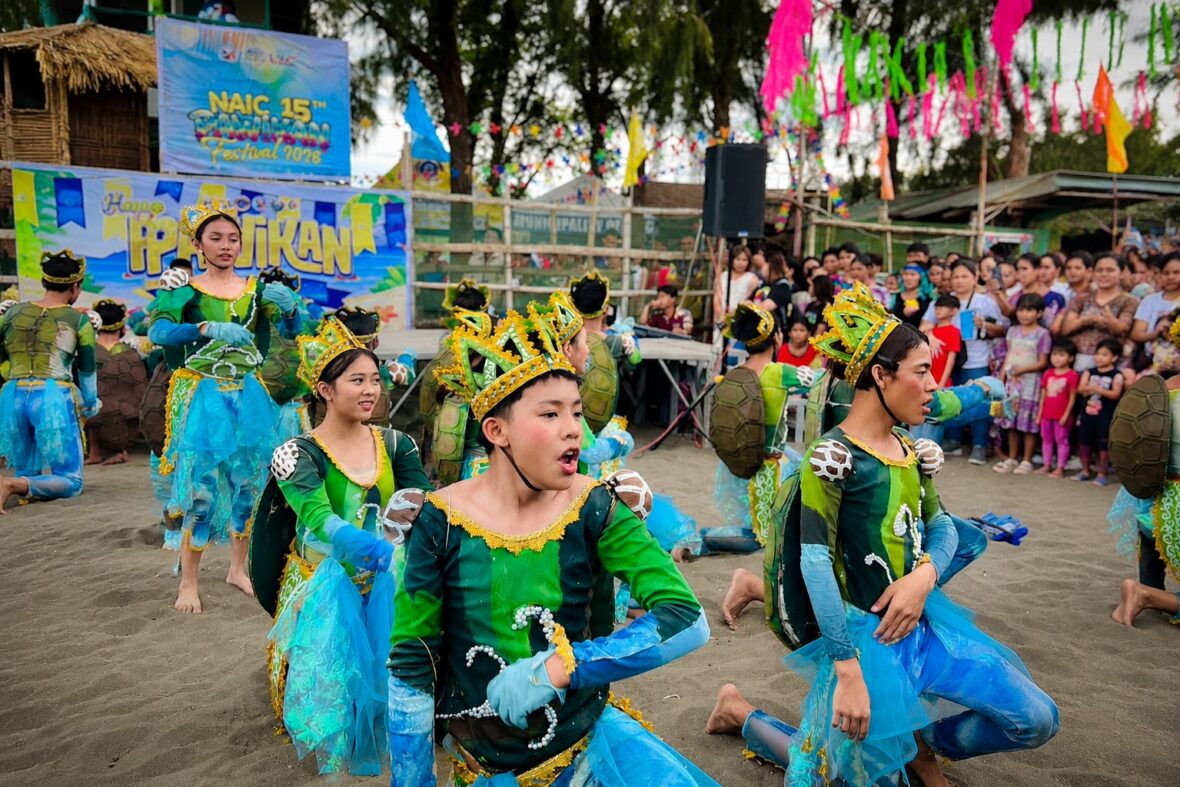
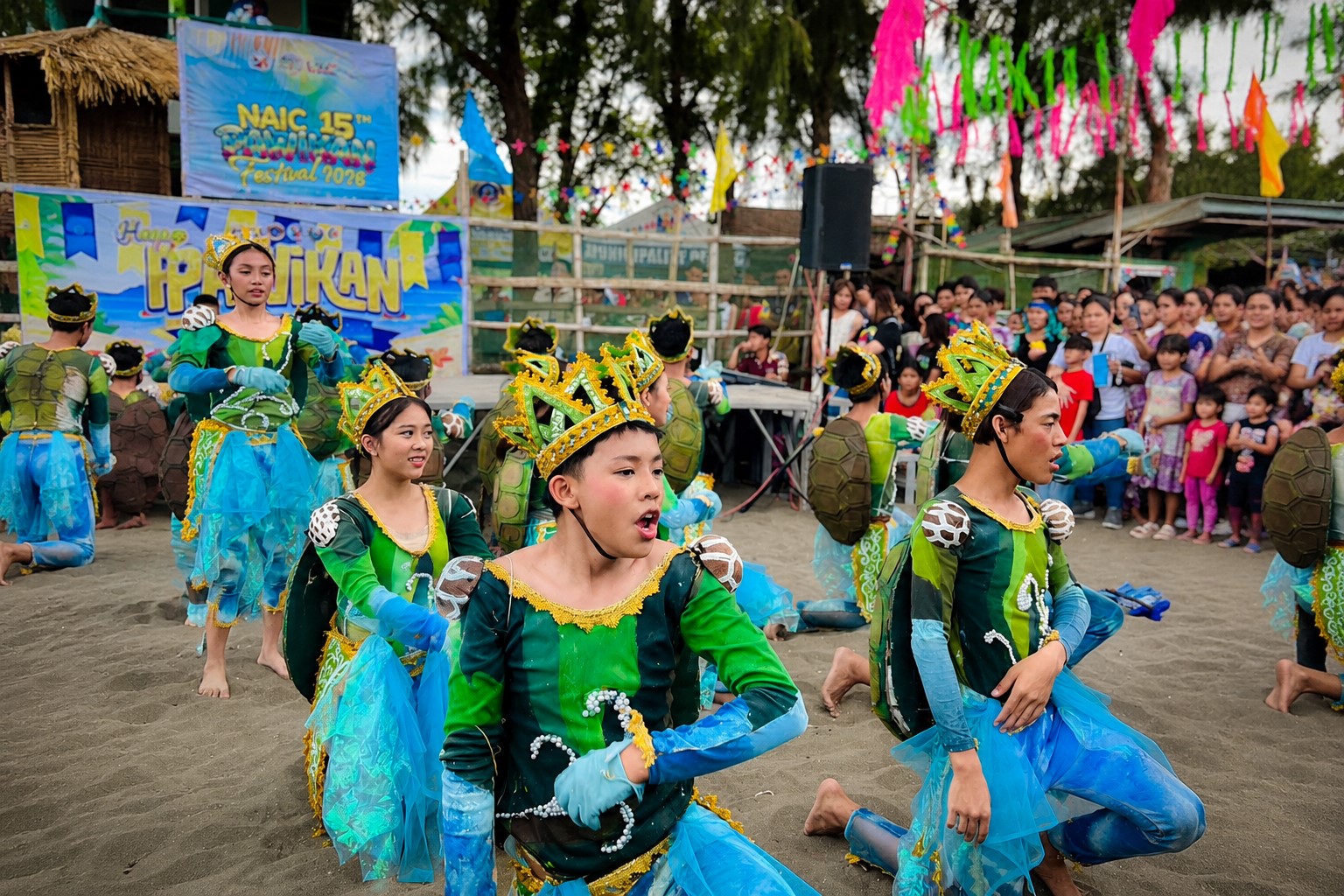
Street Dancing and Turtle-Inspired Costumes
Some Pawikan Festival editions include colorful street-dancing performances.
Dancers may wear green, blue, brown and gold to represent turtle shells, sand, ocean water and sunlight.
Large circular props imitate a pawikan’s shell. Fabric moving across the road may represent ocean waves, while dancers form patterns suggesting swimming turtles or hatchlings emerging from nests.
The festival’s 2024 visual coverage showed performers with turtle-shell props, marine-inspired face paint and elaborate headdresses. The celebration included a street parade, dances and floats decorated with pawikan designs.
These performances help make the conservation message understandable to children and casual visitors.
However, organizers must ensure that the celebration does not overpower its purpose.
The pawikan should remain a protected wild animal rather than becoming only a cute mascot.
What the Festival Feels Like
The Pawikan Festival changes character throughout the day.
In the morning, the town center feels energetic.
Runners gather in festival shirts, music plays and groups prepare for Zumba and cheering competitions. Students carry signs promoting cleaner seas and wildlife protection.
Later, the celebration moves toward the coast.
The atmosphere becomes more serious as volunteers begin the cleanup and conservation workers prepare the release area.
Near sunset or during lower light, people gather behind the designated boundary.
The beach becomes quieter.
Patrollers carry the hatchlings toward the sand, and spectators lower their voices as the tiny turtles begin crawling.
For a few minutes, everybody watches the same thing.
There is no need for an elaborate performance. The determined movement of the hatchlings is enough.
When the last turtle disappears into the waves, the crowd feels both hopeful and uncertain.
The hatchlings have reached the sea, but their journey has only begun.
When Is the Pawikan Festival Celebrated?
The festival is normally held in February, during the period associated with pawikan nesting and hatching activity along the Naic coastline.
Recent editions demonstrate that the exact date changes:
- The 14th Pawikan Festival was celebrated in February 2025.
- The 15th edition was held on February 13, 2026.
Future dates should be confirmed through announcements from the Municipality of Naic, Cavite Tourism and participating conservation organizations.
Do not assume the hatchling release will happen at a fixed hour simply because it appeared on a previous schedule.
Hatching is a natural process. Weather, tides and the condition of the turtles may require organizers to adjust the timing or number of animals released.
Can You Visit the Pawikan Sanctuary Outside the Festival?
The Labac conservation effort continues beyond festival day, but the sanctuary should not be treated like an ordinary attraction with guaranteed daily hatchling releases.
Sea turtles nest and hatch according to natural cycles.
There may be no hatchlings present on the day of your visit. Some parts of the facility may also be restricted to protect nests and reduce disturbance.
Contact the official patroller group, Naic Tourism Office or local government before traveling.
Do not arrive expecting conservation workers to produce turtles for photographs.
A responsible visit should be educational and should follow the availability and rules of the sanctuary.
How to Get to Naic from Metro Manila
From PITX
PITX is the most convenient public-transport terminal for many travelers coming from Metro Manila.
The terminal accommodates buses bound for Naic and Ternate, with current gate information placing Naic services at Gate 6 on the ground floor. Gate and bay assignments may change, so check the live schedule or information counter on your travel date.
Take a bus clearly marked Naic.
Tell the conductor whether you are going to:
- Naic town proper
- Naic Town Plaza
- Barangay Labac
- The Pawikan Sanctuary
A bus may terminate in or pass through the town center without continuing directly to the coastal sanctuary.
From Naic Bayan, visitors may need to take a tricycle or another local vehicle to Barangay Labac.
Show the driver the current festival poster or the exact sanctuary location. Do not rely only on saying “Pawikan Festival,” especially when morning and afternoon activities use different venues.
From Bacoor, Kawit, Tanza or Rosario
Public buses and jeepneys connect the coastal municipalities of Cavite.
Travelers coming from Bacoor or Kawit may use services continuing through Tanza toward Naic. Those coming from Rosario can transfer through Tanza or Tejero depending on the available route.
Festival-day traffic and road closures may affect regular loading and unloading areas.
Ask the driver for the nearest permitted drop-off point.
By Private Vehicle
Drivers from Metro Manila commonly take CAVITEX and continue through Kawit, Tanza and the coastal Cavite corridor toward Naic.
Use live navigation and confirm the official festival access route.
The road to Barangay Labac may differ from the route to the municipal center, so save both locations when attending the full-day program.
Parking at the sanctuary may be limited. Follow instructions from barangay officials and avoid leaving vehicles on narrow roads or directly beside sensitive beach areas.
What to Wear and Bring
Wear light, comfortable clothing suitable for both the town program and the beach.
Useful items include:
- Drinking water
- Hat or cap
- Sunscreen
- Comfortable closed footwear
- Small towel
- Insect repellent
- Reusable water bottle
- Gloves for an organized cleanup
- Compact raincoat
- Cash in small denominations
- Power bank
- Sealable bag for your phone and valuables
Avoid wearing footwear that easily comes off when walking over uneven sand or cleanup areas.
Do not bring unnecessary single-use plastic to the sanctuary.
When organizers distribute food or drinks, dispose of the packaging properly and help leave the beach cleaner than you found it.
Responsible Photography Tips
The Pawikan Festival provides powerful photography opportunities, but wildlife welfare must always come first.
Turn Off the Flash
Flash and bright artificial lights can disorient hatchlings.
Remain Behind the Boundary
Do not move closer just because another photographer has entered the restricted area.
Avoid Blocking the Route
The path between the hatchlings and the sea must remain clear.
Do Not Stage Photographs
Never pick up, turn or reposition a turtle to create a better composition.
Lower Your Phone
Experience part of the release without looking entirely through a screen.
Respect Other Visitors
Do not push children, volunteers or elderly spectators out of the way.
Follow the Patrollers
The conservation team has the authority to stop photography or adjust the viewing area when conditions require it.
A respectful photograph records what happened naturally. It does not create a scene at the animal’s expense.
Important Rules for Visitors
Never Collect Eggs
Taking sea turtle eggs is illegal and directly harms the conservation effort.
Do Not Touch Nest Markers
Ropes, sticks, cages and signs may indicate protected nests.
Keep Dogs Away
Pets may disturb nests or injure hatchlings. Follow local restrictions regarding animals on the beach.
Avoid Loud Behavior Near Nesting Areas
Noise, crowds and movement can disturb adult turtles coming ashore.
Do Not Drive on the Beach
Vehicles can compact sand, damage nests and create dangerous tracks for hatchlings.
Take Your Rubbish Home
Do not leave plastic, food wrappers, cigarette butts or fishing lines.
Report Stranded Turtles
Contact local authorities, DENR personnel or trained pawikan patrollers. Do not attempt complicated rescue procedures without guidance.
Bringing Children to the Pawikan Festival
The festival can be one of the most memorable environmental lessons a child experiences.
Instead of learning about endangered animals only through a book, children see an actual conservation program operated by a community.
Before the release, explain a few simple rules:
- Stay behind the line.
- Do not touch the hatchlings.
- Do not use flash.
- Keep voices low.
- Never leave rubbish on the beach.
- Listen to the patrollers.
Children may ask why the turtles cannot be kept safely in a tank.
Explain that pawikan belong in the ocean. The purpose of the hatchery is to protect vulnerable eggs and help the turtles begin their natural lives—not to turn them into permanent captive attractions.
Keep younger children close because the beach can become dark, crowded and uneven.
Write a guardian’s contact number on a card and place it securely in the child’s pocket.
Food to Try in Naic
The Pawikan Festival is primarily an environmental celebration, but visitors can also explore Naic’s local food and coastal products.
Depending on the season and vendors, you may find:
- Fresh or cooked seafood
- Grilled fish
- Squid and shellfish dishes
- Rice meals
- Native rice delicacies
- Local pastries
- Fruit drinks
- Familiar Caviteño dishes
- Festival snacks and street food
Choose established sellers that handle seafood properly.
Fresh fish and shellfish should be kept cold before cooking. Avoid products left exposed to heat, flies or contamination for long periods.
When buying takeaway food, use reusable containers where practical.
Most importantly, never purchase turtle meat, eggs, shells or products claimed to come from pawikan.
Possessing or trading protected wildlife products may violate Philippine law and directly encourages illegal exploitation.
Other Places to Visit in Naic
Casa Hacienda de Naic
Casa Hacienda de Naic is one of the municipality’s most important historical sites.
The building is associated with the Acta de Naic, or Naic Military Agreement, signed by Andres Bonifacio and his supporters on April 19, 1897 after the Tejeros Convention.
The site was also connected with Emilio Aguinaldo’s later attempt to organize a cabinet of reconciliation. An official historical marker was installed in 1998.
The structure is associated with an educational property, so access may be subject to school rules and operating schedules.
Visit respectfully and avoid disrupting classes or official activities.
Diocesan Shrine and Parish of the Immaculate Conception
The historic Catholic parish in Naic is dedicated to Our Lady of the Immaculate Conception, whose feast is celebrated on December 8.
The church remains an active place of worship and is officially listed as a diocesan shrine.
Visitors may stop to pray or appreciate the church, but should follow parish rules and avoid photographing religious services intrusively.
Naic Town Plaza
The town plaza is a practical starting point for understanding the municipality’s civic center.
Festival runs, assemblies and community programs may begin in this area before participants move toward Barangay Labac.
Check road closures when visiting during Pawikan Festival because transportation may be rerouted around public activities.
Nearby Maragondon and Ternate
Naic can also be combined with nearby historical and natural destinations in Maragondon or Ternate.
Maragondon is known for the Bonifacio Trial House and its historic parish church, while Ternate provides access to coastal and mountain scenery.
Avoid placing too many destinations in one itinerary when your priority is the hatchling release.
Festival activities may be delayed or adjusted, and travel between towns can take longer because of traffic.
Why the Pawikan Festival Matters
Many festivals celebrate a finished product.
A town may honor coffee after it has been harvested or a delicacy after it has been prepared.
Pawikan Festival celebrates something far less certain.
The community releases tiny animals into an enormous sea without knowing which ones will survive, where they will travel or whether they will ever return.
That uncertainty is exactly why the festival matters.
It teaches people that conservation is not about controlling nature. It is about reducing the harm humans create and giving wildlife the opportunity to continue its natural cycle.
The festival also makes local environmental work visible.
Pawikan patrollers do not receive the same attention as performers or public officials. Much of their work happens quietly at night.
By bringing visitors to Labac, the festival introduces the public to the people protecting the nests throughout the season.
More Than a Hatchling Release
The release is emotional, but it should not become the only measure of conservation success.
Protecting sea turtles also requires:
- Cleaner coastal waters
- Responsible fishing practices
- Reduced plastic pollution
- Controlled lighting near nesting beaches
- Protection from poaching
- Proper waste management
- Monitoring of nests and stranded animals
- Enforcement of wildlife laws
- Education for residents and visitors
- Long-term support for local patrollers
Releasing hundreds of hatchlings while allowing the beach to become polluted again would miss the festival’s message.
The true test is what participants do after they return home.
How Visitors Can Support the Conservation Program
Support does not always require a large donation.
You can help by:
- Following sanctuary rules
- Joining an authorized coastal cleanup
- Buying legitimate local products
- Reducing disposable plastic
- Sharing accurate conservation information
- Reporting illegal wildlife products
- Supporting community patrollers through official channels
- Avoiding bright lights on nesting beaches
- Encouraging responsible fishing and tourism
- Returning as a respectful visitor rather than a wildlife collector
When donating, use recognized organizations or official community groups.
Ask how resources will be used and avoid giving money to individuals claiming they can arrange private handling or guaranteed hatchling encounters.
A Festival That Connects Town and Coast
Naic has both a rich revolutionary history and a living coastal environment.
Casa Hacienda tells the story of political conflict during the Philippine Revolution. The Pawikan Sanctuary tells a different story—one about modern communities deciding what kind of natural heritage they want to protect.
Both stories are important.
History is not found only in old buildings and documents. It is also being created by people responding to the challenges of their own time.
The Labac patrollers are creating a conservation legacy that future Naiceños may inherit.
Final Thoughts
The Pawikan Festival is one of Cavite’s most meaningful environmental celebrations.
Its public activities, performances and community competitions create an enjoyable festival atmosphere. However, the event’s true heart is found on the sand of Barangay Labac.
Watching a tiny sea turtle crawl toward the water can change the way you look at the coast.
The beach is no longer just a place for swimming, photographs and weekend trips. It is a habitat, nursery and starting point for animals whose journeys may extend across enormous areas of ocean.
Attend the festival to learn, participate and witness the hatchling release when conditions allow.
Join the cleanup. Listen to the environmental forum. Respect the patrollers and follow every instruction at the sanctuary.
Most importantly, do not let your concern end when the final hatchling reaches the waves.
The Pawikan Festival lasts for a day, but protecting the sea requires attention throughout the year.
Every properly disposed bottle, every protected nest and every visitor who chooses not to disturb wildlife contributes to the same goal: giving the pawikan of Naic a safe path from the sand to the sea—and, someday, perhaps back home again.