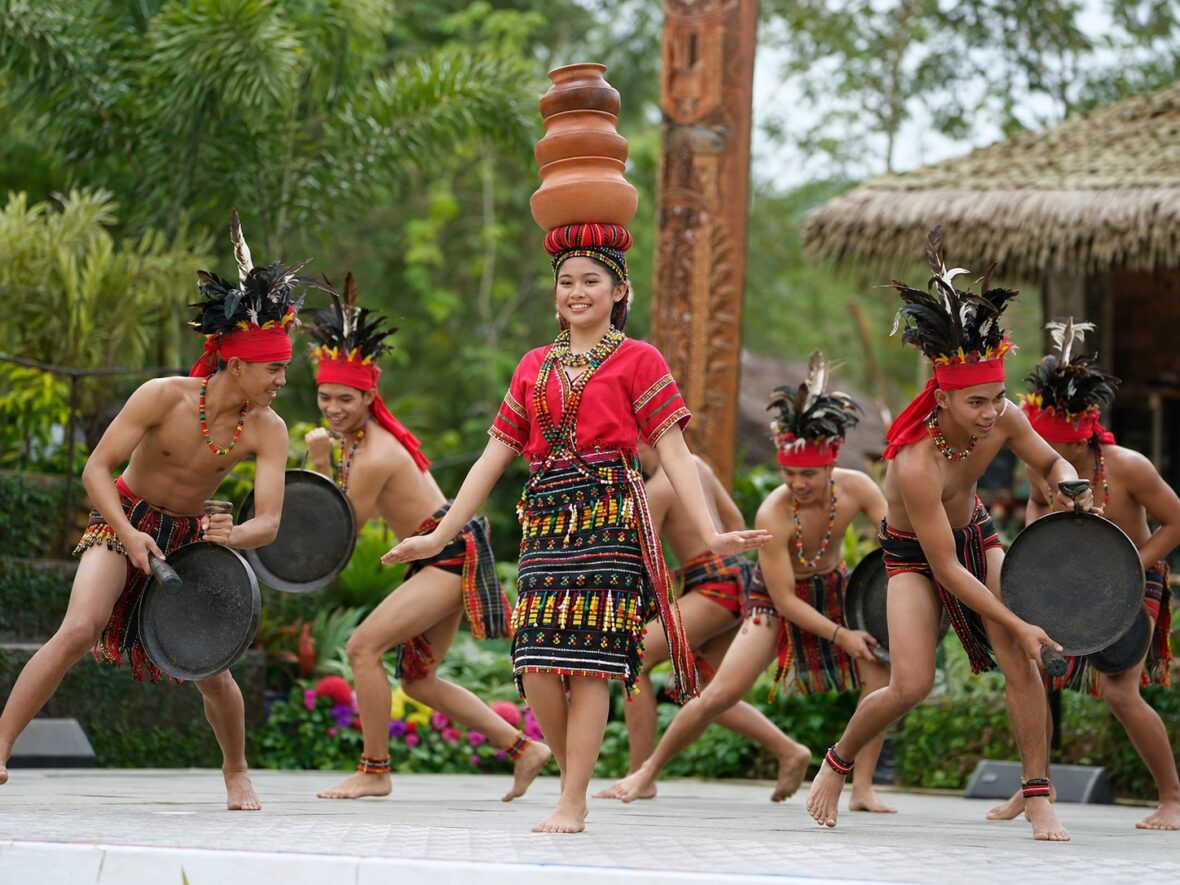
When you watch Banga for the first time, one thing immediately catches your attention: the dancers are balancing clay pots on their heads while moving with calm and graceful steps.
It looks simple from afar, but once you imagine yourself doing it, you quickly realize how impressive it is. Balancing even one pot takes control. Dancing with it takes skill. Moving together with other dancers while keeping the pot steady? That takes discipline, practice, and confidence.
Banga is one of the most beautiful traditional dances from the Cordillera region, especially associated with the Kalinga people. It is often described as a dance that shows women carrying earthen pots, or banga, as part of daily life. In older village settings, these clay pots were commonly used for fetching water, storing food, and other household needs. Sources on Kalinga culture describe Banga as a dance that shows the agility of women balancing clay pots while walking along rice paddies and mountain paths.
Content
What Is Banga?
Banga is a traditional dance from Kalinga where female dancers carry clay pots on their heads while moving gracefully to the rhythm of gongs. The word banga refers to the earthen jar or pot used in the dance.
The dance is sometimes also connected with Banga-Salidsid, especially in staged performances where the pot-carrying movements of the women are combined with courtship elements. But even on its own, Banga already has a strong cultural image: women carrying water, walking through mountain trails, and showing quiet strength through balance and grace.
In many performances, the dancers move slowly and carefully at first. Then, as the dance continues, the movement may become more confident and expressive. The beauty of Banga is not in speed or dramatic tricks. It is in the dancer’s control, posture, and natural elegance.
The Meaning Behind the Dance
Banga is often understood as a dance that honors the strength and grace of Kalinga women.
In many traditional communities, carrying water was part of daily life. Women would bring clay pots to water sources, fill them, and carry them back home. This was not easy work, especially in mountainous areas where paths could be narrow, uneven, or steep.
The dance turns that daily activity into art.
Instead of showing labor as something ordinary, Banga highlights the skill behind it. The dancer’s steady posture, careful steps, and graceful movement remind us that strength does not always have to look loud or forceful. Sometimes, strength is quiet. Sometimes, it is seen in balance, patience, and control.
The Clay Pot as a Cultural Symbol
The clay pot is the heart of the dance.
In Banga, the pot is not just a prop. It represents daily life, household work, water, survival, and community. Some sources note that traditional Kalinga clay pots are made from local clay in certain villages and were used for cooking, water storage, food storage, and bartering.
That makes the dance even more meaningful. The banga is not a random object placed on the dancer’s head just to make the performance impressive. It is an object connected to real life.
This is one of the beautiful things about Philippine folk dances. Many of them come from everyday experiences: farming, fishing, courtship, worship, celebration, and household work. Banga belongs to that tradition because it transforms an ordinary clay pot into a powerful cultural symbol.
How Banga Is Performed
Banga is usually performed by women, often in groups. The dancers balance clay pots on their heads while moving in lines, circles, or other formations.
The steps are generally graceful and grounded. The dancers need to keep their bodies steady, especially the head and upper body. Their movement should look smooth, but not stiff. The challenge is to appear relaxed while doing something difficult.
In some performances, dancers may carry one pot. In more dramatic staged versions, dancers may balance more than one pot, showing an even higher level of skill. But whether the dancer carries one pot or several, the main goal remains the same: to show grace, balance, and strength.
The group formation is also important. When several dancers move together with pots balanced on their heads, the performance becomes visually striking. It creates an image of unity and shared rhythm.
The Music of Banga
Banga is often performed to the sound of traditional Cordilleran instruments, especially gongs. The rhythm gives the dancers a steady beat to follow.
The music is not usually soft and romantic like the music of Cariñosa or Pantomina. It has a grounded, communal, and ceremonial feel. The sound of the gongs helps connect the dance to the highland culture of the Cordillera.
The rhythm also supports the careful movement of the dancers. Since they are balancing pots, the beat must guide their steps without making the dance feel rushed.
Costumes Used in Banga
The costumes used in Banga are usually inspired by Kalinga traditional attire. Female dancers may wear woven skirts, colorful fabric, bead accessories, and other Cordilleran-inspired ornaments.
The costume is an important part of the visual identity of the dance. It helps the audience recognize the cultural roots of the performance. The woven textiles and accessories also reflect the artistry of Kalinga and Cordilleran communities.
At the same time, it is important to remember that these costumes are not just decorations. They are inspired by real cultural clothing and should be treated with respect. When Banga is performed in schools or cultural programs, it is good to understand the culture behind the costume, not just copy the look.
Banga in Schools and Cultural Programs
Many Filipinos encounter Banga in school programs, folk dance lessons, cultural competitions, and Buwan ng Wika presentations. It is a popular dance because it is visually impressive and easy for audiences to appreciate.
The moment people see dancers balancing pots on their heads, they understand the challenge. That makes Banga memorable even for those who are not familiar with Kalinga culture.
For students, Banga teaches more than just choreography. It teaches posture, discipline, body awareness, and respect for cultural traditions. It also introduces them to the beauty of Cordilleran dances, which are an important part of Philippine heritage.
Why Banga Still Matters Today
Banga still matters because it reminds us of the everyday strength of women and the beauty of Indigenous Filipino culture.
In today’s world, many people think of dance as entertainment. But traditional dances like Banga show that dance can also be cultural memory. It can preserve images of daily life, community roles, and local identity.
Banga also helps people appreciate Kalinga culture. The Cordillera is home to many rich traditions, and dances like Banga allow audiences from other parts of the Philippines to see a glimpse of that heritage.
Every time Banga is performed, it keeps a story alive: the story of women, clay pots, mountain paths, water, balance, and quiet strength.

Final Thoughts
Banga is one of the most graceful traditional dances in the Philippines. It may not have the fast bamboo movements of Tinikling or the glowing lamps of Pandanggo sa Ilaw, but it has its own powerful beauty.
It celebrates balance.
It honors daily life.
It highlights the strength of Kalinga women.
And most of all, it shows how Filipino culture can turn simple everyday actions into meaningful art.
Through the steady movement of dancers and the clay pots balanced on their heads, Banga reminds us that grace and strength can exist together. It is a dance that feels calm, but behind that calmness is discipline, culture, and pride.