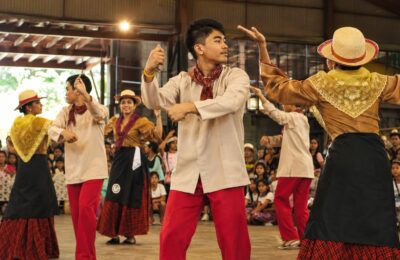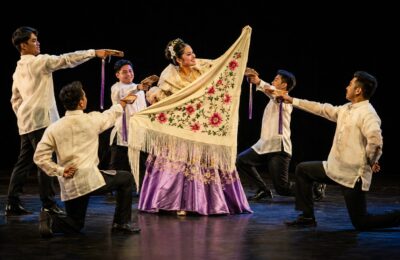
One of the most beautiful things about Filipino culture is the spirit of bayanihan—people helping one another, especially during difficult or labor-intensive tasks. In Leyte, this spirit is reflected in a traditional dance called Tiklos.
Tiklos is not a royal dance, a courtship dance, or a dance with dramatic props. It is a dance inspired by community work.
It tells the story of people coming together to help with farming, clearing land, building houses, and other tasks that are easier when done as a group. In many descriptions, Tiklos is identified as a native peasant dance of Leyte and is closely connected with the Waray tradition of voluntary communal labor.
Content
What Is Tiklos?
Tiklos is a traditional folk dance from Leyte. It is inspired by the practice of villagers working together for the good of the community.
The word Tiklos refers to a group of people who gather to do work together. This may include clearing forests, preparing land for planting, helping with farm work, digging wells, moving houses, or building homes. The work is usually done without expecting payment, although food, drinks, and gratitude may be offered.
That is what makes Tiklos special. It is not only about dance steps. It is about cooperation.
Tiklos and Bayanihan
Tiklos is often described as the Waray equivalent of bayanihan.
Bayanihan is the Filipino value of helping one another. Many people imagine bayanihan as neighbors carrying a nipa hut together, but the idea is much broader than that. It means community support, shared labor, and mutual help.
Tiklos captures this spirit in dance form. It shows people working together, resting together, and celebrating together.
This is why Tiklos feels very Filipino. It reflects a value that many of us grew up hearing about: when someone needs help, the community comes together.
The Story Behind the Dance
The dance is often described as happening during rest periods after work.
According to common folk dance descriptions, peasants would gather early in the morning when called by music or drum sounds. They would bring tools and go to the fields or worksite together. During breaks, they would eat, rest, drink tuba, and dance Tiklos before returning to work. The music could also serve as a signal to call people back.
This gives the dance a very natural setting. It is not something that began in a ballroom or palace. It came from working people, from fields, from community labor, and from the joy of resting after hard work.
How Tiklos Is Performed
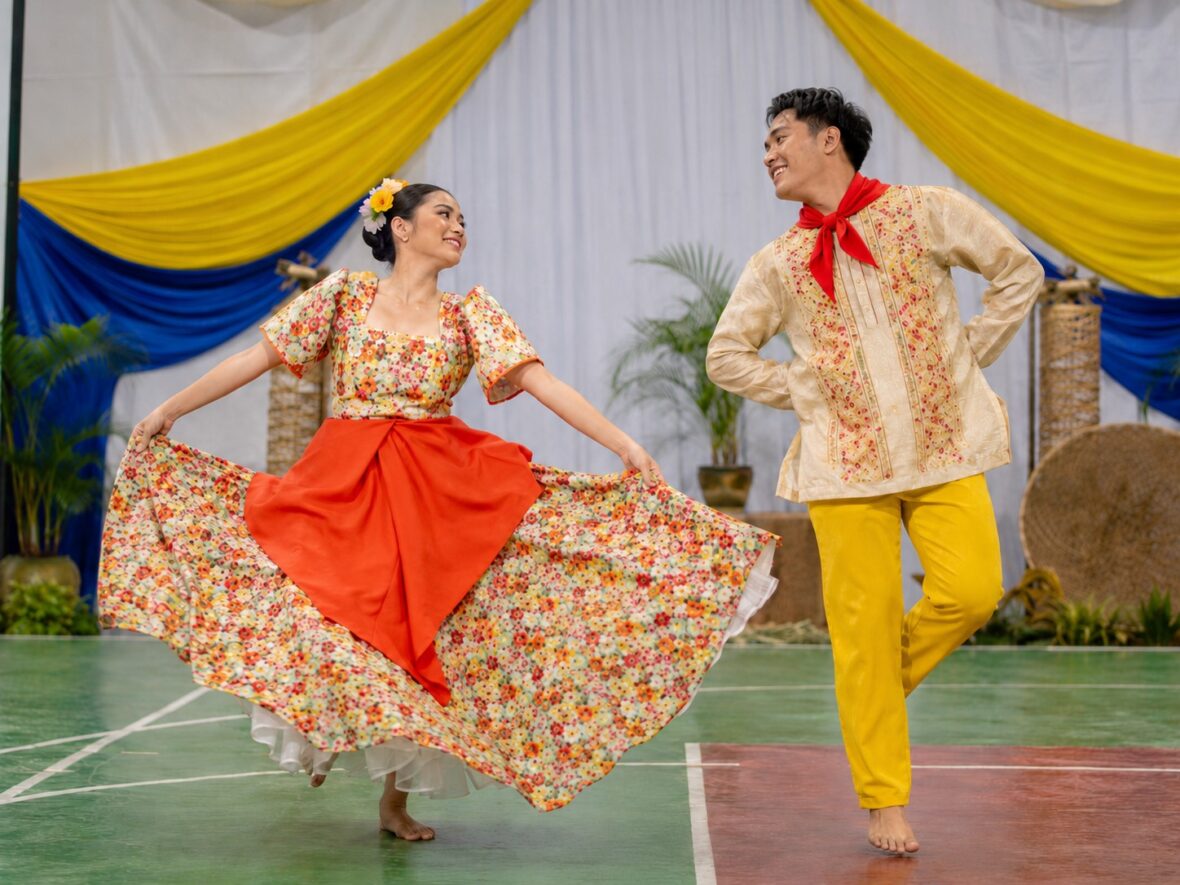
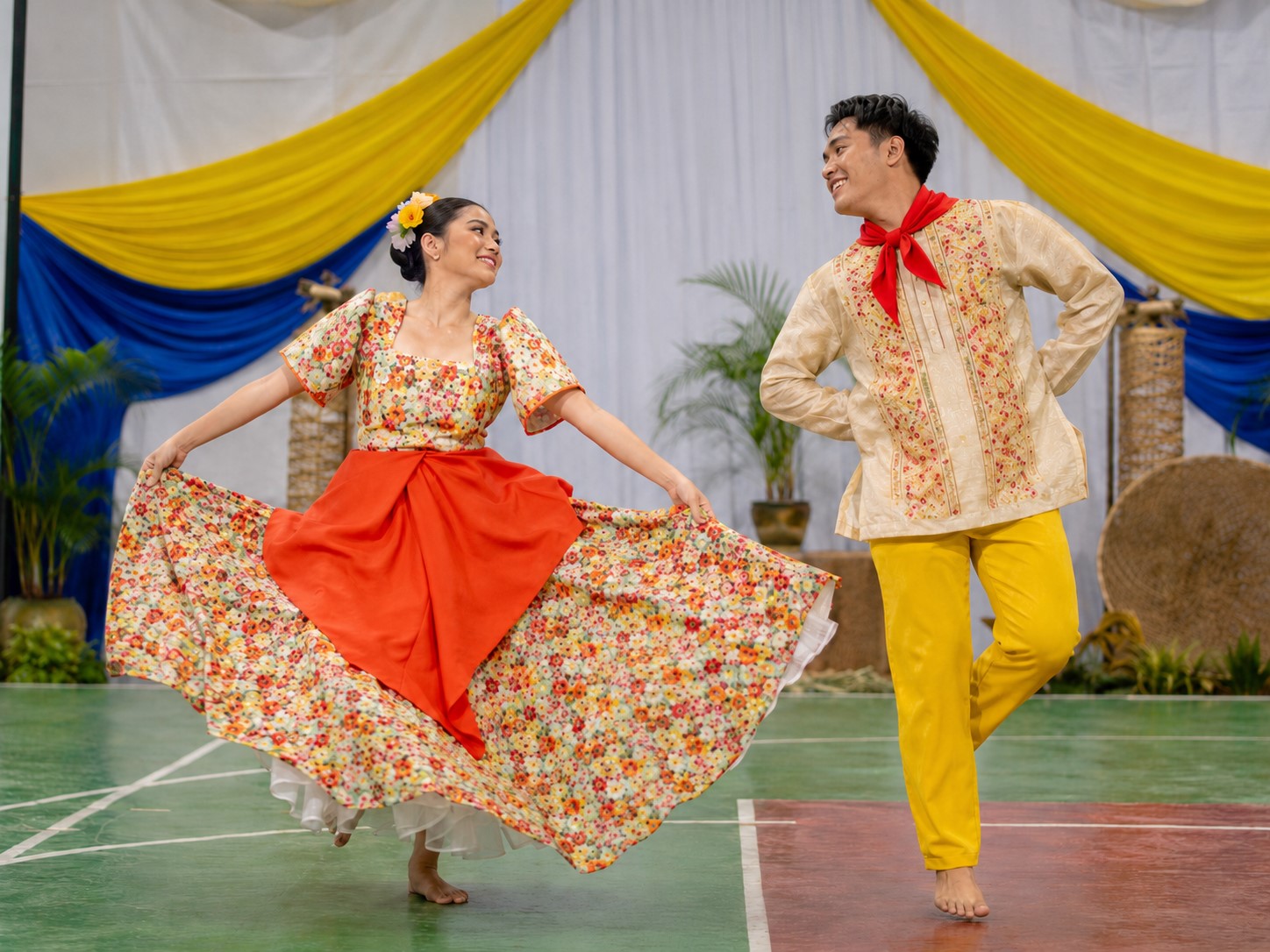
Tiklos is usually performed by pairs or groups. The dancers may imitate movements related to work, walking, gathering, and social celebration.
The steps are often lively but simple enough to feel communal. The dance may include partner formations, turns, claps, heel-and-toe movements, and other folk dance steps commonly taught in school versions.
Because Tiklos is based on community work, the group feeling is very important. It should not look like one dancer is trying to outshine everyone else. The dance works best when the performers move together as a group.
That reflects the meaning of the dance perfectly. Tiklos is about cooperation, not individual display.
The Music of Tiklos
Tiklos music is usually lively and rhythmic.
Some descriptions mention instruments such as the subing or bamboo flute, guimbal, tambora, guitar, and sometimes other local instruments.
The music helps create the feeling of a work break that turns into celebration. It should make people want to move, clap, and join the fun.
The rhythm also reflects the communal nature of the dance. It brings everyone together, just as work brought the community together.
Costumes Used in Tiklos
Costumes for Tiklos are usually simple and inspired by rural Filipino or peasant clothing.
Male dancers may wear camisa de chino, trousers, or work-inspired attire. Female dancers may wear patadyong, saya, or simple rural dresses. In school performances, costumes may vary depending on available materials, but the overall look should remain humble and practical.
This fits the meaning of Tiklos. It is not a dance about wealth or formality. It is about ordinary people working together.
The costumes should reflect that simplicity.
Tiklos in Schools and Cultural Programs
Tiklos is commonly taught in schools because it is meaningful, accessible, and easy to connect with Filipino values.
Students can understand the concept right away: people work together, then dance together. It is a good dance for teaching not only movement, but also cultural values such as cooperation, humility, and community service.
During Buwan ng Wika, foundation day programs, and folk dance competitions, Tiklos can be a refreshing number because it is not just about romance or spectacle. It tells a story of Filipino community life.
Why Tiklos Is Important
Tiklos is important because it celebrates ordinary people.
Many traditional dances show courtship, royalty, ritual, or festival life. Tiklos shows farmers, workers, neighbors, and community members. It honors the people who help one another without expecting anything in return.
That makes it deeply meaningful.
It reminds us that culture is not only made by famous people, rulers, or performers. Culture is also made by farmers, laborers, families, and neighbors who gather to help each other survive and thrive.
Tiklos and the Filipino Work Ethic
Tiklos also says something about the Filipino work ethic.
It shows that work can be communal. It shows that labor can be shared. It shows that after hard work, people still find time for music, dance, laughter, and rest.
That balance is very Filipino. We work hard, but we also celebrate. We help each other, but we also share food and stories. We face difficulties, but we turn even simple breaks into moments of joy.
Tiklos captures that beautifully.
Why Tiklos Still Matters Today
Tiklos still matters because the value behind it is still relevant.
Today, many people live in cities where neighbors may not know each other well. Life can feel individualistic and rushed. But Tiklos reminds us of a time when people relied more closely on community support.
It reminds us that helping others is part of who we are.
Even if we no longer gather to clear fields or build houses in the same way, the spirit of Tiklos can still live in modern life. It can be seen in community pantries, relief operations, volunteer groups, neighborhood help, and family support systems.
That is why this dance remains meaningful. It is not only about the past. It still has something to teach us today.
Final Thoughts
Tiklos is one of the most meaningful traditional dances in the Philippines because it celebrates bayanihan, community work, and the joy of helping one another.
It may not have the dramatic bamboo poles of Tinikling or the elegant hand movements of Pangalay, but it has a powerful message.
It reminds us that Filipino culture is built on cooperation.
It honors the workers, farmers, and neighbors who support each other.
And it shows that even after a long day of labor, there is still room for music, dance, and shared happiness.
Tiklos is a dance of the people—and that is exactly what makes it beautiful.