Some Philippine folk dances are exciting because of fast footwork. Some are beautiful because of costumes and music. Others are memorable because of props like bamboo poles, coconut shells, or lighted lamps. But Binasuan stands out because of one very impressive challenge: dancing while balancing glasses filled with liquid.
Yes, real glasses.
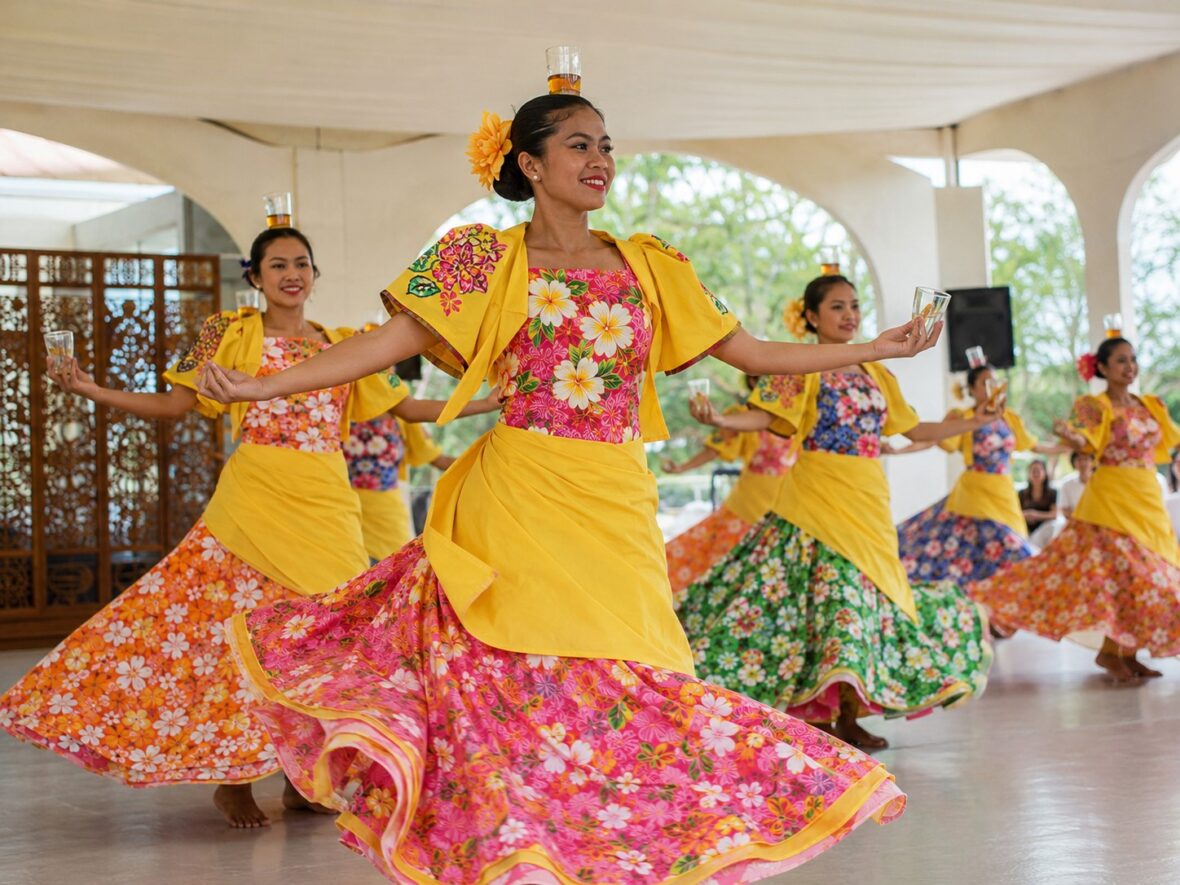
In a typical Binasuan performance, the dancer balances glasses on the head and on both hands while moving gracefully to the music. The glasses are usually filled with rice wine or another liquid, so the goal is not only to dance beautifully, but also to avoid spilling even a drop.
It looks elegant and effortless when performed well, but anyone who has tried balancing even one glass knows how difficult it can be. Now imagine doing that while turning, stepping, swaying, and moving your arms in graceful circles. That is the beauty of Binasuan. It is charming to watch, but it also takes serious control, focus, and skill.
Content
What Is Binasuan?
Binasuan is a traditional Filipino folk dance from Bayambang, Pangasinan. The word “Binasuan” means “with the use of drinking glasses,” which perfectly describes the main feature of the dance. In the performance, dancers balance glasses on their heads and hands while moving gracefully to the music.
The dance is usually performed during festive occasions such as weddings, fiestas, and celebrations. CulturEd, a Philippine cultural education resource connected with the National Commission for Culture and the Arts’ cultural education program, describes Binasuan as a colorful and joyful dance from Bayambang that is often performed during weddings and fiestas.
At first glance, Binasuan may look simple. A dancer holds glasses, moves around, and smiles. But once you understand the challenge, you appreciate it even more. The dancer has to keep the head steady, the palms level, the body balanced, and the steps smooth—all while making the performance look graceful.
That is not easy at all.
The Meaning of the Name Binasuan
The name Binasuan comes from the word baso, which means glass in Filipino. So, the name refers to dancing “with glasses” or “through the use of glasses.”
This name is very direct, but it also says a lot about the dance’s identity. The glasses are not just simple props. They are the heart of the performance. Without them, Binasuan would lose its unique character.
The glasses also suggest celebration. In many Filipino gatherings, drinking and sharing beverages can be part of social bonding. CulturEd notes that the word Binasuan also carries the idea of joyful drinking or toasting during celebrations.
So in a way, Binasuan is not only about balance. It is also about festivity, community, and the happiness of gathering together.
The Origin of Binasuan
Binasuan is strongly associated with Bayambang, Pangasinan, a town known for this beautiful folk dance. The official archived website of Bayambang describes Binasuan as a folk dance that originated in Bayambang and is performed at weddings and festivals.
This local connection is important because many Philippine folk dances are tied to specific towns, provinces, and communities. They are not just generic performances. They carry the identity of a place.
For Bayambang, Binasuan is one of those cultural treasures that helps represent the town’s heritage. It shows the creativity, grace, and festive spirit of the people. It is also a reminder that Pangasinan has contributed many beautiful traditions to Philippine culture.
How Binasuan Is Performed
Binasuan is usually performed by female dancers, although group versions may include several performers moving together in formations.
The classic version involves balancing three glasses: one on the head and one on each palm. The glasses are filled with rice wine or another liquid, which makes the performance more difficult. CulturEd describes the challenge as balancing three glasses placed on the forehead and both palms while dancing, with the added difficulty that the glasses are heavy because they contain wine or liquid.
The dancer moves gracefully while keeping the glasses steady. She may turn, sway, rotate her arms, move in circles, or even perform more challenging movements depending on the choreography. The goal is to make everything look smooth while making sure the liquid does not spill.
A good Binasuan performance should look light and graceful. The dancer should not look too tense, even though she is clearly doing something difficult. That calmness is part of the skill.
The Glasses in Binasuan
The glasses are the most iconic part of Binasuan.
Traditionally, the glasses may be filled with rice wine, though water or another liquid may also be used, especially in school or stage performances. The Bayambang source notes that the glasses are filled with rice wine, making any misstep a messy mistake, while also mentioning that water may be used.
That detail makes the dance more exciting. The audience knows that the dancer is not only balancing empty glasses. The liquid makes the challenge real. If the dancer tilts the head too much or moves the palms carelessly, the liquid can spill.
This is what creates the quiet suspense of the performance. It is not loud or dramatic like a battle dance, but people still watch closely because they know one small mistake can break the illusion of grace.
A Dance of Balance and Control
Binasuan is really a dance of balance.
The dancer must keep the body aligned, the head steady, and the arms controlled. Even a small unnecessary movement can affect the glasses. This means the dancer needs strong posture and awareness.
But balance in Binasuan is not only physical. There is also emotional control. The dancer must stay calm. If she becomes nervous, stiff, or distracted, it becomes harder to move naturally.
That is why Binasuan is so impressive. The dancer has to perform with elegance while managing pressure. She has to make a difficult task look beautiful.
This is one of the best things about traditional dance. It teaches discipline, patience, and presence. You cannot rush Binasuan. You have to feel the rhythm, control the movement, and trust your body.
The Movements of Binasuan
The movements of Binasuan are graceful and flowing. The dancer may use steps similar to waltz-like movements, moving side to side or around the stage. The archived Bayambang page describes Binasuan footwork as similar to waltz steps, with a “step, kick, tap” rhythm that follows the music’s three-quarter time.
The arms are also very important. Since the dancer balances glasses on the palms, the hands must remain facing upward. Arm movements should be soft but controlled. The dancer may rotate the arms carefully, creating beautiful circular movements while keeping the glasses level.
Some performances include more difficult figures, such as turning, bending, or even moving close to the floor. CulturEd mentions dancers may rotate, swing their arms, or even roll on the floor or stage while balancing the glasses, without spilling the liquid.
Of course, not every performance uses the most difficult movements. School and festival versions may be simpler, while trained dancers may include more advanced choreography.
The Music of Binasuan
Binasuan is commonly danced to music in three-quarter time, giving it a graceful, flowing quality. The Bayambang source specifically notes that the music is in three-quarter time, which supports the waltz-like movement of the dance.
CulturEd also mentions that Binasuan is danced to the tune of “Pitoy Oras.”
The music helps create the mood of the performance. It should feel lively but not too wild. Since the dancer is balancing glasses, the rhythm needs to support smooth and controlled movement.
The music also adds to the festive feeling of the dance. Binasuan is not solemn or serious. It is graceful, yes, but it also feels joyful and celebratory.
Traditional Costume Used in Binasuan
The costume often used in Binasuan is the balintawak, usually with a tapis and pañuelo. CulturEd describes the dancer as wearing a balintawak with tapis and panyuwelo.
This costume fits the character of the dance. The balintawak gives the performance a traditional Filipino look while still allowing the dancer to move freely. Since Binasuan requires careful footwork and arm movement, the costume should not be too restrictive.
The outfit also adds charm to the performance. As the dancer turns and sways, the traditional dress helps create a graceful visual effect. Combined with the glasses, music, and controlled movements, the costume completes the image of a classic Filipino folk dance.
Binasuan at Weddings and Fiestas
Binasuan is often performed during weddings and fiestas, which makes sense because the dance has a festive and celebratory character. Both CulturEd and the Bayambang municipal source describe Binasuan as a dance commonly performed during weddings and festivals.
At weddings, the dance can symbolize joy, grace, and celebration. At fiestas, it becomes part of the community’s cultural entertainment. It is the kind of performance that can easily make people clap and cheer because the skill is so visible.
There is also something very Filipino about using dance to celebrate important moments. In many communities, music and movement are part of weddings, town fiestas, family gatherings, and public events. Binasuan fits beautifully into that tradition.
It is elegant enough for formal occasions but lively enough for festive celebrations.
Group Performances of Binasuan
Although Binasuan can be performed by a solo dancer, it is also commonly performed by groups. In group performances, dancers may move in unison or break into smaller formations. The Bayambang source mentions that group performers may begin in a circle, form columns, bend into semicircles, and then return to circular formations.
This makes the dance even more visually interesting. When several dancers move together while balancing glasses, the performance becomes more impressive. The audience sees not just individual balance, but group coordination.
Group Binasuan also requires teamwork. The dancers must stay in rhythm with one another while managing their own glasses. One dancer losing balance can affect the visual flow of the whole performance.
That is why group versions can be especially beautiful when performed well. The dancers look graceful, coordinated, and confident.
Why Binasuan Is Difficult
Binasuan may look calm, but it is not an easy dance.
The difficulty comes from doing several things at the same time. The dancer must follow the music, remember the steps, keep the arms steady, balance the glass on the head, balance the glasses on the hands, and maintain a pleasant expression.
It is a full-body challenge.
The head cannot move too much. The shoulders must stay relaxed. The palms must stay level. The feet must follow the rhythm. The body must stay graceful.
And of course, the dancer must avoid spilling the liquid.
That is what makes Binasuan special. It is not a dance of big jumps or dramatic gestures. Its challenge is quieter, but just as impressive. It is about control.
The Meaning Behind Binasuan
Binasuan can be seen as a dance of joy, balance, and celebration.
On the surface, it entertains people through the impressive act of balancing glasses. But on a deeper level, it also reflects Filipino values such as grace under pressure, patience, discipline, and the ability to make celebrations more meaningful through art.
The dance also shows how Filipino folk culture can transform ordinary objects into performance. A drinking glass is a simple everyday item. But in Binasuan, it becomes a symbol of skill, beauty, and festivity.
That is one of the beautiful things about folk dance. It often takes something familiar from daily life and turns it into art.
Binasuan in Schools and Cultural Programs
Many Filipinos first encounter Binasuan in school. It is often taught as part of Physical Education or MAPEH lessons on Philippine folk dances. It may also be performed during Buwan ng Wika, foundation day programs, cultural presentations, and folk dance competitions.
For students, Binasuan can be both exciting and intimidating. The idea of balancing glasses while dancing feels challenging right away. In practice, students may start with empty cups or safer substitutes before moving to more realistic props.
Learning Binasuan teaches patience and focus. Unlike dances where students can hide small mistakes in group movement, Binasuan makes mistakes more visible. If the glass tips or the liquid spills, everyone notices.
But that is also what makes it rewarding. When students finally perform it successfully, it feels like a real achievement.
Why Binasuan Is Popular
Binasuan remains popular because it is simple to understand but impressive to watch.
You do not need to know the full history to appreciate it. Once you see a dancer balancing glasses while moving gracefully, you immediately understand the skill involved. That makes it very audience-friendly.
It is also visually memorable. The image of a dancer with glasses on the head and hands is not easy to forget. It gives Binasuan a strong identity among Philippine folk dances.
Another reason it is popular is that it feels joyful. It is connected to weddings, fiestas, and celebrations. It does not feel heavy or dramatic. It feels light, graceful, and festive.

Binasuan and Pangasinan Culture
Binasuan is an important part of Pangasinan’s cultural identity, especially because of its connection to Bayambang.
Pangasinan has a rich cultural heritage that includes language, food, music, festivals, and traditional dances. Binasuan adds to that richness by showing the province’s graceful and celebratory side.
When Binasuan is performed, it does more than entertain. It also introduces people to a piece of Pangasinan culture. It reminds audiences that Philippine folk dance is regional, diverse, and full of local stories.
For Bayambang, Binasuan is a source of pride. It is one of those traditions that helps make the town known beyond its borders.
Why Binasuan Still Matters Today
Binasuan still matters because it keeps a beautiful Filipino tradition alive.
In today’s world, many dances become popular because of social media trends. Those dances can be fun, but traditional dances like Binasuan carry something deeper. They connect us to place, history, community, and identity.
Binasuan also teaches younger generations that Filipino culture is creative and skillful. It shows that traditional dance is not boring or outdated. It can be graceful, challenging, and entertaining at the same time.
Every time Binasuan is performed in a school, fiesta, cultural show, or community event, it helps preserve a part of our heritage.
Final Thoughts
Binasuan is one of the most graceful and impressive traditional dances in the Philippines. Coming from Bayambang, Pangasinan, it is a dance that celebrates balance, beauty, and festivity.
With glasses balanced on the head and hands, the dancer must move carefully and gracefully, keeping the liquid from spilling while following the rhythm of the music. It looks simple from afar, but the skill required is truly impressive.
More than anything, Binasuan reminds us of the Filipino ability to turn ordinary things into art. A drinking glass becomes a prop. A celebration becomes a performance. A local tradition becomes a cultural treasure.
Whether performed at weddings, fiestas, school programs, or cultural shows, Binasuan continues to charm audiences with its elegance and quiet excitement.
It is graceful.
It is joyful.
It is proudly Pangasinan.
And it remains one of the most beautiful traditional dances of the Philippines.