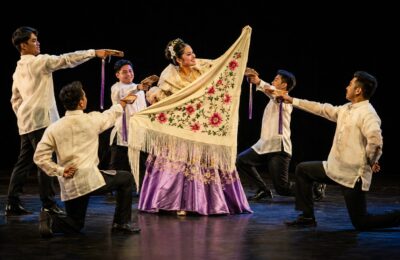
Some Philippine folk dances are lively and playful. Some are graceful and solemn. Some are full of skill, balance, or dramatic movements. But Pantomina has a special kind of charm because it feels warm, romantic, and deeply connected to celebration.
Known as one of the most beloved traditional dances from the Bicol Region, Pantomina is often described as a dance of love and courtship. It is commonly associated with weddings, fiestas, and community gatherings, where couples dance with gentle movements inspired by the courtship behavior of doves. The Tourism Promotions Board describes Pantomina sa Tinampo as a regional “dance of the doves” and a dance of love and courtship performed on the streets during Sorsogon’s Kasanggayahan Festival.
At first, Pantomina may look simple compared to dances with bamboo poles or balancing props. But once you watch the interaction between the dancers, you begin to see its beauty. It is not about tricks. It is about expression, romance, teasing, and connection.
Content
What Is Pantomina?
Pantomina is a traditional Filipino folk dance from the Bicol Region. It is a courtship dance that imitates the movements of doves, especially the gentle gestures of attraction between a pair. Because of this, it is sometimes called the “Dance of the Doves.”
The word Pantomina is connected to “pantomime,” which makes sense because the dance uses gestures and movements to tell a story without spoken words. The dancers do not need dialogue. Their steps, turns, glances, and gestures already show the feeling of courtship.
In Sorsogon, one well-known version is Pantomina sa Tinampo, which means Pantomina performed on the street. The Tourism Promotions Board says this street version is one of the features that makes the Kasanggayahan Festival different from other thanksgiving festivals in the country.
The Meaning Behind the Dance
At its heart, Pantomina is about courtship.
The male dancer usually follows, approaches, or tries to charm the female dancer. The female dancer responds with grace, modesty, and playful hesitation. Their movement creates a romantic conversation without words.
This is why Pantomina feels very human. It shows attraction, but not in a loud or aggressive way. It is gentle, playful, and respectful. Like many traditional Filipino courtship dances, it reflects an older style of romance where affection was expressed through subtle gestures.
The dove-inspired movements also add softness to the dance. Doves are often associated with love, peace, and partnership, so using their movements as inspiration makes the dance feel even more romantic.
Pantomina and Bicolano Culture
Pantomina is strongly connected to Bicolano identity. It is not just a dance that happens to come from Bicol. It is one of those traditions that people associate with the region’s festive and romantic spirit.
In Sorsogon, Pantomina has become especially visible through the Kasanggayahan Festival, a yearly celebration that marks Sorsogon’s transformation into a province separate from Albay. The Tourism Promotions Board notes that the festival’s heart lies in Pantomina sa Tinampo, a vibrant dance that showcases Sorsogon’s courtship traditions.
That local connection matters because folk dances are not only performances. They are cultural markers. They tell us something about the people, the place, and the way a community celebrates love, unity, and joy.
Pantomina at Weddings
One of the most meaningful settings for Pantomina is the wedding celebration.
In many Bicolano communities, Pantomina is traditionally performed during weddings, especially by the newlyweds and their guests. The dance becomes more than entertainment. It becomes a symbolic celebration of love, partnership, and blessings for the couple.
In some wedding traditions, guests may give money while the couple dances. This is similar to other Filipino wedding money-dance customs, where relatives and guests offer cash as a way of wishing the couple prosperity as they begin married life.
This makes Pantomina feel very personal. It is not only a dance performed on stage for an audience. It can also be part of a family’s most important celebration.
Imagine a newly married couple dancing Pantomina while relatives cheer, music plays, and guests offer blessings. That is the kind of scene where culture feels alive.
How Pantomina Is Performed
Pantomina is usually performed by a male and female pair, though group versions are also common in festivals and cultural presentations.
The dancers move with graceful steps, turns, circling patterns, and playful gestures. The male dancer may follow or “court” the female dancer through movement, while the female dancer responds with soft, teasing, and modest gestures. The dance often creates the feeling of a chase, but in a gentle and romantic way.
Because Pantomina is inspired by doves, the arms and upper body are important. The dancers may use soft, wing-like arm movements, graceful hand gestures, and flowing motions that suggest birds moving together.
The best Pantomina performances do not look stiff. They feel natural, warm, and expressive. The dancers need rhythm, but they also need personality. The dance should feel like a story unfolding between two people.
The Music of Pantomina
The music of Pantomina is usually gentle, romantic, and flowing. It supports the courtship story by giving the dancers a rhythm that feels graceful and expressive.
Traditional performances may use a rondalla, a Filipino string ensemble commonly used in many folk dances. The sound of rondalla music adds an old-fashioned charm that fits the romantic nature of Pantomina.
In festival versions, the music may be fuller, louder, and more festive, especially when performed on the streets. Pantomina sa Tinampo during Sorsogon’s Kasanggayahan Festival is a good example of how the dance can move from an intimate courtship performance into a grand public celebration.
Whether danced in a wedding hall, school stage, or street festival, the music helps set the mood. It tells the dancers when to move gently, when to turn, and when to build the romantic energy of the performance.
Costumes Used in Pantomina
Costumes for Pantomina usually reflect traditional Filipino clothing, especially styles connected to lowland Christian communities and regional folk dance presentations.
Female dancers may wear a balintawak, patadyong-inspired dress, or other colorful folk costumes. Male dancers may wear a barong Tagalog, camisa de chino, or other traditional Filipino attire.
In large street performances, costumes may be more colorful and festive. During the 2019 Sorsogon record-setting Pantomina event, the Philippine News Agency reported that male participants wore camisa de chino while female participants wore colorful Filipiniana dresses.
The costumes help create the visual mood of the dance. They make the performance feel traditional, romantic, and festive all at once.
Pantomina sa Tinampo
One of the most famous versions of the dance today is Pantomina sa Tinampo.
“Tinampo” means street, so Pantomina sa Tinampo is a street version of the dance. It is strongly associated with Sorsogon and the Kasanggayahan Festival. The Tourism Promotions Board describes it as a native regional dance and a dance of love and courtship performed on the streets.
This version shows how a folk dance can grow beyond its original social setting. Pantomina may be intimate and romantic in weddings, but in Sorsogon, it also becomes a large community celebration. Streets become dance floors. Residents become performers. The whole province participates in preserving and celebrating its heritage.
That is one of the most beautiful things about Pantomina. It can be personal, but it can also be communal.
The Guinness World Record Moment
Pantomina gained international attention in 2019 when Sorsogon Province achieved the Guinness World Records title for the largest Filipino folk dance. According to Guinness World Records, the event involved 7,127 participants in Sorsogon City on October 31, 2019, and the dance performed was Pantomina sa Tinampo.
The Philippine News Agency also reported that the performance lasted around 30 minutes and was part of Sorsogon’s month-long Kasanggayahan Festival celebration.
This achievement was not just about breaking a record. It was also a powerful display of cultural pride. Thousands of people dancing together in the streets showed how important Pantomina is to Sorsogon and to Bicolano identity.
Pantomina in Schools and Cultural Programs
Like many Philippine folk dances, Pantomina is also performed in schools, cultural shows, and folk dance competitions.
For students, Pantomina is a good way to learn about Bicolano culture and Filipino courtship traditions. It is not as physically risky as Tinikling or as demanding as Binasuan, but it still requires grace, timing, and expression.
The challenge is not only in the steps. The dancers also need to show the feeling of the dance. They need to look playful but respectful, romantic but modest, graceful but natural.
That makes Pantomina a good reminder that folk dance is not just about memorizing choreography. It is also about storytelling.
Why Pantomina Is Loved by Many Filipinos
Pantomina is loved because it feels warm and meaningful.
It is easy to understand. A couple dances. One courts the other. The movements imitate doves. The music feels romantic. The mood is joyful.
But beyond that simplicity is a deeper connection to family, weddings, community, and regional pride. For many Bicolanos, Pantomina is not just a dance from a textbook. It is something connected to real celebrations and local identity.
It also has a gentle beauty that makes it different from more dramatic dances. It does not need loud movements to make an impact. Its charm is in its softness, rhythm, and emotional expression.
Why Pantomina Still Matters Today
Pantomina still matters because it keeps Bicolano culture alive.
In a time when modern dance trends can spread quickly online, traditional dances like Pantomina remind us of our deeper cultural roots. They show how communities expressed love, celebration, and identity long before viral choreography existed.
Pantomina also matters because it continues to evolve. It is still danced at weddings and cultural programs, but it also appears in large festivals and street performances. That means the tradition is not frozen in the past. It is still moving, adapting, and being shared with new generations.
Every time Pantomina is performed, whether by a newlywed couple or thousands of dancers in Sorsogon, it keeps a piece of Filipino heritage alive.

Final Thoughts
Pantomina is one of the most romantic traditional dances in the Philippines. Rooted in the Bicol Region and inspired by the graceful movements of doves, it beautifully expresses courtship, affection, and celebration.
It is a dance that can be intimate enough for weddings and grand enough for street festivals. It can be performed by a couple, a group, or an entire community. And wherever it is danced, it carries the same spirit of love and joy.
More than just a folk dance, Pantomina is a cultural expression of Bicolano warmth and romance.
It reminds us that Filipino traditions are not only found in museums or history books. They are alive in weddings, festivals, music, movement, and the shared happiness of people dancing together.
And that is why Pantomina continues to hold a special place in Philippine folk dance.