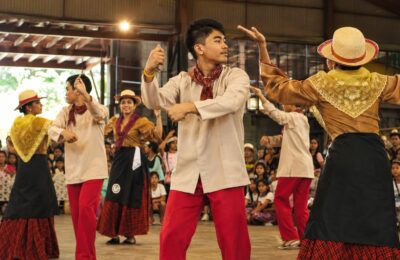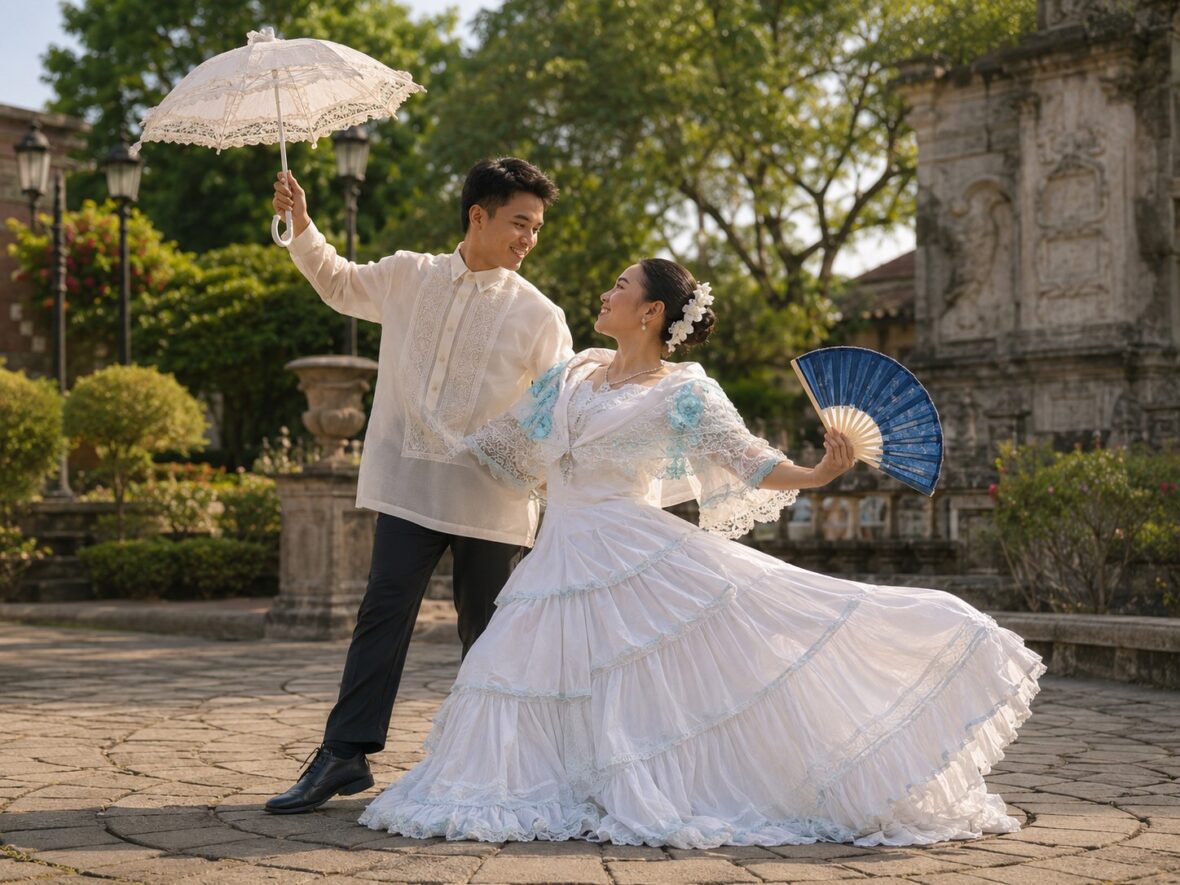
When it comes to traditional Filipino dances, Cariñosa is one of those performances that feels soft, charming, and very Filipino in spirit. It is not as fast and thrilling as Tinikling, and it does not have the dramatic bamboo poles that make audiences hold their breath. Instead, Cariñosa wins people over with grace, sweetness, and playful romance.
This is the kind of dance that feels like a gentle love story. There is a man and a woman, usually moving around each other with shy gestures, teasing steps, and graceful movements. The female dancer often uses a fan or handkerchief, while the male dancer follows with respectful admiration. It is romantic, but not too direct. Playful, but still modest. That balance is exactly what makes Cariñosa special.
In many ways, Cariñosa reflects an old-fashioned style of Filipino courtship—one that is full of subtle gestures, soft movements, and a little bit of pakipot. It is a dance about affection, but expressed in a reserved and elegant way.
Content
What Is Cariñosa?
Cariñosa is a traditional Philippine folk dance known for its romantic and flirtatious movements. The name comes from the Spanish word cariñosa, which means loving, affectionate, or endearing. That meaning already gives you a good idea of what the dance is all about. It is gentle, graceful, and centered on courtship.
The dance is commonly performed by a male and female pair. Through their movements, they act out a sweet courtship scene. The woman may hide behind a fan or handkerchief, while the man tries to catch her attention. They move around each other, sometimes coming close, then moving away again, creating a playful “hide-and-seek” effect.
Unlike dances that focus on speed or strength, Cariñosa is more about expression. The dancers need to show grace, timing, and emotion. A good performance does not feel forced. It should look light, natural, and charming—almost like watching two people communicate without saying a word.
The Origin of Cariñosa
Cariñosa is often associated with the Spanish colonial period in the Philippines. It belongs to the Maria Clara suite of Philippine folk dances, a group of dances influenced by Spanish culture and named after Maria Clara, the iconic female character in José Rizal’s Noli Me Tangere. These dances are usually graceful, formal, and romantic in style.
Many references also connect Cariñosa with Panay Island in the Visayas, where the dance is believed to have developed and become popular. Because of its Spanish influence, Cariñosa has similarities with other Spanish-style dances, especially in its rhythm, formality, and courtship theme.
But even though the dance carries Spanish influence, Filipinos made it their own. Over time, Cariñosa became part of local celebrations, school programs, cultural shows, and community performances. It became less about copying a foreign style and more about expressing Filipino values—modesty, affection, respect, and graceful courtship.
The Meaning Behind the Dance
At its heart, Cariñosa is a dance about courtship.
But it is not the loud, dramatic kind of courtship. It is more subtle. The woman does not immediately respond to the man’s attention. She hides behind her fan or handkerchief. She turns away. She moves gracefully, almost teasingly. The man follows, approaches, and tries to win her attention.
This style reflects the traditional idea of mahinhin behavior, especially associated with Filipina modesty in older Filipino society. The woman is affectionate but reserved. The man is interested but respectful. Their interaction becomes a dance of attraction, hesitation, and playfulness.
That is why Cariñosa feels so charming. It does not need big movements to tell a story. A simple glance, a turn of the body, or the hiding of the face behind a fan can already say so much.
The Fan and Handkerchief in Cariñosa
One of the most recognizable parts of Cariñosa is the use of props, especially the fan and handkerchief.
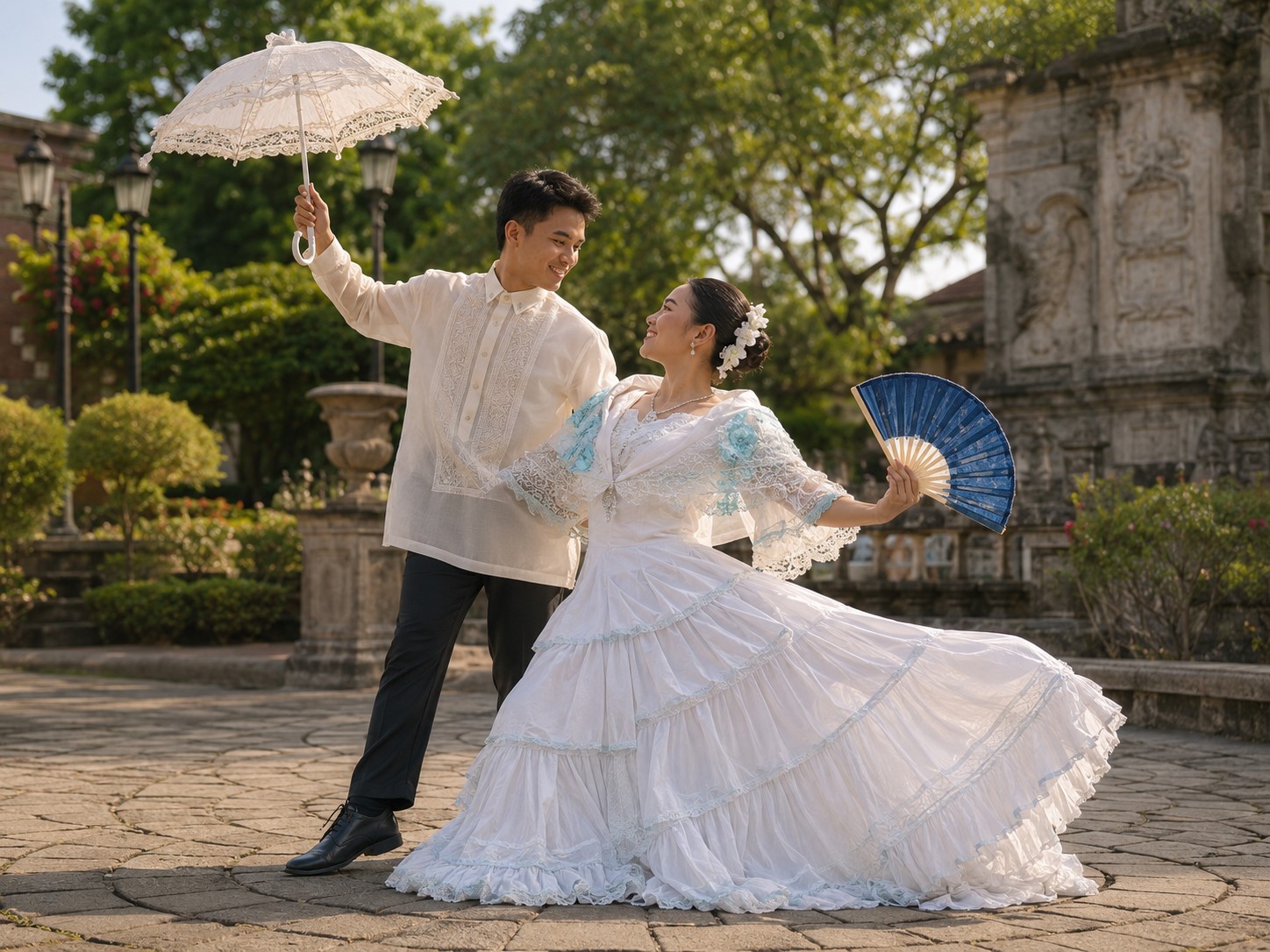
The fan is usually used by the female dancer. She may open it gracefully, cover part of her face, or use it to create a feeling of shyness and mystery. The handkerchief can also be used in a similar way, adding softness and elegance to the performance. These props help create the romantic “hide-and-seek” quality of the dance.
The fan and handkerchief are not just decorations. They are part of the storytelling. When the woman hides behind the fan, it adds playfulness. When the dancers use the handkerchief in their movements, it creates a softer and more graceful feeling. The props help show emotion without the dancers needing to speak.
That is one of the beautiful things about folk dance. Every movement has meaning. Even a small gesture can represent affection, hesitation, or admiration.
The Music of Cariñosa
Cariñosa is usually danced to music in 3/4 rhythm, similar to a waltz. This gives the dance its smooth, flowing, and romantic quality. The rhythm is not too fast, which allows the dancers to move gracefully and focus on expression.
Traditional performances may use rondalla music, played with string instruments such as the bandurria, guitar, laud, octavina, and other related instruments. The sound of the rondalla adds to the old-world charm of the dance. It gives Cariñosa that elegant, nostalgic feeling that fits perfectly with its courtship theme.
The music is an important part of the performance because Cariñosa is all about timing and grace. The dancers should not look rushed. They need to move with the rhythm, allowing each step, turn, and gesture to breathe.
Traditional Costumes Used in Cariñosa
Costumes make Cariñosa even more beautiful to watch.
Female dancers often wear a Maria Clara dress, balintawak, or patadyong kimona, depending on the version being performed. These outfits highlight the graceful movement of the dancer and give the performance a traditional Filipino look. Male dancers commonly wear the barong Tagalog or camisa de chino with trousers.
The costumes are usually elegant but not overly flashy. Cariñosa is a graceful dance, so the clothing should support that mood. The female dancer’s dress moves gently with every turn, while the male dancer’s attire gives a formal and respectful look.
When performed on stage, the costumes help transport the audience to an earlier period of Filipino social life. You can imagine town gatherings, formal dances, and old-style courtship traditions where every gesture mattered.
How Cariñosa Is Performed
Cariñosa is usually performed by one couple, though it can also be presented by several pairs in a group. The dancers face each other, move around each other, and perform graceful steps that show a romantic exchange.
The dance often includes simple but expressive movements. There are turns, side steps, gentle sways, and the famous hide-and-seek action using the fan or handkerchief. The woman may cover her face, then reveal it. The man may follow her movement, then step back. The two dancers create a playful rhythm of approach and retreat.
The beauty of Cariñosa is that it does not need to be physically intense to be interesting. The challenge is in making the movements look natural and expressive. Dancers need to show emotion without overacting. They need to be graceful without looking stiff. They need to be playful without making the dance look silly.
It is a quiet kind of performance, but when done well, it is very captivating.
Regional Versions of Cariñosa
Like many Philippine folk dances, Cariñosa has different versions depending on the region. While the fan and handkerchief version is one of the most familiar, other regional interpretations may use slightly different movements, props, or styling.
For example, some references mention a Bicolano version of Cariñosa where dancers use two handkerchiefs instead of the usual fan-and-handkerchief combination. This shows how the dance has been adapted and localized in different parts of the Philippines.
This is one of the reasons Philippine folk dance is so rich. A dance may have a common name and general theme, but each region can add its own flavor. These small differences help keep the tradition alive and connected to local communities.
Cariñosa in Schools and Cultural Programs
For many Filipinos, Cariñosa is first encountered in school. It is often taught in Physical Education or MAPEH classes, especially when students study Philippine folk dances. Because the steps are generally manageable and the theme is easy to understand, it is a popular choice for school programs and cultural presentations.
You may also see Cariñosa during Buwan ng Wika, foundation day celebrations, town fiestas, cultural festivals, and Filipino heritage events. It is one of those dances that audiences can easily appreciate because the story is clear. Even without a long explanation, people can understand that it is about courtship, affection, and playful romance.
Cariñosa is also a good introduction to Filipino folk dance because it shows another side of Philippine culture. While Tinikling shows speed, coordination, and excitement, Cariñosa shows elegance, restraint, and emotional expression.
Why Cariñosa Still Matters Today
Cariñosa may come from an older style of courtship, but it still has value today.
In a time when many things move fast, Cariñosa reminds us of a slower and more graceful way of expressing affection. It shows how romance can be communicated through small gestures, not just grand displays. It also reminds us of the importance of respect, timing, and emotional subtlety.
The dance also helps preserve Filipino cultural memory. It gives younger generations a glimpse of how people expressed love, admiration, and social grace in earlier times. Even if modern courtship is very different now, the values behind the dance still feel familiar: kindness, respect, charm, and affection.
Cariñosa also continues to matter because it is part of the Filipino cultural identity. Every time it is performed in a school, fiesta, or cultural event, it keeps the tradition alive. It reminds people that Filipino culture is not only festive and colorful, but also graceful and deeply expressive.
Cariñosa as a Symbol of Filipino Grace
What makes Cariñosa beautiful is its softness.
It does not try to impress the audience with daring jumps or complicated tricks. Instead, it charms them with gentle movement, romantic storytelling, and elegant simplicity. The dancers do not need to speak because the fan, handkerchief, glances, and steps already tell the story.
That is why Cariñosa remains one of the most beloved traditional dances in the Philippines. It captures a very human feeling: the sweetness of affection and the playful uncertainty of courtship.
There is something timeless about that. Whether performed by students, cultural groups, or professional dancers, Cariñosa continues to connect with people because the emotion behind it is easy to understand.
Final Thoughts
Cariñosa is more than just a traditional folk dance. It is a graceful expression of love, modesty, and Filipino courtship.
Through its soft movements, playful gestures, and beautiful use of the fan and handkerchief, the dance tells a simple but charming story. It shows how affection can be expressed with elegance. It also reminds us of a time when courtship was slower, more formal, and full of subtle meaning.
For Filipinos, Cariñosa is part of our cultural memory. Many of us have seen it in school, performed it during a program, or watched it during a cultural event. It may be an old dance, but it continues to feel meaningful because it carries values that are still close to the Filipino heart.
Sweet, graceful, and full of charm, Cariñosa remains one of the most beautiful traditional dances of the Philippines.