When we talk about traditional dances in the Philippines, many people immediately think of Tinikling, Cariñosa, or Pandanggo sa Ilaw. But in Eastern Visayas, especially in Samar and Leyte, there is one dance that holds a very special place in community celebrations: Kuratsa.
Kuratsa is lively, playful, romantic, and deeply connected to Waray culture. It is often performed during weddings, fiestas, family gatherings, and other important occasions in Samar and Leyte. More than just a stage performance, it is a dance that brings people together. It is festive, meaningful, and full of local personality.
If Cariñosa shows courtship in a soft and graceful way, Kuratsa shows it with more energy and playfulness. It has teasing movements, lively steps, and a charming back-and-forth between the male and female dancers. It is a dance of attraction, pursuit, celebration, and community joy.
Content
What Is Kuratsa?
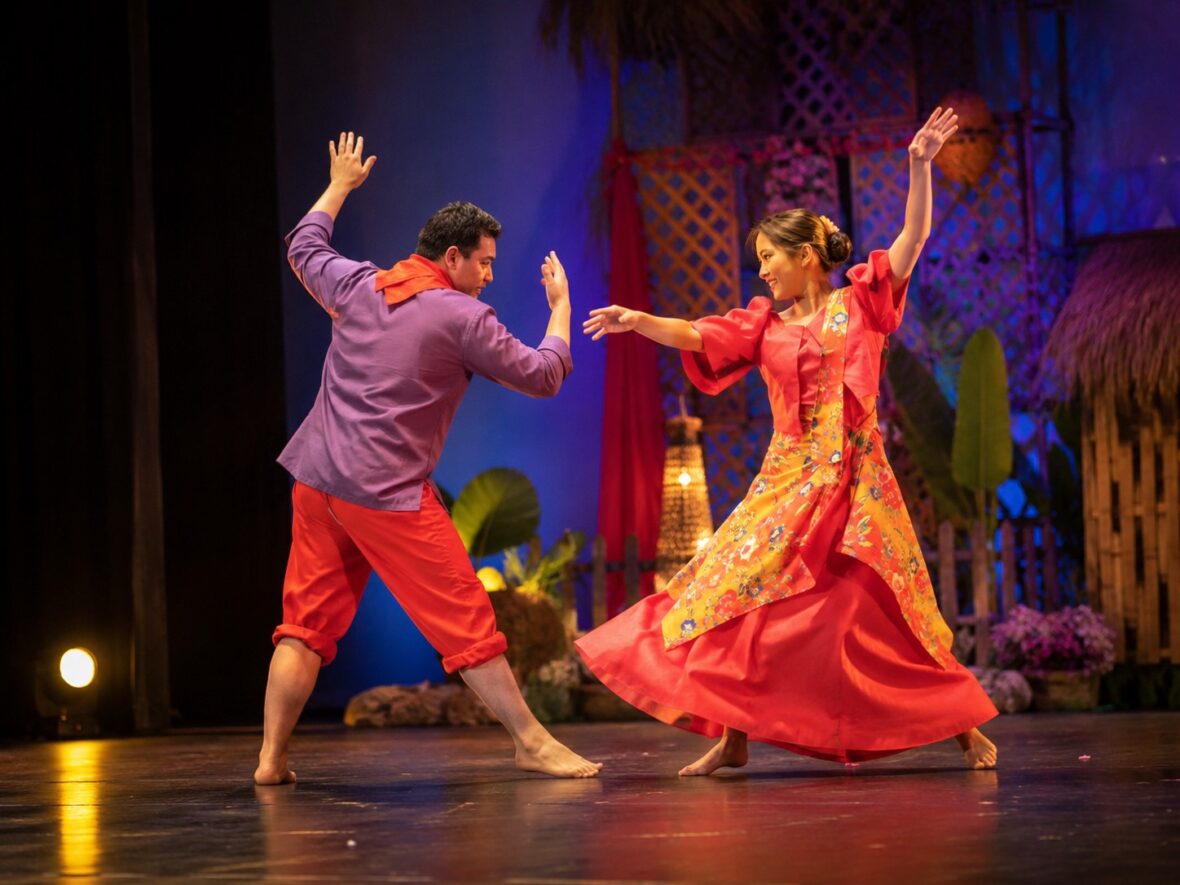
Kuratsa is a traditional Filipino folk dance closely associated with the Waray people of Samar and Leyte. It is commonly described as a courtship dance, where the male dancer approaches and courts the female dancer through movement. In many descriptions, the dance imitates the courtship behavior of a rooster and a hen, giving it a playful and slightly humorous character.
This is one of the things that makes Kuratsa so charming. It is romantic, but it is not too serious. The male dancer may show off with confident steps, while the female dancer responds with graceful and sometimes teasing movements. There is a feeling of pursuit and play, but everything is done with rhythm, respect, and tradition.
Kuratsa is not only performed on formal stages. In many communities, it is danced during real-life celebrations, especially weddings and fiestas. That makes it feel very alive. It is not just something preserved for cultural programs—it is part of social life.
A Dance Deeply Connected to Waray Culture
Kuratsa is often described as one of the most popular traditional dances of the Waray-Waray people. In Samar, local government cultural information describes it as a common dance in social gatherings, especially weddings, and notes that it is very common throughout Samar.
That local connection is important. Kuratsa is not just a “Philippine folk dance” in a general sense. It carries the flavor of Eastern Visayas. It reflects the way people in Samar and Leyte celebrate, gather, express joy, and honor important life events.
In many Filipino communities, dance is not only entertainment. It is part of hospitality, thanksgiving, courtship, family bonding, and even fundraising. Kuratsa captures all of that beautifully. It shows how dance can be woven into the everyday life of a region.
The Courtship Story Behind Kuratsa
At the heart of Kuratsa is a courtship story.
The male dancer usually tries to impress the female dancer. He may move closer, show off his steps, and follow her around the dance area. The female dancer may respond with grace, hesitation, playfulness, or gentle teasing. This creates a lively interaction between the two performers.
Some descriptions compare the movement to a rooster trying to attract a hen. The man may perform more energetic and showy movements, while the woman keeps her own graceful rhythm. The dance becomes a playful conversation without words.
That is what makes Kuratsa entertaining to watch. It does not rely on props like bamboo poles, oil lamps, or coconut shells. The charm comes from the dancers themselves—their timing, expression, confidence, and chemistry.
Kuratsa at Weddings
One of the most meaningful places where Kuratsa is performed is at weddings.
In some Waray communities, the bride and groom dance the Kuratsa while guests offer money as a symbol of blessings, prosperity, and good wishes for the couple. The municipality of Hernani in Eastern Samar describes the tradition of showering the dancing couple with money, with the belief that more money showered upon them means more blessings will come their way.
This makes Kuratsa more than just a wedding dance. It becomes a community ritual. Family members, friends, ninongs, ninangs, and guests join in by giving money, cheering, and celebrating the couple. The dance becomes a joyful expression of support.
In other places, this may look similar to a money dance, but Kuratsa has its own Waray identity and cultural meaning. It is not only about giving money. It is about wishing the couple a happy, abundant, and blessed married life.
Kuratsa During Fiestas and Gatherings
Aside from weddings, Kuratsa is also performed during fiestas, family reunions, birthdays, and community celebrations. The Philippine News Agency has described Kuratsa as widely danced in Leyte and Samar, especially during fiestas, family reunions, and weddings.
This tells us something important: Kuratsa is a social dance. It belongs to the community.
During fiestas, people gather to celebrate their patron saints, share food, welcome visitors, and enjoy music and performances. In that kind of atmosphere, Kuratsa fits perfectly. It is lively enough to entertain people, traditional enough to honor heritage, and familiar enough for locals to feel connected to it.
For many Waray families, seeing or dancing Kuratsa can bring back memories of home, relatives, celebrations, and old community traditions.
How Kuratsa Is Performed
Kuratsa is usually performed by a male and female pair, though group versions may also be staged for cultural presentations. The basic idea is courtship, with the male dancer pursuing or trying to impress the female dancer.
The dance may begin with slower, graceful movements before becoming livelier. The male dancer may use more expressive and showy steps, while the female dancer may perform gentle, elegant, and teasing movements. The mood can shift from refined to playful, depending on the version and the skill of the dancers.
In some descriptions, Kuratsa has different rhythmic sections. The dance can start with a waltz-like feel, then become faster and more animated. This gradual build-up gives the performance energy and excitement.
The beauty of Kuratsa is that it allows personality. A skilled dancer can make the performance more expressive, humorous, graceful, or dramatic. That is why Kuratsa can feel different depending on where and how it is performed.
Different Versions of Kuratsa
Like many traditional dances in the Philippines, Kuratsa is not limited to just one version.
There are different forms and local variations across Eastern Visayas. A Philippine News Agency report mentions versions such as Kuratsa Menor, Kuratsa Mayor, Kuratsa han Kadam-an, and Kuratsa nga Pinayungan. It also notes that the Leyte style tends to be more graceful and gentle, while the Samar style can be more playful and lively, with male dancers sometimes making rooster-like movements.
This is one of the reasons Philippine folk dance is so rich. A dance may have one general name, but each province, town, or community can add its own flavor. The steps, tempo, mood, and gestures may vary, but the spirit of the dance remains.
In the case of Kuratsa, that spirit is courtship, celebration, and community life.
The Music of Kuratsa
The music of Kuratsa is usually lively and festive. It supports the playful courtship between the dancers and helps build the energy of the performance.
In traditional settings, the music may be played by local musicians, rondalla groups, or brass bands, depending on the occasion and community practice. In modern events, recorded music is also commonly used.
What matters most is rhythm. The dancers need music that allows them to move gracefully at first, then become more animated as the dance progresses. The music should invite movement. It should make people want to clap, smile, and join the celebration.
Because Kuratsa is often performed during social gatherings, the music is not just background. It helps create the festive mood of the event.
Costumes Used in Kuratsa
The costumes used in Kuratsa usually reflect traditional Filipino and Visayan-inspired clothing.
Female dancers may wear a patadyong, kimona, or other traditional dress styles commonly associated with Visayan culture. Male dancers may wear a barong Tagalog, camisa de chino, or other folk-inspired attire. The exact costume can vary depending on the performance, location, or school interpretation.
For staged cultural shows, the costumes may be more polished and colorful. For community celebrations, the clothing may be simpler but still formal or festive.
What is important is that the dancers look graceful and presentable while still being able to move freely. Kuratsa requires expressive movement, so the costume should support both elegance and comfort.
The Meaning Behind Kuratsa
Kuratsa may look like a simple courtship dance, but it carries deeper meaning.
It represents attraction, playfulness, respect, and social connection. The courtship element shows how romance can be expressed through movement. The wedding tradition shows how a dance can become a symbol of blessing and support. The fiesta setting shows how dance can strengthen community life.
Kuratsa also shows the Filipino love for celebration. In many parts of the country, important moments are marked with music, food, laughter, and dancing. Kuratsa brings all of those elements together in a distinctly Waray way.
It is a dance that says: we celebrate together, we honor tradition together, and we share joy as a community.
Why Kuratsa Is Still Loved Today
Kuratsa remains popular because it is more than a performance. It is an experience.
When people watch Kuratsa at a wedding or fiesta, they are not just watching dancers move. They are watching a tradition unfold. They are seeing family members give blessings, guests cheer, musicians play, and the community come alive.
This is why Kuratsa continues to matter. It keeps local identity strong. It reminds people from Samar and Leyte of their roots. It gives younger generations a chance to see and practice a tradition that has been part of community life for many years.
In a time when many celebrations are becoming more modern, Kuratsa keeps a strong link to heritage. It reminds people that traditional dances still have a place in today’s weddings, fiestas, and family gatherings.
Kuratsa in Schools and Cultural Programs
Like many Philippine folk dances, Kuratsa is also taught and performed in schools. Students may learn it during Physical Education, MAPEH classes, Buwan ng Wika programs, cultural presentations, or regional dance competitions.
For students outside Eastern Visayas, learning Kuratsa is a chance to discover Waray culture. It helps them understand that the Philippines has many regional traditions, not just one national style of folk dance.
For students from Samar and Leyte, performing Kuratsa can feel more personal. It is a dance connected to home, family, weddings, and local celebrations. It is not just something from a textbook. It is something they may have seen in real life.

Kuratsa as a Living Tradition
Some folk dances are mostly seen on stage. Kuratsa is special because it remains part of actual community life.
It is still connected to weddings, fiestas, fundraising, and family gatherings. In community practice, the giving of money during the dance may also serve as a form of support or fundraising. The Philippine News Agency notes that in community settings, dancing Kuratsa can be a way of raising funds through “gala” or “abwag,” referring to money offered to dancers.
This makes Kuratsa practical as well as cultural. It is entertaining, but it can also help people. It is traditional, but it continues to serve a purpose in modern gatherings.
That is one of the strongest signs of a living tradition. It is not only remembered—it is still used, practiced, adapted, and loved.
Final Thoughts
Kuratsa is one of the most meaningful traditional dances of Samar and Leyte. It is lively, graceful, playful, and deeply connected to Waray culture.
As a courtship dance, it tells a charming story between a man and a woman. As a wedding dance, it becomes a symbol of blessings and prosperity. As a fiesta dance, it brings people together in celebration. And as a cultural tradition, it keeps the spirit of Eastern Visayas alive.
What makes Kuratsa beautiful is not only the movement itself, but the community around it. The music, the dancers, the guests, the laughter, the money offerings, and the shared joy all become part of the experience.
Kuratsa reminds us that Filipino folk dances are not just performances from the past. Some of them are still living, breathing parts of everyday culture.
And in Samar and Leyte, Kuratsa continues to dance its way through weddings, fiestas, family gatherings, and the hearts of the Waray people.