When you think of Philippine folk dances, you might first imagine graceful movements, colorful costumes, and soft traditional music. But Maglalatik brings a different kind of energy. It is lively, rhythmic, playful, and full of action.
Instead of fans, handkerchiefs, bamboo poles, or lighted lamps, Maglalatik uses something very Filipino: coconut shells.
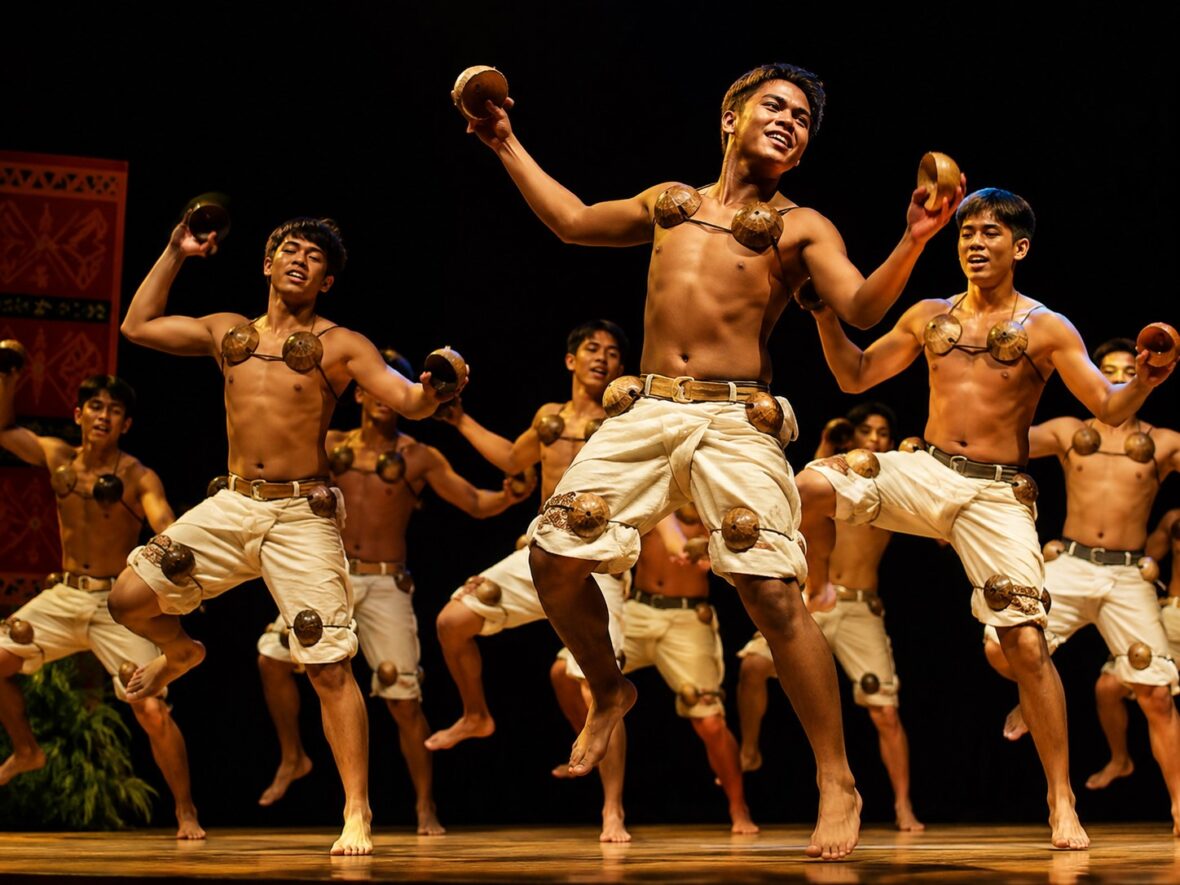
In this dance, performers wear coconut shell halves on their bodies and strike them in rhythm while moving, jumping, and acting out a mock battle. The result is a performance that feels part dance, part percussion, and part theatrical storytelling.
Maglalatik is one of those folk dances that easily gets the attention of the audience. The sound of coconut shells clacking together is sharp and exciting. The movements are strong and athletic. The whole performance feels festive, bold, and proudly local.
Content
What Is Maglalatik?
Maglalatik, also known as Magbabao, is a traditional Filipino folk dance commonly associated with Biñan, Laguna. It is known for its use of coconut shell halves, which are attached to the dancers’ bodies and also held in their hands. The dancers strike the shells together to create rhythm while performing lively movements.
Traditionally, Maglalatik is performed by male dancers. They wear coconut shells on parts of the body such as the chest, back, hips, or thighs, then use additional shells in their hands to strike the shells attached to their bodies or sometimes the shells worn by other dancers.
This gives the dance its unique sound. Unlike other folk dances where the music comes mainly from instruments, Maglalatik turns the dancers themselves into part of the music. Their bodies become moving percussion instruments.
That is one of the reasons Maglalatik is so memorable. You do not only watch the dance—you hear it through every strike of the coconut shells.
The Meaning of Maglalatik
The name Maglalatik is connected to latik, a coconut-based product made from cooked coconut milk. In many Filipino kitchens, latik is used as a topping or ingredient for native delicacies, especially rice cakes and desserts.
In the context of the dance, latik becomes part of the story. The dance is often described as a playful or harmless battle over prized latik, which connects the performance to coconut farming, local food culture, and rural life. Biñan’s tourism site describes Maglalatik as a dance that narrates a harmless battle over latik, the oil and curd residue from slow-simmered coconut milk.
This makes the dance feel very rooted in Filipino life. Coconut is not just a prop here. It is part of the story, the costume, the rhythm, and the cultural identity of the dance.
The Origin of Maglalatik
Maglalatik is strongly associated with Biñan, Laguna, especially the communities of Zapote and Loma. It is often described as a local folk dance that grew from the culture, humor, religious devotion, and agricultural life of the area.
The dance is also connected with the feast of San Isidro Labrador, the patron saint of farmers. In Biñan, Maglalatik became part of local fiesta traditions and religious processions, showing how the dance is not only a stage performance but also part of community celebration.
Today, Maglalatik continues to be celebrated in Biñan, especially during the Puto Latik Festival, which highlights two important cultural symbols of the city: Puto Biñan and Maglalatik. The festival is celebrated every May and features performances, local pride, food culture, and community events.
That local connection is important because it reminds us that folk dances are not just performances we see in school programs. Many of them come from real communities, local stories, religious traditions, and everyday life.
The Story Behind the Dance
Maglalatik is usually presented as a mock battle. The story often shows two groups fighting over latik, with one group commonly representing Christians and the other representing Moros. In many traditional descriptions, the dance begins with conflict and later moves toward reconciliation.
It is important to understand this as a folk performance and staged cultural narrative, not as a simple retelling of actual history. Like many old dances and moro-moro-inspired traditions, Maglalatik uses symbolic characters and dramatic conflict to entertain, teach, and celebrate.
The first parts of the dance usually show the heated encounter between the two groups. The movements are energetic, with dancers striking coconut shells in quick rhythm. Later parts show reconciliation, turning the performance from conflict into peace.
That structure gives the dance a complete story. It is not just about fighting. It is also about resolution, unity, and celebration.
How Maglalatik Is Performed
Maglalatik is one of the more physically demanding traditional dances in the Philippines. It requires strength, timing, coordination, and stamina.
The dancers move in rhythmic patterns while striking the coconut shells attached to their bodies. They may hit the shells on their chest, back, hips, or thighs. They may also strike the shells of other dancers, creating a lively exchange of sounds and movements.
The dance includes quick steps, jumps, turns, and playful combat-like actions. Because the dancers are also creating the rhythm, they need to stay perfectly coordinated. If one dancer loses timing, the sound and formation can become messy.
That is what makes Maglalatik exciting. It is both a dance and a percussion performance. The audience can feel the energy through the sharp clacking of the shells and the fast movement of the performers.
The Coconut Shells in Maglalatik
The coconut shells are the heart of Maglalatik.
They serve many purposes at once. They are costume pieces, musical instruments, storytelling props, and symbols of local culture. Without the coconut shells, the dance would lose its identity.
The use of coconut shells also connects the dance to rural Filipino life. Coconut trees are common in many parts of the Philippines, and coconut products are deeply part of Filipino cooking, farming, and livelihood. By using coconut shells in the dance, Maglalatik transforms an everyday material into something artistic.
This is one of the beautiful things about folk culture. It often takes simple objects from daily life and turns them into music, movement, and meaning.
The Music and Rhythm of Maglalatik
Maglalatik is known for its strong rhythm. The sound of the coconut shells is one of the main musical elements of the dance. In some performances, drums or other percussion instruments may accompany the dancers, but the shell-striking remains the most recognizable sound.
The rhythm is usually lively and fast. It gives the dance its martial and festive feeling. The dancers must follow the beat closely because their movements and shell strikes need to match.
Unlike graceful dances such as Cariñosa or Pandanggo sa Ilaw, Maglalatik has a more forceful and athletic energy. It is not soft and romantic. It is bold, loud, and playful.
That contrast makes it stand out among Philippine folk dances.
Costumes Used in Maglalatik
The costume for Maglalatik is simple but very distinctive.
Traditionally, male dancers wear trousers and coconut shell harnesses. The shells are attached to the body in a way that allows the dancers to strike them during the performance. Some versions use color-coded trousers to represent the two groups in the dance story, with red and blue often mentioned in traditional descriptions.
The costume is practical because the dancers need freedom of movement. Since Maglalatik involves jumping, turning, and striking, the performers cannot wear heavy or restrictive clothing.
The coconut shell harness is the most important part of the costume. It makes the dancers instantly recognizable. Even before the performance starts, the audience already knows they are about to see something energetic and rhythmic.
Maglalatik and San Isidro Labrador
One of the most meaningful parts of Maglalatik is its connection to San Isidro Labrador, the patron saint of farmers.
In Biñan, the dance has been performed as part of fiesta traditions and religious processions in honor of San Isidro Labrador. This gives Maglalatik a devotional and community-based meaning, not just an entertainment value.
This connection makes sense because Maglalatik is deeply tied to agricultural life. The dance uses coconut shells, tells a story connected to coconut products, and is linked to a patron saint associated with farmers.
So while the performance may look playful and energetic, it also carries a deeper local significance. It reflects gratitude, livelihood, faith, and community celebration.
Maglalatik in Schools and Cultural Programs
Many Filipinos first encounter Maglalatik in school. It is commonly performed during cultural programs, Buwan ng Wika celebrations, folk dance competitions, and town fiesta presentations.
For students, Maglalatik can be both fun and challenging. It is fun because the coconut shells make the dance exciting. It is challenging because the timing must be precise, and the movements require energy.
Unlike some folk dances where the dancers mainly focus on graceful steps, Maglalatik demands full-body coordination. The performers must dance, strike the shells, follow the beat, and stay in formation all at the same time.
That is why a good Maglalatik performance is always impressive. It takes practice to make the movements look clean, powerful, and synchronized.
Why Maglalatik Is Popular
Maglalatik remains popular because it is so different from many other Philippine folk dances.
It is loud.
It is rhythmic.
It is playful.
It is physical.
It is easy for audiences to enjoy because the energy is immediate. Even if someone does not know the full story behind the dance, they can still appreciate the skill and excitement of the performance.
The dance also has a very Filipino feel because of the coconut shells. Coconut is such a familiar part of Philippine life, from food to farming to local crafts. Maglalatik turns that familiar object into something artistic and entertaining.
That is one reason the dance continues to be loved. It feels local, festive, and proudly Filipino.
Maglalatik as a Symbol of Filipino Creativity
One of the most beautiful things about Maglalatik is how creative it is.
Imagine taking coconut shells—something simple and ordinary—and turning them into music, costume, movement, and storytelling. That is folk creativity at its best.
Maglalatik shows that Filipino culture does not always need grand materials to create something memorable. Sometimes, all it takes is rhythm, community, imagination, and everyday objects transformed into art.
It also reflects the Filipino sense of humor and play. Even though the dance presents a mock battle, it does not feel heavy or frightening. It feels lively and entertaining. The conflict becomes performance, and the performance ends with reconciliation.
That makes Maglalatik more than just a war dance. It is also a dance of community, peace, and celebration.
Why Maglalatik Still Matters Today
Maglalatik still matters because it keeps local heritage alive.
In a modern world where many performances are influenced by pop culture and online trends, traditional dances like Maglalatik remind us of the creativity of earlier generations. They show how communities expressed their stories, values, humor, and faith through movement.
The dance also helps younger Filipinos appreciate regional culture. It tells us that Philippine folk dance is not only about elegance and romance. It can also be energetic, athletic, and percussive.
Most importantly, Maglalatik continues to connect people to Biñan’s local identity. Through festivals, school programs, and cultural events, the dance remains a living tradition rather than just something written in history books.

Final Thoughts
Maglalatik is one of the most energetic and unique traditional dances in the Philippines. With its coconut shell rhythm, mock battle story, strong movements, and connection to Biñan, Laguna, it offers a lively glimpse into Filipino folk culture.
It is a dance that celebrates rhythm, strength, creativity, and community. It turns coconut shells into instruments. It turns a simple story into a performance. It turns local tradition into something audiences can enjoy and remember.
Whether performed in a school program, town fiesta, cultural show, or festival in Biñan, Maglalatik always brings excitement to the stage.
It is bold, playful, and proudly Filipino—a dance that proves our traditions can be both meaningful and fun.