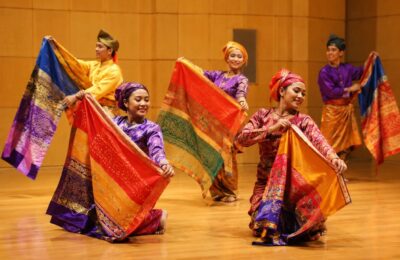
When we talk about Philippine folk dances, we often think of bamboo poles, coconut shells, oil lamps, and playful courtship movements. But there is another beautiful side of Filipino dance that shows our long history of cultural blending: the Spanish-influenced dances.
One good example is La Jota Moncadeña, a graceful and lively folk dance from Moncada, Tarlac.
It may not be as instantly famous as Tinikling or Pandanggo sa Ilaw, but La Jota Moncadeña has its own charm. It carries the elegance of Spanish-style dancing, the local flavor of Ilocano movement, and the joyful rhythm of bamboo castanets. It is a dance that feels formal, festive, and proudly Filipino at the same time.
Content
What Is La Jota Moncadeña?
La Jota Moncadeña is a traditional Filipino folk dance associated with the town of Moncada in Tarlac. It is often described as a local adaptation of the Spanish jota, combining Spanish and Ilocano dance steps with Spanish-influenced music and the use of castanets or bamboo clappers.
The dance is usually performed by couples. The dancers move with lively footwork, graceful arm positions, turns, and rhythmic clicking sounds from the castanets. It has that old-world charm you often see in Maria Clara-style dances, but with a regional identity rooted in Tarlac.
The name itself gives away its origin. Moncadeña means that the dance is connected to Moncada. In other words, La Jota Moncadeña can be understood as the “jota from Moncada.”
A Dance from Moncada, Tarlac
Moncada is a municipality in the province of Tarlac. According to the town’s official history page, the place was officially named the Municipality of Moncada in the late Spanish period, with the name connected to a Spanish noble family.
This historical background makes the dance even more interesting. Tarlac itself has been shaped by different cultural influences, including Ilocano, Kapampangan, Pangasinan, Tagalog, and Spanish colonial traditions. La Jota Moncadeña reflects that kind of cultural layering.
It is not purely Spanish, and it is not purely local in a narrow sense. It is a Filipino version of a Spanish-influenced dance, shaped by the people of Moncada and performed through local movement, music, and style.
What Is a Jota?
To understand La Jota Moncadeña, it helps to understand the word jota.
The jota is a Spanish dance and music form, often associated with lively steps, rhythmic footwork, and castanets. Collins Dictionary describes jota as a Spanish dance in triple meter performed by couples, with complex rhythms marked by heels and castanets.
During the Spanish colonial period, different versions of the jota became popular in the Philippines. Filipinos adapted the dance and created regional versions, mixing Spanish elements with local steps, costumes, music, and personality. Some well-known Philippine jota dances include La Jota Moncadeña, Jota Caviteña, Jota Manileña, and other regional variations.
That is one reason La Jota Moncadeña is culturally important. It shows how Filipinos did not simply copy Spanish dances. We adapted them, localized them, and made them part of our own folk tradition.
Spanish and Ilocano Influences
La Jota Moncadeña is often described as a combination of Spanish and Ilocano dance steps and music. This is what gives the dance its unique identity. It carries Spanish elegance, but it also reflects the local culture of the people who shaped and performed it in Moncada.
You can see the Spanish influence in the formal posture, the couple formation, the castanet-like rhythm, and the graceful social-dance feeling. At the same time, the local influence appears in how the steps were adapted and performed by Filipino communities.
This blending is very common in Philippine folk dances. Many of our traditional dances are not from one single source. They are products of history—indigenous traditions, Spanish colonial influence, local creativity, religious customs, and regional identity all coming together.
La Jota Moncadeña is a perfect example of that.
The Use of Bamboo Castanets
One of the most recognizable features of La Jota Moncadeña is the use of bamboo castanets or bamboo clappers.
In Spanish dances, castanets are often small hand-held percussion instruments used to create rhythmic clicking sounds. In the Philippine version, bamboo castanets give the dance a local flavor. Instead of using only the traditional Spanish-style castanets, Filipino dancers may use bamboo clappers that create a bright, lively sound. Sources describing La Jota Moncadeña note that bamboo castanets are an important part of the dance’s rhythm and character.
This is one of the beautiful things about the dance. The castanets do not just accompany the movement. They become part of the performance. Every click adds energy. Every rhythm gives the dance more life.
The sound also makes the dance feel festive. Even if the movements are formal and graceful, the clicking of the castanets adds brightness and excitement.
How La Jota Moncadeña Is Performed
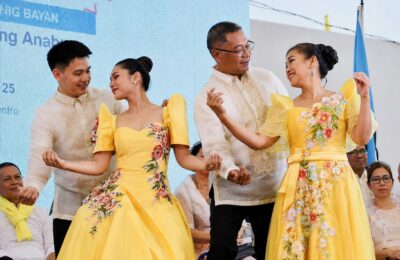
La Jota Moncadeña is usually performed by couples. The dancers move in coordinated patterns, often facing each other, turning, stepping, and using their castanets in rhythm with the music.
The footwork may include pointed steps, crossing steps, brushing movements, stamping, and waltz-like actions. The dancers need to move with good posture and clean timing. Since the castanets are part of the dance, they also need to coordinate their hand movements with the beat.
A good performance should look lively but controlled. The dancers should not look rushed or careless. They need to show elegance, rhythm, and confidence.
Compared to dances like Maglalatik or Tinikling, La Jota Moncadeña is less about athletic excitement and more about refined movement. The beauty comes from the grace of the dancers, the rhythm of the castanets, and the old-fashioned charm of the choreography.
The Music of La Jota Moncadeña
The music of La Jota Moncadeña has a Spanish-influenced character. Like many jota dances, it is lively and rhythmic, giving the dancers a strong beat to follow.
The castanets add another layer to the music. The dancers become part of the rhythm, not just performers moving to a background melody. The clicking sound helps emphasize the steps and gives the performance a bright, festive texture.
Because the dance has both Spanish and Filipino elements, the music also feels like a cultural meeting point. It carries the elegance of a European-influenced social dance, but it has been shaped into something local and Filipino.
Traditional Costumes Used in La Jota Moncadeña
Costumes are an important part of La Jota Moncadeña because they help create the formal, old-world look of the dance.
Female dancers often wear Maria Clara-style dresses or traditional Filipino gowns inspired by Spanish colonial-era fashion. These may include the camisa, pañuelo, and saya. Male dancers commonly wear the barong Tagalog or other formal Filipino attire.
The costumes give the dance elegance. When the women move with their long skirts and the men dance in formal attire, the whole performance feels like a scene from an old social gathering.
This is why La Jota Moncadeña fits well in cultural programs. It gives audiences a glimpse of the Spanish-influenced side of Filipino tradition, especially the dances connected to the Maria Clara suite.
A Dance for Social Gatherings
The jota tradition in the Philippines is often associated with social gatherings such as weddings, parties, baptisms, and community events during the Spanish colonial period. One source on Philippine jota dances notes that Filipinos adapted the lively Spanish dance into different local versions performed in social settings.
La Jota Moncadeña carries that same social-dance feeling. It is graceful enough for formal gatherings, but lively enough to feel celebratory. It is the kind of dance that can fit a cultural night, a school program, a town event, or a folk dance presentation.
It has a festive spirit, but not in a loud or wild way. Its joy is more polished and elegant.
The More Solemn Side of the Dance
One interesting detail about La Jota Moncadeña is that some sources mention a more solemn version of the dance. This version is sometimes connected to funeral processions or mournful occasions, also referred to in some descriptions as Jota Florana.
This may sound surprising because jota dances are usually thought of as lively and festive. But folk traditions can have different uses depending on the community. A dance can be joyful in one setting and solemn in another. Music and movement can express celebration, but they can also express grief, respect, or remembrance.
That detail gives La Jota Moncadeña more depth. It reminds us that folk dances are not always one-dimensional. They can carry different emotions depending on how and where they are performed.
La Jota Moncadeña in Schools and Cultural Programs
Many Filipinos encounter La Jota Moncadeña through school folk dance lessons, cultural programs, and regional dance presentations. It is often included in discussions of Spanish-influenced Philippine folk dances.
For students, the dance is a good way to understand how Spanish colonial influence shaped Filipino culture. It shows that history did not only affect language, religion, food, and architecture. It also influenced music, dance, clothing, and social customs.
Learning La Jota Moncadeña also teaches coordination. Dancers need to move their feet, use their castanets, keep proper posture, and stay in rhythm with their partner. It may look graceful, but it requires focus and practice.
Why La Jota Moncadeña Is Important
La Jota Moncadeña is important because it represents cultural adaptation.
It shows how a Spanish dance form became part of Filipino tradition, but not as a simple copy. The people of Moncada added their own local identity to it. They gave it regional flavor, local movement, and Filipino character.
The dance also helps preserve the cultural heritage of Tarlac. Many Philippine folk dances are strongly tied to specific places, and La Jota Moncadeña is one of those dances that carries the name and identity of its town.
This makes it valuable not only as a performance, but also as a cultural marker. When people perform La Jota Moncadeña, they are also helping keep the memory of Moncada’s folk tradition alive.

Why It Still Matters Today
La Jota Moncadeña still matters because it reminds us that Filipino culture is a beautiful mix of many influences.
The Philippines has indigenous traditions, Spanish influences, American influences, Asian connections, and strong regional identities. Our folk dances reflect all of that. They show how history moved through communities and became part of daily life, celebration, and art.
In today’s world, many people are more familiar with modern dance trends and viral choreography. But traditional dances like La Jota Moncadeña help us look back at the richness of our heritage. They remind us that Filipino dance is not only about energy and entertainment. It is also about elegance, history, identity, and adaptation.
Final Thoughts
La Jota Moncadeña is one of the beautiful Spanish-influenced folk dances of the Philippines. Coming from Moncada, Tarlac, it combines Spanish jota elements with Ilocano and Filipino character, creating a dance that is graceful, lively, and culturally meaningful.
Its bamboo castanets give it rhythm. Its costumes give it elegance. Its couple formations give it charm. And its connection to Moncada gives it a strong sense of place.
It may not always be the first dance people mention when talking about Philippine folk dances, but it deserves appreciation. La Jota Moncadeña shows how Filipinos take outside influences, make them local, and turn them into something uniquely our own.
In the end, this dance is more than just a performance. It is a reminder of how rich, layered, and beautifully blended Filipino culture really is.