The Philippines is home to thousands of churches, from small countryside chapels to enormous cathedrals that have stood for hundreds of years. You will find churches beside busy markets, on top of hills, inside historic towns, near volcanoes, and even in places that look like they came straight out of a European storybook.
But these churches are more than beautiful buildings.
For many Filipinos, they are places where families pray together, travelers ask for protection, devotees seek healing, and communities celebrate important religious traditions. Some have witnessed major moments in Philippine history, while others have become nationally known pilgrimage destinations.
There is no official ranking of the most popular churches in the Philippines. This list is based on several factors, including religious significance, historical importance, architectural beauty, major festivals, national recognition, and popularity among pilgrims and travelers.
Whether you are planning a Visita Iglesia trip, a religious pilgrimage, a heritage tour, or simply want to discover some of the country’s most meaningful landmarks, here are 20 of the most popular churches in the Philippines.
Content
20 Most Popular Churches in the Philippines at a Glance
| # | Church | Location | Best Known For |
|---|---|---|---|
| 1 | Quiapo Church | Manila | Jesus Nazareno and the Traslación |
| 2 | Basilica Minore del Santo Niño | Cebu City | Santo Niño image and Sinulog devotion |
| 3 | Manila Cathedral | Intramuros, Manila | Premier cathedral and seat of the Archbishop of Manila |
| 4 | Baclaran Church | Parañaque City | Wednesday novena to Our Mother of Perpetual Help |
| 5 | Manaoag Church | Manaoag, Pangasinan | Major Marian pilgrimage destination |
| 6 | Antipolo Cathedral | Antipolo City | Our Lady of Peace and Good Voyage |
| 7 | San Agustin Church | Intramuros, Manila | Oldest surviving stone church in the country |
| 8 | Simala Shrine | Sibonga, Cebu | Castle-like architecture and Marian devotion |
| 9 | Peñafrancia Basilica | Naga City | Home of the devotion to Our Lady of Peñafrancia |
| 10 | Paoay Church | Paoay, Ilocos Norte | Massive buttresses and Earthquake Baroque architecture |
| 11 | Miagao Church | Miagao, Iloilo | UNESCO status and intricately carved façade |
| 12 | Taal Basilica | Taal, Batangas | Enormous church structure and heritage-town setting |
| 13 | Barasoain Church | Malolos, Bulacan | Malolos Congress and First Philippine Republic |
| 14 | Santa Maria Church | Santa Maria, Ilocos Sur | Hilltop location and UNESCO recognition |
| 15 | Daraga Church | Daraga, Albay | Volcanic-stone Baroque architecture |
| 16 | Jaro Metropolitan Cathedral | Iloilo City | Our Lady of the Candles and detached bell tower |
| 17 | Molo Church | Iloilo City | Gothic Revival architecture and female saints |
| 18 | Baguio Cathedral | Baguio City | Pink façade, twin spires, and city views |
| 19 | International Shrine of Saint Padre Pio | Santo Tomas, Batangas | Healing devotion and Saint Padre Pio relics |
| 20 | Kamay ni Hesus Healing Church | Lucban, Quezon | Healing ministry and hilltop Risen Christ statue |
1. Quiapo Church – Manila
When people talk about famous churches in the Philippines, Quiapo Church is almost always among the first names mentioned.
Located at Plaza Miranda in the busy district of Quiapo, its official name is the Minor Basilica and National Shrine of Jesus Nazareno. The church houses the deeply venerated image of Jesus Nazareno, commonly called the Black Nazarene.
Every January, the image becomes the center of the Traslación, one of the country’s largest and most intense religious gatherings. Huge crowds of barefoot devotees join the procession, hoping to touch the image, hold the ropes connected to its carriage, or offer prayers of thanksgiving and petition.
But devotion at Quiapo is not limited to one day. Fridays are traditionally associated with Jesus Nazareno, so the church and the surrounding area can become especially busy. Some devotees attend Mass, walk toward the altar on their knees, light candles, or quietly pray for healing and guidance.
The parish traces its beginnings to the late 16th century. Its first structures were affected by fires, earthquakes, and other disasters before the present church took shape. Today, Quiapo Church remains one of the most recognizable centers of Filipino popular devotion.
Why visit: To experience one of the strongest and most visible expressions of Catholic devotion in the Philippines.
2. Basilica Minore del Santo Niño de Cebu – Cebu City
The Basilica Minore del Santo Niño is one of the most important religious landmarks in Cebu and the entire Philippines.
The church is home to the historic image of the Santo Niño de Cebu, representing the Child Jesus. The basilica’s history is closely connected with the arrival of the Spanish expedition led by Miguel López de Legazpi and the establishment of a permanent Spanish settlement in Cebu.
The Augustinians founded the church and convent in 1565, on the site associated with the discovery of the Santo Niño image. Earlier church buildings were destroyed by fire, while construction of the present stone church began in the 18th century.
Today, the basilica receives pilgrims throughout the year. It becomes particularly busy during the Sinulog season, when Cebu celebrates its famous festival in honor of the Santo Niño.
Even outside the festival, the atmosphere around the basilica can be lively. You may see devotees offering candles, attending Mass, praying in front of the image, or visiting nearby landmarks such as Magellan’s Cross and the Cebu Metropolitan Cathedral.
The basilica is not only a Cebu tourist attraction. It remains an active center of faith and devotion that reflects the historical development of Christianity in the Philippines.
Why visit: For its connection to the beginnings of Christianity in the Philippines and the enduring Filipino devotion to the Santo Niño.
3. Manila Cathedral – Intramuros, Manila
Standing proudly at Plaza Roma in Intramuros, the Manila Cathedral is one of the grandest and most historically important churches in the country.
Its official name is the Minor Basilica of the Immaculate Conception, and it serves as the cathedral of the Archdiocese of Manila. It has also been described by the cathedral itself as the premier church and first cathedral of the Philippines.
The cathedral’s story is one of destruction and rebuilding. Different versions of the church were damaged or destroyed by fires, earthquakes, typhoons, and wars. The previous cathedral was devastated during the Battle of Manila in 1945, and the current structure was completed and inaugurated in 1958.
Once you enter, you will notice the impressive arches, stained-glass windows, religious artwork, and peaceful atmosphere. Outside, its stone façade, dome, and bell tower create one of the most recognizable views in Intramuros.
The Manila Cathedral has hosted major religious celebrations, state events, papal visits, weddings, memorials, and other important occasions. However, even with its grand appearance, it continues to function as a place of everyday prayer and worship.
Why visit: To see one of the country’s most important cathedrals and learn about its remarkable history of survival and reconstruction.

4. Baclaran Church – Parañaque City
Officially called the National Shrine of Our Mother of Perpetual Help, Baclaran Church is one of Metro Manila’s most visited religious destinations.
It is especially famous for its Wednesday novena. Every Wednesday, devotees from different parts of Metro Manila and nearby provinces visit the shrine to attend Mass, pray the novena, submit petitions, and give thanks for answered prayers.
The Redemptorists brought the devotion to Our Mother of Perpetual Help to the Philippines in the early 20th century. After the Perpetual Novena was introduced in Baclaran in 1948, attendance quickly grew, transforming what had once been a small mission chapel into a major national pilgrimage center.
One of the things you will immediately notice about Baclaran Church is how open and welcoming it feels. People come from many backgrounds and circumstances. Some are on their way to work, while others have traveled for hours specifically to pray.
The surrounding Baclaran district is famously busy, so expect crowds, public transportation, vendors, and heavy pedestrian activity—especially on Wednesdays. Once inside the shrine grounds, however, you can still find quiet areas for reflection.
Why visit: To experience the long-standing Filipino tradition of attending the Wednesday novena to Our Mother of Perpetual Help.
5. Minor Basilica of Our Lady of the Rosary of Manaoag – Pangasinan
Manaoag Church is one of the most famous Marian pilgrimage destinations in the Philippines.
Located in the municipality of Manaoag in Pangasinan, the church is officially known as the Minor Basilica of Our Lady of the Rosary of Manaoag. The revered image of Our Lady of Manaoag is enshrined above the main altar.
Devotees often visit to pray for healing, protection, family unity, guidance, successful examinations, safe travel, and other personal intentions. It is also common for visitors to bring religious items, vehicles, and other possessions to be blessed.
The parish’s history goes back to the early 17th century. Local tradition connects the name “Manaoag” to the story of the Virgin Mary appearing to a farmer and calling out to him from a tree. The word is commonly linked to the Pangasinan expression for “she calls.”
Over time, the church became a destination not only for Pangasinenses but also for pilgrims from Metro Manila, Central Luzon, the Cordilleras, and other regions.
Weekends and feast days can become extremely crowded, so an early-morning weekday visit may provide a quieter experience.
Why visit: To join one of the country’s most enduring Marian pilgrimages.
6. Antipolo Cathedral – Antipolo City
For generations, Filipino travelers have visited Antipolo to pray for protection before beginning a long journey.
Antipolo Cathedral is home to the image of Our Lady of Peace and Good Voyage, also known as the Virgin of Antipolo. The image is particularly associated with travelers, sailors, overseas workers, motorists, and families praying for a safe trip.
The cathedral’s history goes back several centuries, and earlier church structures experienced fires, earthquakes, wartime damage, and reconstruction. Its religious importance continued to grow as more devotees made pilgrimages to Antipolo.
In 2024, the cathedral was solemnly declared an international shrine after the Vatican-approved elevation took effect in 2023. This made Antipolo Cathedral the first international shrine in the Philippines and Southeast Asia.
The traditional pilgrimage season begins around May, when devotees participate in the practice known as Alay Lakad. Some pilgrims walk from different parts of Metro Manila and neighboring areas to reach the cathedral.
After visiting, many travelers explore Antipolo’s restaurants, museums, overlooking cafés, and local delicacies such as suman and cashew nuts.
Why visit: To pray for safe travels and visit one of the country’s most important Marian shrines.
7. San Agustin Church – Intramuros, Manila
San Agustin Church may not be the largest church in the Philippines, but its historical and cultural importance is difficult to match.
Completed in 1607, it is recognized as the oldest surviving stone church in the country. It also forms part of the UNESCO World Heritage Site known as the Baroque Churches of the Philippines, together with the churches in Paoay, Santa Maria, and Miagao.
The church survived earthquakes and the destruction of much of Intramuros during World War II. Its heavy stone walls, grand interior, carved doors, religious paintings, and decorative ceiling make it one of the most remarkable heritage structures in Manila.
At first glance, the ceiling may look like it is covered in deeply carved details. Look more closely and you will notice the impressive trompe-l’œil painting technique, which creates the illusion of three-dimensional decoration.
Beside the church is the San Agustin Museum, where visitors can view religious artwork, antique furniture, historical objects, and parts of the former monastery.
San Agustin is also a popular wedding church. However, it is best appreciated slowly—not only as a beautiful event venue but as a building that has witnessed more than four centuries of Philippine history.
Why visit: To see the country’s oldest surviving stone church and one of its most valuable cultural treasures.
8. Simala Shrine – Sibonga, Cebu
Simala Shrine looks very different from the typical Spanish-era churches found around the Philippines.
Officially known as the Monastery of the Holy Eucharist, it is located on a hillside in Sibonga, southern Cebu. Its towers, staircases, arches, landscaped gardens, and castle-like design have made it one of Cebu’s most photographed religious destinations.
The shrine was established by the Marian Monks of Eucharistic Adoration in the late 1990s. It is associated with devotion to the Virgin Mary under the title Our Lady of Lindogon. Many devotees visit to submit written prayers, light candles, give thanks, and view displays connected with reported answered petitions.
Visitors will find candles in different colors, each traditionally associated with a particular prayer intention. There are also spaces for reflection, religious exhibits, prayer areas, and long walkways offering views of the complex.
Because Simala is still a monastery and pilgrimage site, visitors are expected to wear respectful clothing. Avoid treating the place merely as a photo location. Take time to pray, observe the atmosphere, and respect people attending religious services.
Why visit: For its distinctive architecture and its importance as a Marian pilgrimage destination in Cebu.
9. Minor Basilica and National Shrine of Our Lady of Peñafrancia – Naga City
In the Bicol Region, devotion to Our Lady of Peñafrancia runs deeply through the culture and identity of the community.
Bicolanos lovingly call her Ina, meaning mother. Her image is enshrined at the Minor Basilica and National Shrine of Our Lady of Peñafrancia in Naga City.
The devotion grew over the centuries, eventually requiring a larger church to accommodate the increasing number of pilgrims. Construction of the present basilica began in the 1970s, and the church was completed in the early 1980s. It was elevated to the rank of minor basilica in 1985.
The most important celebration happens during the Peñafrancia Festival every September. Religious events include the Traslación procession and the famous fluvial procession, when the image of Ina is carried along the Naga River while devotees shout, “Viva la Virgen!”
Even outside the festival season, the basilica receives pilgrims praying for healing, protection, and family blessings.
A visit here is one of the best ways to understand how faith, regional identity, and tradition come together in Bicol.
Why visit: To experience the heart of Marian devotion in the Bicol Region.

10. Paoay Church – Paoay, Ilocos Norte
Paoay Church is one of the most visually impressive heritage churches in the Philippines.
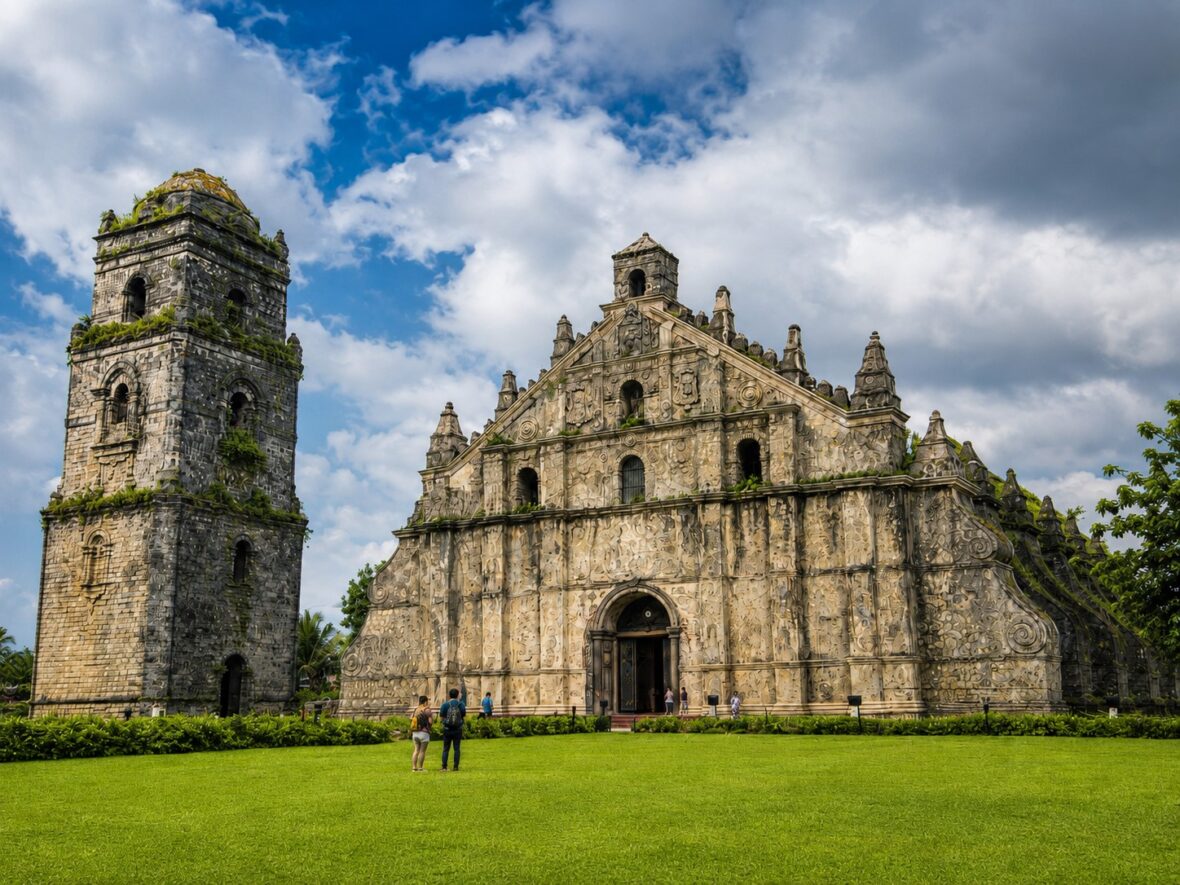
Officially called the Church of Saint Augustine, it is famous for its massive buttresses along the sides and back of the structure. These supports helped the church respond to the earthquake-prone conditions of the country, contributing to the architectural style commonly called Earthquake Baroque.
Its bell tower stands separately from the main church, a design seen in several colonial-era churches in the Philippines.
Paoay Church is one of the four structures included in UNESCO’s Baroque Churches of the Philippines. UNESCO recognizes these churches for the way European Baroque architecture was reinterpreted by Chinese and Filipino craftsmen and adapted to local conditions.
The large open space in front of the church provides a beautiful view of the façade, especially during the early morning or late afternoon.
Paoay is also close to other Ilocos Norte attractions, including Paoay Lake, the Malacañang of the North, and the sand dunes. This makes the church easy to include in a wider Ilocos road trip.
Why visit: To admire one of the country’s finest examples of earthquake-adapted colonial architecture.

11. Miagao Church – Miagao, Iloilo
Miagao Church is another UNESCO-listed church, but its façade gives it a character entirely its own.
Officially called the Church of Santo Tomas de Villanueva, it is located in the municipality of Miagao, southwest of Iloilo City.
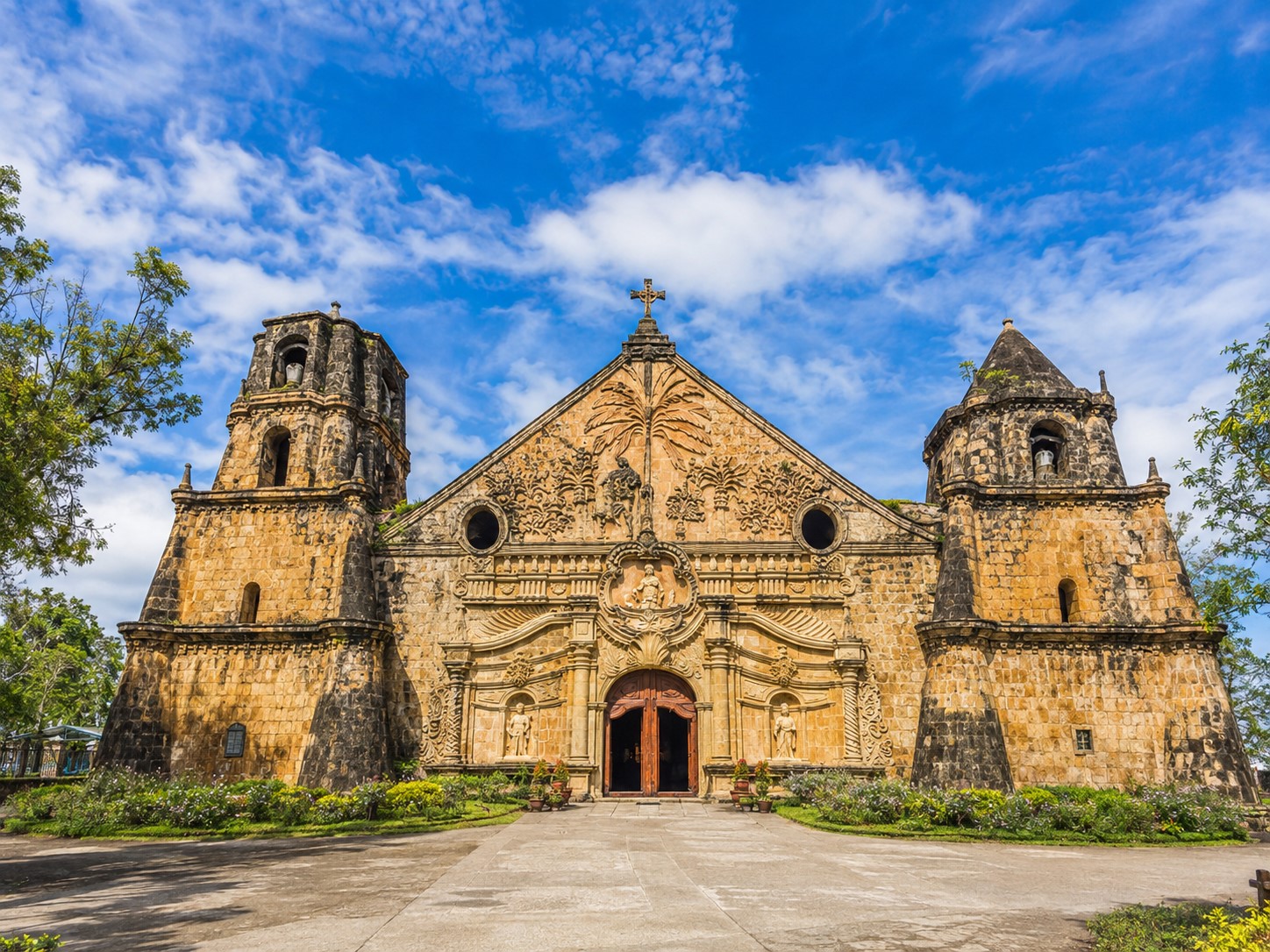
The façade features an elaborate stone relief centered on Saint Christopher carrying the Child Jesus. Around the religious image are plants and decorative elements inspired by the local environment. This combination of Christian imagery and Philippine botanical motifs has made Miagao Church one of the country’s most recognizable heritage structures.
Like the other churches included in UNESCO’s Baroque Churches of the Philippines, its design reflects the adaptation of European church architecture to local craftsmanship, materials, and environmental conditions.
The church has thick walls and fortress-like qualities, reminding visitors that churches during the colonial period sometimes served defensive purposes as well as religious ones.
Miagao Church is around an hour or more from central Iloilo City, depending on traffic and your starting point. It is often included in southern Iloilo heritage tours.
Why visit: To see a rare façade where Catholic religious art and Filipino natural imagery appear together.
12. Taal Basilica – Taal, Batangas
Taal Basilica stands at the center of one of the most beautiful heritage towns in Batangas.
Its complete name is the Minor Basilica of Saint Martin of Tours. The present church was started in the 19th century after earlier structures were affected by the eruption of Taal Volcano and a major earthquake.
Historical records state that construction of the current church began in 1856 based on a design by architect Luciano Oliver, and it was inaugurated in 1865. Its immense scale helped establish it as one of the country’s grandest Catholic churches.
The wide façade dominates the town plaza. Inside, visitors will find a long central nave, religious artwork, side altars, and a spacious interior that feels even more impressive once you enter.
After visiting the basilica, walk around the heritage town to see ancestral houses, museums, local embroidery shops, and establishments selling traditional Batangas delicacies.
You may also include the nearby Archdiocesan Shrine of Our Lady of Caysasay in your itinerary.
Why visit: For its enormous structure and location within the remarkably preserved heritage town of Taal.
13. Barasoain Church – Malolos, Bulacan
Barasoain Church is both a religious landmark and one of the most important historical sites in the Philippines.
Located in Malolos, Bulacan, the church became the seat of the Revolutionary Congress from 1898 to 1899. The Malolos Constitution was discussed and approved there, and the inauguration of the First Philippine Republic also took place at the site.
Because of this history, Barasoain is sometimes associated with the birth of constitutional democracy in the country.
The church building itself features a stone façade, a circular window, and a bell tower. Beside it is a museum where visitors can learn more about the Malolos Congress, the Philippine Revolution, and the establishment of the republic.
Many Filipinos first encounter Barasoain Church in history books, old banknotes, television programs, or school lessons. Seeing it in person helps transform those familiar historical facts into something more real.
It remains an active place of worship, so visitors should balance sightseeing with respect for religious activities.
Why visit: To stand inside a church that played a central role in the creation of the First Philippine Republic.
14. Santa Maria Church – Santa Maria, Ilocos Sur
Unlike many colonial churches built beside a town plaza, Santa Maria Church sits prominently on top of a hill.
Also known as the Church of Nuestra Señora de la Asunción, it is one of the four UNESCO-recognized Baroque Churches of the Philippines.
Visitors reach the church by climbing flights of stone steps. At the top, you will find the brick church, a separate bell tower, old walls, and open grounds overlooking parts of the town.
The elevated position gave the church a defensive character and created a very different layout from the usual Spanish colonial town arrangement. The structure is admired for the way its Baroque design was adapted to the Philippine setting.
Santa Maria is located south of Vigan, making it a good addition to an Ilocos Sur heritage itinerary. The surrounding municipality is also home to Pinsal Falls, which some travelers combine with a church visit.
Wear comfortable shoes because of the steps, and visit earlier in the day when the temperature is cooler.
Why visit: To experience a beautiful UNESCO church set dramatically on a hilltop.
15. Daraga Church – Daraga, Albay
Daraga Church is one of the most beautiful historical churches in the Bicol Region.
Its formal name is the Nuestra Señora de la Porteria Parish Church, and it stands on Santa Maria Hill in Daraga, Albay.
The Franciscans constructed the stone church in the 18th century. After the 1814 eruption of Mayon Volcano destroyed the church in Cagsawa, many members of that community transferred to Daraga.
The church was damaged during World War II and later restored. The National Historical Commission describes it as an example of Baroque architecture demonstrating the skill of Filipino workers during the Spanish colonial period.
Its façade is richly decorated with religious figures, floral patterns, and carved details. The church’s walls were made using volcanic materials, giving the structure a distinctive texture and appearance.
On clear days, the elevated church grounds can also provide an unforgettable view of Mayon Volcano. However, weather conditions can change quickly, and the volcano may sometimes be hidden behind clouds.
Why visit: For its detailed Baroque façade, volcanic-stone construction, and beautiful location near Mayon Volcano.
16. Jaro Metropolitan Cathedral – Iloilo City
Jaro Metropolitan Cathedral is one of the most important religious landmarks in Western Visayas.
Officially known as the National Shrine of Our Lady of the Candles, it serves as the seat of the Archdiocese of Jaro. It is a major pilgrimage center associated with the image of Nuestra Señora de la Candelaria.
One of its most unusual features is the detached bell tower located across the road from the main cathedral. The tower originally served religious and defensive purposes and has become one of Jaro’s most recognizable landmarks.
The cathedral is particularly busy around the Feast of Our Lady of the Candles in February, when religious celebrations and community activities draw many visitors.
The Department of Tourism identifies Jaro Cathedral as an important pilgrimage site and highlights its separate belfry as one of its distinctive characteristics.
When exploring Iloilo City, you can combine the cathedral with a visit to the Jaro Plaza, nearby heritage houses, and local restaurants.
Why visit: To see a major Visayan cathedral with a rare detached bell tower and a strong Marian pilgrimage tradition.
17. Molo Church – Iloilo City
Molo Church is often called the Feminist Church of the Philippines because statues of female saints line the main aisle.
Officially known as Saint Anne Parish Church, it is admired for its Gothic Revival design, pointed towers, arched openings, and pale stone exterior.
The church stands in the historic district of Molo, directly across from Molo Plaza and near the restored Molo Mansion. Together, these landmarks form one of the most attractive heritage areas in Iloilo City.
Inside, the statues of female saints create a distinctive feature rarely seen in other Philippine churches. The central altar is dedicated to Saint Anne, traditionally recognized as the mother of the Virgin Mary.
Government tourism guides highlight Molo Church’s Gothic character and its unusual collection of female saints.
The church is popular among architecture lovers, heritage travelers, photographers, and Catholic pilgrims. Visit during a quiet part of the day so you can observe the details without disturbing Mass or other parish activities.
Why visit: For its Gothic Revival architecture and its remarkable collection of female saint statues.
18. Baguio Cathedral – Baguio City
Baguio Cathedral is one of the most familiar landmarks in the City of Pines.
Officially called the Our Lady of the Atonement Cathedral, it is known for its pink exterior, twin spires, stained-glass windows, and elevated location.
The cathedral stands on Mount Mary Hill and can be reached from Session Road through a long staircase. Visitors who prefer not to climb can also access the church through nearby roads.
During World War II, the cathedral served as an evacuation center, adding another layer to its history.
Because of its location near Session Road, the cathedral is easy to include in a Baguio walking tour. After visiting, you can continue to Burnham Park, the public market, local cafés, or other attractions in the city center.
The weather in Baguio can be cool, foggy, or rainy, so bring a light jacket and umbrella. The church grounds can also become crowded during weekends, holidays, and the Panagbenga season.
Why visit: To see one of Baguio’s most recognizable buildings and enjoy its peaceful hilltop setting.
19. International Shrine of Saint Padre Pio – Santo Tomas, Batangas
The Saint Padre Pio Shrine in Santo Tomas, Batangas, has become one of the country’s leading destinations for prayers of healing.
The shrine began as a small chapel and eventually grew into a large pilgrimage complex. Its main church uses Filipino-inspired design elements and indigenous materials, including wood, bamboo, stone, nipa, and woven bamboo panels. Its broad roof is often compared to a traditional salakot.
Devotees visit to attend Mass, pray for healing, venerate relics connected with Saint Padre Pio, light candles, and spend time in the shrine’s prayer areas.
In May 2026, the Holy See granted the shrine international status, making it the Philippines’ second international shrine after Antipolo Cathedral.
The grounds are spacious and include religious statues, a fountain, Stations of the Cross, devotional spaces, and facilities for large gatherings.
The shrine can become especially busy on the 23rd of the month, during healing activities, on weekends, and around the feast of Saint Padre Pio.
Why visit: To pray for healing and visit one of the newest internationally recognized shrines in the Philippines.
20. Kamay ni Hesus Healing Church – Lucban, Quezon
Kamay ni Hesus is one of the most popular Holy Week destinations in Southern Luzon.
Located in Barangay Tinamnan, Lucban, the complex includes the Healing Church, religious gardens, life-sized biblical scenes, Stations of the Cross, and a hill crowned by a large statue of the Risen Christ.
Pilgrims climb roughly 300 steps to reach the hilltop statue. The climb can be tiring, particularly under the midday sun, but resting areas and religious displays can be found along the route.
The shrine is closely associated with the healing ministry of Fr. Joey Faller. Visitors come to attend healing Masses, pray for sick family members, give thanks, and ask for spiritual strength.
Kamay ni Hesus receives particularly large crowds during Holy Week, especially from Maundy Thursday through Good Friday.
Because Lucban is also famous for the Pahiyas Festival and local food, many travelers combine their pilgrimage with visits to the town center. Do not leave without trying pancit habhab, Lucban longganisa, and other Quezon delicacies.
Why visit: For a combination of prayer, healing devotion, physical pilgrimage, and beautiful countryside surroundings.
Philippine Churches Recognized by UNESCO
Four churches in this list form the UNESCO World Heritage Site known as the Baroque Churches of the Philippines:
- San Agustin Church in Manila
- Santa Maria Church in Ilocos Sur
- Paoay Church in Ilocos Norte
- Miagao Church in Iloilo
These churches are significant because they demonstrate how European Baroque church architecture was adapted by Filipino and Chinese craftsmen to the Philippine environment, materials, artistic traditions, and earthquake conditions.
Visiting all four would require travel across Luzon and the Visayas, but it would make an excellent long-term heritage church project.
Suggested Church Pilgrimage Routes
Metro Manila Church Route
You can visit several major churches within Manila and nearby cities:
- Quiapo Church
- Manila Cathedral
- San Agustin Church
- Baclaran Church
Manila Cathedral and San Agustin Church are within walking distance of each other in Intramuros. Quiapo and Baclaran require separate train, bus, jeepney, taxi, or ride-hailing trips.
Southern Luzon Pilgrimage Route
A longer road trip may include:
- Antipolo Cathedral
- Saint Padre Pio Shrine
- Taal Basilica
- Kamay ni Hesus
These churches are located in different provinces, so completing the entire route may require at least two days.
Ilocos Heritage Church Route
For travelers exploring Northern Luzon:
- Paoay Church
- Santa Maria Church
You can combine these churches with Laoag, Vigan, Calle Crisologo, Paoay Lake, and other Ilocos attractions.

Cebu Religious Route
Popular religious stops in Cebu include:
- Basilica Minore del Santo Niño
- Cebu Metropolitan Cathedral
- Magellan’s Cross
- Simala Shrine
Simala is in southern Cebu and requires a separate trip from Cebu City, so allow enough travel time.
Iloilo Heritage Church Route
An Iloilo church tour can include:
- Jaro Cathedral
- Molo Church
- Miagao Church
Jaro and Molo are within Iloilo City, while Miagao requires a drive toward the southern part of the province.
Tips When Visiting Churches in the Philippines
Dress respectfully
These churches are active places of worship. Wear clothing that appropriately covers your shoulders, chest, and upper legs. Some shrines may enforce stricter clothing rules than others.
Check the Mass schedule
Mass schedules, opening hours, museum hours, and special activities can change. Check the church’s official website or social-media page before traveling.
Avoid interrupting religious services
You may take photos where permitted, but avoid walking directly in front of the altar, using flash, speaking loudly, or blocking aisles during Mass.
Visit early when possible
Major pilgrimage churches can become crowded on weekends, feast days, Wednesdays, Fridays, and during Holy Week. An early weekday visit is usually more peaceful.
Bring drinking water
This is particularly important when visiting outdoor shrines such as Kamay ni Hesus, Simala, or church complexes that require climbing stairs and walking long distances.
Prepare for parking and traffic
Popular churches may have limited parking. During major celebrations, surrounding roads may be closed or heavily congested.
Respect local traditions
Some visitors may walk barefoot, kneel for long periods, touch religious images, carry handkerchiefs, or perform other devotional practices. Observe respectfully, even when the practice is unfamiliar to you.
Remember that the church is not only a tourist attraction
Architecture and history may bring you to the church, but faith gives the place its deepest meaning. Keep conversations quiet, dispose of trash properly, and allow worshippers the space they need.
Final Thoughts
The most popular churches in the Philippines tell many different stories.
Quiapo Church shows the powerful devotion surrounding Jesus Nazareno. The Basilica del Santo Niño connects modern Filipinos with the early history of Christianity in Cebu. San Agustin, Paoay, Santa Maria, and Miagao preserve extraordinary examples of colonial architecture. Barasoain witnessed the birth of a republic, while Manaoag, Antipolo, Baclaran, Peñafrancia, Padre Pio, and Kamay ni Hesus continue to receive pilgrims carrying their hopes, worries, gratitude, and prayers.
You do not have to be an architecture expert or historian to appreciate these places. Sometimes, simply sitting quietly inside an old church can help you understand why generations of Filipinos continue to return.
Each church has its own character, traditions, and history. But together, they show how deeply faith has shaped Philippine culture, communities, celebrations, art, and everyday life.