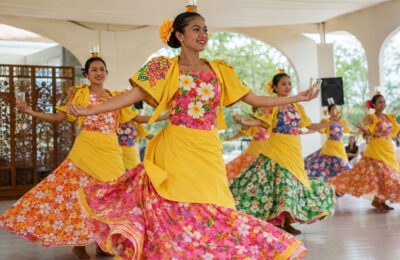
Some Philippine traditional dances are performed mainly for entertainment. Others are danced during weddings, fiestas, or school programs. But Dugso carries a deeper and more sacred meaning.
Dugso is often described as a ceremonial or ritual dance connected with the Indigenous communities of Mindanao, especially the Manobo and Bukidnon cultural traditions. It is associated with important life events, thanksgiving, healing, spiritual offerings, and community gatherings. Some references describe Dugso as a ceremonial dance among Manobo communities in Bukidnon, Agusan, and Misamis Oriental, while Alice Reyes Dance Philippines describes its modern work Dugso: The Offering as inspired by sacred Bukidnon dances that mark turning points in tribal life.
This is why Dugso should be approached with respect. It is not simply a folk dance number. It comes from ritual life.
Content
What Is Dugso?
Dugso, sometimes written as Dugsu, is a traditional ceremonial dance from Mindanao. It is commonly associated with the Manobo and Bukidnon communities and is often linked with rituals of thanksgiving, healing, protection, and important life transitions.
In many descriptions, Dugso is performed by women. The dancers may move around a sacred space, sometimes around a fire or ritual object, while wearing traditional attire and bells. The movement can feel solemn, grounded, and spiritual.
Unlike courtship dances, Dugso is not about romance. Unlike occupational dances, it is not mainly about work. Dugso belongs to the world of ritual, belief, and community spirituality.
The Meaning Behind the Dance
Dugso is often connected to offering.
In some traditions, dances like Dugso are performed to honor spirits, give thanks, ask for protection, or mark important moments in life. It can be connected with births, healing, harvests, initiations, and community ceremonies.
This gives the dance a sacred quality. The dancers are not simply performing for applause. In its traditional context, the dance can be part of communication with the spiritual world.
That is something very important to understand. When Dugso is adapted for school programs or cultural performances, it may become a staged dance. But its roots are deeper than the stage.
Dugso and Bukidnon Culture
Bukidnon is home to rich Indigenous traditions. Its cultural life includes ritual, music, oral tradition, weaving, dance, and community gatherings.
One important cultural event connected with Bukidnon identity is the Kaamulan Festival, which celebrates the gathering of Bukidnon’s Indigenous groups. The word Kaamulan comes from the Binukid word amul, meaning “to gather,” and the festival is associated with purposes such as rituals, weddings, thanksgiving, harvest celebrations, and peace pacts.
Dugso fits into this broader cultural world because it reflects the idea that dance can be part of ceremony. It can mark moments that are important not only to individuals, but to the whole community.
How Dugso Is Performed
Dugso is usually performed with measured, ritual-like movements. The dancers may move in a circle or around a central object. Their steps may be small, grounded, and repetitive, creating a steady rhythm.
One interesting feature often mentioned in Dugso descriptions is the use of ankle bells. Some references say that in many Dugso versions, the rhythm is produced by the dancers’ ankle bells, called saliyaw or singgil, rather than by musical instruments. Other versions may use instruments such as agong or other traditional sounds.
This makes the dance feel intimate and powerful. The dancers themselves create part of the sound. Their movement becomes rhythm. Their steps become music.
The Role of Women in Dugso
Dugso is often performed by women, especially in ceremonial descriptions of the dance.
This is meaningful because women in many Indigenous communities hold important roles in ritual, healing, family life, and cultural continuity. In some ceremonies, female dancers may help represent prayer, offering, protection, or thanksgiving.
The movement does not need to look grand or theatrical to be meaningful. In Dugso, the power comes from repetition, intention, and connection to ritual life.
The dancers move not just to entertain, but to participate in something sacred.
Costumes Used in Dugso
The costumes used in Dugso are usually inspired by the traditional clothing of Indigenous groups in Mindanao. Dancers may wear richly decorated garments, beadwork, headpieces, anklets, and other accessories depending on the version being performed.
Because Dugso is connected with Indigenous cultural identity, costumes should be treated with respect. They should not be used only for visual effect. They represent communities, beliefs, and inherited traditions.
In stage adaptations, costumes may be adjusted for performance, but the cultural meaning should still be acknowledged.
Dugso in Modern Dance and Cultural Performance
Dugso has also inspired modern Philippine dance.
Alice Reyes, National Artist for Dance, created Dugso: The Offering, a modern ballet inspired by sacred Bukidnon dances. Alice Reyes Dance Philippines describes the work as one of the early pieces that merged tribal and modern dance movements in the search for a uniquely Filipino dance form.
This shows how traditional dances can inspire new creative works. However, it also reminds us to distinguish between traditional ritual practice and modern stage adaptation.
Both can be meaningful, but they are not exactly the same. One comes from living ritual context. The other is an artistic interpretation inspired by that tradition.
Dugso in Schools and Cultural Programs
Many Filipino students encounter Dugso through MAPEH classes, folk dance lessons, and cultural programs. It is often included in lists of traditional dances from Mindanao.
When taught in schools, Dugso should be presented with cultural sensitivity. Students should understand that this is not just a “tribal dance” to perform with costumes. It is connected to sacred traditions and community beliefs.
That does not mean it cannot be taught or performed. It means it should be taught properly. A good performance should include respect, context, and awareness.
Why Dugso Is Important
Dugso is important because it shows that Philippine dance is not only social or festive. It can also be sacred.
Many popular folk dances are about courtship, celebration, work, or entertainment. Dugso reminds us that in many Indigenous communities, dance can be part of prayer, ritual, healing, and thanksgiving.
It also highlights the richness of Mindanao culture. The Philippines has many Indigenous communities whose traditions deserve more attention and respect. Dugso gives audiences a glimpse of that spiritual and cultural depth.
Why Dugso Still Matters Today
Dugso still matters because it helps keep Indigenous cultural memory visible.
In the modern world, many sacred traditions are at risk of being misunderstood, simplified, or forgotten. When people learn about Dugso properly, they also learn about the communities behind it.
The dance teaches us that movement can carry prayer.
It teaches us that culture can be sacred.
It teaches us that not all dances are meant only for entertainment.
Most of all, Dugso reminds us to approach Indigenous traditions with humility. These dances come from people, beliefs, and histories that deserve respect.

Final Thoughts
Dugso is one of the most meaningful traditional dances in the Philippines because it is deeply connected to ritual life.
Rooted in Mindanao’s Indigenous traditions, especially among Manobo and Bukidnon communities, Dugso reflects thanksgiving, offering, healing, and important life events. Its movements may look simple compared to more theatrical dances, but its meaning is profound.
It is a dance of faith.
It is a dance of community.
It is a dance of connection between people and the spiritual world.
Whether studied in school, performed on stage, or understood in its traditional context, Dugso reminds us that Philippine culture is rich not only in beauty, but also in sacred meaning.