Some Philippine folk dances are exciting because of fast footwork. Some are romantic because of the story they tell. Then there is Pandanggo sa Ilaw, a dance that is beautiful because of its grace, balance, and glowing lights.
If you have ever watched this dance in a school program, cultural show, or town celebration, you probably remember the most eye-catching part right away: dancers carefully balancing lighted glasses or lamps while moving gracefully to the music. It looks elegant and calm, but behind that smooth performance is a lot of skill, control, and practice.
Pandanggo sa Ilaw is one of the most beloved traditional dances in the Philippines. It is not only charming to watch, but it also shows the Filipino love for celebration, music, movement, and artistry.
Content
What Is Pandanggo sa Ilaw?
Pandanggo sa Ilaw is a traditional Filipino folk dance known for the use of lights. The word pandanggo comes from the Spanish dance fandango, which is a lively dance usually performed in triple time. The phrase sa ilaw means “with light” or “in light,” which refers to the oil lamps or candles used in the dance.
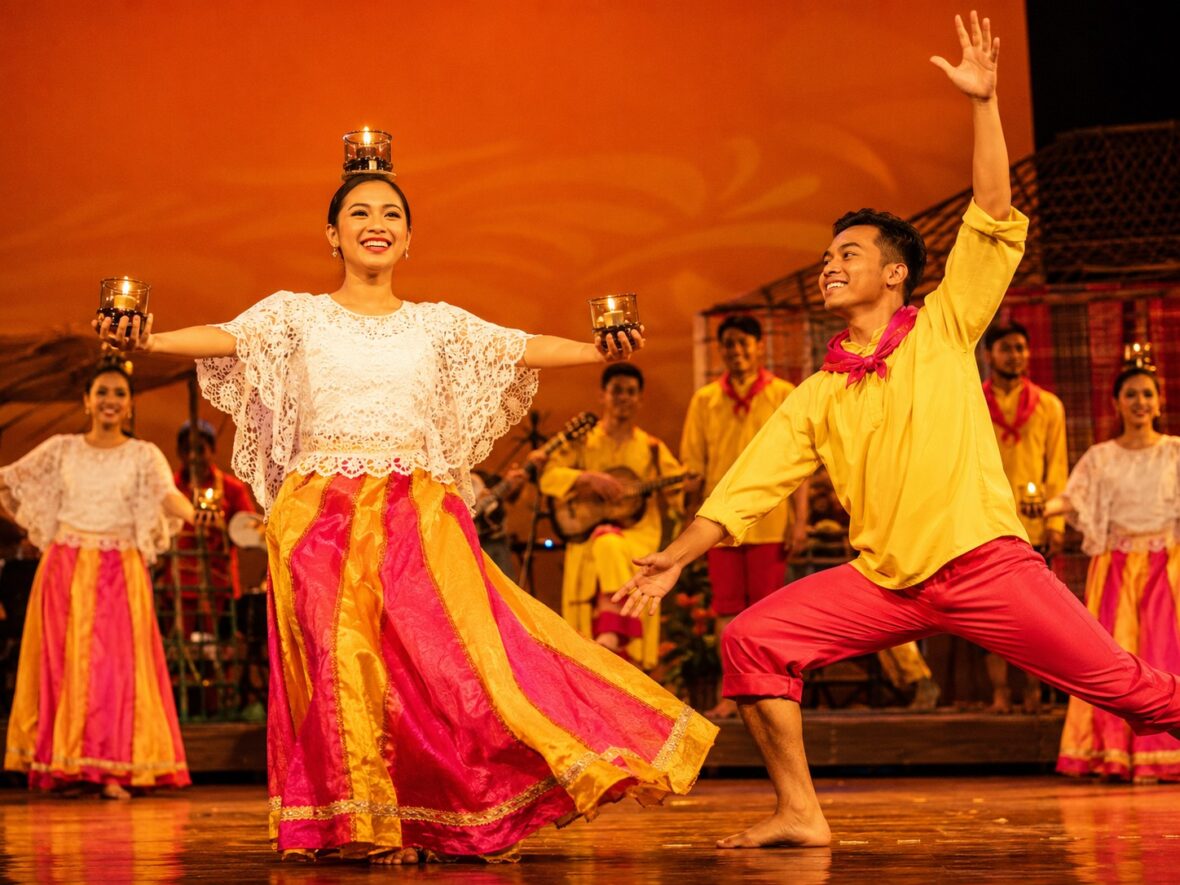
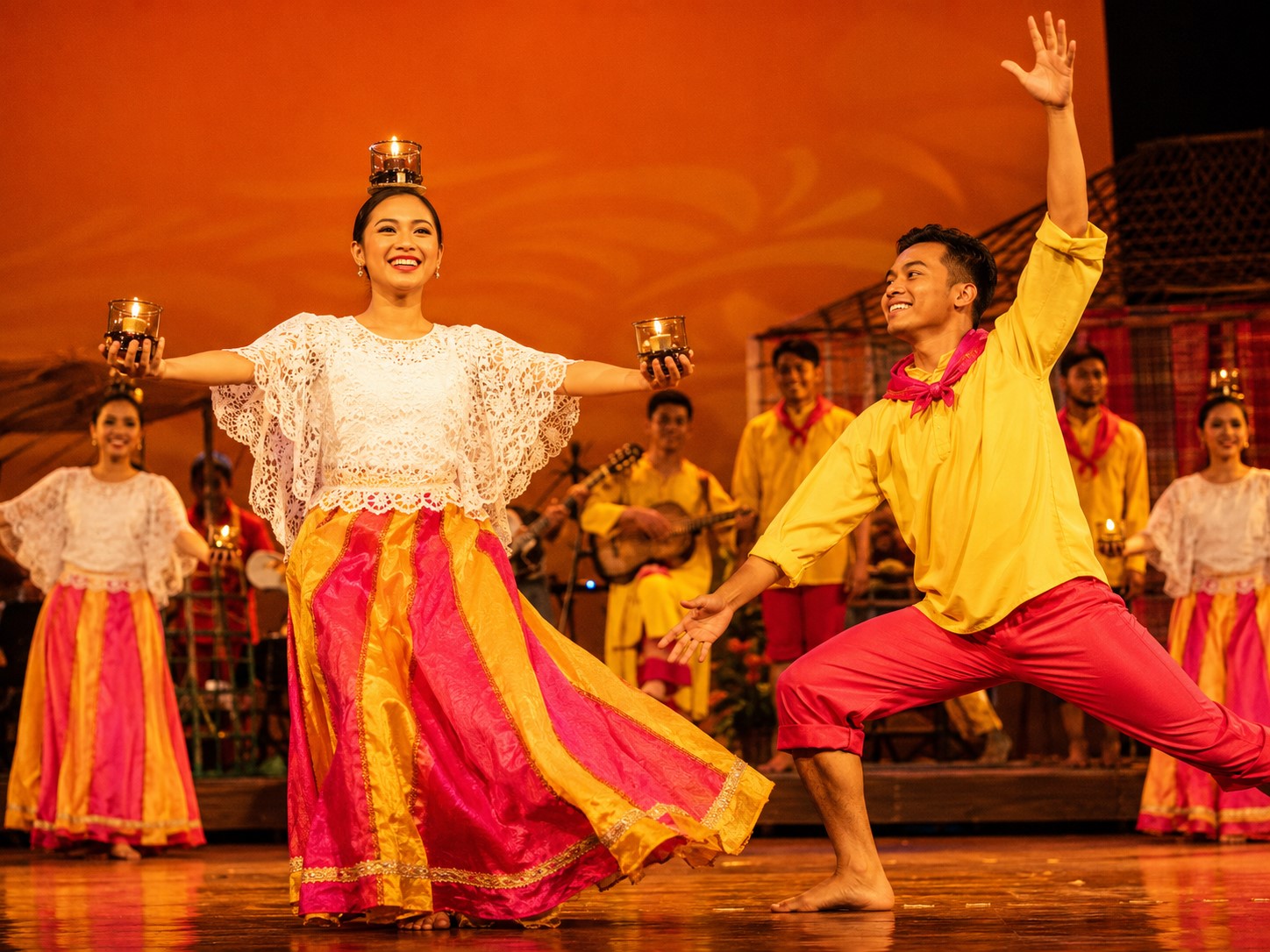
In a typical performance, dancers balance lighted oil lamps or glasses with candles on their heads and on the backs of their hands. While carrying these lights, they perform graceful steps, turns, and arm movements. The result is a dance that feels both festive and magical.
The dance is commonly associated with Lubang Island in Occidental Mindoro, where it became one of the most recognizable folk dances from the region. Over time, Pandanggo sa Ilaw became popular across the country and is now often performed in cultural programs, school presentations, and tourism events.
The Beauty of Dancing with Light
What makes Pandanggo sa Ilaw so memorable is the way the dancers move with glowing lights.
The lights are not just props. They are part of the performance. They highlight the dancers’ movements and create a warm, almost romantic atmosphere. When the stage is slightly dim and the lamps are glowing, the dance becomes even more beautiful. Every turn and hand gesture catches your attention.
But of course, it is not easy.
The dancers need to move smoothly while keeping the lights balanced. They cannot be too stiff, but they also cannot move carelessly. Their steps need to be graceful, but controlled. Their arms need to flow naturally, but carefully. It takes a lot of concentration to make the dance look effortless.
That is the charm of Pandanggo sa Ilaw. It looks simple and graceful from the audience’s view, but once you imagine yourself balancing lights while dancing, you realize how difficult it actually is.
The Origin of Pandanggo sa Ilaw
Pandanggo sa Ilaw has Spanish influence, which is clear from the word pandanggo, derived from fandango. During the Spanish colonial period, many dances, songs, and social traditions from Spain influenced Filipino culture. But as with many Filipino folk dances, local communities adapted these influences and made them their own.
In the Philippines, Pandanggo developed into different regional versions. Some versions are lively and playful, while others are more graceful and romantic. Pandanggo sa Ilaw became especially known for its use of lighted lamps, giving it a distinct identity among Filipino dances.
Its connection to Occidental Mindoro also gives it a local charm. The dance is often described as inspired by the gentle movement of fireflies at night. Whether performed in a small community celebration or on a big cultural stage, it carries that soft, glowing image beautifully.
How Pandanggo sa Ilaw Is Performed
Pandanggo sa Ilaw is usually performed by female dancers, although some versions may include male partners or group formations. The most familiar version features dancers holding and balancing lights while moving to a gentle yet lively rhythm.
The dancers may balance one light on the head and one on each hand. They move in graceful patterns, turning, swaying, bending, and stepping with control. The arms are especially important because the lights must remain steady while the dancers create flowing shapes with their hands.
The dance usually has a light, cheerful rhythm. It is not too fast, but it still has energy. The dancers need to show both elegance and confidence. A good performance should feel smooth, bright, and effortless, even though it requires strong balance and careful timing.
In group performances, the dancers may create formations on stage. They may move in circles, lines, or pairs, allowing the lights to create beautiful patterns as they move together.
The Music of Pandanggo sa Ilaw
The music of Pandanggo sa Ilaw is usually lively and graceful. It often follows a 3/4 rhythm, giving the dance a flowing and waltz-like feeling. This rhythm helps the dancers move with softness and elegance.
Traditional performances may use rondalla music, which gives the dance a classic Filipino sound. The bandurria, guitar, and other string instruments create a bright and festive mood. The music is cheerful without being too heavy, allowing the dancers to remain graceful while still keeping the performance alive.
The rhythm is important because the dancers depend on it to control their steps and turns. Since they are balancing lights, timing is everything. They need to listen closely to the music while staying aware of their posture, hand position, and footwork.
The Costumes Used in Pandanggo sa Ilaw
Costumes make Pandanggo sa Ilaw even more beautiful. Female dancers often wear traditional Filipino dresses such as the balintawak, kimona and patadyong, or other colorful folk-inspired outfits. These costumes are usually bright, flowing, and elegant, matching the graceful mood of the dance.
Because the dancers need to move carefully, the costumes should allow freedom of movement. The skirt often adds beauty to the turns and steps, while the traditional design gives the performance a strong Filipino identity.
In some performances, the costumes are kept simple so that the lights become the main focus. In others, the costumes are more colorful and festive, especially during school programs or cultural festivals. Either way, the overall effect is always graceful and eye-catching.
The Meaning Behind Pandanggo sa Ilaw
Pandanggo sa Ilaw is often seen as a dance of grace, balance, and celebration.
The lights can symbolize joy, hope, warmth, and beauty. As the dancers move with glowing lamps, they create an atmosphere that feels festive and peaceful at the same time. It is the kind of dance that can make an event feel special.
The dance also shows discipline. To perform it well, dancers need patience and practice. They must learn how to move with control, how to keep their balance, and how to stay calm even while handling delicate props.
In that sense, Pandanggo sa Ilaw reflects an important part of Filipino artistry. It is not loud or aggressive. It is graceful, careful, and expressive. It shows beauty through control and simplicity.
Pandanggo sa Ilaw in Schools and Cultural Shows
Like Tinikling and Cariñosa, Pandanggo sa Ilaw is often performed in schools. Many Filipino students encounter it during folk dance lessons, Buwan ng Wika celebrations, foundation day programs, or cultural presentations.
For students, it is both exciting and challenging. The idea of dancing with lights sounds fun, but once rehearsals begin, they quickly realize that balance is not easy. Even when using safer props during practice, the dancers still need to work on posture, coordination, and smooth movement.
Pandanggo sa Ilaw is also a favorite in cultural shows because it is visually beautiful. The glowing lights make it stand out, especially on stage. It is a dance that can easily capture the attention of an audience, even if they are not familiar with Philippine folk dances.
Why Pandanggo sa Ilaw Is Loved by Many Filipinos
Pandanggo sa Ilaw remains popular because it has a special kind of charm.
It is graceful but not boring. It is traditional but still visually impressive. It is gentle but requires real skill. The dance has that perfect mix of beauty and challenge.
Many people also love it because of the lights. There is something naturally captivating about watching dancers move with glowing lamps. The lights create warmth and drama without making the dance feel too heavy. It feels festive, elegant, and almost magical.
For Filipinos, Pandanggo sa Ilaw is also a reminder of how rich and creative our folk dances are. It shows how a simple idea—dancing with light—can become a meaningful cultural performance.
Pandanggo sa Ilaw and Filipino Culture
Philippine culture is full of music, celebration, and community. Pandanggo sa Ilaw fits beautifully into that tradition.
The dance reflects the Filipino love for gatherings and performances. Whether it is a fiesta, school program, cultural night, or tourism event, dances like Pandanggo sa Ilaw help bring people together. They remind us that culture is not only something we read about; it is something we perform, watch, share, and pass on.
It also shows the Filipino ability to adapt influences and make them local. Although Pandanggo has Spanish roots, Pandanggo sa Ilaw became something uniquely Filipino. The use of lights, the local interpretation, and the connection to regional identity all helped shape it into a dance that belongs to the Philippines.
Why Pandanggo sa Ilaw Still Matters Today
Traditional dances like Pandanggo sa Ilaw are important because they keep Filipino culture alive.
In today’s world, young people are surrounded by modern dance trends, pop music, and social media challenges. There is nothing wrong with enjoying those things, but folk dances give us a deeper connection to our heritage. They remind us of the creativity and traditions passed down from earlier generations.
Pandanggo sa Ilaw also teaches values that are still relevant today. It teaches patience, focus, balance, teamwork, and appreciation for culture. It shows that beauty does not always have to be loud or complicated. Sometimes, beauty is found in careful steps, graceful hands, and a small glowing light.
Every time this dance is performed, it keeps a part of Filipino tradition alive.
Final Thoughts
Pandanggo sa Ilaw is one of the most graceful and visually beautiful traditional dances in the Philippines. With its glowing lights, elegant movements, and festive music, it continues to capture the hearts of audiences everywhere.
It is a dance that looks gentle, but requires discipline. It feels simple, but carries history and meaning. It is traditional, but still beautiful to watch even today.
Whether performed by students, cultural groups, or professional dancers, Pandanggo sa Ilaw remains a shining example of Filipino artistry. It reminds us that Philippine folk dance is not only about movement—it is about storytelling, culture, and the beauty of tradition.
And in the case of Pandanggo sa Ilaw, that beauty truly glows.