Among the many traditional dances in the Philippines, Pangalay stands out because of its elegance, control, and almost hypnotic beauty.
This is not the kind of dance that relies on fast jumps or dramatic tricks. Pangalay is slower, more refined, and deeply expressive. The dancer moves with graceful arms, flexible wrists, delicate fingers, and controlled steps. Every gesture feels intentional. Every movement seems to flow like water.
Pangalay is strongly associated with the peoples of the Sulu Archipelago, including the Tausug, Sama, Badjao, and Jama Mapun communities. The Ramon Magsaysay Award Foundation describes Pangalay as a dance tradition among the Samal, Badjao, Jama Mapun, and Tausug peoples of Sulu and Tawi-Tawi, while ICHLinks notes that related forms are known as igal among Sama communities and pamansak among the Yakan.
Content
What Is Pangalay?
Pangalay is a traditional dance style from the southern Philippines, especially Sulu and Tawi-Tawi. It is known for flowing arm movements, expressive hand gestures, subtle footwork, and graceful body control.
Unlike many lowland folk dances influenced by Spanish music and social dance forms, Pangalay has a different movement quality. It feels closer to older Southeast Asian dance traditions, where the hands, wrists, elbows, shoulders, and torso are used with great detail.
The dancer does not need to move quickly to impress the audience. The beauty comes from control. A simple turn of the wrist or gentle opening of the fingers can already carry meaning and elegance.
The Beauty of the Hands and Arms
One of the most recognizable features of Pangalay is the use of the hands and arms.
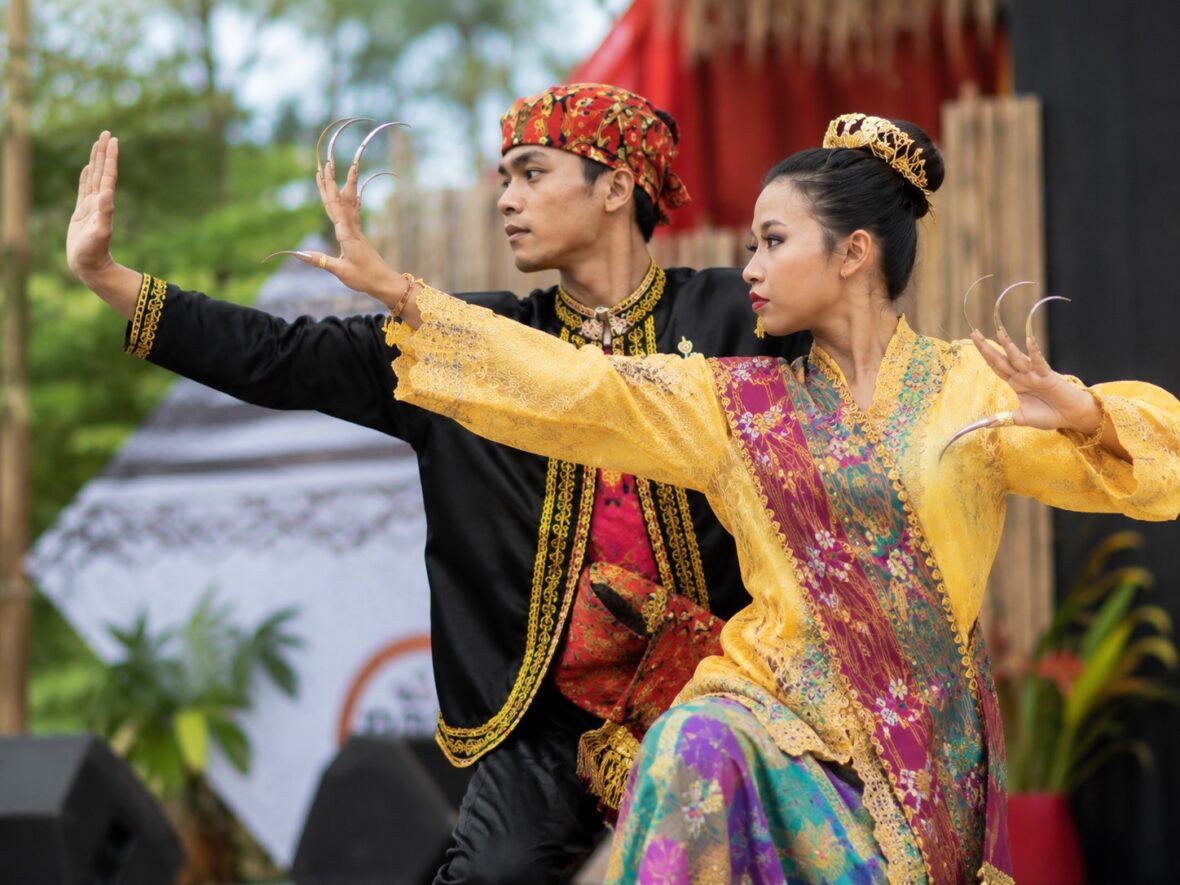
The dancer’s arms move in smooth, wave-like patterns. The wrists bend and rotate. The fingers extend gracefully. The shoulders and elbows support the flow of the movement.
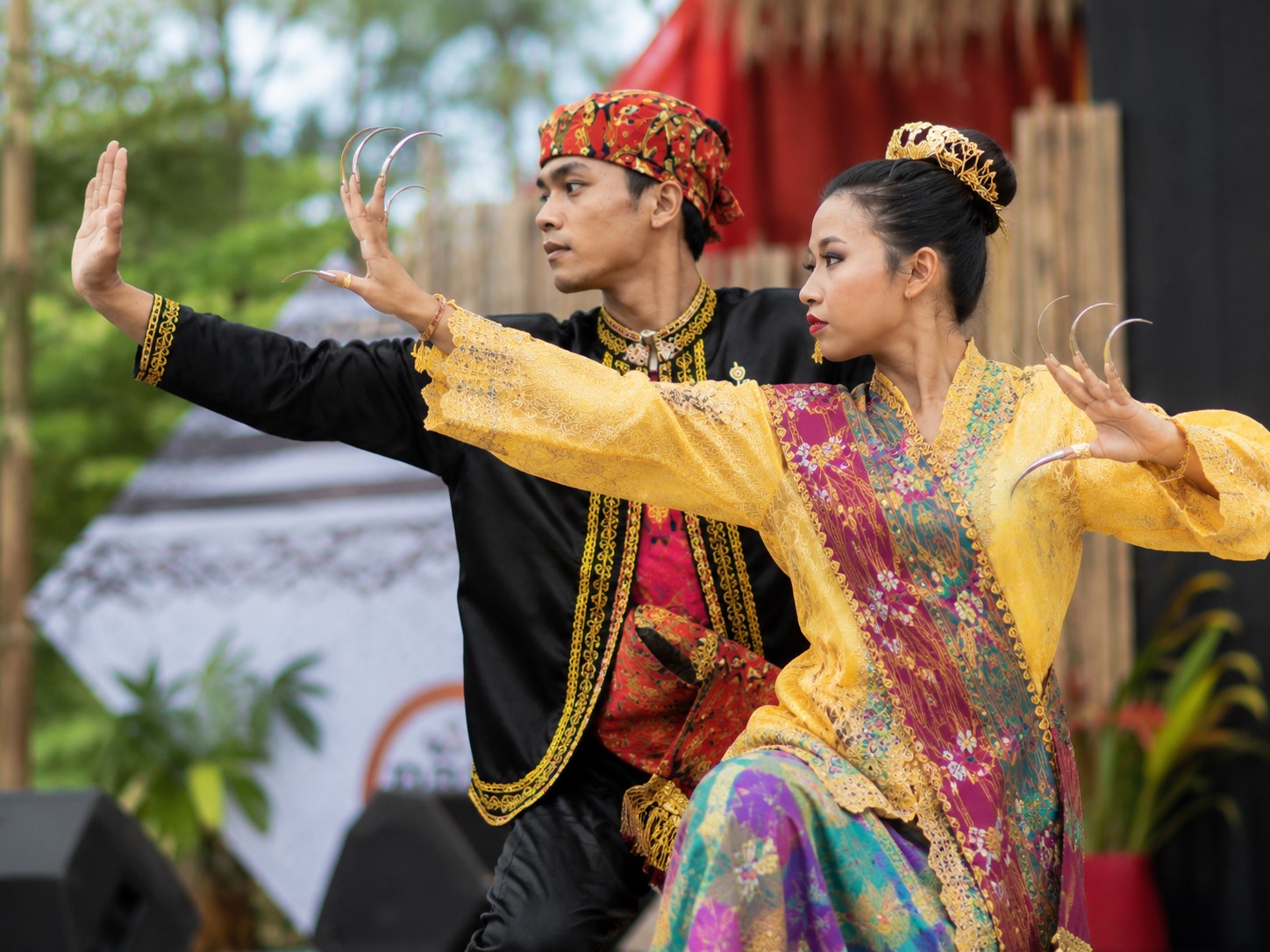
In some performances, dancers wear janggay, which are long metal fingernail extensions. These extensions make the hand movements even more striking because they lengthen the fingers and emphasize every gesture. The NCCA has described Pangalay as a dance of praise for guests, relatives, or friends among Tausug, Samal, Badjaw, and Jama Mapun communities, and notes the use of janggay in some performances.
When the dancer wears janggay, the movement becomes more dramatic and elegant. The fingers look longer, the gestures become more visible, and the whole performance takes on a refined visual beauty.
Pangalay as a Living Tradition
Pangalay is not just a dance for the stage. It is part of a living cultural tradition in the Sulu Archipelago.
In many communities, related dance forms are performed during weddings, celebrations, and important social gatherings. It can be danced by men or women, solo or with others, depending on the context and local tradition.
This is one reason Pangalay is so important. It is not only a performance that people study in school. It is connected to real communities, real celebrations, and real cultural identity.
The dance also reminds us that Philippine culture is not only shaped by lowland Christian traditions or Spanish colonial influence. The Philippines also has rich Muslim and maritime cultures, especially in Mindanao and the Sulu Archipelago. Pangalay is one of the most beautiful examples of that heritage.
Ligaya Fernando-Amilbangsa and Pangalay
A discussion of Pangalay would not be complete without mentioning Ligaya Fernando-Amilbangsa, one of the most important figures in the preservation and teaching of this dance tradition.
She devoted decades to studying, practicing, and promoting Pangalay. The Ramon Magsaysay Award Foundation recognized her work in conserving and promoting Pangalay, describing it as her signature cultural involvement.
Her work helped introduce Pangalay to wider audiences, especially outside the Sulu Archipelago. Through research, teaching, and performance, she helped show that Pangalay is not just a regional dance, but a major part of Philippine dance heritage.
How Pangalay Is Performed
Pangalay is usually performed with slow, controlled movements. The dancer may move in a small space, using the arms, hands, wrists, fingers, shoulders, torso, and feet to create flowing patterns.
The footwork is often subtle. The dancer may use small steps, glides, or grounded movements. The upper body remains controlled while the arms create graceful lines.
A good Pangalay performance requires patience. It cannot be rushed. The dancer must breathe with the movement and allow each gesture to unfold naturally. This is why Pangalay can feel almost meditative.
It may look simple to someone unfamiliar with the style, but it is actually very demanding. The dancer needs flexibility, control, musicality, and deep understanding of the movement vocabulary.
The Music of Pangalay
Pangalay is commonly accompanied by traditional music from the Sulu region. In many performances, gong-based instruments and kulintang-style music help create the atmosphere.
The rhythm does not force the dancer into fast movement. Instead, it supports the slow and graceful quality of the dance. The music gives the dancer space to move with control and expression.
This is one of the most beautiful parts of Pangalay. The movement and music feel connected, but not rushed. The dancer seems to float with the sound.
Costumes Used in Pangalay
Costumes used in Pangalay are usually inspired by traditional attire from the Sulu Archipelago. Dancers may wear colorful garments, scarves, headpieces, and accessories depending on the performance context.
The costume adds elegance, but the most important visual element remains the movement of the body, especially the arms and hands. When janggay is used, it becomes a major part of the costume and performance.
As with all cultural dances, Pangalay costumes should be worn with respect. These styles are connected to real communities and should not be treated as random decorative clothing.
Why Pangalay Is Unique
Pangalay is unique because it feels very different from many of the folk dances often taught in schools.
It is not Spanish-influenced like Cariñosa or La Jota Moncadeña.
It is not a bamboo dance like Tinikling or Singkil.
It is not an occupational dance like Tiklos.
It is not a balancing dance like Banga or Binasuan.
Pangalay is a dance of refined movement, deep control, and cultural identity. It shows another side of Filipino dance—one that is graceful, ancient-looking, maritime, and deeply connected to the southern Philippines.
Why Pangalay Still Matters Today
Pangalay still matters because it preserves the movement traditions of the Sulu Archipelago.
In a modern world where many people know more about viral dances than traditional forms, Pangalay reminds us that Filipino dance heritage is incredibly rich. It also reminds us that the Philippines is made up of many cultural worlds.
Learning about Pangalay helps us appreciate the diversity of Filipino identity. It teaches us that traditional dance can be elegant, spiritual, social, and deeply artistic.
Most importantly, Pangalay deserves respect because it comes from living communities. It is not just a beautiful dance to watch. It is part of the cultural memory of the Tausug, Sama, Badjao, Jama Mapun, Yakan, and related communities of the southern Philippines.
Final Thoughts
Pangalay is one of the most graceful traditional dances in the Philippines. With its flowing arms, expressive hands, subtle footwork, and deep connection to the Sulu Archipelago, it offers a beautiful glimpse into the cultural richness of southern Philippines.
It is a dance that does not need to shout to be powerful. Its beauty is quiet, controlled, and refined.
Through every wrist movement, every finger extension, and every graceful step, Pangalay reminds us that Filipino culture is not one single story. It is many stories, many islands, many communities, and many movements coming together.