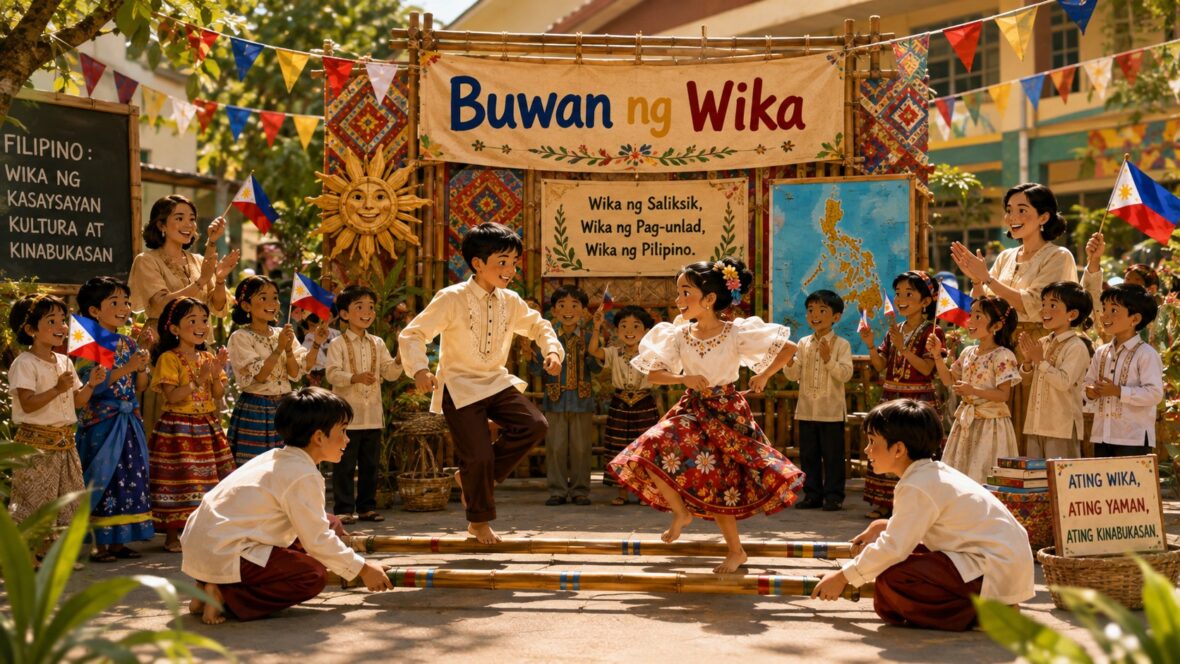
Buwan ng Wika is one of the most exciting school celebrations in the Philippines, especially for kids.
Aside from poster-making contests, Filipino games, poetry, dances, and classroom activities, one of the things students—and parents—often look forward to is wearing a Filipino-inspired costume.
And then comes the question:
Ano ang susuotin sa Buwan ng Wika?
If you’re a parent preparing an outfit for your child, a student joining a school program, or a teacher looking for costume ideas for your class, the good news is that you have plenty of choices.
You don’t necessarily need an expensive costume either.
Some of the best Buwan ng Wika costume ideas can be created using clothes you already have at home, while others can be rented, borrowed, or put together with a few inexpensive accessories.
For Buwan ng Wikang Pambansa 2026, the official theme is:
“Wikang Filipino at AI: Kasangkapan sa Pananaliksik at Tulay sa Yaman ng Impormasyon.”
The Komisyon sa Wikang Filipino has emphasized that the 2026 celebration looks at AI as a tool that can support research and language development while stressing responsible, ethical, and human-centered use of technology.
But don’t worry—you don’t have to dress your child as a robot!
Traditional Filipino clothing remains a wonderful choice because Buwan ng Wika continues to celebrate Filipino language, identity, history, and culture.
So whether you’re looking for something traditional, easy, cute, creative, or budget-friendly, here are 30+ Buwan ng Wika costume ideas for boys and girls in 2026.
Content
1. Barong Tagalog
Let’s start with one of the classics.
A Barong Tagalog is probably one of the easiest and most recognizable Buwan ng Wika costumes for boys.
Pair a barong with:
- Black or dark-colored pants
- Closed shoes
- A white undershirt
That’s basically it.
You can choose an embroidered formal barong for school presentations or a simpler version if the child will be wearing it the entire day.
It’s clean, elegant, and unmistakably Filipino.
For parents who don’t want to create an elaborate costume, this is one of the safest choices.
2. Baro’t Saya
For girls, Baro’t Saya is another classic Buwan ng Wika outfit.
The costume traditionally consists of a blouse or baro paired with a long skirt or saya.
For school celebrations, you’ll find many colorful versions decorated with:
- Floral patterns
- Embroidery
- Lace
- Puff sleeves
- Filipino-inspired fabrics
Add a fan or simple hair accessory, and the outfit is complete.
It’s beautiful without being overly complicated.
3. Filipiniana Dress
If you want something a little more formal, go for a Filipiniana dress.
The distinctive butterfly sleeves immediately make the costume recognizable.
Filipiniana dresses come in many styles today—from traditional gowns to shorter and simpler dresses that are easier for children to wear.
For younger girls, I’d choose something lightweight.
Remember, the child may be wearing it for several hours, so comfort matters just as much as appearance.
4. Camisa de Chino
A Camisa de Chino is perfect if you’re looking for an easy Buwan ng Wika costume for boys.
Pair it with:
- Loose pants
- Rolled-up trousers
- A neckerchief
- Salakot
You can instantly create a traditional rural Filipino look.
It’s also usually more comfortable than a formal barong, particularly for younger kids.
5. Farmer or Magsasaka Costume
This is one of the easiest DIY Buwan ng Wika costumes.
For boys, try:
- Plain white shirt or Camisa de Chino
- Loose pants
- Salakot
- Towel around the neck
- Woven basket
For girls, you can use:
- Simple blouse
- Long skirt
- Bandana
- Basket of vegetables or fruits
You could even place artificial rice stalks or vegetables inside the basket.
Simple, recognizable, and affordable.
6. Maria Clara Costume
If you’re looking for something elegant and distinctly Filipino, consider a Maria Clara-inspired costume.
The outfit usually includes:
- Traditional blouse
- Long skirt
- Panuelo or scarf
- Decorative accessories
A folding fan can complete the look.
This works particularly well for historical presentations, Filipino literature activities, or school programs where students portray characters connected with Philippine history and culture.
7. Katipunero Costume
Here’s another easy costume idea for boys.
Create a Katipunero-inspired outfit using:
- White or cream long-sleeved shirt
- Red pants or dark trousers
- Red neckerchief
- Red headband
You can make a simple KKK-inspired historical presentation costume without needing anything elaborate.
If props are allowed, you can add a rolled paper representing documents or revolutionary writings rather than toy weapons.
8. Katipunera Costume
Girls can also wear a Katipunera-inspired costume.
Use:
- Traditional white blouse
- Long skirt
- Red scarf or neckerchief
You could add a small Filipino flag.
It’s a nice alternative if you want something historical rather than the usual Filipiniana dress.
9. Jose Rizal Costume
Jose Rizal is another popular Filipino historical figure that students can portray.
A simple Rizal-inspired costume might include:
- Black suit
- White shirt
- Black trousers
- Bow tie or necktie
- Round eyeglasses
- Neatly styled hair
You don’t need to make it overly complicated.
The round glasses alone help make the character instantly recognizable.
10. Andres Bonifacio Costume
For an Andres Bonifacio-inspired look, use:
- White Camisa de Chino
- Red neckerchief
- Dark pants
- Simple straw hat or traditional headwear
Add historical-looking papers or a small Filipino flag as props.
This is another relatively inexpensive costume parents can assemble without buying a complete outfit.
11. Emilio Aguinaldo Costume
Students can also portray Emilio Aguinaldo.
A military-style historical costume works best, although creating one from scratch can be more difficult.
If you already have a formal military-inspired jacket, pair it with trousers and appropriate historical accessories.
This option is better for school presentations where students are assigned particular Filipino historical figures.
12. Apolinario Mabini Costume
Here’s a historical costume that’s rarely chosen compared with Rizal or Bonifacio.
A student can portray Apolinario Mabini using a formal Filipino or late-19th-century-inspired outfit.
You could also include books, papers, or writing materials as props to emphasize Mabini’s role as a thinker and statesman.
It’s a good choice if you want something different.
13. Gabriela Silang Costume
Girls looking for a strong historical character can portray Gabriela Silang.
Use Filipino-inspired traditional clothing with a sash or scarf.
If you’re creating a school costume, focus on historical clothing and symbolic accessories rather than realistic weapons.
A Filipino flag can work well as a safer prop.
14. Melchora Aquino or Tandang Sora Costume
Another beautiful historical character for girls is Melchora Aquino, better known as Tandang Sora.
A simple costume might include:
- Traditional blouse
- Long skirt
- Panuelo
- Hair tied neatly
This is especially appropriate for school programs highlighting important Filipino women in history.
15. Juan and Maria Costume
Want something simple for siblings or classmates?
Dress a boy and girl in classic Filipino clothing.
The boy could wear:
Barong Tagalog + black pants
while the girl wears:
Baro’t Saya + fan
It’s almost like a classic representation of traditional Filipino attire.
16. Bahag-Inspired Cultural Costume
Traditional indigenous clothing can also be featured during cultural presentations, but this requires extra care.
If a school activity involves a particular Indigenous cultural community, make sure the costume is accurately represented and treated respectfully.
Avoid mixing random patterns and calling them an authentic costume from a particular ethnolinguistic group.
When possible, learn about the actual clothing, meaning, and cultural context instead of treating Indigenous attire simply as decoration.
17. Ifugao-Inspired Costume
If the school specifically assigns an Ifugao cultural presentation, research the traditional clothing associated with the community.
Students can also incorporate educational materials explaining:
- Ifugao culture
- Language
- Rice terraces
- Weaving traditions
- Community history
This makes the activity more meaningful than simply wearing the costume.
18. T’boli-Inspired Costume
A T’boli-inspired cultural presentation can feature the beautiful textiles and cultural traditions associated with the T’boli people.
Again, accuracy is important.
Rather than buying something labeled vaguely as a “tribal costume,” look for clothing and patterns that genuinely correspond to the community being represented.
19. Maranao-Inspired Costume
Maranao-inspired clothing can be another striking choice for cultural programs.
You can complement the costume with educational information about Maranao art and culture.
The colorful geometric designs often associated with Maranao artistic traditions can also inspire decorations for classroom presentations.
20. Traditional Muslim Filipino Attire
Schools sometimes include traditional clothing from Muslim Filipino communities in Buwan ng Wika celebrations.
If your child is representing one, choose clothing appropriate to the particular community rather than combining unrelated elements.
The Philippines has enormous cultural diversity, and that’s exactly why these costumes deserve to be represented carefully.
21. Malong Costume
The malong can be used in cultural presentations and dances.
It’s colorful, comfortable, and extremely versatile.
Depending on the activity, it can be styled in different ways.
This is also a practical option for students participating in Kappa Malong-Malong or similar cultural performances.
22. Tinikling Dancer Costume
If your child is joining a Tinikling performance, the costume can double as their Buwan ng Wika outfit.
Boys can wear:
- Barong or Camisa de Chino
- Dark pants
Girls can wear:
- Baro’t Saya
- Traditional-inspired skirt and blouse
Bright colors look especially beautiful during performances.
23. Pandanggo sa Ilaw Costume
For girls participating in Pandanggo sa Ilaw, a traditional Filipino dress works beautifully.
The costume is usually colorful and flowing because movement is an important part of the dance.
Of course, if lamps are part of the performance, schools should use safe alternatives where appropriate.
24. Cariñosa Costume
A Cariñosa-inspired costume is another classic choice.
Girls can wear a Maria Clara or Baro’t Saya-style outfit and carry a fan or handkerchief.
Boys can wear Barong Tagalog.
If a boy and girl are performing together, the matching costumes look especially good.
25. Pangalay-Inspired Costume
Students performing Pangalay may wear costumes inspired by the cultural traditions associated with the dance.
Because Pangalay has deep cultural roots, schools should research appropriate clothing and presentation rather than creating a generic costume.
The graceful hand movements and beautiful attire can make this one of the most memorable performances during Buwan ng Wika.
26. Filipino Festival Costume
Here’s where you can get really colorful.
Choose a costume inspired by one of the Philippines’ famous festivals, such as:
- Sinulog
- Ati-Atihan
- Dinagyang
- Pahiyas
- Panagbenga
- MassKara
This works especially well if the school theme is broader Filipino culture.
You could even have different students represent different Philippine festivals.
Imagine an entire classroom where every child represents a different region.
That would look amazing.
27. Pahiyas-Inspired Costume
For something unusual, create an outfit inspired by the colorful Pahiyas Festival.
Decorate a simple Filipino costume with lightweight representations of:
- Leaves
- Flowers
- Fruits
- Vegetables
- Kiping-inspired shapes
Just avoid attaching anything too heavy.
The costume should still be comfortable enough for the child to move around.
28. Panagbenga Flower Costume
A floral costume inspired by Baguio’s Panagbenga Festival can be beautiful for girls.
Use:
- Filipiniana-style dress
- Floral headband
- Artificial flowers
- Colorful accessories
The result can be festive without requiring an extremely elaborate costume.
29. MassKara-Inspired Costume
For older children who want something colorful, try a MassKara-inspired costume.
The star of the outfit is the mask.
Create a lightweight smiling mask using:
- Cardboard
- Colored paper
- Sequins
- Glitter
- Feathers
Pair it with bright clothing.
Just make sure children can see and breathe comfortably when wearing the mask.
30. Philippine Flag-Inspired Costume
You don’t have to literally turn your child into a Philippine flag.
Instead, use the flag’s colors as inspiration.
Combine:
Blue + Red + White + Yellow
A girl could wear a dress featuring these colors.
A boy could wear a Barong Tagalog with a red or blue sash.
It’s simple but immediately communicates Filipino pride.
31. Filipino Language Costume
Now here’s something more creative.
Instead of portraying a historical person, create a costume celebrating Wikang Filipino itself.
Start with simple traditional clothing and attach lightweight Filipino words such as:
Wika
Kultura
Bayan
Pag-ibig
Kalayaan
Karunungan
Pagkakaisa
You could even place the Filipino alphabet on a sash.
This is particularly appropriate for Buwan ng Wika.
32. Filipino Book Character Costume
Buwan ng Wika isn’t only about traditional clothing.
It’s also a celebration of Filipino language and literature.
Students can portray characters from Filipino literary works.
Depending on the school’s guidelines, possibilities might include characters inspired by:
- Noli Me Tangere
- El Filibusterismo
- Filipino legends
- Filipino folktales
- Children’s literature
This gives students an opportunity to explain the story behind their character.
33. Maria Clara From Noli Me Tangere
Rather than simply wearing a generic Maria Clara dress, the student can specifically portray Maria Clara from Noli Me Tangere.
Carry a small book labeled with the novel’s title.
Now the costume connects clothing with Filipino literature—perfect for a language celebration.
34. Crisostomo Ibarra Costume
A boy could portray Crisostomo Ibarra from Noli Me Tangere.
Formal 19th-century-inspired clothing works well:
- Dark suit or coat
- White shirt
- Dark trousers
- Formal shoes
Pair it with a copy of Noli Me Tangere or a character name card.
35. Florante at Laura Costume
For students studying classic Filipino literature, costumes inspired by Florante at Laura can be another creative direction.
Rather than simply dressing traditionally, the student gets to represent an important piece of Filipino literary heritage.
This works particularly well for high school Buwan ng Wika activities.
36. Ibong Adarna-Inspired Costume
Now we’re getting creative.
A child can dress as the Ibong Adarna.
Create colorful wings using:
- Cardboard
- Fabric
- Colored paper
- Feathers
- Recycled materials
Use lots of vibrant colors.
This could be one of the most eye-catching costumes at school, especially for younger students.
37. Filipino Folk Hero Costume
Students could also dress as characters from Philippine folklore and legends.
Possible inspiration includes:
- Bernardo Carpio
- Mariang Makiling
- Lam-ang
- Daragang Magayon
This allows children to discover Filipino stories while preparing their costumes.
38. Mariang Makiling Costume
For girls, Mariang Makiling can be a beautiful nature-inspired costume.
Use:
- Flowing dress
- Floral crown
- Leaves
- Flowers
- Nature-inspired accessories
You could carry a sign briefly explaining the legend.
It’s especially useful if the activity includes a character presentation.
39. Lam-ang Costume
Older students familiar with the epic Biag ni Lam-ang could portray Lam-ang.
This can introduce classmates to Filipino epic literature and regional culture.
As with Indigenous-inspired clothing, however, research the cultural context carefully before creating the costume.
40. Filipino Teacher Costume
Here’s a surprisingly meaningful idea.
Dress as a traditional Filipino teacher holding:
- Filipino books
- Chalkboard
- Dictionary
- Notebook
Add a sash saying:
Guro ng Wikang Filipino
Teachers play an enormous role in preserving and teaching Filipino, so the concept works perfectly for Buwan ng Wika.
41. Filipino Writer Costume
A student could represent a Filipino writer.
Wear simple formal or period clothing and carry:
- Notebook
- Pen
- Filipino literature books
You could portray a particular writer or create a general “Manunulat na Filipino” character.
The costume becomes even better if students explain why writing helps preserve language and culture.
42. Filipino Researcher Costume
This one connects particularly well with the 2026 Buwan ng Wika theme because research is explicitly part of this year’s theme.
Dress the student in:
- Simple academic clothing
- Filipino-inspired sash
- Eyeglasses
- Notebook
- Books
- Tablet or laptop prop
Add a sign saying:
“Mananaliksik na Filipino”
You can decorate the books with Filipino words.
It’s modern but still connected to the celebration.
43. Filipino Student of the Future
Want to connect the costume more directly with the 2026 AI theme?
Create a “Filipino Student of the Future.”
Start with Filipino-inspired clothing, then add futuristic elements such as:
- Silver accessories
- Digital-looking wristbands
- Cardboard tablet
- AI symbols
- Filipino words
The message is that Filipino language belongs in the future, not just the past.
44. Wikang Filipino and AI Costume
For something truly different, turn the 2026 theme itself into a costume.
Divide the outfit into two concepts.
One side represents:
Wikang Filipino
using books, letters, Philippine patterns, and Filipino words.
The other represents:
AI and Technology
using circuits, numbers, computer icons, and futuristic designs.
Connect both sides with the word:
KAALAMAN
It’s unusual, but that’s exactly why it could work well for a costume competition.
45. Filipino Robot Costume
Yes, you can actually use a robot—especially this year.
Create a simple robot costume from cardboard boxes.
Instead of making it look like an ordinary sci-fi robot, decorate it with:
- Filipino words
- Philippine colors
- Baybayin-inspired designs
- Books
- Filipino cultural symbols
You could write:
“AI na Marunong Mag-Filipino”
on the front.
It’s playful, memorable, and very 2026.
46. Book of Filipino Knowledge Costume
Turn the student into a giant book.
Use lightweight cardboard to create a book cover saying:
“Wikang Filipino: Tulay sa Kaalaman”
Decorate it with Filipino words, cultural symbols, and pictures.
This is great for costume competitions because it’s creative without requiring expensive materials.
47. Filipino Dictionary Costume
Here’s another fun DIY concept.
Create a large cardboard dictionary around the child’s torso.
Write:
DIKSİYONARYONG FILIPINO
on the cover.
Add Filipino words and their meanings.
Not only is the costume funny and creative, but it also connects directly with language.
48. Baybayin-Inspired Costume
Create a simple white or beige outfit decorated with accurately written Baybayin characters.
A sash or cape can carry the designs.
You can combine them with traditional textile-inspired patterns.
If you use Baybayin to spell actual words, verify the transliteration first instead of using random characters.
49. Philippine Map Costume
Create a large lightweight outline of the Philippines using cardboard or foam board.
Decorate Luzon, Visayas, and Mindanao with:
- Languages
- Cultural symbols
- Festivals
- Traditional clothing
- Famous landmarks
This costume can emphasize the incredible cultural and linguistic diversity of the country.
50. Luzon, Visayas and Mindanao Group Costume
If three students need coordinated costumes, here’s a great idea.
Each student represents:
Luzon
Visayas
or
Mindanao
Their outfits can feature cultural elements associated with different regions.
When they stand together, they represent the Philippines.
It’s perfect for classroom competitions or group presentations.
Easy Buwan ng Wika Costume Ideas for Boys
If you’re looking specifically for an easy costume for a boy, these are some of the simplest choices:
Barong Tagalog
Probably the easiest. Barong, dark pants, shoes—done.
Camisa de Chino + Salakot
Affordable, comfortable, and instantly Filipino-inspired.
Magsasaka
Camisa de Chino, pants, salakot, basket, and towel.
Jose Rizal
Black suit, white shirt, and round eyeglasses.
Andres Bonifacio
White shirt, dark pants, and red neckerchief.
Katipunero
Similar to Bonifacio but suitable as a general historical costume.
Tinikling Dancer
Barong or Camisa de Chino paired with dark pants.
If your priority is convenience, I’d choose either the Barong Tagalog or farmer costume.
Easy Buwan ng Wika Costume Ideas for Girls
For girls, some of the easiest options are:
Baro’t Saya
Traditional, colorful, and easy to recognize.
Filipiniana
Perfect for school programs and costume competitions.
Maria Clara
Elegant and closely associated with Filipino history and literature.
Magsasaka
Simple blouse, long skirt, bandana, and woven basket.
Cariñosa Dancer
Traditional dress plus a fan.
Mariang Makiling
Simple flowing dress with flowers and leaves.
If you’re short on preparation time, Baro’t Saya or Filipiniana is probably the easiest choice.
Cheap DIY Buwan ng Wika Costume Ideas
You don’t have to spend a lot of money.
Seriously.
For a school activity that might last only a few hours, spending thousands of pesos on a costume doesn’t always make sense.
Look around the house first.
You might already have:
- White long-sleeved shirts
- Plain blouses
- Long skirts
- Black pants
- Scarves
- Bandanas
- Baskets
- Straw hats
- Old cardboard boxes
- Colored paper
- Fabric scraps
From those materials alone, you can create several costumes.
DIY Farmer Costume
Use:
White shirt + rolled pants + straw hat + basket.
DIY Katipunero Costume
Use:
White shirt + red scarf + dark pants.
DIY Filipino Writer
Use:
Formal clothes + notebook + pen + books.
DIY Filipino Dictionary
Use:
Cardboard + paint or colored paper.
DIY Filipino Robot
Use:
Cardboard boxes + aluminum-looking paper + Filipino decorations.
DIY Festival Costume
Use:
Old clothes + recycled paper + artificial flowers + lightweight decorations.
Sometimes the handmade costumes are actually the ones people remember.
Buwan ng Wika Costume Ideas Using Recycled Materials
If your school encourages recycling, you can make costumes using:
- Cardboard
- Newspapers
- Old magazines
- Bottle caps
- Paper bags
- Reused fabric
- Scrap paper
- Used boxes
For example, an Ibong Adarna costume could have wings created from old magazines.
A Filipino robot can be made almost entirely from cardboard boxes.
A Philippine map costume can use recycled carton.
A Pahiyas-inspired outfit can be decorated with colorful paper cutouts made from packaging.
Just make sure nothing is sharp, heavy, or uncomfortable for the child.
Cute Buwan ng Wika Costume Ideas for Preschoolers
For preschool children, simplicity is everything.
You may love an elaborate costume—but your four-year-old may have a very different opinion after wearing it for ten minutes!
Good choices include:
Mini Barong Tagalog
Mini Filipiniana
Little Farmer
Little Maria Clara
Little Tinikling Dancer
Little Filipino Teacher
Keep accessories lightweight.
Avoid anything that blocks their vision or makes walking difficult.
And if the child doesn’t want to wear the salakot, giant wings, cape, mask, sash, basket, and seven other accessories you prepared?
That’s okay.
Sometimes the cutest Buwan ng Wika costume is simply a happy child wearing a comfortable Barong Tagalog or Filipiniana.
Creative Buwan ng Wika Costume Ideas for Competitions
If there’s actually a Best in Costume competition, you can be more adventurous.
I’d consider:
Filipino Student of the Future
Traditional Filipino elements + futuristic technology.
Wikang Filipino and AI
A split costume representing language and AI.
Filipino Robot
Fun, unusual, and particularly relevant to 2026.
Ibong Adarna
Colorful and instantly dramatic.
Philippine Map
Excellent opportunity for handmade creativity.
Filipino Dictionary
Very relevant to language and easy to customize.
Luzon, Visayas and Mindanao
Great for groups.
Pahiyas-Inspired Costume
Colorful, festive, and highly visual.
The trick is to create something memorable without making it uncomfortable.
That’s an important distinction.
An enormous costume may look impressive for 30 seconds, but if the child can’t sit, walk, eat, or use the restroom comfortably, you’ll probably regret it.
How to Choose the Best Buwan ng Wika Costume
Before buying or making anything, consider these five things.
1. School Guidelines
Ask whether the school has a specific theme.
Some schools may request:
- Traditional Filipino clothing
- Regional costumes
- Historical personalities
- Literary characters
- Filipino festivals
Others simply say “Filipino costume.”
Knowing the category prevents you from preparing something that isn’t allowed.
2. Comfort
This should be near the top of your priorities.
Kids may wear the costume for several hours.
Avoid:
- Heavy headpieces
- Extremely tight clothing
- Sharp decorations
- Very heavy fabrics
- Accessories that constantly fall off
A comfortable child will enjoy the celebration much more.
3. Weather
August in the Philippines can be humid.
Heavy costumes may become uncomfortable quickly, especially if activities are held outdoors or in a non-air-conditioned venue.
Choose breathable clothing whenever possible.
4. Budget
Don’t feel pressured to buy an expensive outfit.
Borrowing is perfectly fine.
Renting is another option.
And DIY costumes can be even more creative than ready-made ones.
5. Meaning
Ask your child:
“Ano ang ibig sabihin ng costume mo?”
If they can explain it, even briefly, the costume becomes more meaningful.
For example:
“Magsasaka po ako dahil mahalaga ang mga magsasaka sa ating bansa.”
or:
“Manunulat po ako dahil ginagamit ng mga manunulat ang wikang Filipino upang maipahayag ang ating mga kuwento.”
That little explanation can make a simple costume much more memorable.
Can You Wear Modern Filipino Clothing for Buwan ng Wika?
Absolutely.
Celebrating Filipino culture doesn’t mean every outfit has to look like it came directly from the 1800s.
Modern Filipiniana, contemporary Barong Tagalog, locally woven fabrics, and Filipino-inspired fashion can all work beautifully.
In fact, that can communicate an important message:
Filipino culture continues to evolve.
Traditional elements can live alongside modern designs.
And that idea is particularly fitting for 2026, when the official Buwan ng Wika theme itself connects Filipino with modern technology and AI.
What Not to Do With Cultural Costumes
There’s one thing worth mentioning.
The Philippines is home to many Indigenous peoples and ethnolinguistic communities, and their clothing isn’t simply a generic “tribal costume.”
If a child is representing a specific community, take a little time to research it.
Avoid combining accessories from completely different cultures and presenting the result as authentic.
When possible, teach children:
- What community the clothing represents
- Where the community is located
- What language they speak
- Why particular clothing or patterns are important
Buwan ng Wika is an opportunity to learn about Filipino cultures, not just dress up.
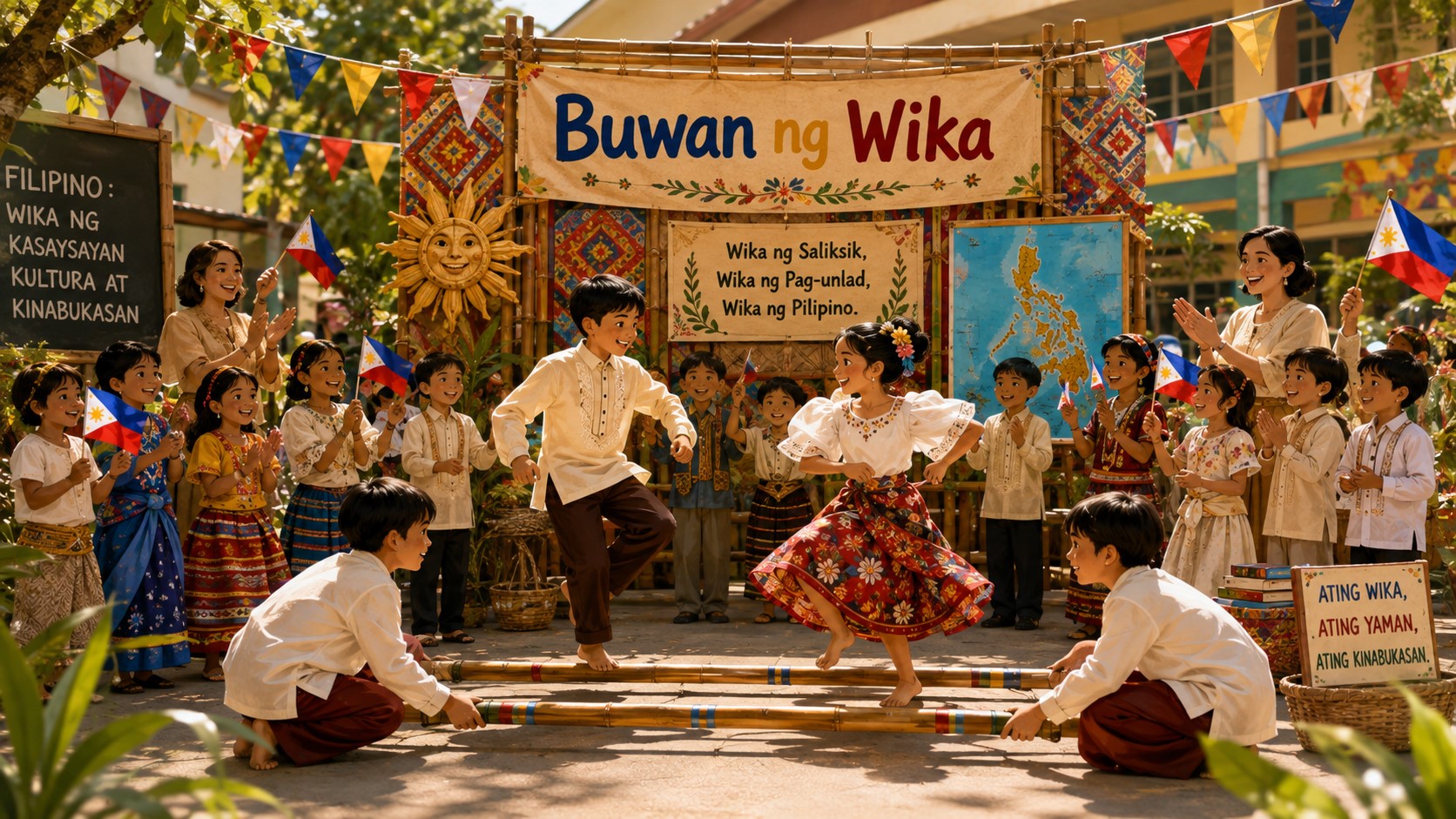
Should a Buwan ng Wika Costume Match the 2026 Theme?
Not necessarily—unless your school specifically requires it.
The official 2026 theme focuses on Wikang Filipino and AI as tools connected with research and access to information.
However, a Barong Tagalog, Filipiniana dress, traditional dance costume, Filipino historical character, or literature-inspired outfit can still be perfectly appropriate for a general Buwan ng Wika celebration.
If you are entering a themed costume competition, though, that’s when you might consider adding 2026 elements.
For example:
Barong Tagalog + futuristic accessories
Filipiniana + digital-inspired patterns
Filipino researcher costume
Wikang Filipino and AI costume
Filipino student of the future
That could make your entry stand out.
Buwan ng Wika Costume Ideas for a Whole Class
If you’re a teacher planning a class presentation, instead of having everyone wear the same thing, you can divide the students into groups.
For example:
Group 1 – Traditional Filipino Clothing
Barong Tagalog, Filipiniana, Baro’t Saya.
Group 2 – Filipino Historical Figures
Rizal, Bonifacio, Gabriela Silang, Tandang Sora.
Group 3 – Filipino Literature
Maria Clara, Ibarra, Ibong Adarna, Mariang Makiling, Lam-ang.
Group 4 – Philippine Festivals
Sinulog, MassKara, Pahiyas, Panagbenga.
Group 5 – Filipino Culture of the Future
Researchers, writers, technology, Filipino and AI.
Now the entire class becomes a visual journey through Filipino history, culture, language, literature, and the future.
That’s much more interesting than having 40 students wearing exactly the same costume.
Frequently Asked Questions About Buwan ng Wika Costumes
What do you wear for Buwan ng Wika?
Popular choices include Barong Tagalog, Filipiniana, Baro’t Saya, Camisa de Chino, traditional dance costumes, historical-character costumes, Filipino literary characters, and culturally appropriate regional attire.
The best option depends on your school’s particular activity or theme.
What is the easiest Buwan ng Wika costume for boys?
A Barong Tagalog with dark pants is probably the easiest.
For a cheaper DIY option, use a white or cream shirt, rolled pants, salakot, and woven basket to create a farmer-inspired costume.
What is the easiest Buwan ng Wika costume for girls?
A simple Baro’t Saya or Filipiniana dress is one of the easiest options.
You can also create a farmer costume using a blouse, long skirt, bandana, and basket.
What can I make for Buwan ng Wika using materials at home?
You can create:
- Magsasaka costume
- Katipunero costume
- Filipino writer
- Filipino teacher
- Filipino dictionary
- Philippine map
- Filipino robot
- Ibong Adarna
- Festival-inspired costume
Cardboard, recycled paper, old clothes, scarves, and baskets can go a long way.
Does a Buwan ng Wika costume need to be traditional?
Not always.
Traditional Filipino clothing is very common, but schools may also allow costumes representing Filipino literature, history, festivals, occupations, languages, or modern Filipino culture.
Always check the school’s instructions.
What is a unique Buwan ng Wika costume for 2026?
Because the 2026 theme connects Filipino with AI and research, creative ideas include a Filipino student of the future, Filipino researcher, Filipino robot, Wikang Filipino and AI costume, or Filipino dictionary costume.
Final Thoughts
Choosing a Buwan ng Wika costume for 2026 doesn’t have to be stressful.
You don’t need the most expensive Filipiniana.
You don’t need the biggest headpiece.
And you definitely don’t need to spend the entire night before the school program desperately gluing decorations onto cardboard.
Sometimes the simplest costumes work best.
A child wearing a Barong Tagalog.
A little girl proudly wearing Baro’t Saya.
A student carrying a basket dressed as a Filipino farmer.
Another dressed as Jose Rizal.
Or perhaps, because this is 2026, a child arrives wearing a homemade cardboard robot covered with Filipino words.
All of them can work.
Because ultimately, Buwan ng Wika isn’t really about who has the fanciest costume.
It’s about giving students an opportunity to appreciate the richness of Filipino language and culture—and hopefully understand a little more about the people, stories, traditions, and communities represented by what they’re wearing.
So choose a costume your child can wear comfortably, understand, and enjoy.
And if you can create it using clothes already inside your cabinet?
Even better.