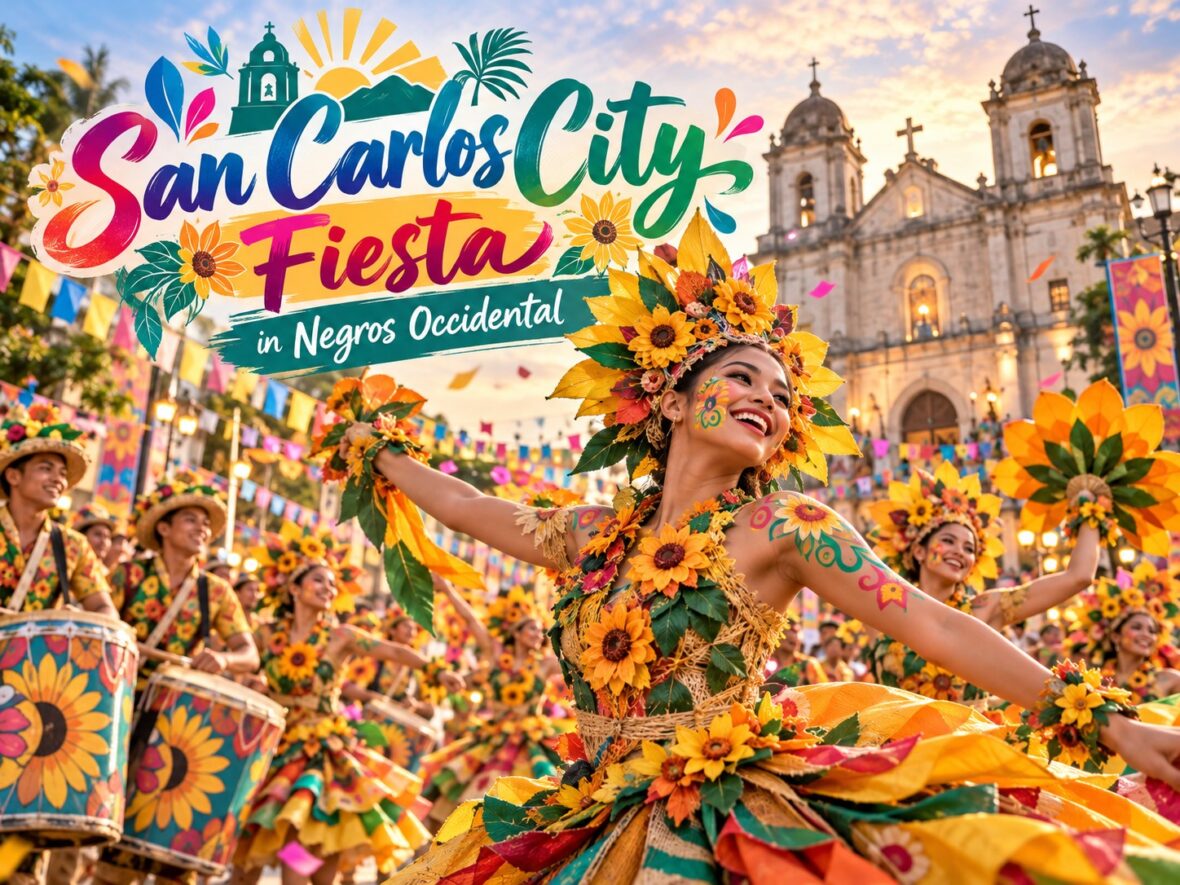
If there’s one celebration in Negros Occidental that combines colorful street dancing, beautiful floral costumes, religious traditions, and plenty of community excitement, it’s the San Carlos City Fiesta.
Every November, the coastal city of San Carlos comes alive with music, performances, parades, and festivities as residents celebrate the feast of their patron saint, San Carlos Borromeo.
But there’s something else that makes the celebration particularly special.
San Carlos City is also home to the famous Pintaflores Festival, one of the most colorful cultural festivals in Negros Occidental.
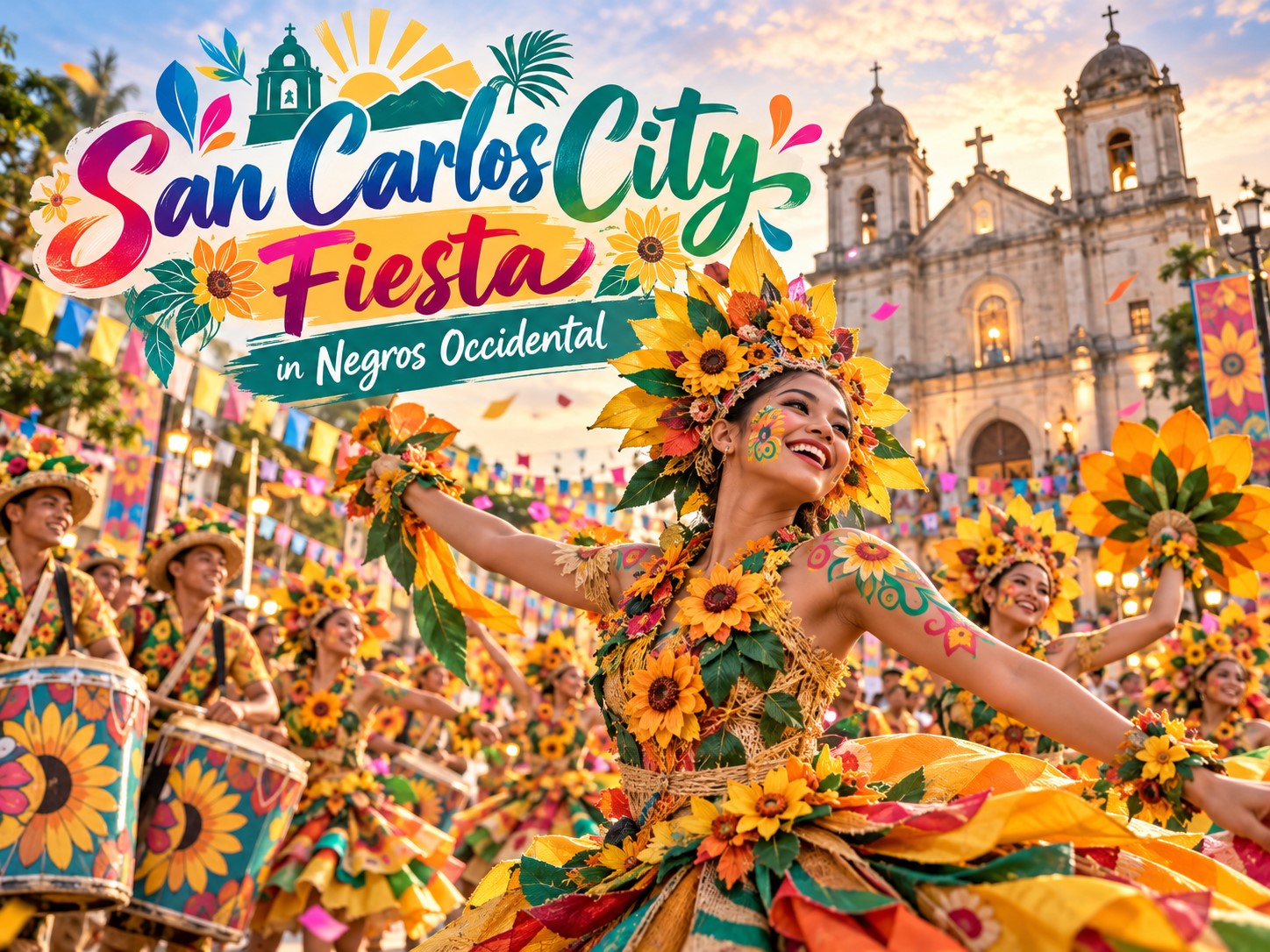
Imagine walking through the city streets and seeing hundreds of dancers wearing elaborate costumes decorated with flowers. Some have intricate floral patterns painted on their faces, arms, and bodies, while others carry enormous flower-inspired props.
Then the drums begin playing, and the dancers move together in colorful formations, transforming the streets into a lively celebration of art, music, and culture.
That’s what makes the San Carlos City Fiesta worth experiencing.
And while the street dancing is probably the biggest attraction for many visitors, there’s more to the celebration than just colorful performances.
The fiesta also reflects the city’s religious devotion, local history, cultural identity, and the traditions that have shaped the lives of San Carloseños for generations.
If you’re planning to visit Negros Occidental or simply want to learn more about Philippine festivals, here’s a complete guide to the San Carlos City Fiesta, including its history, meaning, schedule, patron saint, Pintaflores Festival, major activities, and practical travel tips.
Content
What Is San Carlos City Fiesta?
The San Carlos City Fiesta is an annual religious and cultural celebration held in San Carlos City, Negros Occidental, Philippines.
The celebration honors San Carlos Borromeo, also known as Saint Charles Borromeo, whose feast day falls on November 4.
Like many traditional Filipino fiestas, the occasion combines religious observances with community celebrations.
Residents attend Masses, participate in parish activities, gather with family and friends, and enjoy various festivities organized throughout the city.
However, San Carlos City has developed a particularly distinctive cultural tradition through the Pintaflores Festival.
This festival features dancers wearing elaborate costumes and floral body paintings, accompanied by rhythmic music and theatrical performances.
Pintaflores has become the city’s signature cultural celebration and one of the highlights of its annual November festivities.
Although the religious fiesta and Pintaflores Festival are closely connected, they are not exactly the same thing.
The religious feast honors Saint Charles Borromeo on November 4, while the Pintaflores cultural festivities traditionally take place around November 3 to 5.
Together, they create one of the most anticipated celebrations in San Carlos City.
San Carlos City Fiesta: Quick Facts
| Details | Information |
|---|---|
| Celebration | San Carlos City Fiesta |
| Location | San Carlos City, Negros Occidental |
| Island | Negros, Philippines |
| Administrative Region | Negros Island Region (NIR) |
| Usual Celebration Month | November |
| Patron Saint | San Carlos Borromeo (Saint Charles Borromeo) |
| Patron Saint’s Feast Day | November 4 |
| Main Cultural Festival | Pintaflores Festival |
| Traditional Pintaflores Dates | November 3–5 |
| Main Attraction | Floral body painting, street dancing, and ritual performances |
| Main Religious Landmark | San Carlos Borromeo Cathedral |
| Festival Themes | Faith, thanksgiving, flowers, cultural heritage, and community unity |
History of San Carlos City Fiesta
The roots of the San Carlos City Fiesta are closely connected with the development of the city and its Catholic religious traditions.
Before becoming the modern coastal city we know today, the area was historically associated with the name Nabingkalan.
During the Spanish colonial period, the settlement developed under the influence of Catholic missionary activities and local government administration.
The community eventually became known as San Carlos, named in honor of Saint Charles Borromeo.
As Catholic religious practices became established, the annual patronal fiesta grew into an important occasion for residents.
Families attended religious celebrations, communities organized gatherings, and residents participated in activities expressing their devotion and thanksgiving.
Like other Philippine town fiestas, the celebration gradually became more than a religious event.
It also provided opportunities for families to reunite, communities to strengthen their relationships, and residents to celebrate their shared identity.
Over time, San Carlos continued developing as an important agricultural, commercial, and coastal center in Negros Occidental.
The city eventually gained its cityhood on July 1, 1960.
However, it’s important to remember that San Carlos City’s charter anniversary and annual fiesta are separate celebrations.
The charter anniversary is observed on July 1, while the patronal fiesta and Pintaflores celebrations take place in November.
How the Fiesta Became a Major Cultural Celebration
For many years, the San Carlos City Fiesta followed the familiar traditions of Philippine town celebrations.
However, the city eventually wanted to develop a cultural festival that would give San Carlos its own distinctive identity.
During the early 1990s, local organizers introduced cultural performances inspired by tattoo traditions and floral imagery.
These activities eventually developed into the Pintaflores Festival.
The festival became an important part of the annual fiesta, bringing elaborate street dancing, theatrical storytelling, and colorful floral body painting to the celebration.
Today, Pintaflores is one of the most recognizable symbols of San Carlos City’s cultural identity.
Who Is San Carlos Borromeo?
San Carlos Borromeo, commonly known in English as Saint Charles Borromeo, was an important Catholic bishop and cardinal who lived during the 16th century.
He was born in 1538 in northern Italy and later became the Archbishop of Milan.
Saint Charles Borromeo is remembered for his role in Catholic Church reform, religious education, charitable work, and pastoral leadership.
He played an important part in implementing reforms associated with the Council of Trent.
He is also remembered for his dedication to helping the sick and poor during difficult periods in Milan.
Saint Charles Borromeo died in 1584 and was canonized in 1610.
His feast day is celebrated every November 4.
Why Is San Carlos Borromeo Important to the City?
San Carlos City is named in honor of the saint.
The city’s principal Catholic cathedral also bears his name.
For local Catholics, the annual feast provides an opportunity to celebrate their faith and remember the saint’s example of service, devotion, and compassion.
Religious activities associated with the fiesta may include Masses, novenas, processions, and other parish observances.
These activities reflect the religious heritage of the community.
While the street dancing and cultural festivities attract many tourists, the feast of San Carlos Borromeo remains an important part of the celebration’s identity.
When Is San Carlos City Fiesta Celebrated?
The San Carlos City Fiesta is celebrated every November.
The patron saint’s official feast day is November 4.
Meanwhile, Pintaflores Festival, the city’s signature cultural celebration, is traditionally associated with November 3 to 5.
The Philippine Tourism Promotions Board lists Pintaflores as a November 3–5 festival.
However, the exact schedule of street dancing, competitions, concerts, pageants, and other activities may change each year.
Some celebrations begin earlier than the main fiesta dates.
For travelers, it’s important to distinguish between the religious feast day and the Pintaflores Grand Street Dancing celebration.
Typical San Carlos City Fiesta Schedule
| Date or Period | Usual Celebration |
|---|---|
| Days or weeks before the fiesta | Preparatory activities, community programs, and religious observances |
| Early November | Cultural festivities and Pintaflores-related activities |
| November 3 | Traditional Pintaflores festival period |
| November 4 | Feast of San Carlos Borromeo |
| November 5 | Traditional major Pintaflores celebration and street-dancing activities |
| Other announced dates | Pageants, concerts, cultural competitions, and community entertainment |
This is a general guide based on the city’s established festival traditions.
It should not be treated as a confirmed daily program for every edition.
Before traveling, check the latest schedule from the San Carlos City Government, local tourism authorities, and the Diocese of San Carlos.
What Is Pintaflores Festival?
Pintaflores Festival is the signature cultural festival of San Carlos City, Negros Occidental.
It’s famous for its colorful street dancing, flower-inspired costumes, artistic body painting, and elaborate theatrical performances.
The name Pintaflores combines two concepts.
“Pinta” is associated with painting or the painted bodies of performers, while “flores” is the Spanish word for flowers.
Together, the name reflects the festival’s distinctive combination of body art and floral imagery.
Unlike festivals that focus mainly on agricultural products or religious statues, Pintaflores celebrates the artistic transformation of dancers into colorful representations of flowers and other elements of nature.
During performances, dancers may have floral patterns painted on their faces, arms, legs, and other visible parts of their bodies.
They also wear elaborate costumes decorated with colorful fabric, floral ornaments, and large props.
The choreography often incorporates theatrical storytelling, including themes of life, death, good and evil, thanksgiving, and the triumph of hope.
And when the performers move together in large formations, the result can be spectacular.
History of Pintaflores Festival
Pintaflores Festival emerged from the city’s search for a unique cultural identity during the early 1990s.
In 1992, San Carlos City successfully presented two major cultural activities during its fiesta.
These were the Nabingkalan Tattoo Festival and the Dances of Flowers.
The Nabingkalan Tattoo Festival drew inspiration from body-painting traditions and a local legend associated with the city’s earlier name.
Meanwhile, the Dances of Flowers highlighted floral imagery and colorful performances.
Organizers eventually realized that combining these two concepts could produce a festival that was distinctly associated with San Carlos City.
This led to the development of Pintaflores.
From Pintados to Pintaflores
According to historical information preserved by San Carlos City tourism promoters, the festival initially used the name Pintados in 1992 because of its emphasis on painted bodies.
However, organizers later adopted the name Pintaflores to distinguish the celebration from other festivals using similar terminology.
The name became associated with the city’s participation in major Philippine festival competitions during the early 1990s.
In 1993, San Carlos City’s contingent joined the Sinulog Festival in Cebu, helping introduce the new cultural concept to a wider audience.
The performances received recognition and encouraged organizers to continue improving the festival.
Over the following years, Pintaflores developed into a major cultural event featuring more elaborate costumes, choreographed formations, theatrical presentations, and community participation.
The festival eventually became an important symbol of pride for San Carloseños.
The Legend of Princess Nabingka
One of the most fascinating stories associated with Pintaflores Festival is the legend of Princess Nabingka.
According to local folklore, Princess Nabingka traveled with her people and settled in a beautiful coastal area of Negros.
The land was fertile and surrounded by natural beauty.
However, the princess eventually became seriously ill.
Her people became worried and sought help from a babaylan, or traditional spiritual healer.
According to the legend, the babaylan believed that the princess was saddened by the absence of flowers.
To help restore her happiness and health, the community tried planting flowers around their settlement.
Unfortunately, the flowers failed to bloom.
The people then came up with another idea.
Instead of waiting for flowers to grow, they painted beautiful floral designs on their bodies.
Men, women, and children decorated themselves with colorful flowers, transforming their bodies into living works of art.
The sight brought joy to Princess Nabingka.
As the story goes, she eventually recovered, and the people celebrated by dancing together while wearing their floral body paintings.
This legend became one of the inspirations behind the Pintaflores Festival.
Is the Story of Princess Nabingka Historically True?
The story of Princess Nabingka is part of local folklore.
It should be understood as a cultural legend rather than a fully documented historical account.
However, legends like this play an important role in preserving the imagination, values, and traditions of communities.
For San Carlos City, the story provides a meaningful connection between the town’s earlier identity and its present-day celebration.
It also explains why flowers and body painting became the festival’s most recognizable features.
Why Are Flowers Important to Pintaflores Festival?
Flowers are the central visual symbol of Pintaflores.
They represent beauty, life, creativity, and the natural environment.
The sunflower is particularly associated with the festival and has been described by local tourism promoters as a symbol of the resilience of the people of San Carlos.
Its bright appearance reflects the festival’s joyful atmosphere.
However, dancers are not limited to sunflower designs.
Their costumes and body paintings can feature different flowers, colorful patterns, and artistic interpretations of nature.
The floral theme also connects with the legend of Princess Nabingka, whose recovery is associated with the community’s creative use of painted flowers.
This is what makes Pintaflores visually distinctive.
The dancers themselves become part of the artwork.
Main Activities During San Carlos City Fiesta
Although Pintaflores is the biggest cultural attraction, the San Carlos City Fiesta can include a variety of religious and community activities.
The exact program changes between editions, but several traditions remain closely associated with the celebration.
1. Pintaflores Grand Street Dancing
The grand street-dancing celebration is one of the most anticipated events.
During the performance, contingents wear colorful costumes inspired by flowers, nature, and the festival’s cultural themes.
The dancers move through designated streets accompanied by music and percussion.
Their choreography often includes synchronized formations, energetic movements, and dramatic expressions.
Some performances feature large floral props, while others use elaborate headpieces and costumes to create striking visual effects.
For spectators, it’s a wonderful opportunity to experience the creativity of the city’s performers.
The streets become a colorful open-air stage, filled with music, dancing, and enthusiastic crowds.
2. Pintaflores Ritual Dance Competition
Another major highlight is the ritual dance competition.
During this event, participating contingents present theatrical performances inspired by the festival’s cultural narrative.
The productions may portray the legend of Princess Nabingka or explore themes connected to nature, community life, and thanksgiving.
Unlike ordinary dance numbers, these presentations often tell complete stories.
Dancers use choreography, music, props, costumes, and coordinated formations to communicate different scenes.
Some productions feature conflicts between good and evil, while others focus on celebration, healing, or the triumph of life.
The judges evaluate participating groups according to criteria established for that particular competition.
These may include choreography, musicality, storytelling, costume design, and overall presentation.
The categories and judging system are determined by the organizers each year.
3. Floral Body Painting
Body painting is one of the most distinctive elements of the festival.
Artists decorate performers with colorful designs inspired by flowers and nature.
Some designs cover the arms, face, legs, or other visible parts of the body.
Others are more elaborate, incorporating detailed patterns that complement the dancers’ costumes.
In some editions, body-painting competitions or exhibitions have also been organized.
This allows local artists to demonstrate their creativity using the human body as an artistic canvas.
It’s one of the features that makes Pintaflores different from many other Philippine festivals.
4. Pintaflores Bata
Children have also played an important role in the festival’s development.
Pintaflores Bata, also known as Pinta Bata, was introduced in 1996 as a street-dancing and ritual competition for elementary school children.
The activity provided younger performers with an opportunity to participate in the celebration.
It also helped encourage the transmission of festival traditions to another generation.
For children, joining Pintaflores can be an opportunity to develop confidence, discipline, teamwork, and an appreciation for local culture.
Over time, younger performers have contributed to keeping the festival active and relevant.
5. Festival Queen and Cultural Pageants
Pageants and cultural presentations have also been featured during Pintaflores celebrations.
One recognizable activity is the Festival Queen competition.
Participants may wear elaborate floral costumes and represent different contingents.
The competition typically highlights stage presence, cultural presentation, and costume artistry.
Other pageants or community events may also be organized depending on the year’s fiesta program.
These activities add another dimension to the celebration beyond the main street-dancing performances.
6. Religious Celebrations for San Carlos Borromeo
Of course, the San Carlos City Fiesta is also an important religious celebration.
The Catholic community honors San Carlos Borromeo through parish activities centered on the cathedral.
These may include novenas, special Masses, and other devotional observances.
For many families, attending the religious celebration is an important part of their fiesta tradition.
The religious activities also remind visitors that the annual festivities have a spiritual significance beyond the colorful cultural performances.
7. Concerts, Community Events, and Entertainment
Depending on the year, the city fiesta may also include concerts, community programs, entertainment activities, and other public celebrations.
These provide opportunities for residents to gather and enjoy the festivities.
Local artists, musicians, youth groups, and cultural organizations may participate.
Some editions also feature activities promoting local businesses, products, and community initiatives.
The variety of events helps make the celebration appealing to different age groups.
San Carlos Borromeo Cathedral
One of the most important landmarks connected to the annual fiesta is San Carlos Borromeo Cathedral.
Located in San Carlos City, the cathedral serves as the seat of the Roman Catholic Diocese of San Carlos.
It is dedicated to Saint Charles Borromeo, the city’s patron saint.
The cathedral is an important religious center for local Catholics and the surrounding communities served by the diocese.
During the patronal fiesta, it becomes one of the focal points of religious observances.
Visitors interested in the religious aspect of the celebration can attend public Masses and other parish activities.
However, it’s important to follow church rules and remain respectful of worshippers, especially when services are ongoing.
If you’re interested in architecture and local history, the cathedral is also an important part of San Carlos City’s cultural landscape.
What Makes San Carlos City Fiesta Unique?
The Philippines has hundreds of festivals, and many of them feature colorful costumes, energetic dancing, and large crowds.
But San Carlos City Fiesta has several characteristics that make it stand out.
First, it combines religious devotion with a strong artistic tradition.
The celebration honors Saint Charles Borromeo while also showcasing the city’s creative identity through Pintaflores.
Second, the festival uses floral body painting as an important part of its visual presentation.
Instead of relying only on costumes, performers incorporate artistic designs directly onto their bodies.
Third, the festival is connected to the local legend of Princess Nabingka.
This gives the performances a narrative that is rooted in the community’s cultural identity.
Finally, the celebration has developed a tradition of involving different generations.
From professional performers to students participating in Pintaflores Bata, the festival provides opportunities for residents to contribute to a shared celebration.
These elements help make San Carlos City Fiesta a distinctive part of Negros Occidental’s cultural calendar.
Why Is San Carlos City Fiesta Important?
Beyond the entertainment, the annual fiesta serves several important purposes.
Preserving Local Culture
Pintaflores helps preserve the cultural stories and traditions associated with San Carlos City.
Through dance, music, and visual art, younger generations are introduced to the narratives that form part of their community’s identity.
Supporting Local Artists
The festival provides opportunities for choreographers, musicians, costume designers, makeup artists, body painters, and other creative professionals.
These individuals spend considerable time preparing the elaborate performances that spectators eventually see.
Their work is an important part of the festival’s success.
Strengthening Community Unity
Preparing for a festival requires teamwork.
Schools, barangays, local organizations, businesses, and individual residents may participate in organizing and supporting different activities.
This cooperation strengthens community relationships and creates opportunities for residents to work toward a common goal.
Promoting Tourism
Pintaflores helps introduce San Carlos City to visitors from other parts of Negros and the Philippines.
Travelers attending the festival may also visit nearby attractions, eat at local restaurants, book accommodations, and use local transportation.
This creates opportunities for businesses and service providers.
Celebrating Faith and Thanksgiving
At its heart, the annual fiesta remains an occasion for thanksgiving.
For Catholic residents, the feast of San Carlos Borromeo provides an opportunity to express their faith and celebrate their community’s religious heritage.
San Carlos City Fiesta vs. Pintaflores Festival: What’s the Difference?
These two celebrations are closely connected, but there’s a useful distinction.
| Details | San Carlos City Fiesta | Pintaflores Festival |
|---|---|---|
| Main Purpose | Religious and community celebration | Cultural identity and artistic expression |
| Main Focus | Feast of San Carlos Borromeo | Floral body painting, music, dance, and storytelling |
| Important Date | November 4 | Traditionally November 3–5 |
| Main Activities | Masses, devotional activities, family and community festivities | Street dancing, ritual competitions, body painting, cultural performances |
| Historical Roots | Catholic patronal traditions | Festival developed in the early 1990s |
Both celebrations contribute to the same festive atmosphere in San Carlos City.
For visitors, attending both the religious observances and Pintaflores activities offers a more complete understanding of the city’s traditions.
How to Get to San Carlos City, Negros Occidental
San Carlos City is located on the northeastern coast of Negros Island, facing the Tañon Strait.
Although it belongs to Negros Occidental, it is situated on the eastern side of the island, making it an important connection between Negros and Cebu.
The city can be reached by road from Bacolod and Dumaguete, and by ferry from Toledo City in Cebu.
From Manila to San Carlos City
For travelers coming from Metro Manila, one practical option is to fly to Bacolod-Silay Airport.
From the airport, continue to Bacolod City and look for a bus or van traveling to San Carlos.
Another option is to fly to Cebu, travel to Toledo City, and take a ferry across the Tañon Strait to San Carlos.
Your preferred route will depend on flight availability, transportation schedules, and your overall travel itinerary.
From Bacolod City
San Carlos City can be reached by provincial bus or other available land transportation from Bacolod.
Public transportation services operate between Bacolod and San Carlos, although departure points and schedules may change.
Depending on the route, the journey passes through towns and scenic areas of Negros Occidental.
Allow approximately three to four hours or more, depending on traffic and road conditions.
If you’re traveling during the fiesta, consider allowing additional time because of the expected increase in passengers.
From Cebu City
Travelers coming from Cebu can reach San Carlos through Toledo City.
First, travel from Cebu City to Toledo, located on the western side of Cebu Island.
From Toledo Port, take an available ferry or fast craft bound for San Carlos.
The sea crossing connects the two cities across the Tañon Strait.
Travel time depends on the vessel and operating conditions.
Some fast craft services complete the crossing more quickly than conventional roll-on/roll-off ferries.
Always check the latest ferry schedule and weather advisories before traveling.
From Dumaguete City
San Carlos can also be reached by road from Dumaguete and other destinations in Negros Oriental.
Depending on the available transportation service, the journey may follow routes passing through communities along the eastern side of Negros.
Confirm the bus or van schedule and travel time before your trip.
Getting Around San Carlos City
Once you’re in the city proper, local transportation options include tricycles and other available services.
During festival activities, some streets may have temporary traffic restrictions or road closures.
If you’re attending the grand parade, check the official route and arrange a convenient drop-off point.
Be prepared to walk through certain areas where vehicles may not be allowed.
Where to Stay During San Carlos City Fiesta
If you’re planning to attend the festival, staying within San Carlos City is generally the most convenient option.
There are hotels, inns, pension houses, and other accommodations serving visitors and travelers.
For festivalgoers, staying near the city center can be practical because many activities are held in or around the downtown area.
You’ll also have easier access to food establishments and local transportation.
However, accommodation availability may become limited during the busiest fiesta dates.
I recommend booking ahead once the organizers release the official schedule.
If you’re planning to combine the festival with sightseeing, you can also consider accommodations near recreational areas or on Sipaway Island.
Just remember that staying outside the city proper may require additional transportation arrangements, particularly after evening activities.
Things to Do in San Carlos City During the Fiesta
One of the advantages of visiting San Carlos is that you can combine your festival experience with a short vacation.
The city has coastal attractions, mountain landscapes, and several interesting places worth exploring.
Visit Sipaway Island
Sipaway Island, also known as Refugio Island, is one of the most popular recreational destinations associated with San Carlos City.
Located a short boat ride from the mainland, the island is known for its relaxed atmosphere, coastal scenery, and beach resorts.
Visitors can enjoy swimming and other available recreational activities.
If you’re spending several days in San Carlos, Sipaway can be a good option for a relaxing side trip after the festival.
Before visiting, check the current boat schedules, resort arrangements, and weather conditions.
Explore People’s Park
People’s Park is another recreational area where visitors can spend time enjoying the coastal atmosphere.
It’s a relatively convenient stop for travelers who want to relax without traveling far from the city center.
Depending on the facilities available, visitors can enjoy the open space and views of the surrounding area.
Discover the Codcod Rice Terraces
San Carlos City isn’t just about the sea.
Its upland communities also feature beautiful agricultural landscapes.
Barangay Codcod is known for its rice terraces, farms, and scenic mountain environment.
The terraces show how local farmers have adapted the landscape for agricultural production.
If you’re interested in nature and rural scenery, this is another side of San Carlos worth discovering.
Some upland roads may be challenging during rainy weather, so check local travel conditions before visiting.
What to Eat During San Carlos City Fiesta
Like other celebrations in Negros Occidental, the San Carlos City Fiesta is also a good opportunity to enjoy local food.
While Pintaflores is the main cultural highlight, food is always an important part of Filipino fiesta traditions.
Families may prepare special meals, while restaurants and food vendors serve visitors throughout the celebration.
You can look for familiar Negrense and Visayan dishes such as chicken inasal, grilled seafood, pork dishes, and local snacks.
Fresh seafood may be particularly appealing given San Carlos City’s coastal location.
Visitors can also explore local bakeries, cafés, and eateries around the city proper.
If food stalls are part of the festival program, they can be convenient places to grab a meal while enjoying the festivities.
Supporting local restaurants and food vendors is also one of the easiest ways to contribute to the community during your visit.
Travel Tips for Attending San Carlos City Fiesta
If you’re planning to experience the celebration in person, here are a few practical reminders.
Check the Official Fiesta Schedule
The religious feast falls on November 4, while the major Pintaflores activities are traditionally held around November 3 to 5.
However, the detailed program can change each year.
Check the official schedule before finalizing your travel arrangements.
Arrive Early for the Street Dancing
The main parade attracts spectators, and popular viewing areas may become crowded.
Arriving early gives you more time to find a good location.
It also allows you to enjoy the atmosphere as performers and contingents prepare for the celebration.
Wear Comfortable Clothes and Shoes
Expect warm weather, walking, and crowded streets.
Comfortable footwear is particularly important if you’re planning to follow the parade route.
Bring Water and Sun Protection
Some festival activities take place outdoors during the daytime.
Bring drinking water, sunscreen, and appropriate sun protection.
Protect Your Camera and Phone
Pintaflores is an excellent subject for photography.
The floral body painting, costumes, and colorful performances create beautiful photo opportunities.
However, be careful when moving through crowded areas.
Avoid standing directly in the path of dancers or blocking other spectators.
Respect Religious Activities
If you’re attending the feast day celebrations at San Carlos Borromeo Cathedral, remember that these are religious observances.
Be respectful of worshippers and follow parish instructions.
Prepare for Possible Road Closures
Street-dancing activities may require temporary closures or traffic rerouting.
If you’re traveling by private vehicle, check the official traffic advisory and authorized parking locations.
Bring Cash
Smaller establishments and temporary festival stalls may prefer cash.
Having small bills can make purchases more convenient.
Monitor Weather and Ferry Conditions
If you’re traveling from Cebu, ferry schedules may be affected by rough seas or adverse weather.
Likewise, road conditions can change during heavy rain.
Check travel advisories before leaving.
Frequently Asked Questions About San Carlos City Fiesta
When Is San Carlos City Fiesta Celebrated?
The annual patronal fiesta is celebrated in November, with the feast of San Carlos Borromeo observed on November 4.
The associated Pintaflores cultural festival traditionally takes place around November 3 to 5.
Where Is San Carlos City Fiesta Held?
The celebration takes place in San Carlos City, Negros Occidental, on Negros Island in the Philippines.
Who Is the Patron Saint of San Carlos City?
The city’s patron saint is San Carlos Borromeo, also known as Saint Charles Borromeo.
His feast day is November 4.
What Is the Main Festival of San Carlos City?
Pintaflores Festival is the city’s most recognizable annual cultural festival.
It’s known for colorful floral body painting, street dancing, and theatrical performances.
What Does Pintaflores Mean?
The name combines the idea of painted bodies, associated with “pinta” or the Pintados tradition, and “flores,” the Spanish word for flowers.
When Did Pintaflores Festival Start?
The festival developed from cultural activities organized during the 1992 city fiesta and adopted the Pintaflores name in 1993.
What Is the Story Behind Pintaflores Festival?
One of its main cultural inspirations is the legend of Princess Nabingka.
According to local folklore, residents painted floral patterns on their bodies to bring joy to an ill princess after their attempts to grow flowers were unsuccessful.
Why Do Dancers Paint Flowers on Their Bodies?
Floral body painting is a defining artistic tradition of Pintaflores.
It represents flowers, nature, creativity, and the cultural story associated with Princess Nabingka.
Is Pintaflores a Religious Festival?
Pintaflores is primarily a cultural festival, but it is celebrated in connection with the San Carlos City Fiesta honoring Saint Charles Borromeo.
Is There Street Dancing During San Carlos City Fiesta?
Yes. Pintaflores street dancing is one of the most recognizable and anticipated activities during the November celebrations.
Is San Carlos City Fiesta Free?
Street parades and some public celebrations are generally accessible to spectators.
However, certain organized activities may have specific admission arrangements or fees.
Check the current festival program for details.
Is San Carlos City in Negros Occidental or Negros Oriental?
San Carlos City is located in Negros Occidental, even though it sits on the northeastern coast of Negros Island.
It is now part of the Negros Island Region, established under Republic Act No. 12000 in 2024.
Is San Carlos City Fiesta the Same as San Carlos City Charter Day?
No.
The city’s charter anniversary is celebrated on July 1, while its annual patronal fiesta takes place in November.
Is San Carlos City Fiesta Worth Visiting?
If you enjoy Philippine festivals, elaborate costumes, cultural performances, and street dancing, San Carlos City Fiesta offers a colorful and enjoyable cultural experience.
The celebration is also a good opportunity to explore the city’s coastal attractions and local food scene.
San Carlos City Fiesta 2026: Latest Schedule and Updates
For readers planning to attend the next celebration, here’s a brief update.
The San Carlos City Fiesta is expected to take place during its traditional November celebration period.
The Diocese of San Carlos identifies November 4 as the feast day of San Carlos Borromeo.
Meanwhile, the Philippine Tourism Promotions Board lists Pintaflores Festival on November 3–5.
Publicly circulated festival announcements also identify November 5, 2026, as the main date associated with the 34th Pintaflores Festival.
Important Dates for 2026
| Date | Occasion |
|---|---|
| November 3, 2026 | Beginning of the traditional Pintaflores festival period |
| November 4, 2026 | Feast of San Carlos Borromeo |
| November 5, 2026 | Publicized Pintaflores Festival highlight |
As of October 18, 2026, I could not independently verify a complete official city government program covering every concert, competition, street-dancing route, venue, and starting time.
The November 3–5 period reflects the established festival calendar rather than confirmation that every traditional activity will be held on those exact dates.
The organizers may also schedule preliminary activities before the main celebration.
For accurate travel planning, check the official announcements of the San Carlos City Government, local tourism office, Pintaflores Festival organizers, and Diocese of San Carlos.
Final Thoughts
The San Carlos City Fiesta is one of those Philippine celebrations that perfectly combines religious traditions, artistic creativity, and community pride.
At the heart of the celebration is the feast of San Carlos Borromeo, which remains an important occasion for local Catholics.
But what makes the fiesta particularly memorable is Pintaflores Festival.
There’s something fascinating about seeing dancers transform themselves into colorful representations of flowers through body painting, costumes, and movement.
And when you learn about the story of Princess Nabingka and the festival’s beginnings in the early 1990s, you begin to appreciate the creativity behind the celebration even more.
Pintaflores isn’t simply a performance designed to entertain visitors.
It’s a cultural tradition that has developed through the dedication of local artists, performers, organizers, and residents who wanted to create something uniquely associated with San Carlos City.
And over the years, they’ve succeeded in doing exactly that.
For travelers, the fiesta also provides a wonderful reason to explore this part of Negros Occidental.
You can enjoy the colorful festivities, visit San Carlos Borromeo Cathedral, discover nearby attractions such as Sipaway Island, and experience the hospitality of the local community.
That’s one of the best things about Philippine fiestas.
They’re not just about the celebration itself.
They’re also opportunities to discover the stories, people, and traditions that make each destination special.
So if you’re planning a trip to Negros Occidental this November, consider adding the San Carlos City Fiesta and Pintaflores Festival to your itinerary.
You might just discover one of the most colorful cultural celebrations in the Visayas.
See you in San Carlos City, and enjoy the Pintaflores Festival!