Every November, as Filipino families visit cemeteries to remember their departed loved ones, a small town in Batangas keeps a unique tradition alive through candles, creativity, and community gatherings.
This is the Tumba Festival, also known as the Candle Festival, celebrated in San Luis, Batangas.
And unlike the colorful street dancing festivals that many Filipinos are familiar with, Tumba has a completely different atmosphere.
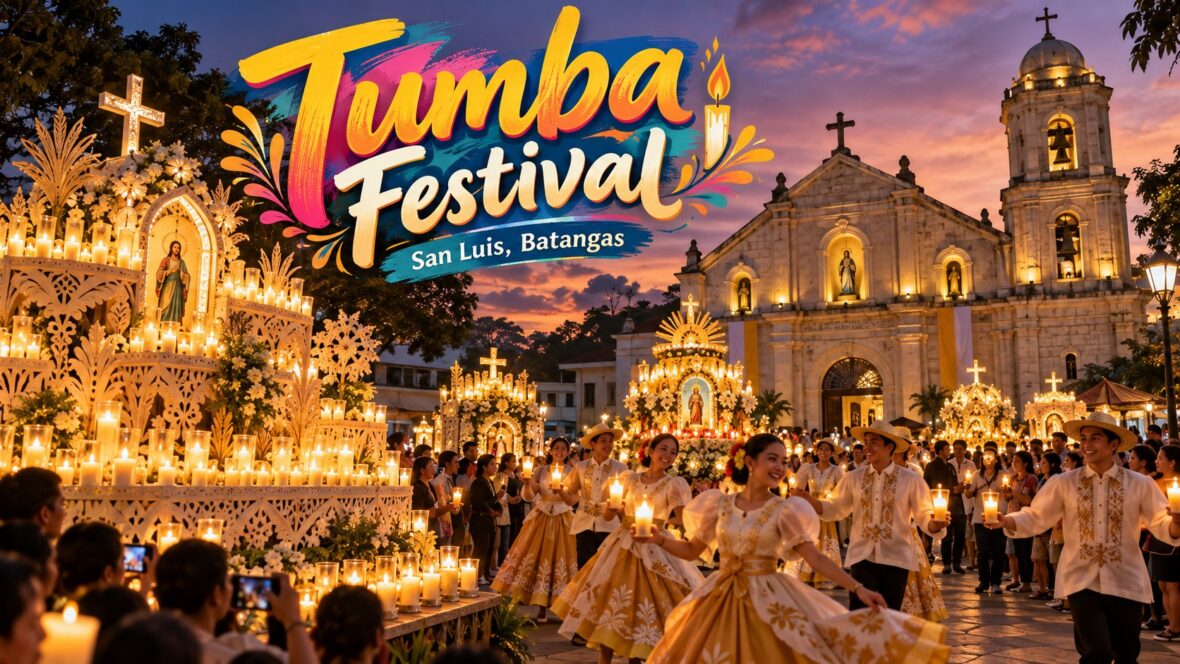
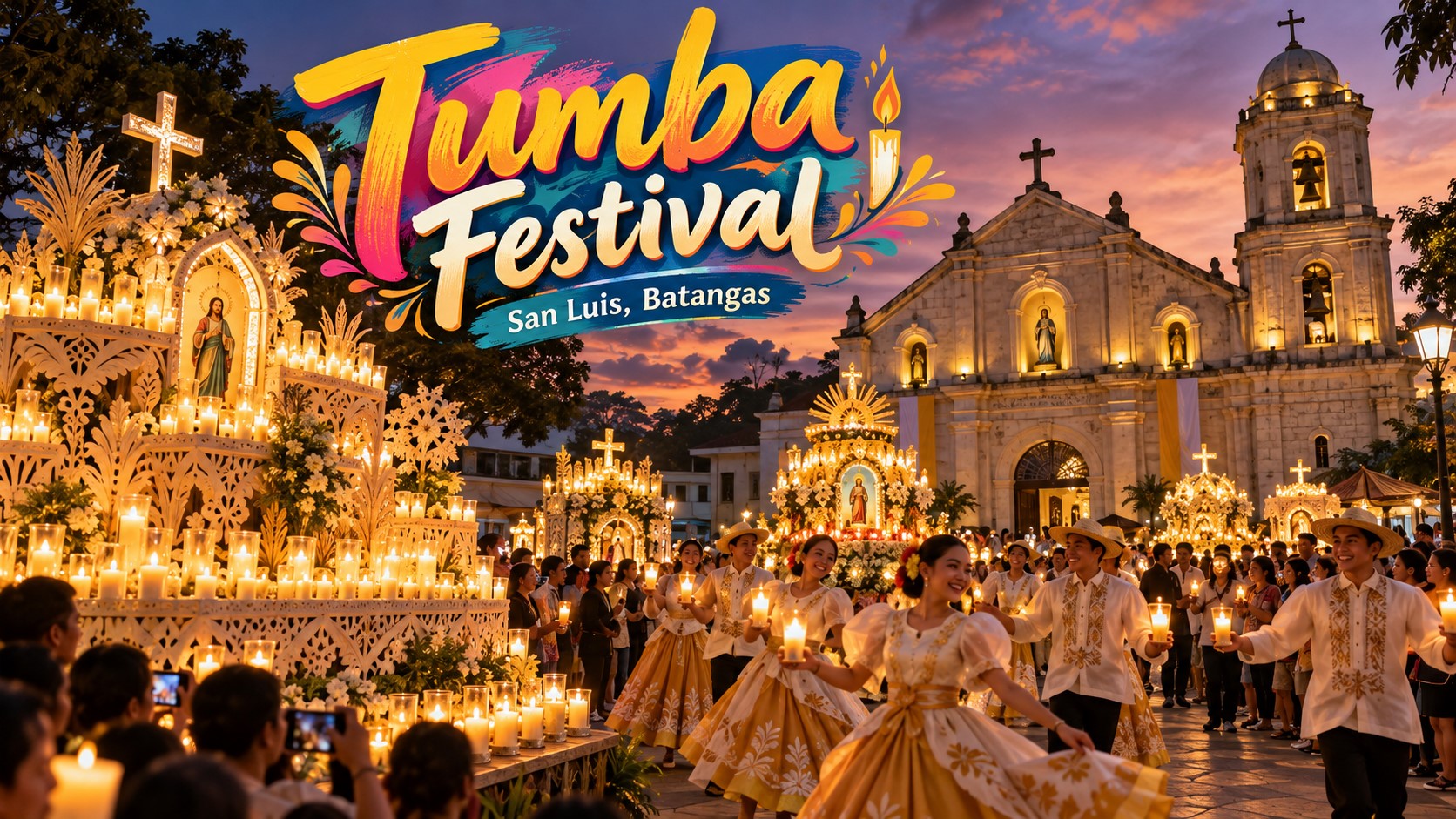
Instead of elaborate parade floats and large dancing contingents, residents create structures decorated with candles, religious images, and symbolic designs that reflect their faith and remembrance of the dead.
Some displays resemble miniature shrines. Others feature creative arrangements of candles, sometimes forming pyramid-like structures or elaborate installations.
What makes the tradition even more interesting is its unusual history.
According to local accounts, the practice originally involved gathering candles left behind in cemeteries after families visited the graves of their relatives.
These candles would then be used to create decorative displays for the community.
Over time, the practice evolved. Residents began purchasing candles and developing more elaborate designs, while continuing the tradition of remembering deceased family members.
Today, Tumba remains an example of how Filipino communities preserve their unique ways of observing Undas.
It’s a celebration that brings together religion, creativity, history, and the spirit of bayanihan.
And for travelers interested in discovering lesser-known Philippine festivals, San Luis offers an interesting glimpse into a tradition that has been passed down through generations.
Here’s everything you need to know about the Tumba Festival, including its meaning, history, traditional activities, celebration dates, and how to visit San Luis, Batangas.
Content
What Is the Tumba Festival?
The Tumba Festival is a traditional candle-centered celebration held during the Undas season in San Luis, Batangas.
Also known as the Candle Festival, it is associated with All Saints’ Day and All Souls’ Day, when Filipino families remember and pray for their departed loved ones.
The celebration is particularly associated with Barangay Poblacion and Barangay Dulangan, two communities that have continued the tradition over the years.
Residents create decorative structures, locally called tumba, using candles and various materials.
These displays may feature religious symbols, representations of saints, or themes that express remembrance, faith, and the hope of eternal life.
The festival is notable because it transforms an ordinary object associated with cemetery visits, the candle, into a meaningful form of community expression.
But Tumba isn’t simply about creating beautiful displays.
It’s also about keeping a tradition alive.
Families, neighbors, and younger residents work together to prepare the structures, passing on knowledge and customs inherited from previous generations.
For many participants, the festival is an opportunity to remember the dead while strengthening the relationships among the living.
Tumba Festival at a Glance
| Details | Information |
|---|---|
| Festival | Tumba Festival |
| Also known as | Candle Festival |
| Location | San Luis, Batangas |
| Region | CALABARZON |
| Traditional celebration | November 1, during Undas |
| Other calendar listing | November 2 |
| Main communities | Barangay Poblacion and Barangay Dulangan |
| Main feature | Candle-decorated structures and religious displays |
| Cultural significance | Remembrance, faith, creativity, and community cooperation |
| Religious connection | All Saints’ Day and All Souls’ Day |
| Type of celebration | Religious and cultural tradition |
Although some Philippine festival calendars list November 2, documented local celebrations have also taken place on November 1.
Visitors should confirm the actual schedule for the year they plan to attend.
What Does Tumba Mean?
The word tumba is derived from Spanish and refers to a tomb or grave.
In Filipino religious and cultural traditions, the word may also be associated with representations or structures connected to death and remembrance.
In San Luis, Tumba refers to the community tradition of preparing decorative structures associated with the Undas observance.
The displays are closely connected to the candles that Filipino families traditionally light beside the graves of their loved ones.
A candle may seem like a simple object.
But during Undas, it carries a deeper meaning.
For many families, lighting a candle is an expression of prayer and remembrance.
It symbolizes faith, hope, and the belief that loved ones continue to be remembered even after death.
Through Tumba, this familiar practice becomes a shared community activity.
Instead of candles being used only at individual graves, they also become part of collective displays that encourage people to reflect on life, death, and the importance of remembering family members.
History and Origins of the Tumba Festival
One of the most fascinating parts of the Tumba Festival is its history.
Unlike some Philippine festivals established through formal municipal programs, Tumba is rooted in a community practice that residents say has been passed down from their ancestors.
The exact year when the tradition began has not been firmly documented in the available historical accounts.
However, reports from residents describe it as a practice observed by earlier generations and continued by their descendants.
The Tradition of Gathering Candles
According to a 2018 GMA News report, the tradition historically involved collecting candles left behind in cemeteries during the Undas period.
After families visited the graves of departed relatives, some candles remained at the cemetery.
These candles were gathered and used to create decorative structures.
Older local accounts even describe the practice as stealing candles.
That unusual detail became part of the stories associated with the festival’s origins.
However, this should be understood as a historical description rather than something visitors or participants are encouraged to do today.
The same GMA report documented residents explaining that candles were increasingly being purchased because taking them without permission was prohibited.
What’s important is that the tradition continued even as the method of obtaining the materials changed.
The candles remained central to the celebration.
From Simple Candle Arrangements to Creative Displays
Earlier descriptions of Tumba mention candles arranged into pyramid-like structures.
Residents would gather around the displays, with some accounts recalling dancing and other community activities.
Over time, the structures became more elaborate.
Instead of focusing only on arranging candles, participants began creating themed installations using religious images, decorative materials, and artistic designs.
The festival gradually became an opportunity for residents to express their creativity while reflecting on the meaning of Undas.
One documented Tumba celebration featured a display in Barangay Poblacion inspired by a stairway to heaven.
The theme represented the journey of souls toward heaven, accompanied by prayers from their loved ones.
Meanwhile, a display in Barangay Dulangan emphasized the importance of strengthening faith and following the examples of saints.
These examples show how Tumba has evolved from a relatively simple candle tradition into a meaningful form of religious and artistic expression.
Passing the Tradition to Younger Generations
Another important part of Tumba’s history is the involvement of young people.
The 2018 GMA report featured residents who explained that continuing the practice allows grandchildren and younger family members to learn about traditions inherited from their ancestors.
The municipality’s information officer also highlighted how preparing the displays encouraged cooperation among young participants.
This is one reason the tradition has continued.
It isn’t simply an activity performed by older residents.
It also provides opportunities for younger generations to become involved in community life.
And as long as people continue sharing its meaning and practices, Tumba can remain part of San Luis’ cultural identity.
Why Is the Tumba Festival Celebrated?
The main purpose of Tumba is to remember departed loved ones during the Undas season.
But its significance also extends to faith, community unity, and cultural preservation.
Remembering the Departed
Every year, Filipino families visit cemeteries to offer prayers, clean graves, light candles, and spend time remembering relatives.
These visits are particularly common on November 1 and 2.
Tumba shares this purpose of remembrance.
Its candle displays encourage participants to reflect on the lives of those who have passed away.
The festival is therefore connected to the larger Filipino tradition of maintaining strong family relationships, even after death.
Honoring Saints and Religious Beliefs
Tumba also incorporates Christian religious imagery.
Some displays feature images of saints or themes inspired by Catholic beliefs about holiness, prayer, and eternal life.
In a GMA News report, a priest from San Isidro Labrador Parish explained that the observance honors the departed and the saints rather than evil spirits.
This is an important distinction, especially because Undas celebrations are sometimes confused with Halloween festivities.
Although both take place around the same season, Tumba’s meaning is rooted in remembrance and religious devotion.
Strengthening Community Relationships
Preparing Tumba structures often requires cooperation.
Residents need to plan designs, gather materials, arrange decorations, and complete their displays.
These activities bring neighbors and families together.
They also create opportunities for younger residents to learn from more experienced community members.
In a way, the preparation itself becomes part of the tradition.
The finished structure may be the most visible result, but the relationships developed while building it are just as meaningful.
Preserving Local Heritage
Every municipality has traditions that help define its identity.
For San Luis, Tumba is one of those distinctive practices.
While other communities may celebrate Undas primarily through cemetery visits and church services, San Luis has developed an additional custom centered on creative candle arrangements.
Preserving this tradition helps maintain the town’s connection to its past.
When Is the Tumba Festival Celebrated?
The Tumba Festival is associated with the annual Undas observance.
Contemporary reporting documents the tradition taking place on November 1, or All Saints’ Day.
However, several festival calendars identify November 2, or All Souls’ Day, as the celebration date.
This difference is worth understanding.
The Undas season covers both dates, and community observances may vary depending on local arrangements.
Tumba Festival Traditional Schedule
| Occasion | Date | Significance |
|---|---|---|
| All Saints’ Day | November 1 | Traditional date documented for Tumba celebrations |
| All Souls’ Day | November 2 | Also listed for Tumba in some festival calendars |
| Tumba activities | During Undas | Community candle displays and remembrance |
| Actual viewing schedule | Varies | Subject to local arrangements |
The most reliable approach is to confirm the year’s activities with the Municipal Government of San Luis or the participating barangays.
Unlike a major commercial festival, Tumba doesn’t necessarily follow an identical program every year.
The location, themes, viewing hours, and extent of participation may change.
Tumba Festival Highlights: What to Expect
Now, let’s talk about what makes this tradition different from the usual Philippine festival.
If you’re visiting San Luis for Tumba, you shouldn’t expect a massive street parade similar to Sinulog or a competition involving dozens of dance contingents.
The main attraction is the community’s creative and meaningful use of candles.
1. Candle-Decorated Tumba Structures
The most recognizable feature is the tumba structure itself.
Traditionally, candles are arranged into decorative displays that may include wooden frameworks, temporary shelters, or other supporting materials.
Some arrangements form pyramid-like shapes, while others incorporate religious imagery or elaborate designs.
The appearance depends on the creativity of the participating residents.
Instead of simply placing candles in rows, participants transform them into installations that tell stories or communicate a particular message.
For visitors, these structures offer an opportunity to appreciate how ordinary materials can be used to create something meaningful.
2. Religious Symbols and Images of Saints
Religious imagery is another important feature of the festival.
Some Tumba displays include statues, images of saints, crosses, or visual representations of Christian beliefs.
The themes may focus on prayer, spiritual guidance, remembrance, or the hope of eternal life.
These displays can also become opportunities for younger participants to learn about the religious significance of All Saints’ Day.
It’s a reminder that the festival’s decorations are not simply intended for entertainment.
They also reflect the beliefs of the community.
3. Creative Community Themes
One of the most interesting aspects of Tumba is how each participating group can interpret its chosen theme.
For example, the stairway-to-heaven presentation documented in Poblacion illustrated the journey of the soul and the importance of prayer.
Other themes have emphasized faith and the example of the saints.
This gives participants opportunities to combine visual storytelling with religious reflection.
And because designs can change from year to year, visitors may encounter different displays whenever the tradition is organized.
4. Candlelight and Evening Atmosphere
Candles naturally become more visually striking when daylight begins to fade.
Their warm glow can create a distinctive atmosphere around the decorated structures.
For someone interested in local photography or traditional community celebrations, this is one of the features that makes Tumba unusual.
But while the displays may be visually interesting, it’s important to remember that they have religious and cultural significance.
Visitors should avoid touching the candles or interfering with the installations.
5. Community Cooperation
Another highlight isn’t necessarily something you can capture in a single photograph.
It’s the preparation.
Tumba brings together participants who help plan and create the displays.
Young residents work alongside family members and neighbors.
This sense of community cooperation is one of the reasons local officials have emphasized the importance of continuing the tradition.
It gives people a shared project connected to their town’s heritage.
6. Traditional Dancing and Community Activities
Older descriptions of Tumba mention residents dancing around pyramid-like candle arrangements.
This detail reflects the tradition’s more informal community origins.
However, it should not be confused with the organized street dancing competitions associated with many other Philippine festivals.
There is no established evidence that a grand street dancing parade is a guaranteed annual feature of the San Luis Tumba Festival.
The activities depend on local customs and the particular year’s arrangements.
Tumba Festival in Barangay Poblacion and Barangay Dulangan
Although Tumba is associated with San Luis as a municipality, two communities are particularly important in documented accounts of the tradition.
These are Barangay Poblacion and Barangay Dulangan.
Barangay Poblacion
Poblacion is the central community of San Luis, where many of the town’s main establishments and public services are located.
Residents of Poblacion have participated in preparing Tumba displays with religious and symbolic themes.
The previously documented stairway-to-heaven presentation is one example.
Through creative design, participants expressed the idea that prayers for deceased loved ones are an important part of Christian remembrance.
Barangay Dulangan
Dulangan is another barangay known for participating in the Tumba tradition.
Residents have created displays emphasizing religious devotion, the example of saints, and the importance of faith.
The community’s participation has also provided opportunities for families and young residents to work together.
These two barangays demonstrate how a tradition can be preserved at the community level.
The festival is not simply something organized for visitors.
It is something residents themselves have helped sustain.
The Role of Candles in Filipino Undas Traditions
To fully appreciate Tumba, it’s helpful to understand why candles are so important during Undas.
Throughout the Philippines, families light candles at the graves of their loved ones.
For many Catholics, this is an expression of prayer and remembrance.
The light can symbolize hope and faith.
It also represents the idea that the deceased continue to be remembered.
In many communities, families spend hours at the cemetery, sharing stories, offering prayers, and reconnecting with relatives.
Tumba reflects these same values, but expresses them through collective candle displays.
Instead of each candle being part of an individual family’s cemetery visit, candles also become materials used for a community tradition.
And that’s what makes the celebration distinctive.
It transforms a familiar religious practice into a shared cultural expression.
Is the Tumba Festival the Same as Halloween?
Not exactly.
This is an important point because the festival takes place around the same time as Halloween.
Halloween, celebrated on October 31, is commonly associated with costumes, decorations, and spooky entertainment.
Tumba, on the other hand, is associated with the Philippine Undas tradition.
Its central purpose is remembering deceased loved ones and expressing religious faith.
Some of the festival’s older themes may have included frightening imagery, according to residents interviewed by GMA News.
However, the tradition has increasingly emphasized remembrance and Christian religious symbolism.
So while its candle displays may sometimes look unusual to visitors, Tumba should not automatically be described as a Halloween celebration.
Its meaning comes from local customs surrounding death, remembrance, and faith.
Tumba Festival in Batangas vs. Tumba Festival in Paoay
Here’s something that often causes confusion when researching this festival.
There is another well-known Tumba Festival in Paoay, Ilocos Norte.
Although both celebrations take place during Undas and involve remembering the dead, they are distinct traditions.
Tumba Festival in San Luis, Batangas
The San Luis celebration is known for candle-decorated structures, religious themes, and the community practice of transforming candles into symbolic displays.
Barangays Poblacion and Dulangan are especially associated with the tradition.
Tumba Festival in Paoay, Ilocos Norte
In Paoay, Tumba is a centuries-old Ilocano remembrance ritual.
Residents build temporary shelters or shrines, arrange food offerings for departed loved ones, and recite prayers and hymns.
The practice has also become part of local cultural tourism.
The Philippine News Agency has documented the Paoay tradition, including the participation of community elders and the preparation of traditional food offerings.
How They Differ
| Details | San Luis, Batangas | Paoay, Ilocos Norte |
|---|---|---|
| Festival | Tumba or Candle Festival | Tumba or Tumba-Tumba |
| Main feature | Candle-decorated structures | Memorial shrines, offerings, and prayers |
| Cultural setting | Batangueño Undas tradition | Ilocano remembrance tradition |
| Traditional date | November 1–2 | November 1 |
| Main purpose | Remembrance and faith | Remembrance and honoring the departed |
Both traditions deserve recognition, but their histories and practices should not be treated as identical.
Where Is the Tumba Festival Held?
Tumba is celebrated in San Luis, a municipality in Batangas Province, part of the CALABARZON Region.
San Luis is located near the historic town of Taal and is accessible through roads connecting it with Lemery, Bauan, and other parts of Batangas.
The municipality is generally quieter than some of the province’s larger tourist destinations.
Its landscape includes residential communities, agricultural areas, and coastal sections facing Balayan Bay.
The town has a traditional municipal center, local church, market, and small businesses that serve residents.
For Tumba, the communities of Poblacion and Dulangan are particularly relevant.
However, the exact locations of the installations can change.
Visitors should confirm the participating barangays and viewing arrangements before traveling.
How to Get to San Luis, Batangas
If you’re planning to visit San Luis during Undas, the municipality can be reached by private vehicle or public transportation.
From Manila by Public Transportation
One practical option is to travel from Metro Manila to Lemery or Taal using an available provincial bus service.
From the Taal or Lemery area, continue toward San Luis using local transportation.
Jeepneys and tricycles serve different routes around the municipality.
However, the exact service you need will depend on your arrival point and destination.
If you’re heading specifically to Barangay Poblacion or Dulangan, confirm the best route with terminal personnel or local transport operators.
From Batangas City
If you’re already in Batangas City, you can travel toward Bauan and connect to routes serving San Luis.
Local jeepneys and other available transport services operate along the road network connecting these municipalities.
Ask about current transfer points and schedules before leaving.
By Private Vehicle
Driving is a convenient option, especially if you’re planning to explore Taal and neighboring Batangas towns during the same trip.
San Luis can be approached through roads connecting Taal and Lemery, as well as through Bauan.
Use a current navigation application to determine the best route.
Because Tumba takes place during the busy Undas period, be prepared for heavier traffic near cemeteries and town centers.
Travel time can vary considerably depending on your starting point, weather, and road conditions.
Places to Visit Near the Tumba Festival
If you’re traveling to San Luis specifically for Tumba, you may want to spend some time discovering the town and its nearby heritage attractions.
San Isidro Labrador Parish Church
One of the important religious landmarks in San Luis is San Isidro Labrador Parish Church in Barangay Poblacion.
The parish belongs to the Roman Catholic Archdiocese of Lipa.
Its history dates to 1916, and it has long served as an important center of Catholic life in the municipality.
A visit to the church provides an opportunity to appreciate the religious setting in which traditions such as Tumba continue.
However, Tumba should not be confused with the parish’s annual patronal celebration.
They are separate occasions.
If you’re visiting during Undas, check the parish’s actual Mass schedule and religious activities.
Taal Basilica and Heritage Town
Since San Luis is located near Taal, it’s also possible to combine your visit with a trip to the historic town.
One of Taal’s best-known landmarks is the Minor Basilica of St. Martin of Tours.
The church is widely recognized for its grand architecture and historical significance.
The surrounding town also has ancestral houses, heritage streets, and establishments associated with Batangas history.
For visitors who enjoy Philippine heritage destinations, Taal is a worthwhile addition to a San Luis trip.
If you’re planning to visit both places, allow additional time for transportation and sightseeing.
What to Eat During Your Visit to San Luis
Batangas is known for its distinctive local food, and exploring nearby towns provides opportunities to enjoy familiar regional specialties.
One dish worth trying is lomi.
Batangas-style lomi is known for its thick noodles and rich broth, often served with meat, egg, and other toppings.
Another famous regional dish is bulalo, a beef shank soup that has become one of Batangas’ most recognizable specialties.
You can also look for local kakanin, pastries, and other snacks sold in markets or neighborhood eateries.
Since San Luis is close to coastal areas, some establishments may also serve fresh fish and other seafood.
However, food availability depends on the establishment and the season.
For a more local experience, consider eating at a carinderia or small restaurant in town.
And remember, the Tumba Festival is primarily a community religious and cultural tradition, so you shouldn’t assume that it always includes a large organized food fair.
Travel Tips for Visiting the Tumba Festival
If you’re interested in experiencing Tumba, here are several practical things to keep in mind.
1. Confirm the Celebration Date
This is particularly important because published calendars differ between November 1 and November 2.
Local reporting documents the tradition on All Saints’ Day, while some general festival listings identify All Souls’ Day.
Check with the municipality or participating barangays before traveling.
2. Respect the Religious Meaning
Although the candle displays may be visually interesting, Tumba is associated with remembrance and faith.
Avoid treating the installations simply as decorative tourist attractions.
Be respectful toward participating families and community members.
3. Don’t Touch the Candles or Decorations
The structures may contain fragile materials and candles.
Avoid moving objects, touching the installations, or entering areas restricted by organizers.
Fire safety should always be a priority.
4. Never Take Candles From Cemeteries
Although older accounts mention collecting or taking cemetery candles, this should not be interpreted as permission to remove candles or offerings from graves.
Contemporary participants have described purchasing their materials instead.
Visitors should never take candles or other objects without permission.
5. Be Responsible When Taking Photographs
If photography is allowed, avoid blocking pathways or interfering with people preparing or observing the tradition.
Ask permission before photographing individuals, especially during prayers and religious activities.
6. Prepare for Undas Traffic
November 1 and 2 are busy travel dates in many parts of the Philippines.
Roads near cemeteries and town centers may experience congestion.
Allow additional time for transportation.
7. Support Local Businesses
If you’re visiting San Luis, consider purchasing meals, refreshments, and other goods from local establishments.
Small businesses can benefit from visitors attending community celebrations.
Suggested San Luis Tumba Festival Day Trip
If you’re visiting from Metro Manila or another part of Batangas, you can plan a simple cultural day trip.
Morning: Explore Taal or San Luis
Begin your journey early.
If you’re interested in history and religious architecture, consider visiting Taal Basilica and exploring the nearby heritage area.
Alternatively, head directly to San Luis and spend time around the town center.
Afternoon: Learn About the Local Tradition
Visit the Poblacion area and check the confirmed arrangements for Tumba.
If local residents or organizers are available to explain the tradition, take the opportunity to learn about its history.
Remember that preparations are carried out by the participating communities, so visitors should not interrupt ongoing work.
Evening: Experience the Candle Displays
If viewing is officially permitted and the installations are operating that day, spend time appreciating the completed Tumba displays.
Observe quietly and follow directions from the barangay or municipal organizers.
If evening activities are scheduled, arrange reliable transportation for your return journey.
This itinerary is only a planning suggestion, not an official festival program.
Why the Tumba Festival Matters
The Philippines is home to many colorful festivals, but not all celebrations are built around street dancing, harvests, or patron saints.
Some are rooted in simple community traditions that have continued through generations.
Tumba is one example.
At first glance, it may seem unusual to create decorative structures using candles during Undas.
But when you understand its meaning, the tradition becomes more significant.
It is a way of honoring the dead.
It is an expression of faith.
It is also an opportunity for neighbors and families to work together.
And perhaps most importantly, it provides a connection between generations.
Older residents remember how Tumba was practiced during their childhood.
Younger residents learn how to prepare the displays and understand the tradition’s meaning.
Through this shared experience, the community preserves a distinctive part of its heritage.
For travelers, Tumba offers something beyond the usual tourism experience.
It provides an opportunity to appreciate how local traditions can be shaped by history, religion, creativity, and everyday community life.
Frequently Asked Questions About the Tumba Festival
What is the Tumba Festival?
The Tumba Festival, also known as the Candle Festival, is an Undas tradition in San Luis, Batangas, where residents create candle-decorated structures and religious displays to honor deceased loved ones.
Where is the Tumba Festival celebrated?
It is celebrated in San Luis, Batangas, particularly in Barangay Poblacion and Barangay Dulangan.
When is the Tumba Festival held?
The tradition is associated with November 1 and 2. Contemporary local reporting documents Tumba on November 1, while some Philippine festival calendars list November 2.
The exact schedule should be confirmed locally.
What does Tumba mean?
Tumba is a Spanish-derived word associated with a tomb or grave. In San Luis, it refers to the local candle-centered remembrance tradition.
Why is the Tumba Festival celebrated?
The celebration honors departed loved ones, expresses religious faith, and encourages community cooperation through the preparation of symbolic candle displays.
Why is it called the Candle Festival?
Candles are the central materials used to create the decorative structures associated with Tumba.
Do people really steal candles during Tumba?
Older local accounts describe a historical practice of gathering or taking candles left behind at cemeteries.
However, contemporary participants have explained that candles are now commonly purchased because taking candles without permission is prohibited.
Visitors should never take candles or offerings from graves.
Is Tumba a religious festival?
Yes. It is closely associated with Christian remembrance traditions during All Saints’ Day and All Souls’ Day.
Is there street dancing during Tumba?
Older descriptions mention community dancing around candle structures, but a grand street dancing competition is not an established annual feature.
Is Tumba the same as the festival in Paoay, Ilocos Norte?
No. Paoay has a separate Tumba tradition involving memorial shrines, offerings, and prayers. The San Luis celebration is particularly associated with candle-decorated structures.
Is the Tumba Festival free?
Public displays may be accessible without admission, but there is no verified permanent admission policy covering all activities. Visitors should check local arrangements.
Can tourists attend the Tumba Festival?
Visitors may be able to view community displays when they are open to the public.
However, access and activities depend on local arrangements, and the religious significance of the tradition should always be respected.
Tumba Festival 2026: Latest Schedule Information
For travelers planning to experience the upcoming celebration, Tumba is traditionally associated with the Undas period on November 1 and 2.
In 2026, November 1 falls on a Sunday, while November 2 falls on a Monday.
The established tradition in San Luis is particularly associated with Barangay Poblacion and Barangay Dulangan.
However, as of October 18, 2026, a complete official public program confirming this year’s Tumba displays, viewing hours, participating barangays, and other organized activities has not been independently verified.
Some festival directories identify November 2 as the celebration date, while local reporting has documented the tradition on November 1.
For this reason, travelers should avoid assuming that the exact date or program will be identical every year.
Before visiting, check announcements from the Municipal Government of San Luis, the participating barangays, and local parish authorities where relevant.
Final Thoughts
Some of the most interesting Philippine traditions are not necessarily the biggest or most colorful.
Sometimes, they’re found in small communities where people continue practices passed down through their families.
The Tumba Festival in San Luis, Batangas, is one of those traditions.
What began as a distinctive way of arranging candles during Undas has become a meaningful form of remembrance and community participation.
Through the preparation of candle displays, residents honor deceased loved ones while preserving customs inherited from earlier generations.
And although the tradition has changed over time, its central message remains familiar.
Remembering the people who came before us is an important part of family and community life.
For visitors, Tumba offers an opportunity to appreciate a lesser-known side of Batangas culture.
It’s a reminder that Philippine festivals aren’t always about massive parades, elaborate costumes, or loud performances.
They can also be about quiet memories, creative expressions of faith, and neighbors working together to keep a tradition alive.
And sometimes, something as simple as a candle can carry a story worth remembering.