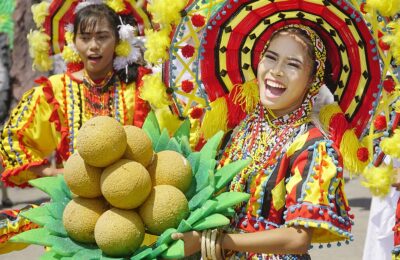
When people talk about festivals in Cebu, Sinulog is usually the first celebration that comes to mind. And it’s understandable. With its colorful costumes, energetic street dancing, and massive crowds, Sinulog has become one of the most recognizable festivals in the Philippines.
But Cebu is home to many other festivals that are just as interesting, especially if you enjoy discovering the traditions and stories behind local celebrations.
One of these is the Kabkaban Festival in Carcar City.
Known as the Heritage City of Cebu, Carcar is famous for its beautiful ancestral houses, centuries-old church, traditional shoemaking industry, and delicious local delicacies like lechon, chicharon, and ampao.
Every November, the city celebrates its culture and religious devotion through Kabkaban Festival, a colorful event that brings together history, music, dance, and community traditions.
What makes this festival special is that it doesn’t celebrate just one aspect of Carcar’s identity. Instead, it tells the story of the city itself, from its historical roots and religious beliefs to the industries, traditions, and people that have shaped it over the years.
The celebration features vibrant street dancing, elaborate costumes, cultural performances, and religious activities honoring the city’s patron saint, St. Catherine of Alexandria.
If you’re planning to visit Cebu or simply want to learn more about Philippine festivals, here’s a comprehensive guide to Kabkaban Festival, including its meaning, history, traditions, activities, and what visitors can expect when exploring Carcar City.
Content
What Is Kabkaban Festival?
Kabkaban Festival is an annual cultural and religious festival celebrated in Carcar City, located in the southern part of Cebu province.
The festival is held in connection with the feast of St. Catherine of Alexandria, the city’s patron saint, whose feast day falls on November 25.
Kabkaban is best known for its colorful street dancing and ritual performances that showcase the history, culture, traditions, and everyday life of the Carcaranons, the people of Carcar.
Unlike festivals that focus exclusively on a harvest, a particular local product, or a historical event, Kabkaban brings together several aspects of the city’s heritage.
Its performances highlight Carcar’s religious devotion, traditional industries, local delicacies, arts, and community values.
The celebration also reflects the city’s reputation as one of Cebu’s most important cultural and historical destinations.
Over the years, Kabkaban Festival has grown into a major local celebration, attracting performers, residents, and visitors who want to experience Carcar’s vibrant culture.
It has also become one of the festivals representing Carcar City in provincial celebrations such as Pasigarbo sa Sugbo, Cebu’s festival of festivals.
Where Is Kabkaban Festival Celebrated?
Kabkaban Festival is celebrated in Carcar City, Cebu, Philippines.
Carcar is approximately 40 kilometers south of Cebu City and is located along the main highway connecting Metro Cebu with the southern municipalities of the province.
The city is bordered by San Fernando to the north, Sibonga to the south, the Cebu Strait to the east, and Cebu’s mountainous interior to the west.
Carcar is sometimes called the Heritage City of Cebu because of its well-preserved historical buildings, ancestral houses, and Spanish and American colonial-era architecture.
The city’s historical district includes the famous Carcar Rotunda, St. Catherine of Alexandria Parish Church, and several old houses that provide a glimpse into the area’s rich past.
These landmarks also help create the atmosphere of the Kabkaban Festival.
During the celebration, the streets and public spaces of Carcar become venues for cultural performances and community activities.
Historically, festival activities have included street-dancing presentations along important roads and performances in the city’s public plaza and designated competition areas.
The exact route and performance venues may change depending on the annual program.
What Does Kabkaban Mean?
The name Kabkaban comes from the word “kabkab,” a local name associated with a type of fern that once grew abundantly in the area.
Historical accounts describe these ferns as growing on trees, particularly in places where large acacia trees provided suitable conditions for the plants.
According to local history, Kabkab was also one of the names used for the settlement before it eventually became known as Carcar.
The fern therefore became associated with the city’s early identity.
When the community developed its own cultural festival, the name Kabkaban was adopted to reflect this historical connection.
The fern is more than just the inspiration behind the festival’s name.
In the celebration’s symbolism, the abundance of kabkab represents the richness of Carcar’s culture and the creativity of its people.
The spreading leaves are also associated with the city’s appreciation of music, arts, and cultural expression.
This makes Kabkaban an interesting example of how something as simple as a native plant can become an important cultural symbol.
While a few festival accounts offer alternative explanations of the name, the connection to the kabkab fern is the explanation consistently recognized by Cebu’s provincial tourism authorities.
History and Origins of Kabkaban Festival
To understand Kabkaban Festival, we also need to explore the history of Carcar.
After all, the celebration is closely connected to the city’s identity, traditions, and historical development.
The Early History of Carcar
Carcar’s history stretches back to the early period of Spanish colonization in Cebu.
Before becoming the modern city that visitors know today, the area was associated with an earlier coastal settlement called Sialo.
Historical accounts describe how raids and security concerns led residents to relocate farther inland.
The community eventually became associated with the name Kabkab, referring to the ferns found in the area.
Later, the settlement became known as Carcar.
Over the centuries, the community developed into an important center of trade, agriculture, craftsmanship, and religious life in southern Cebu.
Its location along the main route connecting Cebu City with the southern towns contributed to its development.
Carcar also became known for industries such as shoemaking, furniture production, basket weaving, bolo making, and food production.
These industries helped shape the city’s economic and cultural identity.
Today, many of these traditions remain closely associated with Carcar.
The Religious Influence of St. Catherine of Alexandria
Catholicism has played an important role in Carcar’s history.
The community established its own parish during the Spanish colonial period, and St. Catherine of Alexandria became its patroness.
St. Catherine is traditionally remembered in Catholic Christianity as a martyr associated with wisdom, learning, and steadfast faith.
Her feast day is celebrated every November 25.
Over time, the annual fiesta honoring St. Catherine became one of the most important occasions in Carcar.
Religious activities such as Masses, novenas, and processions became part of the celebration.
The city’s cultural festivities eventually developed alongside these religious traditions.
Today, Kabkaban Festival serves as one of the major cultural highlights of the annual fiesta.
How Kabkaban Became a Festival
The modern Kabkaban Festival developed as a way of showcasing Carcar’s history, products, industries, and cultural traditions.
Early accounts describe the celebration as having been conceptualized around an annual agro-industrial fair.
The goal was to give residents and visitors an opportunity to appreciate the products and traditions for which Carcar was known.
As the celebration evolved, dance became an important part of its identity.
Festival organizers introduced choreographed presentations featuring the city’s historical and cultural themes.
Schools and community groups began participating in the performances, helping turn the celebration into a major local cultural event.
Kabkaban was already an established festival by the early 2000s.
In 2005, the celebration included activities highlighting Carcar’s contributions to art, religion, and heritage preservation, including performances about the history of prominent local families.
In succeeding years, the festival continued to develop through larger dance presentations, more elaborate costumes, and greater participation from local schools.
Although the celebration has changed over time, its central purpose has remained the same: to preserve and promote the cultural identity of Carcar.
The Connection Between Kabkaban Festival and St. Catherine of Alexandria
One of the defining features of Kabkaban Festival is its connection to Carcar’s patron saint.
The annual fiesta honors St. Catherine of Alexandria, known locally as Santa Catalina de Alexandria.
Her feast day falls on November 25, and the surrounding days are traditionally filled with religious and community activities.
For many Carcaranons, the celebration is an opportunity to express gratitude, strengthen their faith, and participate in their community’s religious traditions.
Religious activities may include novena prayers, church services, and processions.
Meanwhile, the cultural festival provides another way for the community to express thanksgiving.
This combination of devotion and cultural celebration is common in many Philippine fiestas.
However, Kabkaban has developed its own distinctive character by highlighting the city’s heritage through dance.
The festival demonstrates how religious traditions and local cultural expressions can exist together within one celebration.
The Kabkaban Festival Street Dancing
If there’s one activity that visitors should look forward to during Kabkaban Festival, it’s the street dancing.
This is one of the main attractions of the celebration.
Performers wear colorful costumes and participate in coordinated dance presentations inspired by Carcar’s history, traditions, and local way of life.
Depending on the annual festival program, groups may perform along designated streets before presenting their routines in a ritual showdown.
The performances are accompanied by lively music, percussion, and choreographed movements.
One of the most interesting things about Kabkaban is that the dance themes can change depending on the participating groups.
Rather than following one fixed storyline every year, the presentations may explore different aspects of Carcar’s identity.
Traditional Dance Movements
Kabkaban Festival’s dancing incorporates elements associated with Cebuano cultural and religious dance traditions.
Some presentations feature movements inspired by the wider Sinulog dance tradition, while others use choreography specifically developed for Kabkaban.
The movements are designed to express the themes and stories being presented.
Dancers may perform synchronized formations, rhythmic stepping patterns, and gestures symbolizing community life, faith, work, or historical events.
The choreography is often theatrical, helping audiences understand the meaning behind the performance.
Colorful Festival Costumes
Another highlight of Kabkaban is the elaborate costumes.
The costumes can include vibrant fabrics, decorative headpieces, ornamental accessories, and designs inspired by the festival’s annual themes.
Some costumes incorporate patterns and colors associated with nature, while others represent historical characters, local products, or cultural traditions.
The creativity of these costumes is part of what makes the performances visually impressive.
They also demonstrate the artistic talents of local designers, choreographers, students, and community members.
Ritual Dance and Traditional Beliefs
An interesting aspect of Kabkaban is its association with a traditional ritual dance believed to drive away bad spirits.
Older descriptions of the festival explain that the dance symbolically removes negative influences from the community.
This belief has become part of the cultural interpretation of Kabkaban.
Today, however, the dance is primarily presented as an artistic, cultural, and devotional performance.
Its significance lies in preserving traditional beliefs while celebrating the city’s faith and identity.
The ritual element adds another layer of meaning to the festival, showing how older customs have influenced present-day celebrations.
Kabkaban Festival Traditions and Activities
Kabkaban is not limited to one performance.
The festival season traditionally includes religious activities, cultural presentations, community gatherings, and opportunities to showcase the city’s products.
Here are some of the activities commonly associated with the celebration.
1. Grand Street Dancing
The grand street-dancing presentation is one of the most anticipated festival activities.
Participating groups perform choreographed routines inspired by Carcar’s culture, history, and traditions.
School contingents have played an important role in the festival, with students participating as dancers and performers.
These performances often attract large audiences, particularly around designated viewing areas.
2. Ritual Showdown
In editions featuring a competition, the ritual showdown provides participating groups with an opportunity to present their choreographed performances in a designated venue.
These presentations may feature elaborate props, coordinated formations, dramatic storytelling, and specially composed music.
The performances sometimes explore themes such as faith, family, community development, craftsmanship, and local history.
Festival organizers may also recognize outstanding achievements in choreography, costumes, musicality, and overall presentation.
However, not every edition is necessarily organized as a competition.
Some past celebrations have focused on performances without awarding competitive prizes.
3. Religious Activities
The religious aspect of Kabkaban centers on the annual feast of St. Catherine of Alexandria.
Church activities may include novenas, special Masses, and devotional gatherings.
For many residents, these religious observances remain the most meaningful part of the fiesta.
Visitors who attend are encouraged to respect the solemnity of church activities.
4. Cultural Heritage Presentations
Kabkaban provides an opportunity to highlight Carcar’s heritage.
Performances may feature historical events, local industries, and customs associated with the city.
In previous editions, festival groups have portrayed traditions such as courtship, weddings, baptism, bayanihan, harvest celebrations, and other aspects of Filipino community life.
These presentations help introduce younger audiences to traditions that remain important to Carcar’s identity.
5. Local Products and Food
Carcar is famous for several products, particularly its food specialties and traditional crafts.
During the fiesta season, visitors can explore local markets and establishments selling these products.
Carcar lechon, chicharon, ampao, and bocarillo are among the most recognizable delicacies.
The city is also known for traditional shoemaking, basket weaving, and other handicrafts.
These industries are frequently highlighted in Kabkaban’s cultural storytelling.
6. Beauty Pageants and Community Programs
Some editions of the fiesta have included pageants such as Miss Carcar, alongside sports activities and community entertainment.
Other programs may involve performances by local schools and civic organizations.
The exact lineup depends on the annual celebration.
Visitors should check the latest official program rather than assuming that every activity will be repeated each year.
Kabkaban Festival and Carcar’s Cultural Heritage
One of the things I find particularly interesting about Kabkaban is how closely it is connected to Carcar’s history.
Carcar isn’t simply another city hosting a colorful festival.
It is a place where many of Cebu’s historical traditions remain visible.
Walking around the city’s old district, visitors can still find ancestral houses, religious landmarks, and structures that reflect different periods of Philippine history.
These buildings help explain why Carcar has earned its reputation as the Heritage City of Cebu.
And this is also what Kabkaban tries to celebrate.
Instead of allowing the city’s history to remain confined to museums and historical markers, the festival presents it through music, dance, costumes, and storytelling.
For younger Carcaranons, participating in the festival can become a way of learning about their hometown.
For visitors, it provides an opportunity to understand the city beyond its food and tourist attractions.
Preserving Traditional Industries
Carcar’s industries are another important part of the festival’s identity.
The city has long been associated with shoemaking and other forms of craftsmanship.
Its locally manufactured footwear helped establish Carcar as an important shoemaking center in Cebu.
Furniture making, basket weaving, bolo making, and food production also contributed to the city’s economic development.
Kabkaban gives these industries cultural visibility.
For example, Carcar’s presentation during Cebu’s Halad sa Pagtuo festival showcase in August 2026 highlighted its shoemaking industry as part of a broader effort to bring attention to this traditional livelihood.
This demonstrates how Kabkaban can also serve as a platform for conversations about heritage preservation and the future of local industries.
Kabkaban Festival at Pasigarbo sa Sugbo
Kabkaban has also become one of the recognizable festivals participating in Pasigarbo sa Sugbo.
Pasigarbo sa Sugbo is a province-wide festival competition that brings together cultural contingents representing different Cebu municipalities and component cities.
Each participating group presents its local festival through dancing, music, costumes, and storytelling.
For Carcar, Kabkaban serves as its cultural representative.
The city has earned recognition for its performances at the provincial level.
One of its major achievements came in 2019, when Carcar City’s Kabkaban Festival was declared grand champion at Pasigarbo sa Sugbo.
The contingent also received several awards, including recognition for street dancing, ritual showdown, costumes, and musical presentation.
This achievement helped demonstrate the creativity and performance skills of Carcar’s festival participants.
It also strengthened Kabkaban’s reputation as one of Cebu’s notable cultural festivals.
However, it’s important to understand that Kabkaban Festival and Pasigarbo sa Sugbo are not the same event.
Kabkaban is Carcar City’s own cultural and religious celebration, traditionally held in November.
Pasigarbo sa Sugbo is a separate provincial festival showcase where Kabkaban may participate alongside other Cebu festivals.
When Is Kabkaban Festival Celebrated?
Kabkaban Festival is traditionally celebrated in November, usually during the days leading up to the feast of St. Catherine of Alexandria.
The patron saint’s feast day falls on November 25.
Many festival calendars identify November 24–25 as the traditional celebration period.
However, the street dancing and other cultural activities may take place several days before the feast.
For example, past editions have featured major dance performances on November 23 or the preceding Sunday.
The exact timing can vary depending on the city government’s annual schedule.
For travelers, the important thing to remember is that Kabkaban Festival is generally associated with the last part of November.
If you’re planning to attend the street dancing or ritual showdown, it’s best to check the current year’s official announcements before making travel arrangements.
Where to Watch Kabkaban Festival
Kabkaban Festival activities are generally concentrated around Carcar City’s main public spaces.
Historically, the city’s plaza, streets near the heritage district, and areas around the Carcar Rotunda have served as important locations for festivities.
The historic Santa Catalina Street has also been associated with festival parades and the city’s cultural heritage.
During street-dancing performances, some roads may be temporarily closed or used as part of the presentation route.
Viewing arrangements can change depending on the number of participants, available venues, and traffic management plans.
If you’re visiting specifically for the festival, I recommend arriving early and identifying the official performance area before the activities begin.
This will give you more time to find a comfortable viewing spot and explore the city.
Foods to Try During Kabkaban Festival
One of the best things about visiting Carcar is the food.
Even if you’re not familiar with the city’s historical attractions, you’ve probably heard about its famous chicharon or lechon.
And if you’re attending Kabkaban Festival, trying these local delicacies is definitely worth including in your itinerary.
Carcar Lechon
Carcar is one of Cebu’s well-known destinations for lechon.
The city’s roasted pork is recognized for its flavorful meat, crispy skin, and savory cooking juices.
At the public market, lechon vendors typically sell roasted pork by weight.
You can order a portion and enjoy it with rice, depending on the stall’s serving arrangements.
Carcar lechon is especially popular among travelers heading to or returning from southern Cebu.
Carcar Chicharon
Another product that Carcar is famous for is chicharon.
These crunchy pork cracklings are among the city’s best-known pasalubong items.
You can find vendors selling chicharon around the public market, rotunda, and nearby commercial areas.
It’s one of the easiest food souvenirs to bring home after your visit.
Ampao
Ampao is another traditional Carcar delicacy.
It is a sweet, crispy snack made from puffed rice, usually bound together with syrup and shaped into bars.
Some versions include peanuts.
Ampao is a popular pasalubong because it’s lightweight, easy to pack, and commonly sold in local markets.
Bocarillo
Bocarillo is a sweet delicacy made from young coconut.
The coconut is cooked with sugar and shaped into colorful pieces.
It has a chewy texture and is another traditional food associated with Carcar.
If you’re buying pasalubong, you can easily include bocarillo alongside chicharon and ampao.
Tourist Attractions to Visit in Carcar City
If you’re attending Kabkaban Festival, I suggest spending some time exploring the city’s historical attractions.
Carcar is a great destination for travelers who enjoy old churches, heritage architecture, traditional food, and local culture.
Here are some places worth including in your visit.
1. St. Catherine of Alexandria Parish Church
St. Catherine of Alexandria Parish Church is one of the most important landmarks in Carcar.
This historic Catholic church is closely associated with the city’s religious identity and the annual fiesta honoring its patroness.
The church’s architecture reflects the Spanish colonial period, with a distinctive stone facade and prominent bell towers.
Its historical importance makes it a fitting starting point for anyone interested in understanding Kabkaban Festival.
Visitors can appreciate the architecture and learn more about the religious traditions that helped shape the community.
If you’re attending Mass or visiting during the fiesta, remember to follow appropriate church etiquette.
2. Carcar Rotunda
The Carcar Rotunda is one of the city’s most recognizable landmarks.
Located near the public market, it serves as an important reference point for travelers passing through the city.
The rotunda is known for its historical architecture and its role in Carcar’s urban landscape.
It’s also a convenient place to begin exploring the surrounding commercial and heritage areas.
You can find local food vendors and pasalubong shops nearby.
3. Carcar City Museum
For visitors interested in history, Carcar City Museum is another worthwhile stop.
The museum helps preserve objects, photographs, and historical materials associated with the city.
It provides additional context about Carcar’s development, traditional industries, and cultural heritage.
Checking the museum’s current visiting hours is recommended, especially during public holidays and festival activities.
4. Carcar Heritage Houses
Carcar is known for its collection of well-preserved ancestral houses.
Several of these homes reflect architectural styles from the Spanish and American colonial periods.
One of the best-known examples is Balay na Tisa, a historic ancestral house associated with Carcar’s heritage.
Other old houses can also be found around the city center.
Visitors interested in architecture will appreciate the wooden details, balconies, windows, and other features of traditional Filipino homes.
However, remember that some ancestral houses are privately owned.
Ask permission before entering private property or photographing residents.
5. Carcar Public Market
A visit to Carcar wouldn’t be complete without stopping at its public market.
The market is one of the best places to experience the city’s food culture.
This is where you can find lechon, local delicacies, and everyday products sold by local vendors.
It’s a particularly good stop if you’re planning to buy food souvenirs before returning to Cebu City.
How to Get to Carcar City, Cebu
Carcar is one of the more accessible destinations in southern Cebu.
Its location along the main southern highway makes it convenient to visit from Cebu City and neighboring municipalities.
From Cebu City by Bus
One of the easiest ways to reach Carcar is by taking a southbound bus.
Head to the Cebu South Bus Terminal and look for buses traveling toward Carcar or farther south through the eastern coastal route.
Inform the conductor that you’re getting off in Carcar City.
The trip generally takes around one to one and a half hours under favorable traffic conditions, although it can take longer during busy periods.
During Kabkaban Festival, traffic may be heavier near the city center because of road closures and the number of people attending the celebration.
From Cebu City by Private Car
If you’re driving, follow the Cebu South Road or Natalio Bacalso Avenue toward Carcar.
The route passes through the southern part of Metro Cebu and nearby municipalities.
The distance from Cebu City to Carcar is approximately 40 kilometers.
Travel time depends on traffic, road conditions, and your starting point.
When visiting during the festival, consider using official parking areas and be prepared for possible traffic rerouting.
From Mactan-Cebu International Airport
If you’re arriving from another part of the Philippines, Mactan-Cebu International Airport is the main gateway.
From the airport, you can travel to Cebu City and continue to Carcar by bus or private vehicle.
For those carrying luggage or traveling with family, arranging private transportation may be more convenient.
Keep in mind that the journey from the airport to Carcar can take considerably longer during periods of heavy traffic.
Suggested One-Day Carcar Itinerary During Kabkaban Festival
You can experience several of Carcar’s attractions in one day, making the city a convenient destination for a day trip from Cebu City.
I suggest starting your visit in the morning.
Travel to Carcar early enough to explore the heritage district before the main festival activities.
Once you arrive, begin with St. Catherine of Alexandria Parish Church.
Spend some time appreciating the church’s architecture and learning about its connection to the city’s religious traditions.
Afterward, explore the nearby heritage district, Carcar Rotunda, and ancestral houses.
If the museum is open, consider including it in your visit.
For lunch, head to the public market and try Carcar’s famous lechon.
You can also buy chicharon, ampao, and bocarillo to bring home.
In the afternoon, make your way to the official Kabkaban Festival viewing area.
Watch the street-dancing performances and take in the colorful costumes, music, and festive atmosphere.
If a ritual showdown is scheduled later in the day, consider staying for that presentation.
This itinerary is flexible because the exact festival program changes from year to year.
Always prioritize the officially announced performance schedule when planning your day.
Travel Tips for Attending Kabkaban Festival
If you’re planning to attend Kabkaban Festival for the first time, here are a few things worth remembering.
Arrive Early
Major festival activities can attract crowds, particularly around the city center.
Arriving early will give you more time to find a good viewing spot and avoid some of the traffic.
Wear Comfortable Clothing
Cebu’s weather can be hot and humid, especially when spending several hours outdoors.
Wear comfortable clothes and footwear suitable for walking.
A hat, umbrella, and sunscreen can also be useful.
Bring Water
Watching street dancing under the sun can be tiring.
Bring drinking water and stay hydrated throughout the day.
Prepare Cash
Although digital payment options are becoming more common, small vendors and local establishments may still prefer cash.
Bring enough for transportation, meals, and pasalubong.
Respect Religious Activities
Remember that Kabkaban is also connected to a religious fiesta.
Be respectful when attending church activities and avoid disrupting prayers or services.
Follow Traffic Advisories
Some roads may be temporarily closed during street dancing or parades.
Check local government announcements before traveling, particularly if you’re bringing a private vehicle.
Support Local Businesses
Buying food, souvenirs, and locally produced items is one way to support the community during your visit.
It also gives you an opportunity to experience the industries and traditions that Kabkaban celebrates.
Why Kabkaban Festival Is Important to Carcar City
Beyond its colorful performances, Kabkaban plays an important role in preserving Carcar’s cultural identity.
It Preserves Local History
Carcar has a long and fascinating history.
Through Kabkaban, stories about the city’s past are presented in ways that are easier for younger generations to appreciate.
Historical events, local traditions, and community values become part of the choreography and performances.
It Promotes Traditional Industries
Kabkaban also provides an opportunity to highlight the industries that helped shape Carcar.
Shoemaking, furniture making, food production, and traditional crafts are important parts of the city’s identity.
By incorporating these themes into cultural performances, the festival helps raise awareness of their historical and economic importance.
It Encourages Community Participation
Local schools, barangays, organizations, and residents have played important roles in the festival’s development.
Preparing for the celebration requires cooperation among dancers, choreographers, musicians, costume designers, and community supporters.
This helps strengthen community relationships and local pride.
It Promotes Tourism
Carcar is already a popular stop for travelers visiting southern Cebu.
Kabkaban gives people another reason to explore the city.
Visitors attending the festival may also discover the city’s historical landmarks, restaurants, public market, and local businesses.
It Keeps Traditions Alive
Perhaps the most important contribution of Kabkaban is its role in keeping Carcar’s traditions visible.
A festival is not simply about entertainment.
It can also be a way of passing stories and cultural practices from one generation to another.
And for Carcar, Kabkaban provides exactly that opportunity.
Kabkaban Festival vs. Sinulog Festival: What’s the Difference?
Since both Kabkaban and Sinulog are celebrated in Cebu and feature colorful dancing, some visitors may wonder how they differ.
The biggest difference is their location and religious focus.
Sinulog Festival is primarily associated with Cebu City and devotion to the Santo Niño, or the Child Jesus.
It is internationally recognized for its grand parade, street dancing, and religious celebrations, traditionally held in January.
Kabkaban Festival, meanwhile, is celebrated in Carcar City in November.
It honors St. Catherine of Alexandria while showcasing Carcar’s history, cultural heritage, traditional industries, and community life.
Both festivals celebrate Cebuano identity through music, costumes, and dance.
However, Kabkaban places particular emphasis on the stories and traditions of Carcar.
Another important distinction is that Carcar may also participate in Sinulog and provincial festivals through its dance contingents.
This means audiences may encounter Carcar’s performers at different events throughout the year, even though Kabkaban remains the city’s own annual celebration.
Frequently Asked Questions About Kabkaban Festival
What is Kabkaban Festival known for?
Kabkaban Festival is known for its colorful street dancing, cultural performances, and religious celebrations honoring St. Catherine of Alexandria. It also showcases Carcar City’s history, traditions, industries, and local products.
Where is Kabkaban Festival held?
The festival is held in Carcar City, Cebu, approximately 40 kilometers south of Cebu City.
What is the meaning of Kabkaban?
Kabkaban comes from kabkab, a local name for a fern historically associated with the area. Kabkab was also an earlier name connected to Carcar.
Why is Kabkaban Festival celebrated?
The festival honors St. Catherine of Alexandria, the patron saint of Carcar City, while celebrating the city’s cultural heritage, history, traditional industries, and community identity.
When is Kabkaban Festival celebrated?
Kabkaban Festival is traditionally held in November, particularly around November 24–25. The feast of St. Catherine of Alexandria falls on November 25, while major cultural events may take place earlier.
Is Kabkaban Festival a religious festival?
Yes. Kabkaban has both religious and cultural significance. It is associated with the fiesta honoring St. Catherine of Alexandria and includes performances showcasing Carcar’s history and local traditions.
Does Kabkaban Festival have street dancing?
Yes. Street dancing is one of the festival’s main attractions. Participants wear colorful costumes and perform choreographed presentations inspired by Carcar’s heritage.
What are the famous products of Carcar City?
Carcar is famous for lechon, chicharon, ampao, bocarillo, shoes, and traditional handicrafts.
Is there an entrance fee to Kabkaban Festival?
Street festivities have generally been accessible to the public. However, arrangements for specific venues, reserved seating, or organized activities may vary. Visitors should check the annual festival guidelines.
Is Carcar City worth visiting outside the festival season?
Definitely. Carcar is worth visiting throughout the year because of its heritage architecture, historical church, ancestral houses, museum, local markets, and famous food specialties.
Kabkaban Festival 2026 Schedule and Updates
For travelers planning to experience Kabkaban Festival in 2026, the celebration is traditionally expected around the last part of November.
The important dates to remember are November 24–25, which have historically been associated with the city’s fiesta celebrations, and November 25, the feast day of St. Catherine of Alexandria.
However, the exact dates of the street dancing, ritual showdown, and other cultural programs may vary.
The previous edition was held around November 23–24, 2025.
As of October 26, 2026, a complete official schedule for the upcoming Kabkaban Festival, including the street-dancing route, performance times, and competition venue, has not been independently verified.
A regional tourism calendar also carries a tentative November 1 listing, but explicitly states that its date has not been confirmed by the organizer. This should not be treated as the official festival date.
Carcar’s Kabkaban performers also participated in Halad sa Pagtuo in August 2026, but that provincial showcase was separate from the city’s traditional November fiesta.
Visitors planning to attend the 2026 celebration should monitor announcements from the Carcar City Government and local tourism authorities for confirmed schedules.

Final Thoughts
Kabkaban Festival is one of those celebrations that shows why Cebu is such an interesting destination for travelers who appreciate history and culture.
While many visitors know Carcar for its delicious lechon, crispy chicharon, and beautiful heritage buildings, the city’s festival offers another side of its identity.
Through Kabkaban, the people of Carcar bring their traditions to life.
The colorful costumes, lively music, and choreographed performances are entertaining to watch, but they also tell stories about the city’s past.
From the kabkab ferns that inspired its name to the religious devotion surrounding St. Catherine of Alexandria, the festival reflects the history and values that have shaped Carcar over the centuries.
What makes Kabkaban particularly meaningful is its emphasis on heritage preservation.
Instead of allowing traditional industries and historical customs to fade into memory, the community continues to celebrate them through music, dance, and cultural storytelling.
And if you’re planning a trip to southern Cebu, timing your visit around Kabkaban Festival can make the experience even more memorable.
You can explore the city’s ancestral houses, visit its historic church, enjoy its famous food, and witness the cultural performances that make the celebration special.
Because sometimes, the best way to appreciate a place isn’t just by visiting its tourist attractions.
It’s by experiencing the traditions that its people continue to celebrate.