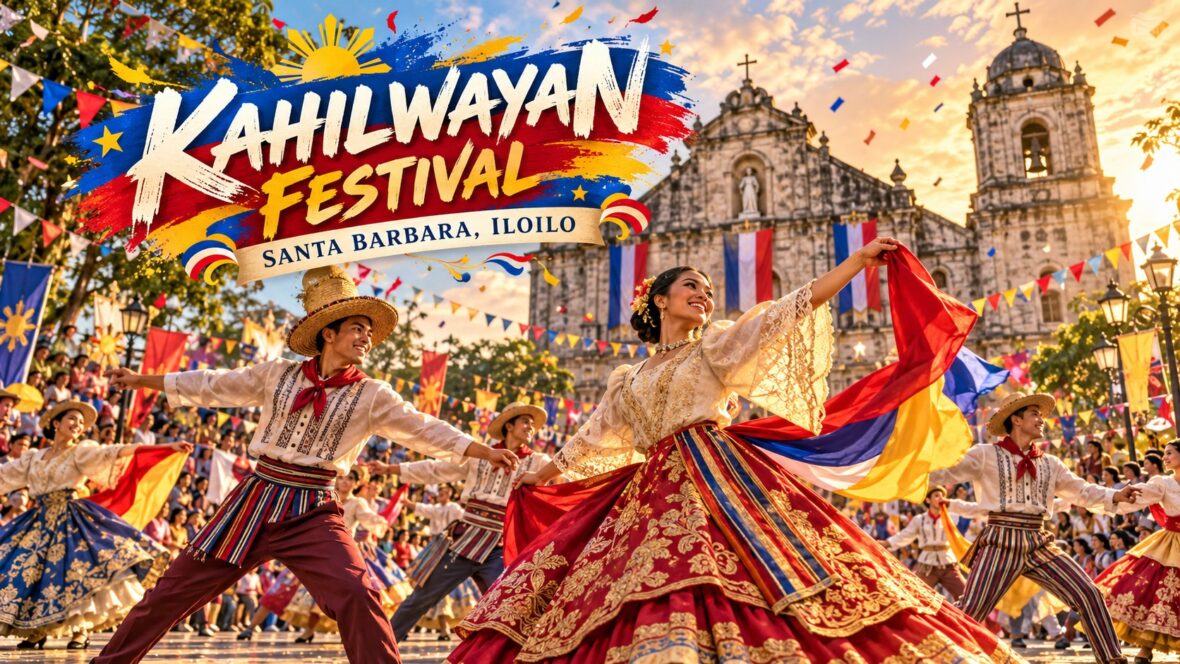
The Philippines is known for its colorful festivals. From grand street-dancing competitions to religious celebrations and harvest festivals, every region has its own traditions that reflect the history and culture of its people.
But in the municipality of Santa Barbara in Iloilo, there’s a festival that celebrates something particularly meaningful in Philippine history: freedom.
Welcome to the Kahilwayan Festival, an annual cultural and historical celebration that commemorates the bravery of Ilonggo revolutionaries who fought against Spanish colonial rule.
Held in connection with the Cry of Santa Barbara every November 17, the festival brings Philippine history to life through dramatic performances, colorful costumes, music, and community activities.
What makes Kahilwayan particularly interesting is that it’s not just another street-dancing festival. Behind the performances is an important chapter of the Philippine Revolution, when Santa Barbara became a center of revolutionary activity in the Visayas.
It was here, on November 17, 1898, that the Revolutionary Government of the Visayas was formally inaugurated and the Philippine flag was raised for the first time outside Luzon.
Today, the Kahilwayan Festival honors that historic moment while celebrating the courage, patriotism, and cultural identity of the Ilonggo people.
If you’re interested in discovering more about this festival, here’s a comprehensive guide to its history, meaning, traditions, activities, and significance.
Content
What Is the Kahilwayan Festival?
The Kahilwayan Festival is an annual historical and cultural festival celebrated in Santa Barbara, Iloilo, in the Western Visayas region of the Philippines.
The festival commemorates the Cry of Santa Barbara, a significant event during the Philippine Revolution against Spanish colonial rule.
Unlike festivals primarily dedicated to patron saints, local harvests, or agricultural products, Kahilwayan focuses on the revolutionary history of the municipality and the heroism of the Ilonggo people.
Its main attraction is a historical dance-drama that reenacts the events leading to the revolutionary uprising in Santa Barbara.
Through music, choreography, costumes, and theatrical performances, participants recreate scenes from the struggle against Spanish rule.
The festival also features commemorative ceremonies, including flag-raising and wreath-laying activities honoring the revolutionaries.
According to the municipal government, Kahilwayan has traditionally been organized as a weeklong celebration involving cultural presentations, workshops, sports activities, and arts programs.
The exact lineup changes from year to year, but the historical commemoration every November 17 remains the heart of the celebration.
What makes the festival special is how it transforms an important historical event into something that people can watch, understand, and appreciate.
Rather than learning about the Cry of Santa Barbara only through history books, festivalgoers can see the story represented through performance.
What Does Kahilwayan Mean?
The word “Kahilwayan” comes from Hiligaynon, also known as Ilonggo, and means freedom, liberty, or independence.
It is an appropriate name for a festival commemorating the struggle of the Ilonggo people against colonial rule.
Freedom is the central theme of the celebration.
The festival remembers the courage of the revolutionaries who challenged Spanish authority and worked toward the establishment of a revolutionary government in the Visayas.
It also serves as a reminder of the sacrifices made by earlier generations in pursuit of independence.
During performances, this meaning is expressed through symbolic movements, dramatic scenes, patriotic music, and the Philippine flag.
Every part of the celebration points back to the same message: the importance of freedom and the people who fought to achieve it.
History of the Kahilwayan Festival
To understand the Kahilwayan Festival, we need to go back to the final years of Spanish colonial rule in the Philippines.
The Philippine Revolution began in 1896, with uprisings taking place in Luzon against Spanish authorities.
However, the revolutionary movement did not spread to all parts of the country at the same time.
In Iloilo, Spanish authorities initially believed that the population would remain loyal to Spain.
They organized volunteer forces that were intended to support the colonial government.
One of the leaders of these volunteer forces was Martin Teofilo Delgado, who would later become one of the most important revolutionary figures in Panay.
But the situation began to change as revolutionary sentiments grew.
The Ilonggo Revolutionaries Rise Against Spain
On October 28, 1898, Martin Teofilo Delgado publicly declared his support for the Philippine Revolution and took control of the municipal building in Santa Barbara.
This was a major turning point.
Santa Barbara became an important base for revolutionary activities in Iloilo.
The town served as a center for organizing revolutionary forces and preparing efforts to challenge Spanish control in the province.
Several local leaders participated in the revolutionary movement, helping establish the foundations of a government independent of Spanish authority.
The events eventually led to one of the most historic moments in Santa Barbara’s history.
November 17, 1898: The Cry of Santa Barbara
On November 17, 1898, the Revolutionary Government of the Visayas was formally inaugurated at the town plaza of Santa Barbara.
A large gathering of people from different parts of Iloilo attended the occasion.
The Philippine flag was raised, marking what is recognized as the first raising of the national flag outside Luzon.
The occasion symbolized the growing strength of the Philippine revolutionary movement in the Visayas.
It also demonstrated that the struggle for independence was not limited to Luzon.
Ilonggo revolutionaries had become active participants in the movement to end Spanish colonial rule.
The Revolutionary Government of the Visayas was established with Roque Lopez as president, while Martin Teofilo Delgado served as general-in-chief of the revolutionary forces.
Other officials were appointed to oversee different government responsibilities.
The event became known as the Cry of Santa Barbara.
It remains one of the defining moments in Iloilo’s revolutionary history.
The Liberation of Iloilo
Following the events in Santa Barbara, revolutionary forces continued their campaign against Spanish control.
Santa Barbara served as an important revolutionary base, with General Delgado leading military operations throughout Iloilo.
On December 24, 1898, Spanish Governor-General Diego de los Ríos surrendered Iloilo City.
This marked the end of Spanish rule in the city.
However, the struggle for Philippine independence did not end there.
The Philippine-American War followed, and Delgado continued fighting against American forces until his surrender in February 1901.
The revolutionary history of Santa Barbara nevertheless remained an important source of local pride.
More than a century later, the Kahilwayan Festival continues to commemorate this chapter of the country’s history.
When Did the Kahilwayan Festival Start?
Although the Cry of Santa Barbara happened in 1898, the modern Kahilwayan Festival began much later.
The festival was officially launched in 2001 during the administration of then Mayor Isabelo Maquino.
The idea was to introduce a more creative way of commemorating the historical events associated with the Cry of Santa Barbara.
Instead of relying entirely on traditional historical reenactments, organizers developed a festival featuring dance-drama performances.
This approach combined historical storytelling with music, theatrical movements, and colorful costumes.
The goal was not only to honor Santa Barbara’s revolutionary heroes but also to encourage more residents and visitors to appreciate the town’s history.
Schools and community groups became involved in the performances, creating an opportunity for younger generations to learn about the historical events.
Over the years, Kahilwayan developed into one of Iloilo’s recognized historical and cultural festivals.
Its performances have also been featured in major festival competitions and national commemorative events.
How Is the Kahilwayan Festival Celebrated?
One of the most interesting things about Kahilwayan is how history becomes the centerpiece of the celebration.
Rather than presenting dance performances without a specific narrative, Kahilwayan uses music and choreography to tell the story of the Ilonggo revolutionaries.
Here are some of the major activities and traditions associated with the festival.
1. Historical Dance-Drama Competition
The historical dance-drama is the signature attraction of the Kahilwayan Festival.
This performance recreates important moments surrounding the revolutionary uprising in Santa Barbara.
Participants portray historical characters, including Filipino revolutionaries and other figures associated with the Spanish colonial period.
The presentation typically follows the events leading to the declaration of freedom and the raising of the Philippine flag.
What makes the performance especially interesting is the combination of theater and dancing.
Instead of simply delivering spoken dialogue, performers communicate the story through expressive movements, choreographed formations, music, and symbolic props.
Scenes may portray the struggles of local communities, the resistance against colonial rule, and the eventual triumph of the revolutionaries.
The most important moment is the reenactment of the Philippine flag being raised in Santa Barbara.
It serves as the culmination of the historical narrative and symbolizes the victory celebrated during Kahilwayan.
2. Street Dancing and Historical Costumes
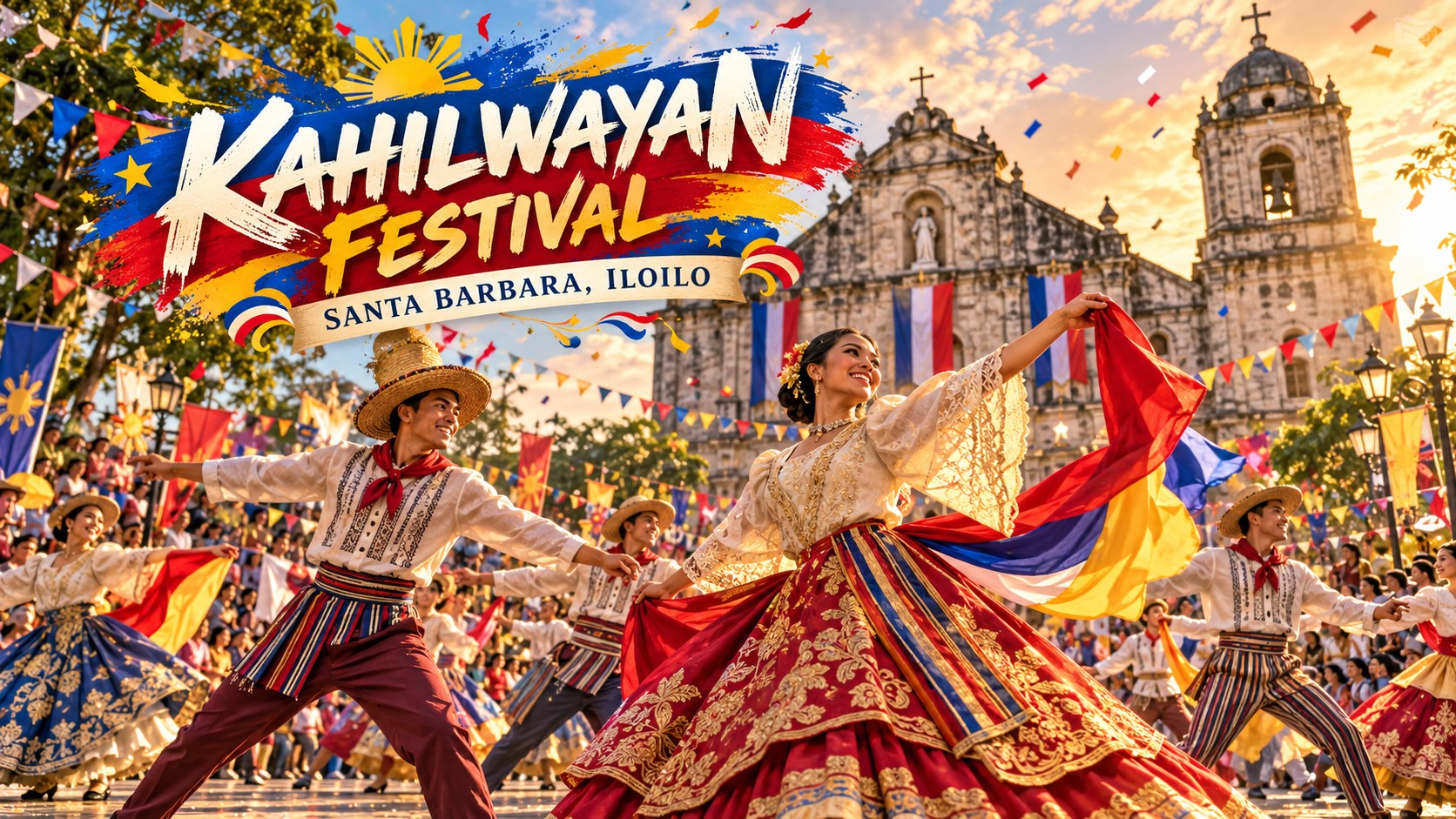
Street dancing is another important part of the festival’s cultural presentation.
Performers wear costumes inspired by clothing from the late Spanish colonial period.
These may include garments such as the saya, kimona, camisa chino, and rayadillo.
The costumes help establish the historical setting while making the performances visually engaging.
Unlike festivals that feature purely fantasy-inspired outfits, Kahilwayan incorporates clothing and accessories associated with its historical theme.
Performers may portray farmers, townspeople, revolutionaries, and other characters involved in the story.
Large choreographed groups bring movement and energy to the celebration.
The combination of colorful attire, theatrical acting, and patriotic imagery makes the festival a distinctive example of historical storytelling through dance.
3. Reenactment of the First Philippine Flag Raising Outside Luzon
One of the most symbolic parts of the Kahilwayan Festival is the reenactment of the Philippine flag raising.
This represents the historic ceremony held in Santa Barbara on November 17, 1898.
According to the municipal government’s description of the festival, the dance-drama includes the story of how the Philippine flag was brought to Santa Barbara by two freedom fighters.
The performance culminates in the raising of the flag.
This scene is particularly important because the flag serves as the central symbol of the revolutionaries’ struggle for independence.
It also connects the festival to the larger story of Philippine nationhood.
For spectators, the flag-raising scene is more than a theatrical finale.
It represents the historical event that the community has gathered to remember.
4. Flag-Raising and Wreath-Laying Ceremonies
Aside from the dance presentations, Kahilwayan includes formal commemorative activities.
The annual observance of the Cry of Santa Barbara has featured flag-raising ceremonies and wreath-laying at the monument of General Martin Teofilo Delgado.
Local officials, invited guests, and representatives of government institutions participate in these activities.
The ceremonies pay tribute to the revolutionaries who contributed to the struggle against Spanish colonial rule.
They also provide an opportunity to reflect on the historical significance of Santa Barbara.
For example, the 127th anniversary of the Cry of Santa Barbara was observed at Flag Pole Park on November 17, 2025.
The occasion included a wreath-laying ceremony honoring General Delgado.
These formal activities distinguish Kahilwayan from purely entertainment-oriented festivals.
5. Cultural Presentations and Community Programs
Beyond the main historical performances, Kahilwayan has traditionally featured other activities involving the local community.
These include cultural presentations, arts programs, educational workshops, and sports activities.
The broader celebration allows different sectors of Santa Barbara to participate.
Schools, local organizations, municipal offices, and residents contribute to festival preparations and activities.
The involvement of students is particularly important.
By participating in performances based on historical events, young people are introduced to the lives of Ilonggo revolutionaries and the significance of the Cry of Santa Barbara.
The festival therefore serves both cultural and educational purposes.
Marcha Libertador: The Music of the Kahilwayan Festival
Music plays an important role in bringing the historical story of Kahilwayan to life.
One of the most significant musical pieces associated with the festival is the “Marcha Libertador.”
This historical march was composed by Colonel Posidio Bermejo Delgado, the brother of General Martin Teofilo Delgado.
According to the Municipality of Santa Barbara, the composition was first played on December 25, 1898, during the liberation celebrations in Iloilo City.
The music became associated with the revolutionary forces and their struggle for freedom.
During Kahilwayan performances, the Marcha Libertador accompanies the historical reenactment, particularly its triumphant moments.
The municipal government has also recognized the musical composition as the official march of Santa Barbara under Municipal Ordinance No. 75-2023.
This connection between music and history gives the festival an additional layer of meaning.
The performers are not simply dancing to a modern festival soundtrack.
They are using music connected to the revolutionary events being commemorated.
Who Was General Martin Teofilo Delgado?
General Martin Teofilo Delgado is one of the central historical figures honored during the Kahilwayan Festival.
He was born in Santa Barbara, Iloilo, on November 11, 1858.
During the Philippine Revolution, Delgado became a leading figure in the struggle against Spanish authority in the Visayas.
Although he initially held a position in the Spanish-organized volunteer forces, he ultimately declared his support for the revolution.
His public declaration on October 28, 1898, helped establish Santa Barbara as a revolutionary center.
He later became general-in-chief of the revolutionary forces of the Visayas.
Delgado played an important role in the campaign that eventually led to the surrender of Spanish authorities in Iloilo City.
He also continued resisting American forces during the Philippine-American War.
Following his surrender in 1901, he became Iloilo’s first provincial governor under American administration.
He died on November 12, 1918.
Today, he is remembered as one of Iloilo’s notable revolutionary leaders.
His monument in Santa Barbara serves as an important reminder of the town’s role in Philippine history.
During Kahilwayan, his leadership and contributions are highlighted through historical performances and commemorative activities.
Other Heroes Remembered During Kahilwayan
Although General Delgado is the most prominent revolutionary figure associated with the festival, the historical narrative also recognizes other individuals.
The municipal description of Kahilwayan identifies several characters portrayed in the dance-drama, including Lieutenant Honorio Solinap, Patrocinio Gamboa of Jaro, and Tan Sabas Solinap.
Their inclusion reflects the broader participation of local revolutionaries and supporters in the struggle for freedom.
This is one reason the festival is more than a tribute to a single hero.
It recognizes the collective effort of Ilonggos who contributed to the revolutionary movement.
The story of Santa Barbara’s independence struggle involved different individuals, communities, and organizations working toward a common goal.
Awards and Recognition of the Kahilwayan Festival
Over the years, Kahilwayan has earned recognition for its historical storytelling and cultural performances.
The festival became a successful participant in the Kasadyahan competition associated with Iloilo’s Dinagyang Festival.
It achieved consecutive championship victories and later earned recognition as a Hall of Fame festival.
Kahilwayan has also competed in Aliwan Fiesta in Metro Manila, where it received runner-up recognition.
Another important achievement came through the Pearl Awards organized by the Association of Tourism Officers of the Philippines and the Department of Tourism.
The festival was recognized as Best Tourism Event in the Culture and Arts Category at the municipal level for three consecutive years, from 2011 to 2013.
It was subsequently elevated to Hall of Fame status in 2014.
These achievements helped establish Kahilwayan as one of Iloilo’s notable cultural festivals.
They also demonstrate how a relatively small municipality can gain wider recognition by presenting its local history through the performing arts.
Kahilwayan Festival and Dinagyang: What’s the Difference?
Visitors sometimes encounter Kahilwayan performances during the Dinagyang Festival in Iloilo City.
However, it’s important to understand that these are separate celebrations.
The Kahilwayan Festival is traditionally celebrated in Santa Barbara in November, in connection with the Cry of Santa Barbara.
Dinagyang, meanwhile, is held in Iloilo City in January and is associated with devotion to the Santo Niño.
Kahilwayan has participated in Kasadyahan sa Kabanwahanan, a cultural competition showcasing festivals from different municipalities of Iloilo.
Through this event, performers from Santa Barbara have presented their historical dance-drama to audiences in Iloilo City.
For example, the Kahilwayan Festival was among the municipal festivals represented in Kasadyahan sa Kabanwahanan in January 2026.
These performances help introduce Santa Barbara’s revolutionary history to a wider audience.
But the main annual historical commemoration of Kahilwayan remains associated with November 17 in Santa Barbara.
Where Is the Kahilwayan Festival Celebrated?
The Kahilwayan Festival is celebrated in the municipality of Santa Barbara, Iloilo.
Santa Barbara is located approximately 16 kilometers from Iloilo City and is part of Iloilo province in Western Visayas.
The municipality is known for its role in Philippine revolutionary history and its collection of significant historical landmarks.
The town center, particularly the area surrounding the municipal plaza and historic church, is closely associated with the events commemorated during Kahilwayan.
The annual historical commemoration has also included ceremonies at Flag Pole Park and the monument of General Martin Teofilo Delgado.
Specific performance venues and street-dancing routes may change depending on the organizers’ plans for each edition.
If you’re planning to visit during the festival, it’s best to check the official program to know where the main presentations will take place.
When Is the Kahilwayan Festival Held?
The Kahilwayan Festival is traditionally celebrated every November 17.
This date commemorates the inauguration of the Revolutionary Government of the Visayas and the historic raising of the Philippine flag in Santa Barbara on November 17, 1898.
Although November 17 is the main commemorative date, the festival has traditionally included several days of activities.
Some editions have featured cultural presentations, educational programs, sports competitions, and other community events leading up to the main occasion.
The exact dates and schedules may differ from one year to another.
For travelers, November 17 is the most important date to remember.
However, if you’re interested in specific competitions or dance-drama presentations, confirm the schedule before making travel arrangements.
Santa Barbara Church: A Historic Landmark Worth Visiting
One of the most significant places to visit in Santa Barbara is its historic church and convent.
The Santa Barbara Church and Convent are closely connected to the revolutionary history commemorated during Kahilwayan.
Construction of the church began in 1849 under the supervision of Father Francisco Aguerria, an Augustinian priest.
Work continued under subsequent parish priests, and the structure was completed in 1878.
During the Philippine Revolution, the church and convent served as headquarters of the Ejercito Libertador, the revolutionary army led by General Martin Teofilo Delgado.
This makes the complex particularly important in understanding the events of 1898.
Recognizing its historical significance, the National Historical Institute declared the Santa Barbara Church and Convent a National Historical Landmark through a resolution dated July 6, 1990.
For visitors interested in history and heritage architecture, the church offers an opportunity to appreciate a structure directly connected to the revolutionary movement in Iloilo.
Its importance goes far beyond its religious function.
It is part of the physical setting in which one of the country’s historic revolutionary movements unfolded.
Flag Pole Park and the Martin Delgado Monument
Another important location associated with Kahilwayan is Flag Pole Park.
The area serves as a venue for commemorating the Cry of Santa Barbara.
Historical ceremonies have included the raising of the Philippine flag and wreath-laying activities honoring General Delgado.
The monument of Martin Teofilo Delgado is an important part of the town’s historical landscape.
For visitors, this is a meaningful place to understand the connection between the festival and the events of November 17, 1898.
It’s also a reminder that the town’s revolutionary heritage is not confined to performances.
The actual places associated with that history continue to be part of everyday life in Santa Barbara.
How to Get to Santa Barbara, Iloilo
Santa Barbara is accessible from Iloilo City and other parts of Panay Island.
For travelers interested in attending the Kahilwayan Festival, Iloilo City is a convenient starting point.
From Manila
If you’re coming from Metro Manila, one of the most convenient options is to take a flight to Iloilo International Airport.
After arriving at the airport, you can arrange ground transportation to Santa Barbara.
The airport is located in Cabatuan, in the same general area of Iloilo province, making Santa Barbara accessible by road.
Transportation options depend on your arrival time, available public services, and whether you prefer private transportation.
From Iloilo City
Santa Barbara is approximately 16 kilometers from Iloilo City, based on municipal information.
You can travel by private vehicle or use public transportation serving the municipality.
Travel times vary depending on your starting point, route, and traffic conditions.
If you’re commuting, confirm the current loading points and routes for Santa Barbara-bound jeepneys or modern public utility vehicles.
Once you reach the town center, you can explore the historic church, plaza, and nearby commemorative landmarks.
From Other Parts of Panay
Travelers coming from neighboring towns in Iloilo or other provinces on Panay Island can reach Santa Barbara through the local road network.
Depending on your location, the trip may involve direct transportation or transfers through Iloilo City or another transport hub.
If you’re visiting during Kahilwayan, allow extra time for travel because ceremonies and performances may attract additional visitors.
Tips for Visiting the Kahilwayan Festival
If you’re thinking of experiencing Kahilwayan in person, here are a few practical things to remember.
Plan Around the Main Commemoration
November 17 is the most important date associated with the festival.
If you want to witness the historical ceremonies, make this date your priority.
For street-dancing competitions and other performances, verify the specific schedule because not every event is necessarily held on the main commemorative day.
Arrive Early for Major Performances
Festival performances can attract crowds, particularly when participating schools and organizations are involved.
Arriving early can help you find a convenient viewing location.
It also gives you time to familiarize yourself with the town center.
Explore the Historic Landmarks
Don’t limit your visit to the performances.
Take some time to visit Santa Barbara Church and the locations connected to the Cry of Santa Barbara.
Seeing these places can make the historical story presented during Kahilwayan even more meaningful.
Prepare for Rain or Warm Weather
November falls within a period when Iloilo can still experience rainy weather.
An umbrella, comfortable clothing, and suitable footwear can make your visit easier.
If you plan to spend several hours watching outdoor performances, bring drinking water and other essentials.
Respect Historical Ceremonies
Remember that Kahilwayan is not simply an entertainment event.
It also commemorates the sacrifices of Filipino revolutionaries.
During flag-raising, wreath-laying, and other formal ceremonies, observe appropriate respect and follow the instructions of organizers.
Support Local Businesses
Festival visits are also opportunities to discover local communities.
Consider buying food from local establishments, exploring the town center, and supporting small businesses.
These simple activities can help you experience Santa Barbara beyond the main celebration.
Why the Kahilwayan Festival Is Important
There are many festivals across the Philippines, but Kahilwayan stands out because of its historical focus.
It commemorates a specific event that played an important role in the struggle for Philippine independence.
The celebration reminds people that the Philippine Revolution was a nationwide movement involving individuals and communities from different regions.
In Santa Barbara, the events of November 17, 1898, became a lasting symbol of Ilonggo patriotism.
Through Kahilwayan, this history is passed on to new generations.
Students learn about the revolution while participating in historical performances. Community organizations contribute to preserving cultural traditions. Visitors are introduced to an important chapter of Philippine history that is sometimes less familiar than the revolutionary events in Luzon.
The festival also demonstrates the value of cultural performance as a way of preserving historical memory.
Dance, theater, music, and costumes become tools for telling stories that might otherwise remain confined to textbooks and historical records.
And perhaps most importantly, Kahilwayan encourages the people of Santa Barbara to remember the contributions of their hometown to the country’s history.
Frequently Asked Questions About Kahilwayan Festival
What is the Kahilwayan Festival?
The Kahilwayan Festival is an annual historical and cultural celebration in Santa Barbara, Iloilo, commemorating the Cry of Santa Barbara and the Ilonggo revolutionaries who fought against Spanish colonial rule.
What is the meaning of Kahilwayan?
Kahilwayan is a Hiligaynon or Ilonggo word meaning freedom, liberty, or independence.
Where is the Kahilwayan Festival held?
The festival is held in Santa Barbara, a municipality in the province of Iloilo, Western Visayas, Philippines.
When is the Kahilwayan Festival celebrated?
The main historical commemoration is observed every November 17. Related cultural and community activities may take place on additional dates.
When did the Kahilwayan Festival start?
The modern Kahilwayan Festival was launched in 2001 during the administration of Mayor Isabelo Maquino as a creative way of commemorating the Cry of Santa Barbara.
What historical event does Kahilwayan commemorate?
It commemorates the Cry of Santa Barbara on November 17, 1898, when the Revolutionary Government of the Visayas was formally inaugurated and the Philippine flag was raised for the first time outside Luzon.
Who is the main historical figure associated with Kahilwayan?
General Martin Teofilo Delgado is one of the central figures honored during the festival. He led revolutionary forces in the Visayas and played an important role in the campaign against Spanish rule in Iloilo.
Is Kahilwayan a religious festival?
Kahilwayan is primarily a historical and cultural festival. Its main theme is the revolutionary struggle for Philippine independence, rather than devotion to a patron saint.
What activities can visitors expect?
Traditional activities have included historical dance-drama presentations, street dancing, flag-raising and wreath-laying ceremonies, cultural programs, workshops, and community events. The exact lineup depends on the year’s official program.
Is the Kahilwayan Festival part of Dinagyang?
Kahilwayan is a separate festival traditionally celebrated in Santa Barbara in November. However, it has also been represented in Kasadyahan sa Kabanwahanan, a cultural competition associated with the Dinagyang Festival in Iloilo City.
Kahilwayan Festival 2026 Schedule
The traditional date of the Kahilwayan Festival in 2026 is Tuesday, November 17.
The occasion marks the 128th anniversary of the Cry of Santa Barbara, which took place on November 17, 1898.
Date: November 17, 2026 (Tuesday)
Location: Santa Barbara, Iloilo
Main Occasion: 128th Anniversary of the Cry of Santa Barbara
Festival Theme: Freedom, Patriotism, and Ilonggo Revolutionary Heritage
The complete official schedule of activities for the November 2026 celebration has not yet been independently confirmed.
Visitors interested in the dance-drama competition, cultural presentations, commemorative ceremonies, and other activities should check announcements from the Municipality of Santa Barbara and its tourism office.
Schedules, venues, and event formats may change depending on the year’s organizers.
Final Thoughts
The Philippines has no shortage of festivals. Every province has its own celebrations, and each one offers a different way of understanding the country’s culture and traditions.
But Kahilwayan in Santa Barbara, Iloilo, has a story that deserves particular attention.
It’s a festival that celebrates freedom.
Through historical reenactments, dance, music, and community participation, Kahilwayan keeps alive the memory of the Ilonggo revolutionaries who helped shape the country’s struggle for independence.
The festival also reminds us that Philippine history isn’t limited to the most familiar places and personalities.
Important events happened in towns and communities across the country, including Santa Barbara, where the Revolutionary Government of the Visayas was inaugurated in 1898.
Today, the Kahilwayan Festival continues to honor that legacy.
For the people of Santa Barbara, it’s a celebration of their history, identity, and hometown pride.
And for visitors, it’s an opportunity to experience a festival where entertainment and historical storytelling come together.
So, if you’re planning to explore Iloilo and discover its local festivals, consider adding Kahilwayan to your travel plans.
Because beyond the colorful costumes, energetic performances, and patriotic music is a meaningful story about courage, sacrifice, and the enduring value of freedom.