Every November, the streets of San Carlos City in Negros Occidental come alive with colorful flowers, elaborately painted dancers, energetic music, and one of the most visually impressive festivals in the Philippines.
This is the Pintaflores Festival, an annual celebration that combines two beautiful forms of artistic expression: body painting and flowers.
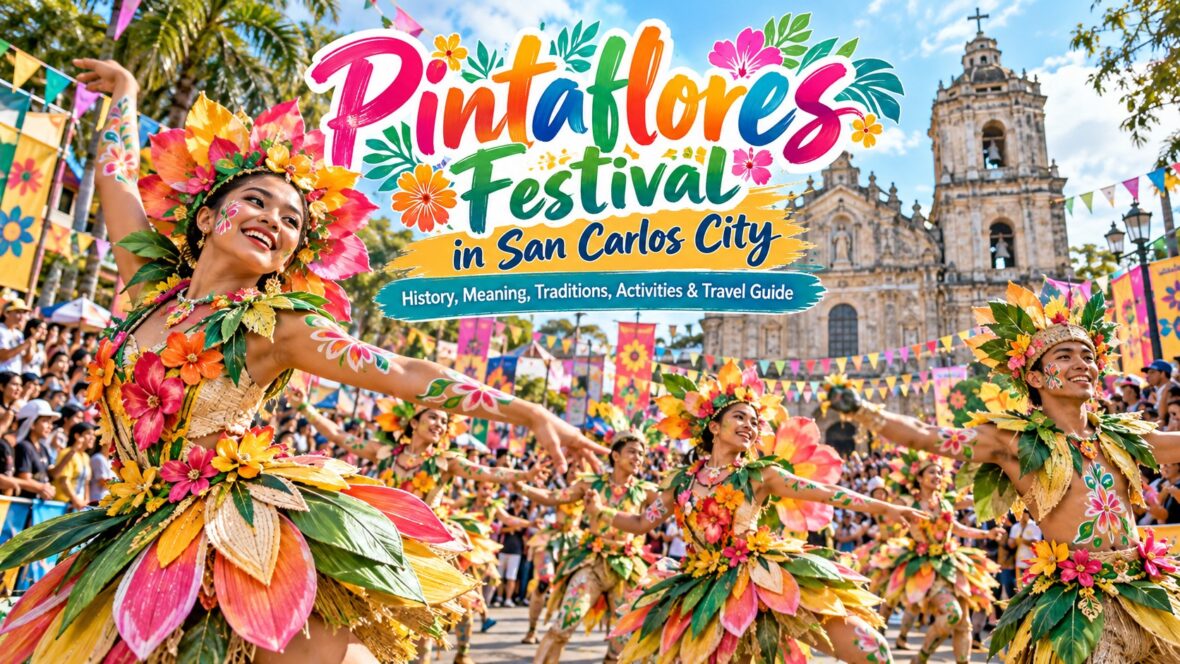
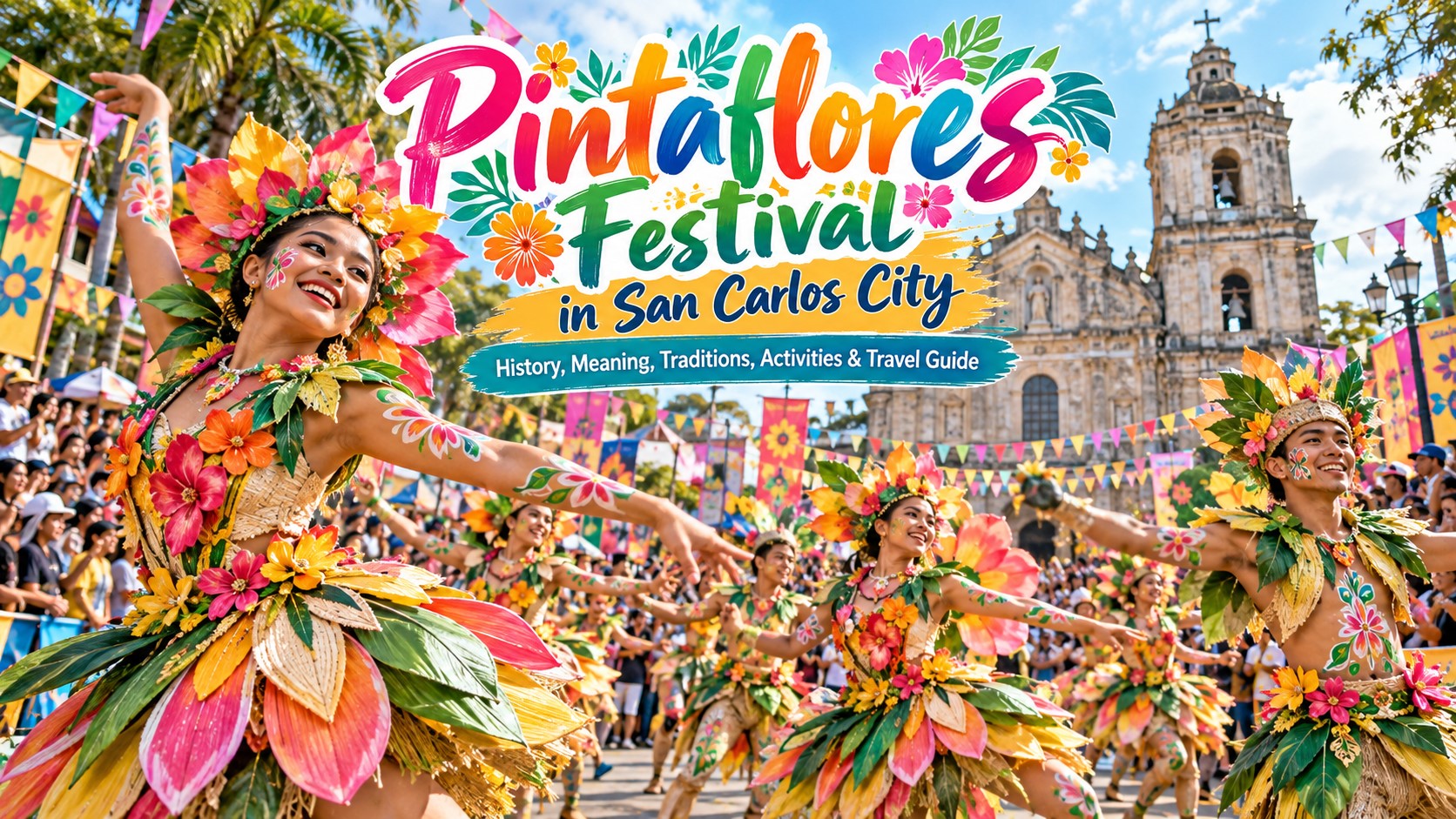
If you’ve seen photos of the festival, you’ve probably noticed the dancers wearing enormous floral headpieces, brightly colored costumes, and intricate flower patterns painted across their faces, arms, and bodies.
It’s quite a sight!
But beyond the colorful performances, Pintaflores has an interesting story that reflects the history, creativity, and cultural identity of San Carlos City.
Unlike many Philippine festivals that developed from centuries-old religious traditions, Pintaflores is a relatively modern celebration. It was created in the early 1990s when the city wanted to establish a unique festival that its people could proudly call their own.
Over the years, it has grown into a major cultural attraction in Negros Occidental, bringing together dancers, artists, musicians, students, residents, and visitors for a celebration of flowers, heritage, thanksgiving, and community spirit.
If you’re interested in Philippine festivals or planning to explore Negros Island, here’s everything you need to know about the Pintaflores Festival, including its history, meaning, famous street dancing performances, traditional activities, location, and travel tips.
Content
What Is the Pintaflores Festival?
The Pintaflores Festival is an annual cultural and street dancing celebration held in San Carlos City, Negros Occidental, Philippines.
It is famous for its combination of floral-inspired costumes, artistic body painting, rhythmic dancing, and theatrical performances that tell stories about life, nature, and the triumph of good over evil.
The festival is closely associated with San Carlos City’s annual fiesta celebrations in early November.
Its grand street dancing and ritual competitions have traditionally taken place around November 5, attracting residents and visitors who gather to watch the colorful performances.
What makes Pintaflores particularly distinctive is the way performers transform themselves into living works of art.
Their bodies are decorated with painted flowers, while their costumes feature oversized petals, colorful leaves, and elaborate floral designs.
The result is a celebration where art, dance, music, and storytelling come together.
Pintaflores Festival at a Glance
| Details | Information |
|---|---|
| Festival Name | Pintaflores Festival |
| Location | San Carlos City, Negros Occidental |
| Island | Negros, Philippines |
| Month Celebrated | November |
| Traditional Festival Dates | November 3–5 |
| Major Celebration | November 5 |
| First Developed | 1992 |
| Name Adopted | 1993 |
| Festival Type | Cultural, Street Dancing and Thanksgiving Festival |
| Famous For | Flower-themed body painting and street dancing |
| Major Highlights | Pintaflores Street Dancing and Ritual Competition |
| Cultural Inspiration | Nabingkalan Tattoo Festival and Dances of Flowers |
| Patron Saint Associated With City Fiesta | St. Charles Borromeo |
What Is the Meaning of Pintaflores?
The name Pintaflores combines two concepts associated with the festival’s origins.
The first is pinta, referring to painting or the painted bodies of performers, inspired by the Pintados tradition.
The second is flores, the Spanish word for flowers.
Put together, Pintaflores represents the combination of body painting and floral designs.
And that’s exactly what you’ll see during the celebration.
Dancers decorate their faces, arms, legs, and other parts of their bodies with colorful flower patterns. Their costumes are designed to resemble blossoms, petals, leaves, and other elements of nature.
But the flowers are more than decorative elements.
They symbolize beauty, hope, resilience, gratitude, and the connection between people and their environment.
The festival is also a reminder of the creativity of the people of San Carlos City, who turned two separate cultural presentations into one distinctive celebration.
History of the Pintaflores Festival
The history of Pintaflores began with San Carlos City’s desire to establish a cultural festival that would represent the identity of its people.
During the early 1990s, different Philippine cities were already becoming famous for their annual festivals.
Cebu City had Sinulog, Bacolod had MassKara, and Kalibo had Ati-Atihan.
San Carlos City wanted to create something equally meaningful, but with its own traditions, stories, and artistic identity.
In 1992, the city organized two major presentations during its annual fiesta celebrations.
These were the Nabingkalan Tattoo Festival and the Dances of Flowers.
The Nabingkalan Tattoo Festival focused on the concept of painted bodies and the story associated with Princess Nabingka.
Meanwhile, the Dances of Flowers highlighted floral designs and performances inspired by nature.
Both activities were well received.
Eventually, local organizers realized that combining the two concepts could produce a more distinctive cultural presentation.
This idea became the foundation of the Pintaflores Festival.
From Pintados to Pintaflores
The festival’s early performances were initially associated with the name Pintados because of the painted designs covering the dancers’ bodies and faces.
However, the name was changed to Pintaflores in 1993.
According to local tourism accounts, the change helped distinguish San Carlos City’s presentation from other festivals already using the Pintados name.
The new name reflected the combination of painted bodies and flowers.
It was a simple but creative concept that eventually became the city’s signature festival.
Pintaflores Gains Recognition
The festival quickly attracted attention beyond San Carlos City.
In January 1993, a contingent composed of high school students from Colegio de Santo Tomas–Recoletos participated in Cebu City’s Sinulog Festival.
Historical accounts of the festival record that the group placed third in the free interpretation category.
This recognition helped introduce Pintaflores to a wider audience.
Later that year, the San Carlos contingent also won a championship at the Panaad sa Negros Festival.
Over the following years, Pintaflores groups continued participating in cultural competitions across Negros and other parts of the Visayas.
Their performances earned recognition for choreography, costumes, and creativity.
As the festival developed, local organizers introduced new activities and encouraged more community participation.
What began as an effort to establish a local cultural identity eventually became one of San Carlos City’s most recognizable traditions.
The Legend of Princess Nabingka
One of the most fascinating aspects of the Pintaflores Festival is the legend of Princess Nabingka.
This story plays an important role in the festival’s cultural narrative.
According to local festival traditions, Princess Nabingka was a princess who journeyed to the area now associated with San Carlos City.
Different retellings of the legend describe her arrival, the challenges faced by her community, and the importance of flowers in bringing hope and beauty to their surroundings.
In one commonly told version, the princess wanted to create a beautiful place filled with flowers.
When the flowers failed to bloom as expected, the people found another way to bring color into their community.
They painted flowers on their bodies.
Through this act of creativity, the people transformed themselves into living flowers, expressing hope, beauty, and their devotion to the princess.
The story became a central inspiration for the festival’s floral body painting and dance presentations.
Is Princess Nabingka a Historical Figure?
The story of Princess Nabingka is best understood as a local legend associated with the festival.
It should not be confused with a fully documented historical account of San Carlos City’s origins.
Like many Philippine festivals, Pintaflores incorporates traditional storytelling, folklore, and artistic interpretation to explain important cultural themes.
The legend provides a narrative foundation for the performances, particularly the connection between painted bodies, flowers, and the idea of overcoming difficulties through hope and creativity.
And during the festival, this story comes alive through dance, music, costumes, and theatrical presentations.
Why Are Flowers Important in Pintaflores?
Flowers are the most recognizable symbol of the Pintaflores Festival.
But they represent more than beauty.
In local tourism descriptions, the sunflower is particularly associated with San Carlos City.
Its bright petals and ability to flourish have made it a symbol of resilience and optimism.
This symbolism reflects the determination of the people of San Carlos City to overcome challenges and continue moving forward.
That’s why sunflower-inspired designs frequently appear in festival costumes and decorations.
However, Pintaflores is not limited to sunflowers.
Performers use different floral patterns, colors, and creative interpretations depending on their chosen theme.
Some costumes resemble large blooming flowers, while others feature petals, leaves, vines, and other elements inspired by nature.
The overall effect is a colorful celebration that transforms dancers into moving floral displays.
Major Highlights and Activities of the Pintaflores Festival
One of the best things about Pintaflores is that it offers much more than a single street parade.
Although the exact lineup varies every year, several activities have become closely associated with the festival.
Here are some of the highlights that visitors can look forward to.
1. Pintaflores Street Dancing Competition
The street dancing competition is the festival’s main attraction.
This is where participating groups perform energetic dances while wearing elaborate flower-themed costumes and colorful body paint.
The performances typically feature synchronized choreography, rhythmic music, and creative formations.
Dancers may represent different schools, barangays, or participating organizations, depending on the annual competition format.
What makes the performances particularly exciting is the amount of creativity involved.
Each contingent works on its costumes, painted designs, props, music, and choreography.
Months of preparation can go into a performance lasting only several minutes.
And when festival day finally arrives, all that hard work becomes visible on the streets.
For spectators, it’s a wonderful opportunity to experience the energy and creativity of San Carlos City’s communities.
2. Ritual Dance Competition
Aside from street dancing, Pintaflores is also known for its ritual dance presentations.
These performances are more theatrical and often follow a particular storyline.
Traditionally, festival narratives have explored themes such as life and death, thanksgiving, abundant blessings, and the triumph of good over evil.
Performers use music, dance, painted designs, costumes, and props to communicate these stories.
In earlier editions, ritual competitions were associated with the San Carlos City Auditorium.
One memorable feature of these performances is the human flower formation.
Through carefully coordinated movements, dancers arrange themselves into shapes that resemble blooming flowers.
The formation highlights the ingenuity of the choreographers and the coordination of the performers.
For visitors who enjoy festival performances with storytelling, the ritual competition is among the most interesting activities to watch.
3. Pintaflores Bata or Pinta Bata
Pintaflores isn’t only a celebration for adult performers.
The festival also developed a children’s version known as Pintaflores Bata or Pinta Bata.
Introduced in 1996, this activity encouraged elementary school students to participate in street dancing and ritual competitions.
Young performers dressed in colorful costumes and participated in choreographed presentations inspired by the festival’s themes.
The introduction of the children’s competition helped ensure that younger generations could become involved in preserving and developing the celebration.
It also created opportunities for students to learn teamwork, discipline, creativity, and performance skills.
The inclusion and format of children’s competitions depend on the particular year’s program.
4. Pintalawas Body Painting
Another distinctive activity associated with the festival is Pintalawas.
This refers to artistic body painting, where the human body becomes the canvas for creative designs.
Artists may paint flowers, animals, natural patterns, and other imaginative images on participating models or performers.
The activity reflects one of the festival’s original inspirations — the concept of the painted body.
What’s especially interesting is how different artists interpret their themes.
Some designs may emphasize realistic flowers, while others use abstract patterns and imaginative colors.
It’s a demonstration of how Pintaflores celebrates visual art alongside music and dance.
5. Floral Costumes and Elaborate Headpieces
Even if you’re not particularly interested in dance competitions, the costumes alone are worth seeing.
Pintaflores performers are known for wearing extravagant floral-inspired outfits.
Many costumes feature oversized petals extending outward from the head or shoulders.
Others incorporate colorful leaf patterns, shimmering fabric, beads, sequins, and intricate decorations.
Depending on the theme, dancers may resemble sunflowers, blooming gardens, or other nature-inspired characters.
The painted patterns on their skin are often coordinated with the colors of their costumes.
This attention to detail creates a visually impressive presentation.
For festival photographers, these costumes are among the highlights of the celebration.
6. Community Programs and Fiesta Activities
Pintaflores is also part of a larger season of celebration in San Carlos City.
Depending on the annual program, related activities may include cultural presentations, entertainment events, pageants, community competitions, and other public gatherings.
These activities encourage residents to participate in the festivities beyond the major dance competitions.
They also create opportunities for local businesses, food vendors, performers, and community organizations.
Not every activity takes place every year, so visitors should check the current festival calendar.
When Is the Pintaflores Festival Celebrated?
The Pintaflores Festival is traditionally celebrated in early November.
The Philippine Tourism Promotions Board lists November 3 to 5 as the customary festival period.
November 5 has historically served as the main date for the major street dancing and ritual competitions.
However, the complete festivities can extend beyond these dates depending on the program prepared by the city government and festival organizers.
This means that activities such as pageants, community events, and other competitions may be scheduled separately.
For travelers, the important thing is to confirm the grand street dancing date before booking transportation or accommodation.
Why Is November 5 Significant?
November 5 is an important date in Negros Occidental because it commemorates Cinco de Noviembre, the anniversary of the 1898 Negros Revolution.
The Pintaflores Festival’s customary main celebration also falls on this date.
Meanwhile, San Carlos City’s religious celebrations are associated with St. Charles Borromeo, whose Catholic feast day is November 4.
These overlapping historical, religious, and cultural occasions make early November a particularly festive time in San Carlos City.
Where Is the Pintaflores Festival Held?
The Pintaflores Festival takes place in San Carlos City, located on the northeastern coast of Negros Occidental.
Although the city belongs to Negros Occidental, it faces the Tañon Strait and is geographically closer to Cebu’s western coast than many other cities in the province.
This location makes San Carlos an important gateway between Negros and Cebu.
During the festival, street dancing activities typically take place along selected roads in the city proper.
In previous editions, ritual competitions and major performances have also been held at designated public venues, including the city auditorium.
However, the parade route, competition venue, and spectator arrangements can change from year to year.
Travelers should check the official event program before deciding where to watch.
What Makes Pintaflores Different From Other Philippine Festivals?
The Philippines has many colorful festivals, but Pintaflores has a distinctive character.
What makes it special is the combination of floral designs and body painting.
In other festivals, colorful costumes and elaborate props usually provide most of the visual spectacle.
In Pintaflores, the performers’ bodies also become part of the artwork.
The painted flowers, decorative patterns, and matching costumes create a unique appearance.
The festival also incorporates theatrical storytelling inspired by the legend of Princess Nabingka.
Instead of presenting only rhythmic dancing, performances often communicate messages about hope, resilience, thanksgiving, and overcoming adversity.
Another important characteristic is the strong participation of local communities.
Students, dancers, choreographers, costume designers, painters, and residents all contribute to making the celebration possible.
It’s a festival that showcases not only talent but also teamwork and community pride.
Pintaflores Festival and San Carlos City’s Cultural Identity
One of the most interesting things about Pintaflores is that it was intentionally developed to give San Carlos City its own cultural identity.
During the early 1990s, organizers saw how festivals in other Philippine cities helped promote their communities and attract visitors.
San Carlos wanted something different.
By combining the Nabingkalan Tattoo Festival and the Dances of Flowers, the city created a celebration that reflected its creativity and local storytelling.
Over the years, Pintaflores has become an important symbol of San Carlos.
The festival provides a platform for local artists and performers while encouraging younger generations to participate in cultural activities.
It also creates opportunities for tourism-related businesses, including restaurants, transportation operators, hotels, and local vendors.
For residents, Pintaflores is an occasion to celebrate their hometown and share its identity with visitors.
And for travelers, it’s an opportunity to discover a part of Negros Occidental that may not always receive the same attention as Bacolod City.
How to Get to Pintaflores Festival in San Carlos City
If you’re planning to attend Pintaflores, the good news is that San Carlos City can be reached from different parts of Negros and Cebu.
The most practical route depends on where your trip begins.
From Bacolod City
Travelers coming from Bacolod can take a bus or other available public transportation to San Carlos City.
Bus services operate between the two cities, passing through mountainous areas of northern Negros Occidental.
The journey commonly takes approximately two to three hours, although travel time can be longer depending on the route, traffic, weather, and road conditions.
If you’re visiting during Pintaflores, allow additional travel time because increased passenger demand and festival-related traffic restrictions may affect your journey.
From Cebu City
San Carlos City is also accessible from Cebu through the Toledo–San Carlos ferry route.
From Cebu City, travelers can proceed by road to Toledo City on Cebu’s western coast.
From Toledo, ferries cross the Tañon Strait to San Carlos City.
The crossing typically takes around one to two hours, depending on the vessel and operator.
Shipping companies serving the route have included Lite Ferries, FastCat, and E.B. Aznar Shipping.
However, ferry schedules and available services can change, so passengers should verify the latest information before traveling.
This route is particularly convenient for travelers who want to combine Cebu and Negros in one itinerary.
From Dumaguete City
Travelers coming from Dumaguete can reach San Carlos City by road.
The journey generally involves traveling north through Negros Oriental toward the northeastern side of Negros Island.
Depending on the transportation service and route, several hours of travel may be required.
If you’re planning a same-day festival visit from Dumaguete, check the latest bus schedules and make sure you have enough time for the return trip.
From Manila
For visitors traveling from Metro Manila, one practical option is to fly to Bacolod-Silay Airport.
From there, continue by road to Bacolod City and take transportation to San Carlos.
Another option is to travel through Cebu and use the Toledo–San Carlos ferry connection.
The better route will depend on airfare, available schedules, and your overall itinerary.
Where to Stay During Pintaflores Festival
If you want to experience the festival without worrying about a long journey afterward, staying overnight in San Carlos City is a good idea.
The city has accommodation options that may include hotels, inns, guesthouses, and smaller lodging establishments.
For festival visitors, staying near the city proper may be convenient because of its proximity to public transportation, restaurants, and likely event areas.
However, festival traffic restrictions can affect access to certain roads.
Before booking, ask your accommodation provider about the distance to the announced festival venues and whether parking is available.
If you’re planning to attend major activities on November 5, consider reserving your room ahead of time.
Other Places to Visit in San Carlos City
While the Pintaflores Festival is a good reason to visit San Carlos City, it’s not the only attraction worth exploring.
If you have extra time, consider adding a few local destinations to your itinerary.
Sipaway Island
One of the most popular nearby destinations is Sipaway Island, located off the coast of San Carlos City.
The island is known for its coastal scenery, beaches, marine environment, and relaxed atmosphere.
It’s an interesting destination for travelers who want to combine a cultural festival with a short island getaway.
Visitors can reach the island using locally available boat services, subject to weather conditions and operating arrangements.
Before traveling, check local tourism and boat transportation information.
San Carlos Borromeo Cathedral
San Carlos Borromeo Cathedral is an important religious landmark in the city.
The cathedral is dedicated to St. Charles Borromeo, whose feast day is celebrated on November 4.
Aside from its religious importance, the cathedral is also associated with the history and heritage of San Carlos City.
For visitors interested in churches and local history, it’s a meaningful place to include in a short city tour.
Remember to dress respectfully and avoid disrupting religious services.
What to Eat During Pintaflores Festival
Exploring local food is always one of the enjoyable parts of attending a Philippine festival.
During your visit to San Carlos City, you’ll find restaurants, eateries, markets, and food vendors offering different Filipino dishes.
Negros Occidental is well known for its culinary traditions, particularly its sweets and delicacies.
Here are some foods worth looking for.
Chicken Inasal
Chicken inasal is one of the most recognizable dishes associated with Negros Occidental.
It’s a grilled chicken dish marinated with seasonings and traditionally served with rice and dipping sauces.
Although particularly famous in Bacolod, you can also look for grilled chicken dishes while exploring other cities in the province.
Piaya
Piaya is a popular Negrense delicacy made from thin, flat pastry filled with muscovado sugar.
It’s commonly purchased as pasalubong.
Napoleones
Another well-known Negros delicacy is napoleones, a layered pastry filled with custard and topped with a sweet glaze.
Availability varies by bakery and location, but it’s worth trying during a visit to Negros Occidental.
Local Street Food
During busy festival periods, food stalls and small eateries may offer different snacks and refreshments.
You can also explore local markets and restaurants to discover more about the city’s everyday food culture.
Tips for Attending the Pintaflores Festival
If you’re visiting Pintaflores for the first time, a little preparation can make the experience much more enjoyable.
Check the Grand Street Dancing Schedule
Since activities may take place on different dates, make sure you know when the street dancing and ritual competitions are scheduled.
These are generally the main events for visitors interested in seeing the festival’s famous costumes and performances.
Arrive Early
Popular viewing areas can become crowded.
Arriving early gives you time to find a comfortable spot and explore the festival atmosphere before the performances begin.
Wear Comfortable Clothes
San Carlos City generally has a warm tropical climate.
Light, breathable clothing and comfortable shoes are helpful, especially if you’re planning to walk around throughout the day.
Bring Water and Sun Protection
Street dancing competitions can take place under the afternoon sun.
Bring drinking water, sunscreen, a hat, or other appropriate sun protection.
Prepare for Possible Rain
November is still a period when rainfall and tropical weather systems can affect parts of the Philippines.
Check the latest PAGASA forecast before heading out.
Keep Your Belongings Secure
Festivals attract large crowds, so keep your wallet, phone, and other valuables in a secure bag.
Avoid carrying unnecessary items.
Respect the Performers
The dancers and organizers spend considerable time preparing for the event.
Avoid stepping into the parade route or disrupting performances just to get a better photograph.
Follow the instructions of event marshals and security personnel.
Support Local Businesses
Consider eating at local restaurants, purchasing souvenirs, and using authorized local transportation services.
Festival tourism can provide meaningful opportunities for small businesses and community vendors.
Is the Pintaflores Festival Free?
The Pintaflores street dancing parade has traditionally offered public viewing opportunities along designated city streets.
However, specific competition venues, reserved seating areas, concerts, and other activities may have different admission arrangements.
This means visitors should not automatically assume that every festival event is free.
If you’re interested in watching a particular competition or performance, check whether tickets, registration, or reserved seating arrangements are required.
Why Is the Pintaflores Festival Important?
Pintaflores is important because it represents the creativity, identity, and community spirit of San Carlos City.
It gives local performers an opportunity to showcase their talents.
It encourages artists and designers to develop imaginative costumes, props, and body-painting techniques.
It also creates opportunities for students and younger participants to become involved in cultural activities.
From a tourism perspective, the festival helps introduce visitors to San Carlos City and the northeastern part of Negros Occidental.
The event also supports local businesses as travelers spend money on food, accommodations, transportation, and other services.
Most importantly, Pintaflores has become a tradition that residents can proudly identify with their city.
What started as a creative combination of two fiesta activities has developed into a cultural celebration recognized beyond San Carlos.
Frequently Asked Questions About Pintaflores Festival
What is the Pintaflores Festival?
The Pintaflores Festival is an annual cultural celebration in San Carlos City, Negros Occidental, featuring colorful floral body painting, elaborate costumes, street dancing, and ritual dance competitions.
Where is the Pintaflores Festival celebrated?
The festival is celebrated in San Carlos City, Negros Occidental, Philippines.
When is the Pintaflores Festival celebrated?
Pintaflores is traditionally celebrated in early November, particularly from November 3 to 5, with November 5 commonly associated with the major street dancing activities.
What does Pintaflores mean?
The name combines pinta, associated with painting and painted bodies, and flores, the Spanish word for flowers.
What is the history of the Pintaflores Festival?
The festival originated in 1992 when San Carlos City combined two fiesta presentations: the Nabingkalan Tattoo Festival and the Dances of Flowers. The name Pintaflores was adopted in 1993.
Who is Princess Nabingka?
Princess Nabingka is a legendary figure associated with the festival’s cultural storyline. Her story provides inspiration for the flower-themed performances and body painting traditions.
What flower symbolizes the Pintaflores Festival?
The sunflower is particularly associated with San Carlos City and appears frequently in the festival’s artistic designs. It symbolizes resilience, hope, and optimism.
What is the main highlight of Pintaflores?
The street dancing and ritual competitions are the festival’s main highlights.
What is Pintaflores Bata?
Pintaflores Bata, also known as Pinta Bata, is a children’s street dancing and ritual competition introduced in 1996.
Why do Pintaflores dancers paint their bodies?
The body painting reflects the festival’s Pintados inspiration and its fusion with floral designs. The painted flowers represent beauty, creativity, gratitude, and the connection between people and nature.
Is Pintaflores a religious festival?
Pintaflores is primarily a cultural celebration, but it takes place during San Carlos City’s traditional fiesta season associated with St. Charles Borromeo.
How do I get to San Carlos City from Cebu?
Travelers can proceed to Toledo City in Cebu and take a ferry across the Tañon Strait to San Carlos City, subject to available sailing schedules.
Is Pintaflores Festival worth visiting?
Yes, especially if you enjoy Philippine street dancing festivals, colorful costumes, cultural storytelling, and local celebrations.
Pintaflores Festival 2026: Dates and Latest Schedule
For travelers planning to attend the 2026 celebration, the Pintaflores Festival is traditionally associated with November 3 to 5 in San Carlos City, Negros Occidental.
In 2026, November 5 falls on a Thursday.
Based on the festival’s established calendar, this is an important date for visitors to keep in mind when planning their trip.
However, as of October 18, 2026, a complete official program confirming this year’s street dancing schedule, ritual competition venue, parade route, and other event arrangements has not been independently verified for this guide.
Travelers should therefore check announcements from the San Carlos City Government, City Information Office, and official Pintaflores Festival organizers before finalizing their plans.
The schedule may include activities beyond the traditional November 3–5 period.
This section can be updated once the complete official program becomes available.
Final Thoughts
The Pintaflores Festival is one of those celebrations that reminds you just how creative Filipino festivals can be.
At first glance, it’s easy to be impressed by the enormous flower-shaped costumes, colorful body paintings, energetic music, and synchronized dancing.
But once you learn about the festival’s origins, you begin to appreciate it even more.
Pintaflores wasn’t simply created to entertain visitors.
It was born from San Carlos City’s desire to establish a cultural identity that its people could proudly call their own.
By combining body painting and floral designs, the community developed a festival that reflects creativity, resilience, gratitude, and a shared sense of belonging.
And after more than three decades, that idea continues to bring people together.
For travelers planning to explore Negros Occidental, attending Pintaflores is an opportunity to experience another side of the province beyond its more familiar destinations.
You’ll see talented performers, creative costumes, cultural storytelling, and the enthusiasm of residents celebrating their hometown.
And if you have extra time, you can combine the festival with visits to Sipaway Island and other attractions around San Carlos City.
So, if you’re planning a trip to Negros in November, consider including the Pintaflores Festival in your itinerary.
It’s a colorful, creative, and memorable celebration that showcases the spirit of San Carlos City and the beauty of Philippine festival traditions.