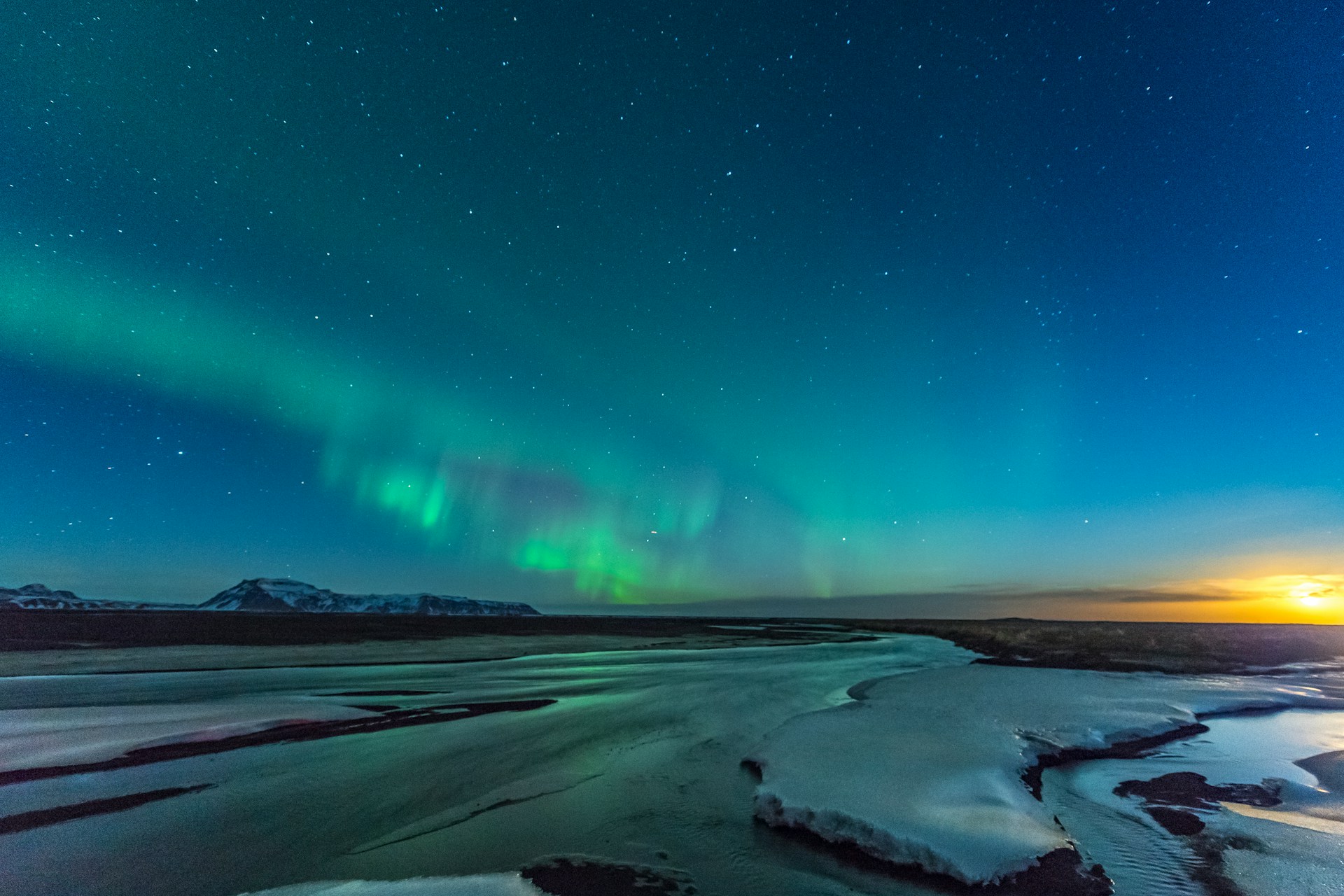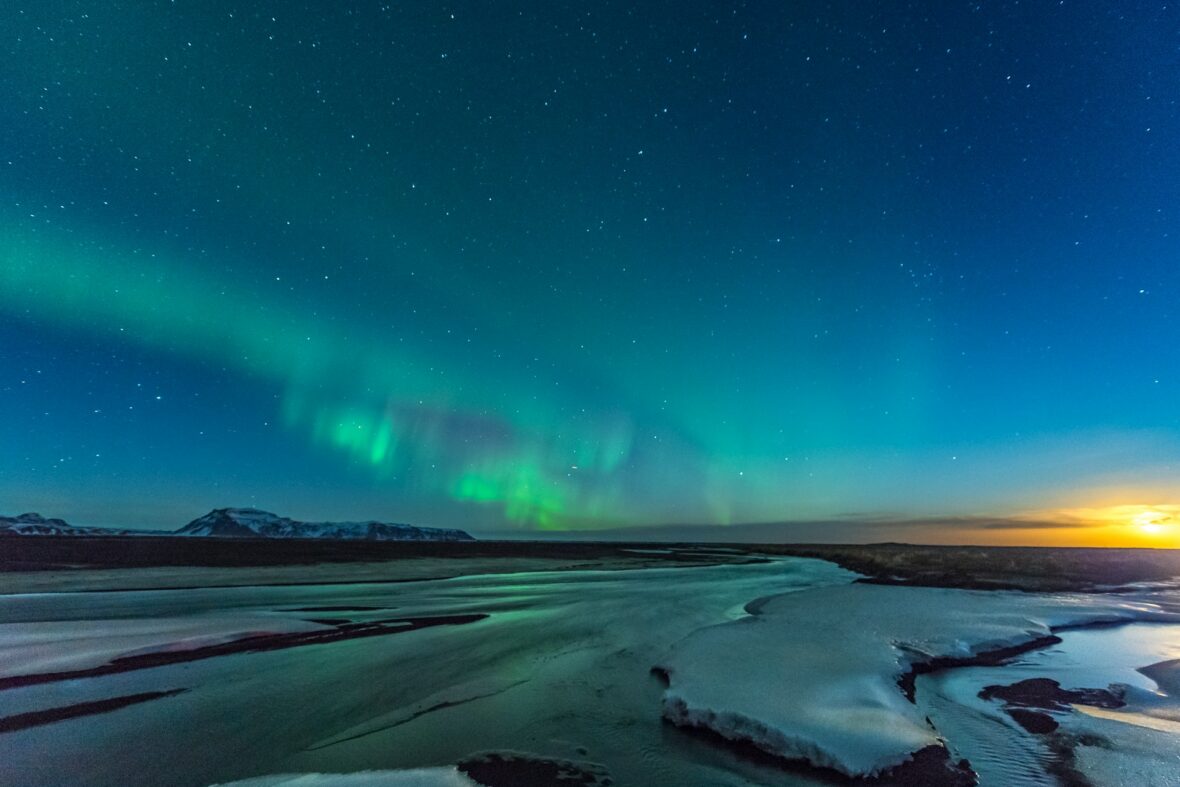
Plenty of people picture a winter evening at Sky Lagoon as a sure thing: warm water, green light rippling overhead, the photo everyone back home will ask about. The warm water holds up. The sky is the gamble. Aurora over Kópavogur depends on the weather and the sun, and neither takes bookings, so the smart way to plan is around the parts that stay put. Then you give yourself the best odds of catching the lights as a bonus.
Content
Can you see the Northern Lights from the lagoon in Kópavogur?
Yes, it’s possible, and the setting helps. The lagoon faces the sea rather than a wall of buildings, so on a good night there’s open sky to work with. Guides describe sightings as possible from September to April, which covers most of Iceland’s long dark stretch.
Waiting is part of aurora watching, and the Sky Lagoon Ritual is a pleasant way to fill that time. Its sequence of warm and cool stations gives the evening a shape and keeps your body temperature in a comfortable place while you keep half an eye on the horizon. Plenty of visitors find the lights show up somewhere in between steps, with no fuss.
Which months between September and April feel most dramatic?
October to March is the stretch one guide singles out, because that’s when the contrast between cold air and warm water is strongest.
September and April still have aurora potential, but the evenings are milder and the nights shorter, so the experience feels softer around the edges. In the deep middle of winter, around December and January, darkness arrives early and lingers, which gives you more hours when the sky could cooperate. February and March are a nice compromise. The air still bites, but there’s a little more daylight for the rest of your trip, and that matters if you’re driving anywhere the next morning.
What do clear skies and solar activity change on the night?
Both have to line up, and that’s why sightings aren’t guaranteed.
Clouds are the more common spoiler. Strong solar activity behind a thick grey ceiling shows you nothing, while a crisp clear night with weak activity might give only a faint pale band that cameras pick up better than eyes do. Check the cloud cover forecast from the national weather service on the afternoon of your visit, alongside an aurora forecast. If you have flexibility, booking a later slot on the clearest-looking night of your stay is the single best move available.
Will the aurora reflect in the Atlantic water around the lagoon?
Guides say it does, since the lagoon sits right on the Atlantic. On a calm night the sea can pick up the colour of a strong display, so you get light above and a smudge of it below. Wind ruffles the surface and breaks the reflection up, so don’t count on a mirror every time.
What do snow, frost and 38 to 40°C water feel like together?
Strange, in the best way. The water stays at a steady 38 to 40°C all year, so your body is warm while your face meets air well below freezing. Steam rises thickly off the surface on cold nights and drifts across the view.
Snow can fall straight onto bathers in winter, landing in your hair and melting the second it touches the water. The surrounding cliffs often carry snow and frost, and under the lights they glow a pale blue.
The walk between the changing area and the water is where the cold hits hardest. Move briskly and get submerged quickly.
Is Sky Lagoon open every day, and how late in winter?
It’s open every day of the year, holidays included. Winter opening hours, according to guides, run until 10 p.m., though it’s worth checking the current schedule for your date before you book.
That late close is what makes aurora hunting here workable. Darkness comes early in winter, so an evening slot puts you in the water during prime viewing hours without dragging yourself out to a field at midnight. A booking in the last couple of hours before closing tends to give the darkest sky.
How do you book the ritual, and what is the wristband for?
You book the ritual by choosing a pass that includes it when you reserve your time slot online. Booking ahead is wise in winter, since evening slots on clear-forecast nights fill up.
When you arrive, you’ll be given a wristband. It’s simply how staff know you’ve booked the ritual and can take part, so there’s no paperwork to carry around and nothing to explain at each station. Keep it on for the whole visit.
Saman or Sér: which pass suits a winter night?
Both include the ritual, so the difference comes down to changing rooms. The Saman pass uses the public changing facilities and comes with a towel, which suits most people perfectly well. The Sér pass adds private changing facilities.
On a freezing night, that privacy has a practical appeal. Peeling off thermal layers, wet hair and a swimsuit is slower in winter, and having your own space to do it calmly makes the end of the evening more comfortable. Couples, anyone who dislikes communal changing, and people who want to linger getting ready before heading back out into the cold will likely prefer Sér. Saman makes more sense if you’d rather put the difference toward another night’s attempt.
The honest trade-off is this: you can plan the water, the hours and the pass down to the minute, and the sky can still stay grey. If seeing the aurora is the whole point of your trip, a lagoon visit is a lovely place to try but a poor place to bet everything, because you’re tied to one booked slot and one patch of sky. Keep a free evening or two for chasing clear weather elsewhere, and go to the lagoon expecting a warm, snowy, steamy night that may or may not turn green.