If there is one thing Philippine festivals do really well, it is turning a simple act of thanksgiving into an entire community celebration.
That is exactly what happens in Tangub City, Misamis Occidental, every September during the Dalit Festival.
There are colorful costumes, pounding drums, street dancers, elaborate props and crowds lining the streets. But behind all that energy is a much simpler idea: gratitude.
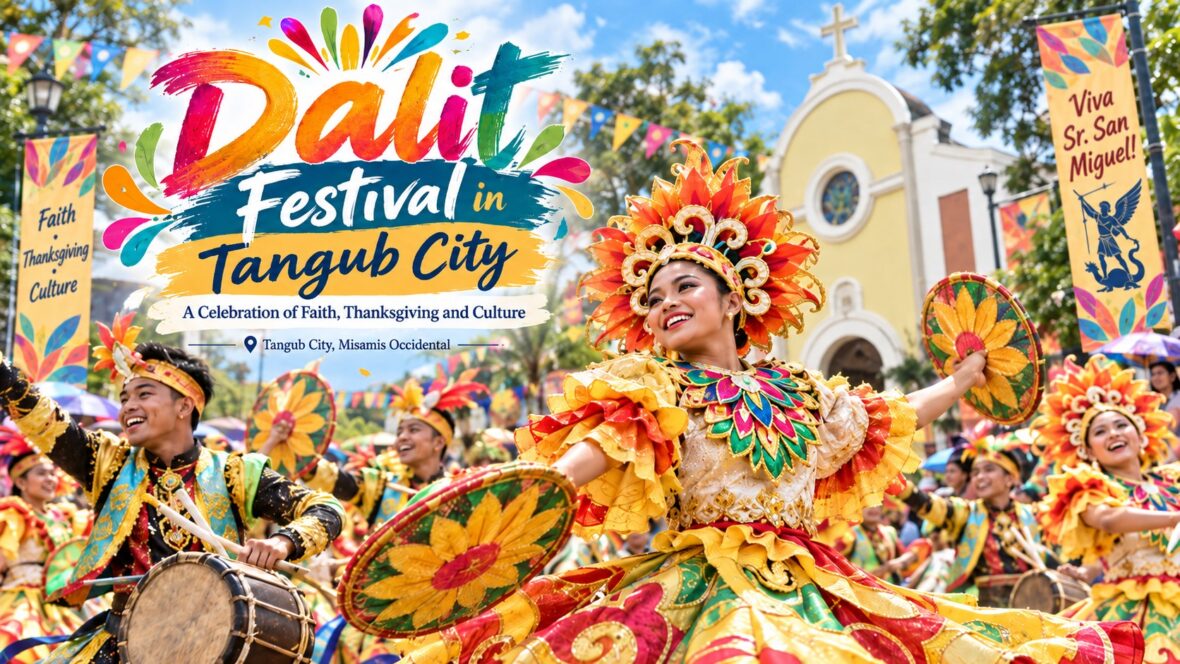
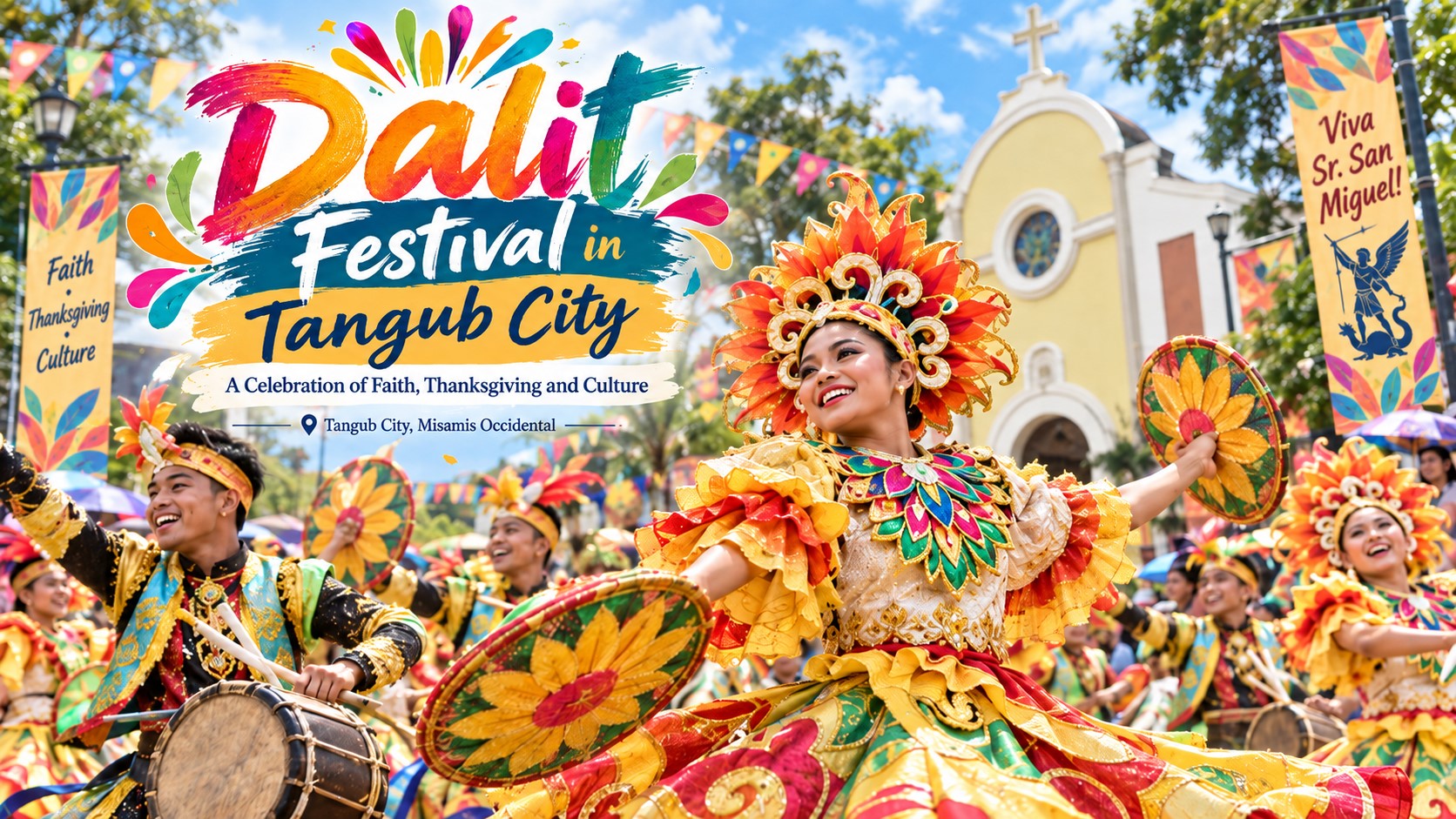
Dalit Festival is traditionally celebrated every September 29 in honor of Tangub City’s patron saint, St. Michael the Archangel. According to the City Government of Tangub, the word “dalit” means “to offer,” referring to the community’s offering of thanks for good health, a bountiful harvest and protection received throughout the year.
So while Dalit is certainly fun to watch, it is not simply a street-dancing competition.
At its heart, it is Tangub’s way of saying thank you.
And that combination of faith, culture, community and celebration is what makes the festival interesting even if you’re visiting from outside Misamis Occidental.
Content
What Is the Dalit Festival?
Dalit Festival is a religious and cultural celebration traditionally held in Tangub City every September 29.
The festival honors St. Michael the Archangel while expressing the people’s gratitude for the blessings they have received throughout the year.
The official city description is straightforward: Dalit means “to offer,” with the festival representing an offering of thanks for health, harvest and protection.
That meaning explains almost everything you see during the celebration.
The dancing is an offering.
The music is part of the thanksgiving.
The costumes and performances become expressions of local creativity.
And the gathering itself becomes a way for communities across Tangub to celebrate together.
This is also why Dalit shouldn’t be viewed as just another colorful Philippine street festival. There is a religious foundation underneath the spectacle.
Where Is Dalit Festival Celebrated?
Dalit Festival is associated with Tangub City in Misamis Occidental, Northern Mindanao.
Tangub sits along Panguil Bay and is accessible from several cities in northwestern Mindanao, including Ozamiz, Oroquieta, Pagadian and Dipolog.
The city is probably best known nationally for another celebration—the Christmas Symbols Festival—but Dalit represents a different side of Tangub.
Christmas in Tangub focuses heavily on lights, displays and the city’s creativity.
Dalit is more closely connected with the city’s patronal fiesta, religious devotion and thanksgiving.
That makes September another interesting time to experience Tangub.
When Is Dalit Festival Celebrated?
The traditional main date is September 29.
This coincides with Tangub City’s celebration of its patron, St. Michael the Archangel. The city government’s festival page identifies September 29 as the annual Dalit Festival date.
However, don’t think of the fiesta as something that suddenly appears on September 29 and disappears the following morning.
As with many Philippine fiestas, related activities can take place earlier in the month.
Pageants, community activities, competitions, entertainment programs and other celebrations may be scheduled in the days or weeks leading up to the main fiesta.
For example, the city says the Ms. Tangub City Tourism pageant has traditionally been staged around the third week of September as part of the city fiesta celebration.
So if you’re traveling specifically for the festival, it is worth checking the year’s full official calendar rather than looking only at September 29.
Why Is It Called Dalit?
This is probably the most important thing to understand about the festival.
“Dalit” is used by Tangub City to mean “to offer.”
The celebration is therefore an offering of thanksgiving.
Tangubanons give thanks for blessings received throughout the year, particularly good health, harvest and protection.
Once you understand that, the festival becomes easier to appreciate.
The dancers aren’t performing simply to win a competition.
The entire celebration is rooted in the idea of offering something back—through dance, prayer, music, creativity and community participation.
That gives Dalit a very Filipino character.
Faith and fiesta aren’t treated as completely separate things. Religious devotion and public celebration exist side by side.
Dalit Festival and St. Michael the Archangel
The festival is dedicated to St. Michael the Archangel, the patron saint of Tangub City.
September 29 is the city’s patronal feast, which is why the Dalit celebration centers on that date.
St. Michael devotion is actually something you’ll encounter in several communities around the Philippines.
And interestingly, September 29 is a particularly busy fiesta date around the country because a number of towns and cities have St. Michael the Archangel as their patron.
But Tangub developed its own distinctive expression of that devotion through Dalit.
Instead of limiting the occasion to church activities, the community combines the religious celebration with large-scale cultural performances.
What Happens During Dalit Festival?
For visitors, the most visually exciting parts of Dalit have traditionally been the street dancing and ritual performances.
Tangub City’s tourism information describes the streets filling with drumbeats and festivities on September 29 as local and invited contingents perform in the morning parade. A larger showdown traditionally follows in the afternoon.
The city’s festival calendar also identifies street dancing, a Grand Ritual Showdown and tourism-related activities among the celebration’s traditional components.
Here are some of the experiences commonly associated with the fiesta.
Street Dancing
This is usually the part that attracts the biggest crowds.
Groups of dancers move along the streets in coordinated formations while musicians provide the rhythm.
Expect bright colors.
Lots of movement.
Large props.
Elaborate costumes.
And plenty of drums.
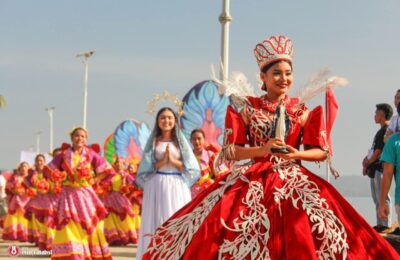
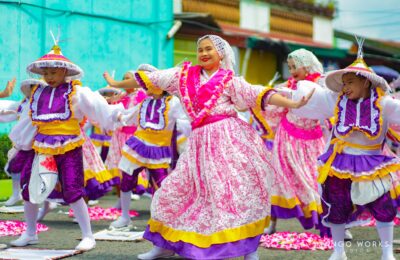
Official images from Tangub’s past Dalit celebrations show just how varied the performances can be. Some contingents use agricultural imagery and woven baskets, while others feature flowers, marine themes, elaborate headpieces or representations connected with St. Michael.
There isn’t necessarily one single costume that defines Dalit.
Instead, participating groups use their own themes to interpret thanksgiving, local life, faith and culture.
Grand Ritual Showdown
Street dancing allows people throughout the route to see the performers.
But the showdown is where the choreography really comes together.
Historically, after the morning street parade, contingents have gathered for a more concentrated performance where routines, formations, music, costumes and storytelling are presented before spectators and judges. Tangub City’s official Dalit page describes the showdown as an afternoon highlight.
If you’re attending the festival primarily for photography or cultural performances, this is one event you’ll want to watch.
Street dancing gives you the atmosphere.
The showdown gives you the complete performance.
Religious Activities
It is easy to become distracted by the costumes and performances, but remember that Dalit grew out of the city fiesta honoring St. Michael the Archangel.
Religious observances form an important part of the wider celebration.
For local families, the fiesta can mean attending Mass, visiting relatives, preparing food at home and participating in religious traditions just as much as watching dancers in the streets.
This is an important distinction for travelers.
You’re not entering a theme park created solely for tourists.
You’re visiting a real community during one of its important annual celebrations.
Ms. Tangub City Tourism
Another event historically associated with the fiesta is Ms. Tangub City Tourism.
According to the city government, the pageant has typically been held around the third week of September.
But its purpose goes beyond appearance.
The city describes the event as a platform where participants showcase talent while developing community awareness, discussing issues and presenting advocacies, including environmental concerns.
Events like this show how Philippine fiestas often become umbrella celebrations.
You may come for one street parade, but once you look at the complete calendar, you’ll usually find pageants, sports, concerts, community competitions and civic programs happening around it.
Colorful Costumes and Festival Props
This is probably what most people will notice first when seeing photos of Dalit.
The costumes can be incredibly colorful.
Past performances have featured large headdresses, flowing skirts, embroidered fabrics, baskets, flowers, wings, agricultural products and oversized decorative pieces.
Some groups take inspiration from farming and harvest.
Others incorporate nature.
Some use imagery reflecting faith or local traditions.
This means Dalit can look completely different from one contingent to another.
And that’s part of the fun.
You’re not just watching the same costume repeated hundreds of times.
You’re watching different groups interpret the festival theme through their own choreography and visual storytelling.
Music and Drums
You usually hear a Philippine street festival before you fully see it.
Dalit is no exception.
Tangub City’s own description talks about its normally quiet streets coming alive with drumbeats, revelry and activity on September 29.
Percussion helps move the performers through the streets, but it also changes the atmosphere of the entire city.
Even spectators who aren’t directly beside the dancers can usually hear when another contingent is approaching.
It’s one of those things photos can’t really capture.
You need the sound.
The cheering.
The whistles.
The drums echoing between buildings.
That’s when a festival feels different from simply watching a performance on a stage.
Dalit as a Thanksgiving Festival
Many Philippine festivals are associated with harvests.
Dalit shares that theme, but its thanksgiving is broader.
Tangub specifically connects the festival with gratitude for good health, harvest and protection.
So although agricultural abundance is important, the festival is really about blessings as a whole.
That gives participating groups a lot of freedom when developing their performances.
One presentation might focus on farming.
Another might depict local livelihoods.
Another could emphasize nature, faith or community life.
But the underlying message remains similar:
Thanksgiving.
Community Participation
Something I always find interesting about provincial festivals is how much effort goes into something that visitors might watch for only a few minutes.
Behind one performance are weeks of rehearsals.
There are costume makers.
Choreographers.
Musicians.
Parents.
Teachers.
Students.
Barangay officials.
Volunteers.
And local residents helping behind the scenes.
This is one reason festivals like Dalit matter beyond tourism.
They become community projects.
Different groups prepare together and then represent their schools, barangays or communities in front of the entire city.
The competition may be part of the excitement, but the preparation itself creates another layer of community involvement.
The Festival’s Name Has Changed in Recent Years
There is an important update worth mentioning, especially because travelers will still frequently encounter the name Dalit Festival online.
In 2023, the Tangub City Government announced that the celebration previously known as Dalit had been transformed or rebranded as “Halad Sayaw Pasalamat kang Sr. San Miguel.”
The city described the newer name as emphasizing gratitude to St. Michael while highlighting Tangub’s culture, traditions, history, Catholic faith and environmental awareness.
The underlying idea remains very close to Dalit’s traditional meaning.
“Halad” also carries the idea of an offering, while “pasalamat” refers to thanksgiving.
So if you’re researching the festival and suddenly see Halad Sayaw Pasalamat kang Sr. San Miguel instead of Dalit, you’re not looking at a completely unrelated event.
It reflects the evolution and rebranding of Tangub’s September 29 patronal cultural celebration.
Even the city’s 2024 fiesta program continued using “Halad Sayaw Pasalamat” for the September 29 festivities.
At the same time, Tangub City’s tourism website still maintains its Dalit Festival information page, and the older name remains widely recognizable.
For a traveler, the easiest way to think about it is this:
Dalit Festival is the traditional and widely known name, while recent city celebrations have used the name Halad Sayaw Pasalamat kang Sr. San Miguel.
What Makes Dalit Different From Other Festivals?
The Philippines certainly isn’t short of street-dancing festivals.
So what distinguishes Dalit?
I think the answer is its very clear theme.
Offering and thanksgiving are at the center of everything.
You don’t need a complicated origin story to understand what people are celebrating.
The community is thankful.
They express that gratitude through faith.
Then they turn that faith into dance, music, costumes and public celebration.
Simple idea.
Big celebration.
And that’s probably why it works.
Best Time to Visit Tangub for the Festival
If seeing the main celebration is your priority, plan around September 29.
I wouldn’t recommend arriving on the morning of the festival if you’re traveling from far away.
Arrive at least a day earlier if possible.
That gives you time to check the parade route, ask locals about event venues and confirm any last-minute schedule changes.
It also means you aren’t dragging luggage around while streets are busy or temporarily closed for festival activities.
If you have more time, arriving several days earlier can also allow you to catch related fiesta events.
How to Get to Tangub City
For travelers coming from Manila or other parts of the Philippines, Ozamiz City is one of the most convenient gateways to Tangub.
Tangub City’s tourism information places Ozamiz about 20 kilometers away and estimates the drive at around 20 minutes under normal conditions.
The city also lists Tangub as accessible by road from several nearby urban centers:
- Ozamiz City – around 20 km
- Oroquieta City – around 63.7 km
- Pagadian City – around 71.5 km
- Dipolog City – around 117.7 km
- Cagayan de Oro City – around 170 km
Travel times can obviously change depending on traffic, road conditions and your exact starting point, so treat older city estimates as general guides rather than guaranteed journey times.
If you’re flying, check current flights to Ozamiz or other nearby airports before deciding which route makes the most sense.
Where to Stay During Dalit Festival
Tangub has local accommodation options, but festival periods can naturally increase demand.
The city tourism site lists establishments including accommodations in Barangays I, IV, Maloro and Manga.
Since accommodation listings and rates change over time, I would confirm directly before booking rather than relying on older published prices.
Ozamiz can also be considered by travelers who prefer a larger selection of accommodations while remaining within reasonable traveling distance of Tangub.
But if your goal is to experience the fiesta from early morning until the evening programs are finished, staying in Tangub itself will obviously be more convenient.
Tips for Watching Dalit Festival
A little preparation makes festival travel much easier.
Arrive early for the street parade because good viewing spots fill up quickly. Bring water because September afternoons in Mindanao can feel hot and humid, especially when you’re standing outdoors for long periods.
Wear comfortable shoes. Festivals involve much more walking than you expect.
A small umbrella can be useful for both sun and rain, although be considerate of the people standing behind you during performances.
Keep your valuables secure in crowded areas.
And if you’re taking photos, don’t block the dancers or enter performance areas unless organizers specifically allow it.
One more thing: don’t leave immediately after the first street-dancing group passes.
Different contingents can have completely different costumes and concepts. If you’ve traveled all the way to Tangub, give yourself time to watch several performances.
Photography Tips
Dalit can be a great festival for photography because there’s so much movement and color.
Morning street dancing usually offers better natural light than the harsh middle of the afternoon.
Try photographing dancers when they’re approaching instead of waiting until they’re directly beside you. That gives you a better chance to capture the entire costume and formation.
A faster shutter speed helps with jumping and spinning dancers.
But don’t focus only on the main performers.
Look around.
Parents fixing costumes.
Musicians waiting for their turn.
Children waving.
Spectators cheering.
Dancers resting after a performance.
Those quieter moments often tell the festival story better than another perfectly centered parade shot.
Other Things to Do Around Tangub
If you’ve traveled to Misamis Occidental for Dalit, there’s no reason to make it an arrive-watch-leave trip.
Tangub and the surrounding province can become part of a longer itinerary.
The city promotes various local attractions and is positioned near Panguil Bay and the Mt. Malindang area, while nearby Ozamiz provides another convenient base for exploring this part of Northern Mindanao.
This is where festival travel becomes especially worthwhile.
The fiesta gives you a reason to choose the date.
The destination gives you a reason to stay longer.
Dalit Festival 2026
For those specifically planning for this year’s celebration, September 29, 2026 falls on a Tuesday.
Tangub City’s standing festival information identifies September 29 as the traditional Dalit date, and the city’s more recent versions of the celebration have likewise centered on the September 29 feast of St. Michael the Archangel.
As of September 18, I have not found a complete official 2026 day-by-day program from the Tangub City Government that I would consider reliable enough to reproduce as a confirmed schedule.
So if you’re visiting in 2026, use September 29 as the key date but still check Tangub City’s official announcements for the final parade time, venue, religious activities, Halad Sayaw Pasalamat program, concerts and other fiesta events.
That’s especially important because activities and venues can change from year to year.
Dalit Festival FAQ
Where is Dalit Festival celebrated?
Dalit Festival is celebrated in Tangub City, Misamis Occidental.
When is Dalit Festival?
The traditional main celebration takes place every September 29.
Why is Dalit Festival celebrated?
It is a thanksgiving celebration honoring St. Michael the Archangel. Tangub City describes it as an offering of gratitude for good health, harvest and protection throughout the year.
What does Dalit mean?
According to the Tangub City Government, dalit means “to offer.”
What are the main highlights?
Traditional highlights include street dancing, cultural presentations, the Grand Ritual Showdown and other city-fiesta activities.
Who is the patron saint of Tangub City?
Tangub City’s patron is St. Michael the Archangel.
Is Dalit Festival still called Dalit?
The name remains widely recognized and is still present on Tangub City’s tourism website. However, beginning in 2023, the city announced that the festival had been transformed or rebranded as Halad Sayaw Pasalamat kang Sr. San Miguel.
Final Thoughts
There are festivals you visit because they’re huge.
There are festivals you visit because they’re famous.
And then there are celebrations like Dalit that are interesting because the meaning behind them is easy to understand once you see what the community is celebrating.
It’s an offering.
A thank you.
Thanksgiving for another year of health, protection, harvest and blessings.
Tangub simply expresses that gratitude in a very Filipino way—with faith, music, dancing, beautiful costumes, food, family and an entire city coming together.
And whether you call it Dalit Festival or encounter its newer name, Halad Sayaw Pasalamat kang Sr. San Miguel, that idea of thanksgiving remains at the heart of Tangub’s September celebration.