If you grew up in the Philippines, chances are you’ve heard at least one of these stories.
Maybe your grandparents warned you about the manananggal flying around at night. Maybe somebody told you not to disturb a mound because duwende might be living there. Or perhaps you heard stories about enormous kapre sitting in old trees, smoking cigars while watching people pass below.
For generations, these creatures have been part of Filipino folklore.
And now, they’re appearing in a major DreamWorks animated movie.
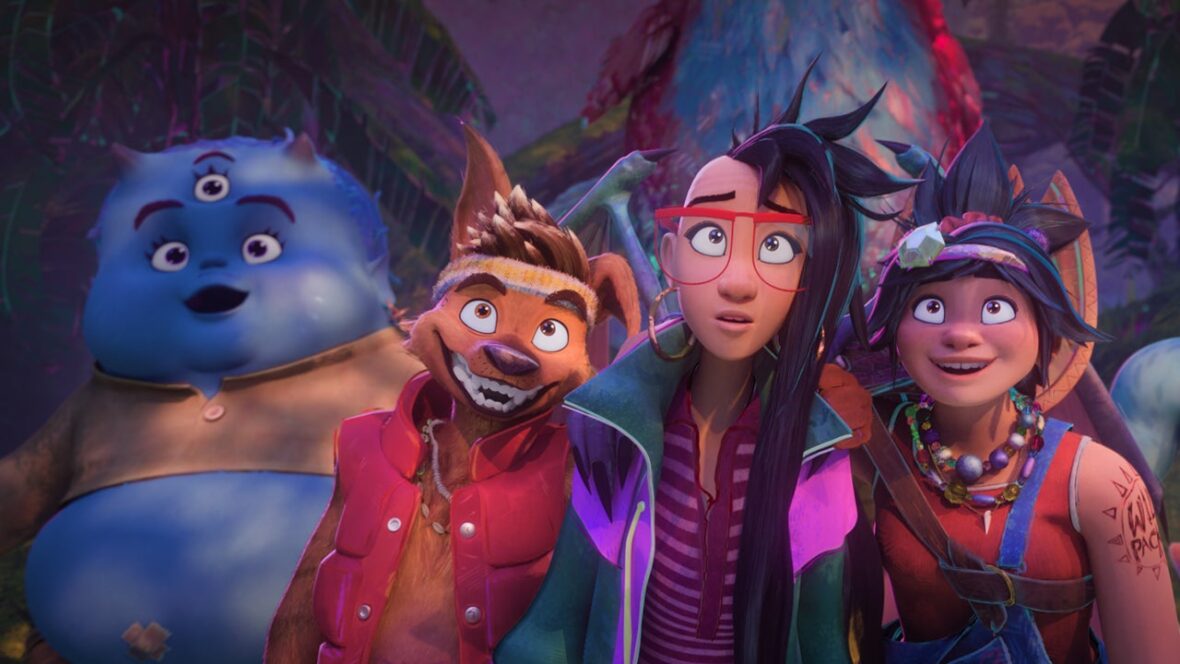
Forgotten Island takes best friends Jo and Raissa into Nakali, a mysterious world filled with creatures they recognize from stories told by their Filipino families. DreamWorks itself describes Nakali as being packed with magical and mythological beings from those childhood stories.
The movie goes much deeper into Philippine mythology than simply putting a manananggal in the background for a few seconds.
There are kapre, tiyanak, duwende, diwata, batibat and even creatures inspired by Philippine merfolk traditions. Vogue Philippines specifically identifies Nakali as a world inhabited by kapre, manananggal, diwata, tiyanak and duwende.
Some have major roles. Others populate the strange world around Jo and Raissa.
But just how close are they to the creatures from the stories Filipinos grew up hearing?
Let’s explore the Filipino mythical creatures in Forgotten Island and the folklore behind them.
A small warning before we continue: this article discusses characters and creatures that appear in the movie, but I’ll keep major plot developments and the ending spoiler-free.
Content
Why Filipino Mythology Is So Important to Forgotten Island
Forgotten Island follows lifelong best friends Jo and Raissa, voiced by H.E.R. and Liza Soberano.
After stumbling through a mysterious portal, they arrive in Nakali—a fantastical island where many of the stories they heard from their Filipino families suddenly become real.
For Filipino viewers, that’s probably one of the most entertaining parts of watching the movie.
These aren’t generic fantasy creatures.
They’re beings whose names have been whispered in Filipino households for generations.
Reuters described Forgotten Island as the first major animated feature to draw heavily from Filipino myths and culture.
The filmmakers also didn’t treat Philippine folklore like a single fixed mythology with one official version.
That’s important because Filipino folklore doesn’t really work that way.
Stories change depending on where you grew up. A creature described one way in Luzon may have different characteristics in Visayas or Mindanao. Even neighboring provinces can have different versions of essentially the same supernatural being.
Vogue Philippines points out that these stories historically changed as they were passed between families and communities—a kapre from one province, for example, might behave differently from one somewhere else.
Forgotten Island embraces that flexibility.
The movie borrows recognizable creatures from Philippine folklore and then gives them personalities, designs and roles that work inside the fictional world of Nakali.
And that’s where things get interesting.
1. Manananggal
Let’s start with probably the most recognizable Filipino creature in Forgotten Island.
The Manananggal.
In the movie, the feared Dreaded Manananggal is called Manang and is voiced by Lea Salonga. DreamWorks describes her as the most feared creature on Nakali.
If you grew up hearing stories about the manananggal, you’ll understand why.
What Is a Manananggal?
The manananggal is one of the most famous supernatural creatures in Philippine folklore.
It is usually portrayed as a woman who appears relatively normal during the day but transforms into a horrifying creature at night.
The part everyone remembers?
Its body separates at the waist.
The upper half grows bat-like wings and flies through the night while the lower half remains behind.
Reuters describes the creature as a legendary Filipino being known for separating its body, while H.E.R. recalled hearing stories about the manananggal while growing up.
In many traditional stories, the creature hunts vulnerable people during the night before eventually returning to its lower body.
It’s basically Filipino nightmare fuel.
And compared with vampires, werewolves and zombies—which have appeared in thousands of Western movies—the manananggal is visually very different.
Liza Soberano has even pointed out that the creature feels uniquely Filipino compared with famous monsters from other cultures.
Manang in Forgotten Island
DreamWorks takes that familiar mythology and transforms it into one of the central creatures of Nakali.
Lea Salonga provides the voice of Manang, the Dreaded Manananggal.
That’s a fun piece of casting in itself.
One of the most internationally recognizable Filipino musical theater stars is voicing one of the Philippines’ most terrifying mythical creatures.
The movie doesn’t simply copy the old folklore word for word. Manang has her own personality and role within Nakali’s mythology.
But visually and conceptually, the basic idea remains immediately recognizable.
For many Filipino viewers, the moment you see that body separation, there is absolutely no need for somebody to explain what you’re looking at.
You already know.
2. Tiyanak
Another familiar creature appears in the form of Bungi.
Bungi is voiced by Filipino-Canadian actor Manny Jacinto and is identified as a Tiyanak in interviews surrounding the movie.
But DreamWorks’ version isn’t exactly the little monster you might remember from Filipino horror movies.
What Is a Tiyanak?
The tiyanak is one of Philippine folklore’s creepiest creatures because it uses something innocent to lure people closer.
A baby.
Traditional tiyanak stories commonly describe a supernatural creature that imitates the cries or appearance of an abandoned infant.
A traveler hears a baby crying somewhere in the darkness.
Naturally, the person goes looking for it.
They find what appears to be a helpless child.
And that’s where things go horribly wrong.
The creature reveals its true form and attacks.
Folklore records vary considerably depending on the region and storyteller, but the basic image of the deceptive crying infant is widespread. A University of Southern California folklore archive entry, for example, records a Filipino family version in which the tiyanak appears as a crying newborn before transforming after someone picks it up.
The creature has become so established in Philippine popular culture that generations of Filipinos know what the word tiyanak means even if they’ve never read a mythology book.
Bungi the Tiyanak in Forgotten Island
Forgotten Island turns the concept on its head.
Manny Jacinto’s Bungi isn’t presented simply as a tiny frightening baby.
He’s an enormous creature.
Jacinto has described the character as an eight-foot-tall demon baby with three eyes, gigantic cheeks and even a mustache—with an artistic side thrown in for good measure.
That’s the kind of strange reinvention that Forgotten Island seems to enjoy.
Instead of attempting to make every Philippine mythical creature terrifying, the movie asks:
What if these beings actually had personalities?
What if the monster from your childhood stories was awkward, funny, artistic or even lovable?
Bungi still clearly comes from the tiyanak tradition, but he’s very much a DreamWorks interpretation of it.
3. Batibat
Batibat might be the creature that introduces the most Filipino viewers to something they haven’t heard about before.
Even Liza Soberano said Batibat was one of the creatures in the movie that was relatively unfamiliar to her compared with manananggal, duwende and aswang stories she heard while growing up.
In Forgotten Island, the character inspired by the Batibat is Batiba, voiced by Jenny Slate.
What Is a Batibat?
The Batibat is generally associated with Ilocano folklore.
Traditional descriptions portray it as a large female tree spirit or supernatural being associated with nightmares and suffocation during sleep.
One common version of the story says the spirit originally lives in a tree.
When that tree is cut down and its wood is used as part of a house, the Batibat may remain connected to the timber.
Someone sleeping near it might then experience the sensation of being crushed or unable to breathe.
Those stories became associated with nightmares and experiences resembling sleep paralysis.
This is another good example of how old folklore often attempted to explain frightening experiences people couldn’t otherwise understand.
Imagine waking up in the middle of the night.
You’re conscious.
You can see your room.
But you can’t move.
You feel pressure on your chest.
Today, we understand sleep paralysis much better.
But centuries ago?
A story about a supernatural creature sitting on your chest would probably feel frighteningly believable.
Batiba in Forgotten Island
The movie gives this obscure creature a major makeover.
Jenny Slate voices Batiba, the Batibat-inspired character.
Rather than simply recreating the frightening sleep demon from traditional stories, Forgotten Island connects Batiba with one of the movie’s major themes: memories.
Interviews describe the character as a tree-associated creature involved with people’s memories.
The character also has a surprisingly emotional personality.
Slate explained that Batiba can be friendly while simultaneously being afraid of the outside world, which gives the creature a vulnerability you probably won’t find in traditional nightmare stories.
This is one of the clearest examples of Forgotten Island using Philippine folklore as a starting point rather than a strict rulebook.
4. Kapre
Here’s another creature practically every Filipino has heard about.
The Kapre.
In Forgotten Island, Jo Koy voices a Kapre character named Datu.
What Is a Kapre?
Think giant.
Think old tree.
Think cigar.
That’s the popular image of the Kapre.
The creature is commonly described as an enormous humanoid being living among the branches of large trees—particularly old balete, acacia and mango trees.
Many stories describe Kapre as dark, hairy and huge.
And almost always?
He’s smoking.
In classic stories, people sometimes notice the smell of tobacco or see the glowing tip of a cigar high in a tree before realizing something supernatural might be watching them.
Unlike the manananggal or tiyanak, however, Kapre isn’t always depicted as purely evil.
Some stories describe the creature as mischievous.
It might confuse travelers.
It might make people lose their way.
It may frighten someone simply by revealing itself.
But depending on the story, it isn’t necessarily interested in killing anyone.
That’s actually something I always find fascinating about Filipino folklore.
Not every supernatural creature falls neatly into “good” or “evil.”
Sometimes they’re simply beings occupying a place humans probably shouldn’t disturb.
Datu the Kapre in Forgotten Island
Forgotten Island uses that tradition through Datu, voiced by Jo Koy.
The movie’s Kapre exists as one of the many personalities making up Nakali rather than simply being a monster waiting in a tree.
Again, the filmmakers aren’t trying to create a documentary about folklore.
They’re building an animated world using Philippine mythology as its foundation.
And having a Kapre wandering around a DreamWorks movie is something I don’t think many Filipino kids growing up in previous generations ever expected to see.
5. Duwende
The Duwende might be one of the most complicated creatures to explain because Filipino stories about them vary enormously.
Forgotten Island includes an entire Duwende community.
Ronny Chieng voices Truffle Wuffle, described as the king of the Duwende people.
What Are Duwende?
Duwende are small supernatural beings frequently compared with dwarfs, goblins, elves or earth spirits.
But none of those Western terms perfectly captures the Filipino concept.
Stories often associate them with particular locations.
That might be:
- an anthill
- a mound of earth
- a tree
- a garden
- a forest
- an old house
Some stories describe helpful duwende.
Others describe mischievous ones.
And others?
Definitely don’t make them angry.
This is where one of the most famous Filipino expressions comes from:
“Tabi-tabi po.”
Many Filipinos were taught to say this when passing places believed to contain spirits.
Essentially, you’re politely asking unseen beings to let you pass.
Even people who don’t seriously believe a duwende is hiding nearby sometimes still say it.
Because why take the chance?
That’s Filipino folklore for you.
Duwende in Forgotten Island
The movie makes them considerably more adorable.
H.E.R. said she found the Duwende in the movie cute, while Liza jokingly pointed out that the real creatures—if they existed—might not necessarily be so adorable.
Instead of one tiny creature hiding beneath a mound, Forgotten Island imagines an entire Duwende society inside Nakali.
That’s an interesting expansion.
It takes the basic folkloric idea and asks what a civilization belonging to those creatures might look like.
6. Diwata
Diwata also appear among the supernatural inhabitants of Nakali. Vogue Philippines specifically names them among the beings inhabiting the island.
But what exactly is a Diwata?
What Is a Diwata?
People sometimes translate diwata as “fairy.”
That’s convenient, but it’s not really the whole story.
In Philippine traditions, the term can refer broadly to supernatural beings, nature spirits or deities, depending on the community and historical context.
The concept stretches much deeper than the modern Western image of a tiny winged fairy.
Diwata may be associated with forests, mountains, rivers, animals, plants and other parts of nature.
The National Museum of the Philippines notes that in many Lumad communities, diwata are connected with natural elements and can play important roles in people’s fortunes and relationships with their environment.
One famous name many Filipinos associate with this tradition is Maria Makiling, the legendary guardian of Mount Makiling.
Again, there isn’t one universal description covering every Philippine tradition.
That’s important.
The Philippines contains hundreds of ethnolinguistic communities with their own stories, spirits and supernatural traditions.
Forgotten Island takes that enormous body of folklore and blends different influences together inside Nakali.
7. Kataw
Here’s another creature that may be less familiar to mainstream audiences.
The Kataw.
GMA’s cast breakdown identifies Kevin McCann as Mermahn, Prince of the Kataw people.
Yes.
Forgotten Island has Filipino merfolk too.
What Is a Kataw?
Kataw belong to Philippine traditions surrounding supernatural sea people or merfolk.
They are especially associated with Visayan folklore.
Descriptions vary, as you’d expect with oral tradition, but Kataw are generally portrayed as beings connected with the sea.
Historical and folkloric accounts have linked Kataw to other Philippine water beings such as sirena, sireno and siyokoy.
Some interpretations describe them as especially powerful inhabitants of the underwater world.
And if you grew up near the sea—which is obviously common in an archipelago like the Philippines—it isn’t difficult to understand why supernatural ocean creatures became part of local storytelling.
For centuries, Filipinos depended on oceans and rivers for food, transportation and livelihoods.
The sea gave life.
But it could also be dangerous and mysterious.
Folklore often develops exactly in those places.
Kataw in Forgotten Island
The film turns that tradition into another community living within Nakali.
Mermahn is identified as a prince of the Kataw people.
It’s another example of DreamWorks taking a creature that might only have a few lines in an old folklore description and imagining an entire society around it.
8. Aswang
You’ll also hear the word Aswang connected with Forgotten Island.
GMA’s coverage mentions aswang among the Filipino creatures represented in the movie’s mythology.
But here’s where things can get confusing.
Is an Aswang one specific monster?
Not necessarily.
What Is an Aswang?
“Aswang” can function as a broad category covering different frightening supernatural beings in Philippine folklore.
Depending on the region and storyteller, it may refer to creatures resembling:
- vampires
- witches
- shapeshifters
- ghouls
- viscera-sucking monsters
And yes, the Manananggal is frequently treated as part of this broader Aswang tradition.
Think of “Aswang” less as one exact creature with one official appearance and more as a large family of supernatural traditions.
That’s why two Filipinos can tell completely different Aswang stories and both still be talking about Filipino folklore.
One person might describe something flying.
Another might describe a shapeshifter.
Someone else’s Lola might swear the Aswang lived three houses away.
That’s part of the fun—and the terror—of oral storytelling.
9. Raww the Were-Aspin
Now we get to something a little different.
Raww.
Dave Franco voices Raww, one of Jo and Raissa’s companions in Nakali.
DreamWorks officially describes him as a “weredog,” while GMA identifies the character more specifically as a were-aspin.
But is the Were-Aspin an actual traditional Filipino mythical creature?
Not really.
What Is an Aspin?
“Aspin” comes from “asong Pinoy.”
It’s a modern term for native mixed-breed dogs in the Philippines.
Many Filipinos previously called them askal, from “asong kalye,” although aspin has become the friendlier and more widely preferred term.
They’re the dogs you see everywhere in the Philippines.
And if you grew up around them, you’ll know they can be incredibly loyal, intelligent and tough.
Raww Is a Filipino-Inspired Original Character
The idea of combining the classic werewolf concept with a Filipino aspin appears to be a creative invention for Forgotten Island rather than a direct adaptation of one traditional folkloric creature.
And I actually love that idea.
The filmmakers aren’t simply taking mythology from the past.
They’re also playing with modern Filipino culture.
What’s the Filipino version of a werewolf?
Apparently:
A were-aspin.
That’s such a wonderfully Filipino DreamWorks idea.
Why These Creatures Look Different From Traditional Folklore
Some viewers might watch Forgotten Island and say:
“That’s not how my Lola described a tiyanak.”
Or:
“Our stories about duwende were much scarier than that.”
And they’re probably right.
Because Filipino mythology doesn’t have one official encyclopedia that every storyteller has followed for hundreds of years.
These traditions developed orally.
Families passed them down.
Communities changed them.
Different provinces had different versions.
Spanish colonization, Christianity, indigenous traditions and influences from neighboring Asian cultures also shaped how many stories developed and were recorded.
Even scholarly collections of Philippine legends contain regional variations. The University of the Philippines Press describes Damiana Eugenio’s major collection of Philippine legends as deliberately national in scope, drawing from different geographical regions and ethnolinguistic groups—including supernatural stories involving aswang, cafre/kapre and duwende.
That means there isn’t necessarily one “correct” visual representation of every creature.
Forgotten Island takes advantage of that freedom.
The filmmakers retain recognizable ideas—the Manananggal splitting apart, the tree-dwelling Kapre, the Tiyanak, the Duwende—but build their own mythology around Nakali.
Filipino Folklore Was Always About Storytelling
This might actually be one of the most Filipino things about Forgotten Island.
These stories were never frozen.
They changed.
One Lola tells the story one way.
Another Lola makes it scarier.
Somebody’s uncle claims he actually saw the creature.
Your cousin adds another detail.
Twenty years later, you’re telling the story to someone else.
That’s how folklore survives.
Vogue Philippines makes a similar observation about Forgotten Island: long before these creatures appeared in books or movies, their stories lived inside homes and changed through generations of retelling.
In that sense, DreamWorks is simply participating in the same tradition.
It’s another storyteller retelling the creatures.
Only this time the storyteller happens to be one of the world’s biggest animation studios.
Which Forgotten Island Creature Is the Scariest?
If we’re talking about traditional folklore?
The Manananggal would probably be difficult to beat.
A creature separating its torso, growing wings and flying through the night isn’t exactly something you want hovering outside your bedroom window.
The traditional Tiyanak is pretty horrifying too.
Hearing a crying baby alone in the darkness and discovering that it isn’t actually a baby?
No thanks.
The Batibat might be even creepier because the legend taps into something people actually experience: waking up unable to move and feeling pressure on your chest.
But Forgotten Island isn’t trying to create a pure horror movie.
Instead, it turns these creatures into characters.
Some are threatening.
Some are funny.
Some are strange.
Some are surprisingly lovable.
And some manage to be all of those things at once.
Filipino Mythical Creatures in Forgotten Island: Quick Guide
| Creature | Forgotten Island Character | Voice Actor | Traditional Folklore |
|---|---|---|---|
| Manananggal | Manang | Lea Salonga | Flying creature whose upper body separates from its lower half |
| Tiyanak | Bungi | Manny Jacinto | Supernatural creature often appearing or crying like a baby |
| Batibat | Batiba | Jenny Slate | Tree-associated spirit connected with nightmares and suffocation |
| Kapre | Datu | Jo Koy | Giant supernatural being commonly associated with old trees |
| Duwende | Truffle Wuffle and the Duwende people | Ronny Chieng | Small supernatural beings associated with earth, mounds and other places |
| Kataw | Mermahn and the Kataw people | Kevin McCann | Merfolk associated with Philippine sea traditions |
| Diwata | Various inhabitants of Nakali | — | Nature spirits or supernatural beings whose characteristics vary between traditions |
| Aswang | Various folklore influences | — | Broad term associated with several kinds of supernatural creatures |
| Were-Aspin | Raww | Dave Franco | Original Filipino-inspired movie creation rather than a traditional creature |
The named character and voice-actor identifications above are confirmed in GMA’s interviews and DreamWorks’ official movie material.
Frequently Asked Questions
What Filipino mythical creatures are in Forgotten Island?
Confirmed creatures associated with the movie include Manananggal, Tiyanak, Batibat, Kapre, Duwende, Diwata, Kataw and other beings associated with Aswang traditions. The movie also introduces Raww, a fictional Were-Aspin.
Who is the Manananggal in Forgotten Island?
The Dreaded Manananggal is Manang, voiced by Lea Salonga. DreamWorks describes her as the most feared creature on the island of Nakali.
Who is Bungi?
Bungi is a Tiyanak voiced by Manny Jacinto. The movie substantially reimagines the familiar frightening baby-like creature from Philippine folklore.
Who is Batiba?
Batiba is a character inspired by the Batibat and voiced by Jenny Slate. The movie connects the character with memories while retaining the creature’s association with trees.
Who is the Kapre in Forgotten Island?
Jo Koy voices Datu, a Kapre.
Are there Duwende in Forgotten Island?
Yes. The movie features a community of Duwende, with Ronny Chieng voicing their king, Truffle Wuffle.
Is Raww a real Filipino mythical creature?
Not exactly.
Raww is described as a Were-Aspin or weredog. The character appears to be an original creation combining the familiar werewolf idea with the Filipino aspin rather than a direct adaptation of a traditional mythological being.
Is Forgotten Island based on Filipino mythology?
Yes, Philippine mythology and folklore are central to the world of the movie. Jo and Raissa are transported to Nakali, where creatures from stories told by their Filipino families are real.
Final Thoughts
For me, one of the coolest things about Forgotten Island isn’t simply that Filipino mythical creatures appear in a Hollywood movie.
It’s how many of them appear.
We’re not talking about one Manananggal showing up for a quick Filipino reference.
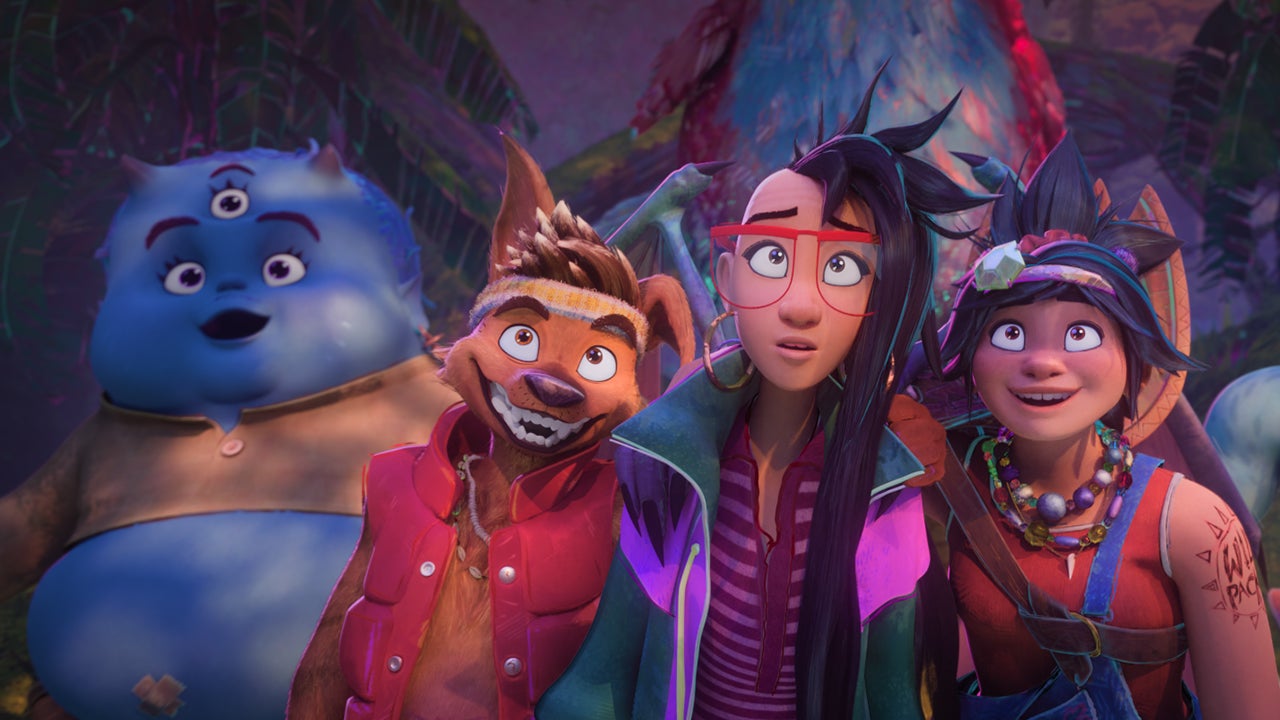
DreamWorks built an entire fantasy world around creatures such as the Manananggal, Tiyanak, Batibat, Kapre, Duwende, Diwata and Kataw.
Then it gave those creatures communities, personalities and relationships.
For Filipino audiences, that creates a completely different experience.
You’ve probably heard some of these names before.
Maybe from your parents.
Maybe from your grandparents.
Maybe while visiting relatives in the province.
Maybe during a brownout when somebody decided it was the perfect time to scare every child in the room.
And suddenly those same creatures are appearing in a major DreamWorks movie.
Of course, Forgotten Island changes them.
Bungi isn’t exactly the Tiyanak from traditional stories. Batiba has a personality and emotional journey beyond the old Batibat legends. Nakali’s Duwende have their own kingdom. Raww isn’t even a traditional creature at all.
But that’s also what folklore has always done.
Stories evolve every time somebody tells them.
And Forgotten Island might introduce Manananggal, Kapre, Duwende, Tiyanak and other Philippine mythical creatures to millions of people around the world who have never heard their names before.
For Filipinos, though, there’s something particularly satisfying about watching them and thinking:
We’ve known these creatures all along.