If the Filipino cast and Philippine mythology in Forgotten Island weren’t already enough to get people excited, wait until you see the soundtrack.
DreamWorks Animation’s Forgotten Island has assembled one of the most Filipino-heavy soundtracks we’ve seen attached to a major Hollywood animated movie.
BINI is here.
SB19 is here.
Lea Salonga doesn’t just have one song—her voice appears throughout the movie’s musical score.
H.E.R. and Liza Soberano actually sing together.
Sophia Laforteza of KATSEYE gets her own track.
Then you’ve got Ruby Ibarra, Carl Angelo, Guapdad 4000, P-Lo and Filipino-American composer Nathan Matthew David tying everything together.
The result is a 37-track soundtrack that feels less like Hollywood borrowing a few Filipino references and more like Filipino culture being built directly into the musical identity of the movie.
Forgotten Island (Original Motion Picture Soundtrack) was officially released digitally on September 18, 2026 through Back Lot Music, several days before the film’s Philippine theatrical release on September 23. The album combines original songs, covers and Nathan Matthew David’s score for the movie.
And when you look at the full track list, you’ll immediately notice something.
There is a lot of Filipino language, mythology and music packed into this album.
Content
BINI Performs “A Parallel World”
One of the biggest names on the Forgotten Island soundtrack is BINI.
The Nation’s Girl Group performs “A Parallel World,” one of the soundtrack’s main original songs.
The track was written by Forgotten Island composer Nathan Matthew David and Shawn Serrano, better known as producer Shawn Wasabi. It was produced by Shawn Wasabi and David, with Tagalog lyric translation credited to Annie Nepomuceno.
But BINI actually appears twice on the album.
The regular version of “A Parallel World” comes in at Track 4.
Then the entire soundtrack closes with “A Parallel World (Amping Mix),” featuring BINI together with Lea Salonga.
That means one of the biggest Filipino pop groups today gets both an early spotlight and the final track on the entire Forgotten Island album.
And considering what Forgotten Island is about, the title “A Parallel World” couldn’t be more appropriate.
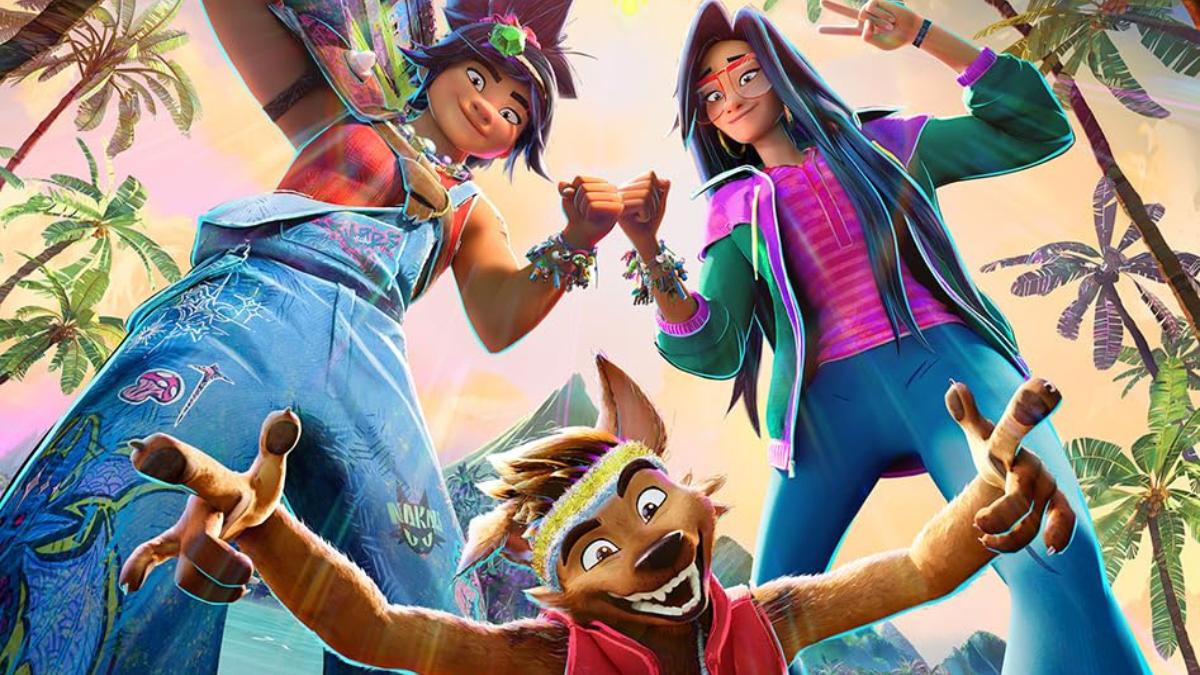
The movie follows best friends Jo and Raissa after they discover a mysterious portal and enter Nakali, a fantastical world populated by creatures inspired by the Philippine myths and legends they heard from their families growing up.
“A Parallel World” fits directly into that idea of suddenly finding yourself somewhere magical, familiar and completely strange at the same time.
SB19 Performs “Mga Kababayan”
Then there’s SB19.
Rather than giving the group an entirely new song, Forgotten Island made a particularly interesting choice.
SB19 performs “Mga Kababayan.”
Yes, that “Mga Kababayan.”
The song was originally written and recorded by Filipino rap icon Francis M., or Francis Magalona. The Forgotten Island version is performed by SB19 and produced by RADKIDZ. Official soundtrack credits list Francis Magalona and Jimmy Antiporda as the songwriters.
It’s a clever addition to the movie.
“Mga Kababayan” is already deeply connected to Filipino identity and Filipino popular culture, so bringing it into a DreamWorks movie centered around Philippine mythology gives the song an entirely new international platform.
It also connects different generations of Filipino music.
You’ve got a song associated with one of the most important figures in Filipino hip-hop now being performed by arguably one of the Philippines’ most internationally visible contemporary groups.
For longtime Filipino listeners, there’s familiarity.
For international audiences discovering the song through Forgotten Island, it might be their first introduction to a Filipino classic.
Lea Salonga Is Everywhere on the Forgotten Island Soundtrack
Lea Salonga might have the most interesting musical role of anyone involved.
She’s already part of the Forgotten Island voice cast as Manang, also known as the Dreaded Manananggal, one of the most powerful and feared creatures in Nakali.
But Lea’s involvement goes much further than voice acting.
Her vocals are incorporated throughout Nathan Matthew David’s score.
She is featured on “Ninakaw Sa Akin,” “Magnanakaw,” “Balik,” “Bahagi Mo” and the almost seven-minute “Ang Manananggal Suite.”
Then she joins BINI on the album-closing “A Parallel World (Amping Mix).”
That gives Lea Salonga six credited appearances across the 37-track album.
And honestly, if you’re making a major animated movie about Filipino mythology and you’ve already managed to cast Lea Salonga as a manananggal, it makes perfect sense to use that voice musically too.
Her vocals effectively become part of the sound of Manang herself.
Back Lot Music specifically identifies Salonga as a featured vocalist within Nathan Matthew David’s score, rather than simply an artist brought in to perform one standalone pop song.
That’s an important distinction.
Lea Salonga isn’t just on the soundtrack.
Her voice is part of the movie’s musical world.
H.E.R. and Liza Soberano Sing “BRB”
Here’s another collaboration many viewers probably weren’t expecting.
H.E.R. and Liza Soberano perform together.
Their main song is “BRB,” the opening track on the Forgotten Island soundtrack.
H.E.R. voices Jo in the movie while Liza Soberano voices her best friend Raissa, so having the two actresses perform the song together extends their on-screen friendship into the soundtrack.
“BRB” was written by Ryan Tedder and Gabriella Wilson—H.E.R.’s real name—and produced by Tedder and H.E.R. Back Lot Music describes it as the film’s end-title track.
Ryan Tedder’s involvement is notable too.
The OneRepublic frontman has written and produced music for some of the biggest artists in pop, so pairing him with H.E.R. for one of Forgotten Island’s central songs gives the soundtrack another major international connection.
And yes, Liza really is singing on the track.
That should be particularly interesting for Filipino fans who primarily know her through acting.
H.E.R. and Liza also appear together on the wonderfully short “Jerk in the Box,” another track within the movie.
So the Jo-and-Raissa pairing exists not only through dialogue but through music as well.
Sophia Laforteza of KATSEYE Sings “Never Tear Us Apart”
Another Filipino artist with a major moment on the soundtrack is Sophia Laforteza.
The Filipina member of global girl group KATSEYE performs “Never Tear Us Apart.”
Unlike BINI’s “A Parallel World,” this isn’t an original song created specifically for the movie.
It’s a new version of the classic INXS song written by Andrew Farriss and Michael Hutchence.
For Forgotten Island, Sophia’s version was produced by Mike Elizondo, with additional production by Nathan Matthew David.
The song choice makes a lot of sense once you know the central story.
Forgotten Island is ultimately about Jo and Raissa trying to hold onto their friendship while life is pulling them in different directions.
Raissa is leaving.
Jo is staying.
And once they reach Nakali, there’s an even bigger problem: returning home could cost them the memories of their friendship.
Suddenly a song called “Never Tear Us Apart” becomes incredibly appropriate.
Ruby Ibarra and Carl Angelo Perform “Salbahe Ako”
Filipino-American rapper Ruby Ibarra also joins the soundtrack alongside Carl Angelo for “Salbahe Ako.”
The song was produced by Filipino-American electronic producer Sweater Beats and features Ibarra’s unmistakable hip-hop presence.
Ruby Ibarra has spent much of her career exploring Filipino-American identity through music, making her another natural choice for a project like Forgotten Island.
And even the title feels distinctly Filipino.
“Salbahe Ako” roughly carries the idea of “I’m bad,” “I’m naughty,” or “I’m wicked,” depending on context.
It’s one more example of Filipino language being presented naturally within the soundtrack rather than being hidden or translated away.
Guapdad 4000 and P-Lo Join With “Double Up”
Forgotten Island also reaches into the Filipino-American hip-hop scene through Guapdad 4000 and P-Lo.
They perform “Double Up,” with Guapdad 4000 credited as producer.
Both artists are associated with the Bay Area music scene, adding another layer of Filipino-American culture to an album that moves between the Philippines and the Filipino diaspora.
That’s one of the more interesting things about the soundtrack overall.
It doesn’t define Filipino music as one particular sound.
You have P-pop.
Hip-hop.
Broadway vocals.
Pop.
Film score.
Traditional Philippine instrumentation.
American influences.
And even familiar karaoke-style music.
That’s a much more realistic reflection of Filipino music culture than simply putting traditional instruments over an orchestral score and calling it a day.
The Complete Forgotten Island Soundtrack Song List
The official Forgotten Island soundtrack contains 37 tracks. Unless another performer is specifically listed, the score music is by composer Nathan Matthew David.
- “BRB” – H.E.R. & Liza Soberano
- “Pasakalye”
- “Tayo Na”
- “A Parallel World” – BINI
- “Lola”
- “Tadhana”
- “Never Tear Us Apart” – Sophia Laforteza of KATSEYE
- “Nakalimutan”
- “Susmaryosep! Hay Naku! Maanghang!”
- “Salbahe Ako” – Carl Angelo & Ruby Ibarra
- “Ninakaw Sa Akin” – Nathan Matthew David feat. Lea Salonga
- “Batiba”
- “Sarimanok”
- “Mga Kababayan” – SB19
- “Bungi”
- “King Truffle Wuffle”
- “Prince Mermahn” – Nathan Matthew David feat. Nico Santos
- “Jerk in the Box” – H.E.R. & Liza Soberano
- “Double Up” – Guapdad 4000 feat. P-Lo
- “Kapre”
- “If We Remember”
- “Magnanakaw” – Nathan Matthew David feat. Lea Salonga
- “Hulihin”
- “It Was You”
- “Balik” – Nathan Matthew David feat. Lea Salonga
- “All of Them”
- “One Last Deal”
- “Forgotten Friendship”
- “I’m So Sorry, Apo”
- “Without You”
- “Memories Are Magic”
- “Bahagi Mo” – Nathan Matthew David feat. Lea Salonga
- “Paalam, Nakali”
- “Jo and Raissa Suite”
- “Ang Manananggal Suite” – Nathan Matthew David feat. Lea Salonga
- “Batiba Suite”
- “A Parallel World (Amping Mix)” – BINI feat. Lea Salonga
That’s a surprisingly massive album for an animated movie.
And even without listening to it, you can learn a lot about Forgotten Island simply by reading those titles.
The Filipino Words Hidden Throughout the Track List
This might be my favorite part.
Look through the song titles again.
Pasakalye.
Tayo Na.
Lola.
Tadhana.
Nakalimutan.
Salbahe Ako.
Ninakaw Sa Akin.
Magnanakaw.
Hulihin.
Balik.
Bahagi Mo.
Paalam.
Apo.
These aren’t random Filipino words thrown onto an album for decoration.
Many connect directly to the movie’s story about memories, relationships, family and separation.
“Nakalimutan” means forgotten.
“Balik” suggests returning or coming back.
“Paalam” means goodbye.
“Lola” immediately brings the Filipino grandmother into the musical world of the film.
And then you’ve got titles pulled straight from Philippine mythology.
“Batiba.”
“Sarimanok.”
“Bungi.”
“Kapre.”
“Ang Manananggal Suite.”
Even the track listing tells you that Forgotten Island isn’t trying to hide its Filipino identity to make itself easier for international audiences.
It’s leaning into it.
Philippine Mythology Is Built Into the Score
The music gets even more interesting once you move beyond the pop songs.
Nathan Matthew David composed the original score.
David was born in Los Angeles to Filipino parents and has spent years studying and collaborating with Filipino artists. While developing Forgotten Island, he traveled to the Philippines, including Lake Sebu and the Cordillera region, as part of his research.
His goal wasn’t simply to take a standard Hollywood orchestral score and add a few Filipino instruments on top.
He wanted those sounds to belong naturally within Nakali.
And DreamWorks apparently went pretty deep.
Official soundtrack credits list instruments including kulintang, gandingan, agung, dadabuan, dabakan, babendil, tongatong, sludoy, sloli and tampong alongside the traditional orchestra. Filipino musicians and Indigenous music and cultural advisers were involved in the production.
That means audiences may hear instruments rooted in different Philippine musical traditions within a major DreamWorks animated feature.
That’s pretty significant.
Yes, They Even Recorded the Bamboo Organ
Here’s another detail Filipino viewers might appreciate.
Part of the Forgotten Island score was recorded using the famous Bamboo Organ at the Diocesan Shrine and Parish of St. Joseph—the Bamboo Organ Church in Las Piñas.
The official album credits list Prof. Armando Salarza as the Bamboo Pipe Organist, with Janinna Casuncad and Roy Sabenecio assisting.
Other parts of the score were recorded at major facilities including Abbey Road Studios, Eastwood Scoring Stage, ELBO Studios and Hit Productions.
Think about that combination for a second.
Abbey Road Studios.
And the Las Piñas Bamboo Organ.
On the same DreamWorks soundtrack.
That’s a pretty cool representation of what Forgotten Island seems to be trying to accomplish musically—bringing Filipino sounds into the scale of a major international animated production without stripping away where those sounds came from.
The Soundtrack Mixes Filipino Culture With the 1990s
There’s another reason some of the soundtrack choices may sound familiar.
Forgotten Island is influenced heavily by the pop culture surrounding Jo and Raissa’s world, particularly music from the 1980s and 1990s.
Back Lot Music says the filmmakers intentionally combined original Filipino and Filipino-American music with songs reflecting that era.
That explains choices like “Never Tear Us Apart.”
It also helps explain why music seems to be such an important part of the movie itself.
For many Filipinos, you really can’t tell a story about family gatherings, friendships and growing up without eventually getting somewhere near music or karaoke.
Forgotten Island apparently understands that.
Where Can You Listen to the Forgotten Island Soundtrack?
You don’t have to wait for the movie to hear the soundtrack.
Forgotten Island (Original Motion Picture Soundtrack) was released digitally by Back Lot Music on September 18, 2026, and the label’s official soundtrack page directs listeners to streaming services.
So if you’re specifically looking for the BINI, SB19, Lea Salonga, H.E.R., Liza Soberano or Sophia Laforteza tracks, the album is already available digitally.
Physical editions of the soundtrack have also been announced, including vinyl, CD and cassette formats.
And considering the number of Filipino artists involved, I wouldn’t be surprised if some fans end up treating this soundtrack almost like a collectible on its own.
Which Forgotten Island Songs Should Filipino Fans Watch?
There are several obvious tracks likely to get the most attention.
BINI fans will naturally go straight to “A Parallel World,” while the “Amping Mix” gives the song an additional reason to listen because it brings BINI and Lea Salonga together.
For A’TIN, SB19’s version of “Mga Kababayan” is particularly interesting because they’re reinterpreting a genuine Filipino hip-hop classic rather than simply recording another original P-pop track.
Then there’s “BRB,” because hearing H.E.R. and Liza Soberano sing together adds another layer to Jo and Raissa’s relationship.
Sophia’s “Never Tear Us Apart” should also attract KATSEYE fans.
And if you’re interested in the actual musical world of Forgotten Island rather than only its pop singles, Lea Salonga’s Manananggal-related tracks and Nathan Matthew David’s longer suites are probably where things get especially interesting.
“Jo and Raissa Suite” runs for more than six minutes.
“Ang Manananggal Suite” featuring Lea Salonga is even longer.
Those pieces should give listeners a much better sense of how the score works beyond individual songs.
More Than Just a Movie Soundtrack
There’s something genuinely interesting happening with Forgotten Island.
DreamWorks could have made a Philippine-inspired fantasy movie, added a couple of Filipino actors, commissioned one Filipino pop song and called it representation.
Instead, Filipino influence appears throughout the production.
It is in the mythology.
It is in the cast.
It is in the language.
It is in the animation.
And now it’s clearly in the music.
Nathan Matthew David isn’t simply scoring scenes with a Hollywood orchestra. The production brought Philippine instruments and Filipino musicians into the musical world of Nakali.
Lea Salonga isn’t simply singing the end credits. Her voice becomes part of the score itself.
SB19 isn’t simply contributing a random song. They’re reviving “Mga Kababayan.”
BINI isn’t appearing only once. They get “A Parallel World” and then close the album alongside Lea Salonga.
H.E.R. and Liza Soberano don’t just voice Jo and Raissa. They sing together.
And artists representing different parts of the Filipino diaspora—from Ruby Ibarra to Guapdad 4000 and P-Lo—are part of the mix as well.
That’s why the Forgotten Island soundtrack is worth paying attention to even separately from the movie.
Final Thoughts
Forgotten Island already feels like a major moment for Filipino representation in mainstream animation, and its soundtrack might be one of the clearest examples of how seriously DreamWorks approached the movie’s cultural identity.
BINI performing “A Parallel World.”
SB19 taking on Francis M.’s “Mga Kababayan.”
Sophia Laforteza singing “Never Tear Us Apart.”
H.E.R. and Liza Soberano performing together.
Lea Salonga’s voice becoming part of the sound of a manananggal.
Then beneath all those recognizable names is Nathan Matthew David’s score, combining orchestra with musical traditions and instruments from the Philippines.
That’s a lot of Filipino music packed into one DreamWorks movie.
And perhaps that’s what makes this soundtrack feel different.
You’re not just hearing Filipino artists appearing on a Hollywood soundtrack.
You’re hearing Filipino music, language, mythology, history and modern pop culture occupying the same space.
For Filipino audiences watching Forgotten Island, some of those sounds will probably feel instantly familiar.
For audiences elsewhere in the world, they might be hearing them for the very first time.
Either way, Nakali is going to sound unmistakably Filipino.