It takes two to fly a plane: the captain and the first officer. Together, they form the essential team that ensures that every flight runs smoothly and safely. While they both have the experience and skill to pilot an aircraft individually, they have different roles when sharing a single cockpit.
Here’s a closer look at the unique duties and responsibilities of these personnel, and what it really takes for them to pilot an aircraft together.
Content
What Are the Responsibilities of a Captain?
The captain, often referred to as the pilot in command (PIC), holds the ultimate responsibility for the safety and operation of the flight. Their duties encompass a wide range of tasks before, during, and after the flight.
Before takeoff, the captain reviews the flight plan, checks weather conditions, and ensures that the aircraft is in optimal condition through pre-flight inspections. They also coordinate with ground crew, air traffic control, and other relevant parties to confirm that everything is set for a smooth departure.
During the flight, the captain’s primary role is to oversee all aspects of the aircraft’s operation. This includes making critical decisions regarding route adjustments, managing unexpected situations, and maintaining clear communication with the first officer, cabin crew, and passengers.
After landing, the captain conducts post-flight checks and debriefs with the crew to discuss the flight’s performance and address any issues that arise. This continuous feedback loop is vital for maintaining high standards of safety and efficiency.
What Are the Responsibilities of a First Officer?
The first officer, also known as the co-pilot, plays a supportive yet vital role in the cockpit. While the captain is the final authority, the first officer is equally responsible for operating the aircraft and ensuring the flight’s success. Their duties start with assisting the captain in pre-flight preparations, including reviewing the flight plan, conducting aircraft inspections, and checking weather forecasts.
During the flight, the first officer’s primary role is to support the captain by managing the controls and monitoring the aircraft’s systems. They handle radio communications, navigate, and ensure that all operational procedures are followed.
In many airlines, the first officer and captain take turns flying the aircraft, with one acting as the pilot flying (PF) and the other as the pilot monitoring (PM). This role rotation helps in sharing the workload and maintaining a high level of vigilance throughout the flight. During emergencies, the first officer’s role becomes even more critical, as they assist the captain by providing additional input, executing necessary procedures, and maintaining calm under pressure.
The collaboration between the captain and first officer is essential for effective problem-solving and ensuring the safety of the aircraft and its passengers.
What Requirements Are Needed to Become a Captain and First Class Officer?
The journey to becoming a captain or first class officer begins with enrolling in a reputable pilot school in the Philippines, United States, United Kingdom, Australia, or any country that has institutions that offer aviation studies. These flight schools place aspiring pilots on a path to obtaining the necessary licenses to jumpstart and grow their careers.
The two main licenses that both aspiring captains and first class officers need are the private pilot license (PPL) and commercial pilot license (CPL). Captains, however, must have an airline transport pilot license (ATPL)—the highest level of aircraft pilot certification. Aviation schools also offer courses that aspiring pilots have to complete to be allowed to fly a commercial aircraft. Examples of these courses include instrument rating (IR), multi-engine rating (ME), and type rating.
Flight hours, or the total time a pilot has operated an aircraft, are also a crucial requirement to becoming a captain or first officer. To qualify for a captain position, aspiring applicants must complete around 3,000 to 5,000 flight hours. For first officers, applicants need to complete at least 1,500 hours.
In addition to getting an aviation education and accumulating enough flight hours, captains and first officers must pass stringent medical examinations to ensure that they’re physically and mentally fit to fly. They also have to complete recurrent and training simulator sessions, where they enhance their skills in executing emergency procedures and complex flight scenarios, to remain proficient and prepared for any situation they may encounter during a flight.
How to Tell the Captain and First Officer Apart
While the captain and first officer share many responsibilities and work closely together, there are distinct ways to differentiate between the two roles, both visually and functionally. One of the most noticeable differences lies in their uniforms. Both pilots wear similar attire, typically consisting of a shirt, tie, trousers, and blazer.
However, the insignia on their uniforms sets them apart. Captains usually have four stripes on their epaulets and sleeve cuffs, indicating their seniority and ultimate authority on the flight. In contrast, first officers have three stripes on their epaulets and sleeves, signifying their role as the second-in-command.

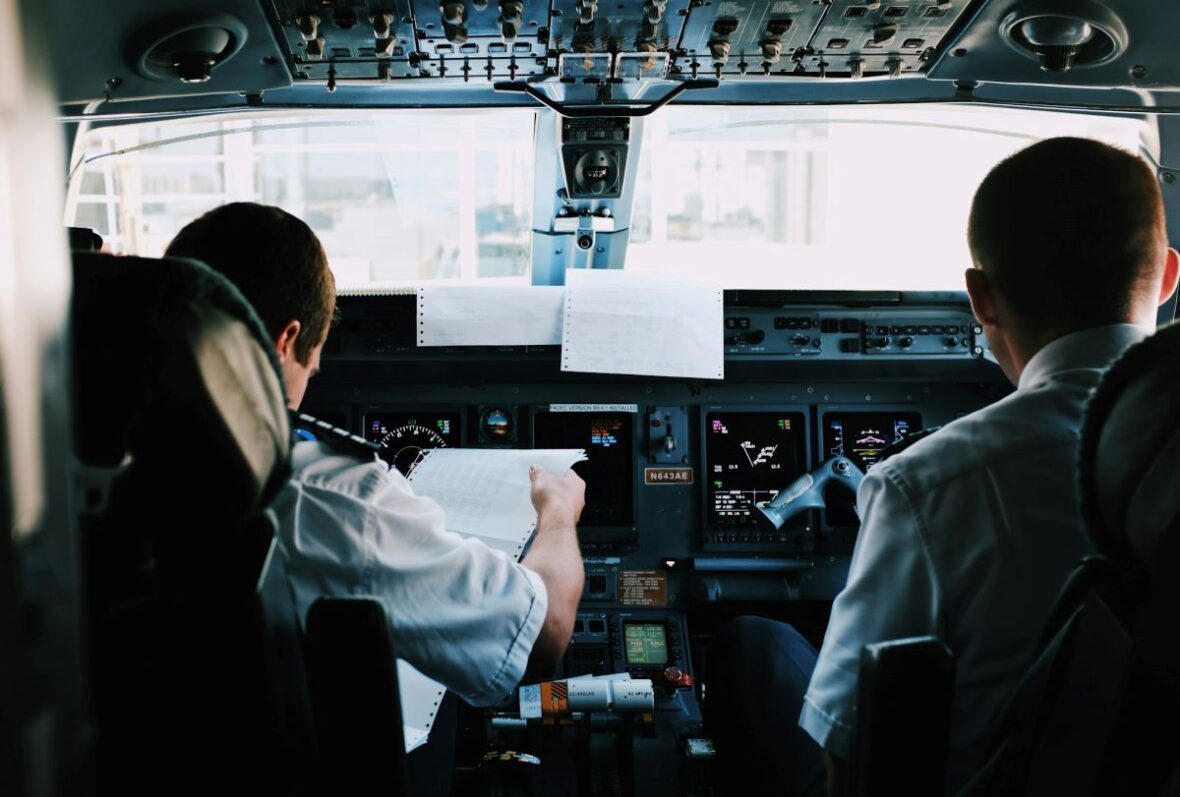
Photo by Blake Guidry on Unsplash
In the cockpit, the seating arrangement also differentiates the two roles. The captain sits in the left seat, known as the captain’s seat, while the first officer sits in the right seat. This arrangement is standard across most commercial aircraft and helps delineate their respective responsibilities during the flight.
Finally, passengers can often identify the captain and first officer through pre-flight announcements. The captain typically makes the initial announcement, welcoming passengers on board, and providing information about the flight path, weather conditions, and estimated arrival time. The first officer might also make announcements, particularly regarding safety procedures or additional updates during the flight.
The roles of a captain and first officer are indispensable. Each of their unique skills and responsibilities helps strengthen their partnership that ensures the safety and success of each flight, understanding their dynamic sheds light on what it really takes to fly an aircraft.