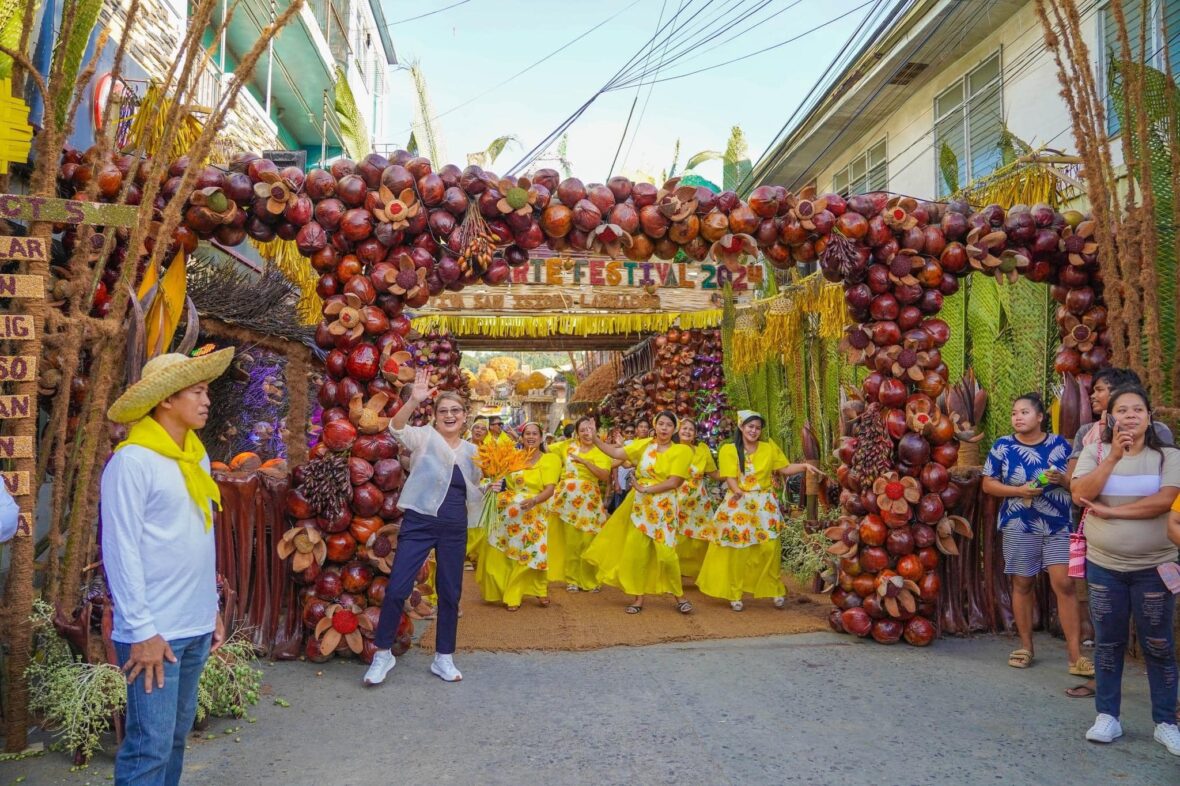
Every May 15, many travelers head straight to Lucban for its colorful kiping-covered houses. But if you keep going south, past the usual festival trail, you will reach the coastal town of Gumaca, Quezon. This is where the Araña’t Baluarte Festival takes center stage, and it is unlike any other harvest celebration in the province.
Araña’t Baluarte is big, bold, and unforgettable. Instead of delicate decorations, Gumaca builds towering bamboo structures loaded with real fruits and vegetables. When the harvest finally rains down on the crowd, you understand that this festival is all about shared abundance and community spirit.
Content
How the festival began
The name Araña’t Baluarte comes from Gumaca’s Spanish-era history. Araña means chandelier, while baluarte refers to a fort or bastion. Centuries ago, Gumaca was a fortified coastal town protecting itself from seafaring invaders. That sense of strength and defense is still reflected in the festival today.
Originally, simple bamboo gates were built to welcome the image of San Isidro Labrador, the patron saint of farmers. Over time, these gates became larger, stronger, and more elaborate. What started as a religious welcome evolved into a friendly competition among communities.
Today, the baluarte represents the strength and unity of the people, while the araña symbolizes the overflowing blessings of the land and sea.

A forest of food and bamboo
Walking through Gumaca during the festival feels like entering a forest made of bamboo, fruit, and vegetables. The town is divided into several stations, each with its own massive structure.
The baluarte is the first thing you notice. These bamboo arches can stretch across an entire highway and rise as high as three stories. They are carefully engineered to carry enormous weight without collapsing.
Hanging from these arches are the arañas. These are giant chandeliers that slowly rotate above the street. Instead of glass or crystals, they are decorated with pineapples, bananas, coconuts, and bundles of vegetables.
Unlike the polished look of kiping in Lucban, Gumaca celebrates a raw and earthy aesthetic. Everything you see is real food, ready to be cooked, eaten, or shared once the festival reaches its peak.
When the harvest falls
The most exciting moment of the Araña’t Baluarte Festival happens during the religious procession of San Isidro Labrador. As the image passes beneath each baluarte, a signal is given.
Ropes holding the heavy arañas are loosened or cut, bringing the chandeliers down within reach of the crowd. This moment is simply called the Fall.
What follows is a joyful scramble. People jump, reach, and sometimes climb to catch falling fruits and vegetables. It is chaotic but good-natured, filled with laughter and cheers. In that moment, everyone becomes part of the same story.
This scramble captures a deep Filipino belief. A harvest is not complete unless it is shared. What falls from the araña belongs to the community.
Food, faith, and history by the sea
Because Gumaca is a port town, the festival comes with flavors and sights you will not find elsewhere.
Try the local suman de labak, a sticky rice treat wrapped in leaves and lightly sweetened. You will also find plenty of fresh seafood, often grilled right at the market and best enjoyed with rice and vinegar.
Take time to visit the San Diego de Alcala Fortress, also known as Castillo de San Diego. Built in the 18th century, it is the only remaining Spanish-era fort in Quezon. Its thick stone walls offer a quiet contrast to the lively bamboo arches outside.
Nearby stands the San Diego de Alcala Cathedral, made of coral stone. It is massive, solemn, and a powerful reminder of Gumaca’s enduring faith.
Planning your visit in 2026
If you are visiting on Friday, May 15, 2026, plan your day wisely. Morning is the best time to walk around and admire the baluartes before the crowds grow thick. The main procession usually happens in the afternoon, which is when the harvest scramble takes place.
Food stalls are open all day, so keep an eye out for local lambanog and refreshing buko juice to beat the heat.
Helpful tips for first-timers
Gumaca is about four to five hours from Manila, making it less crowded than Lucban and ideal for travelers who prefer a more relaxed and local atmosphere.
The scramble can get intense. Heavy fruits like pineapples and coconuts fall fast, so if you are traveling with children, it is best to watch from a safe distance.
Some adventurous travelers turn May 15 into a festival marathon, starting early in Lucban, passing through Sariaya, and ending the day in Gumaca. It is tiring but incredibly rewarding.
Araña’t Baluarte Festival is not just something you watch. It is something you feel. Standing under towering bamboo arches as the harvest rains down around you is a powerful reminder of gratitude, generosity, and the strength of community.

FAQ: Araña’t Baluarte Festival
1. What is the Araña’t Baluarte Festival all about?
Araña’t Baluarte Festival is Gumaca’s way of giving thanks for a good harvest and honoring San Isidro Labrador. It is known for its massive bamboo arches and hanging chandeliers filled with real fruits and vegetables that are shared with the crowd.
2. When and where is the festival held?
The festival takes place every May 15 in the coastal town of Gumaca, Quezon. Activities are spread across several stations in town, especially along the main roads where the bamboo baluartes are built.
3. What are arañas and baluartes?
Baluartes are large bamboo arches that act like forts across the streets. Hanging from them are arañas, which are chandelier-like structures loaded with pineapples, bananas, coconuts, and other produce. Together, they symbolize strength and abundance.
4. Is it safe to join the harvest scramble?
The scramble is exciting but can be intense. Heavy fruits can fall quickly, so it is important to stay alert. Families with small children may prefer to watch from a safe distance rather than joining the crowd.
5. What else should I see or eat while in Gumaca?
Aside from the festival, visit the San Diego de Alcala Fortress and the coral-stone cathedral near the plaza. For food, try suman de labak, fresh grilled seafood, and local lambanog to complete the Gumaca experience.