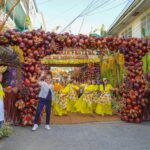
Every May 15, while nearby Lucban quietly shows off its picture-perfect kiping displays, the town of Sariaya in Quezon chooses chaos in the best possible way. This is Agawan Festival, a harvest celebration where grabbing, scrambling, and laughing with strangers is all part of the tradition.
Agawan is loud, crowded, and full of energy. It is the kind of festival where you do not just watch from the sidelines. You become part of the story. If you enjoy festivals with strong community spirit, deep faith, and a little friendly madness, Sariaya is the place to be.
Content
What Agawan really means
The word agawan means to snatch or to grab. The term was officially used in 1999 by the late parish priest Fr. Raul Enriquez to describe Sariaya’s unique way of honoring San Isidro Labrador, the patron saint of farmers.
Like many harvest festivals, Agawan is about thanksgiving. But here, gratitude is expressed through generosity. Homeowners willingly give away their harvest, believing that the more they share, the more blessings will come in the next year. Losing your produce to the crowd is not seen as a loss at all. It is an act of faith and trust.
Locals often describe Agawan as a happy pandemonium, and once you experience it, the phrase makes perfect sense.

Decorations you will only see in Sariaya
Sariaya’s festival decorations feel different from anywhere else in Quezon. They are playful, practical, and meant to be taken.
One of the first things you will notice are the bagakay. These are young bamboo branches tied to the front of houses and balconies. They are loaded with treats like fruits, vegetables, snacks, candies, and even small bills wrapped in plastic. These are what people rush for during the Agawan scramble.
You will also see buntal hats everywhere. Sariaya is known as the Buntal Hat Capital of the Philippines, and residents proudly display these finely woven hats on their homes, gates, and arches.
Look closely at the windows and you might spot curtains made of string beans. Long strands of sitaw hang like green drapes, proving that even vegetables can be part of the design.
Spanning the streets are bamboo arches called baluarte, dripping with farm produce and local goods. They frame the road beautifully and serve as the main source of prizes once the procession passes.
Where history meets celebration
What truly sets Sariaya apart is its incredible architecture. The town is known as the Art Deco Capital of Southern Luzon, thanks to the coconut boom of the early 1900s. Wealthy coconut barons built grand homes that still stand today, many of them right along the Agawan route.
One highlight is the Gala-Rodriguez House, designed by National Artist Juan Nakpil. Its clean lines and Art Deco details make it a standout.
The Natalio Enriquez Mansion feels almost like a European castle, complete with twin spires. It was designed by Andres Luna de San Pedro, the son of the famous painter Juan Luna.
Another must-see is the Don Catalino Rodriguez House, also known as Villa Sariaya. It is a classic bahay na bato that reflects the wealth and elegance of the 1920s.
Walking through Sariaya during Agawan feels like stepping into a living museum, only with flying snacks and cheering crowds.
What happens on festival day
If you are visiting on Friday, May 15, 2026, the day usually starts on a calm note. Morning Mass is held at the historic St. Francis of Assisi Parish Church, grounding the celebration in faith.
Things quickly shift once the procession of San Isidro Labrador begins. As the image passes through town, homeowners start lowering their bagakay or tossing items from balconies. This is the Agawan itself. The crowd surges forward, hands in the air, laughter everywhere, as people grab whatever they can.
Later in the day, Saywan sa Kalye takes over the streets. This is a lively street dance parade featuring costumes made from buli or buri palm and other indigenous materials.
One of the most fun events to watch is the Pinagong Contest, where participants race to eat the town’s famous turtle-shaped bread.
Eating your way through Sariaya
Between scrambles, you will want to eat, and Sariaya has plenty to offer.
Pinagong is the town’s signature bread. Shaped like a turtle, it is dense, slightly sweet, and perfect as a snack or pasalubong.
Minukmok is a traditional dessert made from mashed cassava or green bananas. It has a simple, comforting taste and is often linked to old courtship traditions.
If you are curious, try lambanog, the local coconut vodka. Sariaya is known for producing strong and high-quality varieties, so sip carefully.
Tamalis is another local favorite. It is a savory rice cake topped with egg, meat, and a rich peanut-based sauce, very different from the Mexican dish with a similar name.
Tips for enjoying Agawan
Bring an extra bag or eco-sack if you plan to join the scramble. Even if you do not push your way through, chances are someone will throw snacks your direction.
If you can arrive on May 14, do it. The Flores de Mayo the night before is worth seeing, especially the gowns made entirely of buli fibers.
Lastly, remember that many of the beautiful houses are still private homes. Admire them respectfully and check with the local tourism office near the plaza if you want to join a guided heritage tour.
Agawan Festival is messy, noisy, and joyful. It is a celebration where faith meets fun and generosity turns into a shared adventure. You might leave with a bag full of snacks, but more importantly, you leave with a great story and a deeper appreciation for Sariaya’s spirit.

FAQ Agawan Festival
1. What is the Agawan Festival in Sariaya all about?
Agawan Festival is Sariaya’s way of celebrating a good harvest and honoring San Isidro Labrador, the patron saint of farmers. What makes it unique is the tradition of giving away food, produce, and other items by literally throwing or lowering them to the crowd below.
2. Why do people “snatch” items during the festival?
The scrambling is a symbol of generosity. Homeowners believe that by giving away their harvest, they invite even more blessings in the coming year. What looks like chaos is actually an act of faith and sharing.
3. When and where is the Agawan Festival held?
Agawan Festival takes place every May 15 in the town of Sariaya, Quezon. The main activities happen along the streets near the town plaza and the St. Francis of Assisi Parish Church.
4. What should I bring if I want to join the Agawan scramble?
Many visitors bring an eco-bag or even an empty rice sack to carry whatever they manage to catch. Comfortable clothes and shoes are also important since you’ll be standing, walking, and possibly reaching up for flying snacks.
5. Is Agawan Festival good for first-time visitors?
Yes, especially if you enjoy lively and interactive festivals. Even if you do not join the scramble, you can enjoy the decorations, street dancing, historic houses, and local food. It is energetic, welcoming, and very memorable.