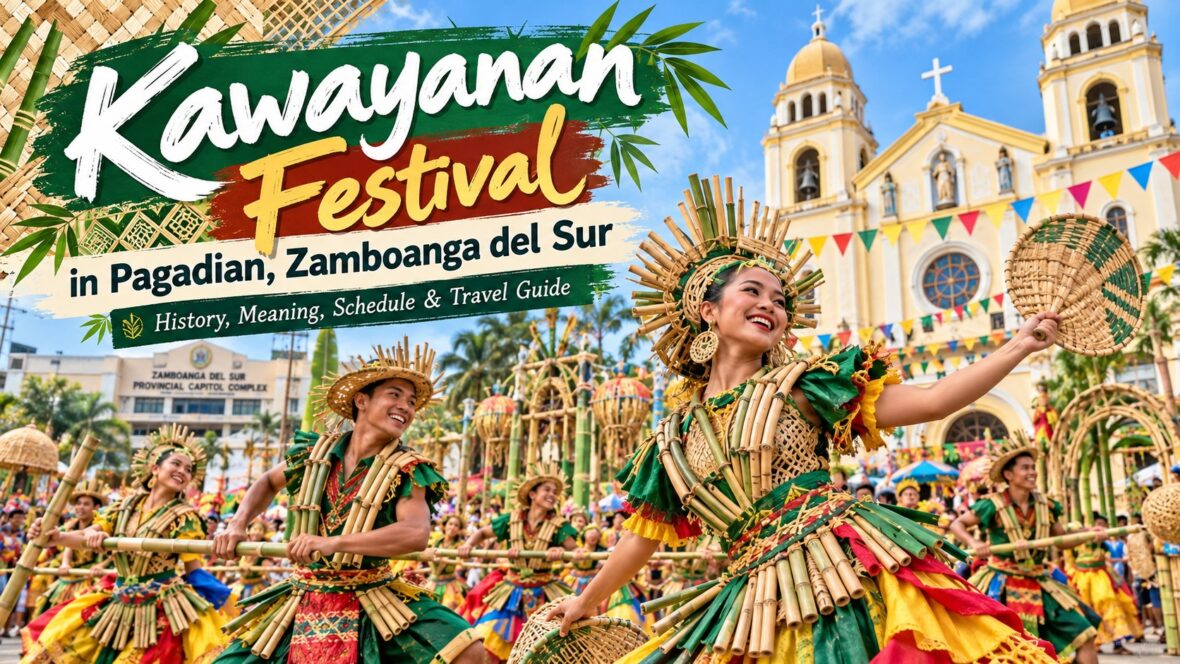
Every November, the spotlight turns to one of the Philippines’ most versatile natural resources as the province of Zamboanga del Sur celebrates the Kawayanan Festival in Pagadian City.
And while the Philippines has hundreds of festivals celebrating religious devotion, agricultural harvests, and local traditions, Kawayanan focuses on something we often see in everyday life but rarely stop to appreciate — bamboo.
From traditional Filipino houses and furniture to baskets, musical instruments, and handicrafts, bamboo has played an important role in the lives of many Filipino communities for generations.
The Kawayanan Festival celebrates this connection through the creativity, livelihood traditions, and cultural identity associated with the plant.
Recognized in the Philippine Tourism Promotions Board’s festival calendar, the celebration is traditionally associated with the third week of November and the Provincial Capitol Complex in Pagadian City, Zamboanga del Sur.
It’s the kind of local festival that reminds us how something as simple as bamboo can become a symbol of resourcefulness, craftsmanship, and community pride.
And if you’re planning to explore the Zamboanga Peninsula, Pagadian itself offers plenty of interesting experiences, from its unusual inclined tricycles and scenic hilltop views to nearby islands, waterfalls, and cultural landmarks.
Here’s everything you need to know about the Kawayanan Festival, including its meaning, cultural significance, traditional activities, celebration dates, and how to explore Pagadian City.
Content
What Is the Kawayanan Festival?
The Kawayanan Festival is a cultural celebration associated with Pagadian City, the capital of Zamboanga del Sur, in the Zamboanga Peninsula Region of Mindanao.
The festival celebrates bamboo, or kawayan, and its many uses in local communities.
According to the Tourism Promotions Board of the Philippines, Kawayanan highlights the versatility of bamboo and its importance in the area.
The celebration is traditionally listed during the third week of November, with the Zamboanga del Sur Provincial Capitol Complex identified as its venue.
Unlike festivals centered on a particular patron saint, Kawayanan’s defining theme is bamboo.
It recognizes the plant’s usefulness in construction, furniture-making, handicrafts, agriculture, and traditional Filipino life.
Bamboo has long been an affordable and practical material for families, farmers, and artisans.
It can be transformed into everything from simple household items to beautiful decorative products.
Through Kawayanan, this familiar plant becomes the center of a cultural celebration that encourages people to appreciate local craftsmanship, resourcefulness, and the relationship between communities and their natural environment.
Kawayanan Festival at a Glance
| Details | Information |
|---|---|
| Festival name | Kawayanan Festival |
| Location | Pagadian City, Zamboanga del Sur |
| Region | Zamboanga Peninsula, Region IX |
| Traditional celebration month | November |
| Traditional schedule | Third week of November |
| Listed venue | Zamboanga del Sur Provincial Capitol Complex |
| Main theme | Bamboo and its cultural and economic importance |
| Local word | Kawayan, meaning bamboo |
| Cultural significance | Craftsmanship, natural resources, livelihood, and local creativity |
| Travel gateway | Pagadian City |
The festival’s specific program and whether particular activities will be staged may vary by year. Travelers should confirm the current celebration arrangements with the provincial tourism office.
What Does Kawayanan Mean?
The name Kawayanan comes from the Filipino word kawayan, which means bamboo.
Kawayanan can refer to a place where bamboo grows abundantly, or a bamboo grove.
And that meaning is fitting for a festival dedicated to appreciating this remarkable plant.
Bamboo may appear ordinary, especially in rural parts of the Philippines, where it is commonly used for houses, fences, furniture, and household items.
But look a little closer, and you’ll discover just how important it has been to Filipino life.
For generations, bamboo has provided families with affordable building materials, farmers with useful equipment, and artisans with a material they can transform into functional and decorative products.
Its strength, flexibility, and relatively fast growth make it valuable for many purposes.
And here’s something interesting: despite its tree-like appearance, bamboo belongs to the grass family.
Some species grow rapidly under suitable environmental conditions, making bamboo a potentially renewable resource when responsibly cultivated and harvested.
Through the Kawayanan Festival, these practical uses become part of a larger celebration of creativity, cultural heritage, and local enterprise.
History and Origins of the Kawayanan Festival
The cultural meaning of Kawayanan is closely connected to the long history of bamboo use in the Philippines.
Long before modern building materials became widely available, communities throughout the archipelago were already using bamboo to construct houses, create tools, make furniture, and produce everyday household items.
Bamboo was particularly valuable because it was relatively accessible, lightweight, and adaptable.
In rural communities, it could be used for walls, flooring, ladders, fences, baskets, agricultural equipment, and other practical needs.
Craftspeople also developed techniques for cutting, splitting, shaping, and weaving bamboo into different products.
These traditions helped establish bamboo as an important part of Philippine material culture.
Bamboo Traditions in Zamboanga del Sur
Like many provinces in Mindanao, Zamboanga del Sur has agricultural and rural communities where locally available natural materials have long been useful.
Bamboo has applications in farming, construction, handicrafts, and livelihood activities.
Government-supported environmental projects in the province have also included bamboo cultivation.
For example, a community-based watershed rehabilitation project in Bayog, Zamboanga del Sur, incorporated bamboo plantations alongside reforestation and agroforestry activities.
This illustrates how bamboo can be part of both environmental management and livelihood development.
The Kawayanan Festival draws attention to this broader relationship between people and bamboo.
How Did the Modern Festival Begin?
The Tourism Promotions Board includes Kawayanan in its Philippine festival calendar and identifies the Zamboanga del Sur Capitol Complex in Pagadian as its traditional venue.
However, a definitive founding year, original organizing committee, and detailed historical chronology of the first Kawayanan Festival could not be established from the official sources reviewed for this guide.
For that reason, it would be misleading to assign a particular founding year or claim that the festival began under a specific local administration without supporting historical records.
What is established is its central purpose: celebrating the versatility of bamboo and its importance in the area.
That theme makes Kawayanan part of a wider Philippine tradition of festivals that highlight the products, resources, and livelihoods that help shape local communities.
Why Is the Kawayanan Festival Celebrated?
One of the things I find interesting about local Philippine festivals is how they turn something familiar into a source of cultural pride.
Some towns celebrate fruits, flowers, fish, or agricultural harvests.
Others showcase traditional crafts and products for which their communities are known.
For Kawayanan, that resource is bamboo.
The celebration highlights how bamboo contributes to everyday life while recognizing the creativity and skills involved in working with it.
There are several reasons bamboo deserves this attention.
1. Bamboo Is an Important Building Material
For many generations, bamboo has been used in traditional Filipino architecture.
It is commonly associated with the bahay kubo, the familiar nipa hut that represents rural Filipino life.
Bamboo can be used for floors, walls, framing, and other structural or decorative components, depending on the design and construction method.
Its flexibility and relatively low weight make it useful, although proper treatment and construction techniques are necessary to ensure durability and safety.
2. Bamboo Supports Local Crafts and Livelihoods
Bamboo can be transformed into baskets, trays, furniture, decorations, and numerous household products.
These items require skills that are often developed through experience and passed down within families or communities.
For artisans, bamboo isn’t simply a plant.
It’s a material that can become a source of livelihood.
Recognizing these crafts also means recognizing the people whose work makes the products possible.
3. Bamboo Has Environmental Value
Bamboo can be useful in land rehabilitation, erosion management, and agroforestry projects.
Its dense root systems can help stabilize soil under suitable conditions.
Because bamboo grows relatively quickly, it can also provide a renewable source of raw material when managed responsibly.
However, not every bamboo species is appropriate for every location.
Sustainable bamboo production still requires proper species selection, land management, and environmental safeguards.
4. Bamboo Is Part of Filipino Cultural Identity
Beyond its practical uses, bamboo also appears in traditional music, recreation, and the arts.
One familiar example is tinikling, a Philippine folk dance performed with moving bamboo poles.
Bamboo can also be used to make musical instruments and sound-producing devices.
These traditions show how a plant can become part of a community’s creative expression.
Through Kawayanan, the cultural importance of bamboo receives the attention it deserves.
Kawayanan Festival Highlights: What Can Visitors Expect?
If you’re planning to attend Kawayanan, it’s helpful to understand what makes a bamboo-themed celebration different from other Philippine festivals.
The Tourism Promotions Board’s official listing confirms the festival’s bamboo theme, traditional celebration period, and venue, but it does not publish a detailed recurring program.
Other festival directories describe activities such as street dancing, colorful presentations, and bamboo-product displays.
These are useful descriptions of the celebration’s character, although specific events should be checked against the current year’s official schedule.
Here are the experiences associated with the festival or worth looking out for when organizers announce their program.
1. Street Dancing and Cultural Performances
Street dancing is one of the attractions mentioned in descriptions of the Kawayanan Festival.
During bamboo-themed cultural presentations, dancers may use costumes, choreography, and props inspired by bamboo and local traditions.
Imagine groups of performers presenting coordinated movements while wearing colorful costumes decorated with natural-looking textures and patterns.
Creative performances can turn familiar aspects of everyday life into something visually interesting.
For spectators, this is an opportunity to appreciate the work involved in costume design, music, rehearsals, and choreography.
However, an official street dancing competition, its route, and its participating contingents should not be assumed for every edition without a confirmed program.
2. Bamboo Handicrafts and Product Displays
One of the most natural attractions of a bamboo festival is the opportunity to appreciate products made from bamboo.
These may include practical household goods, decorative pieces, and other handmade products.
Bamboo can be fashioned into baskets, furniture, trays, lamps, and other items.
What’s particularly interesting is that the same plant can produce very different results depending on how it is prepared.
For instance, whole bamboo poles may be used for larger structures, while thin bamboo strips can be woven into detailed patterns.
Displays or demonstrations, when included in a festival program, provide an opportunity to appreciate the skill involved in these crafts.
3. Cultural and Community Presentations
Cultural celebrations also provide opportunities for communities to share music, dance, and other forms of artistic expression.
In a place like Zamboanga del Sur, where different cultural communities contribute to local identity, these activities can become meaningful occasions for gathering and appreciation.
The province is home to Subanen communities, Muslim residents, and Christian communities with varied linguistic and family backgrounds.
Each has its own history and traditions.
Visitors should recognize that a bamboo-themed performance is not automatically a representation of one specific indigenous group’s traditional culture.
The meanings and origins of individual performances are best understood through the explanations of their organizers and cultural participants.
4. Local Crafts and Livelihood Activities
Bamboo’s role in economic life is another important part of the festival’s theme.
If local product exhibitions or livelihood activities are included in a particular edition, these provide opportunities for artisans and entrepreneurs to introduce their work.
Buying directly from local makers can also help support small businesses.
For travelers who enjoy learning about traditional products, handcrafted items can be among the most meaningful souvenirs.
5. Agriculture and Environmental Awareness
Because bamboo is both a natural resource and a cultivated material, Kawayanan also offers an opportunity to discuss responsible production.
Bamboo cultivation, conservation, and sustainable harvesting are relevant topics for communities involved in its production.
Bamboo-themed exhibits or environmental activities would fit naturally within this celebration, although they should not be treated as guaranteed annual events.
The important idea is that bamboo’s usefulness depends on proper care for the environment that produces it.
When Is the Kawayanan Festival Celebrated?
The Kawayanan Festival is traditionally listed during the third week of November.
This timing is identified in the official festival calendar of the Tourism Promotions Board of the Philippines.
The listed location is the Provincial Capitol Complex in Pagadian City, Zamboanga del Sur.
However, there is an important distinction between a traditional festival date and an officially confirmed event schedule.
A festival calendar may indicate the period when a celebration is usually associated with a destination.
It does not necessarily guarantee that the same activities, opening ceremonies, competitions, or performances take place every year.
Kawayanan Festival Schedule Overview
| Details | Traditional information |
|---|---|
| Month | November |
| Festival period | Third week |
| Location | Pagadian City |
| Listed venue | Zamboanga del Sur Provincial Capitol Complex |
| Main festival theme | Bamboo and its versatility |
| Exact daily activities | Subject to official announcements |
| Street dancing schedule | Must be confirmed for each edition |
If you’re traveling specifically for the festival, I recommend confirming the actual activity dates rather than booking solely on the basis of a general third-week listing.
Where Is the Kawayanan Festival Held?
The Kawayanan Festival is associated with the Provincial Capitol Complex in Pagadian City.
The complex is located in Barangay Dao, where several Zamboanga del Sur provincial government offices are based.
Pagadian is the capital of Zamboanga del Sur and an important administrative and commercial center in the Zamboanga Peninsula.
The city is known for its hilly terrain, coastal scenery, and unusual public transportation.
It is also a practical gateway for exploring destinations around the province.
If you’re heading to Kawayanan, the Capitol Complex is the first location to verify with local organizers.
The venue for any specific parade, presentation, or exhibition could differ from the general festival listing.
Kawayanan Festival vs. Other Festivals in Pagadian
Here’s something worth explaining, particularly for visitors who are researching Pagadian festivals for the first time.
Kawayanan isn’t the same celebration as Pasalamat or Megayon.
Although they are associated with Pagadian and Zamboanga del Sur, each has a different cultural focus.
Kawayanan Festival
Traditionally associated with the third week of November, Kawayanan celebrates the importance and versatility of bamboo.
Pasalamat Festival
The Pasalamat Festival is Pagadian City’s annual religious and cultural celebration in honor of Señor Santo Niño.
It is traditionally celebrated in January and features activities associated with the city’s devotion to the Holy Child.
Previous celebrations have included religious processions, street dancing, and community activities.
Megayon Festival
The Megayon Festival is a provincial celebration associated with the founding anniversary of Zamboanga del Sur in September.
It celebrates unity and solidarity among the province’s different cultural communities.
The Tourism Promotions Board lists Megayon around September 27–30 and associates it with the Provincial Capitol Complex in Pagadian.
The celebration traditionally includes cultural presentations, local products, and tourism-related activities.
How the Three Festivals Differ
| Festival | Traditional schedule | Main theme |
|---|---|---|
| Kawayanan Festival | Third week of November | Bamboo, its uses, and its importance |
| Pasalamat Festival | January | Devotion to Señor Santo Niño |
| Megayon Festival | September | Provincial unity and cultural diversity |
Understanding the differences helps visitors choose the celebration that best matches their interests.
Why Pagadian City Is Worth Visiting
One of the good things about planning a trip to Kawayanan is that Pagadian itself has plenty to offer.
Located along the shores of Illana Bay, the city is known for its combination of coastal scenery and steep hills.
In fact, Pagadian has earned the nickname “Little Hong Kong of the South” because of its distinctive terrain.
The nickname is often associated with the city’s sloping streets and how its urban landscape rises from the coast.
And then there are the tricycles.
Pagadian is particularly famous for its inclined tricycles, which were adapted to navigate the city’s steep roads.
These vehicles have become one of the city’s most recognizable symbols.
Whether you’re visiting for a festival or simply exploring a new destination in Mindanao, Pagadian has several attractions that make the trip worthwhile.
Best Tourist Spots to Visit in Pagadian
If you’re traveling to Pagadian for Kawayanan, consider spending an extra day exploring the city.
Here are some attractions worth including in your itinerary.
1. Pagadian City Rotonda
The Pagadian City Rotonda is one of the city’s familiar landmarks.
Located at an elevated road junction, it offers views of the surrounding city landscape.
On clear days, visitors may also enjoy glimpses toward Illana Bay.
The rotunda is a convenient stop for sightseeing and photography, particularly if you’re exploring Pagadian by local transportation.
Since it is also part of an active road area, be mindful of vehicles and use designated pedestrian spaces.
2. Plaza Luz
Plaza Luz is a public gathering space in Pagadian City.
Located in the city proper, it is a familiar venue for recreation and community activities.
The plaza is particularly pleasant for an evening stroll.
If you’re spending a night in Pagadian, visiting Plaza Luz can be a relaxing way to experience everyday city life.
It’s also conveniently located for travelers who want to explore nearby commercial establishments and food options.
3. Dao-Dao Islands
If you enjoy coastal destinations, consider visiting the Dao-Dao Islands.
Located off the coast of Pagadian, the islands offer a different experience from the city’s busy streets.
Boat trips, coastal scenery, and opportunities to appreciate the surrounding marine environment are among the reasons travelers visit.
However, access conditions and visitor arrangements may vary.
Before going, confirm current boat availability, safety conditions, and whether particular parts of the islands are open to tourists.
Weather and sea conditions should always be considered.
4. Pulacan Falls
Pulacan Falls is a well-known waterfall attraction in nearby Labangan, Zamboanga del Sur.
Although it is outside Pagadian City’s boundaries, it can be considered for a side trip.
The waterfall is accessible from the general highway corridor serving the area and is surrounded by greenery.
It’s a good alternative for travelers who want a nature experience after exploring the city.
Before visiting, check the current access arrangements, weather conditions, and any swimming restrictions.
How to Get to Pagadian City
Pagadian is accessible by both air and land.
The best route depends on where you’re coming from and how much time you have available.
From Manila to Pagadian
For travelers coming from Metro Manila, flying is generally the most convenient option.
Pagadian Airport serves the city and surrounding areas of Zamboanga del Sur.
As of October 2026, published schedules show Cebu Pacific operating nonstop services between Manila and Pagadian, with a typical flight duration of about one hour and 45–50 minutes.
Flight frequencies and schedules can change, so check the airline’s current timetable before booking.
After arriving at Pagadian Airport, you can continue toward the city center using available local transportation.
From Zamboanga City
Travelers coming from Zamboanga City can reach Pagadian through overland transportation.
Provincial buses and other public transport services connect major cities along the Zamboanga Peninsula.
Confirm departure schedules and route availability directly with the terminal or transport operator.
Since the journey covers a considerable distance, allow enough time for the trip.
From Ozamiz City
Ozamiz is another possible access point for travelers heading toward Pagadian.
Road connections link Ozamiz and surrounding areas with Zamboanga del Sur.
Available transport services and possible transfers depend on the route.
From Dipolog City
If you’re exploring Zamboanga del Norte, you can also travel overland from Dipolog toward Pagadian.
This makes it possible to combine destinations in the northern and southern sections of the Zamboanga Peninsula.
Getting Around Pagadian
One of the most interesting transportation experiences in Pagadian is riding its distinctive inclined tricycles.
The unusual design reflects the city’s steep terrain.
Traditional inclined tricycles have become an important part of local transportation heritage, although more modern three-wheeled vehicles are also in use.
If you’re using public transportation, ask about the fare before boarding and confirm that your driver can take you to your intended destination.
For festival activities, expect possible traffic changes or temporary road restrictions near event venues.
Where to Stay During the Kawayanan Festival
If you’re planning to spend a night or two in Pagadian, staying within the city proper is generally a convenient option.
This gives you easier access to restaurants, transportation services, shopping establishments, and popular attractions.
You may also prefer accommodation along the main commercial roads or in areas with convenient connections to Barangay Dao.
Before booking, check how far your accommodation is from the provincial complex and whether public transportation is available during the hours you plan to travel.
Because event attendance can change from one festival edition to another, booking ahead is sensible, particularly when dates overlap with other major local activities.
What to Eat During Your Visit to Pagadian
Exploring local food is always one of the enjoyable parts of traveling around the Philippines.
And in a city like Pagadian, with its coastal location and diverse communities, you’ll find a variety of dining options.
Seafood is worth considering, especially given the city’s connection to Illana Bay.
Local eateries may serve grilled fish, shrimp, squid, and other seafood dishes depending on availability and season.
You’ll also find familiar Filipino meals, grilled meats, noodle dishes, and local snacks.
The wider Zamboanga Peninsula has a rich culinary heritage influenced by different communities and traditions.
If you’re interested in exploring regional specialties, ask local residents about food establishments they recommend.
For visitors attending Kawayanan, local food stalls or temporary vendors may also be available if these are included in the annual celebration.
However, specific festival food markets should be confirmed through the event program.
Suggested Two-Day Pagadian Festival Itinerary
If you want to combine Kawayanan with sightseeing, here’s a simple itinerary you can use as a starting point.
Day 1: Discover the Festival and Pagadian City
Arrive in Pagadian and settle into your accommodation.
Begin by checking the current festival arrangements at the Provincial Capitol Complex in Barangay Dao.
If cultural activities, exhibitions, or performances are scheduled, spend time experiencing the celebration.
Later, explore the city proper and visit Pagadian City Rotonda.
Take some photographs and enjoy the surrounding views.
In the evening, visit Plaza Luz and have dinner at a local restaurant.
Day 2: Explore Pagadian’s Natural Attractions
Start the day early and plan a trip to Dao-Dao Islands, provided boat services and weather conditions permit.
Enjoy the coastal scenery and take time to explore the available visitor areas.
Alternatively, consider a side trip to Pulacan Falls in nearby Labangan.
Return to Pagadian and prepare for your onward journey.
If your schedule allows, you can also spend more time exploring local shops and markets before leaving.
This itinerary is flexible and should be adjusted depending on transportation, weather, and the confirmed festival schedule.
Travel Tips for Attending the Kawayanan Festival
If you’re planning your first visit, here are a few practical things worth remembering.
Check the Festival’s Official Schedule
This is probably the most important tip.
Although Kawayanan is traditionally listed during the third week of November, the current year’s official program may differ from a general tourism calendar.
Before booking flights or accommodation specifically for the festival, verify that the event and the activities you want to attend have been confirmed.
Prepare for Warm and Humid Weather
Pagadian has a tropical climate.
Light, comfortable clothing is useful, especially if you’ll be walking outdoors.
Bring drinking water, sunscreen, and an umbrella.
Rain can occur during November, so it’s also helpful to carry a lightweight raincoat.
Book Accommodation in Advance
If the festival coincides with other provincial activities, accommodation availability may be affected.
Booking early can make your trip more convenient.
Support Local Craftspeople
Bamboo-related celebrations provide an opportunity to appreciate the skills of artisans.
If handmade bamboo products are available from participating vendors or local shops, consider supporting the people who produce them.
It’s a meaningful way to contribute to local livelihoods.
Respect Cultural Presentations
If cultural performances form part of the event, be respectful toward participating communities.
Avoid entering performance spaces or interrupting presentations simply to take photographs.
Follow instructions from organizers and cultural representatives.
Keep the Environment Clean
A festival celebrating a natural resource is also a good reminder of the importance of environmental responsibility.
Dispose of waste properly and avoid damaging decorations, plants, or displays.
If you’re visiting nearby beaches or waterfalls, follow local conservation and safety guidelines.
Why the Kawayanan Festival Matters
The Philippines is known for its colorful festivals, but many celebrations are about more than entertainment.
They also highlight the traditions, livelihoods, and resources that have shaped local communities.
Kawayanan is an interesting example of this.
Its theme focuses on a plant that has been part of Filipino everyday life for generations.
Bamboo may not always receive the same attention as other agricultural products or natural resources.
Yet its contributions are everywhere.
It appears in traditional houses, furniture, household items, handicrafts, music, and community livelihoods.
By recognizing bamboo’s importance, Kawayanan encourages people to appreciate both the resource and the skills required to transform it into useful products.
It also provides an opportunity to discuss responsible cultivation and sustainable use.
For visitors, the festival offers a different perspective on Philippine culture.
Instead of celebrating only a historical event or religious tradition, it draws attention to the relationship between people, their environment, and their creativity.
And that’s something worth appreciating.
Frequently Asked Questions About Kawayanan Festival
What is the Kawayanan Festival?
The Kawayanan Festival is a bamboo-themed cultural celebration associated with Pagadian City, Zamboanga del Sur. It highlights the versatility of bamboo and its importance in the area.
Where is the Kawayanan Festival celebrated?
The festival is listed at the Provincial Capitol Complex in Pagadian City, Zamboanga del Sur, Philippines.
When is the Kawayanan Festival held?
The Tourism Promotions Board lists Kawayanan during the third week of November. Exact dates and activities should be verified for each edition.
What is the meaning of Kawayanan?
Kawayanan is related to the Filipino word kawayan, meaning bamboo. The term can refer to a place where bamboo grows abundantly.
Why is the Kawayanan Festival celebrated?
The festival celebrates bamboo’s importance as a material used in construction, handicrafts, household products, and livelihood activities.
What are the main attractions of the Kawayanan Festival?
Festival directories describe street dancing, cultural presentations, and bamboo-product exhibitions as attractions associated with Kawayanan. However, specific activities should be confirmed through the current official program.
Is Kawayanan a religious festival?
The defining theme of Kawayanan is bamboo rather than devotion to a particular patron saint. It should not be confused with Pagadian’s Pasalamat Festival, which is associated with Señor Santo Niño.
Is Kawayanan the same as the Megayon Festival?
No. Kawayanan celebrates bamboo and is traditionally associated with November. Megayon is a provincial cultural celebration associated with Zamboanga del Sur’s founding anniversary in September.
Is Kawayanan the same as the Kawayan Festival in other provinces?
Not necessarily. Several places in the Philippines have bamboo-themed celebrations with similar names.
Examples include bamboo festivals in Abra, Laguna, and Oriental Mindoro. These have their own histories, organizers, and schedules.
The Kawayanan Festival discussed in this guide is the one listed by the Tourism Promotions Board in Pagadian, Zamboanga del Sur.
Is the Kawayanan Festival free?
The official festival listing does not specify admission fees. Public events may be free to observe, while particular activities or exhibitions could have separate arrangements. Check the current program before visiting.
Can I visit Pagadian even when there is no Kawayanan Festival?
Absolutely.
Pagadian has attractions such as the City Rotonda, Plaza Luz, Dao-Dao Islands, and nearby waterfalls that can be enjoyed at other times of the year.
Kawayanan Festival 2026: Latest Schedule Information
For visitors planning to attend the upcoming celebration, Kawayanan is traditionally associated with the third week of November.
In 2026, that period falls around November 16–22.
The Tourism Promotions Board continues to list the Provincial Capitol Complex in Pagadian as the festival’s traditional venue.
However, as of October 18, 2026, a finalized official public program for the 2026 Kawayanan Festival has not been independently verified.
This means specific details such as the opening ceremony, street dancing schedule, parade routes, participating contingents, and exhibition dates should not yet be treated as confirmed.
Some independent festival calendars list November 16, 2026, as a projected date, but this does not establish an official event announcement.
For the most reliable information, travelers should contact the Provincial Tourism Office of Zamboanga del Sur or check announcements from the Provincial Government and Pagadian’s tourism authorities.
If you’re planning to travel specifically for Kawayanan, confirm the event before making nonrefundable arrangements.

Final Thoughts
Sometimes, the most interesting festivals in the Philippines are the ones that celebrate things we tend to overlook.
For Kawayanan, that thing is bamboo.
It may be a familiar sight in many Filipino communities, but its usefulness goes far beyond what we normally notice.
From traditional houses and practical farming tools to beautiful handicrafts and creative products, bamboo has supported generations of Filipino families.
The Kawayanan Festival celebrates that relationship between people, their natural environment, and their creativity.
And while it’s not as widely known as some of the country’s biggest festivals, its theme offers an interesting perspective on the culture and livelihoods of Zamboanga del Sur.
For travelers, a visit also provides an opportunity to discover Pagadian City.
You can explore its hilly landscape, ride its distinctive local transportation, enjoy coastal scenery, and experience the everyday life of this Mindanao destination.
If you’re planning a trip around the Zamboanga Peninsula, consider keeping Kawayanan on your list of local celebrations to learn about.
Because sometimes, a festival doesn’t need grand historical battles or elaborate religious processions to have a meaningful story.
Sometimes, it can begin with something as simple as bamboo — and the generations of people who have found creative ways to make it part of their lives.