Bamboo is so common in the Philippines that we sometimes forget how remarkable it is.
We see it used as fencing beside provincial roads, poles supporting vegetable plants, furniture inside homes and decorations in restaurants. It can become a basket, musical instrument, cooking tool, wall panel, bridge, fabric or even part of an elaborate festival costume.
In Maragondon, Cavite, bamboo is more than a useful material.
It has provided livelihood to growers, cutters, artisans, weavers and small entrepreneurs. Families have learned how to split thick bamboo poles into thin strips, shape them into household products and transform a plant growing in the countryside into something valuable.
The town celebrates this relationship through the Kawayan Festival.
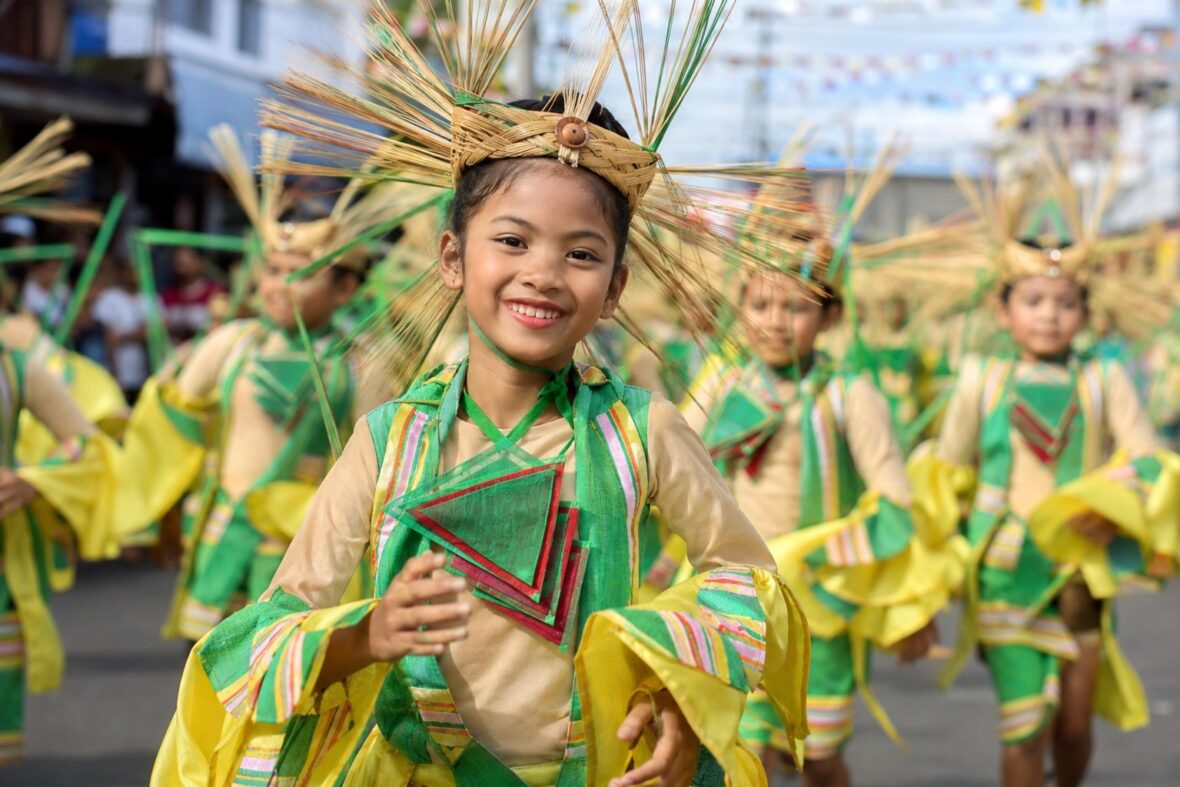
During the festivities, Maragondon’s streets become filled with young dancers wearing bamboo-inspired costumes. Some carry poles, woven fans and native instruments, while others wear elaborate headpieces made to resemble bamboo leaves and shoots.
At the town plaza, visitors can explore locally produced crafts, food and agricultural products. Fashion presentations demonstrate how bamboo can move beyond traditional furniture and household items and become part of contemporary Philippine textiles.
For travelers, the Kawayan Festival offers a lively introduction to one of Cavite’s most historic and naturally beautiful towns. It combines agriculture, craftsmanship, environmental awareness, fashion, tourism and community pride in one celebration.
Content
What Is the Kawayan Festival?
The Kawayan Festival is an annual cultural, agricultural and livelihood celebration held in Maragondon, Cavite.
The word kawayan is the Filipino term for bamboo, the natural resource at the center of the festival.
The celebration highlights Maragondon’s bamboo growers and artisans while promoting products made from locally available materials. Its best-known activities include street dancing, bamboo craft exhibits, an agri-tourism trade fair and cultural performances. Recent editions have also incorporated fashion, textile innovation, nature activities and community programs.
The ninth Kawayan Festival was held in December 2025, with street-dancing performances featuring students in colorful bamboo-inspired costumes. The event again promoted locally made products and Maragondon’s cultural identity.
The festival is also connected with the celebration of Maragondon Day, allowing residents to honor the town’s wider history, culture and progress alongside its bamboo heritage.
Why Bamboo Is Important to Maragondon
Maragondon is an upland and coastal municipality with mountainous terrain, rivers, agricultural communities and large areas that remain less urbanized than northern Cavite.
Bamboo grows naturally in this kind of landscape and has long been used by local residents.
Maragondon is particularly known for products made from kawayan tinik, or thorny bamboo. This bamboo can be divided into strips and processed into useful materials for weaving and craft production. Local artisans have used bamboo for furniture, baskets, household items, decorations and other products.
The town’s bamboo industry is not limited to harvesting poles.
A complete supply chain may involve:
- Bamboo growers
- Harvesters and cutters
- Workers who treat and dry the poles
- Artisans who split bamboo into strips
- Furniture and craft makers
- Weavers
- Designers
- Product packers
- Sellers and tourism businesses
A study conducted through the University of the Philippines Los Baños examined the supply chain of bamboo poles and products in Maragondon, including how value is added when raw poles are transformed into finished goods.
This is one reason the festival matters economically.
A raw bamboo pole has value, but it can become more profitable when transformed into a carefully designed basket, lamp, bag, piece of furniture or textile product.
Bamboo Is More Than “Poor Man’s Lumber”
Bamboo was once frequently described as the “poor man’s lumber” because it was a widely available and affordable substitute for wood.
Today, government researchers also call it green gold because of its many environmental and economic uses.
Bamboo can be used for houses, furniture, farm tools, fishing equipment, food, handicrafts, landscaping, clothing, accessories and engineered construction products. Its versatility has created opportunities in industries far beyond traditional rural carpentry.
The Philippine government has promoted bamboo as a substitute for timber and as a resource that can support plantation development, livelihood generation and the rehabilitation of degraded areas.
Bamboo can also help stabilize soil and absorb water when planted appropriately. DENR programs have highlighted its value for carbon storage, watershed protection and erosion control.
However, calling bamboo sustainable does not mean every bamboo product is automatically environmentally friendly.
Sustainability still depends on responsible harvesting, proper treatment, efficient processing, safe chemicals, durable design and the protection of natural ecosystems.
The festival creates an opportunity to discuss these issues while celebrating bamboo’s practical value.
How the Kawayan Festival Developed
Older Cavite festival listings traditionally placed the Kawayan Festival on September 7, with street dancers parading in costumes made from indigenous materials and bamboo products displayed at the town plaza.
More recent editions, however, have been held in December.
The seventh Kawayan Festival ran for four days beginning December 14, 2023. The eighth edition was celebrated on December 18, 2024, while the ninth festival began on December 11, 2025.
This shows that the festival schedule has evolved.
Older references may still identify September 7 as its traditional date, while recent municipal celebrations have placed the main activities during the December Maragondon Day and Christmas season.
Travelers should therefore avoid relying entirely on an old festival calendar.
The street-dancing competition, trade fair and community activities may be scheduled on different dates each year. Always check the latest announcement from the Municipality of Maragondon, its public information office or the provincial tourism office.
What to Expect at the Kawayan Festival
The official program changes with every edition, but the festival generally combines bamboo-centered activities with agriculture, tourism, exercise, environmental awareness and entertainment.
Some events are highly visual and designed for large crowds, while others focus more directly on livelihood and community development.
Bamboo-Themed Street Dancing
Street dancing is the most colorful part of the Kawayan Festival.
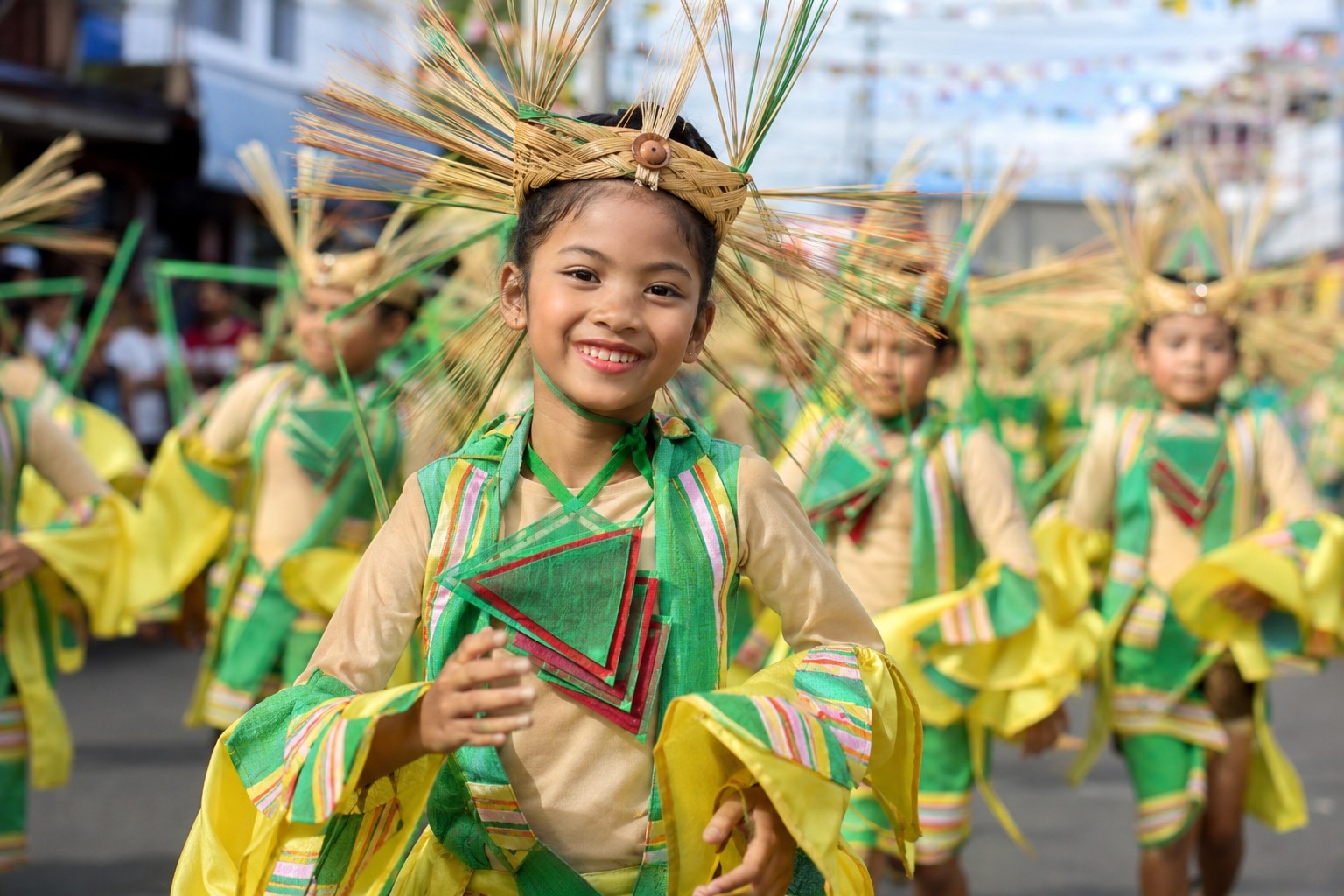
Students representing local schools perform along roads in Maragondon’s poblacion while wearing costumes inspired by bamboo forests, leaves, shoots, woven products and traditional rural life.
Green, yellow, brown and gold are among the most common colors.
Green represents living bamboo and the surrounding landscape. Brown suggests mature poles and woven products, while yellow and gold create a warmer, more festive appearance.
Some dancers wear headpieces that resemble young bamboo shoots. Others carry thin poles, woven panels, baskets or fans made to look like bamboo crafts.
The costumes can be surprisingly elaborate.
Thin strips are arranged into sunburst patterns, collars, wings and large circular headdresses. Materials that might otherwise appear simple become dramatic once dozens of performers move together.
Recent photographs of the festival show elementary pupils wearing coordinated costumes and carrying bamboo-inspired props as they dance through the streets of Barangay Poblacion.
The Story Told Through Dance
The choreography often presents bamboo as a living part of the community.
A performance may begin with dancers portraying farmers planting or caring for bamboo. Other performers represent rain, sunlight, soil and growing shoots.
As the music becomes faster, the dancers may transform from plants into artisans and performers.
They demonstrate how bamboo is harvested, split, woven and turned into finished products. The routine then ends with a celebration of the livelihoods and culture created by the material.
Native instruments may also become part of the presentation.
Bamboo can be used to make percussion instruments, flutes, tubes and other sound-producing objects. Incorporating them into the performance allows the festival theme to be heard as well as seen.
The best routines are not simply dances performed while holding a pole.
They give audiences a basic understanding of bamboo’s journey from plant to product.
Preparing for the Street-Dance Competition
The finished presentation may last only a few minutes, but preparation can take weeks.
Students must learn the choreography, build stamina and practice moving through narrow streets while keeping their formation.
Teachers and choreographers select the music and develop a concept. Parents and community volunteers help create costumes, prepare food and transport the dancers’ props.
Bamboo materials must also be handled carefully.
Untreated strips may have sharp edges or splinters. Designers need to sand, secure and arrange them so that performers can move safely.
Large headdresses and wide props create another challenge. They must remain light enough to carry while being strong enough to survive rehearsals and the entire parade route.
This community effort is part of what makes the competition meaningful.
The dancers represent not only their schools but also the families and barangays that supported them.
Agri-Tourism Community Trade Fair
The trade fair allows visitors to see the economic side of the Kawayan Festival.
During the seventh festival in 2023, an Agri-Tourism Community Trade Fair was opened at the town plaza to showcase bamboo goods and other local products.
Depending on the participating sellers, visitors may find:
- Bamboo baskets
- Food trays
- Lamps and decorations
- Furniture
- Plant holders
- Kitchen utensils
- Woven containers
- Souvenirs
- Fashion accessories
- Agricultural products
- Local food and delicacies
The fair provides a direct connection between artisans and customers.
Instead of purchasing an anonymous product in a large store, visitors can ask who made the item, where the bamboo came from and how long the work took.
These conversations reveal why handmade products may cost more than mass-produced alternatives.
A craftsperson must select suitable material, dry or treat it, create even strips, form the design and finish the product. Each step requires time and skill.
Buying Bamboo Products at the Festival
A festival craft fair can be tempting, particularly when the products are attractive and reasonably priced.
Before buying, inspect the item carefully.
Look for bamboo that feels dry and properly finished. Avoid pieces with obvious signs of active insect damage, severe cracking or mold.
Check the joints and woven sections.
A basket should feel stable when lifted. Furniture should not wobble excessively, and sharp ends should be trimmed or covered.
Ask the seller whether the bamboo was treated.
Untreated bamboo can be more vulnerable to insects and moisture. Proper treatment and drying can improve durability, although the exact process depends on the product.
Also ask how the item should be maintained.
Some products should remain indoors, while others can tolerate limited outdoor use. Prolonged exposure to rain and direct sunlight can still shorten the life of many bamboo crafts.
Bamboo Furniture and Household Items
Bamboo furniture is among the material’s most familiar uses.
Maragondon artisans can transform thick poles into chairs, tables, shelves, benches and decorative structures. Thinner strips can become baskets, trays, lamps and wall decorations.
The beauty of bamboo furniture often comes from its natural shape.
Instead of hiding every joint, artisans may allow the nodes and curves of the pole to become part of the design.
However, good furniture requires more than tying several poles together.
The bamboo must be mature enough, properly dried and protected from pests. Joints must be designed to handle weight, while surfaces should be sanded to prevent splinters.
When buying a larger item, ask about delivery rather than forcing it inside a vehicle unsafely.
Also check whether the product can handle the humidity and location where you plan to use it.
Bamboo Barbecue Sticks and Everyday Products
Not every bamboo enterprise produces elaborate furniture.
Some communities earn income from smaller everyday products, including skewers, food sticks and agricultural materials.
These products may look simple, but producing them consistently still requires skill.
The bamboo must be split into thin pieces, shaped evenly, dried and cleaned. Rough edges must be removed, particularly when the product will come into contact with food.
Smaller goods can support more regular demand than decorative furniture because restaurants, food stalls and households use them repeatedly.
The festival helps visitors understand that the bamboo industry includes both artistic crafts and ordinary objects used in daily life.
Habing Maragondon
One of the most exciting developments connected with the festival is Habing Maragondon.
The initiative combines local weaving traditions with bamboo textile innovation.
During the seventh Kawayan Festival, the celebration concluded with a Habing Maragondon fashion show featuring bamboo textiles developed through collaboration involving the Philippine Textile Research Institute and the Department of Science and Technology.
This pushes bamboo beyond its familiar image as a hard construction material.
Through scientific processing, bamboo fibers can be extracted, treated and developed into yarns and fabric suitable for fashion and household products.
DOST-PTRI has worked with Likhang Maragondon and other brands to demonstrate the potential of Philippine bamboo textiles. The institute says scientific and technological improvements can enhance product quality while preserving craftsmanship and supporting local weaving communities.
Likhang Maragondon
Likhang Maragondon is a local social enterprise that combines traditional craftsmanship with product development and modern design.
It works with bamboo and weaving communities while introducing equipment and processing methods intended to improve consistency and durability.
One challenge in traditional bamboo craft production is creating even strips.
When slivers have different thicknesses, the finished product may become uneven or difficult to weave. Untreated bamboo can also be vulnerable to pests.
Technology can help artisans address these problems without removing the handmade character of the product.
This balance is important.
Modernization should not mean replacing local workers with machines. It should help artisans produce safer, stronger and more competitive goods while preserving the creative decisions and manual skills that make their work distinctive.
Bamboo on the Fashion Runway
Bamboo-inspired fashion is one of the festival’s most visually interesting developments.
A designer can use bamboo in several ways.
Hard strips may become accessories, structural details, headpieces or decorations. Woven bamboo can be incorporated into bags, belts and footwear.
Textile technology creates even more possibilities.
Bamboo fiber can be blended with other Philippine materials and developed into fabrics suitable for dresses, formal clothing and home furnishings. DOST-supported exhibitions have featured Likhang Maragondon products alongside work by established Filipino designers and textile brands.
Fashion shows give the bamboo industry a new audience.
A person who may never buy a traditional basket could become interested in a bag, scarf or modern household product.
This helps bamboo remain relevant to changing consumer tastes.
Fun Nature Walk
The Kawayan Festival has also included outdoor and environmental activities.
During the 2023 celebration, the municipal government organized a Fun Nature Walk as part of the four-day program.
A nature walk fits naturally with Maragondon’s identity.
The municipality contains rivers, hills, farms and sections of the Mounts Palay-Palay–Mataas-na-Gulod Protected Landscape. The protected area extends across parts of Maragondon and Ternate in Cavite and Nasugbu in Batangas.
However, participating in an official festival walk is different from entering a mountain or forest independently.
Visitors should follow the approved route and instructions of organizers. Protected landscapes may have access rules, registration procedures and environmental restrictions.
Never remove bamboo, plants, rocks or wildlife from a natural area.
Zumba and Community Wellness Activities
The seventh Kawayan Festival included a Grand Zumba activity for women and senior citizens.
This may appear unrelated to bamboo, but it reflects the broader character of a municipal festival.
A town celebration should provide different ways for residents to participate. Not everyone is a dancer, artisan or farmer.
Exercise programs allow older residents and community groups to become part of the festivities. They also create a relaxed atmosphere before more competitive events begin.
Other editions may include sports competitions, health services, concerts or civic activities depending on the municipal program.
Christmas and Maragondon Day Atmosphere
Because recent festivals have been held in December, Kawayan Festival now shares the atmosphere of the Filipino Christmas season.
Decorations, food booths, community performances and evening lights add warmth to the agricultural and craft-centered celebration.
The 2025 edition began on December 11 and formed part of a busy December festival period across several Cavite towns.
This timing has advantages for visitors.
The weather can feel more comfortable than during the hottest months, and families may already be looking for holiday activities.
However, December traffic can also become heavy, particularly along Cavite’s westward routes.
Travel early and avoid planning too many separate attractions on the main street-dancing day.
What the Festival Feels Like
The Kawayan Festival has the atmosphere of a traditional town celebration mixed with a creative craft fair.
Early in the morning, students begin gathering near schools and barangay halls.
Some are already dressed in green and yellow, while others sit patiently as parents and teachers attach woven headpieces and bamboo decorations.
Musicians test their instruments. Dancers review their steps, and costume makers secure loose strips before the parade begins.
At the town plaza, artisans arrange baskets, furniture, souvenirs and local products. Visitors move between the booths, inspecting the weave and asking about prices.
Then the drums start.
Groups of dancers appear along the road, carrying poles and wide circular props. Costumes made from simple natural materials begin moving like leaves in the wind.
The visual effect can be surprisingly elegant.
After the parade, the town remains busy with performances, food and community activities. Families gather, students take photographs and sellers continue introducing their products to visitors.
The festival feels creative but grounded.
Its inspiration is not something invented only for tourism. Bamboo is a real material connected with Maragondon’s livelihood and landscape.
When Is the Kawayan Festival Celebrated?
The answer depends on which period of the festival’s history you are referring to.
Traditional festival listings identify September 7 as Kawayan Festival day.
Recent editions have been held in December:
- The seventh festival opened on December 14, 2023, and continued for four days.
- The eighth festival was held on December 18, 2024.
- The ninth festival began on December 11, 2025.
As of July 2026, a complete official public schedule for the next edition was not readily available from the municipal sources reviewed.
Check current announcements rather than automatically traveling on September 7 or assuming the festival will remain in December.
The municipality may continue adjusting the dates to align with Maragondon Day, school participation and the wider Christmas calendar.
Where Is the Festival Held?
Major activities are usually concentrated around Maragondon town proper, including the poblacion, municipal areas and town plaza.
Street-dancing groups travel along designated roads before performing at a final presentation or judging area.
The agri-tourism trade fair has been held at the town plaza, while fashion shows, community activities and other programs may use separate municipal venues.
Before leaving home, check the current poster for:
- Parade assembly point
- Street-dancing route
- Final performance venue
- Trade-fair location
- Road-closure schedule
- Parking areas
- Public-transport drop-off point
- Evening event venue
Do not assume every activity is within the same compound.
How to Get to Maragondon from Metro Manila
From PITX
PITX is the most practical public-transport starting point for many travelers coming from Metro Manila.
The terminal currently serves buses bound for Ternate and Naic from Gate 6. PITX’s route information also identifies Maragondon as a stop served by the Ternate–PITX bus corridor.
Ask terminal staff for a bus passing through Maragondon town proper.
Do not simply board any Naic-bound bus without confirming whether it will continue far enough for your destination.
Show the conductor the exact festival venue or a current event poster.
During road closures, the bus may drop passengers outside the central area. Be prepared to walk or transfer to a local tricycle.
Via Naic
Another option is to travel to Naic and transfer to a jeepney or bus heading toward Maragondon or Ternate.
Naic has more frequent public transportation than some smaller western Cavite towns, making it a practical transfer point.
Confirm where the connecting vehicle ends. Some may pass only along the main highway rather than entering the poblacion.
Via Ternate
Travelers coming from the coastal side or nearby Batangas may approach through Ternate.
Local vehicles connect Ternate and Maragondon, but schedules may become limited in the evening.
Ask about the last return trip before attending a late festival program.
By Private Vehicle
Drivers from Metro Manila commonly travel through CAVITEX, Kawit, Tanza and Naic before continuing toward Maragondon.
Another approach may use the Aguinaldo Highway–Tagaytay–Nasugbu corridor and Kaybiang area, depending on the starting point and destination.
Use live navigation and check local advisories.
Festival traffic can become congested near the town center, and some roads may be narrow. Park only in designated areas and avoid blocking homes, businesses or emergency access.
Practical Tips for Attending the Festival
Confirm the Current Date
The festival has shifted from its traditionally listed September schedule to December in recent editions.
Check the latest municipal announcement before booking transportation or accommodation.
Arrive Early
Road closures may begin before the parade’s advertised starting time.
Arriving early also gives you time to explore the trade fair before the largest crowds arrive.
Bring Cash
Small craft sellers, food vendors and local transportation providers may not accept cards or digital payments.
Mobile data can also become slow when many people gather in the same location.
Carry a Reusable Bag
A strong bag is useful for crafts, packaged food and agricultural products.
Use additional padding when purchasing delicate woven items.
Wear Comfortable Shoes
You may need to walk from a transport stop or distant parking area.
Some streets and fair areas may be uneven, dusty or muddy depending on the weather.
Prepare for Sun and Rain
Even in December, daytime events can become warm.
Bring water, sunscreen, a hat and a compact umbrella or raincoat.
Respect the Performers
Do not pull or touch bamboo decorations attached to costumes.
Some materials may be fragile or have sharp edges.
Stay Away from Moving Floats
Bamboo props can extend beyond the sides of a vehicle or performance formation.
Remain behind barriers and follow instructions from marshals.
Ask Before Photographing Artisans
Public performances are naturally photographed, but workshops and selling booths are also workplaces.
Ask permission before recording close-up videos of craft techniques.
Bringing Children to Kawayan Festival
The festival can become an enjoyable lesson for children.
Many young visitors know bamboo only as a tall plant or a cartoon panda’s food. The event shows them how Filipinos use it in daily life.
Point out the different products:
- A thick pole can become furniture.
- Thin strips can become a basket.
- Bamboo can produce music.
- Shoots can be eaten when prepared correctly.
- Fibers can become textiles.
- Plants can help protect soil.
Encourage children to speak with sellers and ask how the products were made.
Keep them away from cutting tools, unfinished bamboo strips and moving parade formations. Splinters and sharp edges are still possible even during a family-friendly event.
Children sensitive to drums and loud music may benefit from hearing protection.
Local Products to Look For
Woven Baskets
Baskets are practical and easy to carry home.
Check the base and handles for stability. Ask whether the item is intended for food, clothing, plants or decoration.
Lamps and Home Décor
Bamboo lamps can create beautiful patterns when illuminated.
Use only electrical fittings appropriate for the design and keep flammable materials away from hot bulbs.
Plant Holders
Bamboo plant stands and hanging containers suit homes with natural or rustic interiors.
Ask whether the product has been treated for outdoor exposure.
Kitchen Items
Trays, utensils and food containers may be available.
Confirm whether the finish is food-safe and how the item should be cleaned.
Furniture
Chairs and tables can be beautiful but require more planning.
Check the joints, stability and delivery arrangements before buying.
Fashion and Accessories
Look for woven bags, belts, jewelry, footwear and textile products connected with Maragondon’s craft community.
These items show how bamboo design is moving beyond traditional furniture.
Caring for Bamboo Products
Keep most bamboo products dry.
Wipe them with a soft cloth rather than soaking them in water for long periods. Allow washed kitchen items to dry completely before storage.
Avoid leaving indoor bamboo products permanently exposed to rain or intense sunlight unless the seller confirms they were designed and treated for outdoor use.
Inspect furniture and baskets occasionally for cracks, loose joints or insect activity.
Proper care extends the product’s life and reduces the need to replace it quickly.
That durability is part of genuine sustainability.
Other Places to Visit in Maragondon
Maragondon’s history and natural setting make it worth exploring beyond the festival.
Bonifacio Trial House
The Bonifacio Trial House is one of Maragondon’s most important historical landmarks.
The house was built in 1889 and later became the place where Andres Bonifacio and his brother Procopio were tried by a military court in May 1897.
The site helps visitors understand one of the most tragic and controversial episodes of the Philippine Revolution.
Check current museum hours before going, especially during holidays and festival road closures.
Our Lady of the Assumption Parish Church
Maragondon Church is a historic place of worship recognized with an official historical marker.
The church reflects the town’s long Catholic and colonial history and remains an active religious site.
Visit quietly, dress appropriately and avoid disrupting Masses, weddings or parish activities.
Mounts Palay-Palay–Mataas-na-Gulod Protected Landscape
The protected landscape covers sections of Maragondon, Ternate and Nasugbu and includes some of the region’s best-known mountain environments.
Access rules, registration systems and trail conditions can change.
Do not assume that a trail is open simply because you have seen older hiking guides online. Coordinate with authorized local offices and guides.
Kaybiang Area
The road near Kaybiang connects Cavite with Batangas and offers dramatic mountain and coastal scenery.
Stopping on active roadways or inside tunnels can be unsafe and may be prohibited. Use only authorized viewing or parking areas.
Maragondon River and Rural Barangays
The municipality’s rivers, farms and countryside roads form part of its natural appeal.
Respect private property and avoid entering fields or river areas without local guidance.
Why the Kawayan Festival Matters
Traditional craft industries face serious challenges.
Cheap plastic products and mass-produced imports can replace handmade baskets, furniture and household items. Younger residents may choose other jobs because craft work is physically demanding and income can be uncertain.
Raw bamboo may also be sold without enough value being added locally.
When that happens, the community receives less economic benefit than it could earn from finished products.
Kawayan Festival helps address this by bringing artisans and their work into public view.
It gives sellers access to customers, allows students to learn about the industry and introduces visitors to products they may not encounter elsewhere.
The fashion and textile initiatives are particularly important.
They show that preserving tradition does not require producing exactly the same item forever. Bamboo craftsmanship can evolve into contemporary bags, fabric, décor and design products while retaining its local identity.
Bamboo and the Future of Local Livelihood
Bamboo can support different kinds of employment.
Some residents may grow it. Others may harvest, treat or split the poles. Artisans can create traditional crafts, while designers develop modern products.
Tourism businesses can use locally made furniture and décor. Restaurants can purchase bamboo serving pieces, while fashion brands work with weavers and textile developers.
The more stages completed within the community, the more value can remain in Maragondon.
However, growth must be responsible.
Bamboo plantations should not replace diverse natural forests, and harvesting should allow clumps to remain healthy. Workers need safe tools and fair compensation, while finished products need honest labeling and consistent quality.
A successful bamboo industry balances livelihood, craftsmanship and environmental care.
A Festival Rooted in Real Community Life
The strongest local festivals celebrate something that genuinely matters to the people hosting them.
Kawayan Festival succeeds because bamboo is not an arbitrary symbol.
It grows in the surrounding landscape. Residents know how to cut, weave and use it. Local enterprises are finding new ways to transform it through science and design.
The dancers’ costumes therefore represent more than decoration.
They reflect a living material connected with farms, homes, workshops and livelihoods throughout Maragondon.
Final Thoughts
The Kawayan Festival is one of Cavite’s most creative and environmentally meaningful celebrations.
Its street dancers bring bamboo to life through colorful costumes and energetic performances. The trade fair introduces visitors to artisans, agricultural producers and local entrepreneurs.
Fashion shows and textile projects demonstrate that bamboo is not limited to traditional huts, baskets and furniture. With research, careful processing and thoughtful design, it can become part of a modern and competitive creative industry.
Visit the festival to watch the street-dancing competition, explore the craft booths and experience the community atmosphere of Maragondon.
Bring home a locally made bamboo product, but take time to learn about the person who created it.
Every woven strip represents patience. Every finished basket or piece of furniture carries practical knowledge passed between generations.
Through the Kawayan Festival, Maragondon reminds us that bamboo is not merely a plant growing beside the road.
It is shelter, art, music, livelihood and heritage—all rising from the same strong and flexible stem.