When people think of Alfonso, Cavite, they often picture cool weather, quiet countryside roads, garden restaurants, farm stays and weekend destinations near Tagaytay.
But behind the relaxing cafés and scenic accommodations is a town with strong agricultural roots.
Farmers continue to grow vegetables, fruits, coffee, herbs and other crops across Alfonso’s rural barangays. Small businesses transform these harvests into meals, drinks, preserves and packaged products. Farm owners welcome visitors who want to experience a slower and greener side of Cavite.
Every December, Alfonso brings these different parts of the community together through the Alfonso Organiko Festival.
The celebration fills the town with street dancers, agricultural displays, parades, trade booths, food bazaars, cultural performances and evening concerts. Costumes are inspired by crops, flowers, leaves and rural life, while local farmers and entrepreneurs receive a public platform for their products.
For visitors, the festival is an opportunity to experience Alfonso beyond its proximity to Tagaytay. It introduces you to the farmers, students, artists and small businesses shaping the town’s identity.
More importantly, it reminds us that a beautiful harvest does not simply appear. It grows through months of patience, knowledge, cooperation and care for the land.
Content
What Is the Alfonso Organiko Festival?
The Alfonso Organiko Festival is the official festival of Alfonso, Cavite, created to promote the town’s abundant organic produce and support the continued expansion of organic agriculture.
Available materials connected with the Alfonso Tourism Office identify 2019 as the festival’s inaugural edition. The event was developed to give greater visibility to local harvests, organic farmers and Alfonso’s emerging identity as an agricultural and farm-tourism destination.
The festival is now one of the recognized celebrations featured by Cavite Tourism.
Its program changes each year, but activities have included:
- Street-dancing competitions
- Grand civic and cultural parades
- Agricultural and food fairs
- Local-product bazaars
- School performances
- Photography and creative competitions
- Singing and talent contests
- Community programs
- Concerts and evening entertainment
- Christmas-season attractions
The 2025 celebration ran from November 29 to December 21, making it much longer than a typical one-weekend festival. It promoted a bountiful harvest and support for Alfonso’s local farmers while combining agriculture with cultural and Christmas activities.
A Paskong Pinoy Food Fair and Bazaar connected with the festival continued until January 3, 2026, extending the opportunity for residents and visitors to support food sellers and local entrepreneurs.
What Does “Organiko” Mean?
Organiko is the Filipino word for organic.
In simple terms, organic agriculture works with ecological processes and locally adapted farming cycles rather than depending mainly on inputs that may have harmful environmental effects. The Department of Agriculture’s National Organic Agriculture Program describes it as a system that relies on ecology, biodiversity and natural cycles suited to local conditions.
The Philippines formally promotes organic agriculture through Republic Act No. 10068, later strengthened by Republic Act No. 11511.
The law encourages farming systems intended to improve soil fertility, increase productivity, reduce pollution, protect natural resources and lessen farmers’ dependence on costly imported inputs. It also supports community-based practices such as farmer-produced compost, natural pest-management materials and other organic farm inputs.
That sounds technical, but you can understand the basic idea through everyday farming practices.
An organic farmer may:
- Improve soil through compost and decomposed plant materials
- Use crop rotation rather than planting the same crop continuously
- Encourage beneficial insects
- Manage pests with biological or plant-based solutions
- Reduce reliance on synthetic fertilizers and pesticides
- Recycle agricultural waste through composting
- Protect water, soil organisms and surrounding biodiversity
Organic farming does not mean ignoring science or simply allowing plants to grow without care.
In many cases, it requires more observation. Farmers must understand the soil, weather, insects, plant diseases and relationships between different crops. They need to prevent problems before those problems become difficult to control.
The festival turns these ideas into something easier to see and appreciate.
Instead of discussing organic agriculture only inside training rooms, Alfonso presents it through local products, costumes, performances, booths and conversations with farmers.
Why Alfonso Is a Fitting Home for an Organic Festival
Alfonso is located in the upland portion of Cavite near Tagaytay, Mendez, Magallanes, Maragondon, General Emilio Aguinaldo and Nasugbu in Batangas.
Its countryside environment, relatively cool climate and remaining agricultural land have made farming an important part of local life. The town is also increasingly associated with farm tourism, garden destinations and accommodations built around nature.
One documented example is Luntiang Republika Ecofarms in Barangay Taywanak Ilaya 1, an integrated and diversified organic farm studied as part of Alfonso’s growing agritourism sector. The farm combines agricultural activity with rural experiences and a green environment for visitors.
Alfonso is not completely rural anymore.
Residential communities, resorts, restaurants and commercial properties continue to expand. Its location beside Tagaytay makes the town attractive to tourists, investors and people searching for cooler weekend destinations.
That development creates both opportunities and pressure.
Tourism can provide additional income for farmers and food producers. However, the continued conversion of agricultural land can also make farming more difficult to sustain.
The Organiko Festival helps keep agriculture visible while Alfonso continues to change.
It reminds residents and visitors that the town’s beauty is not found only in landscaped resorts. It is also present in working farms, vegetable plots, orchards, coffee trees and families who continue earning their living from the land.
How the Festival Began
Event-design materials produced in cooperation with Alfonso Tourism describe the 2019 Organiko Festival as the town’s inaugural official festival focused on organic produce and the expansion of organic production.
That goal gave Alfonso a festival identity closely tied to its agricultural strengths.
Many Philippine towns build festivals around a particular product such as coffee, pineapple, coconut or smoked fish. Alfonso’s approach is broader.
Instead of selecting just one crop, Organiko celebrates an entire way of producing food.
This allows different farmers to participate regardless of whether they grow vegetables, fruits, herbs, coffee or other agricultural products. It also creates space for compost producers, food processors, cooks, farm-tourism establishments and small entrepreneurs.
The festival does not need to look exactly the same every year.
Its central purpose remains consistent: celebrate a good harvest, support local farmers and encourage a healthier relationship between agriculture, consumers and the environment.
Organiko Festival and Alfonso’s Older Traditions
Alfonso also has a well-known cultural tradition called Sanghiyang, a ritual associated with thanksgiving, healing and the dramatic Sayaw sa Apoy.
Sanghiyang has been staged as a separate festival and cultural presentation during earlier December celebrations.
Organiko should not be confused with Sanghiyang.
The two celebrations highlight different parts of Alfonso’s identity:
Organiko Festival focuses mainly on organic agriculture, harvests, farmers, local products and community development.
Sanghiyang preserves an older ritual tradition associated with spirituality, healing and cultural belief.
Both are valuable.
One looks toward sustainable farming and modern livelihood opportunities. The other protects an inherited cultural practice that connects present-day Alfonseños with earlier generations.
Together, they show that Alfonso’s identity is not limited to one story.
When Is the Alfonso Organiko Festival Celebrated?
Recent editions have been celebrated during December, often alongside Alfonso Day and the beginning of the Christmas season.
The 2024 street-dancing celebration was held in December, with students performing in colorful costumes to honor the town’s harvest and promote organic farming.
The 2025 festival officially ran from November 29 to December 21. Major parade and street-dancing activities were held during the middle of December, while food-fair activities extended into early January 2026.
The 2025 Organiko Music Fest was held on December 13 at Alfonso Central School.
Festival dates should always be confirmed for the current year.
The complete calendar may include separate dates for:
- Opening ceremonies
- Street dancing
- Grand parade
- Agricultural fair
- Food bazaar
- Photography contests
- School competitions
- Pageants or talent programs
- Music festival
- Christmas activities
- Closing ceremonies
As of July 2026, readily accessible official tourism pages were still mainly showing highlights from the 2025 celebration rather than a complete Organiko Festival 2026 calendar. Travelers should monitor Alfonso Turismo and Cavite Tourism announcements later in the year.
What to Expect During the Organiko Festival
The festival combines agriculture, education, performance and entertainment.
Some visitors come specifically for the street-dancing competition. Others prefer the trade fair, Christmas bazaar or evening concerts.
The complete experience is best understood by attending more than one activity.
Street-Dancing Competition
Street dancing is the festival’s most colorful attraction.
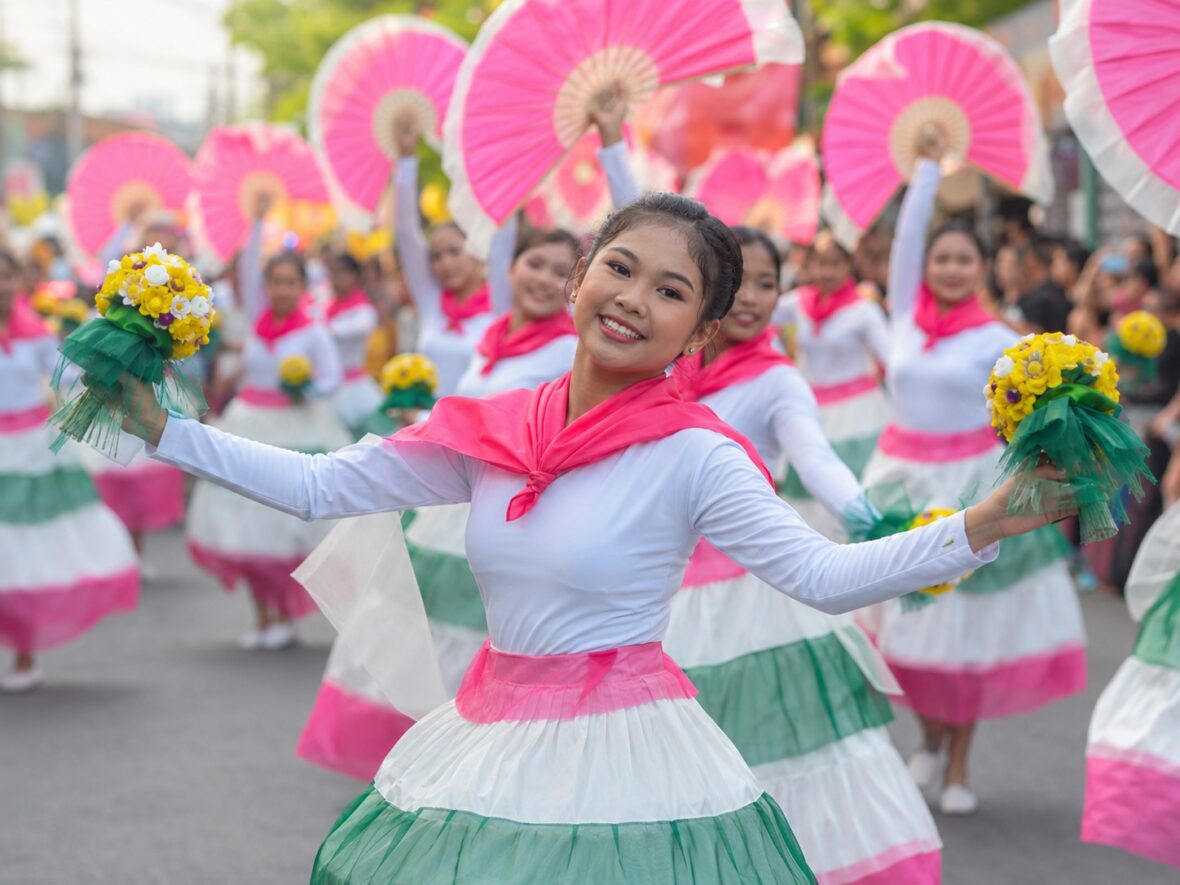
Students and community groups perform along Alfonso’s roads wearing costumes inspired by crops, flowers, sunlight, rain and the natural environment.
The 2024 celebration featured performers in bright pink, green and white costumes carrying flowers and fans. The presentation was described as a celebration of Alfonso’s abundant harvest through organic farming.
Other groups may use orange, yellow, red, brown and green to represent:
- Ripe fruits and vegetables
- Soil and compost
- Leaves and growing plants
- Sunlight and rain
- Flowers and pollinators
- Farmers and harvesters
- Traditional baskets and tools
The performances often tell a simple agricultural story.
Dancers may begin by acting as farmers preparing the soil. Other performers represent seeds, rain or sunlight. Slowly, the formation changes as plants begin to grow.
By the final section, the performers are carrying baskets, flowers or representations of harvested produce.
The routine makes agriculture feel alive.
A process that normally takes several months is presented in a few energetic minutes through music, costume and movement.
Street-Dance Parade
Before the final competition, participating groups may perform along the parade route.
This is often the best part for casual visitors because you do not necessarily need a reserved seat or entrance to a formal venue.
The performers pass close enough for spectators to appreciate the details of their costumes. You can see leaves made from folded fabric, recycled materials transformed into flowers and headpieces shaped like fruits or plants.
The parade is demanding for participants.
They must stay synchronized while traveling along public roads. Costumes may be heavy, and December days can still become warm despite Alfonso’s cooler climate.
When watching, remember that the short performance you see represents weeks of practice.
Students, teachers, choreographers, parents and costume makers all contribute to the finished presentation.
Grand Civic Parade
The festival may also include a broader parade involving municipal offices, schools, organizations, businesses and community groups.
Alfonso Turismo described the 2025 grand parade as part of a continuing program of performances, culture and community celebration, with the assembly held at Alfonso Central School.
The civic parade presents a wider picture of Alfonso.
Street dancers may be joined by:
- School bands
- Government employees
- Farmers’ organizations
- Community associations
- Local businesses
- Tourism establishments
- Youth groups
- Emergency and public-service units
For residents, the parade becomes a town gathering rather than a show created only for visitors.
People recognize classmates, relatives, coworkers and neighbors among the participants. That familiarity gives the festival a warm community atmosphere.
Agricultural Trade Fair
The trade fair is one of the most important parts of the festival because this is where farmers and producers meet customers directly.
Depending on the participants, you may find:
- Fresh vegetables
- Herbs and seedlings
- Fruits
- Coffee
- Eggs and livestock products
- Compost and organic inputs
- Preserves and jams
- Baked goods
- Local snacks
- Bottled drinks and condiments
- Handicrafts
- Plants and garden products
The fair allows small producers to explain their products in a way that is difficult inside a supermarket.
You can ask where an item was grown, how it was produced and how it should be prepared.
That conversation matters.
When customers understand the work behind a product, they are more likely to appreciate why locally produced and carefully grown food may cost more than a mass-market alternative.
Supporting Local Farmers
“Support local farmers” is a phrase frequently used in festival promotions, but it should mean more than taking photographs beside vegetables.
Real support happens when consumers:
- Buy directly from legitimate producers
- Pay fair prices
- Avoid excessive bargaining
- Ask about the farm and production method
- Recommend good local products
- Return outside festival season
- Reduce food waste
- Respect agricultural land and farm rules
The 2025 Organiko Festival explicitly promoted the celebration of a bountiful harvest and support for Alfonso’s local farmers.
Buying one basket of vegetables may seem like a small action.
However, when hundreds of visitors make similar purchases, the festival creates meaningful demand for the participating farms and businesses.
Food Fair and Bazaar
Food is naturally an important part of Organiko.
The Paskong Pinoy Food Fair and Bazaar held during the 2025 festival gave local vendors a long selling period extending from late November until January 3, 2026.
A food bazaar turns local harvests into something visitors can immediately enjoy.
Fresh vegetables may appear in salads, soups or rice meals. Fruits can become drinks, desserts and preserves. Coffee and herbs may be served by cafés, while local bakers create pastries using ingredients sourced from nearby farms.
The fair also expands the festival’s economic reach.
Not everyone owns a farm. Some residents earn through cooking, baking, packaging, transportation, design or retail. A food bazaar gives these workers and entrepreneurs a place within the celebration.
Visit with an open mind.
Do not limit yourself to familiar fast food when local dishes and small food businesses are available.
Cooking and Food Demonstrations
Food demonstrations are a natural fit for an organic festival.
They help answer an important question: what should consumers do with the produce after buying it?
A farmer may grow excellent vegetables, but customers will hesitate to purchase unfamiliar varieties when they do not know how to cook them.
Demonstrations can introduce visitors to:
- Simple vegetable meals
- Fresh salads
- Soups and stews
- Herb-based drinks
- Fruit preserves
- Healthy snacks
- Farm-to-table cooking
- Waste-reducing kitchen techniques
The goal is not to make organic food appear expensive or complicated.
The best demonstrations show that fresh local ingredients can be used in ordinary household cooking.
Organic Farming Exhibits
Some exhibits may explain the practices used by participating farms.
Visitors may encounter demonstrations or displays involving:
- Composting
- Vermicomposting
- Seedling production
- Natural pest-management solutions
- Crop rotation
- Integrated farming
- Container gardening
- Herb cultivation
- Waste recycling
Vermicomposting, for example, uses worms to transform organic waste into nutrient-rich fertilizer. The Agricultural Training Institute describes it as a practical way of managing biodegradable materials while improving soil.
These topics may not sound as exciting as street dancing, but they are central to what the festival represents.
Organic agriculture begins with healthy soil.
Without fertile soil, attractive produce displays and abundant harvests cannot continue year after year.
Farm and Garden Products
Alfonso’s agricultural character is not limited to edible crops.
Garden plants, flowers, herbs and seedlings may also be available from local sellers.
This is especially appealing to visitors who live in subdivisions or urban areas and want to begin a small home garden.
Before buying, ask:
- How much sunlight does the plant need?
- How often should it be watered?
- Can it grow in a container?
- Does it require Alfonso’s cooler climate?
- How large will it become?
- Is it safe around pets or children?
Do not buy a plant based only on appearance.
A beautiful seedling will not survive when its basic needs do not match your home environment.
Photography and Creative Competitions
The festival’s colorful agricultural theme naturally attracts photographers.
Alfonso Turismo has promoted photography activities encouraging participants to capture the festival’s theme, performances and community atmosphere.
Photography contests help document the celebration.
A good festival image can preserve:
- A farmer arranging produce
- A dancer preparing backstage
- A child watching the parade
- A family buying local products
- Costumes made from recycled materials
- The expressions of performers
- The transition from rural tradition to modern tourism
Photographers should still behave respectfully.
Ask permission before entering working farms, photographing vendors at very close range or taking intrusive images of performers while they are changing clothes or resting.
School and Youth Activities
Young Alfonseños play a major role in Organiko.
Students perform in street-dancing competitions, join parades, participate in music programs and help interpret agricultural themes for the public.
This involvement is important because the future of farming depends partly on whether younger generations continue to value it.
Not every student will become a farmer.
However, the festival can show them that agriculture includes many possible careers:
- Farm management
- Agricultural science
- Food processing
- Culinary arts
- Tourism
- Marketing
- Environmental work
- Product design
- Logistics
- Technology
- Entrepreneurship
A modern farming community needs more than people planting crops.
It also needs people who can improve production, process harvests, develop products, build brands and bring those goods to customers.
Organiko Music Festival
Evening concerts provide a livelier conclusion after the daytime agricultural and cultural programs.
The 2025 Organiko Music Fest was held on December 13 at Alfonso Central School and featured the band Hale among its performers.
Earlier editions also featured popular bands and local performers. A 2022 festival concert included December Avenue together with Alfonso-based acts.
Concerts attract audiences who may not initially be interested in agriculture.
Once they arrive, however, they may explore local food booths, see festival displays and learn more about the town.
That wider audience benefits vendors and helps the festival remain relevant to younger residents.
Christmas Atmosphere
Because Organiko is held in December, it naturally blends with Filipino Christmas traditions.
Lights, food bazaars, music and family activities make the festival feel different from agricultural celebrations held during warmer months.
Visitors may arrive in the afternoon for the parade and remain until evening to enjoy:
- Christmas displays
- Local food
- Live entertainment
- Cooler weather
- Family photo areas
- Holiday shopping
- Evening concerts
The long 2025 calendar demonstrated how Organiko can function as both a harvest festival and Alfonso’s extended Christmas celebration.
What the Organiko Festival Feels Like
Festival mornings begin long before the official program.
Students gather near Alfonso Central School, barangay halls and staging areas. Costumes are checked, makeup is applied and props are repaired.
Parents carry water, food and extra materials. Teachers review formations while musicians test drums and sound equipment.
Near the market and activity grounds, vendors begin arranging vegetables, plants, packaged food and drinks.
Then the parade starts.
The road fills with green, pink, orange and yellow. Dancers carry flowers and farming-inspired props while the crowd cheers from the sidewalks.
The festival smells like a mixture of fresh produce, grilled food, coffee and the soil from potted plants.
Later in the day, the agricultural atmosphere begins blending with Christmas.
Lights switch on, food stalls become busier and families arrive for evening entertainment.
The experience feels festive without losing its provincial character.
You are still in a working town surrounded by farms and rural barangays, but for several days Alfonso turns that everyday identity into a public celebration.
What Local Products Should You Look For?
The available products depend on the participating farmers and the current harvest, but several categories are worth exploring.
Fresh Vegetables
Look for leafy vegetables, herbs, tomatoes, eggplants, peppers, root crops and other seasonal produce.
Ask when they were harvested and how they should be stored.
Freshness is one of the biggest advantages of buying directly from a farmer.
Coffee
Alfonso is beside Cavite’s major coffee-growing municipalities and has farms and food establishments offering locally sourced coffee.
Ask whether the beans were grown in Alfonso or blended with coffee from nearby towns.
Also ask about the roast level and recommended brewing method before buying a large package.
Herbs
Fresh basil, mint, rosemary, lemongrass and other herbs may be sold as cut produce, seedlings or potted plants.
Herbs are practical souvenirs because they can continue growing at home when cared for properly.
Fruits and Preserves
Seasonal fruit may appear fresh or transformed into jam, jelly, juice, pastries and bottled products.
Processed products are useful when you have a long journey home, but always check the label and storage instructions.
Plants and Seedlings
Buy only from sellers who can explain the plant’s needs.
Alfonso’s cooler environment may allow certain plants to thrive more easily than they would in hotter and more urban locations.
Baked Goods and Farm-to-Table Food
Garden restaurants and small food businesses around Alfonso often use the town’s countryside image as part of their identity.
During the festival, look for products that clearly identify their ingredients and producer.
How to Buy Organic Products Wisely
The word organic should not be treated as a decorative marketing label.
Certified organic products are subject to standards involving production, processing, labeling, traceability and recordkeeping. Philippine organic standards cover crops, livestock, processing, special products and consumer information.
At a festival, you may encounter products in different stages of verification.
Some may be formally certified organic. Others may be produced through natural or low-input farming methods but do not carry certification.
Ask respectful questions:
- Is the farm certified organic?
- Is the product under a participatory guarantee or community-based system?
- What fertilizers are used?
- How are pests managed?
- Where is the farm located?
- Who produced the item?
Do not accuse a seller simply because the packaging looks informal.
Small farms may still be developing their documentation and certification. The important thing is transparency.
Where Is the Festival Held?
Major Organiko activities have been held around Alfonso Central School, the town center and other municipal event spaces.
The 2025 grand parade and street-dancing assembly used Alfonso Central School, while the Organiko Music Fest was also staged there.
Food-fair and community activities may use separate spaces and operate on different schedules.
Before traveling, check the current program for:
- Parade assembly point
- Street-dancing route
- Final performance venue
- Agricultural fair location
- Bazaar operating hours
- Concert entrance
- Parking areas
- Road closures
- Public-transport drop-off points
Do not assume that every activity is in exactly the same place.
How to Get to Alfonso from Metro Manila
From PITX
PITX is one of the most convenient terminals for commuters traveling to Alfonso.
Its official transportation directory lists bus services for Tagaytay–Amadeo–Alfonso, as well as Alfonso and Nasugbu routes using Aguinaldo Highway.
At the terminal, look for a bus marked:
- Alfonso
- Alfonso–Nasugbu
- Mendez–Alfonso
- Nasugbu via Aguinaldo Highway
Tell the conductor that you are going to Alfonso town proper or show the precise festival venue.
Some buses may pass Alfonso Crossing without entering the central town area. Confirm the drop-off before boarding.
PITX route assignments can change, so check the live schedule or ask at the information counter rather than relying only on an old gate number.
Via Tagaytay
Travelers who cannot find a direct Alfonso bus can take a Tagaytay-bound vehicle and transfer to a jeepney or bus traveling toward Mendez, Alfonso or Nasugbu.
This route may involve additional waiting, especially at night.
Ask whether the connecting vehicle enters Alfonso Bayan or travels only along the highway.
From Other Parts of Cavite
Alfonso can be reached from Dasmariñas, Silang, Tagaytay, Mendez and nearby western Cavite towns through buses and jeepneys using Aguinaldo Highway and local roads.
Travelers coming from Trece Martires or Indang may need to transfer depending on the available route.
By Private Vehicle
Drivers from Metro Manila usually approach through Aguinaldo Highway via Bacoor, Imus, Dasmariñas and Tagaytay.
Another route may use SLEX, Santa Rosa and Tagaytay before continuing toward Mendez and Alfonso.
Festival road closures can affect the town center, particularly during the grand parade and street dancing.
Use live navigation, leave early and park only in areas designated by local traffic officials.
Practical Tips for Festival Visitors
Confirm the Date and Activity
Organiko can last for several weeks, but the major parade, fair and concert may happen on different dates.
Choose the event you most want to see and confirm its venue.
Arrive Early for Street Dancing
Road closures may begin before the advertised starting time.
Early arrival gives you a better viewing area and more time to explore the food and agricultural booths.
Bring Cash
Some vendors may accept digital payments, but cash remains useful when mobile signals become slow or sellers have limited payment options.
Bring smaller bills.
Carry Reusable Bags
You may leave with vegetables, plants, coffee, bottled products or pastries.
A strong reusable bag is more practical than accepting several thin plastic bags.
Bring an Insulated Bag
Use one when buying perishable food, dairy products or fresh produce that will remain inside your vehicle for several hours.
Wear Comfortable Shoes
You may need to walk from a distant parking area or public-transport drop-off point.
Festival grounds can also be uneven, dusty or muddy depending on the weather.
Prepare for Cool Evenings
Alfonso can feel cooler than Metro Manila, especially after sunset in December.
Bring a light jacket, but also prepare for warm daytime conditions.
Carry Rain Protection
December is generally outside the peak rainy season, but unexpected rain is still possible.
A compact umbrella or raincoat can protect both you and your purchases.
Respect the Farmers and Vendors
Ask before entering display areas or touching products.
Avoid excessive bargaining, particularly with small producers selling limited harvests.
Keep the Festival Clean
Use proper waste bins and avoid leaving cups, bags and food packaging beside agricultural displays.
A celebration promoting environmental responsibility should not end with unnecessary litter.
Visiting the Festival with Children
Organiko can be an excellent learning experience for children.
Many young visitors know vegetables only as items sold in supermarkets. The festival helps them connect food with soil, seeds, farmers and seasons.
Encourage them to ask questions such as:
- How long does this vegetable take to grow?
- What does the plant look like before harvesting?
- Why do farmers use compost?
- Which insects help crops?
- How do you know when a fruit is ready?
Street dancing makes the agricultural story entertaining, while the fair provides actual products they can see and taste.
Keep children away from moving floats and crowded intersections. Write a guardian’s contact number on a card and place it securely in the child’s pocket.
Other Places to Visit in Alfonso
A festival trip can easily become a full-day or overnight countryside escape.
St. Joseph Parish Church
St. Joseph Parish is Alfonso’s principal Catholic parish, with its feast celebrated on March 19.
The church provides a quiet stop when exploring the town center.
Attend respectfully and avoid taking photographs during Mass without permission.
Farm-Tourism Destinations
Alfonso has farms and countryside properties offering agricultural experiences, food, accommodations and event spaces.
Access rules differ widely. Some accept walk-in visitors, while others require advance booking.
Contact the establishment directly before visiting.
Garden Restaurants and Cafés
The town’s location near Tagaytay has encouraged the growth of garden restaurants, farm-to-table dining and quiet cafés.
They can be especially busy on December weekends, so reservations may be useful.
Sonya’s Garden Area
Sonya’s Garden is one of the best-known countryside destinations associated with Alfonso.
Its popularity helped establish the area as a retreat for garden dining, wellness and overnight stays. Visitors should check current reservation and access policies before going.
Tagaytay and Mendez
Alfonso is close enough to Tagaytay and Mendez to combine several destinations in one trip.
However, weekend traffic can be heavy. Avoid planning too many stops when you also want to watch a festival parade at a fixed time.
Why Farm Tourism Matters to Alfonso
Farm tourism can provide farmers with income beyond selling raw produce.
A farm may earn through:
- Guided visits
- Workshops
- Dining
- Accommodations
- Pick-and-pay activities
- Seedling sales
- Processed food
- Events
- Educational programs
This diversification can make farming more financially resilient.
However, farm tourism must remain respectful of the agricultural operation.
A farm should not be treated as a photo studio where crops are damaged and workers are interrupted. Visitors should follow paths, ask permission and understand that food production remains the property’s primary purpose.
The Organiko Festival can introduce travelers to responsible farm tourism by connecting them directly with legitimate local producers and establishments.
Why the Festival Matters
Agriculture is easy to overlook when a town becomes popular for tourism and real estate.
A new resort is immediately visible. A farmer’s daily work is quieter.
The farmer prepares the soil, checks plants, controls pests, worries about the weather and waits for a harvest that may still be affected by market prices.
Organiko brings that work into public view.
It gives farmers space to display their produce, meet customers and receive recognition. It also encourages residents to see farming as a source of knowledge, livelihood and community identity.
The festival tells consumers that environmental responsibility begins long before food reaches the table.
It begins with the condition of the soil, the inputs used on the farm and the way natural resources are managed.
Organic Farming Is Not Just a Trend
Words such as organic, natural and sustainable are now used frequently in advertising.
It can be easy to treat them as lifestyle trends associated with expensive cafés and attractive packaging.
For farmers, however, these practices affect real daily decisions.
Should they purchase another chemical input or create compost from available materials? How can pests be controlled without damaging beneficial insects? How can soil remain productive for future seasons?
These questions influence costs, health, yields and long-term survival.
The Organic Agriculture Act recognizes that organic farming can support soil fertility, environmental protection, farmer health and reduced dependence on imported farm inputs.
The festival makes those ideas accessible without turning the celebration into a formal lecture.
Visitors encounter them through food, products, performances and conversations.
A Celebration of the Whole Community
Although farmers are at the heart of Organiko, the festival depends on many other people.
Students bring agricultural stories to the streets. Teachers and choreographers prepare the performances. Artists create costumes and props.
Food businesses purchase local ingredients. Tourism establishments bring visitors into town. Municipal workers organize programs, traffic and public safety.
Every sector contributes something.
This is appropriate because a sustainable local food system also depends on cooperation.
Farmers need customers. Businesses need reliable ingredients. Consumers need safe and nutritious food. Tourism needs communities and landscapes worth experiencing.
Organiko celebrates all these connections.

Final Thoughts
The Alfonso Organiko Festival is one of Cavite’s most meaningful agricultural celebrations.
Its street dancers, concerts and Christmas attractions create a lively atmosphere, but the festival’s real strength comes from the farmers and local producers it places at the center of attention.
The vegetables, fruits, herbs and other products displayed at the fair represent months of work.
They carry the knowledge of people who understand Alfonso’s soil, weather and growing conditions. They also represent a choice to farm in ways intended to protect the land and make agriculture more sustainable.
Attend the festival for the colorful parade and performances. Explore the food bazaar, buy directly from local producers and bring home something grown or made in Alfonso.
Most importantly, take time to talk with the farmers.
Behind every beautiful harvest is a person who planted, waited, worried and continued working even when the result was uncertain.
Through the Organiko Festival, Alfonso gives those people—and the land they care for—the celebration they deserve.