As a Filipino, I’ve always felt that our country’s soul is best seen and felt during a festivals and fiestas. With over 7,000 islands, we’re a colorful mosaic of cultures and beliefs, but what really unites many of us is our deep devotion to faith—especially expressed through our religious festivals.
These celebrations, locally known as fiestas, are more than just religious events. They are vibrant expressions of joy, gratitude, and community spirit.
Let me take you on a journey through some of the most beautiful and meaningful religious festivals that are celebrated across the country.
Content
The Heartbeat of Filipino Fiestas: Patronal Celebrations
Thanks to over 300 years of Spanish rule, Catholicism has become deeply rooted in our culture.
Today, almost every town and barangay in the Philippines has its own patron saint—and every year, locals go all out to honor them.
These feast days are marked with parades, masses, street dancing, food feasts, and more. They are a time when families come home, neighbors come together, and communities celebrate both faith and local identity.
Sinulog Festival – Cebu City (3rd Sunday of January)
Sinulog is one of the grandest religious festivals I’ve ever witnessed. It honors the Santo Niño (Child Jesus), the oldest religious icon in the country.
Imagine thousands of people dancing in the streets with painted faces and vibrant costumes, doing the traditional two-steps-forward, one-step-backward dance, said to mimic the movement of the river. All the while, the crowd chants “Pit Señor!” It’s a heartfelt plea for blessings and a beautiful tribute to Cebuano faith and culture.

Ati-Atihan Festival – Kalibo, Aklan (3rd Week of January)
This one’s often called the “Mother of All Philippine Festivals.” It’s wild, loud, and full of energy! What makes Ati-Atihan so unique is that participants paint their faces black to honor the Ati people, the indigenous tribe of the area.
It’s another celebration of the Santo Niño, but mixed with pre-colonial tribal traditions. When you hear the drums and the crowd shouting “Hala Bira! Pwera Pasma!”—you know you’re in the middle of something truly alive.
Dinagyang Festival – Iloilo City (4th Sunday of January)
Following Sinulog and Ati-Atihan, Dinagyang is Iloilo’s spectacular tribute to the Santo Niño. The street dances here are on a whole new level—choreographed tribal performances with intense drumbeats and dramatic storytelling.
It’s a celebration of the arrival of Malay settlers and their peaceful relationship with the Ati people, topped with vibrant Christian devotion.
Feast of the Black Nazarene – Quiapo, Manila (January 9)
If you want to witness one of the most intense expressions of Filipino faith, this is it. Millions of barefoot devotees join a massive procession, trying to touch the miraculous Black Nazarene statue.
I’ve seen people cry, crawl, and carry life-size replicas of the image. It’s a chaotic yet moving sea of faith, filled with hope for healing, miracles, and answered prayers.

Moriones Festival – Marinduque (Holy Week)
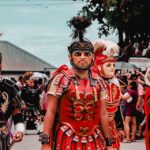
During Holy Week, the island of Marinduque transforms into a biblical stage. Locals wear Roman soldier masks and costumes, re-enacting the story of Longinus, the centurion who pierced Jesus’ side and was later converted.
The festival mixes solemn reflection with street drama, and I personally find it one of the most visually striking Holy Week observances in the country.
Flores de Mayo and Santacruzan – Nationwide (May)
May in the Philippines feels extra special because of Flores de Mayo—a whole month dedicated to the Virgin Mary. Kids offer flowers in churches, and by the end of the month, towns hold a Santacruzan, a pageant parade of beautiful young women dressed as biblical and historical figures.
At its heart is Queen Helena (Reyna Elena) and her son Constantine, re-enacting their search for the Holy Cross. It’s religious, glamorous, and a proud community event all in one.
Pahiyas Festival – Lucban, Quezon (May 15)
This is one of my personal favorites! Lucban’s Pahiyas Festival is a thanksgiving celebration for a bountiful harvest, in honor of San Isidro Labrador, the farmer’s patron saint.
Locals decorate their homes with colorful rice wafers called kiping, fruits, vegetables, and local produce. The entire town becomes a walking gallery of creativity and gratitude.
Peñafrancia Festival – Naga City, Camarines Sur (September)
Bicolanos are deeply devoted to Our Lady of Peñafrancia, and her annual festival is one of the most emotional Marian celebrations in the country.
The highlight is the fluvial procession on the Naga River, where the image is paraded on a pagoda surrounded by candle-lit boats and throngs of faithful shouting “Viva la Virgen!” I’ve joined this before and felt overwhelmed by the sheer devotion of the crowd.
Indigenous Traditions: Spirituality Beyond Religion
Aside from Catholic and Islamic practices, there are also indigenous communities in the Philippines who continue to celebrate their ancestral beliefs and traditions. Many of these are tied to nature, agriculture, and the spirit world—offering a unique and deeply Filipino expression of spirituality.
Kaamulan Festival – Malaybalay, Bukidnon (Late August to Early September)
I find Kaamulan truly special because it’s a genuine gathering of Bukidnon’s seven indigenous tribes, known as the Lumad. While the festival now includes parades and civic events, its roots are in spiritual rituals—thanksgiving for good harvests, peace pacts, and ancestral veneration.
It’s a time for the tribes to share their customs, dances, music, and prayers, reminding us of the country’s rich cultural diversity.

Kadayawan Festival – Davao City (3rd Week of August)
Kadayawan is a big celebration in Davao, bursting with color, flowers, fruits, and festive dances. But at its heart, it’s about giving thanks to the Manama, the Supreme Being, and honoring the spirits of ancestors and nature.
With Davao’s many ethnic groups coming together, Kadayawan showcases the harmony of tradition, agriculture, and faith.
Pintados-Kasadyaan Festival – Tacloban City, Leyte (June 29)
This one’s a fascinating blend of pre-Hispanic and Catholic traditions. The name “Pintados” refers to the tattooed Visayan warriors of old.
During the festival, performers paint their bodies in intricate designs, reenacting their ancestors’ bravery and rituals. At the same time, it honors the arrival of the Santo Niño in Leyte, reflecting how indigenous and Catholic beliefs have merged over time.
Islamic Festivals: Celebrating Faith in Mindanao and Beyond
While most of the Philippines is Catholic, our Muslim brothers and sisters—especially in Mindanao and the Sulu archipelago—hold beautiful and deeply spiritual celebrations rooted in Islamic faith and tradition.
These festivals may not be as well-known across the country, but they are just as meaningful and vibrant in their own way.
Eid al-Fitr (Hari Raya Puasa)
This marks the joyful end of Ramadan, the holy month of fasting. After a month of prayer, reflection, and self-discipline, Muslim families come together for special prayers called Salat al-Eid, followed by festive meals and gatherings.
There’s also a strong spirit of giving, as families share blessings through zakat al-fitr, a form of charity for the less fortunate. It’s a beautiful reminder of community, gratitude, and compassion.
Eid al-Adha (Hari Raya Haji)
Also known as the Feast of Sacrifice, this festival commemorates the story of Prophet Ibrahim’s deep faith and obedience to God.
Families take part in prayers and the symbolic sacrifice of animals—usually goats or cows—with the meat distributed among family, friends, and those in need. It’s a day of generosity, reflection, and spiritual connection.
Maulid-un Nabi
This is the celebration of the birth of Prophet Muhammad, a peaceful and reflective gathering where people come together to pray, listen to stories about the Prophet’s life, and recite the Quran. It’s a time to honor his teachings and values.
These Islamic festivals help keep traditions alive and strengthen bonds within communities, especially in places like Marawi, Cotabato, Sulu, and parts of Metro Manila with growing Muslim populations.
Why These Festivals Matter
What I love most about religious festivals in the Philippines is how they bring people together—regardless of faith, background, or location. Whether it’s a grand Catholic procession in Manila, a spiritual Islamic gathering in Mindanao, or a tribal celebration in the mountains of Bukidnon, each festival tells a story of identity, faith, and unity.
These celebrations are more than colorful costumes and parades—they are moments when communities pause, reflect, and celebrate what matters most: family, gratitude, faith, and cultural pride.
So whether you’re lighting a candle in a church, joining a tribal ritual, or feasting after Ramadan prayers, you’re part of something beautiful—the living, breathing spirit of the Filipino people.
Ready to experience the soul of the Philippines? Make sure to time your travels with one of these amazing festivals—you won’t just be a tourist, you’ll be part of the celebration.
Let me know if you’d like a travel guide to attend any of these festivals next!