Every year, Cinemalaya gives Filipino moviegoers something we don’t always get from mainstream cinema: stories that are willing to take risks.
Some are uncomfortable. Some are funny. Others are deeply personal, political, strange, heartbreaking, or all of those things at once.
And Cinemalaya 2026 is no exception.
The 22nd Cinemalaya Philippine Independent Film Festival brings together stories about bureaucracy, political power, war, family, grief, love, identity, disability, migration, Indigenous communities, and even a dog trying to survive a zombie apocalypse.
Yes, the lineup is that diverse.
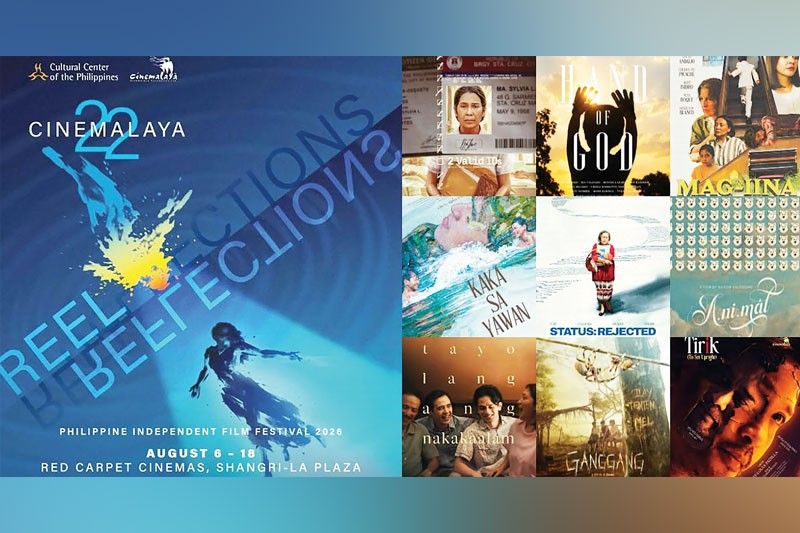
Cinemalaya 22 is happening from August 6 to 18, 2026, with the theme “Reel Reflections.” This year’s main competition features nine full-length films and 10 short films, all competing for the festival’s prestigious Balanghai trophies.
So, whether you’re planning a Cinemalaya movie marathon or simply wondering which films are worth watching, here’s a complete guide to Cinemalaya 2026 and all 19 official competition films this year.
We’ll also look at the opening and closing films, venues, ticket prices, and a few important things to know before watching.
Content
What Is Cinemalaya?
Cinemalaya is one of the most important film festivals in the Philippines, particularly when it comes to independent cinema.
Established in 2005, the festival was created to develop, support, and promote Filipino independent filmmakers while giving them opportunities to tell stories that might not normally find a place in commercial cinema.
Cinemalaya is particularly interesting because its main feature competition doesn’t simply accept finished films. Projects go through a development process, and selected filmmakers receive production support to turn their concepts into completed movies.
For the main competition, Cinemalaya says finalists receive a ₱1-million production grant from the Cultural Center of the Philippines and another ₱1 million from the Film Development Council of the Philippines, released in stages as filmmakers develop their projects.
Over the years, Cinemalaya has helped introduce many Filipino filmmakers, actors, writers, cinematographers, and other film artists to wider audiences.
According to the CCP, more than 1,000 works have been presented through Cinemalaya since the festival began, including feature films, short films, documentaries, restored classics, and films from elsewhere in Asia.
Cinemalaya 2026: Reel Reflections
The official theme for the 22nd edition is:
Cinemalaya 22: Reel Reflections
It’s a fitting theme considering the movies competing this year.
Many of them reflect realities that Filipinos immediately recognize: dealing with government systems, leaving the country for work, navigating poverty, living with political violence, caring for family members, questioning tradition, struggling for acceptance, and simply trying to find a place where you belong.
The CCP describes the 2026 lineup as exploring themes including identity, family, memory, resilience, justice, love, and contemporary life.
And you’ll see those themes again and again throughout the competition.
Cinemalaya 2026 Full-Length Films
There are nine official full-length competition films in Cinemalaya 2026.
Let’s take a closer look at each one.
1. 2 Valid IDs
Director: Ma-an L. Asuncion-Dagñalan
Screenplay: Abet Pagdagdagan Raz
Runtime: 90 minutes
Genre: Social Drama
Cast: Marietta “Pokwang” Subong, Meryll Soriano, Joey Marquez, and Zaijian Jaranilla.
If there’s one title from this year’s festival that immediately sounds familiar to almost every Filipino, it’s probably 2 Valid IDs.
We all know the phrase.
Open a bank account?
Bring valid IDs.
Apply for another ID?
You may need valid IDs.
Claim money?
Again: IDs.
But what happens when someone living in poverty doesn’t have even one?
That’s the situation facing Sylvia, a poor farmer who desperately needs to claim money sent by a relative. The money is intended for the medical treatment of her seriously ill husband, Ramon.
There’s only one problem.
The remittance center requires two valid IDs, and Sylvia doesn’t have any.
What looks like a simple administrative requirement quickly becomes an exhausting journey through bureaucracy. Desperate to obtain the documents she needs, Sylvia eventually turns to a fixer while the money she is trying to protect slowly disappears into transportation, food, paperwork, and other daily expenses.
Meanwhile, her husband’s health continues to deteriorate.
The movie isn’t really just about IDs. It’s about what happens when systems supposedly designed to serve people become nearly impossible for the poorest members of society to navigate.
It’s a simple premise, but that’s exactly what makes it powerful.
2. A.ni.mál
Director and Screenwriter: Dustin Celestino
Runtime: 120 minutes
Genre: Black Comedy / Social Satire
Cast: Maxine Ignacio, Frances Makil-Ignacio, Jojit Lorenzo, Bituin Escalante, Reymund Domingo, and Anthony Falcon.
Politics, privilege, family loyalty, and a compromising video collide in A.ni.mál.
The story takes place in a provincial Philippine town where Lily, the daughter of the mayor, returns home carrying something potentially explosive: a video involving a powerful governor and the abuse of his dog.
Her father wants to protect the governor, a longtime political ally.
Her mother sees an opportunity to reveal what happened.
And Lily?
She threatens to release the video unless the governor gives her his dog.
What follows is a black comedy about power and the people willing to protect it.
Director Dustin Celestino approaches the subject through social satire, exploring how corruption and wrongdoing can become frighteningly ordinary when people around those in power simply choose to look away.
Rather than presenting evil as something mysterious or extraordinary, A.ni.mál looks at how it can emerge from entitlement, selfishness, cowardice, and the everyday decision to tolerate wrongdoing.
It’s one of the more openly satirical entries in this year’s lineup.
3. Ganggang
Director and Screenwriter: JL Burgos
Runtime: 89 minutes
Genre: Coming-of-Age Drama
Cast: Raine Dela Cruz, Kenneth “Butchoy” Vincent Mendoza, Don Rishmond Cerbito, Prince España, Brian Arda, and a large ensemble of young performers.
At first, Ganggang sounds like a simple childhood story.
Three boys are searching for the perfect fighting spider so they can finally defeat the spider belonging to their school bully.
For many Filipinos who grew up catching spiders and placing them on sticks for friendly battles, the idea is instantly nostalgic.
But Ganggang has something much heavier underneath.
Ilay and Ten-ten are tired of losing to Anton, the boy who dominates their school. Then Mel, a newcomer from the city, joins them.
Their friendship grows as they search for a ganggang powerful enough to defeat their rival.
At the same time, however, their community is being shaped by the arrival of armed forces and a larger conflict the children may not fully understand.
Director JL Burgos, whose work has frequently focused on human rights, uses childhood friendship as a way of looking at violence, power, and how young people experience conflicts created by adults.
There’s childhood adventure here, but don’t expect Ganggang to be merely nostalgic.
4. Hand of God
Director and Screenwriter: Mark Duane Angos
Runtime: 106 minutes
Genre: Drama
Cast: Ruru Madrid, Iza Calzado, Ronnie Lazaro, Sue Ramirez, KD Omalin, Jhong Hilario, Cholo Barretto, Edwin Nombre, Rosh Barman, and Tyke Sanchez.
Football becomes an unlikely bridge between soldiers and children in Hand of God.
The story takes place in a remote community in the southern Philippines that has lived through years of armed conflict.
A military lieutenant arrives and begins teaching local children how to play football. At first, the idea is partly strategic: building trust with a community suspected of having connections to armed groups.
But things become more complicated when the lieutenant develops a genuine relationship with the children.
Among them is Khaleel, a 10-year-old child soldier connected to a violent armed organization.
For Khaleel, football offers a glimpse of something radically different from the life already chosen for him.
He can run.
Play.
Laugh.
And, perhaps for the first time, imagine being an ordinary child.
But war doesn’t simply disappear because a football arrives.
As the lieutenant and Khaleel grow closer, both are forced to confront the world waiting outside the playing field.
At its core, Hand of God asks whether childhood and hope can survive in places where violence has already become normal.
5. Kaka sa Yawan (Brothers by the River)
Director and Screenwriter: Alpha Habon
Runtime: 90 minutes
Genre: Drama
Cast: Beaver Magtalas, Bryce Nicolo Mercader, Dennis Dato, Noelle Polack, Nikki Valdez, Luis Alandy, Karl Medina, Queenay Mercado, Deanne Bautista, and Benedix Ramos.
One of the most culturally rooted films in the lineup is Kaka sa Yawan (Brothers by the River).
The story centers on two boys from very different worlds.
There’s Niko, a Manila boy, and Ayan, a Tadyawan-Mangyan boy from Mindoro.
During one important summer, the two form an unlikely friendship.
They introduce each other to their worlds, eventually developing a bond strong enough for them to make a promise about their future.
Years later, a now 21-year-old Niko returns to Mindoro.
He’s older, more jaded, and carrying the weight of the past.
His return forces him to confront memories of Ayan, his own identity, his childhood, and the promise they once made.
The film also puts the culture and traditions of the Tadyawan Mangyan community at the center of its story, making Kaka sa Yawan not only a story about friendship but also memory, cultural identity, grief, and healing.
6. Mag-iina (The Mothering)
Director: Giancarlo Abrahan
Screenplay: Guelan Varela-Luarca
Runtime: 105 minutes
Genre: Horror
Cast: Janine Gutierrez, Lucas Andalio, Cherry Pie Picache, Agot Isidro, Ness Roque, Jackie Lou Blanco, Bart Guingona, and Alejandra Cortez.
If you want something darker, Mag-iina (The Mothering) might be the Cinemalaya film for you.
Anj returns to her family’s ancestral home as the 40th day since the death of her estranged father approaches.
In Filipino tradition, the 40th day after death carries particular spiritual significance.
But Anj isn’t returning to a peaceful home.
The old house is filled with grief, difficult relationships, secrets, and several generations of women who have been living with their own emotional wounds.
And there may be something else inside the house as well.
The official synopsis describes a family bound together by grief, madness, and evil thicker than blood.
Rather than using horror simply for scares, Mag-iina appears interested in something Cinemalaya films often explore very well: the idea that the most frightening things inside a home aren’t always supernatural.
Sometimes they’re inherited.
7. Status: Rejected
Director: Vahn Leinard C. Pascual
Runtime: 90 minutes
Genre: Drama / Family / Comedy
Cast: Ruby Ruiz, Alessandra de Rossi, Beverly Salviejo, and Yani Villarosa.
At 69, Virginia “Biring” Divinagracia hasn’t stopped dreaming.
After spending much of her life caring for her family, she longs for a different future—and for the chance to reunite with her son abroad.
Then her U.S. visa application is rejected.
Again.
After her fourth rejection, Biring begins exploring the digital world with the help of an old friend.
That’s where she meets Steve, a charming American man who makes her feel visible and desired in a way she hasn’t experienced for years.
Suddenly, life feels different.
But online relationships aren’t always what they appear to be.
Status: Rejected uses Biring’s story to explore aging, loneliness, family obligations, romance, migration dreams, self-worth, and the desire to still live for yourself even after spending decades living for everyone else.
And having Ruby Ruiz and Alessandra de Rossi in the same film certainly makes this one of the year’s more intriguing acting showcases.
8. Tayo Lang ang Nakakaalam (Only Known to Us)
Director: David R. Corpuz
Screenplay: Iar Arondaing and David R. Corpuz
Runtime: 110 minutes
Genre: Drama
Cast: Martin del Rosario, Miguel Odron, Yayo Aguila, Epy Quizon, Madeleine Nicolas, Bodjie Pascua, Bong Cabrera, Adrian Lindayag, and Nour Hooshmand.
Tayo Lang ang Nakakaalam tells a quieter but potentially very emotional story about love, illness, and belonging.
Neil and Bong are longtime partners.
Neil has also formed a close relationship with Bong’s mother, Gloria, making him part of the family in every meaningful sense.
Then Bong suddenly becomes seriously ill and is hospitalized.
Neil tries to balance work and caring for his partner while Gloria fights to remain strong for her son.
Complicating everything further is the arrival of Benjie, Bong’s estranged father, who tries to reconnect with the family during the crisis.
The situation forces everyone to confront old wounds and difficult questions.
For Neil, there’s an especially painful one:
When your relationship isn’t always recognized in the same way as everyone else’s, what happens when illness suddenly forces you to prove where you belong?
The movie centers on a love kept largely private and a man struggling to remain visible inside the family he considers his own.
9. Tirik (To Set Upright)
Director: May-i Guia Padilla
Screenplay: May-i Guia Padilla and Charlson Ong
Runtime: 91 minutes
Genre: Thriller / Drama
Cast: Rocco Nacino, Floyd Tena, Chai Fonacier, Jess Mendoza, Glenn Sevilla Mas, Justin Mclaire, Brian Arda, Hershey Neri, Bor Ocampo, and Hope Summer Skye.
Tirik brings audiences into the streets of Manila during the height of the Philippine drug war.
The story follows Paring Bert, a priest, and Santos, a taxi driver.
What begins as a seemingly ordinary act of faith and compassion—traveling to attend to a funeral—turns into something much more dangerous.
The two men suddenly find themselves trying to escape an assassination attempt while confronting their own moral conflicts.
Their journey through Manila becomes a reckoning with guilt, responsibility, faith, violence, and redemption.
Among this year’s entries, Tirik appears to be one of the most directly connected to a painful chapter in recent Philippine history.
Wait—Why Are There Only Nine Full-Length Films?
This may confuse anyone who followed the Cinemalaya 2026 finalists early in the development process.
Earlier Cinemalaya materials included Dangeom by Paul Sta. Ana, a story about a queer Korean-Filipino aspiring dancer living in South Korea and caring for his grandfather while pursuing his dream of entering the K-pop industry.
However, Cinemalaya’s final 2026 competition announcement and current Full Length 2026 page list only nine movies, and Dangeom is not included in the final competition lineup.
So if you’re seeing older articles mentioning 10 Cinemalaya 2026 feature finalists, that’s why the lists may look different.
For the festival itself, the official competition lineup is the nine films above.
Cinemalaya 2026 Short Films
Don’t ignore the shorts.
Some of Cinemalaya’s most creative ideas appear in films that run for less than 20 minutes.
The 2026 competition has 10 short films, divided into Shorts A and Shorts B programs.
Cinemalaya 2026 Shorts A
1. Hoy, Hoy, Ingat! (Hey, Hey, Take Care!)
Director: Norvin de los Santos
Runtime: 20 minutes
Genre: Magic Realism / Social Dramedy
This imaginative short follows siblings living amid poverty and uncertainty.
Baby dreams of becoming famous online, while her ill brother Bhing survives through street work. With hunger and homelessness closing in, the two embark on a mission to recover their family’s jeepney from a junkyard.
The film mixes social realism with humor, music, nostalgia, and fantasy, transforming the siblings’ difficult reality into something almost fairytale-like.
2. Silkscreen
Director: Rey Anthony Villaverde
Runtime: 17 minutes, 55 seconds
Genre: Drama
Silkscreen is a story about work, family, tradition, and what happens when the world moves on.
Roy is struggling to keep his family’s old T-shirt silkscreen printing shop alive.
As orders pile up and traditional printing methods slowly lose ground to modern technology, Roy reconnects with his aging father, who once ran the business.
The fading shop becomes a reflection of their relationship—and of the question faced by many children who inherit a family livelihood:
Do you continue what your parents built, or build a life of your own?
3. Honey, My Love, So Sweet
Director: JT Trinidad
Runtime: 20 minutes
Genre: Queer Coming-of-Age
Set in 2000s Manila, the story follows Life, an androgynous child who arrives with their mother at an old cinema facing demolition.
There, Life meets Gab, the projectionist’s son.
Their friendship develops inside a disappearing movie house as both children begin confronting feelings, attraction, identity, and their changing understanding of the adults around them.
Cinema itself becomes part of the story—a place where young people can see possibilities they may not find elsewhere.
The film previously premiered at the Locarno Film Festival and later won Best Short Film at QCinema, according to Cinemalaya’s filmmaker profile.
4. RUNO!
Directors: Lysa Catolico and Jazmine Gin Pateña
Runtime: 13 minutes, 57 seconds
Genre: Animation / Comedy
Now for something completely different.
The Philippines is in the middle of a zombie apocalypse.
And Runo, a lovable rescued aspin, has one mission:
Find her owner.
Well, that—and perhaps find something to eat.
The animated short follows Runo as she travels through a zombie-infested world trying to reach her student owner, Aimee.
It’s funny and adventurous, but underneath all that chaos is a simple story about the bond between a dog and the person who loves her.
Among all the films this year, RUNO! probably has one of the easiest elevator pitches:
A Filipino aspin versus the zombie apocalypse.
I’m in.
5. Para-Paraan (Finding a Way Through)
Director: Mae Chan Li
Runtime: 10 minutes, 3 seconds
Genre: Documentary / Social Issues / Disability / Human Rights
Para-Paraan follows Katrina Hernandez, a wheelchair user navigating everyday spaces that weren’t necessarily designed with people like her in mind.
A doorway.
A sidewalk.
A building entrance.
Transportation.
For an able-bodied person, these may seem ordinary.
But accessibility—or the lack of it—can determine whether another person can participate in society independently.
The documentary examines how people with disabilities are frequently expected to be endlessly resourceful when the real problem is that the environment should have been accessible in the first place.
It’s a short film with a very direct question:
Why do we celebrate resilience when we could simply remove unnecessary barriers?
Cinemalaya 2026 Shorts B
6. The River Flows in Different Places
Director: Lot-Lot Hermosura
Runtime: 19 minutes, 59 seconds
Genre: Documentary
One of the most internationally relevant films in the lineup centers on two Filipino-Palestinian mothers displaced from Gaza.
Net and Maha recount their journey to the Philippines after being forced to flee.
But arriving in the Philippines doesn’t automatically mean feeling completely at home.
Their story exists between cultures, countries, memories, and identities.
Using interviews, photographs, home videos, and illustrations, the documentary looks at displacement and what it means to rebuild the idea of “home” somewhere that can feel both familiar and foreign.
7. Elenita Elena Elaine
Director: Gabriela Serrano
Runtime: 19 minutes, 39 seconds
Genre: Science Fiction / Drama
Elenita Elena Elaine imagines a Manila where people have stopped dreaming.
Against this surreal backdrop, three women move through different moments in their lives.
A pop idol prepares for what will become her final television performance.
A young graduate prepares to leave the country for work.
A call center agent struggles within the overwhelming noise of daily life.
Then a fallen star appears.
Their routines and subconscious worlds begin to overlap, exposing things they’ve never said aloud: regrets, wishes, possibilities, and other versions of themselves.
The cast includes Agot Isidro, Gabby Padilla, and Mariana Serrano.
It’s science fiction, but the fears behind it—leaving home, losing dreams, and wondering what might have been—are very human.
8. kung paano kakalas (never been there, never)
Director: Joseph Vitali
Runtime: 19 minutes, 40 seconds
Genre: Slice of Life
Christmas in Manila looks very different depending on which side of the street you’re standing on.
For Edison, there’s no celebration yet.
He’s a street vendor who still needs to sell his remaining sherbet products before he can finally go home for Christmas.
When customers disappear from his usual selling spot, he starts searching for buyers.
His goal isn’t grand.
He simply wants to finish working and rest.
The film follows that small journey, turning it into a portrait of working-class life and the people who continue earning while almost everyone else is already celebrating.
9. Sorbetes (Ice Cream)
Director: Jennissie Gilbuena
Runtime: 12 minutes, 4 seconds
Genre: Narrative Drama
Two brothers are trying to deal with the aftermath of a traumatic event that affected their community.
They respond differently.
The older brother struggles openly with what happened.
The younger brother finds comfort in something much simpler:
sorbetes.
That contrast becomes the heart of the film.
Sometimes grief arrives through dramatic breakdowns.
Sometimes it hides inside ordinary routines—like a child eating ice cream because it’s the one thing that still feels safe.
10. The Keeper
Director: Nolan Rae Fabular
Story: Nolan Rae Fabular and TRNZ
Runtime: 7 minutes, 45 seconds
Genre: Psychological Drama
At just under eight minutes, The Keeper is the shortest competition film—but its concept is intriguing.
A devoted keeper maintains a perfectly organized trophy hall.
Everything has its place.
Everything must remain exactly as it should be.
Then an intruder enters.
The disruption sends the keeper into an obsessive pursuit to restore order, only for her carefully constructed reality to begin unraveling around her.
The production combines psychological drama with animation to explore control, perfection, and what can happen when life refuses to remain neatly arranged.
Complete Cinemalaya 2026 Competition Lineup
So, to summarize, these are the 19 films competing at Cinemalaya 2026.
Full-Length Films
- 2 Valid IDs
- A.ni.mál
- Ganggang
- Hand of God
- Kaka sa Yawan (Brothers by the River)
- Mag-iina (The Mothering)
- Status: Rejected
- Tayo Lang ang Nakakaalam (Only Known to Us)
- Tirik (To Set Upright)
Short Films
- Hoy, Hoy, Ingat! (Hey, Hey, Take Care!)
- Silkscreen
- Honey, My Love, So Sweet
- RUNO!
- Para-Paraan (Finding a Way Through)
- The River Flows in Different Places
- Elenita Elena Elaine
- kung paano kakalas (never been there, never)
- Sorbetes (Ice Cream)
- The Keeper
The CCP officially announced these nine full-length and 10 short films as the Cinemalaya 22 competition lineup.
Cinemalaya 2026 Opening Film: Enjoy Your Stay
Aside from the competition films, Cinemalaya selected Enjoy Your Stay as its official opening film.
Directed by Dominik Locher and Honeylyn Joy Alipio, the movie stars Mercedes Cabral as Luz, an undocumented Filipina cleaner living in Switzerland.
Luz has spent years working abroad while separated from her daughter.
Then she sees her former husband and their six-year-old daughter appear on a Filipino reality TV program.
Desperate to reconnect with her child, she makes a promise on live television that she will return home for her daughter’s birthday.
But returning isn’t simple.
Luz has debts, limited savings, and an uncertain future. Her attempt to earn enough money pushes her toward decisions that may hurt the very migrant community that has supported her.
The film also stars Anna Luna, Hasmine Killip, Irma Adlawan, Donna Cariaga, and Madeleine Nicolas.
Enjoy Your Stay had its world premiere in the Panorama section of the 2026 Berlin International Film Festival before opening Cinemalaya on August 6.
Cinemalaya 2026 Closing Film: Filipiñana
Cinemalaya 2026 closes with Filipiñana, directed by Rafael Manuel.
The film follows Isabel, played by Jorrybell Agoto, a teenage worker at an exclusive country club.
She becomes fascinated by club president Dr. Palanca, played by Teroy Guzman.
But behind the beautiful lawns and polished image of the country club lies something far darker.
As Isabel gets closer to Palanca and begins looking beneath the club’s pristine surface, she discovers violence and a troubling history connecting them.
The movie expands Rafael Manuel’s acclaimed 2020 short film of the same name.
The feature had its world premiere in the World Cinema Dramatic Competition at the 2026 Sundance Film Festival before being chosen as Cinemalaya 22’s closing film.
Its Cinemalaya screening is scheduled for August 16 at 8:30 PM at Red Carpet Cinemas 1 and 2 in Shangri-La Plaza.
Where Is Cinemalaya 2026 Being Held?
One great thing about this year’s festival is that you don’t necessarily have to travel to one central venue.
Red Carpet Cinemas at Shangri-La Plaza serves as the primary Cinemalaya hub.
Screenings are also being held at:
- Gateway Cineplex 18
- Ayala Malls Manila Bay
- Glorietta Cinemas
- Ayala Malls Circuit
- Market! Market!
- TriNoma Cinemas
The official schedule distributes competition films across these locations, making Cinemalaya accessible to moviegoers in different parts of Metro Manila.
Cinemalaya 2026 Ticket Prices
As of the current festival, official ticket prices are:
Regular ticket: ₱350
Student ticket: ₱250
A 20% discount is available for:
- Senior citizens
- Persons with disabilities
- National athletes
- National coaches
Tickets are sold through the respective ticketing platforms of Red Carpet Cinemas, Gateway Cineplex 18, and Ayala Malls Cinemas.
Because popular screenings can fill up quickly, buying tickets ahead of time is a good idea—especially during the final weekend.
What Happens After the Competition Screenings?
The official Cinemalaya schedule has already reserved August 17 for additional screenings of the four highest-performing box-office titles.
Then on August 18, cinemas will screen the eventual winners in categories such as:
- Best Film
- Best Direction
- Special Jury Prize
- NETPAC Film
Those slots are currently listed by award rather than film title because the winners have yet to fill them.
That gives audiences who missed an award-winning movie another opportunity to see it before Cinemalaya 2026 officially wraps up.
Which Cinemalaya 2026 Film Should You Watch?
That’s difficult because this year’s movies are tackling completely different subjects.
But you can narrow things down based on what you’re interested in.
If you enjoy socially relevant Filipino dramas, 2 Valid IDs immediately stands out.
For political satire, try A.ni.mál.
If you want a coming-of-age story with political undertones, there’s Ganggang.
For stories about war and children, Hand of God offers one of the heavier premises.
If you’re interested in Indigenous culture, friendship, and memory, look at Kaka sa Yawan.
Horror fans should definitely consider Mag-iina.
For something centered on aging, loneliness, online romance, and migration dreams, there’s Status: Rejected.
If you’re looking for an intimate LGBTQ+ family drama, Tayo Lang ang Nakakaalam may be worth prioritizing.
And those interested in stories about faith, violence, the drug war, and morality can look toward Tirik.
The shorts are just as varied.
You can go from disability rights in Para-Paraan to zombies and an aspin in RUNO!, Filipino-Palestinian displacement in The River Flows in Different Places, queer childhood in Honey, My Love, So Sweet, working-class Christmas in kung paano kakalas, and science fiction in Elenita Elena Elaine.
That’s the beauty of Cinemalaya.
You don’t have to agree with every film.
You don’t even have to like every film.
But chances are, you’ll see something you wouldn’t normally find in a regular commercial cinema.
Why Cinemalaya Still Matters
More than two decades after it started, Cinemalaya remains important because Filipino cinema needs spaces where filmmakers can experiment.
Not every movie has to become a blockbuster.
Not every story needs celebrities.
Not every ending has to make an audience comfortable.
Independent filmmakers can ask questions commercial movies may hesitate to ask.
What happens when poverty makes it difficult to prove who you are?
What does war look like through the eyes of a child?
Who gets recognized as family?
What happens when Indigenous stories are allowed to take center stage?
How does someone rebuild a home after displacement?
Can an elderly woman still choose romance and adventure for herself?
What barriers do people with disabilities face simply trying to move through an ordinary city?
And yes:
What would an aspin do during a zombie apocalypse?
Cinemalaya gives filmmakers the freedom to explore all of those things.
That’s why the festival continues to matter.
Final Thoughts
Cinemalaya 2026 may have one of the most diverse competition lineups we’ve seen in recent years.
The nine full-length films alone move from government bureaucracy to political corruption, armed conflict, Indigenous identity, generational horror, online relationships, queer love, and the Philippine drug war.
Then the 10 short films expand the conversation even further.
Some stories are large and political.
Others are extremely small and personal.
But they all reflect pieces of Filipino life—which fits perfectly with this year’s “Reel Reflections” theme.
And perhaps that’s still the best reason to watch Cinemalaya.
You go into the cinema expecting to watch someone else’s story.
Then somewhere in the middle of it, you recognize something.
A street you’ve walked through.
A government office you’ve waited in.
A family conversation you’ve heard.
A dream of leaving the country.
A parent growing older.
A childhood game.
A fear you’ve never said aloud.
Or simply another Filipino trying to make sense of life.
And suddenly, the movie doesn’t feel quite so far away.
That’s Cinemalaya at its best.