The Philippines is home to some of the most colorful festivals in Southeast Asia. From the lively street dancing of Dinagyang to the spectacular flower floats of Panagbenga, there’s always something worth celebrating in different parts of the country.
But if there’s one celebration that brings together the diverse cultures of the Philippine highlands, it’s the Cordillera Festival of Festivals.
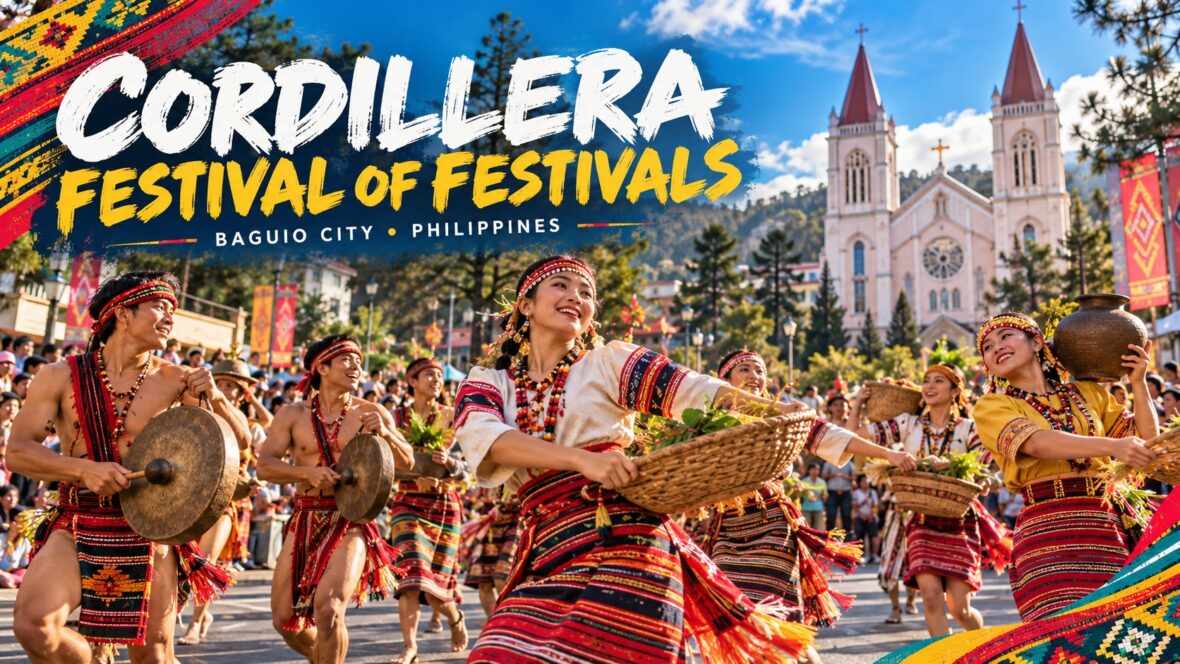
Imagine watching performers in beautifully woven traditional clothing, hearing the rhythmic sounds of indigenous gongs, and seeing dancers from different mountain communities share their stories through music and movement.
Now imagine experiencing several of the Cordillera’s most celebrated festivals in one place.
That’s exactly what the Cordillera Festival of Festivals is all about.
Organized by the Department of Tourism in the Cordillera Administrative Region, the festival brings together cultural performances representing the region’s six provinces and two cities.
From the bamboo traditions of Abra to the thanksgiving celebrations of Apayao, the dances of Benguet, and the rich cultural heritage of Ifugao and Kalinga, the event offers a glimpse of what makes the Cordillera region so special.
And while the costumes and performances are certainly worth seeing, the festival has a deeper purpose.
It’s about preserving traditions, celebrating indigenous identities, strengthening regional unity, and sharing the stories of communities whose cultural heritage has been passed down through generations.
If you’re interested in discovering this unique celebration, here’s a comprehensive guide to the Cordillera Festival of Festivals, including its history, meaning, activities, participating festivals, and what visitors can expect.
Content
What Is the Cordillera Festival of Festivals?
The Cordillera Festival of Festivals is an annual regional cultural celebration showcasing the festivals, traditions, and indigenous heritage of the Cordillera Administrative Region (CAR).
The event brings together representatives from the six provinces of Abra, Apayao, Benguet, Ifugao, Kalinga, and Mountain Province, along with Baguio City and Tabuk City.
Each participating delegation presents cultural performances that highlight the history, beliefs, customs, and way of life of its community.
These performances may feature traditional dances, indigenous music, chants, cultural clothing, historical storytelling, and symbolic representations of community practices.
Unlike festivals centered on a single town or patron saint, the Cordillera Festival of Festivals serves as a regional gathering.
It provides an opportunity for people from different parts of the Cordillera to celebrate their shared identity while recognizing the traditions that make each community unique.
The event is organized by the Department of Tourism-Cordillera Administrative Region (DOT-CAR), working with local government units, cultural groups, tourism offices, and participating communities.
Baguio City hosted the first five editions, although the festival is beginning to expand to other parts of the region.
More than a tourism event, it has become a platform for promoting cultural understanding and pride in Cordilleran heritage.
What Is the Meaning of the Cordillera Festival?
The Cordillera Festival of Festivals represents unity in cultural diversity.
The Cordillera is home to numerous indigenous peoples, each with its own languages, traditions, community practices, and cultural expressions.
These include the Ibaloy, Kankanaey, Ifugao, Bontok, Kalinga, Isneg, and Itneg peoples, among others.
Although these communities share a geographical region, their cultures are not identical.
Each has developed its own practices influenced by history, ancestral knowledge, agricultural livelihoods, social relationships, and connections to the land.
The festival recognizes those differences while celebrating the broader identity of the Cordillera region.
Its message is that cultural diversity is something to preserve and appreciate.
For visitors, the celebration provides an opportunity to learn about communities that may otherwise be difficult to experience during a single trip.
For participating groups, it offers a venue to share cultural knowledge and strengthen connections with other Cordilleran communities.
And for younger generations, the festival helps keep traditional dances, music, and stories visible and relevant.
History and Origin of the Cordillera Festival of Festivals
The Cordillera Festival of Festivals is a relatively young celebration compared with many of the Philippines’ long-established town fiestas.
Its first edition was held on October 15, 2022, in Baguio City.
The event was initiated by the Department of Tourism-Cordillera Administrative Region as part of efforts to revive tourism and celebrate the cultural resilience of the region following the COVID-19 pandemic.
At the time, tourism destinations across the Philippines were gradually welcoming visitors again after years of restrictions.
For the Cordillera, this created an opportunity to introduce a regional cultural celebration that would bring together the traditions of its different provinces.
The inaugural event featured seven major festivals, representing the region’s six provinces and Baguio City.
These included the Laga Festival of Abra, Say-am Festival of Apayao, Panagbenga Festival of Baguio, Adivay Festival of Benguet, Gotad ad Ifugao, Bodong Festival of Kalinga, and Lang-ay Festival of Mountain Province.
The participating delegations gathered in Baguio for a colorful parade and cultural performances.
The event also coincided with the broader observance of Indigenous Peoples’ Month, making it an appropriate occasion to highlight the region’s cultural heritage.
From a Regional Showcase to an Annual Celebration
Following the inaugural event, the Department of Tourism continued organizing the Cordillera Festival of Festivals.
The second edition took place on November 11, 2023, in Baguio City.
The festival again brought together cultural performances representing different Cordilleran communities.
In 2024, the third edition was held on October 18, featuring traditional dances, regional festival presentations, and performances in Baguio’s city center.
The fourth edition followed on October 24, 2025, with participating groups presenting their respective cultural traditions.
A regional exhibit also showcased local crafts, products, and other elements of Cordilleran heritage.
By its fifth edition in October 2026, the festival had grown into a major regional cultural showcase, featuring more than 500 performers representing the region’s six provinces and two cities.
Its development reflects increasing efforts to bring Cordillera traditions to wider audiences.
Although Baguio served as the original host, the festival’s organizers have also begun exploring opportunities to stage the celebration in other provinces.
This allows more communities to participate not only as performers but also as hosts.
How Is the Cordillera Festival of Festivals Celebrated?
One of the most exciting things about the Cordillera Festival of Festivals is the variety of cultural experiences it brings together.
Each delegation has its own performance, and every presentation tells a different story.
While the activities may vary by edition, several features have become closely associated with the celebration.
1. Grand Street Dancing Parade
The grand parade is one of the festival’s most anticipated highlights.
Performers representing different Cordillera communities gather in colorful traditional and festival-inspired clothing before marching through the designated parade route.
During editions held in Baguio, the celebration has transformed parts of the city’s central streets into a lively cultural showcase.
Groups perform traditional dance movements while carrying instruments, props, woven baskets, and other items associated with their presentations.
Some wear intricately patterned textiles and beadwork, while others carry gongs or symbolic objects.
What makes this parade particularly interesting is that the performances are not all the same.
Each group brings its own rhythms, movements, costumes, and stories.
For spectators, it’s like discovering several different festivals in one morning.
2. Indigenous Cultural Dance Performances
Traditional dancing is one of the most important elements of the festival.
Across the Cordillera, different communities have developed dances associated with thanksgiving, agricultural celebrations, weddings, social gatherings, victories, and other important occasions.
Some dances feature slow, deliberate movements accompanied by gong rhythms.
Others involve synchronized formations, energetic steps, or symbolic gestures connected to the community’s traditions.
During the festival, participating groups present carefully prepared performances inspired by these cultural practices.
It’s important to remember that the dances come from different communities and carry different meanings.
They should not all be treated as one generic Cordillera dance.
One of the purposes of the festival is to help audiences appreciate those distinctions.
3. Traditional Gong Music and Chants
If you’ve ever watched a Cordilleran cultural performance, you’ll probably remember the sound of traditional gongs.
Gongs are important musical instruments in many indigenous communities across the region.
Depending on the community, they are used during celebrations, ceremonies, dances, and social gatherings.
The instruments are played in coordinated patterns, creating distinctive rhythms that accompany movements.
Different communities also have their own musical practices, instruments, and performance traditions.
During the Cordillera Festival of Festivals, visitors may hear gong music, traditional chants, bamboo instruments, and other sounds associated with participating groups.
For many spectators, these performances are among the most memorable parts of the celebration.
But beyond the music itself, they represent forms of cultural knowledge that continue to be practiced and passed on.
4. Traditional Clothing and Handwoven Textiles
Another fascinating aspect of the festival is the clothing worn by performers.
The Cordillera is widely recognized for its weaving traditions, with different communities producing textiles featuring distinctive colors, patterns, and designs.
During the festival, visitors can see examples of traditional attire and performance costumes inspired by these weaving traditions.
These may include woven skirts, loincloths, traditional tops, head coverings, beadwork, and other accessories.
Colors and designs vary depending on the community being represented.
In some cultural settings, particular garments or accessories may communicate identity, status, or ceremonial significance.
That’s why these clothes should be appreciated as more than decorative costumes.
They are connected to the cultural histories of the communities that created them.
The festival provides an opportunity to recognize the skills of local weavers and the importance of preserving traditional craftsmanship.
5. Cultural Storytelling
Unlike ordinary dance competitions where the main attraction may be choreography and entertainment, the Cordillera Festival of Festivals places particular emphasis on storytelling.
Performances may depict agricultural life, community celebrations, thanksgiving rituals, traditional relationships, or important cultural beliefs.
Some groups present stories inspired by ancestral practices.
Others focus on local products, community livelihoods, or the history of a particular festival.
Through music, movements, and symbolic props, the performers introduce audiences to different aspects of Cordilleran life.
This is one reason the festival is especially meaningful.
It allows cultural traditions to be appreciated through performances while also encouraging people to learn about the communities behind them.
6. Regional Products and Cultural Exhibits
Some editions of the festival have also featured exhibits highlighting products, crafts, and traditions from different parts of the Cordillera.
These activities allow visitors to discover another side of the region’s heritage.
For example, the 2025 edition included a multiday exhibit featuring regional products and cultural displays in Baguio City.
Such exhibits can help promote locally produced crafts, woven textiles, and other community products.
They also provide opportunities for local entrepreneurs and cultural practitioners to reach a wider audience.
However, the availability of exhibits, markets, and other activities depends on the official program for each edition.
Festivals Showcased During the Cordillera Festival of Festivals
The biggest attraction of the celebration is the opportunity to experience performances representing the different provinces and cities of the Cordillera.
The exact participating festivals may vary from year to year, but the following celebrations have been represented in different editions.
1. Kawayan Festival – Abra
Abra is known for its diverse cultural communities and its connection to bamboo and local craftsmanship.
The Kawayan Festival celebrates the importance of bamboo in the province’s economy, culture, and traditions.
Bamboo has long been used in various forms of craftsmanship, construction, and everyday life.
During the Cordillera Festival of Festivals, Abra’s delegation has presented performances reflecting the province’s bamboo heritage and the traditions of both lowland and upland communities.
These presentations also help introduce visitors to the cultural diversity of Abra, including the traditions of its Itneg communities.
2. Say-am Festival – Apayao
The Say-am Festival is one of Apayao’s important cultural celebrations.
It highlights the province’s indigenous heritage, particularly traditions associated with the Isneg people.
The celebration is connected to thanksgiving, community gathering, and the preservation of cultural practices.
Traditional music, dances, and ceremonial themes form part of its cultural identity.
When represented during the Cordillera Festival of Festivals, Say-am offers audiences a glimpse into Apayao’s heritage.
It also introduces visitors to a province that remains less familiar to many travelers compared with Baguio or Benguet.
3. Adivay and Bindiyan Traditions – Benguet
Benguet is known for its agricultural communities, mountain landscapes, and indigenous cultural traditions.
One of its best-known celebrations is the Adivay Festival, which brings together residents in thanksgiving and celebration of the province’s heritage.
Benguet has also showcased the Bindiyan or Bendian dance tradition during the regional festival.
Associated particularly with Ibaloy communities, the Bendian is an important cultural dance that has historically been connected to celebrations, victory, and thanksgiving.
The exact performance representing Benguet depends on the edition.
These cultural presentations provide an opportunity to appreciate the province beyond its well-known vegetable farms and mountain destinations.
They highlight the traditions of the people who have lived in the region for generations.
4. Gotad ad Ifugao – Ifugao
Ifugao is internationally known for its rice terraces and remarkable agricultural heritage.
But its cultural identity goes far beyond its famous landscapes.
The Gotad ad Ifugao celebration highlights the traditions, social relationships, and cultural practices of Ifugao communities.
The word “gotad” is associated with a gathering or celebration.
During the Cordillera Festival of Festivals, Ifugao delegations have presented performances featuring traditional dances, agricultural themes, and customs associated with community gatherings and weddings.
These presentations help audiences understand the importance of agriculture, ancestry, and cultural continuity in Ifugao society.
They also remind visitors that the people who maintain the rice terraces have rich living traditions deserving of recognition.
5. Bodong and Tachok-Salip Traditions – Kalinga
Kalinga is known for its strong indigenous identity and cultural heritage.
One important tradition associated with the province is the bodong, a customary peace-pact system that has historically helped regulate relationships between communities.
Kalinga has also been represented by cultural performances featuring the Tachok and Salip dances.
These dances are associated with important social and community occasions.
During the regional festival, performers have used these traditions to present themes of celebration, harvest, and community identity.
The exact performances depend on the communities chosen to represent the province.
For visitors, Kalinga’s participation offers an opportunity to discover the region’s traditions beyond its internationally recognized tattooing heritage.
6. Lang-ay Festival – Mountain Province
The Lang-ay Festival is one of Mountain Province’s most recognized cultural celebrations.
The word “lang-ay” is associated with gathering and celebration.
The festival brings together communities representing the different municipalities of Mountain Province.
It highlights local traditions, agricultural livelihoods, indigenous music, and cultural practices.
During the Cordillera Festival of Festivals, Mountain Province has presented performances associated with thanksgiving, farming, and communal celebrations.
These have included dances and ritual-inspired presentations connected to local agricultural life.
The festival reflects the importance of community relationships and the traditional knowledge preserved across Mountain Province.
7. Panagbenga Festival – Baguio City
Of all the celebrations represented during the Cordillera Festival of Festivals, Panagbenga is probably the most familiar to many Filipino travelers.
Held annually in Baguio City, Panagbenga is famous for its colorful flower floats, street dancing, and floral displays.
The celebration is also known as the Baguio Flower Festival.
During the regional festival, Baguio’s representatives showcase performances inspired by Panagbenga and the city’s heritage.
These presentations may highlight themes involving flowers, nature, community, and the environment.
While Panagbenga itself is held in February and March, its participation in the Cordillera Festival of Festivals allows visitors to experience a smaller cultural presentation associated with the city’s famous celebration.
8. Matagoan and Gabbok Traditions – Tabuk City
Tabuk City, the capital of Kalinga, has also participated in the Cordillera Festival of Festivals.
The city is known for its Matagoan Festival, which celebrates local identity and community unity.
The word “matagoan” is associated with life or a place of living.
In some editions, Tabuk City has also presented other traditions.
One example is Gabbok, a traditional thanksgiving expression associated with the arrival of a family’s firstborn child.
Its presentation incorporates cultural elements such as chants, music, dance, and symbols of blessing.
These performances highlight the importance of family, community relationships, and cultural beliefs among participating Kalinga groups.
They also demonstrate that the festival is not limited to showcasing provincial celebrations.
Cities and individual communities can contribute their own cultural traditions as well.
Why the Cordillera Festival of Festivals Is Important
At first glance, the festival might look like a typical Philippine cultural parade.
There are colorful costumes, music, performances, and enthusiastic spectators.
But the celebration carries greater cultural significance.
Preserving Indigenous Heritage
One of the festival’s most important purposes is to help preserve indigenous cultural traditions.
The Cordillera is home to communities whose music, weaving, storytelling, dances, and customary practices have been maintained across generations.
However, like many cultural traditions around the world, these practices face challenges.
Modernization, migration, changes in livelihoods, and the declining number of cultural practitioners can affect how traditions are passed on.
By providing a platform for cultural presentations, the festival helps strengthen public interest in these traditions.
It also recognizes the work of elders, cultural leaders, artists, musicians, and community members who help preserve them.
Educating Younger Generations
The festival offers opportunities for younger Cordillerans to become involved in cultural performances.
Students and young performers can learn about traditional dances, music, clothing, and the stories behind them.
For some participants, preparing for a festival performance can become an introduction to their community’s cultural history.
Of course, preserving traditions requires more than rehearsing a performance.
It also involves learning from the communities and cultural knowledge holders who understand their original significance.
Nevertheless, festivals can help encourage younger generations to take greater interest in their heritage.
Promoting Responsible Cultural Tourism
Another important goal of the festival is to encourage tourism that respects local communities.
The Cordillera has many popular destinations, but tourism can sometimes focus heavily on scenery and attractions without giving equal attention to the people and cultures of the region.
The Cordillera Festival of Festivals provides an opportunity to change that.
Rather than viewing indigenous traditions as entertainment alone, visitors are encouraged to understand their cultural meaning.
This approach recognizes that cultural tourism should benefit communities while respecting their identities, values, and traditions.
Strengthening Regional Unity
The Cordillera Administrative Region includes communities with different histories, languages, and cultural practices.
Despite these differences, they share a broader regional identity.
The festival brings these communities together through a common celebration.
Participants have an opportunity to present their traditions, meet performers from other areas, and strengthen relationships across the region.
In this sense, the festival celebrates both diversity and unity.
When Is the Cordillera Festival of Festivals Held?
The Cordillera Festival of Festivals is generally held during the latter part of the year, with recent editions taking place in October or November.
Unlike festivals with a permanent annual date, its schedule has changed between editions.
Previous celebrations include:
- October 15, 2022 – First edition
- November 11, 2023 – Second edition
- October 18, 2024 – Third edition
- October 24, 2025 – Fourth edition
- October 17, 2026 – Fifth edition
The October editions have been associated with Indigenous Peoples’ Month, which is observed nationwide to recognize the contributions and rights of indigenous communities.
Tourism officials have expressed interest in establishing the third weekend of October as a regular schedule.
However, travelers should still confirm the official date because future arrangements may change.
Where Is the Cordillera Festival Held?
The first five editions of the Cordillera Festival of Festivals were held in Baguio City.
The city served as the primary gathering place for participating delegations from across the region.
Major performances have taken place along Session Road and in nearby locations such as Malcolm Square.
The central location made it possible for spectators to watch several cultural presentations within a relatively small area.
However, the festival is not permanently tied to Baguio.
The Department of Tourism has begun expanding the celebration to other provinces.
Kalinga was selected to host the sixth edition in 2027, marking the festival’s first planned staging outside Baguio.
For visitors, this means the venue should always be checked before planning a trip.
What to Expect When Attending the Festival
If you’re visiting the Cordillera Festival of Festivals for the first time, expect a celebration that is quite different from some of the Philippines’ more commercialized festivals.
The atmosphere is centered on cultural performances and regional heritage.
You’ll see participants wearing traditional textiles, hear indigenous musical instruments, and watch dances that represent different communities.
Some performances are energetic and celebratory.
Others may be more solemn or reflective, depending on the traditions being represented.
One of the best things about the event is that each delegation offers something different.
You might watch a performance inspired by agricultural thanksgiving, followed by another depicting a wedding tradition or community celebration.
Even if you’re not familiar with Cordilleran culture, the festival provides an introduction to the region’s diversity.
And if you enjoy cultural photography, there are plenty of opportunities to appreciate traditional clothing, musical instruments, and carefully choreographed performances.
Just remember to respect the participants and ask permission when appropriate, especially when photographing individuals or cultural activities outside the public performance.
How to Get to the Cordillera Festival of Festivals
Because the host location can change, your travel route will depend on where the particular edition is being held.
For editions staged in Baguio City, the following transportation options are useful.
From Manila to Baguio
Baguio is accessible by bus and private vehicle from Metro Manila.
Several bus companies operate services connecting Metro Manila with Baguio City.
Common departure areas include terminals in Cubao and Pasay, although operators and routes may change.
Bus travel usually takes around five to seven hours, depending on road conditions, traffic, and the type of service.
Travel times can be longer during weekends, holidays, and busy tourism periods.
If you’re visiting during the festival, consider booking your transportation early.
From Other Parts of Luzon
Travelers coming from Central Luzon, Pangasinan, La Union, and nearby provinces can reach Baguio through various road routes and bus services.
Depending on your starting location, direct transportation may be available.
If not, you may need to transfer at a major transportation terminal.
Always confirm current routes and schedules before departure.
Getting Around the Festival Area
For editions held in central Baguio, walking has often been the most practical way to explore the parade and performance areas.
Major streets may be temporarily closed to accommodate the event.
Visitors should check official traffic advisories, especially if traveling by private vehicle or using taxis.
For future editions outside Baguio, transportation arrangements will depend on the host province and designated festival venues.
Tips for Attending the Cordillera Festival
A little preparation can make your festival experience more comfortable and enjoyable.
1. Check the Official Schedule
The festival does not have a permanently fixed date.
Before planning your trip, check the announcements from DOT-CAR and the host local government.
Make sure to confirm the parade route, performance venue, starting time, and any additional exhibits or activities.
2. Arrive Early
Popular viewing areas can become crowded during the main cultural parade.
Arriving early gives you time to find a suitable location and watch the participating delegations as they arrive.
For photographers, getting a good position before the performances begin can make a big difference.
3. Wear Comfortable Clothing
The Cordillera has cooler weather than many lowland destinations, especially in places such as Baguio.
However, outdoor festival activities can still involve several hours of walking or standing.
Wear comfortable shoes and bring a light jacket if needed.
4. Be Prepared for Rain
Rain can occur in the Cordillera even during the latter months of the year.
Bring a compact umbrella or raincoat, particularly if the event includes outdoor performances.
Wet roads and changing weather can also affect travel times.
5. Respect Indigenous Cultural Traditions
This is probably the most important reminder when attending the festival.
Not every dance, costume, chant, or musical performance is simply for entertainment.
Some practices have ceremonial, historical, or spiritual significance to the communities that perform them.
Avoid touching performers’ clothing, instruments, or cultural objects without permission.
And while photography is usually part of public festival coverage, respect any restrictions communicated by organizers or cultural representatives.
6. Support Local Products
If the festival includes exhibits or community markets, consider purchasing products made by local artisans.
Handwoven textiles, traditional crafts, and locally produced goods offer opportunities to support Cordilleran livelihoods.
When buying cultural products, look for sellers who can explain where their items come from and how they are made.
Cordillera Festival vs. Panagbenga Festival
Some visitors may wonder whether the Cordillera Festival of Festivals is the same as Panagbenga.
The answer is no.
Although both celebrations have been held in Baguio City, they are different events.
Panagbenga is Baguio’s annual flower festival, traditionally celebrated in February and March.
Its major attractions include floral floats, street dancing, flower displays, and other events connected to the city’s identity.
The Cordillera Festival of Festivals, meanwhile, is a regional cultural gathering organized to showcase traditions from across the Cordillera Administrative Region.
It features performances representing different provinces and cities rather than focusing exclusively on Baguio.
Panagbenga may be one of the participating festivals, but the regional celebration includes many other cultural traditions.
Cordillera Festival vs. Adivay Festival
Another celebration sometimes associated with the Cordillera is the Adivay Festival of Benguet.
While both events promote regional culture, they have different purposes.
Adivay is a provincial celebration in Benguet, traditionally held in November.
It highlights the province’s heritage, agricultural achievements, and community traditions.
The Cordillera Festival of Festivals, on the other hand, features celebrations representing multiple provinces and cities.
Benguet’s Adivay and other cultural traditions may be showcased during the regional event, depending on the year’s program.
This means visitors can experience aspects of Benguet’s heritage during the Cordillera Festival of Festivals without attending Adivay itself.
However, those interested in the full provincial celebration should plan a separate visit during its official schedule.
Frequently Asked Questions About the Cordillera Festival
What is the Cordillera Festival of Festivals?
The Cordillera Festival of Festivals is an annual regional cultural celebration showcasing the traditional dances, music, festivals, and indigenous heritage of the Cordillera Administrative Region in northern Luzon.
Where is the Cordillera Festival celebrated?
The first five editions were held in Baguio City. However, Kalinga has been selected to host the 2027 edition, beginning the festival’s expansion to other parts of the Cordillera.
When is the Cordillera Festival of Festivals?
The festival is generally held in October or November. Its exact date changes depending on the edition and the official schedule.
When did the Cordillera Festival of Festivals begin?
The festival began on October 15, 2022, in Baguio City. It was initiated by the Department of Tourism-Cordillera Administrative Region.
Who organizes the Cordillera Festival?
The event is organized by the Department of Tourism-Cordillera Administrative Region in partnership with host local government units, provincial tourism offices, participating communities, and other stakeholders.
What are the main activities during the festival?
Major activities have included grand cultural parades, traditional dance performances, indigenous music, regional festival presentations, and cultural exhibits.
The exact lineup varies by edition.
Which provinces participate in the Cordillera Festival?
The festival features traditions from Abra, Apayao, Benguet, Ifugao, Kalinga, and Mountain Province, together with Baguio City and Tabuk City.
Is the Cordillera Festival a religious celebration?
The festival is primarily a regional cultural and tourism event rather than a celebration dedicated to a single religious patron.
However, some of the traditions represented during performances are connected to indigenous beliefs, rituals, and spiritual practices.
Is the Cordillera Festival free to attend?
Past editions have included public parades and cultural performances along city streets. However, admission arrangements for particular venues or activities should be verified with the organizers.
Is the Cordillera Festival the same as Cordillera Day?
No. Cordillera Day is associated with commemorations of Cordilleran history, identity, and Indigenous Peoples’ struggles, with different observances depending on the organizing group.
The Cordillera Festival of Festivals is a separate tourism and cultural showcase initiated in 2022.
Cordillera Festival of Festivals 2026 Schedule and Highlights
The fifth Cordillera Festival of Festivals was held on Saturday, October 17, 2026, in Baguio City.
The event brought together more than 500 cultural performers representing the region’s six provinces and two cities.
The 2026 celebration featured a grand parade through central Baguio, followed by cultural presentations near Upper Session Road.
Participating groups presented traditions associated with the Kawayan Festival of Abra, Say-am of Apayao, Bindiyan of Benguet, Gotad ad Ifugao, Tachok-Salip of Kalinga, Lang-ay of Mountain Province, Panagbenga of Baguio City, and Gabbok of Tabuk City.
2026 Event Details
Date: October 17, 2026 (Saturday)
Location: Baguio City, Benguet
Main Activities: Grand parade and regional cultural performances
Participating Areas: Abra, Apayao, Benguet, Ifugao, Kalinga, Mountain Province, Baguio City, and Tabuk City
Organizer: Department of Tourism-Cordillera Administrative Region, in partnership with the Baguio City Government and participating local government units
The 2026 edition highlighted the theme of unity through cultural diversity and the importance of preserving the heritage of Cordilleran communities.
Kalinga to Host the 2027 Cordillera Festival of Festivals
An important development came during the October 2026 celebration, when Kalinga was announced as the host of the sixth Cordillera Festival of Festivals in 2027.
This marks the first planned staging of the event outside Baguio City.
Tabuk City is expected to serve as the host location.
The change creates an opportunity for visitors to experience the festival in another part of the Cordillera and discover Kalinga’s cultural heritage.
As of October 2026, the exact dates and detailed program for the 2027 celebration have not yet been announced.
Travelers interested in future editions should check official DOT-CAR and host-government announcements before making arrangements.

Final Thoughts
The Cordillera Festival of Festivals is one of those celebrations that offers something more than colorful performances and lively crowds.
It’s an opportunity to discover the diversity of the Philippine highlands.
Through traditional dances, indigenous music, handwoven clothing, and cultural storytelling, the festival brings together communities whose traditions have been preserved across generations.
It also reminds us that the Cordillera is not defined by a single culture.
Every province, every city, and every indigenous community has its own stories, beliefs, and ways of celebrating life.
And that’s what makes the festival meaningful.
For the people of the Cordillera, it is a celebration of heritage, cultural pride, and regional unity.
For visitors, it’s a chance to experience traditions that might otherwise require separate trips to different parts of northern Luzon.
But perhaps the most important thing to remember is that the festival is about more than what happens on stage.
Behind every performance are communities whose traditions continue to shape their everyday lives.
So, whether you’re a traveler who enjoys Philippine festivals, a photographer interested in cultural events, or someone who simply wants to learn more about the country’s indigenous heritage, the Cordillera Festival of Festivals is certainly worth discovering.
Because the real beauty of the celebration isn’t just in the colorful costumes, the rhythmic gongs, or the energetic performances.
It’s in the stories of the people who keep those traditions alive.