When people think about museums near Metro Manila, General Trias probably isn’t the first place that comes to mind.
And that’s precisely why GBR Museum is such an interesting discovery.
Hidden inside Gateway Business Park in Barangay Javalera, General Trias, the Geronimo Berenguer de los Reyes Jr. Museum is surrounded by an environment you wouldn’t normally associate with a heritage museum. Gateway is a modern industrial and business estate, yet tucked inside it is a collection that takes visitors back through some of the most important periods in Philippine history.
There are old photographs of Manila.
Images connected with Jose Rizal, Andres Bonifacio and Emilio Aguinaldo.
Records of the Philippine Revolution and Filipino-American War.
Photographs from the Japanese occupation and the destruction of Manila during World War II.
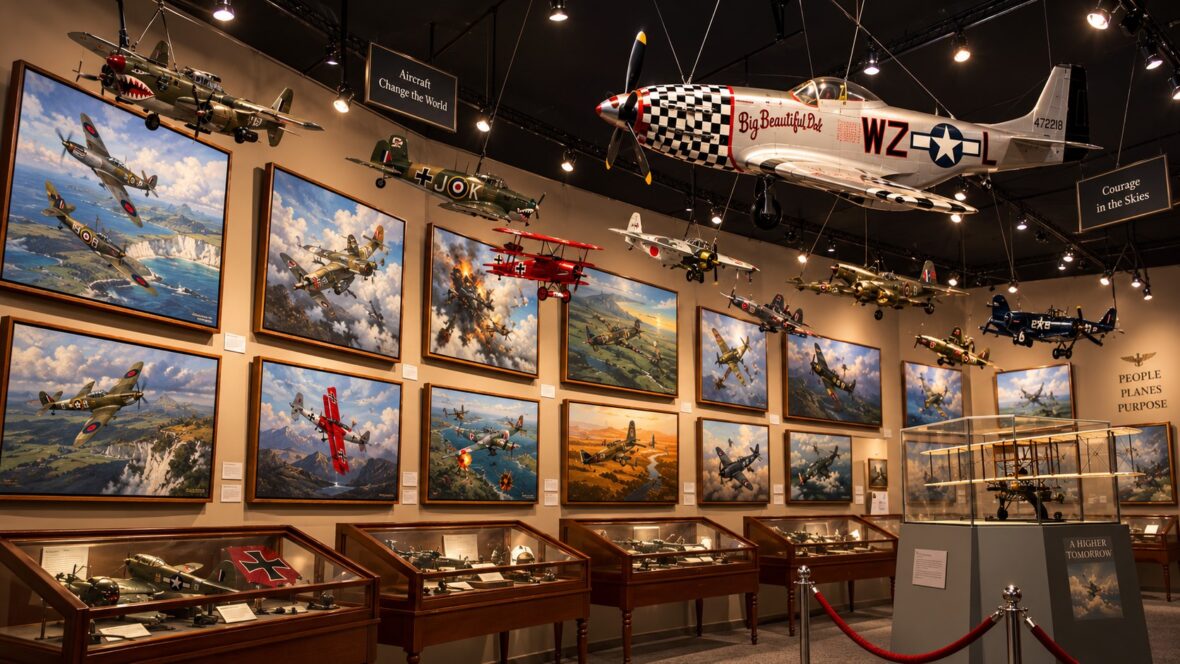
Then, just when you think you’ve figured out what kind of museum this is, you walk into galleries filled with model airplanes tracing the story of aviation from early flight to the space age.
It’s an unusual combination.
And that’s part of what makes GBR Museum worth visiting.
The City Government of General Trias officially includes GBR Museum among the city’s must-see places, while the Cavite Provincial Tourism Office categorizes it as one of the province’s museum and art-gallery attractions.
If you’re exploring GenTri and want something beyond parks, restaurants and newer commercial developments, this is one place you should definitely know about.
Content
GBR Museum at a Glance
| Detail | Information |
|---|---|
| Full name | Geronimo Berenguer de los Reyes Jr. Museum |
| Common name | GBR Museum |
| Location | Gateway Business Park, Barangay Javalera, General Trias, Cavite |
| Main focus | Philippine history, vintage photography, aviation, art and historical memorabilia |
| Established | 1996 |
| Latest visitor-reported entrance fee | ₱100 regular; ₱80 seniors and students with ID |
| Current 2026 hours listing | 9:00 AM–3:00 PM, Tuesday to Sunday |
| Closed | Monday according to the latest 2026 travel listing |
| Best for | History lovers, students, families, aviation enthusiasts and photographers |
| Suggested visit | Around 1.5 to 3 hours |
| General Trias tourism contact listing | (046) 885-7027 |
| Cavite tourism listing | 0998-953-7417 and additional landlines |
There is an important note about the schedule. A travel listing updated in May 2026 gives museum hours as 9:00 AM to 3:00 PM from Tuesday to Sunday, while an older CAVITEX visitor guide lists 8:00 AM to 5:00 PM. Because the current General Trias and Cavite tourism pages don’t publish operating hours, I strongly recommend calling the museum before making a special trip.
What Is GBR Museum?
GBR stands for Geronimo Berenguer de los Reyes Jr., the Filipino businessman, philanthropist and collector whose historical holdings became the foundation of the museum.
General Trias’ own development plan identifies the late Geronimo Berenguer de los Reyes Jr. as an entrepreneur and guardian of historical records who collected photographs, artwork and paintings that are displayed at GBR Museum.
The museum opened to the public in September 1996 and is operated through the GBR Foundation. Its purpose has always been broader than simply displaying attractive antiques. The collection was assembled to preserve and share Philippine history with students, researchers and ordinary visitors.
And it’s quite a collection.
Gateway Business Park describes the museum as containing authentic 19th- and 20th-century photographs showing old Manila and scenes connected with Philippine conflicts, including the Spanish period and World War II.
That means you’re not just looking at reproductions of familiar pictures from textbooks.
You’re seeing a visual record of how Filipinos lived, dressed, traveled, fought and rebuilt across several historical periods.
An Unexpected Museum Inside an Industrial Park
One of the first things that makes GBR Museum memorable is its location.
Gateway Business Park is a large industrial estate in Barangay Javalera.
You’re driving past factories, landscaped roads and corporate facilities, and then suddenly there’s a museum dedicated to Philippine history.
It feels almost hidden.
CAVITEX describes exactly this contrast, calling GBR Museum a window into the past located in the middle of the ultra-modern Gateway Business Park.
I think that makes arriving here more interesting.
Instead of entering a traditional heritage district filled with ancestral homes, you’re moving from modern industrial Cavite directly into photographs of a Philippines that existed more than a century ago.
Start With the Cavite Mutiny Memorial
Before heading inside, spend some time around the museum entrance.
A memorial commemorating the Cavite Mutiny of 1872 stands here.
This isn’t a random historical event chosen for decoration. There is a family connection.
Geronimo de los Reyes Jr. was descended from Crisanto de los Reyes, who was implicated along with Maximo Inocencio and Enrique Paraiso as supporters of the Cavite uprising. Spanish authorities sentenced the men to exile after the mutiny.
The Cavite Mutiny itself became one of the pivotal episodes leading toward the growth of Filipino nationalism.
It is also inseparable from the story of Fathers Mariano Gomez, Jose Burgos and Jacinto Zamora—Gomburza—who were accused of involvement and executed by garrote.
A 2025 visitor account notes that a granite memorial to the 1872 Cavite Mutiny can still be seen in front of the museum together with a monument honoring Crisanto Mendoza de los Reyes, Maximo Inocencio and Enrique Paraiso.
So your history lesson begins before you even enter the building.
A Museum Built Around Photographs
Photographs are probably the heart of GBR Museum.
We live in a time when thousands of images disappear into our phones every year, so it’s easy to forget how powerful an old photograph can be.
At GBR, a photograph isn’t simply an illustration beside a paragraph of text.
In many cases, it is the historical object.
CAVITEX describes the collection as including photographs from the 19th and early 20th centuries showing everything from Calle Colon in Cebu to the Biak-na-Bato revolutionary headquarters in Bulacan.
You can also encounter photographs connected with major personalities such as Jose Rizal, Juan Luna and Andres Bonifacio.
Seeing historical figures in photographs makes them feel different from the portraits printed in school textbooks.
Suddenly they’re not symbols.
They’re people who actually stood in front of a camera.
The Jose Rizal Execution Photograph
One of the museum’s most famous holdings is connected with the execution of Dr. Jose Rizal on December 30, 1896.
Gateway Business Park describes a mural depicting Rizal’s execution as a centerpiece of the museum’s historical presentation. CAVITEX also identifies a photograph of Rizal’s execution as one of the museum’s prized historical images.
A 2025 visitor report adds an important clarification: visitors were shown an enlarged reproduction associated with the Rizal execution image, while the authentic photograph itself was reportedly not displayed publicly at that time.
That distinction is worth knowing.
Museums often protect fragile original photographs, documents and maps from prolonged exposure to light and environmental conditions.
So even when the original isn’t hanging openly on the wall, the story behind the image remains one of the museum’s major highlights.
Philippine Revolution and Filipino-American War
If you enjoy Revolutionary history, give yourself plenty of time in these sections.
A recent visitor account describes Pavilion C as containing memorabilia related to the Spanish colonial period, Philippine Revolution and Filipino-American War, including material connected with Emilio Aguinaldo.
CAVITEX also notes photographs documenting events during the American period, including Aguinaldo’s surrender.
This is particularly fitting for a museum in Cavite.
You could easily spend the morning here looking at Revolutionary-era images and then continue to other historical destinations elsewhere in the province.
Cavite isn’t merely where many famous Revolutionary landmarks happen to be located.
A large part of the history actually happened here.
World War II and the Destruction of Manila
The historical timeline continues into World War II.
Gateway Business Park specifically mentions World War II imagery among the museum’s important photographic holdings.
CAVITEX describes photographs documenting events including General Douglas MacArthur’s return to the Philippines and the devastating destruction of Manila near the end of the war.
A 2025 visit also documented a pavilion dealing with the Japanese occupation, liberation, postwar period and the Philippines after independence.
These can be some of the museum’s most sobering displays.
Old photographs of destroyed streets and buildings are particularly powerful because you recognize names and locations that still exist today.
The Manila we know was built partly on top of that destruction.
The Aviation Galleries
Then the museum changes gears completely.
You go from wars and revolutions to airplanes.
And surprisingly, it works.
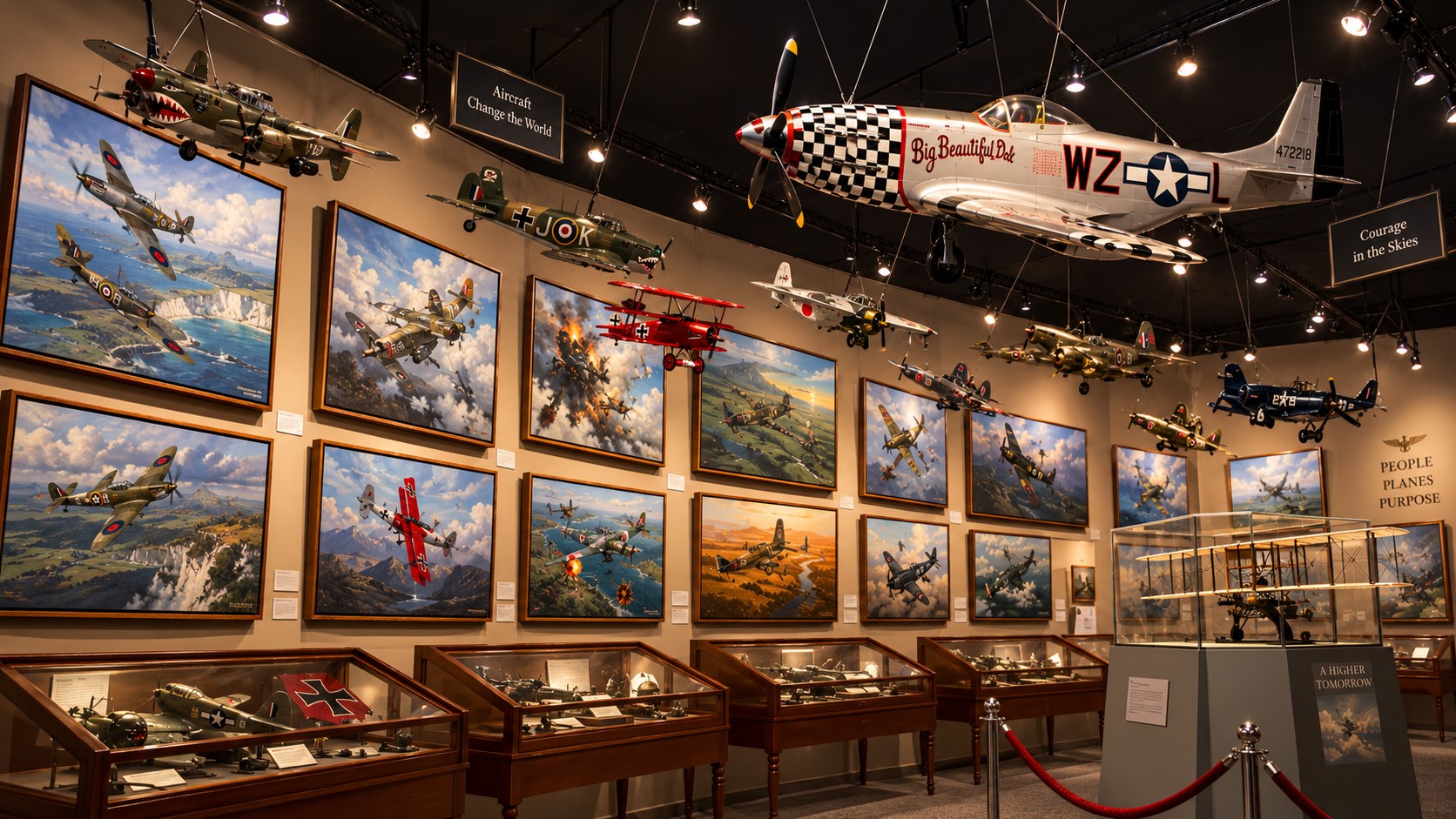
Two museum areas are devoted to aviation history. CAVITEX says the collection contains more than 100 model aircraft from Geronimo de los Reyes Jr.’s personal collection, covering the development of aviation from its earliest years through the space age.
The models represent aircraft from countries including France, Germany and the United States.
You’ll also find aviation prints, replicas and paintings. CAVITEX specifically identifies works by American aviation artist Stan Stokes among the collection.
A 2025 visitor described separate General Aviation A and General Aviation B areas, with earlier aircraft represented in one section and more modern aviation in another.
Even visitors who aren’t deeply interested in Philippine history may enjoy this part.
Children especially tend to connect easily with model airplanes.
Why Is There So Much Aviation Material?
The aviation collection makes more sense once you know something about Geronimo de los Reyes Jr.
Before becoming a successful businessman, he worked for Pan American World Airways when he was young. His connection with aviation continued as a personal interest, which helps explain why aircraft models and aviation art became such an important part of his collection.
The museum even preserves memorabilia connected with flight and space exploration, according to recent visitor documentation.
So rather than feeling like a completely unrelated exhibit, the aviation section reveals something about the person behind the museum.
This was not a collection assembled according to a generic museum checklist.
It reflects someone’s lifelong interests.
Historical Maps, Books and Prints
GBR Museum has also been documented as holding collections that go far beyond photography.
Published descriptions of the museum have mentioned rare books, historical maps, woodcut prints, war documents and Chinese ceramics. A detailed profile of the collection describes antique maps connected with European cartographers and historically important maps of the Philippine archipelago.
Some holdings may not always be on public display, and museum exhibits can change over time.
But this is another reason history enthusiasts should avoid treating GBR as a quick 20-minute stop.
There is a lot here once you start reading instead of simply walking past the cases.
How Is the Museum Arranged?
Different published guides use slightly different language for the museum layout.
CAVITEX describes five pavilions covering Philippine history, aviation and art. A visitor who toured the museum in June 2025 described six distinct exhibit areas: Pavilion A, Pavilion B, General Aviation A, General Aviation B, Pavilion C and Pavilion D.
The exact labeling matters less than the general flow.
You move through different historical periods and themes instead of encountering one huge room filled with unrelated artifacts.
Expect sections dealing with:
- Geronimo de los Reyes Jr. and his collection
- early Philippine life and historical photographs
- the Spanish colonial and Revolutionary periods
- the Filipino-American War
- aviation history
- World War II and liberation
- the postwar Philippines
If you’re visiting with children or students, giving them one historical theme to look for can make the experience more engaging.
GBR Museum Entrance Fee
The latest firsthand visitor report I found, published after a June 2025 visit, listed the following admission prices:
| Visitor | Reported Admission |
|---|---|
| Regular visitor | ₱100 |
| Senior citizen | ₱80 |
| Student with ID | ₱80 |
| Student tour groups | Special discounted rates may be available |
Those amounts match the fee previously published by CAVITEX.
However, I have not found a 2026 entrance-fee table on either the current General Trias tourism page or the Cavite Provincial Tourism site.
For that reason, treat these prices as the latest publicly documented rates rather than a guarantee.
Call before visiting if the exact fee matters to your trip.
GBR Museum Opening Hours
This part requires a little explanation because online sources currently disagree.
A General Trias travel guide updated in May 2026 lists GBR Museum as open:
Tuesday to Sunday: 9:00 AM to 3:00 PM
Monday: Closed
An older CAVITEX guide lists:
Tuesday to Sunday: 8:00 AM to 5:00 PM
Open on holidays
Because neither the current General Trias tourism page nor the provincial tourism directory publishes operating hours, I would not arrive at 4:00 PM assuming the older 5:00 PM closing time is still valid.
The safest approach is simple:
Call first.
This is especially important if you’re driving from Metro Manila specifically for the museum.
GBR Museum Contact Information
The current General Trias tourism page lists the museum at Gateway Business Park in Barangay Javalera and provides the contact number:
(046) 885-7027
The current Cavite Provincial Tourism directory also lists:
0998-953-7417
(046) 509-4111
(046) 509-4149
(046) 433-0313
(046) 433-0021
(02) 892-2916
Since several numbers appear across official tourism listings, trying the General Trias tourism number or the mobile number first may be easiest.
Where Is GBR Museum?
GBR Museum is inside Gateway Business Park along Crisanto M. De Los Reyes Avenue in Barangay Javalera, General Trias, Cavite.
The Cavite Provincial Tourism Office currently lists the address as Gateway Business Park, Crisanto M. De Los Reyes Avenue, General Trias, Cavite.
Don’t confuse this with General Trias’ old poblacion.
The museum is on the Javalera side of the city, farther inland toward the Amadeo and Trece Martires area.
This is another example of why you should never simply tell a driver, “GenTri.”
General Trias is huge.
Always give the exact attraction.
How to Get to GBR Museum
Driving is by far the easiest way to visit.
From the Metro Manila side, CAVITEX publishes a route passing through Kawit, General Trias Drive, Governor Ferrer Drive and eventually Crisanto M. De Los Reyes Avenue before entering Gateway Business Park.
The exact best route now depends on your starting point and current traffic, so I would use your navigation app rather than following an old turn-by-turn route blindly.
Search:
“GBR Museum General Trias”
or
“Gateway Business Park Javalera”
Once inside Gateway Business Park, follow the estate’s directions toward the museum.
For commuters, the journey is more complicated because Gateway Business Park isn’t on the typical tourist corridor. Depending on where you’re coming from, you’ll likely need a combination of Cavite-bound public transportation followed by a jeepney or tricycle connection toward Javalera.
If commuting, contact the museum or ask local drivers for the most current connection before traveling.
What Else Is Near GBR Museum?
One advantage of visiting GBR Museum is that you can easily turn it into a larger Javalera and General Trias day trip.
Our Lady of Guadalupe Parish Church stands beside the Gateway Business Park area and is itself included among General Trias’ official tourist attractions. Eagle Ridge Golf & Country Club is also in Javalera, while Kaway’an EcoPark is farther along the General Trias interior in Barangay Panungyanan.
A nice full-day combination would be:
GBR Museum in the morning, Our Lady of Guadalupe Parish Church afterward, lunch somewhere around GenTri, and Kaway’an EcoPark for the afternoon.
That gives you history, architecture, food and nature without leaving General Trias.
Our Lady of Guadalupe Parish Church
Since you’re already at Gateway Business Park, this is one nearby stop I wouldn’t skip.
Gateway Business Park identifies Our Lady of Guadalupe Church as one of the facilities beside the estate, while General Trias tourism also promotes it as a local attraction.
It’s convenient enough to combine with the museum and gives your trip another dimension.
Just remember that it’s an active Catholic church, so visit respectfully.
Is GBR Museum Good for Children?
Yes, particularly school-age children.
The historical photographs make many lessons from textbooks more visual, while the aviation galleries provide something completely different once younger visitors start getting tired of reading historical captions.
Gateway Business Park specifically notes that schoolchildren visit the museum throughout the year, and student groups have historically been offered special admission arrangements.
If you’re bringing children, don’t try to explain every exhibit.
Choose a few stories.
Ask them to find the oldest photograph.
Let them choose their favorite airplane.
Talk about Rizal or the Cavite Mutiny.
Museums become much more enjoyable when they don’t feel like surprise exams.
Is GBR Museum Good for History Lovers?
Absolutely.
In fact, history enthusiasts are probably the people who will appreciate GBR most.
What makes the collection unusual isn’t simply the number of artifacts.
It’s the way photographs allow you to see the Philippines at different points in time.
Colonial streets.
Revolutionaries.
War.
Occupation.
Liberation.
Postwar rebuilding.
Instead of looking only at swords, uniforms and statues, you’re looking directly into captured moments.
For anyone who enjoys old photographs, you can easily spend more time here than expected.
Is It Good for Aviation Enthusiasts?
Definitely.
The aviation galleries are substantial enough that they aren’t just a small side display.
With more than 100 aircraft models documented in the collection, along with aviation art and material extending into space exploration, this part alone makes GBR unusual among Philippine local museums.
It is especially interesting that the aviation collection sits beside Philippine historical exhibits.
There aren’t many places where you can study the Cavite Mutiny, Jose Rizal and the evolution of aircraft during the same museum visit.
How Long Should You Spend at GBR Museum?
I’d recommend at least 90 minutes.
Two hours is better.
If you’re someone who actually reads captions and studies old photographs, three hours would not be unreasonable.
Don’t arrive 30 minutes before closing and expect to appreciate the collection properly.
The museum looks relatively modest from the outside, but there’s more material inside than you might expect.
Best Time to Visit
A weekday morning would be my first choice.
You have less risk of encountering a large school group, and starting early gives you plenty of time to continue to another General Trias attraction afterward.
Rainy days are also perfect for a museum visit.
In fact, that’s one of GBR’s advantages compared with outdoor attractions.
If Cavite weather suddenly turns bad and your Kaway’an or park plans don’t look promising, spending a few hours surrounded by Philippine history isn’t a bad Plan B at all.
Photography Inside GBR Museum
Museum photography policies can change depending on the gallery and individual object.
Some historical photographs and fragile materials may have restrictions.
So don’t assume you can photograph everything simply because you paid admission.
Ask the staff first.
And if photography is permitted, avoid using flash around old photographs, maps and documents unless specifically allowed.
Sometimes the best museum visit is one where you actually look at the collection instead of experiencing everything through your phone screen.
Tips Before Visiting
The most important tip is to contact the museum first.
The hours currently published online aren’t consistent, and the latest admission rates aren’t posted on the current official tourism directories.
Bring a valid ID if you’re a student or senior hoping to use the discounted rate documented in recent visitor reports.
Give yourself at least an hour and a half.
If you’re driving, navigate directly to Gateway Business Park in Javalera rather than the General Trias poblacion.
For school groups, call ahead because the museum has accommodated educational tours and special group rates in the past.
And don’t skip the memorial outside.
It’s part of the museum experience, not merely something decorating the entrance.
A Suggested Half-Day GBR Museum Itinerary
Here’s an easy way to plan your visit.
9:00 AM – Arrive at Gateway Business Park
Confirm the museum is open and proceed to the entrance.
9:15 AM – Cavite Mutiny Memorial
Spend a few minutes outside before entering.
Read about Crisanto de los Reyes, Maximo Inocencio and Enrique Paraiso.
9:30 AM – Historical Galleries
Begin with the photographs and Philippine historical exhibits.
Take your time with the Revolutionary and Rizal collections.
10:30 AM – Aviation Galleries
Explore the aircraft models, aviation paintings and space-related displays.
11:15 AM – Finish Remaining Exhibits
Return to anything you rushed through earlier.
11:45 AM – Our Lady of Guadalupe Parish Church
Stop by the nearby church before leaving the Gateway area.
12:30 PM – Lunch
Head toward another part of General Trias for lunch.
From there, you can continue to Kaway’an EcoPark or another attraction for the afternoon.
Frequently Asked Questions About GBR Museum
What does GBR Museum stand for?
GBR refers to Geronimo Berenguer de los Reyes Jr., the businessman, philanthropist and collector whose historical collections helped establish the museum.
Where is GBR Museum?
It is located inside Gateway Business Park in Barangay Javalera, General Trias, Cavite. The Cavite Provincial Tourism Office lists the address along Crisanto M. De Los Reyes Avenue.
How much is the GBR Museum entrance fee?
The latest firsthand visitor report I found lists ₱100 for regular visitors and ₱80 for students and seniors with valid IDs. Student groups may receive special rates. Because a current 2026 official fee schedule isn’t posted online, verify before visiting.
What are GBR Museum’s opening hours?
A travel listing updated in May 2026 says 9:00 AM to 3:00 PM Tuesday through Sunday, closed Monday. An older CAVITEX page lists 8:00 AM to 5:00 PM, so calling ahead is strongly recommended.
What can you see inside GBR Museum?
The museum contains historical photographs, Philippine Revolutionary and wartime materials, Jose Rizal-related displays, aviation exhibits, model airplanes, art and other historical collections.
Does GBR Museum have airplanes?
It has more than 100 documented model aircraft representing the history of aviation, from early flying machines through modern aviation and space travel.
Is there a Jose Rizal exhibit?
Yes. The museum is known for historical material connected with Rizal, including imagery related to his execution on December 30, 1896.
Is GBR Museum good for students?
Yes. Gateway Business Park notes that schoolchildren visit the museum throughout the year, and group discounts have previously been available for student tours.
Why GBR Museum Deserves More Attention
General Trias has no shortage of new things.
New communities.
New roads.
New commercial developments.
New restaurants.
New attractions.
But GBR Museum offers almost the opposite experience.
It asks you to look backward.
And that’s valuable in a city changing as quickly as GenTri.
Inside Gateway Business Park, surrounded by modern industry, you can look at photographs showing Filipinos more than a century ago.
You can see images connected with Rizal and Bonifacio.
You can trace the upheavals of the Revolution.
You can look at Manila before and after war transformed it.
Then you can step into another room and watch aviation evolve through miniature aircraft.
It’s a strange combination on paper.
In person, that’s what gives the museum personality.
Is GBR Museum Worth Visiting?
Yes, especially if you enjoy history.
I wouldn’t describe it as a flashy modern interactive museum.
That’s not really the point.
GBR’s strength is the collection.
The photographs.
The documents.
The stories.
The airplanes.
The connection between one collector’s personal interests and much larger chapters in Philippine history.
It is also one of those attractions that reminds you how easy it is to overlook places close to home.
You don’t necessarily need to drive all the way to Manila’s museum district to spend a meaningful morning looking at Philippine history.
There’s a fascinating museum sitting quietly inside a business park in General Trias.
Final Thoughts
GBR Museum may be one of the most underrated attractions in General Trias.
It doesn’t have the visual spectacle of Kaway’an EcoPark.
It doesn’t have the centuries-old façade of GenTri Church.
It isn’t somewhere you visit for sunset photos or a picnic.
Instead, GBR gives you something else.
Perspective.
Old photographs show what Philippine streets looked like before any of us were born.
Images of war show how much was lost.
Revolutionary material reminds us that names we encounter in textbooks belonged to real people.
The Cavite Mutiny memorial connects national history with the family behind the museum.
And the aviation galleries remind you that the person who assembled much of this collection had his own passions and curiosities.
That’s what makes the place feel personal rather than institutional.
So if you’re exploring General Trias and want to discover a side of the city that doesn’t revolve around malls, subdivisions or new developments, make time for GBR Museum.
Call ahead.
Give yourself a couple of hours.
Read the captions.
Look closely at the photographs.
And don’t rush.
Sometimes the most interesting way to understand where a place is going is to spend a little time looking at where the country has already been.