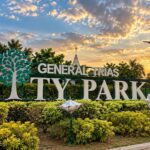
There are fiestas that feel like a one-day celebration, and then there are fiestas that seem to take over an entire city.
The General Trias City Fiesta definitely belongs to the second group.
Every October, the old center of GenTri becomes noticeably different. Bands fill the streets with music. Devotees gather around the historic San Francisco de Malabon Parish Church. Families prepare food at home. Processions move through the poblacion. Pets arrive with their owners for a blessing. And during the Karakol, crowds dance through the streets as an expression of thanksgiving and devotion to the city’s patron saint.
At the center of everything is St. Francis of Assisi.
But in General Trias, almost everyone knows him by a much warmer name:
Tata Kiko.
The annual Town Fiesta is officially celebrated every October 4 in honor of St. Francis of Assisi, and the City Government of General Trias identifies activities such as the Karakol, Pabialahay, Grand Pasayo, Grand Parish Procession and Palarong Pinoy as established parts of the city’s fiesta tradition.
If you want to experience one of the most deeply rooted traditions in General Trias, this is one of the best times of the year to visit.
Content
General Trias City Fiesta at a Glance
| Detail | Information |
|---|---|
| Celebration | General Trias Town Fiesta / Pistang Tata Kiko |
| Main feast day | October 4 |
| Patron saint | St. Francis of Assisi |
| Local name | Tata Kiko |
| Main church | San Francisco de Malabon Parish Church |
| Main area | Poblacion / old General Trias town center |
| Major traditions | Karakol, Pabialahay, Grand Pasayo, parish processions, Masses and Palarong Pinoy |
| Novena Mayor | Traditionally September 25 to October 3 |
| Best for visitors | Culture, religious tradition, street photography, local food and community celebrations |
| Admission | Public fiesta activities are generally free, although individual events may have their own arrangements |
The official city tourism page describes the fiesta as a highly anticipated annual celebration for both GenTriseños and visitors, with activities beginning before the actual October 4 feast day.
Why Does General Trias Celebrate on October 4?
October 4 is the feast day of St. Francis of Assisi.
The Diocese of Imus identifies St. Francis as the patron of the historic San Francisco de Malabon Parish in General Trias and lists October 4 as his official feast day.
The connection runs much deeper than the name of a church.
Before General Trias became General Trias, the town was called San Francisco de Malabon. The city government traces the municipality to December 13, 1748 and says it was named after St. Francis of Assisi.
So the patron saint is tied directly to the old identity of the town.
Long before the city had huge subdivisions, business parks, townships and modern commercial districts, San Francisco de Malabon already gathered around its church and patron.
That helps explain why the fiesta remains such an important tradition even as General Trias becomes increasingly urban.
Who Is Tata Kiko?
Tata Kiko is the affectionate local name for St. Francis of Assisi.
“Kiko” is a familiar Filipino nickname for Francisco, while “Tata” is an old respectful term that conveys affection for an elder or father figure.
Calling the patron Tata Kiko makes the devotion feel personal.
This isn’t simply “the Feast of St. Francis of Assisi” written formally on a calendar.
For many families, Tata Kiko feels almost like a familiar presence that has accompanied generations of GenTriseños through baptisms, weddings, funerals, fiestas and ordinary Sunday Masses.
That relationship becomes especially visible during fiesta season.
The Historic GenTri Church Is the Heart of the Celebration
The religious center of the fiesta is San Francisco de Malabon Parish Church, also called St. Francis of Assisi Parish Church or simply GenTri Church.
The church itself is one of the most historically important landmarks in General Trias.
The National Historical Commission records that the first chapel was established by Franciscan missionaries in 1611, when the settlement was still a visita of Kawit. It became an independent parish in 1753, while construction of the stone church began in 1769.
The building also has a famous connection to the Philippine National Anthem.
The Banda Matanda rehearsed the Marcha Filipina inside the church before performing the composition during the proclamation of Philippine independence in Kawit on June 12, 1898.
So during fiesta season, people are gathering around a church that isn’t only religiously important to General Trias.
It is also part of Philippine history.
The Fiesta Is More Than October 4
One thing first-time visitors should understand is that the General Trias Fiesta isn’t really confined to one day.
October 4 is the official feast day, but preparations and religious activities begin earlier.
A locally produced General Trias cultural reference documents a traditional sequence that includes an Opening Salvo before the Novena Mayor, followed by the Novena Mayor from September 25 to October 3, the Karakol around October 2, the Transitus on the evening of October 3, fiesta Masses and procession on October 4, and a grand procession involving other barangay patrons afterward.
Individual schedules can vary from year to year, so those dates should be treated as the traditional pattern rather than a guarantee of the exact program every October.
The city itself officially recognizes the larger fiesta season and notes that programs and preparations usually begin before October 4.
The Opening Salvo
The Opening Salvo signals that fiesta season has begun.
This is more than an announcement.
It is the moment when the mood of the town starts changing.
Local documentation describes the Opening Salvo as taking place before the Novena Mayor, with the image of St. Francis participating in activities connected with communities historically associated with old San Francisco de Malabon.
In 2025, for example, the annual opening celebration included a Mass connected with the start of the week-long fiesta period.
From that point onward, you begin seeing more visible signs that October 4 is approaching.
The Novena Mayor
The Novena Mayor is one of the most important religious preparations for the fiesta.
Traditionally held from September 25 through October 3, the nine-day novena brings devotees to prayer and Mass as the feast approaches.
For travelers who want to understand the fiesta beyond the parades and street celebrations, attending one of the novena evenings gives you a completely different perspective.
This is the quieter side of Pistang Tata Kiko.
Before the bands, processions and crowds come prayer.
And for devotees, that’s really where the celebration begins.
Karakol: One of GenTri’s Most Important Fiesta Traditions
If there’s one tradition that visually captures the General Trias Fiesta, it’s the Karakol.
Karakol is a devotional dance performed while participants move through the streets accompanied by lively band music.
But calling it simply “street dancing” misses the point.
Local General Trias cultural materials describe Karakol as a ritual dance through which devotees express prayer, thanksgiving and praise to their patron. Participants traditionally move together in rhythm as the band plays.
That’s what makes Karakol so interesting.
From a distance, it looks festive.
There is music.
There is dancing.
There are crowds.
But underneath the celebration is devotion.
People aren’t necessarily dancing because someone organized a competition or because tourists are watching.
They’re dancing as a form of prayer.
When Is the Karakol?
The traditional General Trias fiesta sequence places the town-wide Karakol around October 2.
However, exact timing and routes can change each year.
If Karakol is the main reason you’re visiting, check the current year’s official schedule from the City Government of General Trias or San Francisco de Malabon Parish shortly before the fiesta.
Don’t rely on a program from a previous year.
Pabialahay: The Famous Blessing of Pets
This might be one of the most charming parts of the GenTri Fiesta.
Pabialahay is the city’s pet-blessing tradition.
The city officially includes it among the recognized Town Fiesta activities and links the event with St. Francis of Assisi’s association with animals and ecology.
Imagine arriving at the plaza in the morning and instead of seeing only devotees, you’re surrounded by dogs, cats and other pets with their owners.
That’s Pabialahay.
In 2024, the program included a pet parade at Plaza Rizal, a blessing of animals and activities involving the City Veterinary Office.
This tradition fits perfectly with St. Francis.
He is one of Christianity’s best-known saints associated with love for animals, nature and creation.
So blessing pets isn’t simply a cute side activity added to attract families.
It connects directly to the spirituality of the patron being celebrated.
Should You Bring Your Pet?
If the current year’s program includes Pabialahay and you plan to participate, make sure your animal can safely handle crowds.
Fiesta streets can be noisy.
Bands are playing.
People are moving everywhere.
Other animals may be nearby.
Bring a leash or secure carrier, water and anything your pet needs.
Most importantly, remember that a fiesta isn’t enjoyable for every animal.
If your dog becomes anxious around loud music or large groups, leaving them at home may actually be the kinder choice.
Grand Pasayo: When the Bands Take Over
Another tradition that gives the General Trias Fiesta its distinctive sound is the Grand Pasayo.
Think marching bands, colorful uniforms, flags, band majors and musicians moving through the town.
The city officially recognizes Grand Pasayo as one of its annual fiesta activities.
General Trias has a particularly meaningful relationship with marching-band culture because a band from old San Francisco de Malabon played Julian Felipe’s composition at the June 12, 1898 independence proclamation in Kawit. The NHCP recognizes that historical connection.
So seeing bands parade through GenTri today has a historical resonance that goes well beyond fiesta entertainment.
Music has been part of the identity of the town for generations.
What Does Grand Pasayo Feel Like?
Loud—in the best possible way.
Different bands move through the streets.
Drums echo between buildings.
Brass instruments carry across the plaza.
Crowds line the route.
Majorettes and band leaders add color and movement.
One older local account described multiple bands representing different communities parading through the town in full costumes during Grand Pasayo.
If you love street photography, this can be one of the best fiesta events to photograph.
Just arrive early enough to find a good position.
Transitus of St. Francis
The evening before the feast has a quieter and more reflective tradition.
The Transitus commemorates the death or “passing” of St. Francis of Assisi.
Local General Trias documentation places the Transitus on the evening of October 3 and describes prayers surrounding an image representing the passing of the saint.
This is one of those parts of the fiesta that tourists can easily overlook because it doesn’t have the visual spectacle of a parade.
But spiritually, it’s important.
If Karakol is energetic devotion, the Transitus is reflective devotion.
Seeing both gives you a much fuller understanding of what Pistang Tata Kiko means.
October 4: Fiesta Day
Then comes the main event.
October 4 is officially the feast day of St. Francis of Assisi and the date recognized by the City Government of General Trias for the annual Town Fiesta.
Historically documented fiesta schedules include several Masses beginning in the morning, followed by processional activities.
The church and surrounding poblacion can become extremely busy.
Families attend Mass.
Devotees visit Tata Kiko.
Visitors arrive from elsewhere in Cavite.
Homes prepare food for relatives and guests.
Streets become crowded.
And the city feels noticeably different from an ordinary day.
If you’re attending Mass specifically, verify the fiesta-day schedule because the ordinary weekly Mass timetable may be replaced by a special feast program.
The Grand Parish Procession
Processions are a central part of traditional Filipino fiestas, and General Trias is no exception.
The city’s tourism ordinance specifically names the Grand Parish Procession as an established Town Fiesta activity.
In the documented local tradition, a larger procession also involves patron images from the city’s barangays following the main feast.
This can be one of the most impressive moments of the entire celebration.
Religious images move through streets that people use every day for work, school and errands.
For a few hours, those ordinary roads become processional routes.
Families stand outside their homes.
Candles appear.
Bands accompany the images.
And the religious identity of the old town becomes visible throughout the community.
Palarong Pinoy
Not everything during fiesta season is solemn.
The city also officially identifies Palarong Pinoy among the annual Town Fiesta activities.
Traditional Filipino games add a community element to the celebration, particularly for children and families.
This is one reason fiestas remain relevant even to people who may not participate in every religious event.
The celebration provides different ways for the community to gather.
Prayer for some.
Music for others.
Games for children.
Food for everybody.
Food Is Half the Fiesta Experience
You can’t talk about a Philippine fiesta without talking about food.
General Trias households traditionally become busy during the fiesta as relatives and friends visit.
Tables fill up.
People move from one house to another.
Someone tells you to eat even if you’ve already eaten twice.
Then another relative asks why you’re not eating.
It’s a familiar Filipino fiesta situation.
One local dish you should know about is Valenciana, a rice dish closely associated with General Trias.
Valenciana even has its own city festival in December, separate from the October Town Fiesta. The city describes it as a paella-like rice dish that symbolizes GenTri’s culinary traditions.
You may find it served during family celebrations and special occasions, although the October fiesta itself should not be confused with the Valenciana Festival.
General Trias Fiesta vs. Valenciana Festival
This distinction is important.
They are not the same festival.
The General Trias Town Fiesta happens on October 4 and honors St. Francis of Assisi or Tata Kiko.
The Valenciana Festival is connected with the city’s founding and cityhood anniversary in December and usually centers on Valenciana cooking, street dancing and field presentations.
So if someone searches for “General Trias festival,” they may encounter both.
Think of it this way:
October is Tata Kiko and the traditional religious town fiesta.
December is the city anniversary and Valenciana Festival.
Both are major General Trias celebrations, but they represent different parts of the city’s identity.
Why St. Francis Fits General Trias So Well
There’s something interesting about General Trias having St. Francis as its patron.
St. Francis is remembered for simplicity, humility, peace, compassion and care for creation.
Modern General Trias, meanwhile, is becoming increasingly urban.
More subdivisions.
More roads.
More businesses.
More industrial and commercial development.
That makes traditions such as Pabialahay and the devotion to a patron associated with nature feel particularly meaningful.
They connect a fast-growing city with an older set of values.
The city may be changing physically, but fiesta season reminds people of the traditions that existed long before the modern skyline.
The Fiesta and Old San Francisco de Malabon
If you’re visiting for the fiesta, spend some time learning the old name of the city.
General Trias was once San Francisco de Malabon.
The municipality took its name from St. Francis, and the old poblacion remains the heart of the traditional fiesta.
This connection makes October a particularly good time to explore the historic center.
You aren’t looking at the church and plaza as museum pieces.
You’re seeing them being used for essentially the same purpose they’ve served for generations:
bringing the community together.
The Fiesta as a Tourism Event
The fiesta has also gained recognition beyond General Trias.
In 2025, the City Government of General Trias received second runner-up recognition in the Religious Festival category of the National Tourism Pearl Awards for “Pistang Tata Kiko: A Soulful Celebration of Faith and Fellowship.”
That’s significant because it recognizes something GenTriseños have known for a long time.
The fiesta isn’t merely a local calendar event.
It is part of the cultural identity of the city.
Visiting the General Trias Fiesta for the First Time
For first-time visitors, my biggest advice is not to treat the fiesta like a single tourist attraction.
Don’t arrive, take a picture of the church and go home.
Walk around.
Listen to the bands.
Watch the devotees.
Visit Plaza Rizal.
Attend Mass if that is meaningful to you.
See Karakol if your schedule allows.
Watch Grand Pasayo.
And most importantly, observe how the community participates.
Fiestas make the most sense when you stop trying to “complete” them and simply experience what is happening around you.
Best Time to Visit During Fiesta Week
If you want the strongest religious experience, October 4 is the obvious choice.
If you want street dancing and energetic crowds, check the year’s Karakol schedule.
If you love marching bands, Grand Pasayo should be high on your list.
If you’re traveling with a pet and want to participate, check the Pabialahay program.
If you prefer something quieter, attending the Novena Mayor on one of the evenings before the feast may actually be more meaningful.
There really isn’t one “best” day.
It depends on what part of the fiesta you’re most interested in.
What About the 2026 General Trias Fiesta Schedule?
The permanent General Trias tourism calendar confirms October 4 as the annual Town Fiesta date and identifies the major traditional activities.
As of September 8, 2026, however, the detailed day-by-day 2026 program does not appear on the city’s main official fiesta page.
That means I would not rely on dates copied from 2024 or 2025 for events such as Pabialahay, Grand Pasayo or the exact Karakol route.
The tradition is consistent.
The specific timetable can change.
Check the City Government of General Trias and San Francisco de Malabon Parish announcements as late September approaches.
Expect Traffic and Road Closures
This part is worth planning for.
The main activities take place around the old poblacion, where roads are already much narrower and busier than the city’s newer developments.
Add processions, bands, crowds and fiesta visitors and traffic becomes inevitable.
If you’re driving, arrive early.
Don’t expect to park immediately beside the church.
Be prepared to walk.
And if your only reason for passing through the poblacion is to get somewhere else, consider an alternate route during major fiesta activities.
Anyone familiar with Cavite knows that “quickly passing through town” and “fiesta day” rarely belong in the same sentence.
What to Wear
For outdoor fiesta activities, choose comfortable clothes and footwear.
October weather can still be hot and humid, and you may spend a long time standing or walking.
Bring an umbrella because it works for both sun and rain.
If you’re entering San Francisco de Malabon Parish Church or attending Mass, dress appropriately for an active place of worship.
For processions and religious activities, remember that you’re witnessing devotion rather than a performance staged purely for visitors.
A little courtesy goes a long way.
Photography Tips
Fiesta season is fantastic for photography.
The colors.
The bands.
Religious images.
Crowds.
Pets during Pabialahay.
The old stone façade of GenTri Church.
Karakol dancers.
You can easily come home with hundreds of images.
But photograph respectfully.
Avoid blocking processions.
Don’t stand directly in front of people praying simply because the light looks good.
Don’t use intrusive flash inside the church during Mass.
And if you’re photographing children or individual devotees closely, basic courtesy still applies.
The best fiesta photos often come from observing rather than directing.
A Suggested Fiesta-Day Experience
If you’re planning your first visit, I would start early around the old town center.
Attend or observe one of the morning religious activities, then spend time around San Francisco de Malabon Parish Church and Plaza Rizal.
Have lunch somewhere in the poblacion or, even better, with friends or relatives in GenTri if you’ve been invited to a traditional fiesta meal.
Return later for whichever major procession, band event or community program is scheduled that year.
Stay into the evening if you want the full atmosphere.
GenTri during fiesta night feels completely different from GenTri on an ordinary weeknight.
Is the General Trias Fiesta Good for Tourists?
Yes, especially if you’re interested in authentic local culture.
But “tourist” probably isn’t even the best way to approach it.
Think of yourself as a visitor to a community celebration.
The fiesta wasn’t created as an attraction for outsiders.
It exists because generations of General Trias residents have continued the devotion to Tata Kiko.
That’s exactly what makes it worth seeing.
You aren’t walking into something built recently for tourism.
You’re entering a living tradition.
Frequently Asked Questions About the General Trias Fiesta
When is the General Trias City Fiesta?
The official Town Fiesta is celebrated every October 4.
Who is the patron saint of General Trias?
St. Francis of Assisi is the patron saint of General Trias and the historic San Francisco de Malabon Parish.
Who is Tata Kiko?
Tata Kiko is the affectionate local name for St. Francis of Assisi.
What is Karakol?
Karakol is a traditional devotional dance accompanied by band music. In General Trias, devotees dance as an expression of prayer, praise and thanksgiving to the patron.
What is Pabialahay?
Pabialahay is the pet-blessing tradition associated with the feast of St. Francis of Assisi, reflecting his connection with animals and creation.
What is Grand Pasayo?
Grand Pasayo is a parade featuring marching bands, an established part of the city’s fiesta program.
Is Valenciana Festival the same as the General Trias Fiesta?
No. The Town Fiesta honors St. Francis of Assisi on October 4. Valenciana Festival is associated with the city’s December founding and cityhood celebrations.
Where is the main fiesta celebration?
The traditional center is the old poblacion around San Francisco de Malabon Parish Church and the town plaza.
When does the fiesta season begin?
Activities usually begin before October 4. The traditional Novena Mayor runs from September 25 to October 3, although the exact annual program should always be confirmed.
Why the General Trias Fiesta Still Matters
General Trias today barely resembles the town that existed a century ago.
The city is larger.
More populated.
More commercial.
More connected to Metro Manila.
Entire new districts are rising.
But every October, something older returns to the center of attention.
The church.
The plaza.
The bands.
The Karakol.
The procession.
The image of Tata Kiko.
Families returning home.
Pets lining up for blessings.
People preparing food.
And streets becoming gathering places instead of simply roads.
That continuity is what makes the fiesta special.
Modern cities sometimes struggle to hold onto traditions because development can make every place begin to look the same.
Shopping malls look alike.
Subdivisions look alike.
Commercial strips look alike.
But Pistang Tata Kiko could only really belong to General Trias.

Final Thoughts
If you want to understand General Trias beyond its new developments, spend some time here during October.
Come to the old poblacion.
See San Francisco de Malabon Parish Church filled with devotees.
Listen to the marching bands.
Watch Karakol move through the streets.
See families bringing their pets for Pabialahay.
Wait for the procession.
And notice how many generations seem to be participating at the same time.
Children are experiencing the fiesta for the first time.
Parents are continuing traditions they grew up with.
Older residents remember fiestas from decades ago.
And at the center of it all is the same patron the old town was named after.
St. Francis of Assisi.
Tata Kiko.
General Trias may continue to modernize, but every October 4, the city remembers where it came from.
And that’s what makes the GenTri Fiesta worth experiencing.