There are Philippine festivals that immediately explain themselves through their names.
A mango festival celebrates mangoes. A coconut festival celebrates coconuts. A fishing festival naturally tells the story of fishermen and coastal life.
Then there is Kaplag Festival in Mahaplag, Leyte.
At first, the name doesn’t immediately tell an outsider what to expect.
But once you understand the meaning behind “Kaplag” and its connection to Mahaplag, the celebration starts to make much more sense.
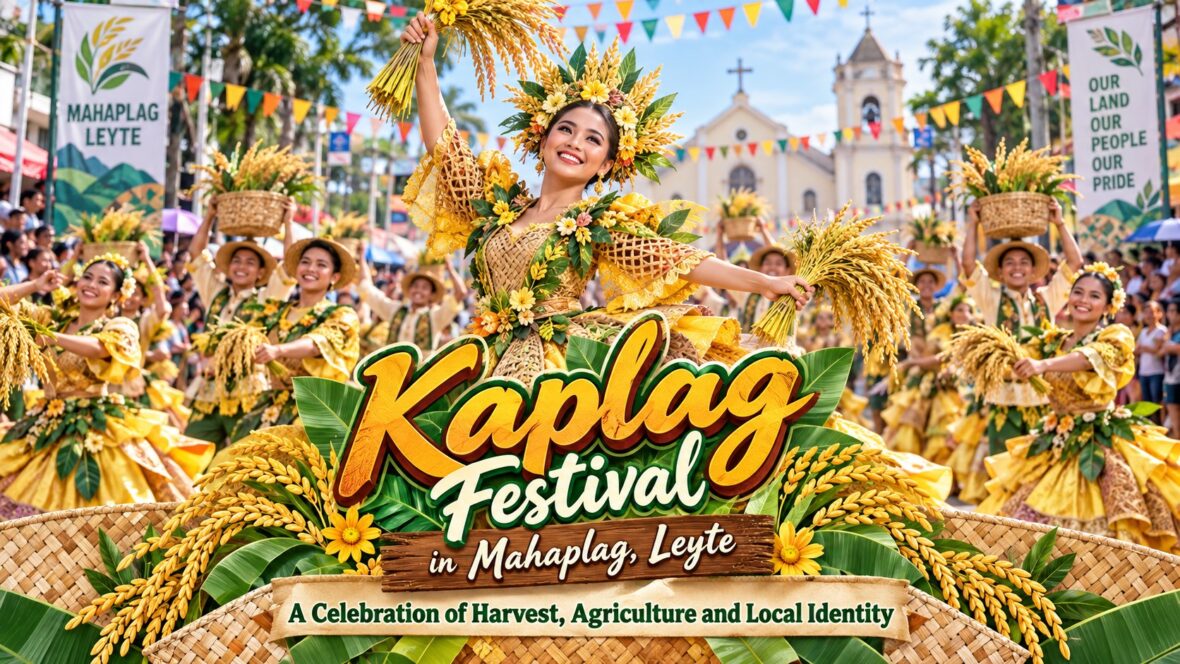
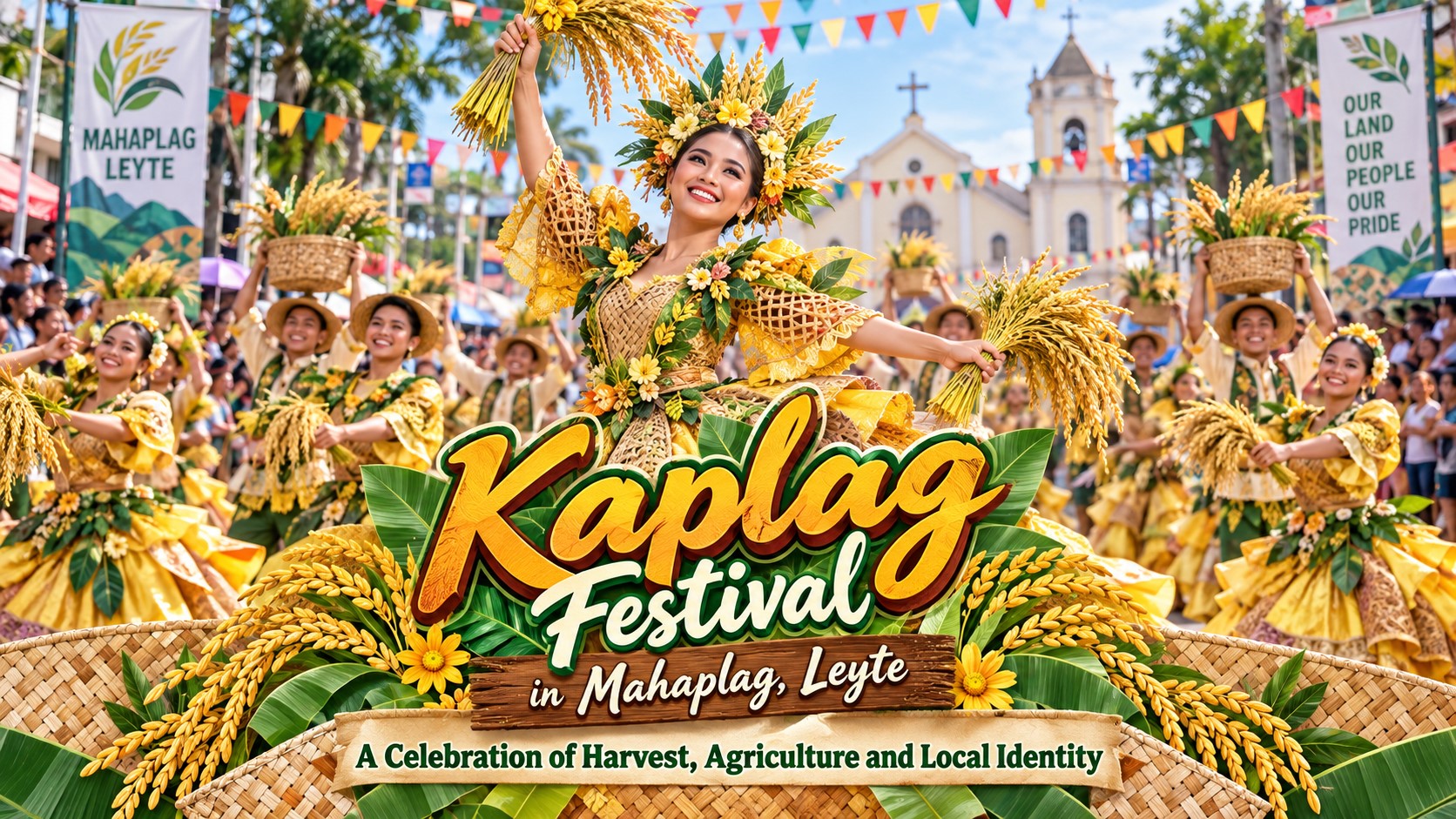
Kaplag Festival is a cultural and agricultural celebration built around the blessings of the land, the abundance of the harvest and the everyday life of the people of Mahaplag. Its most recognizable element is a dance ritual in which performers transform farming, thanksgiving and local traditions into colorful street performances.
The festival is traditionally associated with September 28, just before Mahaplag celebrates the feast of St. Michael the Archangel on September 29. Tourism references describe Kaplag as a dance ritual showcasing Mahaplag’s agricultural blessings and bountiful harvest.
But Kaplag Festival is more than a harvest celebration.
It is also closely tied to the identity of Mahaplag itself.
And that is where the story gets interesting.
Content
What is Kaplag Festival?
Kaplag Festival is an annual cultural festival celebrated in Mahaplag, Leyte.
The celebration highlights the municipality’s agricultural life through dance, music, costumes and community activities.
Older tourism descriptions define Kaplag Festival as a “dance ritual” presenting Mahaplag’s agricultural blessings and abundant harvest. The same descriptions identify “kaplag” as a Visayan term connected with finding or being able to find something.
At its simplest, the festival is a celebration of gratitude.
Farmers plant.
Crops grow.
Families work.
The community waits.
And when the land produces enough to sustain people for another season, there is something worth celebrating.
Kaplag Festival turns that gratitude into public performance.
Agricultural work that normally happens quietly in fields becomes choreography in the streets.
The harvest becomes color.
Farming becomes dance.
And everyday rural life becomes something the whole town can proudly present.
Where is Kaplag Festival celebrated?
Kaplag Festival is celebrated in Mahaplag, a municipality in Leyte province in Eastern Visayas.
Mahaplag is located in the interior part of Leyte and is surrounded by agricultural and forest landscapes.
The municipality was created on July 21, 1958 through Executive Order No. 308 signed by President Carlos P. Garcia. Several barrios and sitios formerly belonging to Abuyog were separated to create the new municipality of Mahaplag.
Its municipal status was later affirmed through Republic Act No. 6529 in 1972, which recognized Mahaplag as a duly constituted municipality effective from July 21, 1958.
Agriculture naturally became an important part of the municipality’s development.
Research on farming in Mahaplag identifies corn, rice and coconut among the area’s important crops, reflecting the strong agricultural character that eventually became part of Kaplag Festival’s identity.
When you understand that background, it becomes easier to see why the festival focuses so heavily on the land and the harvest.
Agriculture isn’t simply a decorative festival theme here.
It is part of everyday life.
What does “Kaplag” mean?
This is one of the most interesting parts of the festival.
Local heritage materials describe “kaplag” as a Visayan term associated with finding or being able to find something.
Other Eastern Visayas cultural accounts place Kaplag Festival among celebrations whose themes are connected with the origins or names of their hometowns.
That connection between “Kaplag” and “Mahaplag” gives the festival another layer of meaning.
It isn’t simply an agricultural festival given a random catchy name.
The word is linked with the identity of the municipality itself.
Some local explanations of the name Mahaplag contrast ideas of hardship or failure with “kaplag,” representing success or finding something valuable. Because the detailed etymology survives mostly through local accounts rather than a single definitive historical document, it is best understood as part of Mahaplag’s local storytelling tradition.
What remains clear is that Kaplag Festival has become closely associated with the town’s name and the idea of discovering or recognizing the blessings found in the community.
And in a farming municipality, many of those blessings quite literally come from the ground.
The beginnings of Kaplag Festival
Kaplag Festival is relatively young compared with centuries-old patronal fiestas in the Philippines.
Local educational heritage materials from the Leyte school system trace the first Kaplag celebrations to the late 1990s.
These materials identify municipal official Aida L. Dizon, a former elementary school teacher and member of the Sangguniang Bayan, as one of the people who initiated the organized festival.
That origin is worth remembering.
Many successful provincial festivals did not begin as enormous tourism events.
They started locally.
Teachers, cultural workers, barangay representatives and municipal officials looked at what made their community distinctive and found a way to present it through dance and celebration.
Kaplag followed that pattern.
Agriculture was already there.
The harvest was already important.
Mahaplag already had its own stories and identity.
The festival simply brought those things together.
Kaplag Festival as a harvest celebration
The agricultural theme is really the heart of Kaplag Festival.
Farming communities understand something that people living far from agricultural areas can easily forget:
a good harvest is never guaranteed.
Farmers can prepare the land correctly.
They can plant at the right time.
They can work for months.
But weather, pests, disease and other conditions can still affect the crops.
Heavy rain can destroy fields.
A lack of rain creates a different problem.
Strong typhoons can undo months of work within hours.
That uncertainty is one reason harvest celebrations appear in agricultural communities around the Philippines.
When the land produces well, people give thanks.
Kaplag Festival expresses that gratitude through dance and community celebration.
The harvest isn’t treated simply as an economic event.
It becomes a blessing.
The dance ritual of Kaplag Festival
The most distinctive cultural side of Kaplag Festival is its dance ritual.
Tourism references specifically describe Kaplag as a performance showcasing Mahaplag’s agricultural blessings and bountiful harvest.
That gives dancers plenty of material to interpret.
Performances can draw inspiration from the different stages of agricultural life:
Preparing the land.
Planting.
Tending crops.
Waiting for rain.
Harvesting.
Gathering produce.
And finally, celebrating the fruits of everyone’s labor.
Instead of explaining this agricultural cycle through a lecture, festival dancers tell the story through movement.
For spectators, this is what makes street dancing interesting.
You don’t simply watch synchronized steps.
You watch a community turn its livelihood into a performance.
Costumes inspired by agriculture
Agricultural festivals naturally lend themselves to creative costumes.
The land provides an enormous visual vocabulary.
There are green leaves.
Golden grains.
Corn.
Rice.
Coconut.
Roots.
Flowers.
Bamboo.
Woven materials.
Farm tools.
Baskets.
And the earthy colors of rural life.
Kaplag Festival performances can use these ideas to create costumes and props that immediately connect dancers with agriculture.
Bright greens can represent growing crops.
Gold and yellow can evoke the harvest.
Brown and natural materials can suggest soil, baskets and traditional farming.
Props can help transform simple choreography into a recognizable farming scene.
What farmers normally carry for work suddenly becomes part of festival storytelling.
Agriculture in Mahaplag
Kaplag Festival becomes easier to appreciate when you understand Mahaplag’s landscape.
Studies of the municipality describe substantial agricultural areas and identify corn, rice and coconut as important crops.
A more recent Department of Agriculture land-use map also identifies large portions of Mahaplag as strategic crop and agro-forestry zones.
This helps explain why agriculture became such a natural theme for the town’s festival.
The countryside isn’t simply scenery.
It provides livelihoods.
Fields produce food.
Farms provide household income.
Coconut trees support different products and industries.
Corn and rice connect Mahaplag to larger food systems beyond the municipality.
When Kaplag Festival celebrates agricultural abundance, it is celebrating something that supports real families.
Celebrating the farmer behind the harvest
Festivals about agricultural products sometimes focus so much on the crop that the farmer becomes almost invisible.
But every harvest has somebody behind it.
Someone wakes up early.
Someone prepares the field.
Someone spends money on seeds and farm inputs.
Someone worries when the weather changes.
Someone walks through the crops checking whether everything is growing properly.
Someone eventually harvests what survives.
Kaplag Festival gives those experiences a public space.
Even if individual farmers are not literally represented in every performance, their way of life is embedded in the festival.
The choreography comes from their work.
The agricultural imagery comes from their surroundings.
The harvest being celebrated is the result of their labor.
That makes Kaplag, at its core, a festival about people as much as produce.
From everyday work to street performance
One of the most fascinating things about Philippine agricultural festivals is how they transform ordinary movements into dance.
Imagine a farmer planting rice.
The movement is repetitive.
Bend.
Place.
Move.
Repeat.
Now imagine several dancers performing a stylized version of the same movement simultaneously.
Suddenly, work becomes choreography.
The same can happen with carrying baskets, harvesting crops, threshing grain or gathering produce.
Kaplag’s dance ritual allows these familiar actions to become cultural expressions.
For older spectators who grew up farming, the movements may look immediately familiar.
For children and visitors, they provide a visual introduction to agricultural life.
That is one reason festivals can help preserve culture.
People learn without necessarily realizing they are being taught.
Music and rhythm in Kaplag Festival
Dance cannot exist without rhythm.
Festival performances typically rely on energetic percussion and musical arrangements designed for large outdoor presentations.
Drums help dancers maintain synchronization.
Changes in tempo can represent different scenes.
Slower sections may depict agricultural work or ritual.
Faster sections can signal celebration and thanksgiving.
Local educational materials about Kaplag specifically encourage young people to create festival songs, musical beats and dance steps inspired by the way of life of Mahaplag’s people.
That idea is important.
The festival isn’t meant to be frozen.
Each generation can reinterpret agricultural traditions through new choreography and music while keeping the underlying story recognizable.
Kaplag and the identity of Mahaplag
There are many harvest festivals in the Philippines.
What keeps them from becoming identical is the community behind each one.
Kaplag belongs to Mahaplag.
An Eastern Visayas overview of regional festivals specifically groups Kaplag with celebrations inspired by the origins of their towns’ names, alongside festivals such as Buyogan in Abuyog and Binaybayon in Baybay.
That local connection is what gives Kaplag its identity.
Agriculture is the main story.
But the town itself is part of that story.
Kaplag represents finding value in the blessings of Mahaplag—the land, its products, the harvest and the people who sustain the community.
Kaplag Festival and St. Michael the Archangel
Kaplag Festival is also closely connected with Mahaplag’s September fiesta season.
The town’s Catholic parish is dedicated to St. Michael the Archangel, whose feast is celebrated on September 29.
St. Michael the Archangel Parish in Mahaplag belongs to the Archdiocese of Palo and was established in 1967. Parish references identify September 29 as its annual feast day.
Kaplag Festival is commonly listed on September 28, placing the cultural celebration immediately before the religious feast.
This arrangement is familiar throughout the Philippines.
The cultural festival celebrates the community’s heritage, livelihood and creativity.
The patronal fiesta expresses religious devotion.
They are different parts of the celebration, but during fiesta season they naturally overlap.
For visitors, this means late September in Mahaplag can offer both cultural and religious experiences.
St. Michael the Archangel and the town fiesta
September 29 is traditionally the Feast of the Archangels in the Catholic calendar, with St. Michael particularly associated with protection and the triumph of good over evil.
In Mahaplag, St. Michael is at the center of the town’s patronal celebration.
Religious activities may include Masses, devotional events and other parish-centered observances.
Kaplag Festival provides the more civic and cultural side of the fiesta season.
This distinction matters.
Kaplag is primarily known as a celebration of agricultural blessings and local heritage.
It should not be confused with some other Kaplag festivals in the Philippines that specifically commemorate religious discoveries involving images of the Santo Niño.
Not to be confused with other Kaplag festivals
This is an important point because searching “Kaplag Festival” online can quickly become confusing.
There are other Philippine celebrations using the word Kaplag.
Cebu, for example, has a religious Kaplag tradition associated with the historical finding of the Santo Niño image. In that context, “kaplag” means discovery or finding.
Malitbog in Southern Leyte also has Kaplag-uli Festival, which commemorates the recovery and return of a missing Santo Niño image.
Mahaplag’s Kaplag Festival is different.
The Mahaplag celebration is primarily described as an agricultural dance ritual showcasing the municipality’s blessings and bountiful harvest.
So if you’re researching the festival or planning a trip, always include “Mahaplag, Leyte” in your search.
Otherwise, you may end up reading about a completely different celebration.
Kaplag Festival and Leyte’s festival culture
Mahaplag is part of a province with an incredibly rich festival tradition.
Different Leyte municipalities use festivals to tell stories about history, agriculture, livelihoods, religion and local legends.
Abuyog has Buyogan.
Dulag has Karatong.
Tanauan has Pasaka.
Baybay has Binaybayon.
Mahaplag has Kaplag.
Kaplag has also appeared among the municipal festivals represented in Leyte’s wider festival-of-festivals tradition, giving Mahaplag an opportunity to present its local cultural identity beyond its own town celebration.
Events like these show why municipal festivals matter.
A small town may not have the national recognition of a major tourist city.
But when its dancers perform on a provincial stage, people discover the municipality through its festival.
The role of young people
One of the most valuable things about a community festival is that it gives younger residents a reason to learn traditions they might otherwise overlook.
Students become dancers.
Teachers help research local stories.
Young musicians learn rhythms.
Costume designers work with agricultural symbols.
Choreographers turn traditional work into modern performances.
Schools become part of cultural preservation.
The Department of Education heritage material documenting Kaplag Festival specifically presents it as something learners should understand, appreciate and recreate through songs, dances and festival-inspired performances.
That tells us something important.
Kaplag isn’t only about attracting visitors.
It is also a way for Mahaplag to teach Mahaplag’s story to its own children.
Why harvest festivals still matter
Modern agriculture looks very different from farming several generations ago.
Machines have replaced some manual labor.
Transportation has improved.
Farmers use new crop varieties, fertilizers and technologies.
But one thing hasn’t changed.
Communities still depend on successful harvests.
Food still has to come from somewhere.
And farmers still have to produce it.
Festivals like Kaplag remind people of that connection.
When we buy rice, corn or other agricultural products, we usually see the finished product.
We don’t see months of work.
Kaplag puts that work back into the story.
A celebration of gratitude
Perhaps the easiest way to understand Kaplag Festival is through one word:
gratitude.
Gratitude for fertile land.
Gratitude for crops.
Gratitude for rain.
Gratitude for farmers.
Gratitude for another harvest.
And gratitude for the community itself.
Agricultural festivals become meaningful because they pause everyday life long enough for people to recognize things they normally take for granted.
The harvest isn’t simply expected.
It is celebrated.
What to expect during Kaplag Festival
Specific programs can change from year to year, but the central cultural identity of Kaplag remains its agricultural dance presentation.
Visitors should watch for performances inspired by farming, harvest and the everyday life of Mahaplag’s people.
Depending on the year’s program, the wider fiesta season may also include parades, cultural competitions, community entertainment, sporting activities, local presentations and religious events associated with the feast of St. Michael the Archangel.
The biggest mistake would be to treat Kaplag as nothing more than a street-dancing competition.
Look at the details.
Notice the props.
Look at the crops represented in the costumes.
Watch the farming movements.
Listen to the rhythm.
Once you understand what the dancers are representing, the performance becomes much more interesting.
When is Kaplag Festival celebrated?
Kaplag Festival is traditionally celebrated on September 28 in Mahaplag, Leyte.
Tourism festival calendars consistently associate the celebration with that date and describe it as Mahaplag’s agricultural dance ritual.
The following day, September 29, is the feast of St. Michael the Archangel, the patron of the Mahaplag parish.
That makes the final days of September the most important period for visitors interested in experiencing Mahaplag’s cultural and religious celebrations.
As always, individual events may be scheduled several days before or around these traditional dates.
Kaplag Festival 2026 schedule
For travelers interested specifically in the 2026 celebration, Kaplag Festival remains traditionally associated with September 28, followed by the feast of St. Michael the Archangel on September 29.
As of September 15, 2026, I could not verify a complete official 2026 Kaplag Festival program published online by the Municipality of Mahaplag.
Because major activities such as street dancing, competitions and other fiesta events can be assigned different dates each year, visitors should wait for or check the official municipal program rather than assuming every activity will happen on September 28 itself.
The traditional dates remain useful for planning:
September 28 – Kaplag Festival
September 29 – Feast of St. Michael the Archangel
But check the latest local announcement before making a trip specifically for a particular event.
Tips for visiting Kaplag Festival
Mahaplag is not a huge mass-tourism destination, and that can make experiencing the festival more interesting.
You are seeing a celebration that remains closely tied to the local community.
If street dancing is part of the year’s program, arrive early to find a good viewing spot.
Wear comfortable clothes and footwear.
September falls within the rainy season in Eastern Visayas, so prepare for both strong sun and sudden rain.
Bring cash for smaller local vendors.
And if agricultural products or locally made goods are being sold, support them.
A harvest festival becomes more meaningful when the people whose livelihoods are being celebrated also benefit from visitors.
Most importantly, don’t rush away as soon as the main performance ends.
Spend some time in Mahaplag.
Talk to people.
Visit the town center.
See St. Michael the Archangel Parish.
Try whatever local food is available.
Provincial festivals are often best experienced between the major scheduled events.
Why Kaplag Festival matters
Kaplag Festival doesn’t need to be one of the biggest festivals in the Philippines to be meaningful.
Its importance comes from what it preserves.
Agriculture.
Local history.
Community identity.
Farming traditions.
Music.
Dance.
And the simple practice of giving thanks after another harvest.
It gives Mahaplag a way to tell its story using something everyone can understand.
Movement.
Color.
Music.
Celebration.
A visitor might arrive knowing nothing about the town.
Then the dancers appear.
They recreate farming.
They celebrate the harvest.
They present the agricultural landscape.
And suddenly, Mahaplag begins introducing itself.
Final thoughts
Kaplag Festival is the kind of celebration that becomes much more interesting once you understand what is happening beneath the colorful surface.
Yes, there are dancers.
There are costumes.
There is music.
There is the excitement that comes with a Philippine town fiesta.
But behind all of that are fields.
Farmers.
Crops.
Months of work.
Uncertainty.
Harvest.
And thanksgiving.
That is the story Kaplag Festival tells.
It is Mahaplag looking at the blessings found in its land and turning those blessings into a celebration.
It is agriculture becoming culture.
It is ordinary rural life becoming festival art.
And every September, as dancers once again bring the story of farming and harvest into the streets, Mahaplag reminds everyone of something simple but important:
sometimes the things worth celebrating are the things that have been around us all along.