There is something comforting about the smell of sugarcane juice slowly cooking over a fire.
The liquid gradually thickens, the color deepens and the air fills with a warm aroma that is part caramel, part molasses and part freshly harvested sugarcane. Workers continue stirring until the mixture begins to crystallize, eventually becoming the soft, dark-brown sugar known as muscovado.
In Magallanes, Cavite, this traditional sweetener is more than something added to coffee or desserts. It represents farmland, family businesses, women-led livelihood projects and generations of agricultural knowledge.
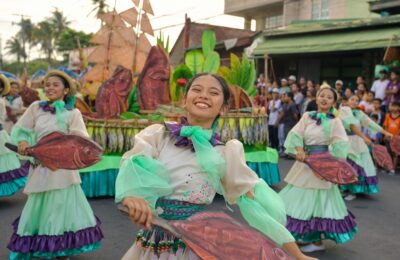
Every March, the community celebrates this local product through the Muscovado Festival.
The festival brings together sugarcane farmers, food producers, students, barangays and local entrepreneurs. Visitors can expect agricultural exhibits, cooking competitions, street performances, locally made products and activities celebrating the founding anniversary of Magallanes.
For travelers, it is an opportunity to discover one of Cavite’s quieter and more rural municipalities. Magallanes may not be as familiar as Tagaytay, Kawit or Bacoor, but its countryside atmosphere and sugarcane heritage make it an interesting destination for anyone who enjoys local food, agriculture and community festivals.
Content
What Is the Muscovado Festival?
The Muscovado Festival is an annual agricultural and cultural celebration held in Magallanes, Cavite.
It showcases Muscovado de Magallanes, the municipality’s signature sugarcane product and recognized One Town, One Product. The celebration is also a thanksgiving for the local harvest and forms part of the municipality’s founding-anniversary activities.
Cavite Tourism officially includes the Muscovado Festival among the province’s recognized festivals.
Depending on the year’s program, festival activities may include:
- An agricultural and trade fair
- Muscovado cooking competitions
- Street dancing and cultural performances
- Displays of sugarcane and other farm products
- Community bazaars
- Kubo-building competitions
- Youth and farmers’ forums
- Public-service and health activities
- Civic ceremonies
- Programs marking the founding anniversary of Magallanes
Earlier editions were commonly held over two days around March 14 and 15. However, festival dates can be adjusted. The 2026 celebration was held on March 12 as part of Magallanes’ 110th founding anniversary.
What Is Muscovado Sugar?
Muscovado is a type of minimally refined or unrefined cane sugar.
It has a dark-brown color, moist texture and deep molasses-like flavor. Unlike ordinary white sugar, which undergoes additional refining, muscovado retains much of the naturally occurring molasses from the sugarcane juice. This gives it its characteristic color, aroma and slightly sticky texture.
It does not taste exactly like ordinary brown sugar.
Commercial brown sugar is often made by combining refined white sugar with molasses. Muscovado develops its flavor from the sugarcane juice and the way it is cooked and granulated.
Depending on the batch and production process, you may notice flavors resembling:
- Caramel
- Molasses
- Toffee
- Roasted sugar
- Mild bitterness
- Dried fruit
- Smoke from traditional cooking
The flavor is stronger and more complex than white sugar, which makes muscovado useful for recipes where the sweetener is expected to contribute noticeable taste and color.
Muscovado Is Still Sugar
Muscovado is sometimes marketed as a healthier alternative because it is less refined and may retain small amounts of minerals found in sugarcane.
However, it is still primarily sugar.
The trace minerals in unrefined brown sugars do not turn them into nutritionally complete foods, and muscovado should still be consumed in moderation. Its greatest advantages are its distinct flavor, traditional production and ability to support local sugarcane growers—not a free pass to eat unlimited amounts.
This is especially important when preparing drinks or desserts. Muscovado may be less processed, but it still adds sweetness and calories.
Enjoy it for its flavor and local heritage rather than treating it like medicine.
Why Is Magallanes Known for Muscovado?
Magallanes is one of Cavite’s more agricultural and less densely urbanized municipalities.
Sugarcane farming has been an important source of livelihood in the area, particularly for small-scale growers. A Department of Trade and Industry profile described Magallanes as an agriculture-based municipality where sugarcane occupied a significant portion of cultivated land and supported many local farmers.
The municipality’s distance from Cavite’s heavily developed northern cities has helped it retain a quieter rural landscape.
As you travel toward Magallanes, the scenery gradually changes. Busy commercial roads give way to farms, hills, scattered homes and patches of agricultural land.
Sugarcane fits naturally into this setting.
The crop provides raw material for muscovado production while creating work for farmers, cutters, mill operators, processors, packers and sellers.
That entire livelihood chain is what the festival celebrates.
Magallanes: Cavite’s “Sweetest” Town
Magallanes has been described as Cavite’s “sweetest” municipality because of its muscovado industry.
During the 2019 festival, the town showcased organic and native sugarcane-based products while celebrating its 103rd founding anniversary. Local officials placed muscovado and other sugar-based products at the center of the agricultural fair.
The nickname is catchy, but it also carries an economic meaning.
Muscovado distinguishes Magallanes from other Cavite towns. Amadeo is associated with coffee, Rosario with Tinapang Salinas, General Trias with Valenciana and Magallanes with traditional cane sugar.
A strong local product gives visitors a reason to remember the municipality.
It also allows farmers and small businesses to market their goods using a place-based identity. A package labeled Muscovado de Magallanes tells the buyer where the sugar came from and connects the product to a particular farming community.
A Brief History of Magallanes
Magallanes was once connected administratively with the neighboring municipality of Maragondon.
Historical accounts indicate that it became an independent municipality on July 15, 1879. However, insufficient municipal income later caused it to revert to barrio status under Maragondon. It regained its status as a separate municipality in 1916.
This explains why founding-anniversary counts in modern festival programs generally use 1916 as their starting point.
The municipality marked its 103rd anniversary in 2019 and its 110th anniversary in 2026.
The history reflects the practical challenges faced by small rural communities.
Becoming a municipality required more than receiving a name or boundary. The local government needed enough income, population and administrative capacity to operate independently.
Today, the Muscovado Festival celebrates how Magallanes developed from a rural settlement into a municipality with a product and cultural identity of its own.
The Role of the Magallanes Women’s Club Multi-Purpose Cooperative
An important organization behind the local muscovado industry is the Magallanes Women’s Club Multi-Purpose Cooperative, commonly known as MAWCO.
The cooperative helped establish Muscovado de Magallanes as the municipality’s One Town, One Product. It provided local women and farming families with opportunities in processing, packaging and marketing sugar.
The Department of Trade and Industry assisted MAWCO with its product packaging and labeling. In 2013, DTI also provided an automatic packaging machine that allowed the cooperative to prepare muscovado in different sizes, including small sachets and larger retail packs.
This support may sound like a small technical improvement, but packaging matters greatly.
Farmers can produce excellent sugar, yet the product may struggle to reach supermarkets or institutional buyers when its packaging is inconsistent, difficult to store or missing important information.
Improved packaging can help with:
- Product cleanliness
- Consistent weight
- Shelf presentation
- Branding
- Transport
- Customer confidence
- Access to larger markets
It also creates additional work beyond farming. Cooperative members can participate in sorting, packing, labeling, accounting, marketing and sales.
How Muscovado Supports Women’s Livelihoods
MAWCO was organized partly to give women opportunities to become economically productive and earn additional household income.
Many rural women already contribute heavily to farming families. They help manage homes, care for children, prepare food and assist with agricultural activities—work that may not always receive formal recognition or direct compensation.
A cooperative creates a structure through which women can participate more visibly in business.
Members can work together instead of attempting to purchase equipment, develop packaging and find customers individually. They share responsibilities, training and market opportunities.
The muscovado industry therefore represents more than sugarcane.
It also reflects community organization and the ability of women to build a livelihood around a product grown in their own municipality.
Traditional Muscovado Production in Magallanes
Older Muscovado Festival programs have highlighted two forms of local sugar production.
One is the traditional system locally associated with tarapichi, particularly in Barangays Urdaneta and Ramirez. The other involves the preparation and repacking of finished muscovado in Barangay Poblacion 4.
Traditional sugar production is physically demanding.
Workers must harvest the cane, transport it, extract the juice, manage the fire, stir the liquid and judge the correct moment when the mixture is ready to crystallize.
The process requires experience because changes in heat, timing and sugarcane quality can affect the final product.
A batch may become too wet, too dry, too dark or unevenly granulated when the cooking process is not controlled properly.
That knowledge is often learned through observation and repeated practice rather than from a recipe alone.
How Muscovado Sugar Is Made
The exact equipment and techniques vary among producers, but the basic process follows several important stages.
Harvesting the Sugarcane
Mature sugarcane is cut from the field and transported to the processing area.
Timing matters because the sugar content of the cane affects the amount and quality of juice available for processing.
Workers remove unnecessary leaves and prepare the stalks for milling.
Extracting the Juice
The sugarcane stalks are passed through a crusher or mill.
Pressure squeezes out the sweet juice, leaving behind fibrous material called bagasse. The juice is collected and filtered to remove larger particles.
The leftover bagasse may be reused as fuel, compost material or for other agricultural purposes, depending on the production system.
Clarifying the Juice
The juice may contain soil, plant material and other impurities.
Processors filter and prepare it before prolonged cooking. Some traditional systems use locally established clarification methods to improve the texture and appearance of the finished sugar.
Cooking
The juice is transferred into a large pan or cooking vessel and heated.
As water evaporates, the liquid becomes thicker and more concentrated. Workers monitor the heat carefully and stir the mixture to reduce burning and uneven cooking.
This stage produces the aroma most people associate with muscovado processing.
The smell becomes richer as the sugarcane juice turns into thick syrup.
Granulating the Sugar
Once the syrup reaches the correct stage, it is removed from intense heat and stirred continuously.
The mixture begins to cool and form small sugar crystals. Stirring helps break the mass into the soft, granular texture associated with muscovado.
PCAARRD describes muscovado preparation as a process moving from sugarcane-juice extraction through cooking and granulation.
Cooling and Packing
The finished sugar must cool properly before packaging.
Packing muscovado while it is still too warm or moist can create condensation and affect its texture. Once ready, it can be weighed, sealed, labeled and prepared for sale.
Why Traditional Production Deserves Protection
Modern equipment can improve cleanliness, consistency and productivity. However, traditional methods contain knowledge that should not simply be discarded.
Experienced muscovado makers understand how the juice behaves at different temperatures. They recognize changes in color, aroma, thickness and bubbling patterns.
They may be able to judge readiness without electronic instruments because they have observed the process repeatedly over many years.
Preserving that knowledge does not mean refusing all modernization.
The strongest approach combines tradition with practical improvements such as:
- Cleaner processing areas
- Safer equipment
- Better temperature control
- Proper food-handling practices
- Consistent packaging
- Accurate labeling
- More efficient fuel use
- Reliable product testing
The goal is to protect the character of Muscovado de Magallanes while helping producers meet modern expectations.
What to Expect During the Muscovado Festival
Festival activities change each year, but agriculture and muscovado remain the central themes.
The celebration normally combines product promotion with civic, cultural and community programs.
Muscovado and Agri-Trade Fair
The agricultural fair is one of the festival’s most important attractions.
Local farmers and producers display muscovado, sugarcane-based goods and other products grown or made in Magallanes.
During the 2019 celebration, the fair was staged at the town plaza and highlighted muscovado as the municipality’s OTOP product. Local farmers were also invited to display and sell their other agricultural produce.
Depending on the participating vendors, visitors may find:
- Packaged muscovado sugar
- Sugarcane products
- Local vegetables
- Fruits
- Root crops
- Plants and seedlings
- Native delicacies
- Baked goods
- Bottled condiments
- Handmade products
The fair is the best place to buy directly from producers.
Do not rush from booth to booth. Ask the sellers how their sugar was produced and how they recommend using it.
Muscovado Cooking Competition
The cooking contest challenges participants to use muscovado as an important ingredient rather than treating it only as a sweetener for coffee.
The 2026 Muscovado Festival featured a culinary competition in which participants prepared dishes using muscovado sugar as the central ingredient. The activity aimed to encourage creativity and promote one of Magallanes’ signature products.
Contestants may use muscovado in desserts, sauces, marinades, pastries or beverages.
The strongest entries are those that allow the sugar’s molasses flavor to complement the food rather than simply making it extremely sweet.
A good muscovado dish should balance sweetness with other flavors such as:
- Salt
- Acidity
- Spice
- Chocolate
- Coffee
- Coconut
- Fruit
- Roasted or smoky ingredients
The contest can also inspire commercial products that participants may later sell through small businesses.
Kubo-Building Competition
The 2026 celebration included a kubo-building contest.
Barangay participants constructed traditional huts using materials such as bamboo and coconut. The activity honored farmers and highlighted the municipality’s appreciation for rural life and locally available materials.
A bahay kubo is a fitting festival symbol.
It represents simplicity, agriculture and the resourcefulness of communities that build with materials found in their environment.
The contest also gives residents a chance to demonstrate skills in carpentry, weaving, design and teamwork.
The finished huts can be decorated with farm products and used as festival booths, creating an environment that feels more connected to Magallanes’ countryside identity.
Street-Dancing Competition
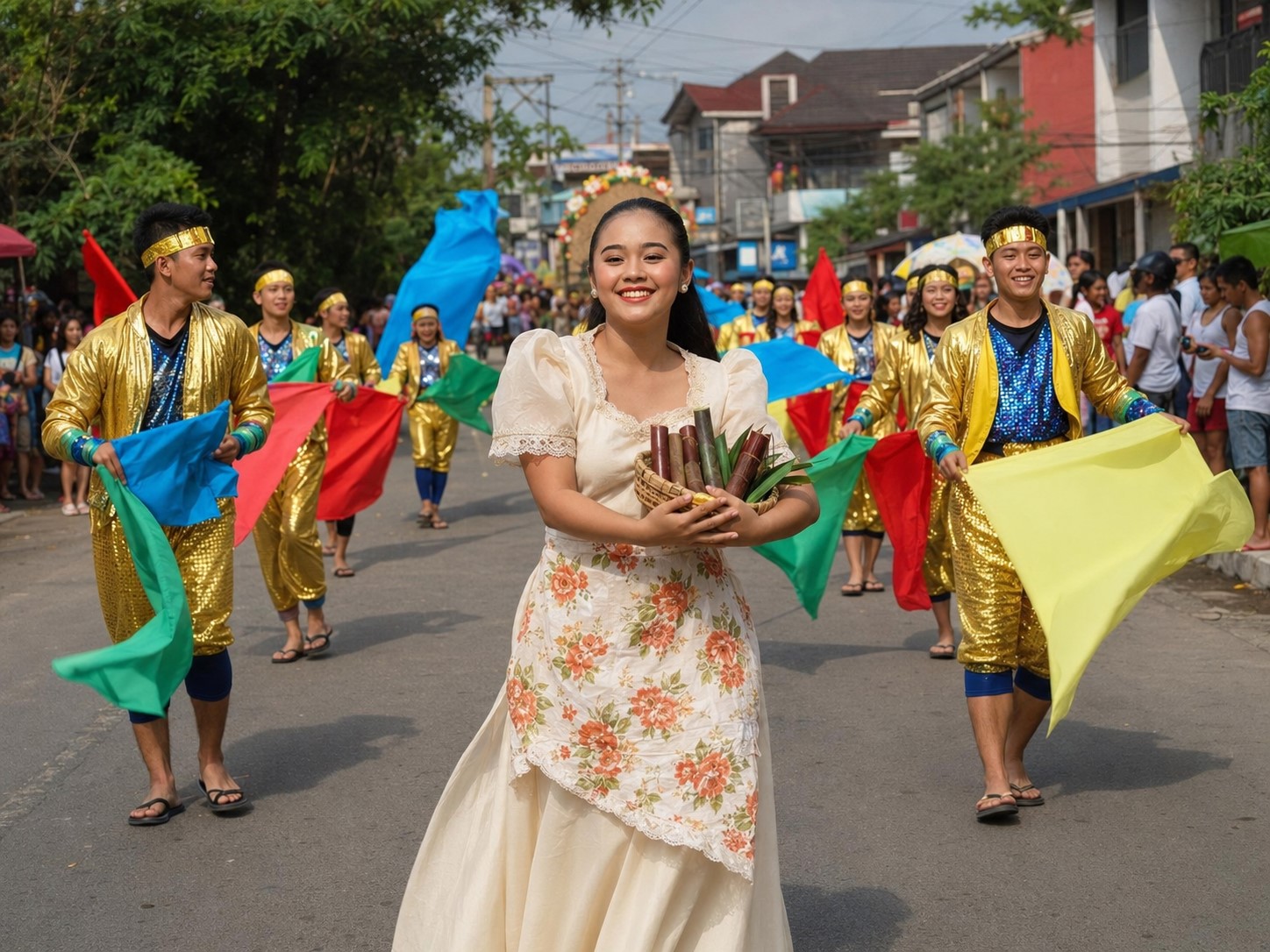
Earlier Muscovado Festivals featured street dancing involving the municipality’s barangays and young performers.
The costumes and choreography portrayed muscovado products, sugarcane farming and the cultural heritage of Magallanes.
You may see dancers carrying props inspired by:
- Sugarcane stalks
- Large pans and cooking tools
- Baskets of farm produce
- Muscovado crystals
- Traditional mills
- Fire and smoke
- Rural houses
- Farmers and cooperative workers
The colors commonly associated with the theme include green, brown, gold, yellow and orange.
Green represents living sugarcane, while brown and gold suggest the finished muscovado. Orange and red may symbolize the fire used during cooking.
Some routines depict the complete production process.
Dancers begin as farmers planting and cutting sugarcane. The performance moves toward milling and cooking before ending with a thanksgiving celebration for the finished product.
Youth and Farmers’ Forums
The festival has included forums for young people and farmers.
These programs may cover agriculture, local history, culture, livelihoods and community development. Earlier editions also featured quiz competitions in which participants answered questions about Magallanes and current events.
These activities may not attract the same crowds as street dancing, but they support the festival’s educational purpose.
Young residents need to understand why muscovado matters.
Without that knowledge, the festival risks becoming a performance where participants wear sugarcane costumes without understanding the livelihood behind them.
A farmers’ forum can also address practical concerns such as production costs, crop diseases, processing, packaging and market access.
Health and Community-Service Activities
Some festival editions have combined entertainment with public services.
The 2019 program included women’s health examinations, blood donation, youth activities, a mass wedding and the distribution of civil-registry documents.
This demonstrates how a municipal festival can serve several purposes at once.
It celebrates local culture while bringing government programs closer to residents who may already be gathering in the town center.
The exact services change from year to year, so visitors should consult the official program rather than expecting a particular activity.
Markets and Evening Activities
Previous celebrations have included community markets, food stalls, car shows and evening entertainment.
In 2019, the “Day and Night Market Banchetto ala Magallanes” involved the municipality’s 16 barangays.
An evening market allows visitors to continue enjoying the festival after the daytime heat has eased.
It also creates selling opportunities for residents who are not directly involved in muscovado production.
Food vendors, home-based businesses, artisans and community organizations can all participate.
Muscovado Products and Dishes to Try
The festival is a good time to see how muscovado can be used beyond sweetening a cup of coffee.
Muscovado Coffee
The easiest introduction is a hot cup of coffee sweetened with Muscovado de Magallanes.
Start with a small amount because its flavor can be stronger than refined sugar.
The molasses character works particularly well with dark or medium-roasted coffee.
Muscovado Hot Chocolate
Muscovado pairs naturally with cocoa.
Its deep flavor makes hot chocolate taste richer and less one-dimensional. Coconut milk or ordinary milk can be added depending on the recipe.
Muscovado Rice Cakes
Traditional rice delicacies can use muscovado instead of white sugar.
The result is usually darker, more aromatic and slightly caramel-like. It works particularly well with coconut-based kakanin.
Muscovado Cookies and Cakes
Muscovado can add moisture and depth to:
- Chocolate cake
- Banana bread
- Oatmeal cookies
- Gingerbread
- Carrot cake
- Brownies
- Coconut cookies
Because the sugar is moist, recipes may require adjustments when replacing dry white sugar.
Muscovado Glaze
Muscovado can be cooked with butter, citrus, vinegar or soy sauce to create a glaze for meat and vegetables.
Its deeper flavor makes it useful in dishes where sweetness needs to be balanced with saltiness, smoke or acidity.
Muscovado Caramel
The sugar’s molasses flavor creates a darker and more intense caramel.
It can be poured over rice cakes, ice cream, fruit or pastries.
Muscovado Syrup
Some producers transform muscovado into bottled syrups for drinks, pancakes or desserts.
Check the ingredients and storage instructions before buying.
What to Look for When Buying Muscovado
Good muscovado generally has a natural brown color and noticeable molasses aroma.
Its texture may be soft, slightly sticky and prone to forming small clumps. This is normal because the sugar retains moisture.
Check the packaging for:
- Producer or cooperative name
- Net weight
- Ingredients
- Production or packing date
- Best-before date
- Storage instructions
- Proper sealing
- Contact information
Avoid packages showing obvious moisture damage, insects, torn seals or an unusual fermented smell.
Ask whether the product is locally produced or simply repacked in Magallanes. Both may be legitimate businesses, but transparency helps you understand what you are buying.
How to Store Muscovado
Keep muscovado inside an airtight container.
Exposure to air can cause it to harden as moisture escapes. On the other hand, excessive moisture can encourage spoilage or unwanted clumping.
Store it in a cool, dry place away from direct sunlight, steam and strong odors.
Always use a clean, dry spoon. Introducing water into the container can reduce the product’s quality.
When the sugar hardens slightly, it may still be usable. Break it apart carefully or allow it to soften in a properly sealed container.
When Is the Muscovado Festival Celebrated?
The festival is traditionally associated with March 15, coinciding with the founding-anniversary season of Magallanes.
However, the main activities do not always happen on that exact date.
The 2019 celebration ran from March 14 to 15, while the 2026 festival and 110th founding anniversary were held on March 12.
Future visitors should check the latest announcements from:
- The Municipality of Magallanes
- Cavite Tourism
- DTI Cavite
- Official barangay pages
- Festival organizers
The agriculture fair, cooking competition, street dancing and anniversary ceremony may be scheduled on different dates or combined into one main festival day.
Where Is the Festival Held?
Major activities are normally held around Magallanes town proper, particularly the municipal grounds, town plaza and government facilities.
The 2019 festival opened at the municipal square in front of the historic town hall.
Separate venues may be assigned to trade booths, performances, health services and evening activities.
Before traveling, confirm:
- The main festival venue
- Parade route
- Competition schedule
- Road closures
- Parking locations
- Public-transport drop-off point
- Market operating hours
Magallanes is a rural municipality, so do not assume that every event location will be within a short walk of every bus or jeepney stop.
How to Get to Magallanes from Metro Manila
Magallanes is located in the southwestern interior of Cavite and is farther from Metro Manila than destinations such as Bacoor, Imus and Dasmariñas.
Public transportation may require patience and a transfer, particularly outside the main travel hours.
From PITX
PITX serves several Cavite routes, including buses going to Naic and Ternate from Gate 6, although live assignments and schedules should always be checked on the day of travel.
One practical option is to travel toward Naic or Maragondon and transfer to a local vehicle bound for Magallanes.
Some periods have also had direct or connecting PITX–Magallanes services, but these routes may not operate as frequently as buses to larger Cavite towns. Confirm availability at PITX before relying on a direct trip.
Ask terminal personnel for the latest Magallanes route. When no direct bus is available, ask for the best connection through Naic or Maragondon.
Via Naic
Naic is a useful transport connection for travelers heading toward western and upland Cavite.
From the Naic terminal or town center, look for a jeepney, minibus or other public vehicle traveling to Magallanes.
Local departures may become less frequent later in the afternoon. Plan your return trip before attending an evening event.
Via Maragondon
Another option is to travel to Maragondon and transfer to a Magallanes-bound vehicle.
Tell the driver that you are going to Magallanes town proper or show the exact festival venue.
By Private Vehicle
Driving is usually the most convenient option, especially for families or groups.
The route may pass through Naic and Maragondon or through the Tagaytay–Alfonso side, depending on your starting point.
Use live navigation and download an offline map in case the mobile signal weakens in rural sections.
Allow extra time for narrow roads, farm vehicles and festival traffic near the town center.
Practical Tips for Festival Visitors
Confirm the Festival Date
Do not automatically arrive on March 15 without checking. The latest celebration may be scheduled a few days earlier.
Leave Early
Magallanes is farther from Metro Manila and northern Cavite than many other festival destinations.
Early travel also gives you time to find the venue before road closures or crowds begin.
Plan Your Return Transportation
Public vehicles may become limited in the evening.
Ask drivers or terminal staff about the last available trip before entering the festival grounds.
Bring Cash
Small vendors, tricycles and local transport providers may not accept cards or digital payments.
Mobile signals may also become slow when many visitors gather in one area.
Carry Reusable Shopping Bags
You may leave with muscovado, vegetables, plants, bottled products or local delicacies.
A sturdy reusable bag protects your purchases and reduces plastic waste.
Protect Muscovado from Moisture
Place packaged sugar inside a sealed bag, especially during rainy weather.
Wear Comfortable Clothing
March can be hot and dry.
Wear breathable clothes, comfortable shoes and sun protection. Bring an umbrella, hat and drinking water.
Respect Production Areas
Do not enter a sugar mill, cooking area or cooperative facility without permission.
Hot syrup, moving machinery and sharp tools can create serious safety risks.
Ask Before Photographing Workers
Festival performances are naturally photographed, but traditional processing areas are also workplaces.
Request permission before taking close photographs or recording demonstrations.
Visiting with Children
The Muscovado Festival can become an enjoyable agricultural lesson for children.
Many young people know sugar only as white crystals inside a packet. The festival allows them to see that sugar begins as a tall grass growing in a field.
Explain the basic journey:
- Sugarcane is planted and allowed to mature.
- The stalks are harvested.
- Juice is squeezed from the cane.
- The juice is cooked.
- The thick syrup is stirred until sugar forms.
- The sugar is cooled and packed.
Street dancing and displays make the process easier to understand.
Keep children away from cooking vessels, fires, moving equipment and parade routes. Bring water, snacks and identification containing a guardian’s contact number.
Other Places to Visit in Magallanes
Magallanes is not a heavily developed tourist center, but its rural environment has attractions suited to travelers who prefer farms, nature and quieter destinations.
E-Place Resort and Leisure Farm
Cavite Tourism lists E-Place Resort and Leisure Farm in Barangay Kabulusan among its tourism establishments. Contact the property directly for current rates, day-tour availability and reservation requirements.
Rural Farms and Countryside Roads
The agricultural scenery is part of the Magallanes experience.
However, farms are private working properties. Do not enter fields, pick sugarcane or photograph residents closely without permission.
Nearby Maragondon
Maragondon has historical attractions such as the Bonifacio Trial House and its old parish church.
It can be combined with a Magallanes trip when schedules allow.
Alfonso and Tagaytay
Travelers approaching through the upland route may also visit Alfonso or Tagaytay.
Avoid overloading your itinerary when the festival contains an activity you need to attend at a fixed time.
Why the Muscovado Festival Matters
Traditional agricultural products can disappear when the people producing them no longer earn enough to continue.
Sugarcane farmers face high labor costs, unpredictable weather, changing prices and competition from large commercial producers.
Traditional processors must also comply with modern expectations for cleanliness, consistency and packaging without losing the character of their product.
The Muscovado Festival gives the industry visibility.
It allows farmers and cooperative members to meet customers directly. It teaches younger residents why sugarcane matters and encourages cooks to develop new products using Muscovado de Magallanes.
The festival cannot solve every agricultural challenge, but it gives the community a reason to protect and improve the livelihood.
More Than a Sweetener
A spoonful of muscovado may look simple.
Yet behind it are months of work.
A farmer prepared the land, planted the cane and waited for it to mature. Workers harvested and transported the stalks. Someone operated the crusher, managed the fire and stirred the juice.
Other people cooled, packed, labeled and sold the sugar.
The final product contains the labor of an entire chain of people.
Understanding that changes the way you look at an ordinary package of sugar.
A Celebration of Rural Resourcefulness
Magallanes does not need skyscrapers or enormous shopping centers to give the community something worth celebrating.
Its festival is built around what the town already has:
- Agricultural land
- Sugarcane
- Traditional knowledge
- Women’s cooperatives
- Farmers
- Local food
- Community cooperation
That makes the Muscovado Festival feel genuine.
It does not borrow an identity from somewhere else. It takes a familiar local livelihood and turns it into a source of public pride.
Final Thoughts
The Muscovado Festival is one of Cavite’s sweetest and most meaningful agricultural celebrations.
Its cooking competitions, trade fairs, cultural programs and community activities create an enjoyable festival atmosphere. But the true heart of the event is found in the sugarcane fields and traditional processing areas of Magallanes.
Muscovado represents the patience of farmers, the skill of sugar makers and the determination of cooperative members who transformed a local harvest into a recognized product.
Visit the festival to taste Muscovado de Magallanes and discover creative dishes made with it. Explore the agricultural fair, speak with local producers and bring home a properly packed bag of sugar.
Most importantly, remember the people behind its sweetness.
Muscovado may dissolve quickly in coffee, pastries or hot chocolate, but the farming tradition it represents has taken generations to build.
Through the Muscovado Festival, Magallanes keeps that tradition visible—and gives every visitor a chance to appreciate how much work can be found inside a single spoonful of sugar.