At first glance, the Mardicas Festival may look like an energetic street celebration filled with colorful costumes, marching bands and dancers carrying swords and shields.
But once you learn the story behind it, the festival becomes much more fascinating.
The Mardicas Festival of Ternate, Cavite, is a celebration of courage, faith and cultural identity. It honors the Santo Niño while remembering the Mardicas, the early settlers whose ancestors came from the Moluccas—now part of Indonesia—and established a distinctive community along the western coast of Cavite.
During the festival, dancers perform dramatic movements inspired by combat. They carry traditional weapons, form defensive lines and act out scenes involving warriors protecting their community and the image of the Holy Child. Religious processions, marching-band music and the lively karakol bring the streets to life.
For visitors, Mardicas is more than an opportunity to watch a colorful parade. It is a chance to discover one of the most culturally distinctive towns in Cavite—a community with Southeast Asian roots, a Spanish-based creole language and a deeply rooted devotion to the Santo Niño.
Content
What Is the Mardicas Festival?
The Mardicas Festival is an annual religious and cultural celebration held in Ternate, Cavite.
It honors the Santo Niño de Ternate, the town’s patron, while celebrating the history and traditions associated with Ternate’s early Mardicas settlers. The festival commonly features a fluvial procession, a street procession, karakol, marching bands and a dramatic war-dance presentation.
The Mardicas Dance is the festival’s signature attraction. Performers use choreographed movements to portray warriors protecting the Santo Niño and defending their community from enemies or pirates.
With its swords, daggers, shields and fast-paced formations, the performance looks very different from the graceful agricultural dances seen at many other Philippine festivals.
The movements communicate bravery, alertness and unity. Even when the performance becomes theatrical and entertaining, the Santo Niño remains at the center of the story.
Who Were the Mardicas?
To understand the festival, we first need to understand the people whose name it carries.
The Mardicas—also written as Merdicas or Mardikas—were connected to the islands of Ternate and Tidore in the Moluccas. During the 17th century, these islands became contested territories involving Portuguese, Spanish and Dutch colonial interests.
When Spanish forces withdrew from the Moluccas in 1663, a community of Catholic Mardicas was relocated to the Philippines. Some eventually settled near the mouth of the Maragondon River along the Cavite coast, where they established the community that developed into present-day Ternate. Scholarly research on the town traces its distinctive history and identity to this Moluccan migration.
Local accounts commonly explain the name Mardicas as meaning “People of the Sea.” It is an appropriate description for a community whose ancestors traveled across the sea and settled along Cavite’s coastline.
Over time, the settlers interacted and intermarried with other people living in Cavite. They became part of the wider Filipino population while preserving several features of their own history, devotion and language.
This makes Ternate’s story different from that of most Cavite towns.
The community’s heritage does not point only toward Spain and the Philippine Revolution. It also connects Cavite with the islands and peoples of maritime Southeast Asia.
Why Is Ternate Named After a Place in Indonesia?
Ternate, Cavite, shares its name with the island of Ternate in Indonesia’s Maluku region.
The name reflects the ancestral home of the Mardicas settlers who moved to the Philippines during the Spanish colonial period. Instead of leaving that identity entirely behind, the community carried the name of its original homeland to its new settlement in Cavite.
That historical connection explains why the Mardicas Festival feels different from an ordinary town fiesta.
It is not simply celebrating a modern municipal identity. It is remembering a migration that happened more than three centuries ago.
When dancers perform in the streets, they are helping preserve the memory of people who crossed the sea, rebuilt their lives in Cavite and created a community with its own language and traditions.
The Santo Niño de Ternate
The festival’s religious center is the Santo Niño de Ternate, the image of the Child Jesus honored as the patron of the community.
The Santo Niño de Ternate Parish is part of the Roman Catholic Diocese of Imus. The diocese lists the parish feast day as January 6.
The devotion reflects the Catholic faith of the Mardicas community that arrived from the Moluccas. For generations, the image has served as a symbol of protection, hope and unity among Ternateños.
During the festival, the Santo Niño is not treated merely as a decoration placed on a float.
The image leads or becomes the focus of processions. Devotees follow while praying, singing and dancing. The energetic performance is therefore tied to an act of faith.
To an outsider, the festival’s war dance may initially appear aggressive. However, its underlying message is protective. The dancers act as guardians defending something sacred to the community.
The Story Behind the Mardicas War Dance
The Mardicas Dance is a dramatic reenactment of a traditional story about the town’s ancestors.
In the festival narrative, warriors defend the Santo Niño and their settlement from pirates or hostile invaders. Performers carry traditional-looking weapons such as the tabak, a sword or large blade, and the balaraw, a dagger.
The dance is not presented like a quiet historical lecture.
It is fast, rhythmic and highly visual.
Dancers may advance in rows, raise their weapons and suddenly retreat. Some form protective circles around the Santo Niño, while others portray enemies attempting to break through their defenses.
Every formation has a purpose.
A group standing shoulder to shoulder represents unity. Raised swords communicate readiness. Sudden movements suggest the danger of an approaching attack. The protective formation around the image shows that faith remains at the heart of the performance.
The choreography may vary between competing groups, but courage, defense and devotion remain the central themes.
Weapons, Shields and Costumes
Mardicas costumes often combine historical imagination with modern festival design.
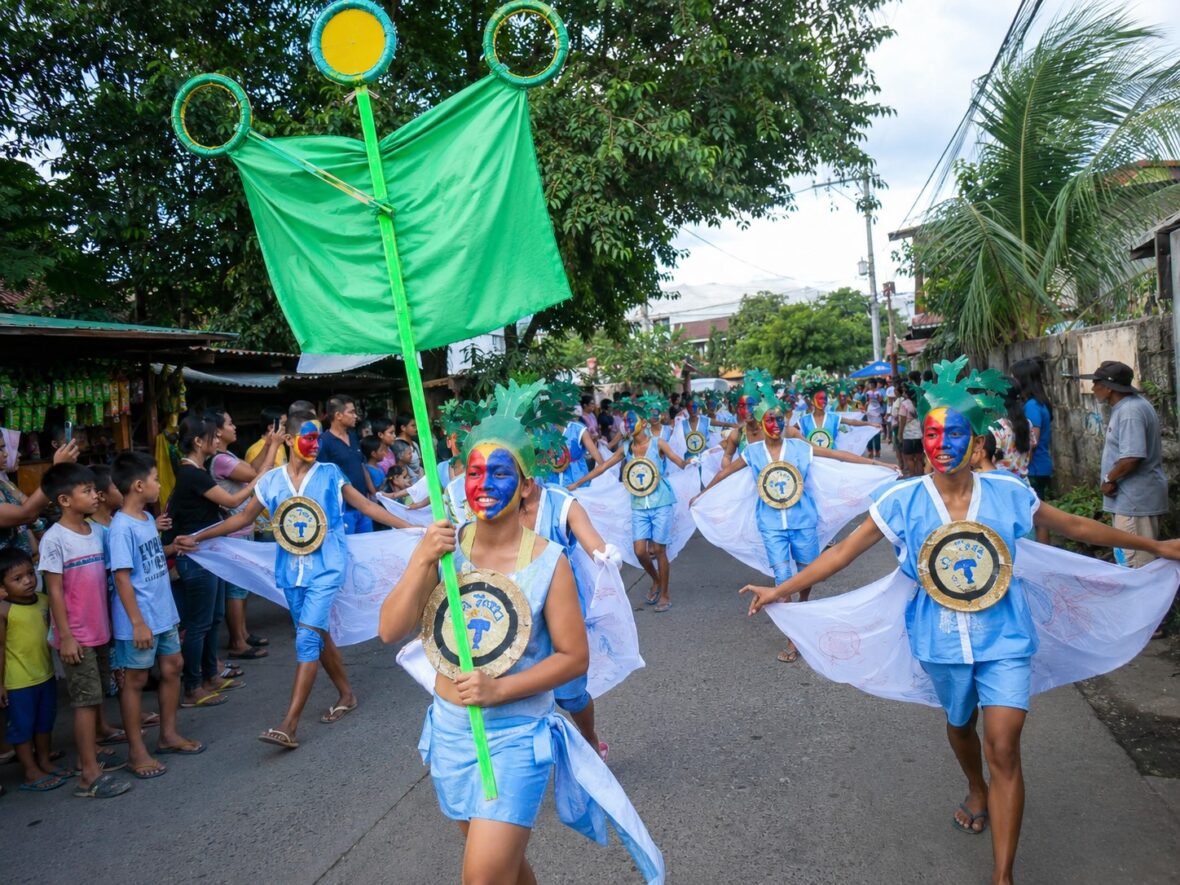
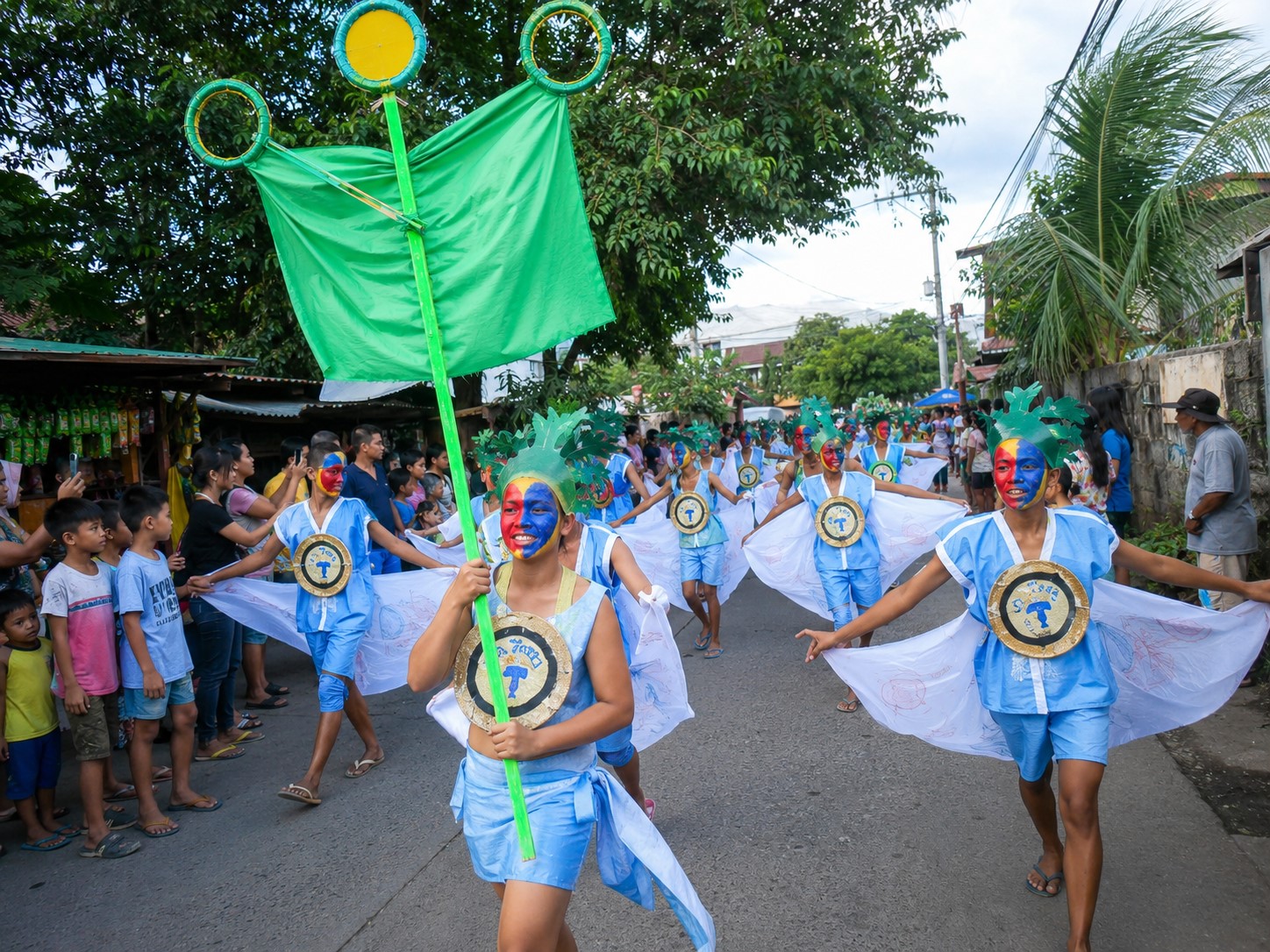
Performers may wear bright clothing inspired by warriors or maritime communities. Red, blue, white, gold and green commonly appear in costumes, shields and headpieces.
Some dancers wear capes or flowing fabric that exaggerates their movements. Others use face paint, feathers, leaves and armor-like decorations to create a stronger warrior appearance.
The weapons used in the competition are generally performance props, but they help make the storytelling clear. Spectators immediately understand that the dancers are portraying a battle or defensive struggle.
Shields may display symbols associated with Ternate, the Santo Niño or the participating school or barangay. When dozens of performers raise them together, they create a striking visual wall.
The best costumes do more than look impressive in photographs. They support the story being told by the dance.
Street-Dancing Competition
The street-dancing competition is one of the festival’s most anticipated events.
Groups representing schools, barangays or community organizations perform along the designated route before presenting a final routine in front of judges.
Unlike dancers performing only on a stage, street-dancing contingents must maintain their energy while moving through town. They need to keep their spacing, carry their props and perform difficult movements despite heat, crowds and uneven road surfaces.
The dramatic nature of the Mardicas story gives each group plenty of creative possibilities.
One performance may begin with a peaceful community celebrating the Santo Niño before enemies suddenly appear. Another may focus on a stolen sacred image and the warriors’ attempt to recover it. Some groups may emphasize prayer and devotion, while others create extended battle scenes.
Marching drums and brass music make the choreography feel even more powerful.
When the performers rush forward together while raising their swords and shields, the streets can feel like the setting of an outdoor historical drama.
Karakol: Dancing as an Expression of Faith
Another important part of the celebration is the karakol.
A karakol is a dance procession commonly associated with religious fiestas in Cavite. Devotees move through the streets with the image of a patron saint while dancing to lively music provided by marching bands.
During Mardicas, participants follow the Santo Niño while swaying, stepping and dancing in rhythm. The procession may look festive and spontaneous, but for many devotees, it is also a form of prayer and thanksgiving.
The mood differs from the competitive war dance.
The war dance focuses on dramatic storytelling and martial movements. The karakol feels more communal. Residents, devotees and visitors may join the movement rather than simply watching from the roadside.
Some people participate to fulfill a religious promise. Others offer prayers for health, protection or family blessings.
Because everyone moves together, the karakol becomes a public expression of unity. You do not need to know an elaborate choreography. You follow the rhythm, stay with the procession and share in the community’s devotion.
The Fluvial Procession
Ternate’s coastal identity becomes especially visible during the fluvial procession.
The Santo Niño is carried aboard a decorated boat, accompanied by other vessels and devotees. After the water procession, the image is brought ashore and continues through the streets before reaching the church or main festival area.
The sea is an appropriate setting for this tradition.
The Mardicas are locally remembered as people of the sea, and the ancestors of the community reached Cavite after traveling from the Moluccas. Bringing the Santo Niño onto the water connects faith, history and geography in a single ceremony.
From the shore, spectators may see boats decorated with flags, flowers and colorful banners. The sound of prayers, horns and music carries across the water as the procession approaches.
When the image is brought back onto land, the celebration shifts from the sea to the streets. Devotees gather around it, bands begin playing and the karakol continues toward the church.
Visitors who plan to watch the fluvial procession should confirm the exact viewing points and schedule. Access to the waterfront may be controlled, and weather or sea conditions can affect the activity.
Marching Bands and Ternate’s Fiesta Sound
Marching-band music gives Mardicas much of its festive energy.
Brass instruments and drums accompany the procession, karakol and other community activities. The music can be heard long before the performers appear, alerting residents that another part of the celebration is approaching.
The bands play several roles.
They provide the rhythm for dancers, maintain the movement of processions and create the cheerful atmosphere expected during a town fiesta.
Ternate also has organized bands that participate in local and provincial events. Band exhibitions and parades have continued to form part of the town’s recent fiesta celebrations.
For spectators, the combination of brass music and war-dance choreography is one of the festival’s most memorable features.
The music gives the warriors a sense of urgency, while the drums make every step and sword movement feel more dramatic.
Ternateño Chabacano: The Language Behind the Culture
Ternate’s heritage is also preserved through its language.
Some residents continue to speak Ternate Chabacano, also locally known as Bahra. It is one of the Spanish-based contact varieties collectively called Chabacano in the Philippines.
Linguistic research describes it as a minority community language used mainly in homes and neighborhoods, with Tagalog and English now dominating many other areas of communication.
Hearing the language provides another reminder that Ternate developed through a unique combination of influences.
Its vocabulary is largely Spanish-based, but its history is connected with the Moluccas, Cavite and the wider multilingual environment of the Philippines.
The survival of Bahra is important because language carries more than words.
It preserves family expressions, jokes, prayers, legends and ways of describing the world. Once a community language disappears, many of those cultural details become difficult to recover.
The Mardicas Festival therefore contributes to cultural preservation even when language is not the main focus. By encouraging young people to learn about their ancestors, the celebration may also motivate them to become curious about Bahra and other local traditions.
When Is the Mardicas Festival Celebrated?
Visitors should check the current festival calendar carefully because the cultural festival and the religious feast may be scheduled on different dates.
Recent reporting placed the major Mardicas cultural celebration on December 28, as part of the fiesta season honoring the Santo Niño. Meanwhile, the Diocese of Imus lists January 6 as the official feast day of the Santo Niño de Ternate Parish. Older tourism references have also associated Mardicas activities with January.
This means you should not assume that the street-dancing competition, fluvial procession and parish feast will all happen on the same day.
The celebration may extend from late December into early January, with separate schedules for:
- The Mardicas street-dancing competition
- The fluvial procession
- The karakol
- Parish novena Masses
- Marching-band exhibitions
- Community programs
- The January 6 feast day
Wait for announcements from the Municipality of Ternate, the municipal tourism office and the Santo Niño de Ternate Parish before finalizing your visit.
Cavite Tourism lists the Mardicas Festival as one of the province’s recognized cultural celebrations and provides contact details for Ternate’s tourism office through its official tourism directory.
What the Festival Feels Like
Mardicas feels energetic from the moment the drums begin.
Performers gather in side streets wearing bright costumes and face paint. Some are tightening the straps of their shields, while others practice sword movements or review their formation.
Families wait beside the road with umbrellas, water and food. Children climb onto higher surfaces to see over the crowd. Vendors prepare snacks and cold drinks as marching bands tune their instruments.
Then the dancers enter.
The first group may advance slowly, carrying the Santo Niño or a religious symbol. The mood changes when the music becomes faster. Warriors raise their swords, defenders form a circle and another group launches a choreographed attack.
The performers shout, turn and strike their shields in rhythm.
Even though you know it is a performance, the combination of music, weapons and coordinated movement creates a genuine sense of drama.
Later, the atmosphere changes again during the karakol. The performance becomes less about competition and more about community. Residents join the dancing, devotees follow the Santo Niño and the streets become a moving expression of celebration and prayer.
That contrast is what makes Mardicas special.
It can feel fierce one moment and deeply devotional the next.
Where Is the Festival Held?
Major activities are held around Ternate town proper, including streets near the municipal center and the Santo Niño de Ternate Parish.
The parish is located in the poblacion area and serves as the religious center of the celebration. The official diocesan directory identifies it as the parish dedicated to the Santo Niño de Ternate.
The fluvial procession naturally uses a waterfront area, while street dancing and community events may follow routes through several roads before ending at a judging venue, plaza or churchyard.
Locations and routes can change from year to year.
Before traveling, look for the current:
- Parade route
- Competition venue
- Fluvial-procession viewing area
- Road-closure schedule
- Public-transport drop-off point
- Designated parking areas
- Parish Mass schedule
Simply telling a driver that you are going to the Mardicas Festival may not be enough. Show the exact venue or landmark announced for the activity you plan to attend.
How to Get to Ternate from Metro Manila
Via PITX
The Parañaque Integrated Terminal Exchange is one of the most practical starting points for commuters traveling from Metro Manila.
PITX’s official route information includes services connected with Ternate and Naic, as well as routes serving Maragondon and other towns along the western Cavite corridor. Gate assignments and departure times can change, so check the live schedule or ask at the information counter before boarding.
Look for a bus traveling directly to Ternate when available.
Another option is to take a Naic-bound bus and transfer to a local bus or jeepney continuing toward Maragondon and Ternate. A current commuter guide also reports direct and connecting services from PITX, but schedules should still be verified on the day of travel.
Tell the conductor that you are going to Ternate town proper or the Santo Niño de Ternate Parish.
During the festival, road closures may require passengers to get off before reaching the central activity area. Be prepared to walk from the designated drop-off point.
By Private Vehicle
Drivers from Metro Manila can travel through CAVITEX and continue through Kawit, Noveleta, Rosario, Tanza, Naic and Maragondon before reaching Ternate.
Allow additional travel time during the festival season. The route passes through several busy town centers, and traffic may become heavier around Christmas and New Year.
Use official parking areas rather than attempting to enter streets occupied by performers and spectators.
Arriving early is especially important when attending the fluvial procession or street-dancing competition.
Helpful Tips for Attending Mardicas
Check Both the Festival and Parish Schedules
The cultural celebration may be held in late December, while the formal feast day is January 6. Make sure you are checking the correct event.
Arrive Early
Viewing areas along the main parade route can fill quickly. Early arrival also helps you avoid traffic rerouting.
Wear Comfortable Clothing
The festival involves long periods of standing and walking. Wear breathable clothes and comfortable footwear.
Bring Sun and Rain Protection
Late December and early January are generally cooler than summer, but daytime activities can still become warm. Carry an umbrella for both sun and unexpected rain.
Keep a Safe Distance from Performers
Dancers use swords, daggers, shields and large props. Even when these are designed for performance, they require space.
Do not step into the route for a close photograph.
Respect the Santo Niño Procession
Lower your voice during prayers and solemn moments. Avoid blocking devotees or walking directly in front of the sacred image.
Protect Your Belongings
Keep your phone, wallet and bag secure in crowded areas. Bring only the valuables you need.
Carry Cash
Local food stalls, tricycles and small shops may not accept cards or digital payments.
Drink Water
Street dancing and processions can last for hours. Stay hydrated even when the weather feels relatively cool.
Follow Waterfront Safety Rules
During the fluvial procession, remain inside public viewing areas. Do not board a vessel unless you are officially permitted and the boat has appropriate safety equipment.
Bringing Children to the Festival
Mardicas can be exciting for children, especially those interested in warriors, boats and marching bands.
However, the loud music, imitation weapons and crowded streets may be overwhelming for very young children.
Choose a viewing area away from the competition’s narrowest sections. Keep children behind the designated barrier and explain that they must not touch the dancers’ swords, shields or costumes.
Bring ear protection for children who are sensitive to drums and brass instruments.
Write a parent or guardian’s contact number on a card and place it securely in the child’s pocket. Establish a meeting place before entering the crowd.
The festival can also become a useful history lesson. Explain that the performance honors people whose ancestors traveled from islands now belonging to Indonesia and created a new community in Cavite.
Food to Try in Ternate
Ternate’s coastal location makes seafood a natural part of the local food experience.
Festival visitors may find grilled fish, squid, shellfish and familiar Filipino dishes at eateries and temporary stalls. Street vendors may also sell barbecue, fried snacks, rice cakes and cold drinks.
Local celebrations provide a good opportunity to look for home-cooked specialties that may not appear on the menus of larger restaurants.
Ask residents where they usually eat rather than choosing only the busiest stall beside the main stage.
Because activities may run for several hours, eat before entering the most crowded part of the parade route. Bring a small snack and drinking water in case food lines become long.
Other Places to Visit Around Ternate
Ternate is known not only for its cultural heritage but also for its coastal and mountain scenery.
Ternate’s Coastal Areas
The municipality faces Manila Bay and has beaches and coves that attract visitors looking for a quick escape from Metro Manila.
Access rules, environmental conditions and operating arrangements can change, particularly for beaches inside privately managed or restricted areas. Contact the property or local tourism office before making a side trip.
Mount Palay-Palay Area
The mountainous landscape around Ternate and Maragondon provides a dramatic backdrop for the western side of Cavite.
Hiking routes may require registration, guides or environmental permits. Never assume that a trail is open simply because an old travel article describes it.
Ternate–Nasugbu Road
The road connecting Ternate with Nasugbu offers views of mountains and the western coastline.
It passes through the Mount Palay-Palay area and the Kaybiang Tunnel. Travelers should continue driving safely and avoid stopping in prohibited areas around the tunnel. Authorities have previously restricted roadside lingering because it created traffic and safety problems.
Nearby Maragondon
Maragondon can be combined with a Ternate trip.
Its historical attractions include the Bonifacio Trial House and the old parish church. Visiting these places allows you to explore another part of western Cavite’s rich history before or after the festival.
Check museum hours and holiday closures in advance, especially when traveling in late December or early January.
Why the Mardicas Festival Is Unique
Many Philippine festivals honor the Santo Niño.
What makes Mardicas distinctive is the way that devotion is connected to one community’s migration history.
The festival remembers ancestors who came from the Moluccas, crossed the sea and built a new home in Cavite. It preserves the image of the warrior as a protector of faith, family and community.
Its cultural influences are layered.
There is the Catholic devotion brought through centuries of colonial contact. There is the Moluccan ancestry reflected in the community’s name and origin story. There is Ternate Chabacano, a Spanish-based language shaped in the Philippine environment. There is also the familiar Cavite tradition of celebrating through karakol and marching-band music.
All these elements come together in one celebration.
That is why Mardicas should not be described simply as another street-dancing festival. It is a visible expression of Ternate’s unusual place within Philippine history.
Why the Festival Matters to Younger Generations
Cultural identity can disappear quietly.
It may begin when fewer children learn the language spoken by their grandparents. Old stories are no longer repeated. Traditional names become unfamiliar, and festivals are remembered only for their costumes rather than their meaning.
Mardicas gives Ternateños a reason to continue telling their story.
Students who join the dance must learn why they carry swords and shields. Designers must understand the warrior theme. Families explain the Santo Niño devotion to children, while elders remember how earlier celebrations were performed.
The festival does not preserve history perfectly. Costumes change, choreography becomes more theatrical and modern sound systems replace older forms of accompaniment.
But tradition does not survive by remaining frozen.
It survives when every generation receives the story and finds a way to perform it again.
Final Thoughts
The Mardicas Festival is one of the most culturally fascinating celebrations in Cavite.
Its street dancers, marching bands, fluvial procession and lively karakol create an exciting experience for visitors. Yet the festival becomes truly meaningful when you understand the people behind its name.
The Mardicas were travelers, settlers, warriors and people of faith. Their descendants built a community on Cavite’s western coast and preserved an identity shaped by the Moluccas, the sea, Catholic devotion and life in the Philippines.
Today, that story continues whenever dancers raise their swords and form a protective circle around the Santo Niño.
The movements may represent an old battle, but their message remains relevant: a community becomes stronger when its people stand together to protect what they value.
Come to Ternate for the colorful costumes and powerful performances. Listen to the drums, follow the procession and watch the boats carrying the Santo Niño across the water.
But also take time to appreciate the history.
Mardicas is not just a dance. It is Ternate remembering where its people came from—and proudly carrying that identity into the future.