Silang is often associated with cool weather, garden restaurants, coffee shops and the road leading to Tagaytay. However, beyond those familiar attractions is a municipality with deep agricultural roots.
Farms continue to produce fruits, vegetables, ornamental plants and livestock products across different parts of Silang. Every year, the people behind these farms are placed at the center of the celebration through the Sumilang Festival.
This is not simply a parade where agricultural decorations are added to colorful costumes. Sumilang is a genuine tribute to farmers—the people who plant crops, care for animals, face unpredictable weather and continue producing food despite the many challenges of agricultural life.
During the festival, enormous pineapples and freshly harvested vegetables are proudly displayed. Farmers receive awards for their achievements, local products fill the trade booths and dancers take to the streets wearing costumes inspired by fields, crops and rural life.
For visitors, the Sumilang Festival offers a refreshing way to experience Silang. It allows you to look beyond the town’s cafés and commercial establishments and meet the farming community that has helped shape its identity.
Content
What Is the Sumilang Festival?
The Sumilang Festival is an agricultural, cultural and thanksgiving celebration held in Silang, Cavite.
Its primary purpose is to honor Silang’s farmers and showcase the municipality’s agricultural products. Recent editions have featured awards for outstanding farmers, competitions for the best harvests, food bazaars, agricultural exhibits, livelihood programs, pageants, floats and a grand parade.
The festival also carries a religious connection. Earlier celebrations were closely tied to Silang’s town fiesta and the feast of Nuestra Señora de Candelaria, or Our Lady of Candelaria, the municipality’s patroness. Sumilang was traditionally presented as an expression of gratitude to God and the Virgin for a plentiful harvest.
This gives the festival two closely connected identities.
It is a celebration of agriculture because farmers and their harvests remain at its center. At the same time, it preserves the Filipino tradition of offering thanksgiving through faith, community gatherings and a town fiesta.
What Does “Sumilang” Mean?
The word sumilang can suggest appearing, emerging or bringing forth light.
A Philippine News Agency account described the festival name as referring to radiating or sparking a ray of light. This meaning fits a celebration that looks toward renewed hope, better harvests and a brighter future for Silang’s agricultural communities.
It also sounds naturally connected to the name of the municipality.
The festival represents Silang emerging proudly through its culture, agriculture and people. Farmers who normally work quietly in the fields are brought into public view, their achievements recognized before the entire community.
Why Agriculture Is Important to Silang
Silang has long supported a wide variety of agricultural activities.
The municipality’s crops include pineapple, banana, coconut, coffee, corn and numerous fruit trees. Farmers also cultivate vegetables, root crops, ornamental plants and other high-value agricultural products. Poultry, livestock and small-animal raising contribute to the local farming economy as well.
Silang’s location and environment help explain this agricultural diversity.
Parts of the municipality have fertile land, reliable water sources and a relatively cooler climate compared with lower areas of Cavite. These conditions allow farmers to grow familiar crops as well as flowers, fruit trees and higher-value produce.
Development has changed much of Silang. Subdivisions, industrial facilities, restaurants, schools and commercial establishments have expanded across the municipality. However, farming continues in numerous barangays, and the Sumilang Festival reminds visitors that agriculture remains an important part of the community.
A Festival That Puts Farmers First
Many festivals feature farmers in costumes or use crops as decorations. Sumilang goes further by recognizing actual farmers and agricultural entrepreneurs.
The revived 2023 festival included searches for the municipality’s most outstanding farmer, oldest farmer, young farmer, naturally grown vegetable farmer, high-value-crop farmer and corn farmer. It also recognized ornamental-plant producers, agricultural entrepreneurs and raisers of small and large animals who used integrated farming systems.
These awards are important because farming success cannot be measured only by the size of a fruit or the weight of a harvest.
A good farmer must understand the land, choose the right crops, control pests, manage costs and adjust to changing weather. Farmers must also find buyers, transport their products and continue investing even when earnings are uncertain.
By giving them a public stage, Sumilang reminds people that food production depends on knowledge, experience, patience and hard physical work.
When Is the Sumilang Festival Celebrated?
The festival’s schedule has changed over the years, so visitors should check the current calendar before making travel plans.
Older editions were held around late January and early February. The 2019 celebration ran from January 20 to February 8 and coincided with Silang’s founding anniversary and the feast of Our Lady of Candelaria. The main town-fiesta activities were commonly concentrated around February 1 to 3.
More recent agriculture-focused editions have been held in April.
After being suspended for three years because of the 2020 Taal Volcano eruption and the COVID-19 pandemic, the festival returned from April 24 to 30, 2023. The 2024 edition opened on April 24, while the announced 2025 festivities were scheduled from April 23 to 26 at the New Municipal Hall Festival Grounds in Barangay Biga 1.
Because of this evolution, you may encounter older references saying Sumilang is a February festival and newer announcements placing it in April. Both reflect actual periods in the festival’s history.
The safest approach is to follow announcements from the Municipal Government of Silang, Silang Tourism and the Municipal Agriculture Office rather than relying on a previous year’s poster.
The Festival’s Connection to Our Lady of Candelaria
Sumilang’s history is closely connected with Silang’s devotion to Nuestra Señora de Candelaria.
The Diocese of Imus lists February 2 as the feast day of the Diocesan Shrine and Parish of Nuestra Señora de Candelaria. The National Museum notes that Silang became a parish in 1595, that its stone church was constructed from 1637 to 1639 and that the church was dedicated to Our Lady of Candelaria in 1640.
The patroness is traditionally associated with light and candles, making the idea of sumilang—to emerge or radiate light—especially appropriate.
Earlier versions of the festival formed part of a broader season of novena prayers, church ceremonies, heritage presentations, cultural activities and thanksgiving for the town’s harvest.
Although recent municipal programs have placed stronger emphasis on agriculture and farmer recognition, the festival’s spirit of gratitude remains rooted in this older religious tradition.
What to Expect at the Sumilang Festival
The official program changes each year, but Sumilang usually combines agriculture, entertainment, education and community participation.
Some events are designed primarily for farmers, while others attract families, students, entrepreneurs and tourists.
Agricultural Trade Fair and Food Bazaar
The agricultural fair is one of the best places to begin your visit.
Farmers, associations and local entrepreneurs display fresh produce, plants, processed food and other products from Silang. Depending on the participating exhibitors, visitors may find fruits, vegetables, coffee, ornamental plants, seedlings, preserves, pastries and bottled products.
The 2023 festival’s Baraka sa Bagong Silang included displays of local goods, a food bazaar and a baratillo at the New Municipal Grounds. The program was designed to give producers a place to promote and sell their products directly.
Take time to speak with the sellers rather than simply walking past the displays.
Ask where the products were grown, when they were harvested and how they are normally prepared. Farmers can often explain the difference between varieties more clearly than labels in a supermarket.
Buying directly from producers also allows more of your spending to remain within the local agricultural community.
Best Agricultural Harvest Competition
One of Sumilang’s most enjoyable attractions is the search for the best agricultural harvest.
Farmers bring some of their most impressive crops to the festival. Visitors may see unusually large pineapples, squash, papayas, jackfruit and root crops arranged for judging.
The 2024 celebration publicly recognized farmers who produced the largest harvested pineapples. Media coverage also highlighted the festival’s displays of enormous fruits and vegetables.
The 2023 harvest competition included pineapple, several banana varieties, papaya and jackfruit. Vegetable and root-crop categories included beans, squash, eggplant, ube and cassava.
The displays are fun to photograph, but they also demonstrate agricultural skill.
Producing an impressive crop requires good planting materials, healthy soil, proper care and the ability to protect the plant from pests, disease and extreme weather.
Search for Outstanding Farmers
The recognition of outstanding farmers gives Sumilang a purpose beyond entertainment.
Award categories may acknowledge farmers based on their crops, age, innovations, environmental practices or contributions to the community. The festival has recognized young farmers, vegetable growers, corn farmers, livestock raisers, ornamental-plant producers and agricultural entrepreneurs.
The inclusion of young farmers is particularly meaningful.
Many farming families worry that the next generation will choose careers outside agriculture. Farming can involve long hours, physical work and uncertain earnings, while urban employment may appear more stable.
Publicly celebrating young people who choose to farm sends a powerful message: agriculture is not merely a profession from the past. It can remain relevant when combined with technology, entrepreneurship, food processing and modern production methods.
Street Dancing
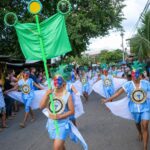
Street dancing brings Silang’s agricultural story to life through music, movement and costume.
Performers may wear clothing inspired by the colors of crops, flowers, sunlight and fertile fields. Yellow, orange, green, brown and gold often dominate the parade, while props may include baskets, farm tools, woven hats, leaves and representations of fruits and vegetables.
Students from Silang’s public schools have participated in festival street parades, presenting coordinated performances that combine traditional agricultural imagery with youthful energy.
Some routines portray the cycle of planting and harvesting.
Dancers begin by acting as farmers preparing the soil. Others represent rain, sunlight or growing plants. As the music becomes faster, the performers raise baskets or produce to represent an abundant harvest.
The theme is easy to understand even when there is no spoken narration: farmers work together, nature responds and the community celebrates what the land provides.
Grand Parade
The grand parade gathers different sectors of Silang in one large public procession.
The 2023 parade included farmers’ associations, performing students, municipal employees, police personnel, cadets and a Sumilang-themed float. The route moved through roads in the poblacion area before reaching the main activity venue.
You may see agricultural groups marching beside school performers, government representatives and local businesses. Floats use crops, farming scenes and images of rural life to interpret the festival’s theme.
Because Silang is a large municipality, the parade may not pass every major area. Confirm the route before choosing where to wait.
Road closures can also affect public transportation and private vehicles. Arrive early and be prepared to walk from your drop-off point.
Float Parade
Festival floats allow barangays, schools, businesses and organizations to create larger interpretations of Silang’s identity.
A float may resemble a farm filled with vegetables and fruit trees. Another may show a traditional farming family beside modern equipment, suggesting the transition from manual labor to new agricultural technology.
Recent editions have continued to feature float parades, including the 2025 celebration held at the end of its April festival schedule.
The best floats do not simply cover a vehicle with produce.
They tell a story about Silang—its farmers, changing landscape, local products and hopes for sustainable agricultural development.
Food Processing and Cooking Activities
Growing food is only the beginning of the agricultural value chain.
Farmers may earn more when raw crops are transformed into higher-value products such as jam, wine, pastries, preserves, chips or bottled drinks. This is why food-processing seminars, cooking demonstrations and product-development activities have appeared in festival programs.
The 2023 schedule included food-processing instruction and a cooking demonstration featuring ube halaya. The festival also provided space for local products to be displayed and sold.
These activities help visitors understand the connection between farming and entrepreneurship.
A farmer may sell fresh pineapple, but a community enterprise can also transform that harvest into juice, jam, pastries or other products with a longer shelf life. That creates additional income and gives Silang a stronger local-product identity.
Agricultural Seminars and Government Assistance
Not every Sumilang activity is designed for tourists.
Some of the festival’s most important programs involve training, equipment and support for farming groups.
The 2023 edition included livelihood assistance such as hand tractors and organic fertilizer. Recent programs have also highlighted modern farming, sustainability and technological improvements in food production and livestock raising.
Seminars may address crop production, food processing, machinery use, pest control, marketing or other practical concerns.
These activities show that Sumilang is not only celebrating a completed harvest. It is also trying to prepare farmers for the next planting season and the challenges ahead.
Ginoo and Binibining Sumilang
Pageants add glamour and entertainment to the festival schedule.
The search for Ginoo and Binibining Sumilang has been included in recent programs, with candidates taking part in presentations and a coronation night.
Festival pageants commonly incorporate agricultural themes into costumes and production numbers.
A candidate may wear an outfit inspired by pineapple leaves, flowers or native materials. Interviews may also provide opportunities to discuss farming, environmental protection and local culture.
The pageant gives young Silangueños a public role in promoting the municipality while adding an evening attraction after the daytime agricultural activities.
Farmers’ Night
Farmers’ Night is one of the most meaningful parts of the celebration.
After days of displays, competitions and public events, farmers gather for recognition, entertainment and the awarding of festival honors. The 2023 celebration ended with a Farmers’ Night and an awards ceremony acknowledging their contribution to Silang’s economy.
The mood is usually more personal than the street parade.
Farmers who spend much of the year working in distant barangays are able to meet, exchange experiences and celebrate with their families. Awardees step onto a stage where their work is recognized not only by agricultural officials but also by the wider community.
For one evening, the people behind the harvest become the main guests.
What the Festival Feels Like
Sumilang feels like a combination of a farmers’ market, agricultural fair and traditional town festival.
In one area, enormous crops are lined up for judging. Nearby, entrepreneurs offer samples of locally made products. Farmers discuss planting methods while children stop to photograph an unusually large pineapple or squash.
Then the drums begin.
Street dancers enter in bright costumes, carrying baskets and woven hats. Floats covered in leaves and agricultural decorations pass through the crowd. Families cheer for schools, barangays and farming associations they recognize.
The festival is colorful, but it also feels practical and grounded.
The products displayed are not merely decorations. They represent somebody’s livelihood. The farmers receiving awards are real people who have spent months caring for crops and animals.
Understanding that makes the celebration more meaningful.
Agricultural Products to Look For
Silang’s diverse farming sector means festival offerings can change depending on the harvest and participating barangays.
Among the products you may encounter are:
- Pineapples and bananas
- Papayas and jackfruit
- Coffee and coconut products
- Squash, beans and eggplant
- Ube and cassava
- Ornamental plants and seedlings
- Processed fruit products
- Local pastries and rice delicacies
- Eggs, milk and livestock-related products
The 2023 harvest categories demonstrate the range of fruits, vegetables and root crops associated with the festival, while recent editions have also highlighted livestock raising and agricultural sustainability.
Bring a reusable bag because it is easy to leave the trade fair carrying more produce than expected.
Tips for Buying Fresh Produce
Look closely at the quality rather than automatically choosing the largest item.
Ask the farmer whether the fruit is ready to eat or should be allowed to ripen for several days. Some produce may have been harvested specifically for display and may not have the same qualities as items intended for immediate consumption.
When buying plants, ask about sunlight, watering and soil requirements. Silang’s cooler environment may be different from the conditions at your home.
For packaged products, check the label, production date and storage instructions. Support legitimate local businesses that provide clear information about their products.
Where Is the Sumilang Festival Held?
Recent agriculture-focused celebrations have been staged at the New Municipal Hall Festival Grounds in Barangay Biga 1.
The 2024 festival officially opened at the New Municipal Hall Grounds, while the April 2025 schedule also identified the same area as its main venue.
Other activities may take place elsewhere.
Street parades may use roads in the poblacion, while seminars, pageants, job fairs and community competitions may be assigned to separate halls or event spaces.
Always check the specific venue for the activity you plan to attend. Saying “Sumilang Festival” to a driver may not be enough when events are spread across different parts of the municipality.
How to Get to Silang from Metro Manila
Via PITX
PITX is a convenient departure point for commuters traveling toward Cavite.
The terminal accommodates buses serving destinations such as Dasmariñas, Tagaytay, Mendez, Alfonso and Nasugbu through the Aguinaldo Highway corridor. PITX also provides a route finder and live bus schedule, which should be checked before traveling because operators and assignments may change.
For destinations along Aguinaldo Highway in Silang, ask for a bus bound for Tagaytay or another route passing through the municipality.
For Silang Bayan or the New Municipal Hall in Barangay Biga 1, you may need to get off at an appropriate junction and transfer to a jeepney, tricycle or other local vehicle. A current commuter guide also suggests traveling through Dasmariñas or using a Tagaytay-bound bus, depending on the exact Silang destination.
Show the conductor the exact festival venue before boarding. Silang covers a large area, and the highway, town proper and municipal-government complex are not interchangeable destinations.
By Private Vehicle
Drivers from Metro Manila commonly approach Silang through Aguinaldo Highway, while travelers coming from Laguna may use the Santa Rosa–Tagaytay corridor and connecting local roads.
Festival traffic, parades and road closures can slow down travel near the main venue. Use live navigation and follow announcements from local traffic officials.
Park only in designated areas. Avoid leaving your vehicle along narrow roads used by residents or agricultural delivery vehicles.
Practical Tips for Festival Visitors
Confirm the Current Date
Do not automatically travel in February or April without checking. The festival schedule has changed across different editions.
Arrive Early
Agricultural fairs are more enjoyable before the venue becomes crowded. Early arrival also gives you better access to produce displays and parade viewing areas.
Bring Cash
Some farmers and small vendors may accept digital payments, but cash remains useful when signals become weak or sellers have limited payment options.
Carry Reusable Bags
You will probably be tempted to buy fruit, vegetables, plants or packaged products.
Wear Comfortable Shoes
Festival grounds can involve considerable walking, and some agricultural sections may be dusty or uneven.
Prepare for Heat
Recent editions have been held in April, when daytime temperatures can be high. Bring water, sunscreen, an umbrella and a hat.
Talk to the Farmers
Do not treat the exhibits like an ordinary supermarket. Asking questions is one of the best ways to appreciate the festival.
Respect the Displays
Do not touch, lift or cut competition entries without permission. Some crops are carefully arranged for judging.
Check Road Advisories
Parades may close parts of the poblacion or roads near government facilities.
Visiting the Festival with Children
Sumilang can be both fun and educational for children.
They can see where familiar fruits and vegetables come from, meet farmers and learn that food does not simply appear on a supermarket shelf.
Ask children to identify the different crops on display. Let them compare the sizes, colors and shapes of various produce. Older children may enjoy asking farmers how long a pineapple, banana or squash takes to grow.
Keep them away from moving floats, agricultural machinery and livestock enclosures unless organizers allow public access.
Bring drinking water, snacks and sun protection, especially when attending an outdoor parade.
Other Places to Visit in Silang
Nuestra Señora de Candelaria Church
The historic Silang Church is an essential stop for visitors interested in the religious side of Sumilang.
The present stone structure dates to the 17th century and is known for its remarkable church art and historic retablos. The church was declared a National Cultural Treasure, and its heritage marker was formally unveiled during Silang’s 2019 festival season.
Silang Town Proper
The poblacion gives visitors a closer look at the older civic and religious center of the municipality.
Explore respectfully, particularly when church services or official programs are taking place.
Farms, Gardens and Local Cafés
Silang has numerous farm-based destinations, plant nurseries, garden restaurants and independent cafés.
Operating hours and reservation requirements vary, so contact the establishment before making it part of your itinerary.
Tagaytay
Silang’s proximity to Tagaytay makes it easy to combine the festival with ridge views, restaurants and familiar tourist attractions.
Traffic between the two areas can be heavy on weekends, so allow additional travel time.
Why the Sumilang Festival Matters
Agricultural land in Cavite continues to face pressure from urban development.
As communities grow, farms may be converted into roads, subdivisions, commercial areas or industrial properties. Younger family members may also leave farming in search of other employment.
Sumilang cannot solve all these challenges through a few days of festivities.
However, it can make farmers visible.
It gives them a place to display their best harvests, sell products, receive training and be recognized for years of work. It also reminds consumers that protecting agriculture requires more than praising farmers in speeches.
It means buying local products, supporting fair prices, reducing food waste and understanding why productive land remains valuable.

More Than a Harvest Celebration
The festival is ultimately about relationships.
Farmers depend on the soil, weather, markets and one another. Consumers depend on farmers for food. Local businesses depend on agricultural products they can process, serve or sell.
Sumilang brings all these relationships into one public space.
A visitor who buys a pineapple may meet the person who grew it. A student watching the parade may discover an interest in agricultural technology. A young farmer receiving an award may feel encouraged to continue the family livelihood.
These individual experiences help the festival create an impact beyond its closing ceremony.
Final Thoughts
The Sumilang Festival is one of Cavite’s most meaningful agricultural celebrations.
Its street dancers, floats, pageants and food stalls provide the color and energy expected from a local festival. However, its real strength comes from the people it honors.
Behind every pineapple, banana, vegetable and ornamental plant is a farmer who prepared the soil, cared for the crop and waited patiently for the harvest.
Sumilang brings those farmers out of the fields and places them at the center of the community’s attention.
Visit for the parade and the impressive agricultural displays. Taste local products, explore the trade fair and take home fresh produce. But while enjoying the festivities, take time to talk with the farmers and learn about the work behind what you see.
The festival reminds us that a bountiful harvest is never created by luck alone.
It grows from knowledge, perseverance, cooperation and gratitude—and those are exactly the qualities that the people of Silang celebrate through Sumilang.