Some Philippine festivals are built around patron saints.
Others celebrate flowers, local delicacies, historical events or indigenous traditions.
And then there are festivals that begin with one of the most basic things a farming community can celebrate:
A good harvest.
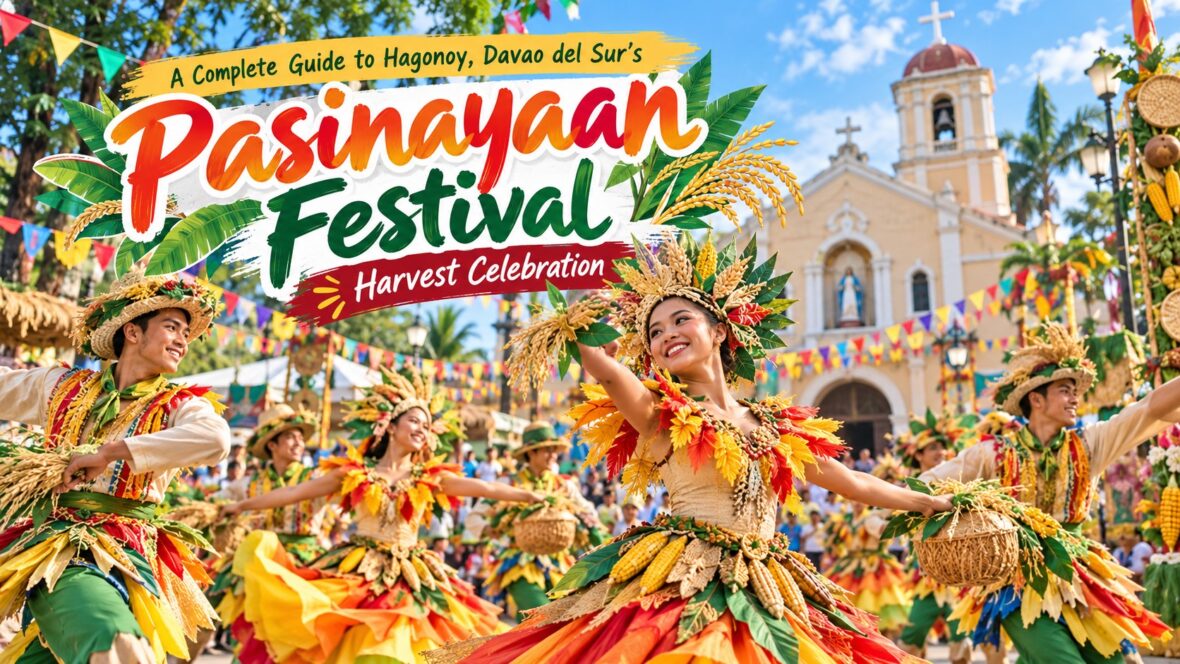
That is the heart of the Pasinayaan Festival of Hagonoy, Davao del Sur.
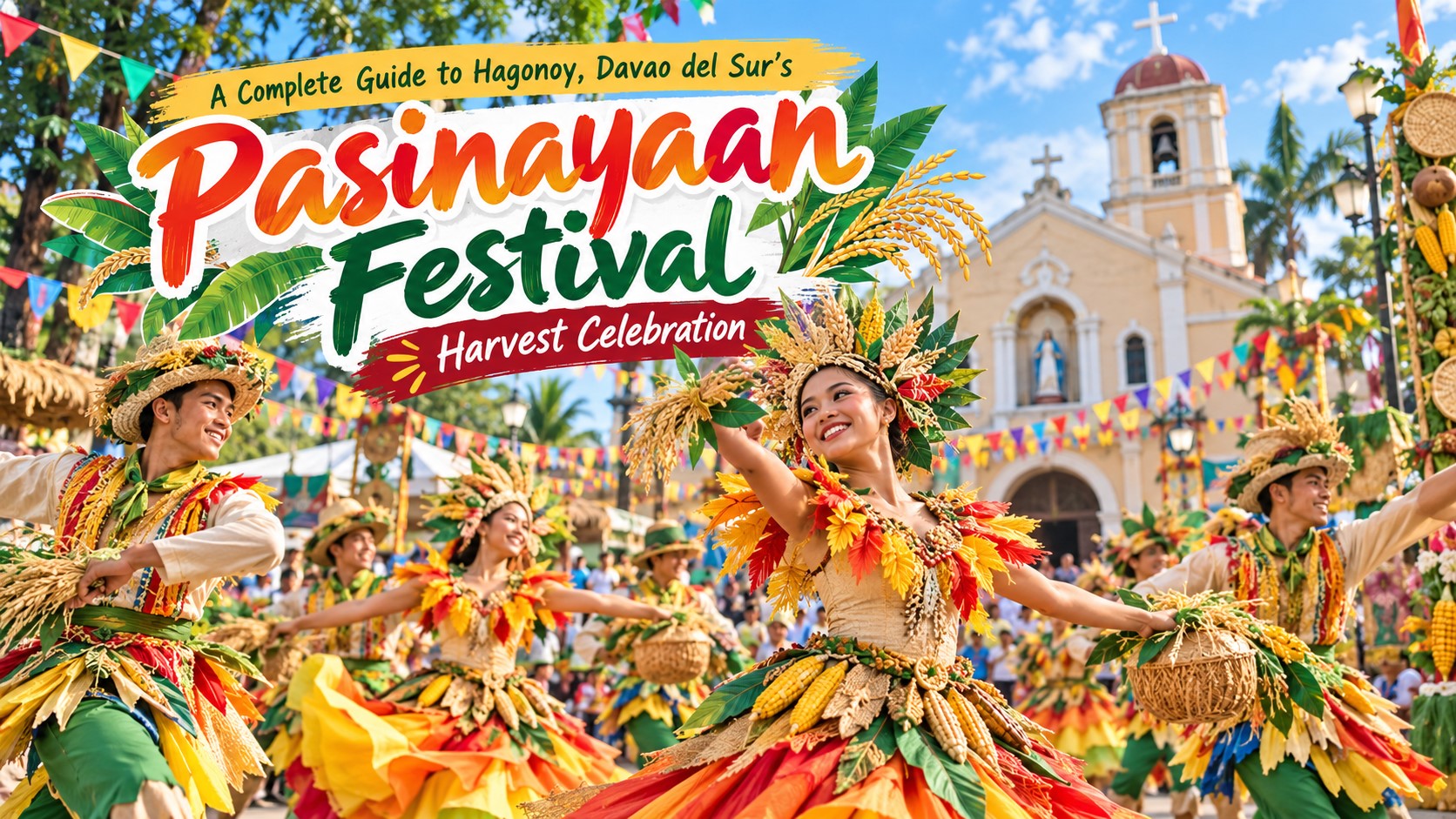
Traditionally held during the first few days of October, Pasinayaan is known as a thanksgiving celebration for the municipality’s abundant harvest and the agricultural livelihood that supports many families in the community. Philippine festival calendars have long listed the celebration in Hagonoy from October 1 to 5 and describe it as a thanksgiving festival for a bountiful harvest.
And once you learn a little about Hagonoy itself, that focus makes perfect sense.
This is a municipality where rice fields, coconut trees, banana farms, sugarcane and other crops are not simply part of the scenery.
They are part of everyday life.
So when harvest time comes, Pasinayaan becomes an opportunity to pause, celebrate and give thanks for what the land has provided.
If you’re curious about this lesser-known festival in Mindanao, here’s a complete guide to Pasinayaan Festival—its meaning, agricultural roots, traditional schedule and why it matters to the people of Hagonoy.
Content
What Is Pasinayaan Festival?
Pasinayaan Festival is a local thanksgiving festival celebrated in Hagonoy, Davao del Sur.
Its central theme is gratitude for a good and abundant harvest.
Long-running Philippine festival listings consistently identify Pasinayaan as an October celebration in Hagonoy and describe it specifically as a thanksgiving festival for a bountiful harvest.
That makes Pasinayaan primarily an agricultural celebration.
It reflects a very familiar Filipino idea:
When there is a blessing, you celebrate it together.
For farming communities, few blessings are more important than a successful harvest.
A good harvest can mean food on the table.
It can mean income for a family.
It can mean money for school expenses.
It can mean another planting season.
And on a larger scale, it supports traders, farm workers, transport operators and many other people whose livelihoods are connected to agriculture.
Pasinayaan gives the community a way to celebrate all of that.
Where Is Pasinayaan Festival Celebrated?
Pasinayaan Festival is celebrated in the Municipality of Hagonoy in Davao del Sur.
Hagonoy lies immediately south of Digos City and is made up of 21 barangays.
Agriculture remains an important part of the municipality’s identity. Studies of Hagonoy’s land use show large areas suitable for annual crops, irrigated rice, perennial trees and vines.
And agriculture isn’t concentrated around only one product.
Different parts of Hagonoy produce different crops.
The municipality’s central barangays are particularly important for rice production, while upland and other agricultural areas support crops such as corn, sugarcane and coconut.
The eastern side also has plantation crops including coconut, cacao and banana, together with fishpond areas.
So when Pasinayaan celebrates a “bountiful harvest,” that harvest represents a much wider agricultural landscape.
Hagonoy: A Farming Community at the Heart of the Festival
To understand Pasinayaan, you really have to understand Hagonoy’s relationship with agriculture.
Hagonoy has long been recognized as an agricultural municipality.
Research on the town has identified rice, coconut, banana, mango and sugarcane among its major crops. Its central lowland areas are particularly associated with rice production.
Even today, agriculture remains visible in local development projects.
A farm-to-market road project connecting areas of Hagonoy was specifically designed to serve banana, rice and sugarcane production zones.
More recently, irrigation projects have continued supporting rice farmers around Hagonoy. In 2026, for example, a solar-powered irrigation project in Barangay Sinayawan was turned over to help irrigate around 180 hectares of agricultural land.
So Pasinayaan isn’t a festival where agriculture is added simply because it makes a nice theme.
Agriculture is the reason the celebration makes sense in the first place.
What Does “Pasinayaan” Mean?
The festival name is interesting because the Filipino root word “pasinaya” is commonly associated with the idea of formally opening, beginning or launching something.
You’ll hear the related verb “pasinayaan” used when a new building, project or facility is formally inaugurated.
But in Hagonoy, Pasinayaan has developed its own identity as the name of the town’s harvest thanksgiving celebration.
Published sources documenting the festival are surprisingly limited, so it would be risky to invent a more elaborate origin story for the name.
What we do know consistently is this:
Pasinayaan is associated with Hagonoy, Davao del Sur, it takes place during the first days of October, and it is traditionally described as a thanksgiving celebration for a successful harvest.
Sometimes that’s actually the better way to understand a local festival.
Instead of forcing a complicated explanation onto the name, look at what the community is celebrating.
And here, the answer is very clear:
The harvest.
Pasinayaan Is a Thanksgiving Festival
The most important word connected to Pasinayaan is probably “thanksgiving.”
Harvest festivals exist in many cultures because agriculture has always depended on things people cannot completely control.
Farmers can prepare the soil.
They can plant.
They can irrigate.
They can remove weeds.
They can protect crops.
But weather, pests, drought, flooding and many other conditions still affect the final harvest.
That makes a successful season worth celebrating.
In Pasinayaan, the harvest becomes more than an economic result.
It becomes something shared by the entire community.
And that’s a tradition Filipinos understand very well.
We celebrate birthdays with food.
We celebrate graduations with food.
We celebrate fiestas with food.
So naturally, when the land itself provides an abundant harvest, we find a reason to celebrate that too.
Rice and the Agricultural Landscape of Hagonoy
Rice deserves special attention when talking about Hagonoy.
The municipality’s central barangays have historically been considered important rice-producing areas, supported by irrigation from the Padada River Irrigation System.
That means fields of palay are not simply something tourists might see while passing through.
They form part of Hagonoy’s economic landscape.
And rice production involves much more than harvest day.
There is land preparation.
Planting.
Irrigation.
Fertilizing.
Pest control.
Monitoring weather conditions.
Harvesting.
Drying.
Transport.
Selling.
It takes months of work before a sack of rice reaches the market.
A festival like Pasinayaan gives that entire process a cultural meaning.
The harvest becomes a symbol of labor, patience and hope.
Other Crops Connected to Hagonoy
Rice may be prominent, but Hagonoy’s farms are diverse.
Agricultural studies and provincial projects have identified several important crops in the municipality, including:
- Rice
- Coconut
- Banana
- Sugarcane
- Corn
- Mango
- Cacao
- Other fruits and vegetables
Land-use studies have found that Hagonoy’s soils support annual crops, irrigated rice and perennial trees and vines, while provincial infrastructure projects have specifically supported communities producing rice, banana and sugarcane.
That diversity gives Pasinayaan a broader meaning.
It isn’t simply a rice festival.
It is a thanksgiving celebration for the agricultural abundance of Hagonoy as a whole.
What Happens During Pasinayaan Festival?
This is one area where it’s worth being careful.
Unlike larger Philippine festivals such as Sinulog or Dinagyang, detailed year-by-year programs for Pasinayaan are not consistently archived online.
The core identity of the festival—a harvest thanksgiving celebration held in Hagonoy—is well documented.
But specific events can vary depending on the year.
Municipal festivals in agricultural communities commonly bring together cultural presentations, community programs, agricultural displays, local products, competitions and entertainment.
For Pasinayaan, however, visitors should always check the official program for the particular year they plan to attend instead of assuming that every activity happens annually.
What remains constant is the spirit behind the celebration:
Thanksgiving.
Community.
Agriculture.
And pride in Hagonoy.
Celebrating the Farmers
It’s easy to enjoy a festival and forget the people behind the theme.
But for a harvest festival, farmers really are at the center of the story.
Rice doesn’t simply appear in a supermarket.
Bananas don’t magically arrive at fruit stands.
Sugarcane doesn’t harvest itself.
Behind every successful crop are people waking up early, working under the sun and dealing with conditions that can change from one season to another.
Pasinayaan gives the municipality an opportunity to recognize that work.
And I think that is one reason harvest festivals remain meaningful.
They remind people where food actually comes from.
Not from shelves.
Not from delivery apps.
From farms.
A Celebration of Community
Pasinayaan is also about community.
Agriculture rarely operates in isolation.
One farmer may grow the crop.
But someone else transports it.
Someone else buys it.
Someone else mills it.
Someone else sells it.
Someone else prepares it.
Local agriculture creates a network.
And when the municipality celebrates a successful harvest, the festival belongs not only to the farmers but also to the wider community whose lives are connected to them.
That includes:
- Farm workers
- Traders
- Market vendors
- Drivers
- Small business owners
- Families
- Students
- Barangay organizations
- Local government workers
A good harvest can create economic activity throughout the town.
Pasinayaan becomes a celebration of that shared prosperity.
The Festival and Hagonoy’s Identity
Every town needs traditions that help people recognize what makes their community different.
For Hagonoy, agriculture is an obvious part of that identity.
The municipality isn’t defined only by government boundaries or barangay names.
It is defined by landscapes.
Rice paddies.
Plantations.
Irrigation canals.
Farm roads.
Harvest seasons.
And the people working in them.
Pasinayaan turns those everyday realities into something worth celebrating.
That is often what the best local festivals do.
They take something residents see every day and remind everyone that it deserves appreciation.
Is Pasinayaan Festival Religious?
Pasinayaan is generally described in tourism and festival references primarily as a harvest thanksgiving celebration rather than specifically as a patronal festival.
That distinction is worth noting.
Many Filipino festivals are directly tied to a patron saint’s feast day.
Others have a stronger civic, cultural or agricultural identity.
Pasinayaan is best understood through its thanksgiving and harvest character.
Of course, Filipino ideas of thanksgiving often have spiritual dimensions as well.
For many families, giving thanks for a successful harvest naturally includes gratitude to God.
But Pasinayaan’s commonly documented identity is centered on agricultural abundance.
Pasinayaan Festival vs CCP Pasinaya Festival
Here’s something that can easily confuse people searching online.
Pasinayaan Festival in Hagonoy is not the same event as the Cultural Center of the Philippines’ Pasinaya Open House Festival.
The CCP Pasinaya is a major multi-arts event associated with performances, theater, dance, music, visual art and other creative disciplines.
Pasinayaan Festival, on the other hand, is held in Hagonoy, Davao del Sur and is traditionally described as a harvest thanksgiving celebration.
So if you’re searching online, pay attention to the extra letters.
Pasinaya = the well-known CCP arts festival.
Pasinayaan = the harvest festival associated with Hagonoy, Davao del Sur.
Very similar names.
Very different celebrations.
When Is Pasinayaan Festival Celebrated?
Traditional festival calendars list Pasinayaan Festival from:
October 1 to October 5
in Hagonoy, Davao del Sur.
That puts the celebration right at the beginning of October.
However, exact dates and specific activities can change depending on the year’s official local program.
If you’re planning a trip specifically for the festival, always verify the latest schedule with the Municipality of Hagonoy or official local tourism channels before booking transportation.
How Long Does Pasinayaan Festival Last?
Older tourism listings describe Pasinayaan as a roughly weeklong thanksgiving celebration, although the commonly published date range of October 1 to 5 covers five days.
That difference is another reason not to rely too heavily on old festival calendars when planning an actual trip.
The general period is early October.
The exact program is something visitors should confirm every year.
Where Is Hagonoy, Davao del Sur?
Hagonoy is a municipality in the province of Davao del Sur in Mindanao.
It lies south of Digos City and forms part of a highly agricultural section of the province.
The municipality is divided into 21 barangays spread across upland, central agricultural and eastern coastal areas.
That geography helps explain the variety of agricultural activities found in the town.
Some communities are strongly associated with rice.
Others support plantation crops.
And some eastern areas have fishponds as well.
How to Get to Hagonoy
For travelers coming from outside Davao del Sur, the usual gateway to the area is Davao City.
From Davao City, travelers can head south toward Digos City before continuing toward Hagonoy.
Public buses and vans serving southern Davao routes are commonly available, although routes and terminals can change.
If you’re traveling specifically for Pasinayaan, check local transportation schedules close to your trip.
Festival days can bring additional traffic and temporary road adjustments.
From Digos City to Hagonoy
Hagonoy is located close to Digos City, making Digos one of the most practical jump-off points for visitors.
From Digos, travelers can use local public transportation heading toward Hagonoy and nearby municipalities.
If you’re unfamiliar with the area, ask the driver or terminal staff for the most convenient drop-off point for the year’s festival venue.
Remember that festival events may not all happen in exactly the same place.
What to Expect When Visiting Pasinayaan
Pasinayaan is not one of those festivals where you should arrive expecting the scale of Sinulog.
And that’s okay.
Actually, that’s part of its charm.
Smaller municipal festivals can feel much more personal.
You’re experiencing something primarily organized for the community itself rather than something built around mass tourism.
Expect a local atmosphere.
Families.
Students.
Barangay delegations.
Farmers.
Local businesses.
Municipal officials.
Visitors from nearby towns.
It’s the type of festival where you get a closer look at everyday community life in the Philippines.
Tips for Visiting Pasinayaan Festival
If you’re planning to attend, keep these practical tips in mind.
Check the official program first
This is probably the most important advice.
Event schedules vary.
Confirm dates, venues and activity times before traveling.
Arrive early
If there’s a major municipal event or cultural presentation, arriving early will make it easier to find parking or a good viewing area.
Bring sun and rain protection
October weather in Mindanao can be unpredictable.
Bring an umbrella.
It can protect you from both sun and rain.
Very Filipino.
Wear comfortable clothes
You’re attending a local festival, not a formal dinner.
Comfortable shoes are especially useful if you’ll be walking around the town center.
Support local products
If farmers, cooperatives or local businesses are selling products during the celebration, buying from them is one of the simplest ways to support the community.
Ask permission before photographing people up close
Festivals are incredibly photogenic, but basic courtesy still applies.
Try the local food
Personally, this is one of my favorite parts of attending provincial festivals.
Every town has something to eat.
And if a festival is celebrating agricultural abundance, you might as well taste some of it.
Why Harvest Festivals Still Matter
Modern life can make agriculture feel distant.
Most of us buy rice already packed.
Fruit arrives cleaned and sorted.
Vegetables are stacked neatly in supermarkets.
It’s easy to forget everything that happened before those products reached us.
Harvest festivals bring that story back into view.
They remind us that food is connected to land.
Land is connected to weather.
Weather affects farmers.
And farmers support communities.
Pasinayaan celebrates that cycle.
And even though the festival may not be as famous nationally as some Philippine fiestas, its message is something almost everyone can understand.
Be grateful for what the land provides.
Pasinayaan and Sustainable Agriculture
A modern harvest festival can also be a good opportunity to think about the future.
Agriculture faces challenges from changing weather patterns, irrigation needs, production costs and access to markets.
Projects in Hagonoy continue to address some of those concerns.
Farm-to-market roads have been developed to improve market access for agricultural communities, while irrigation projects continue supporting rice-producing areas.
So celebrating a good harvest should also remind us that agriculture needs continued support.
Festivals preserve tradition.
Infrastructure helps preserve livelihoods.
The two are more connected than they might initially seem.
Why Pasinayaan Festival Is Worth Discovering
Pasinayaan isn’t yet one of the country’s most heavily promoted festivals.
And that can actually make it more interesting for travelers who enjoy discovering celebrations beyond the usual tourist circuit.
You’re not only attending an event.
You’re learning something about Hagonoy.
About its farms.
About its economy.
About the importance of rice.
About the people who depend on agriculture.
And about the very Filipino habit of turning gratitude into a community celebration.
Sometimes that’s what makes a festival memorable.
Not how many tourists attended.
Not how huge the stage was.
But how clearly the celebration reflects the place where it happens.
Frequently Asked Questions About Pasinayaan Festival
What is Pasinayaan Festival?
Pasinayaan Festival is a harvest thanksgiving celebration held in Hagonoy, Davao del Sur.
Where is Pasinayaan Festival celebrated?
It is celebrated in the Municipality of Hagonoy in Davao del Sur, Mindanao.
When is Pasinayaan Festival?
Traditional Philippine festival calendars list the celebration from October 1 to October 5.
What does Pasinayaan Festival celebrate?
It celebrates and gives thanks for a bountiful harvest in Hagonoy.
Is Pasinayaan a harvest festival?
Yes. Published festival references consistently describe it as a thanksgiving festival celebrating a good and abundant harvest.
What products are grown in Hagonoy?
Important agricultural products associated with the municipality include rice, coconut, banana, sugarcane, corn, mango and cacao.
Is Pasinayaan Festival the same as CCP Pasinaya?
No.
CCP Pasinaya is a multi-arts festival organized by the Cultural Center of the Philippines.
Pasinayaan Festival is the harvest thanksgiving celebration of Hagonoy, Davao del Sur.
Is Hagonoy known for rice?
Yes. Hagonoy’s central agricultural barangays have historically been important rice-producing areas supported by the Padada River Irrigation System.
Pasinayaan Festival 2026 Schedule
For 2026, festival calendars continue to associate Pasinayaan Festival with its traditional early-October period in Hagonoy.
The commonly cited dates are:
October 1 to October 5
However, I would treat those as the traditional festival dates rather than a complete official 2026 program.
As of this guide, a detailed indexed schedule listing every 2026 activity was not readily available from official municipal sources.
Visitors planning to attend should check announcements from the Municipality of Hagonoy and its official local channels for the final program, venues and event times.
Final Thoughts
There is something simple about Pasinayaan Festival that I really like.
It doesn’t need an overly complicated story.
The fields produced a harvest.
People worked for it.
Families benefited from it.
So the community celebrates.
That’s Pasinayaan.
And maybe that’s why harvest festivals continue to survive across the Philippines.
Even as towns grow and lifestyles change, we still understand the importance of saying thank you.
Thank you for the rain.
Thank you for the land.
Thank you for the farmers.
Thank you for another harvest.
Every October, Hagonoy turns that gratitude into a celebration.
And for a few days, the crops that quietly sustain the community throughout the year finally take center stage.
That’s what makes Pasinayaan Festival worth remembering.