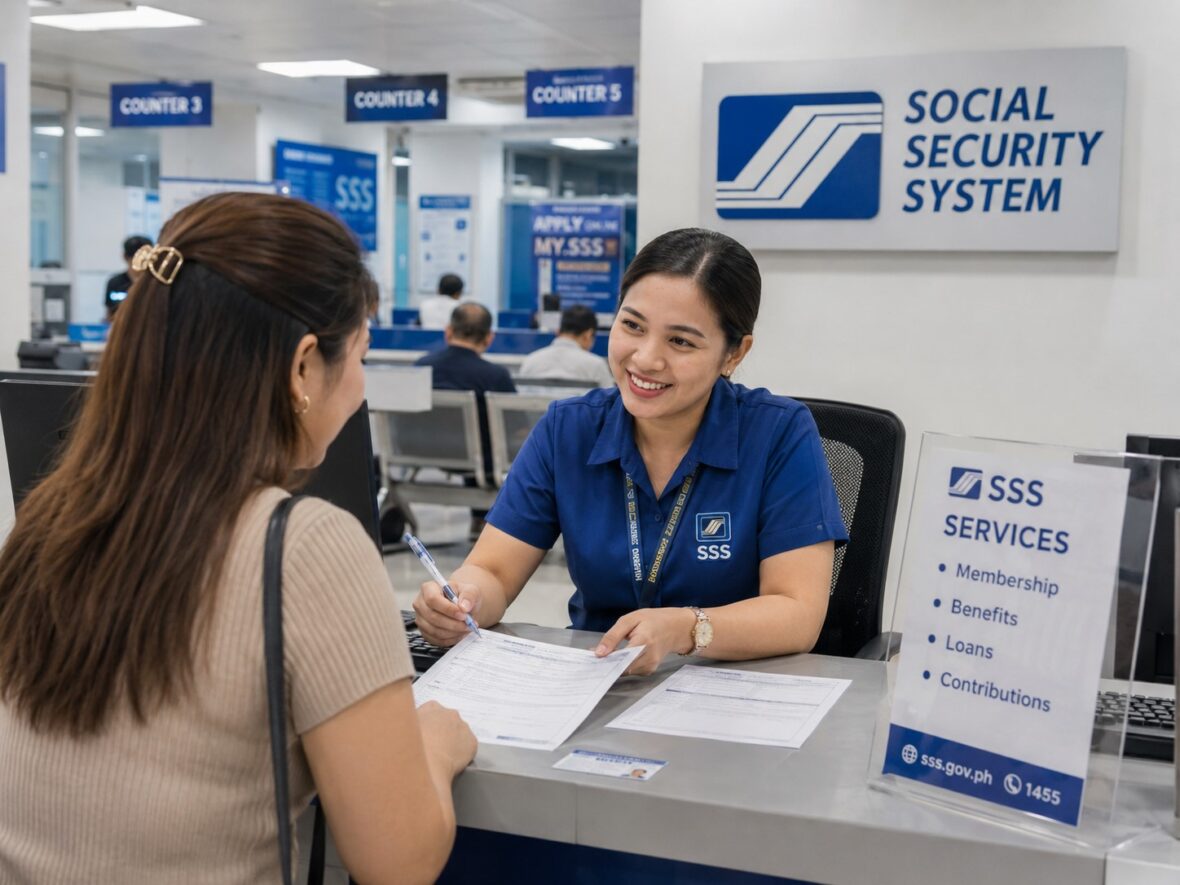
The SSS Salary Loan is one of the first options many Filipinos consider when they need extra cash.
Compared with many online lending apps and informal lenders, an SSS Salary Loan can be easier to manage because it has a fixed repayment term, published interest rates, and payroll deduction for employed borrowers.
But before you count on receiving the money, there are several important questions to answer:
- How many contributions do you need?
- How much can you borrow?
- What is the current interest rate?
- Why are the net proceeds lower than the approved amount?
- Can voluntary members and OFWs apply?
- What happens when you pay late?
- Can you renew an existing loan?
Let us break everything down in simple terms.
Content
What Is an SSS Salary Loan?
An SSS Salary Loan is a short-term loan granted to qualified SSS members to help meet immediate financial needs.
SSS officially describes it as a privilege loan. That distinction is important because a salary loan is not automatically given to every member. You must meet the contribution, age, account, loan-history, and membership requirements before you can qualify.
The program is available to qualified:
- Employed members
- Kasambahays and household employees
- Self-employed members
- Voluntary members
- Non-working spouses
- Land-based OFW members
Despite the name “salary loan,” you do not necessarily have to be receiving a company salary at the time of application.
Quick Summary of the SSS Salary Loan
Here are the most important figures under the current program rules:
| Loan detail | Current rule |
|---|---|
| Minimum contributions for a one-month loan | 36 posted monthly contributions |
| Minimum contributions for a two-month loan | 72 posted monthly contributions |
| Recent contribution requirement | At least 6 within the 12 months before application |
| Additional requirement for individually paying members | At least 6 contributions under the current membership type |
| Standard interest rate | 8% per year on a diminishing balance |
| Rate after recent penalty condonation | 10% per year |
| Service fee | 1% of the approved loan |
| Repayment period | 24 monthly amortizations |
| Late-payment penalty | 1% per month, computed for the delay |
| Maximum age at application | Under 65 years old |
| Application method | My.SSS Portal or MySSS mobile app |
These rules are based on the official SSS Salary Loan guidelines under Circular 2025-004, which remain posted on the SSS website in 2026.
SSS Salary Loan Requirements in 2026
Getting approved is not based only on the total number of years you have been an SSS member.
The system checks several conditions.
1. You need at least 36 posted contributions
To qualify for a one-month salary loan, you must have at least:
- 36 posted monthly contributions in total
- At least six posted contributions within the 12 months immediately before the month of application
Both conditions must be satisfied.
Example
Suppose you apply in July 2026.
You already have 50 posted contributions from several years of employment. However, you paid only four contributions during the 12 months before July 2026.
Even though your total is higher than 36, you may still be ineligible because you do not have the required six recent contributions.
2. You need at least 72 contributions for a two-month loan
To qualify for a two-month salary loan, you need:
- At least 72 posted monthly contributions in total
- At least six posted contributions within the 12 months before the application month
The difference between the one-month and two-month loan is therefore mainly the member’s total contribution history.
| Loan type | Total contributions needed | Recent contributions needed |
|---|---|---|
| One-month loan | 36 | 6 within the previous 12 months |
| Two-month loan | 72 | 6 within the previous 12 months |
3. Contributions must already be posted
This is one of the most important details.
SSS evaluates posted contributions, not merely amounts that were:
- Deducted from your salary
- Recently paid through GCash or a bank
- Included in an employer’s pending remittance
- Covered by an unprocessed payment receipt
Check your contribution history in My.SSS before applying.
When your employer deducted contributions but they are missing from your online account, speak with HR or payroll before submitting the loan application.
4. Individually paying members have an additional requirement
Self-employed members, voluntary members, non-working spouses, and land-based OFWs must have at least six posted monthly contributions under their current membership or coverage type before the application month.
This can affect someone who recently resigned.
Example
You previously accumulated 80 contributions as an employee. After resigning, you started paying as a voluntary member.
You have already met the total 72-contribution requirement for a two-month loan. However, you have paid only three contributions under voluntary membership.
You may need three more posted voluntary contributions before qualifying under your current membership type.
Your previous employee contributions still form part of your total record. The issue is the separate six-contribution requirement under your current status.
5. Your employer must be updated with SSS
For employed members, the current employer must be updated in:
- Contribution payments
- Loan remittances
- Other applicable SSS obligations
The employer must also electronically certify the employee’s application through its My.SSS employer account.
Your application may remain pending or become ineligible when:
- Your employer has unpaid contributions
- Your employer has unremitted loan deductions
- HR has not certified the application
- A former employer is shown instead of your current employer
- Your current employment has not been properly reported
After applying, notify your HR or payroll department that employer certification is required.
6. You must be under 65 years old
An applicant must be of legal age and under 65 years old at the time of the loan application.
7. You must not have an active final benefit
You generally cannot apply after being granted a final SSS benefit such as:
- Retirement
- Permanent total disability
An exception may apply when a previously granted final benefit was canceled because the member returned to employment, resumed self-employment, or recovered from total disability before applying.
8. You must not have a past-due SSS loan
You must not have a past-due obligation under covered SSS loan programs, including:
- Salary Loan
- Salary Loan Early Renewal Program
- Educational Assistance Loan Program
- Other short-term or long-term member loans identified by SSS
An unpaid old loan may therefore prevent you from obtaining a new one.
9. You must not be disqualified because of fraud
A member who has been formally disqualified for committing fraud against SSS cannot qualify while the restriction remains effective.
10. Your contact information must be updated
Your mobile number and email address should be current in the SSS database.
These may be used for:
- Login verification
- Loan notifications
- Employer-certification updates
- Approval messages
- Security alerts
- Disbursement notices
Update outdated information before applying.
11. You need an active disbursement account
Your loan cannot be released without an eligible account.
The proceeds may currently be credited through:
- An active MySSS Card
- An active UMID ATM Pay Card
- An active single account with a PESONet-participating bank enrolled through DAEM
The enrolled bank account must be in the member’s name.
Do not confuse your bank-account number with the 16-digit number printed on your ATM or debit card.
How Much Can You Borrow from SSS?
The amount is based primarily on the average of your latest 12 posted Monthly Salary Credits under the Regular Social Security Program.
It is not based simply on:
- Your current monthly salary
- The total amount of all your contributions
- The amount you want to borrow
- Your latest contribution alone
- The maximum MSC displayed in the contribution table
One-month salary loan amount
A one-month loan is equal to the average of your 12 latest posted Regular SS MSCs.
The average is rounded to the next higher available MSC. However, when you request an amount lower than the computed amount, the lower requested amount becomes the loan basis.
Example
Your 12 latest Regular SS MSCs are all ₱15,000.
Your average is:
₱15,000
Your possible one-month gross loan is therefore:
₱15,000
Two-month salary loan amount
A two-month salary loan is twice the average of your 12 latest posted Regular SS MSCs, again subject to the amount you actually apply for.
Using the same ₱15,000 average:
₱15,000 × 2 = ₱30,000
Your possible gross two-month loan is ₱30,000.
Sample SSS Salary Loan Computations
Example 1: Same MSC for the latest 12 months
Suppose all your latest 12 Regular SS MSCs are ₱10,000.
| Loan type | Computation | Gross amount |
|---|---|---|
| One-month loan | ₱10,000 × 1 | ₱10,000 |
| Two-month loan | ₱10,000 × 2 | ₱20,000 |
You would still need 72 total contributions to qualify for the two-month option.
Example 2: Different MSCs during the year
Suppose your latest 12 Regular SS MSCs are:
| Number of months | MSC |
|---|---|
| 6 months | ₱12,000 |
| 6 months | ₱15,000 |
Compute the total:
- ₱12,000 × 6 = ₱72,000
- ₱15,000 × 6 = ₱90,000
- Total = ₱162,000
Divide by 12:
₱162,000 ÷ 12 = ₱13,500
Possible loan amounts:
| Loan type | Gross amount |
|---|---|
| One-month loan | ₱13,500 |
| Two-month loan | ₱27,000 |
Example 3: Average falls between brackets
Suppose your calculated average is ₱14,625.
The rules provide for rounding to the next higher available MSC. Therefore, the system may use the next applicable salary-credit bracket.
The actual My.SSS application page will display the official amount available to you.
Example 4: You choose a lower amount
Suppose the system says you qualify for a one-month gross loan of ₱18,000.
You need only ₱10,000.
When the application allows you to request ₱10,000, the approved amount may be based on the lower figure because the rule uses the computed loanable amount or the amount applied for, whichever is lower.
Borrowing less can be practical when you want:
- A smaller monthly amortization
- Lower total interest
- More room in your monthly budget
- A smaller deduction from your future salary
What Is the Maximum SSS Salary Loan Amount?
The contribution schedule currently allows a total MSC of up to ₱35,000. However, contributions on the portion above ₱20,000 are allocated to the mandatory MySSS Pension Booster or provident-fund component.
The official salary-loan formula uses only the latest MSCs under the Regular SS Program, while the official contribution guidance says the maximum MSC considered in regular benefit computations is ₱20,000 under the current structure.
Based on these combined rules, the practical maximum is generally:
| Loan type | General maximum gross amount |
|---|---|
| One-month salary loan | ₱20,000 |
| Two-month salary loan | ₱40,000 |
This is an inference from the current Regular SS limit and salary-loan formula. Your My.SSS account remains the final source of the exact amount for which you qualify.
Paying contributions based on a total MSC of ₱35,000 does not necessarily mean you can borrow ₱35,000 for a one-month loan. The amount above the Regular SS limit is credited to the mandatory Pension Booster component rather than increasing the Regular SS loan basis.
Gross Loan Amount vs. Net Loan Proceeds
The amount approved by SSS is not necessarily the amount deposited into your bank account.
Gross loan amount
This is the amount approved before deductions.
Net loan proceeds
This is the amount you actually receive after applicable deductions.
SSS may deduct:
- A 1% service fee
- Pro-rated interest
- An outstanding balance from a previous short-term member loan
- Other applicable amounts shown in the Disclosure Statement
The official rules state that net proceeds equal the approved amount minus the applicable service fee, pro-rated interest, and any outstanding previous short-term loan balance.
Simple example
Suppose your approved gross loan is ₱20,000.
The service fee is:
₱20,000 × 1% = ₱200
Before considering pro-rated interest or any previous loan balance, the amount is already reduced to:
₱19,800
Your actual net proceeds will likely be lower once the pro-rated interest is included.
SSS Salary Loan Interest Rate in 2026
The current standard rate is 8% per year, calculated on a diminishing principal balance.
However, a 10% rate applies to certain renewal borrowers who used penalty condonation within the previous five years.
| Application type | Annual interest rate |
|---|---|
| Initial salary loan | 8% |
| Renewal with no penalty-condonation use in the previous five years | 8% |
| Renewal after penalty-condonation use within the previous five years | 10% |
SSS may adjust the rate in response to market conditions. Any adjustment is supposed to be announced through official SSS channels and applied to new or renewed loans from the effective date.
This means it is always wise to check the rate shown in your actual online Disclosure Statement before confirming an application.
What Does “Diminishing Principal Balance” Mean?
A diminishing-balance loan charges interest based on the amount you still owe.
As you make monthly payments, part of each payment reduces the principal. The next interest charge is then calculated using the lower remaining principal balance.
For example:
- You begin with a principal of ₱20,000.
- You make your first amortization.
- Part of that payment covers interest.
- The rest reduces the principal.
- The following month’s interest is based on the reduced balance.
This is different from a flat-rate loan, where interest may be calculated using the original borrowed amount throughout the loan term.
In simple terms, the interest portion gradually decreases as the outstanding principal goes down.
Nominal Interest Rate vs. Effective Interest Rate
The advertised rate may be 8%, but the Disclosure Statement may show a slightly different Annual Effective Interest Rate, or EIR.
This is not necessarily an error.
The EIR considers more than the basic annual rate. Factors may include:
- Loan release date
- Amortization start date
- Service fee
- Pro-rated interest
- Approved amount
- Other applicable charges
SSS says each borrower’s exact EIR appears in the individual Disclosure Statement during the application process.
Always review the EIR when comparing an SSS Salary Loan with:
- A bank personal loan
- A credit-card cash advance
- An online lending app
- A salary-advance service
- An employer loan
How Pro-Rated Interest Works
The first amortization does not necessarily begin immediately after the money is released.
SSS deducts pro-rated interest covering the period from the date the loan is granted through the end of the month before the first amortization month.
Example
Suppose the loan is approved in July.
The first applicable amortization month begins in September because payments start in the second month following the approval month.
SSS may deduct pro-rated interest covering the applicable period before regular amortizations begin.
The exact amount depends on:
- Approval date
- Release date
- Gross loan amount
- Applicable interest rate
- Start of the amortization schedule
This is why two people borrowing the same gross amount may receive slightly different net proceeds.
SSS Salary Loan Service Fee
SSS charges a service fee equal to 1% of the approved loan amount.
The fee is deducted from the proceeds rather than collected as a separate upfront payment.
| Approved loan | 1% service fee |
|---|---|
| ₱5,000 | ₱50 |
| ₱10,000 | ₱100 |
| ₱15,000 | ₱150 |
| ₱20,000 | ₱200 |
| ₱25,000 | ₱250 |
| ₱30,000 | ₱300 |
| ₱40,000 | ₱400 |
Remember that this table shows only the service fee. It does not include pro-rated interest or a previous loan balance.
Estimated Monthly Amortization
The loan is payable in 24 equal monthly amortizations.
The table below gives a rough illustration using an 8% annual diminishing-balance calculation over 24 months.
| Gross loan | Approximate monthly amortization |
|---|---|
| ₱10,000 | ₱452 |
| ₱15,000 | ₱678 |
| ₱20,000 | ₱905 |
| ₱30,000 | ₱1,357 |
| ₱40,000 | ₱1,809 |
These are only planning estimates. They do not replace the official SSS Disclosure Statement.
Your actual amount can differ because of:
- Release date
- Exact EIR
- Rounding
- Pro-rated interest treatment
- Existing loan deductions
- Applicable rate of 8% or 10%
Use the amortization shown in My.SSS as the official payment amount.
When Do Salary Loan Payments Begin?
The loan is payable in 24 monthly amortizations.
Payments start in the second month following the month of loan approval. The deadline is on or before the last day of the month following the applicable amortization month.
Example
Suppose your loan is approved in July 2026.
- First applicable amortization month: September 2026
- First payment deadline: October 31, 2026
When the deadline falls on a Saturday, Sunday, or holiday, payment may be made on the next working day.
Follow the exact dates shown in your Disclosure Statement because the actual schedule depends on the approval month.
How Employed Members Repay the Loan
For employed borrowers, the employer deducts the monthly amortization from payroll and sends the payment to SSS.
The employer certifies during the application that:
- You are currently employed by the company
- Your take-home pay is sufficient for the deduction
- The company will deduct and remit the monthly amortization
The employer must also handle the outstanding balance according to SSS rules when the borrower resigns, retires, is terminated, or is otherwise separated from employment.
Even when your employer handles the payment, check your My.SSS loan records regularly.
A deduction appearing on your payslip does not always mean the payment has already been posted.
How Voluntary, Self-Employed, and OFW Members Repay
Self-employed, voluntary, non-working-spouse, and land-based OFW borrowers are personally responsible for paying each monthly amortization.
Payments must be made using an SSS loan Payment Reference Number, or PRN, through an SSS tellering facility or accredited collecting partner.
Do not assume that SSS will automatically debit your enrolled disbursement account.
The account used to receive the loan is not necessarily an automatic-payment account.
Keep each payment receipt until it appears in your My.SSS loan history.
What Happens When You Pay Late?
A salary-loan amortization paid after its deadline is subject to a penalty of 1% per month, calculated for the period of delay.
If the loan remains unpaid after the end of its term, SSS applies:
- 10% annual interest
- 1% monthly penalty
These charges continue until the balance is fully paid.
Order in which payments are applied
When you make a payment, SSS applies it in this order:
- Penalties
- Interest
- Principal
This means a late borrower may see the principal decrease more slowly because penalties and interest are paid first.
When Is a Salary Loan Considered in Default?
A salary loan is considered in default when:
- The unpaid obligation is equal to more than six monthly amortizations, or
- A balance remains after the end of the loan term
Once the loan is in default, the full balance becomes due and demandable.
The unpaid obligation may include:
- Principal
- Interest
- Penalties
Leaving the loan unpaid can also affect future loan eligibility and SSS benefit proceeds.
Can an Unpaid Salary Loan Be Deducted from Your Pension?
Yes.
When a salary loan remains partly or fully unpaid at maturity, SSS may collect the outstanding balance from benefits payable to the member or beneficiaries.
For a final benefit claim, such as:
- Retirement
- Permanent total disability
- Death
SSS may deduct the outstanding principal, interest, and penalties from the benefit proceeds.
An SSS Salary Loan should therefore never be treated as money that you do not need to repay.
What Happens When You Resign?
Your loan does not disappear when you leave your employer.
When an employed borrower resigns, retires, is terminated, or is otherwise separated, the employer is required to deduct the outstanding loan balance from compensation or benefits due to the employee when sufficient funds are available.
When the employee’s final pay is not enough to settle the loan, the employer reports the remaining balance to SSS.
The member remains responsible for continuing the payments.
After resigning:
- Ask how much was deducted from your final pay.
- Request proof that the amount was remitted.
- Check your remaining balance in My.SSS.
- Generate a loan PRN.
- Continue paying the remaining amortizations.
- Confirm every payment online.
Can You Renew an SSS Salary Loan?
Yes, provided you meet the renewal conditions.
Renewal after six months
You may renew after at least six months from the approval date of the existing loan when:
- The current loan is not past due
- The latest three monthly amortizations before the renewal month were paid within their deadlines
The outstanding balance of the existing loan is deducted from the proceeds of the new loan.
Renewal after full payment
A fully paid loan may be renewed immediately when the final three amortizations were paid on time.
When one of the final three amortizations was paid late, renewal is generally allowed only after three months from the date the loan was fully settled.
Minimum renewal proceeds
After deductions, the new loan must provide net proceeds of at least:
- ₱2,000 for most members
- ₱100 for kasambahays and household employees
Otherwise, the renewal will not qualify.
Does Using Loan Condonation Affect the Interest Rate?
It can.
A renewal borrower who used penalty condonation within the previous five years is charged the current 10% annual rate instead of the standard 8% rate.
This does not mean you should never use a condonation program. Condonation can be useful when you have a delinquent loan and want to settle or restructure it.
However, you should understand that using it may affect the interest rate of a later salary-loan renewal.
Can You Cancel the Loan After Approval?
A granted SSS Salary Loan cannot simply be canceled.
When you no longer want to keep the loan, you may settle the outstanding principal, interest, and applicable penalties in full.
Before confirming your application, check:
- Gross loan amount
- Net proceeds
- Bank account
- Monthly amortization
- Interest rate
- EIR
- Service fee
- Repayment dates
Do not submit the application simply to see whether SSS will release the money.
SSS Salary Loan Requirements Checklist
Before applying, make sure that:
- You have an active My.SSS account.
- Your mobile number and email are updated.
- You have 36 contributions for a one-month loan.
- You have 72 contributions for a two-month loan.
- At least six contributions were posted within the required recent period.
- Individually paying members have six contributions under their current status.
- Your current employer is correctly recorded.
- Your employer is updated with SSS.
- You have no past-due SSS loan.
- You are under 65 years old.
- You have not received an active final benefit.
- You have an active eligible disbursement account.
- Your existing loan payments are properly posted.
- You can afford the monthly amortization.
Common Reasons You May Not Qualify
You have enough total contributions but not enough recent contributions
The six-contribution rule within the required recent 12-month period still applies.
Your latest contribution has not been posted
Only posted contributions are counted.
You recently changed membership type
Voluntary, self-employed, non-working-spouse, and land-based OFW members need six contributions under their current classification.
Your employer has not remitted contributions
An employed applicant’s employer must be updated in contribution and loan payments.
You have an unpaid previous SSS loan
A past-due loan may disqualify you.
You do not have an active DAEM account
The loan cannot be released without an eligible disbursement account.
The wrong employer appears in the application
Your present employer must certify the loan.
You already received a final benefit
An active retirement or permanent-total-disability benefit may prevent qualification.
Frequently Asked Questions
How many contributions do I need for an SSS Salary Loan?
You need at least:
- 36 posted monthly contributions for a one-month loan
- 72 posted monthly contributions for a two-month loan
At least six must have been posted within the required 12-month period before the application month.
Can I apply with exactly 36 contributions?
Yes, provided that at least six were posted within the required recent period and you satisfy all the other conditions.
Can I borrow two months’ salary with 36 contributions?
No. You need at least 72 posted monthly contributions for the two-month loan.
Can a voluntary member apply?
Yes.
A voluntary member must satisfy the total and recent contribution rules and must also have at least six posted contributions under the current voluntary membership type before applying.
Can a self-employed member apply?
Yes, provided all requirements are satisfied, including the six contributions under current self-employed coverage.
Can an OFW apply?
A qualified land-based OFW may apply online through My.SSS or the MySSS app.
The OFW needs the required posted contributions, updated records, an active disbursement account, and no disqualifying past-due loan.
How much is the current interest rate?
The standard rate is 8% per year on a diminishing principal balance.
A 10% rate applies to a renewal after penalty-condonation use within the previous five years.
Is there a processing fee?
SSS charges a 1% service fee, which is deducted from the approved loan proceeds.
Is the service fee refundable?
The fee forms part of the charges deducted when the loan is granted. Review the Disclosure Statement before accepting the application.
How much is the maximum salary loan?
Under the current Regular SS structure, the practical maximum is generally ₱20,000 for a one-month loan and ₱40,000 for a two-month loan, subject to your posted MSC record and the system’s official computation.
Why did I receive less than the approved amount?
The net amount is reduced by:
- The 1% service fee
- Pro-rated interest
- An outstanding previous loan balance
- Other applicable deductions shown in the disclosure
How long do I have to repay the loan?
The standard term is 24 equal monthly amortizations.
Can I request less than the maximum amount?
Yes. The rule uses the computed loan amount or the lower amount you request.
Can I pay the loan early?
Yes. You may settle the outstanding balance, including any applicable interest and penalties.
Can I renew after six months?
Yes, when the loan is not past due and the last three monthly amortizations before renewal were paid on time.
Can SSS deduct the loan from my retirement pension?
Yes. An outstanding balance, including interest and penalties, may be deducted from final benefit proceeds.
Is the loan automatically paid through my bank account?
Not necessarily.
Employed members generally pay through payroll deduction. Individually paying members must generate a loan PRN and make the payment through an accredited channel.
What should I check before accepting the loan?
Review the:
- Gross amount
- Service fee
- Pro-rated interest
- Existing loan deduction
- Net proceeds
- Monthly amortization
- Interest rate
- Effective interest rate
- First payment month
- Payment deadlines
Is an SSS Salary Loan Worth It?
An SSS Salary Loan can be a reasonable option when:
- You need money for an important short-term expense.
- You qualify under the contribution rules.
- You understand the deductions.
- The monthly amortization fits your budget.
- You can pay on time.
- Other borrowing options charge significantly more.
However, being qualified does not automatically mean you should borrow.
Avoid taking the loan merely because the money is available. The monthly payment will reduce your future take-home income, and an unpaid balance can eventually be deducted from your SSS benefits.
Borrow only what you need.
When the system offers ₱20,000 but you need only ₱8,000, taking a smaller amount may be the more responsible decision.
Final Thoughts
The SSS Salary Loan is relatively straightforward once you understand the three main parts: requirements, loan amount, and cost.
For qualification, remember the numbers 36, 72, and 6:
- 36 total contributions for a one-month loan
- 72 total contributions for a two-month loan
- Six recent contributions within the required period
Your loanable amount is based on the average of your latest 12 Regular SS Monthly Salary Credits—not simply your current salary or the total amount you have contributed.
The standard interest rate is currently 8% per year on a diminishing balance, but fees and pro-rated interest mean your net proceeds will be lower than the approved gross amount.
Before submitting the application, read the Disclosure Statement carefully. Check how much you will actually receive, how much will be deducted every month, and when the first payment is due.
An SSS Salary Loan can provide helpful financial support, but it remains a real debt connected to your SSS record. Use it thoughtfully, pay it on time, and regularly confirm that every amortization has been properly posted.