Some festivals are built around a famous delicacy or agricultural product. Others commemorate a historical battle or a town’s founding anniversary.
In Tanza, Cavite, the Sapyaw Festival brings together colorful street dancing, community participation and devotion to the town’s beloved patron, St. Augustine of Hippo, affectionately called Tata Usteng by local devotees.
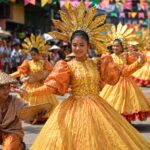
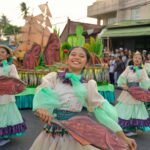
During the celebration, groups from different barangays take to the streets in bright costumes. Music echoes through Tanza’s town center as performers dance before residents, visitors and fellow devotees. The event is festive and energetic, but its deeper meaning comes from the community’s longstanding relationship with San Agustin de Tanza.
Sapyaw is traditionally associated with August 20, while the formal feast day of St. Augustine falls on August 28. Together with religious services, processions and other community activities, it forms part of Tanza’s broader August fiesta season.
For travelers, the festival offers an opportunity to experience Tanza beyond its highways, subdivisions and commercial areas. It introduces visitors to a historic Cavite town whose identity has been shaped by faith, revolution, food and a strong sense of community.
Content
What Is the Sapyaw Festival?
The Sapyaw Festival is a cultural and religious celebration held in Tanza, Cavite.
It is best known for street dancing performed by groups from different barangays. Participants wear colorful costumes and move through the town’s streets as part of the celebration honoring St. Augustine. Provincial festival listings and local references traditionally place Sapyaw on August 20.
The festival should be understood as part of a longer fiesta season rather than an isolated one-day event.
August 20 is commonly connected with Sapyaw and local civic celebrations, while August 28 is the official feast day of St. Augustine. Tanza’s religious calendar may also include novena Masses, devotional activities, processions and the grand karakol held close to the feast.
The exact activities are not necessarily identical each year. A particular edition may include cultural presentations, concerts, pageants, sports events or barangay programs in addition to street dancing. Schedules, routes and participating groups depend on the annual program announced by the municipal government and parish.
What Does “Sapyaw” Mean?
Published festival references consistently use the name Sapyaw, but readily available official and historical sources do not provide a clear, well-documented explanation of its etymology.
Because of that, it is better not to attach an invented meaning to the word.
What is clearly documented is the festival’s identity: it is a colorful street celebration involving Tanza’s barangays and held in honor of St. Augustine.
The lack of a widely published word origin does not lessen the festival’s significance. For many Tanzeños, Sapyaw is meaningful because of the experience surrounding it—the rehearsals, costumes, devotional activities, family reunions and community gatherings that return during the August fiesta season.
Who Is Tata Usteng?
Tata Usteng is the affectionate local name used for St. Augustine of Hippo, the patron associated with Tanza’s principal Catholic shrine.
The word Tata is a respectful and familiar way of referring to a father or older male figure, while Usteng is a localized form derived from Agustin. Calling the saint Tata Usteng reflects a personal kind of devotion. He is not regarded merely as a distant historical figure but as a familiar spiritual protector of the community.
The Diocesan Shrine of San Agustin and Parish of Santa Cruz identifies St. Augustine as its patron and observes his feast on August 28. The parish also holds a regular Thursday devotion to San Agustin de Tanza.
A 2023 academic study concerning devotion and heritage preservation in Tanza described the antique image of Tata Usteng as more than two centuries old. Accounts about the image’s discovery near a local waterway belong largely to oral and devotional tradition, so they are best understood as part of the community’s living religious heritage rather than as fully verified archival history.
For generations, residents have approached Tata Usteng with prayers for healing, safety, livelihood and family needs. This devotion provides the spiritual foundation behind the dancing and public celebrations.
St. Augustine of Hippo
St. Augustine was a Christian theologian and bishop whose writings became highly influential in Western Christianity.
His life story is often remembered as one of personal transformation. Before becoming a bishop and major religious thinker, Augustine experienced a long period of questioning and spiritual searching. His eventual conversion has made him particularly meaningful to people seeking renewal, wisdom and a closer relationship with God.
In Tanza, however, devotion to him is not expressed only through books or formal theology.
It is expressed through prayers, Masses, processions, karakol, family traditions and the lively public celebration surrounding the Sapyaw Festival. The religious and cultural elements work together: the church provides the devotional center, while the streets allow the entire community to participate.
Tanza’s Historic Parish
The Diocesan Shrine of San Agustin and Parish of Santa Cruz is central to Tanza’s religious identity.
The Diocese of Imus traces the community’s parish history to the Spanish colonial period. Santa Cruz de Malabon, as Tanza was then known, was established as an independent parish on August 29, 1780, after having earlier been served by secular clergy.
The parish carries two important titles.
Santa Cruz, or the Holy Cross, is its titular dedication, while St. Augustine is its patron. This explains why references to the church may use both Santa Cruz and San Agustin.
The church is also linked to one of the most important episodes in Philippine revolutionary history. On March 23, 1897, Emilio Aguinaldo and Mariano Trias took their oaths and assumed office as president and vice president of the revolutionary government in the convent of Tanza. Artemio Ricarte took his oath as captain-general there the following morning. They had been selected during the Tejeros Convention held the previous day.
This gives the church significance beyond the Sapyaw Festival. It stands at the meeting point of Tanza’s religious life and its role in the Philippine Revolution.
How Tanza Got Its Present Name
Tanza was once known as Santa Cruz de Malabon.
On February 28, 1914, Act No. 2390 officially changed the municipality’s name to Tanza. The same law also renamed several other Philippine municipalities.
Some local descriptions connect Sapyaw with Araw ng Tanza, although the historical law changing the town’s name was enacted in February rather than August. It is therefore safer to describe August 20 as the festival’s traditional date and part of Tanza’s civic-fiesta calendar without presenting it as the legal anniversary of the 1914 renaming.
The distinction is useful because local celebrations often combine several layers of meaning. A festival may honor a patron saint, showcase municipal pride and bring residents together without every activity corresponding to a single legal anniversary.
What to Expect During the Sapyaw Festival
Sapyaw is primarily known for colorful street dancing.
The main experience comes from seeing residents representing different barangays move through the streets in coordinated costumes and formations. Music, cheering spectators and religious imagery create an atmosphere that feels both celebratory and devotional.
The detailed program varies, but several elements may form part of the wider fiesta season.
Colorful Street Dancing
Street dancing is the feature most consistently associated with Sapyaw.
Barangay contingents appear in bright clothing, often using coordinated colors, hats, fabric and handheld props. Performers dance along public roads while residents gather on sidewalks and outside nearby homes and businesses.
The performances may combine traditional fiesta movements with modern choreography.
Some groups may interpret themes connected with faith, local history or community life. Others focus on strong visual presentation, using repeating formations and costume patterns that look impressive when seen across an entire street.
Unlike a short stage presentation, street dancers must continue moving while remaining synchronized. They perform under the sun, navigate public roads and manage costumes that may be heavy or difficult to carry.
This requires stamina and weeks—or sometimes months—of preparation.
Barangay Participation
One of Sapyaw’s strengths is the participation of Tanza’s barangays.
A local festival becomes more meaningful when residents are not merely spectators. Dancers, costume makers, musicians, parents, teachers, youth organizations and barangay officials all contribute to the finished presentation.
The performers seen on the road represent a much larger group working behind them.
Someone designed the concept. Others selected the music, taught the choreography, sewed costumes and built props. Families prepared food and drinking water for participants. Volunteers helped maintain order along the route.
This collective preparation turns Sapyaw into a community project rather than a performance created only for tourists.
Devotional Processions and Karakol
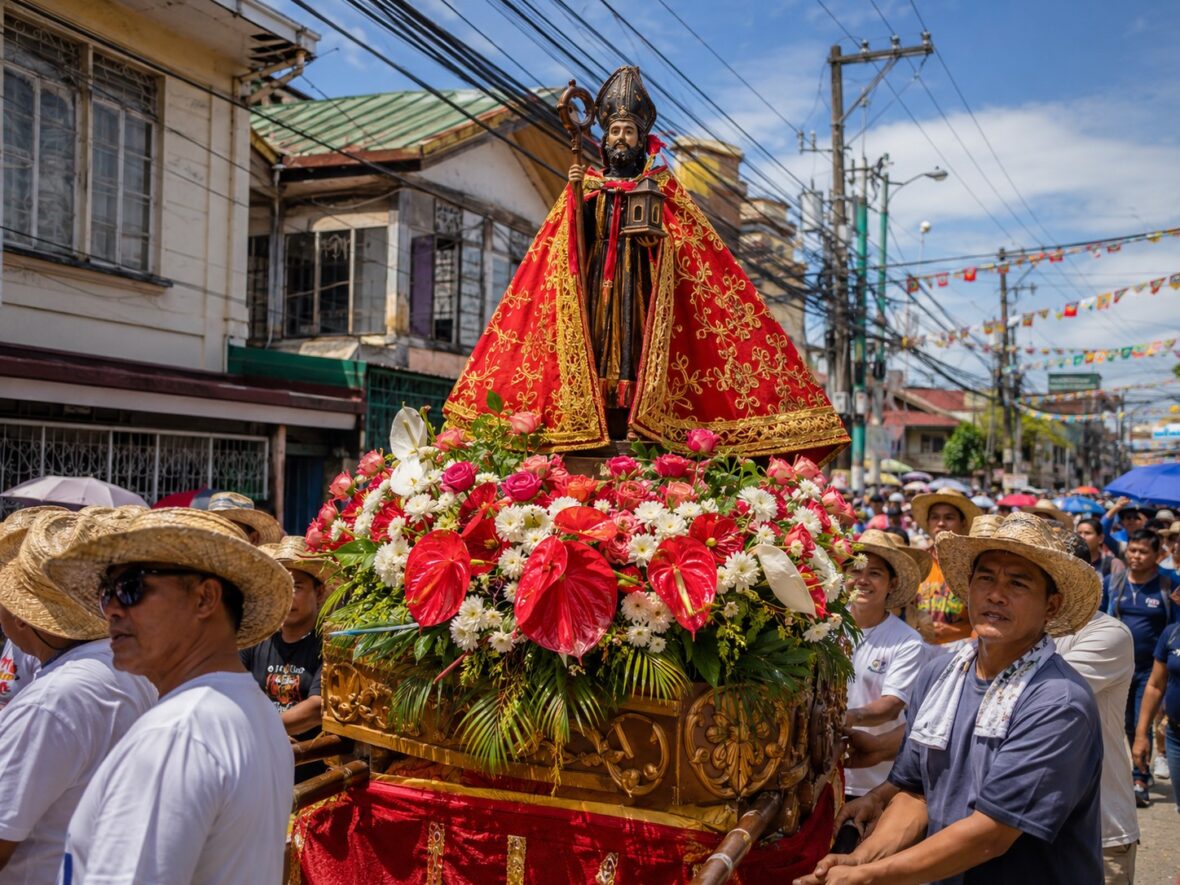
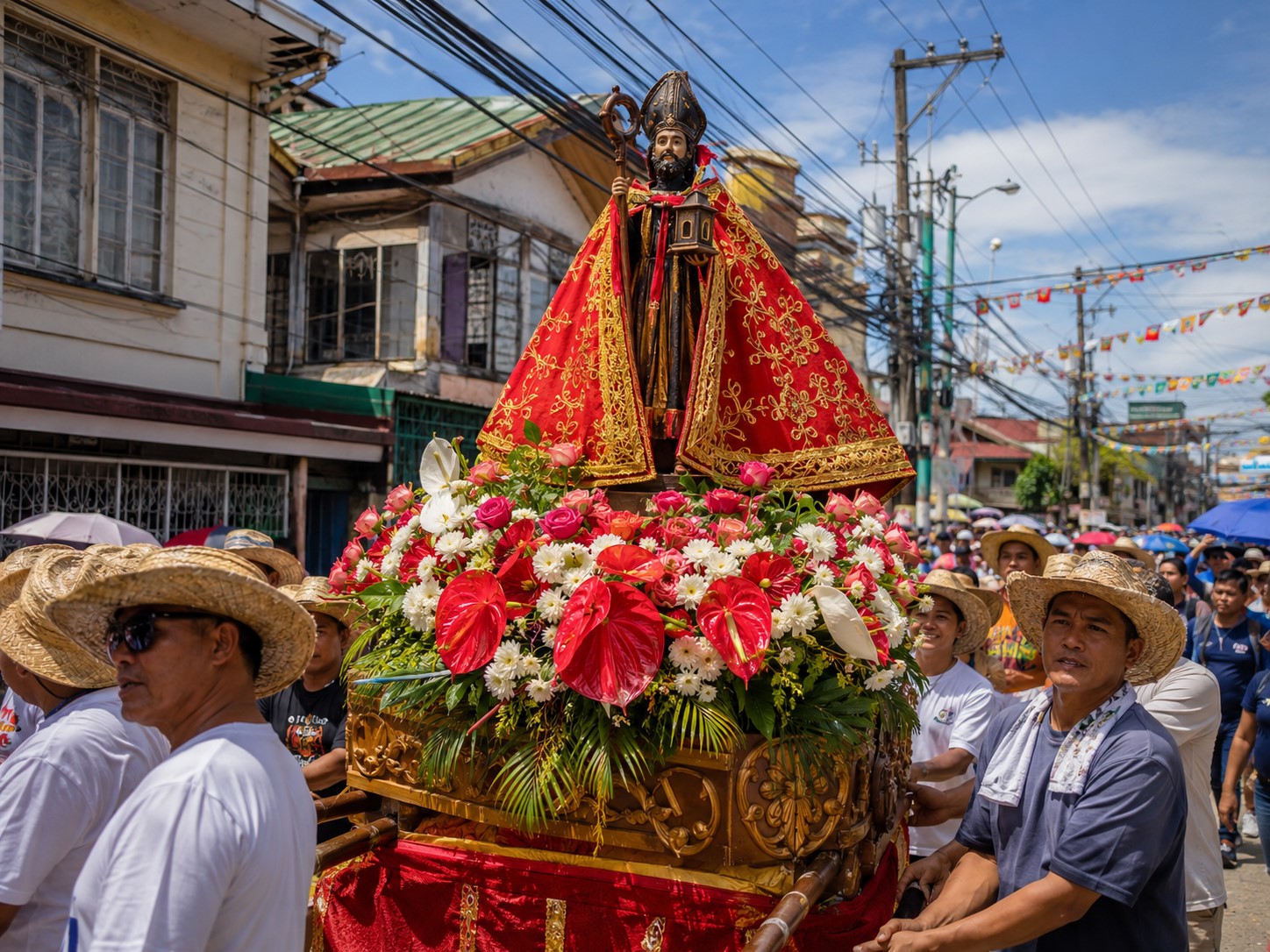
The August fiesta season is also associated with processions honoring Tata Usteng.
In Cavite, a karakol is a lively religious procession in which devotees dance to music while accompanying the image of a patron saint. It combines movement, prayer and thanksgiving in a form that is deeply familiar across the province.
Tanza’s broader feast calendar identifies August 27 with the grand karakol and August 28 with the town fiesta and patronal feast.
The mood during a karakol differs from a formal street-dancing competition.
Participants do not necessarily follow an elaborate routine. Many simply move with the music while staying close to the procession. Some join as an expression of gratitude, while others are fulfilling a personal religious promise.
Visitors are generally welcome to observe, but they should remember that the image of Tata Usteng is being accompanied as an object of devotion, not simply displayed as a parade attraction.
Religious Services
Novena Masses, prayers and other parish activities normally give the fiesta its spiritual structure.
The street celebration may attract the largest crowd, but for devotees, the church services are equally important. These gatherings provide time to pray, give thanks and reflect on St. Augustine’s teachings and example.
Travelers interested in the religious side of the festival should check the parish’s current schedule. Mass times may be expanded or adjusted during the novena and feast days.
Arrive early if you plan to attend Mass. The church and surrounding streets may become crowded, particularly on August 27 and 28.
Lobo, Higante and Toro Traditions
Tanza is also known for distinctive fiesta traditions involving lobo, higante and toro.
Local accounts describe lobo as paper lanterns released into the air, higante as large papier-mâché figures and toro as a bull-shaped structure fitted with fireworks. These elements inspired the name of Tanza’s separate LoHiTor Festival, although some have also appeared during the August town fiesta.
The toro tradition is especially dramatic. A bull-shaped frame may be carried or moved through an open area as fireworks discharge, with participants keeping their distance while reacting to its unpredictable movement.
However, activities involving fireworks or airborne lanterns depend on current safety rules, weather conditions and local permits. Visitors should never assume that older fiesta practices will automatically appear in every modern edition.
Stay behind official barriers and follow instructions from organizers when pyrotechnics are involved.
Music and Community Entertainment
Music gives Sapyaw much of its energy.
Street dancers perform to recorded festival music or live percussion, while brass bands may accompany religious processions and other fiesta activities. Evening programs may feature local singers, dance groups or invited performers.
Festival stages also provide opportunities for students and community artists to showcase their abilities.
These programs may feel less historical than the church or revolutionary landmarks, but they are an important part of the festival experience. They allow families to gather after the daytime parade and give younger residents their own space within the celebration.
Because entertainment lineups change each year, check the current official program rather than expecting a particular performer or concert.
What the Sapyaw Festival Feels Like
Festival mornings often begin long before the audience arrives.
Dancers gather in covered courts, schools and side streets. Makeup is applied, costumes are checked and props are repaired one last time. Coaches review formations while parents distribute water and snacks.
In the town center, residents begin taking their places along the route.
Vendors prepare food and cold drinks. Church bells and passing vehicles mix with the sound of drums being tested in the distance. Children search for a viewing spot while older residents greet neighbors they have known for years.
Then the first contingent appears.
The road suddenly fills with color. Dancers move together as music echoes between buildings. Costumes ripple, spectators cheer and performers smile even while dealing with the August heat.
Later, the atmosphere may become more devotional as the image of Tata Usteng moves through town.
The combination of public celebration and personal faith is what makes the experience distinctly Caviteño. Sapyaw is joyful, but it is not disconnected from the saint being honored.
When Is the Sapyaw Festival Celebrated?
Sapyaw is traditionally listed on August 20.
The religious celebration continues toward the feast of St. Augustine on August 28, with the grand karakol commonly associated with August 27.
Visitors should treat these as the festival’s traditional dates rather than a guaranteed schedule for every activity.
Street dancing might be moved to a weekend. A concert may be held several days earlier. Religious activities follow the parish calendar, while civic programs depend on the municipal government.
Before traveling, look for the current year’s announcements from:
- The Municipal Government of Tanza
- The local tourism or cultural office
- The Diocesan Shrine of San Agustin and Parish of Santa Cruz
- Official barangay pages participating in the festival
Do not rely entirely on an old poster shared online. Road routes, starting times and venues may have changed.
Where Is the Festival Held?
The main celebrations are generally associated with Tanza town proper and the streets surrounding the municipal and parish center.
Street-dancing routes may pass through major roads before ending at a judging or program venue. Religious processions naturally center on the Diocesan Shrine of San Agustin and Parish of Santa Cruz.
Some events may be held elsewhere in the municipality.
Tanza has grown substantially, and public facilities, sports venues and open grounds outside the older poblacion may be used for concerts, competitions or municipal programs.
Check the exact venue for the activity you plan to attend. Asking only for “Sapyaw Festival” may not be enough when several events are happening in different locations.
How to Get to Tanza from Metro Manila
From PITX
The Parañaque Integrated Terminal Exchange is one of the easiest starting points for commuters.
PITX’s official route finder lists transportation serving Tanza. Depending on current operations, travelers may use a direct Tanza bus or a west-Cavite service bound for places such as Naic or Ternate that passes through appropriate parts of the municipality.
At PITX, ask for a bus that can drop you near Tanza town proper or the festival’s announced venue.
Show the conductor the specific landmark rather than simply saying Tanza. The municipality covers a large area, and a bus stop near a subdivision or commercial center may still be far from the church and traditional festival route.
Gate assignments and departure schedules can change. Check the PITX live schedule or ask at the information counter on your travel date.
From Other Parts of Cavite
Buses, minibuses and jeepneys connect Tanza with General Trias, Trece Martires, Rosario, Naic and other nearby communities.
Travelers coming from Dasmariñas or Imus may need to transfer around General Trias or another transport interchange, depending on the route.
During the festival, some vehicles may stop outside the town center because of road closures. Be prepared to walk or take a local tricycle from the designated drop-off area.
By Private Vehicle
Drivers from Metro Manila commonly approach Tanza through CAVITEX and roads passing through Kawit, General Trias or the coastal Cavite corridor.
Traffic can become heavy even on ordinary days. During the festival, parades and processions may result in additional congestion and temporary road closures.
Leave early and use the parking areas announced by the local government. Avoid parking directly along the procession route, in front of residential gates or on narrow roads needed by emergency vehicles.
What to Wear
Wear light and breathable clothing.
August can be hot and humid, while sudden rain is also possible. Comfortable shoes are essential because road closures may require considerable walking.
Bring an umbrella that can protect you from both sunlight and rain. However, avoid opening a large umbrella in the middle of a dense crowd where it may block the view or strike other spectators.
A hat, sunscreen and a small towel can also make the experience more comfortable.
People attending religious services may want to bring a more modest top or light outer layer for entering the church.
Helpful Tips for Festival Visitors
Confirm the official schedule. Sapyaw, the karakol and the patronal feast are connected but may occur on different days.
Arrive early. Roads can close before the parade begins, and the best viewing areas fill quickly.
Bring drinking water. Standing beside the road under the August sun can become exhausting.
Carry cash in small denominations. Temporary vendors and local transportation may not always accept digital payments.
Keep your belongings secure. Use a bag that closes properly and avoid displaying unnecessary valuables in crowded areas.
Stay outside the parade route. Dancers need space for formations, props and sudden movements.
Respect religious activities. Avoid loud conversations and intrusive photography during prayers, Masses and solemn processions.
Follow pyrotechnic safety rules. Do not approach a toro, lantern-launching area or fireworks setup unless organizers have clearly opened the location to spectators.
Photographing the Festival
Sapyaw is naturally photogenic.
The costumes, movement and expressions of performers provide plenty of opportunities for strong images. A wide photograph can show an entire formation, while closer shots can capture the effort and emotion on a dancer’s face.
Try to choose your position before the parade begins.
Constantly stepping into the road creates danger for both you and the performers. It can also disrupt the choreography that participants have spent weeks preparing.
Avoid using a flash directly in a dancer’s face. Natural daylight is usually sufficient during the street parade.
During religious processions, photograph respectfully. Do not block devotees or walk backward directly in front of the image of Tata Usteng simply to record a video.
Bringing Children to Sapyaw
The bright costumes and music can make Sapyaw enjoyable for children.
Choose a viewing spot away from narrow intersections and the most crowded sections. Bring water, snacks, an umbrella and any medication the child may need.
Write a parent or guardian’s contact number on a card and keep it in the child’s pocket. Older children should know your agreed meeting point in case the family becomes separated.
Explain that they should not run onto the parade route or touch performers’ props.
Children sensitive to loud drums, brass instruments or fireworks may benefit from hearing protection. It may also be better to leave before evening pyrotechnic activities begin.
Food to Try in Tanza
A festival visit is a good opportunity to explore Tanza’s local food traditions.
One dish associated with the town is pipian, a chicken stew with a thick, nutty sauce. Local culinary accounts connect the dish with Mexican influence that reached the Philippines through colonial-era trade. Tanza versions may use peanuts, rice flour and annatto to create a rich sauce.
Another dish to look for is tinumis.
It resembles dinuguan but is commonly flavored with tamarind rather than relying only on vinegar. This gives the dish a sourness that balances its deep, savory flavor.
Visitors may also encounter pancit choko, a Caviteño noodle dish prepared with squid and its ink. Its dark appearance can surprise first-time diners, but it reflects the seafood traditions of coastal Cavite.
Not every restaurant serves these dishes daily. Ask local residents for recommendations or check menus before making a special trip.
Festival stalls will also offer familiar food such as barbecue, fried snacks, rice meals, cold drinks and desserts.
Other Places to Visit in Tanza
A Sapyaw trip can easily become a short historical and food tour.
Diocesan Shrine of San Agustin and Parish of Santa Cruz
The church is essential for understanding both the festival and Tanza’s history.
It is the center of devotion to Tata Usteng and stands near the site where leaders of the revolutionary government took their oaths in March 1897.
Visit outside Mass times when possible if you want to appreciate the church quietly. Dress appropriately and follow parish photography rules.
Revolutionary Government Historical Marker
The historical marker commemorates the organization of the revolutionary government and the oaths taken by Emilio Aguinaldo, Mariano Trias and Artemio Ricarte.
The site helps visitors understand that Tanza played an important role in the political reorganization of the Philippine Revolution following the Tejeros Convention.
Casa Hacienda de Tanza
Casa Hacienda de Tanza in Biwas is associated with the Spanish colonial history of the area.
Local heritage descriptions identify it as one of Cavite’s surviving Spanish-era houses and connect it with the former Hacienda de Santa Cruz de Malabon. Because it remains connected with private ownership, visitors should verify whether public access is permitted before going.
Old Houses and the Historic Town Center
Sections of old Tanza contain ancestral and prewar homes with architectural details such as wooden tracery, decorative transoms and traditional windows.
Walking around the poblacion before the festival begins can help you appreciate the setting in which the town’s religious and cultural traditions developed.
Respect private property and avoid photographing residents through open windows or gates without permission.
Tanza Beyond the Festival
Modern Tanza is very different from the smaller agricultural and coastal town remembered by earlier generations.
Residential development, commercial activity and transportation projects have changed its landscape. New residents arrive from other parts of Cavite and Metro Manila, creating a larger and more diverse community.
Festivals like Sapyaw help preserve continuity amid that change.
A person who recently moved to Tanza may first encounter Tata Usteng through the street celebration. A child may learn the town’s history while preparing for a school performance. A longtime resident may see old friends who return only for the fiesta.
These connections give a local festival value beyond tourism.
Why the Sapyaw Festival Matters
The most visible part of Sapyaw is the dancing, but its importance lies in participation.
Festivals survive because people decide that a tradition is worth the effort. They rehearse after school or work. They spend time making costumes. Families adjust their routines, and volunteers give their time to organize public events.
The celebration also creates a bridge between different generations.
Older Tanzeños carry memories of previous fiestas, while younger performers introduce new music, costume techniques and choreography. The presentation evolves, but the devotion to Tata Usteng and the feeling of community remain.
Sapyaw therefore reflects two forms of identity at once.
It is religious because it honors St. Augustine. It is civic because it allows residents to celebrate being Tanzeño.
Final Thoughts
The Sapyaw Festival is a colorful introduction to the culture of Tanza, Cavite.
Its street dancers bring excitement to the town’s roads, but the celebration becomes more meaningful when you understand the devotion behind it. Tata Usteng is not simply the name attached to a fiesta. For many residents, he is part of family prayers, community history and a religious tradition passed down through generations.
Sapyaw also invites visitors to discover Tanza’s wider story.
This is a town where revolutionary leaders took their oaths, where an old parish continues centuries of devotion and where local dishes preserve traces of Cavite’s complex cultural history.
Come for the costumes, music and street dancing. Stay to visit the church, learn about Tanza’s revolutionary past and taste the food that local families have kept alive.
The festival may fill the streets for only a short time, but what it represents—faith, history and community—has been part of Tanza for generations.