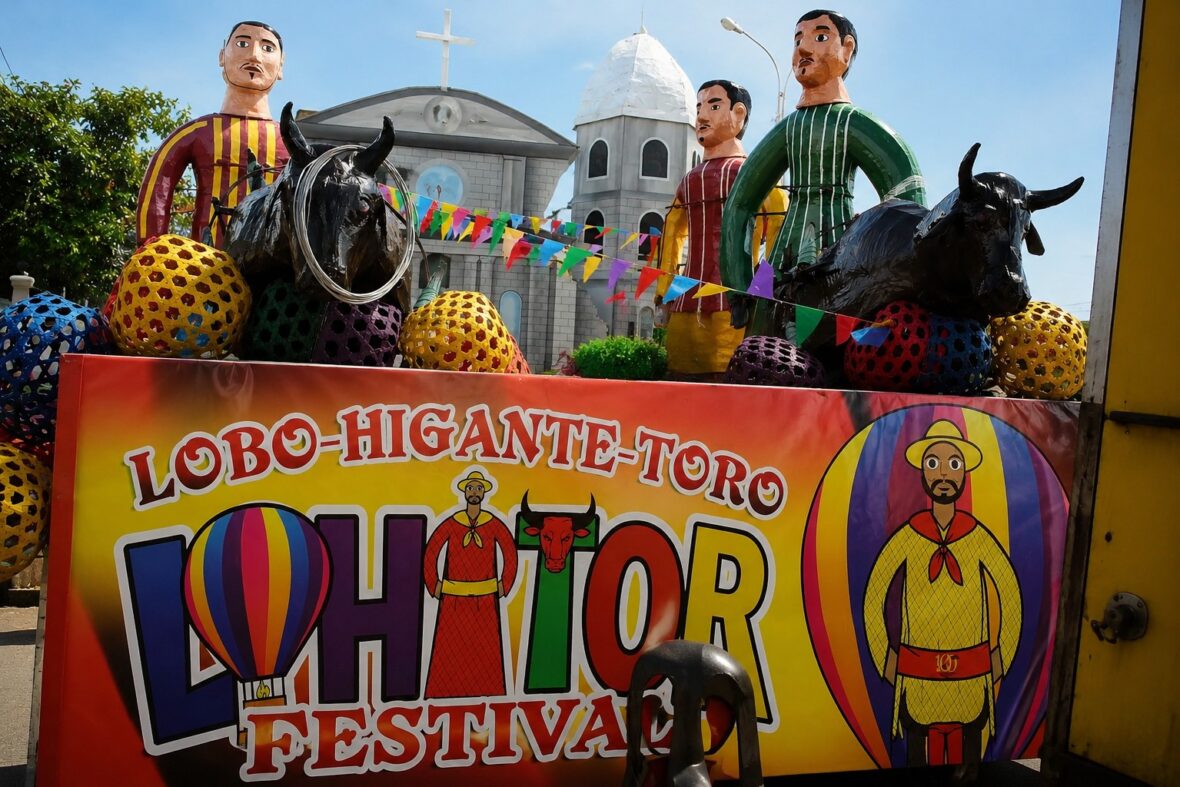
At first, the name LoHiTor Festival may sound mysterious.
It is not the name of a saint, a local delicacy or an agricultural product. Instead, it combines three colorful traditions associated with the people of Tanza, Cavite:
Lo comes from lobo or balloon.
Hi comes from higante or giant.
Tor comes from toro or bull.
Put them together and you get LoHiTor—a celebration of creativity, community artistry and traditions that have appeared in Tanza’s fiestas and public festivities for generations.
During the festival, the streets become filled with marching bands, dancers, giant papier-mâché figures and colorful decorations. Some presentations interpret the glowing lobo, towering higante and fiery toro through costumes and props rather than using the original objects exactly as they appeared in older celebrations.
The festival is held around Araw ng Tanza on February 28, commemorating the date in 1914 when the municipality’s name was officially changed from Santa Cruz de Malabon to Tanza. The occasion combines local history with cultural performances, pageants, parades and civic activities.
For visitors, LoHiTor provides an energetic introduction to a town that is often passed through on the way to Naic, Maragondon or Ternate. It reveals Tanza as a community with deep religious devotion, revolutionary history, distinctive food and a strong tradition of public celebration.
Content
What Is the LoHiTor Festival?
The LoHiTor Festival is a cultural and civic celebration held in Tanza, Cavite, traditionally around February 28.
It is staged alongside Araw ng Tanza and celebrates the municipality’s local identity through street dancing, marching bands, pageants, floats, cultural presentations and other community programs.
The festival’s name represents three older fiesta attractions:
- Lobo – large paper balloons or lanterns
- Higante – oversized papier-mâché human figures
- Toro – a bull-shaped structure traditionally associated with pyrotechnics
Cavite Tourism lists LoHiTor among the province’s recognized festivals and identifies Tanza’s tourism office as its local point of contact.
The festival is not necessarily limited to one day. Pageants, sports programs, cultural competitions and community events may begin several days before the main parade.
In 2025, for example, Mutya ng Tanza was crowned on February 22 before the municipality held its principal anniversary and LoHiTor activities later that week.
What Does “LoHiTor” Mean?
The festival name is formed by combining the first sounds of three words:
LO – Lobo
In this context, lobo refers to a large paper balloon or lantern rather than an ordinary rubber party balloon.
Traditional versions were made from lightweight paper and lifted by heated air created by a flame beneath the structure. When released in suitable conditions, the balloon rose into the night sky and created a glowing display.
HI – Higante
Higante means giant.
These are oversized human-shaped figures commonly created from papier-mâché, bamboo, cloth and other lightweight materials. A performer carries or operates the structure from inside, allowing the giant to appear as though it is walking and dancing through the streets.
TOR – Toro
Toro is the Spanish and Filipino word for bull.
In Tanza’s older fiesta tradition, the toro was represented by a bull-shaped papier-mâché or framed structure associated with small fireworks or pyrotechnic effects. Once activated under controlled conditions, it created an exciting chase-like spectacle for spectators.
Local accounts generally connect the formal LoHiTor name with Tanza’s 2014 centennial celebration, when the municipality marked 100 years since adopting the name Tanza. The name gathered three familiar local traditions into one festival identity.
Because detailed official archival material about the exact first use of the term is limited, it is best to understand 2014 as the widely cited beginning of the modern LoHiTor branding rather than assume the three traditions themselves began that year.
Araw ng Tanza and the February 28 Celebration
LoHiTor is closely connected with Araw ng Tanza.
The community was previously known as Santa Cruz de Malabon. On February 28, 1914, Act No. 2390 changed its official name to Tanza. The same law renamed several other municipalities across the Philippines.
This is why modern anniversary counts use 1914 as their starting point.
Tanza celebrated its 111th anniversary in 2025 and its 112th Araw ng Tanza on February 28, 2026. The national government declared February 28, 2026, a special nonworking day in the municipality so residents could participate in the celebration.
The distinction is useful because Tanza has a much longer history than the number used for Araw ng Tanza.
The municipality existed under earlier names and administrative arrangements before 1914. The anniversary celebrates the official adoption of the name Tanza, not the first settlement of the area.
Is LoHiTor a Religious Festival?
LoHiTor is connected with Tanza’s fiesta culture, but February 28 is not the official feast day of the town’s patron saint.
Tanza’s patron is St. Augustine of Hippo, affectionately known locally as Tata Usteng. The Diocese of Imus lists his feast day as August 28, and the Diocesan Shrine of San Agustin and Parish of Santa Cruz maintains a weekly Thursday devotion to San Agustin de Tanza.
Some popular descriptions say LoHiTor is held on February 28 to honor St. Augustine. A more accurate explanation is that the modern festival is principally connected with Araw ng Tanza, while its lobo, higante and toro traditions developed from the town’s broader fiesta culture and devotion to Tata Usteng.
Tanza therefore has two important celebration periods:
February is associated with Araw ng Tanza and LoHiTor.
August is associated with the patronal feast, novenas, religious processions and celebrations honoring Tata Usteng.
The traditions may overlap culturally, but the dates represent different occasions.
The Lobo Tradition
The lobo was designed to create wonder in the evening sky.
Artisans used light paper to form a large lantern or balloon. Heat from a controlled flame allowed the structure to rise, carrying its glow above houses and streets.
Before electric decorations and large concert stages became common, a floating illuminated object would have been an impressive sight.
The activity also required skill.
The balloon had to be shaped correctly so that hot air remained inside. Its paper needed to be light enough to rise but strong enough to hold its form. Weather conditions were important because strong winds could push it away from the intended area.
Today, the use of actual fire-powered sky lanterns presents serious safety and regulatory concerns.
A released lantern cannot be controlled once it is airborne. It may fall onto houses, power lines, vegetation or other flammable materials. Fire-safety authorities have repeatedly warned against sky lanterns because of this risk.
For this reason, modern festival presentations may represent the lobo through:
- Lantern-shaped parade props
- Costumes inspired by balloons
- Stationary illuminated decorations
- Stage designs
- Controlled displays managed by organizers
- Nonflammable replicas
Visitors should never bring or launch their own sky lanterns. Any official display should follow the requirements of the local government and fire-safety authorities.
The Higante Tradition
The higante is probably the most approachable of LoHiTor’s three symbols.
These large human figures immediately attract children and photographers. Their expressive faces, exaggerated clothing and swaying movements create a playful atmosphere as they move through the parade.
A traditional higante may begin with a bamboo or lightweight frame.
Papier-mâché is shaped into the head and facial features, while fabric covers the body. A performer enters through the lower section and supports the structure while walking.
The figure must be light enough to carry but strong enough to survive the parade.
Artists can transform the higante into almost any character:
- A farmer
- A fisherman
- A historical personality
- A local official
- A traditional Caviteño
- A humorous community character
- A symbolic representation of Tanza
The oversized features are part of the appeal.
Large eyes, dramatic eyebrows and broad smiles remain visible even from the back of a crowded street. Some figures are dignified, while others are intentionally funny.
The higante also demonstrates how inexpensive materials can become public art through imagination and craftsmanship.
How a Higante Is Operated
The person carrying the higante sees through an opening in the body or clothing.
Walking can be challenging because the performer must manage the figure’s weight while avoiding spectators, wires, uneven roads and other parade participants.
Wind can make the structure difficult to control.
A sudden gust may pull the upper section sideways, particularly when the head is wide. Helpers may walk beside the figure to provide support and keep people from stepping too close.
Spectators should give higantes enough room.
Do not pull the clothing, touch the frame or run directly in front of the performer. Remember that the person inside may have limited visibility.
The Toro Tradition
The toro is the most dramatic—and potentially dangerous—part of LoHiTor’s traditional imagery.
It represents a bull-shaped structure created from a lightweight frame and paper or cloth. Older descriptions associate it with small pyrotechnic devices attached around the body.
Once lit, the moving structure created the impression of an angry bull chasing people through an open space.
The activity relied on excitement and unpredictability. Spectators reacted to the sparks and movement while trying to remain beyond the toro’s path.
Modern safety standards make casual public use inappropriate.
Philippine law regulates the manufacture, sale, distribution and use of firecrackers and pyrotechnic devices. Executive Order No. 28 further restricts firecrackers to organized community displays conducted in designated areas under qualified supervision.
Visitors should therefore not expect the traditional fiery toro to appear in exactly the same way every year.
Organizers may instead present it through:
- A nonpyrotechnic papier-mâché bull
- Parade floats
- Dance props
- Costumes
- Stage performances
- Controlled professional effects
- Symbolic festival decorations
Any pyrotechnic display should be viewed only from the official spectator zone.
Never approach an activated structure, pick up an unexploded device or allow children to handle festival pyrotechnics.
Street-Dancing Competition
Street dancing brings the three LoHiTor symbols together through music and movement.
Performers may wear costumes inspired by balloons, giants, bulls, fireworks and other aspects of Tanzeño culture.
A contingent might begin with dancers carrying circular lantern props. The formation then opens to reveal higante figures before bull-inspired performers enter with faster and more forceful choreography.
Bright colors are common:
- Red and orange represent fire and energy.
- Yellow and gold suggest lantern light.
- Blue and green add contrast and represent the town’s landscape.
- Black and silver create the appearance of smoke, metal or nighttime festivities.
The choreography can also incorporate Tanza’s history, faith and community life.
Some groups use traditional movements, while others combine festival music with modern dance. Costumes may feature paper, fabric, woven materials and lightweight structures that imitate the three main attractions.
Festival coverage consistently identifies street dancing, marching bands and colorful public performances among LoHiTor’s principal activities.
Marching Bands
Marching bands add a distinctly Caviteño sound to the festival.
Tanza has community bands that participate in parades, fiestas and civic occasions. During the 2025 Araw ng Tanza celebration, groups included the San Lorenzo Ruiz Band Association of Tanza and other local ensembles.
The bands create energy even before the dancers arrive.
Drums announce that a parade section is approaching, while brass instruments carry music across the town center. Musicians must continue playing while maintaining spacing and responding to the movements of the parade.
For many young performers, joining a local band is a way to participate in community traditions while developing musical discipline.
Band members learn to listen to one another, follow a conductor or drum major and perform despite heat, crowds and long periods of walking.
Grand Parade
The grand parade brings together more than street dancers.
Depending on the year, participants may include:
- Barangay delegations
- Marching bands
- Municipal departments
- Schools
- Community organizations
- Pageant candidates
- Civic groups
- Floats
- Higante figures
- Cultural performers
The parade becomes a public summary of Tanza’s identity.
One float may highlight the town’s revolutionary history. Another may feature Tata Usteng, traditional food, coastal livelihood or modern municipal development.
During the 2025 celebration, a participating float portrayed the historic oath-taking of the revolutionary government in Tanza, connecting the anniversary festivities with one of the town’s most important national-historical events.
Festival Floats
LoHiTor provides designers with plenty of visual material.
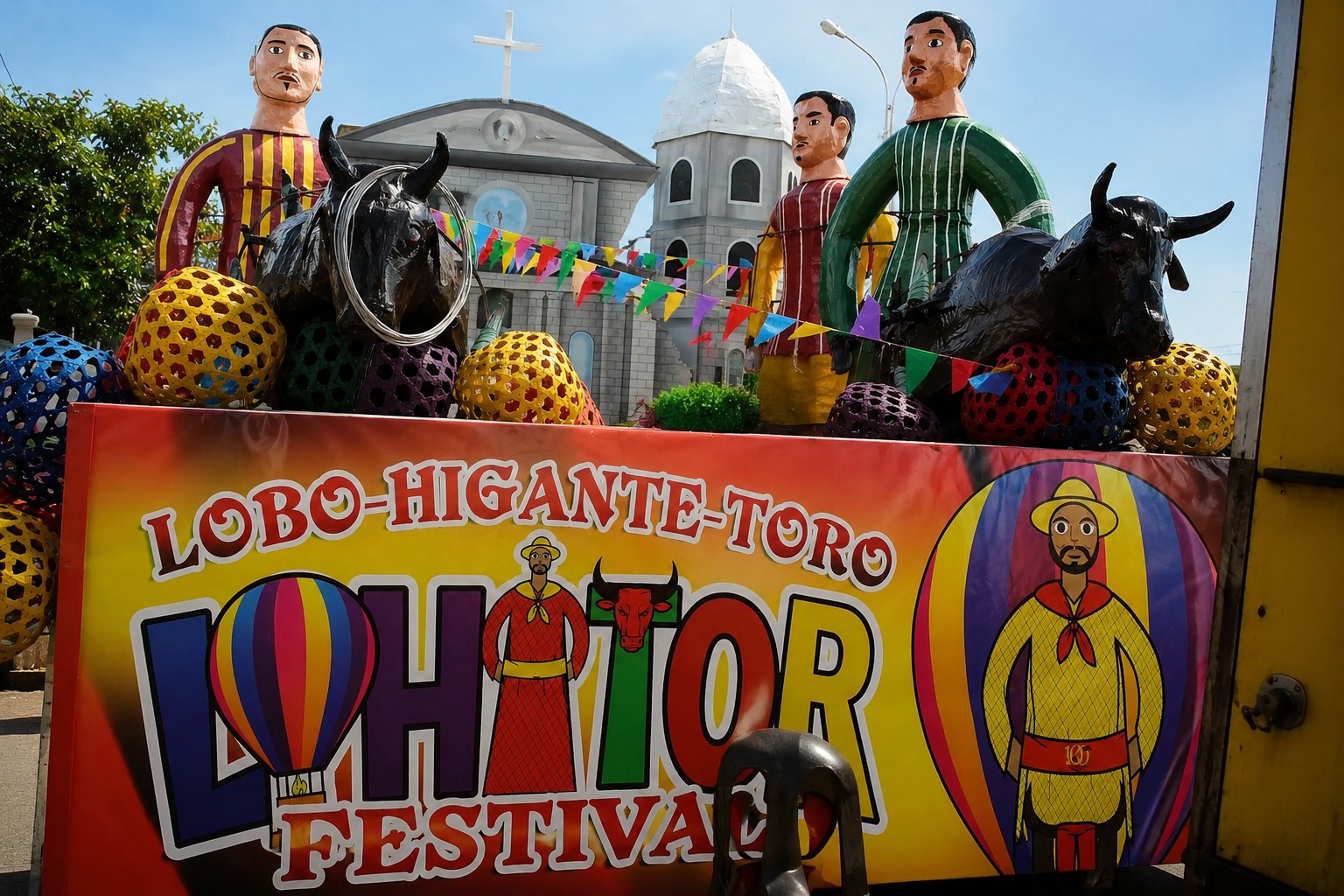
A float may carry enormous lanterns, papier-mâché giants and a stylized bull. Other designs recreate old streets, churches, coastal scenes or moments from Tanza’s past.
The challenge is to turn three separate traditions into one clear presentation.
A strong float does not merely place a balloon, giant and bull on a vehicle. It explains how those symbols relate to the people of Tanza.
Designers may show:
- Artisans building festival figures
- Families gathering for a fiesta
- Musicians leading a procession
- Devotees honoring Tata Usteng
- The old town of Santa Cruz de Malabon
- Tanza’s transition into a modern municipality
Because floats are large and have limited turning space, spectators should stay behind official barriers.
Mutya ng Tanza
Beauty pageants and community searches commonly form part of the extended festival calendar.
The 2025 Mutya ng Tanza coronation took place at the Tanza Sports Center in Barangay Daang Amaya before the principal Araw ng Tanza celebration. Maria Keisha Anne Bustillo of Barangay Tanauan was crowned that year.
Candidates normally represent different barangays and participate in several presentations.
Festival-inspired costumes may incorporate:
- Lantern patterns
- Papier-mâché details
- Bull imagery
- Historical clothing
- Coastal materials
- Traditional Caviteño designs
The pageant allows participants to promote their barangays and discuss issues concerning tourism, heritage, youth and community development.
It also extends LoHiTor beyond the main parade day, allowing residents to join activities throughout the anniversary season.
Civic and Community Activities
Araw ng Tanza is a municipal anniversary, so the complete program usually goes beyond performances.
Depending on the year, activities may involve:
- Historical commemorations
- Recognition ceremonies
- Sports competitions
- Public-service programs
- School events
- Cultural presentations
- Trade and food fairs
- Concerts
- Community gatherings
The 2026 celebration marked Tanza’s 112th year under its present name and was formally recognized through a special nonworking-day proclamation.
The local calendar may change annually, so visitors should look for the complete official schedule rather than focusing only on February 28.
The pageant may happen a week earlier, while the main parade could be moved to the closest suitable date.
What the Festival Feels Like
The morning begins with activity throughout Tanza Bayan.
Band members arrive carrying instruments and uniform bags. Street dancers gather near schools and barangay staging areas while parents adjust costumes and distribute food.
Higante figures wait beside the road, leaning against walls or supported by their handlers. Without a performer inside, they appear strangely still.
Vendors prepare cold drinks, rice meals and festival snacks.
As the parade approaches, drums become louder.
A marching band appears first, followed by dancers in bright costumes. The higantes begin swaying above the crowd, their large faces visible from several blocks away.
Floats move slowly behind them. Children point at the bull-shaped decorations, while older residents greet neighbors and relatives participating in the procession.
The festival feels both theatrical and familiar.
The objects are exaggerated, but the community behind them is real. Students, musicians, artists, barangay workers and families all contribute to the celebration.
When Is the LoHiTor Festival Celebrated?
LoHiTor is traditionally celebrated around February 28, the anniversary of Tanza’s official renaming in 1914.
The date may occasionally shift for logistical reasons.
In 2025, the municipality commemorated its 111th anniversary and LoHiTor Festival on February 27, while February 28, 2026, was officially declared a special nonworking day for the 112th Araw ng Tanza.
Related activities can begin much earlier.
Pageants, sports, school programs and cultural competitions may be spread across several weeks.
Before traveling, check announcements from:
- The Municipality of Tanza
- Tanza Tourism
- Cavite Tourism
- Participating barangays
- Local schools and organizations
Confirm the date of the specific activity you want to attend, particularly the street parade or evening program.
Where Is the Festival Held?
Major activities are generally concentrated around Tanza town proper, municipal facilities, public roads and designated event venues.
The Tanza Sports Center in Barangay Daang Amaya has hosted major festival-related programs, including Mutya ng Tanza. The main parade may pass through roads in or near the poblacion, although the exact route can change.
Do not assume all events take place in one location.
Check the official schedule for:
- Parade assembly point
- Street-dancing route
- Final performance area
- Pageant venue
- Concert location
- Road-closure times
- Parking areas
- Public-transport drop-off points
Tanza is a large and rapidly developing municipality. Locations around Tanza Bayan, Daang Amaya, Julugan, Tejero and newer commercial areas can be several kilometers apart.
Safety Around Lobo and Toro Displays
The lobo and toro are culturally important symbols, but they involve fire hazards when presented in their traditional forms.
Philippine regulations require firecrackers and pyrotechnic devices to be controlled and used only under lawful conditions. Firecracker use is generally confined to authorized community displays in LGU-designated areas.
Festival visitors should follow several basic rules:
Do Not Launch Your Own Sky Lantern
A lantern can drift toward houses, trees, power lines or dry vegetation.
Stay Behind Barriers
Do not approach an official toro or pyrotechnic display, even when it appears inactive.
Never Pick Up Unexploded Fireworks
Report them to event marshals, police or fire personnel.
Keep Children Close
Children should never handle firecrackers, sparklers or burning lanterns.
Follow Weather-Related Cancellations
Wind or rain may make a planned display unsafe. Accept the organizers’ decision when an activity is delayed or cancelled.
Use Ear Protection When Necessary
Pyrotechnics and marching percussion can be extremely loud for young children and noise-sensitive visitors.
Cultural preservation does not require ignoring modern safety rules. Traditions can evolve while retaining their meaning.
How to Get to Tanza from Metro Manila
From PITX
PITX is one of the most convenient departure points for commuters traveling to western Cavite.
Its official transport directory includes Cavite bus services, while current commuter information identifies Tanza, Naic and Ternate buses as practical options for reaching Tanza. Because routes and loading assignments can change, passengers should check PITX’s live schedule or information desk on the day of travel.
Tell the conductor that you are going to:
- Tanza Bayan
- The municipal center
- Tanza Sports Center
- The announced parade route
- Another specific festival venue
A bus passing through Tanza may not enter the town proper.
You may need to transfer to a jeepney, multicab or tricycle from a highway stop or transport terminal.
During the parade, vehicles may be rerouted before reaching their usual unloading areas.
From Bacoor, Kawit or Noveleta
Buses and jeepneys travel through the coastal Cavite corridor toward Tanza, Naic and Ternate.
Choose a vehicle clearly marked for Tanza or a farther destination that passes through the municipality.
Ask whether it travels through Tanza Bayan or only along a major highway.
From General Trias or Rosario
Tanza is connected with General Trias and Rosario through roads around Tejero and nearby communities.
Local jeepneys, minibuses and other public vehicles serve different sections of the corridor.
Confirm the endpoint because a vehicle marked Tanza may stop far from the festival venue.
By Private Vehicle
Drivers from Metro Manila commonly use CAVITEX before continuing through Kawit, Noveleta and the coastal Cavite road network.
Other routes approach from General Trias or Trece Martires.
Use live navigation, but follow local traffic officers when their instructions differ from the app. Festival closures may not appear immediately on digital maps.
Arrive early because parking near the poblacion can become limited.
Practical Tips for Attending LoHiTor
Confirm Which Celebration You Are Attending
LoHiTor and Araw ng Tanza are held in February. The feast of Tata Usteng is in August.
Check the current poster to avoid confusing the two periods.
Arrive Before the Parade
Road closures can begin long before the first contingent appears.
Early arrival gives you time to find a viewing spot, eat and locate restrooms.
Bring Cash
Street vendors, tricycles and temporary booths may not all accept digital payments.
Wear Comfortable Shoes
You may need to walk from a distant drop-off point or parking area.
Prepare for February Heat
Bring drinking water, sunscreen, a hat and a compact umbrella.
Give Higantes Enough Space
The operators have limited visibility and may need helpers when turning.
Avoid Pyrotechnic Areas
Watch only from the authorized spectator zone.
Protect Your Belongings
Use a bag that closes securely and keep your phone and wallet close in crowded areas.
Plan Your Journey Home
Ask where buses and jeepneys will load after the roads reopen. The normal terminal may temporarily move.
Photographing the Festival
LoHiTor is highly photogenic.
The higantes create strong vertical subjects, while marching bands and dancers provide movement and color. Festival floats offer wider scenes showing the surrounding community.
A few simple practices will help you photograph responsibly.
Do not step onto the parade route for a closer angle. Use a zoom function or wait until the performers move toward you.
Avoid blocking children and elderly spectators who have already found a viewing position.
Never ask a higante operator to stop in the middle of an active procession.
During any official pyrotechnic presentation, remain behind barriers and avoid flash photography if instructed by marshals.
The best photographs capture the festival without interfering with it.
Bringing Children to the Festival
Children usually enjoy the giants, marching bands and colorful costumes.
Before arriving, explain that some activities can be loud and crowded.
Choose a viewing position away from intersections, speakers and official pyrotechnic zones.
Bring:
- Drinking water
- Snacks
- Sun protection
- Hearing protection
- A small towel
- Identification with a guardian’s phone number
Do not allow children to run after higantes or touch bull-shaped props.
When they ask what LoHiTor means, turn the festival into a simple cultural lesson. Show them how ordinary materials such as paper, bamboo and cloth can become public art.
Food to Try in Tanza
Tanza is an excellent place to explore Cavite’s heritage cuisine.
Pipian
Pipian is a rich chicken dish with a thick, nutty sauce.
It is often compared with kare-kare because of its color and peanut-based character, but its flavor and preparation are distinct. Cavite food accounts connect it with Mexican culinary influence that may have reached the province through colonial-era trade.
The sauce may include ground rice, peanuts, annatto and seasonings.
It is usually eaten with hot rice and works particularly well as a shared family dish.
Tinumis
Tinumis resembles dinuguan but commonly uses tamarind to create a noticeable sourness.
The acidity balances the richness of the pork and blood-based sauce.
Its deep flavor makes it another important dish to look for during a Tanza food trip.
Patis Tanza and Coastal Flavors
Tanza’s food heritage also reflects its coastal and fishing connections.
Local food-tour accounts have highlighted dried squid, seafood and patis Tanza, a fish sauce associated with older food traditions in the municipality.
Availability varies, so ask residents or established local restaurants which heritage dishes are served on the day of your visit.
Other Places to Visit in Tanza
Diocesan Shrine of San Agustin and Parish of Santa Cruz
The church is the spiritual home of devotion to Tata Usteng.
It observes St. Augustine’s feast on August 28 and maintains regular devotional activities.
Visit respectfully and avoid disrupting Masses, prayers or parish ceremonies.
Revolutionary Government Historical Marker
Tanza played an important role in the Philippine Revolution.
In the convent hall on March 23, 1897, Emilio Aguinaldo and Mariano Trias took their oaths and assumed office as president and vice president of the revolutionary government. Artemio Ricarte was inducted as captain-general the following morning.
The marker gives visitors a reason to see LoHiTor as more than entertainment. The town also occupies an important place in Philippine political history.
Historic Town Center
The poblacion contains the church, civic spaces and streets associated with Tanza’s older community life.
Walk carefully during festival periods because some roads may be reserved for the parade.
Casa Hacienda de Tanza
Casa Hacienda de Tanza is associated with the municipality’s Spanish colonial and agricultural history.
Access conditions can change because heritage properties may be privately owned or used for other purposes. Verify permission before visiting or photographing the interior.
Why LoHiTor Matters
Modern Tanza is changing quickly.
Residential developments, commercial establishments and transport routes continue to reshape the municipality. Many current residents may not have grown up with the older traditions represented by lobo, higante and toro.
The festival creates a way to introduce those traditions to a new generation.
A child may first encounter a higante during the parade. A student may learn the history of Santa Cruz de Malabon while preparing for a performance. A new resident may discover Tata Usteng and Tanza’s revolutionary role through festival activities.
LoHiTor allows tradition to evolve instead of simply disappearing.
Actual fire-powered lanterns and uncontrolled pyrotechnic bulls may no longer be appropriate under modern safety conditions. But their stories can survive through dance, visual art, floats and controlled presentations.
Preservation does not always mean repeating every old practice exactly.
Sometimes it means keeping the meaning while finding a safer and more responsible form.
A Celebration of Tanzeño Creativity
The three LoHiTor symbols require artistic skill.
A lobo must be carefully formed from lightweight materials. A higante needs balance, structure and an expressive face. A toro must look energetic and recognizable even when presented without dangerous effects.
Street dancers and float designers reinterpret these objects through costumes, choreography and stage design.
This makes LoHiTor a celebration of makers as much as performers.
Behind every parade figure is someone who measured bamboo, shaped paper, mixed paste, painted a face or repaired a costume.
These workers may not appear onstage, but the festival could not exist without them.
More Than Three Festival Props
Lobo, higante and toro are the easiest parts of LoHiTor to remember.
Yet the festival represents something broader.
It represents residents gathering to celebrate their town’s name and history. It brings schools, barangays, musicians, artists and public workers into one event.
It also connects two versions of Tanza:
The older community of Santa Cruz de Malabon, shaped by faith, agriculture, fishing and revolution.
And the modern municipality, shaped by population growth, commerce, new neighborhoods and changing lifestyles.
LoHiTor places both versions on the same street.
Final Thoughts
The LoHiTor Festival is one of Cavite’s most unusual and visually creative community celebrations.
Its name may sound unfamiliar at first, but its meaning is simple: lobo, higante and toro—three traditions that reflect the imagination and fiesta culture of Tanza.
The glowing balloon represents wonder.
The giant represents artistry and humor.
The bull represents excitement and the dramatic energy of older celebrations.
Today, these traditions continue through street dancing, parades, costumes, floats and controlled public presentations. The festival also gives residents an opportunity to celebrate Araw ng Tanza and remember the municipality’s journey from Santa Cruz de Malabon to the town they know today.
Visit for the marching bands, dancers and towering higantes. Explore the historic parish, learn about the revolutionary government and try Tanza’s heritage dishes.
Most importantly, look beyond the festival props.
Behind every giant face and colorful decoration is a community preserving its stories through creativity.
LoHiTor may combine only three short words, but together they carry generations of Tanzeño memory, artistry and pride.