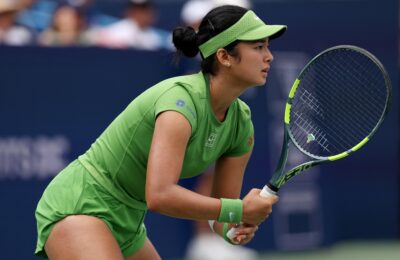
Alex Eala’s remarkable run continues, and her next challenge in Toronto could be one of her most interesting matches yet.
After surviving another three-set battle and defeating American Caty McNally 6–3, 5–7, 6–4, Alex has advanced to the Round of 16 of the 2026 Canadian Open, officially known as the National Bank Open presented by Rogers.
Waiting for her is Switzerland’s Belinda Bencic—an Olympic gold medalist, former world No. 4, and, perhaps most importantly, a former champion of this very tournament.
So yes, this is going to be a serious test.
But considering the way Alex has been playing lately, it is also a matchup that Filipino tennis fans have every reason to be excited about.
Alex enters the match riding a seven-match singles winning streak, fresh from her first WTA Tour championship in Washington and two hard-fought victories in Toronto.
Bencic, meanwhile, brings years of experience at the highest level, an excellent return game, and the ability to take the ball extremely early and rush her opponents.
Interestingly, this will be the first professional singles meeting between Alex Eala and Belinda Bencic.
Here is everything you need to know about the upcoming Eala vs. Bencic Canadian Open showdown, including their road to the fourth round, playing styles, rankings, strengths, possible strategies, schedule information, prize money, ranking points, and what could happen next.
Content
Alex Eala vs. Belinda Bencic: Match details
Here are the important details at a glance:
Tournament: 2026 National Bank Open presented by Rogers
Location: Toronto, Canada
Venue: Sobeys Stadium
Tournament level: WTA 1000
Surface: Outdoor hard court
Round: Round of 16 / Fourth Round
Alex Eala seed: No. 25
Belinda Bencic seed: No. 12
Eala current ranking: Career-high world No. 20 following her Washington title
Bencic current ranking: World No. 14
Head-to-head: First meeting
Match date: Scheduled during the August 9 Round-of-16 program in Toronto
Philippine time: Exact court and starting time still to be officially confirmed at the time of this update
The tournament schedule shows the bottom-half Round-of-16 matches taking place on Sunday, August 9 in Toronto. Because Toronto is 12 hours behind the Philippines at this time of year, Filipino viewers should expect Alex’s match either late Sunday evening or during the early hours of Monday, August 10, depending on the final court assignment. (nationalbankopen.com)
It is better to wait for the official order of play before setting an alarm because tennis schedules frequently change depending on the length of earlier matches.
First career meeting between Alex Eala and Belinda Bencic
One of the most interesting things about this matchup is that Alex and Bencic have never played each other in professional singles.
Their head-to-head record currently stands at:
Alex Eala 0–0 Belinda Bencic
That creates an element of uncertainty for both players.
They can study videos, analyze tendencies, and prepare tactical plans, but actually standing across the net from someone is different.
The speed of the ball feels different.
The angles look different.
The timing is different.
And Bencic, in particular, is the kind of player whose style can be difficult to appreciate until you actually experience it.
Alex will have to make adjustments during the match rather than relying on lessons from previous encounters.
How Alex Eala reached the Round of 16
Alex entered Toronto under unusual circumstances.
She had barely finished celebrating the biggest title of her professional career.
At the Mubadala DC Open in Washington, Alex defeated Zheng Qinwen, Leylah Fernandez, Elina Svitolina, Naomi Osaka, and Jessica Pegula on her way to the championship.
She defeated Pegula 4–6, 6–4, 6–0 in the rain-delayed final to become the first player representing the Philippines to capture a main-tour WTA singles title. The victory also pushed Alex from No. 28 to a projected career-high world No. 20.
Then she had to travel almost immediately to Toronto.
There was hardly enough time to celebrate.
First round: Bye
Because Alex entered Toronto as the No. 25 seed, she received a first-round bye.
The seeding was based on the ranking used when the draw was made, before her Washington victory moved her higher in the rankings.
The official Toronto draw lists Alex as the No. 25 seed and Bencic as No. 12.
Second round: Alex Eala beats Alycia Parks
Alex opened against American Alycia Parks, one of the biggest servers on the WTA Tour.
The result:
Alex Eala def. Alycia Parks, 6–1, 4–6, 6–2
Alex completely controlled the first set before Parks recovered and forced a deciding third.
Instead of allowing the momentum to continue shifting toward Parks, Alex regrouped and took control again.
It was an important victory for another reason.
Parks had defeated Alex earlier in the year at the Australian Open after Alex won the opening set 6–0.
Toronto provided a chance to reverse that result, and Alex took it.
The victory was also celebrated by a huge Filipino crowd inside Sobeys Stadium. Alex later described the atmosphere as one of the best she had experienced, while the National Bank Open highlighted the enormous support she has received from Toronto’s Filipino community.
Third round: Alex Eala beats Caty McNally
Alex then faced American Caty McNally.
McNally was dangerous.
She had just knocked out Wimbledon champion Linda Noskova in straight sets and entered her meeting with Alex playing with plenty of confidence.
The match became another battle.
Alex won the first set.
McNally fought back in the second.
Then everything came down to the deciding set.
Alex eventually prevailed:
6–3, 5–7, 6–4
That victory extended Alex’s singles winning streak to seven consecutive matches—five in Washington followed by two in Toronto.
Perhaps even more encouraging is how those victories have come.
Alex has not needed everything to go perfectly.
Against both Parks and McNally, she lost the second set after winning the first.
Both times, she recovered and won the third.
That tells us plenty about where her confidence is right now.
How Belinda Bencic reached the Round of 16
Bencic received a first-round bye as the No. 12 seed.
Her opening match was considerably more comfortable than Alex’s.
Second round: Bencic dominates Sloane Stephens
Bencic faced former US Open champion Sloane Stephens and won:
6–3, 6–1
The match lasted only one hour and 36 minutes, according to the National Bank Open.
It was exactly the kind of performance you would expect from Bencic when she is seeing the ball well.
She takes time away from opponents, redirects their pace, and can suddenly make a rally feel much faster than expected.
Third round: Bencic survives Taylor Townsend
The next match was completely different.
Bencic faced American Taylor Townsend and needed almost three hours to advance.
The result:
Belinda Bencic def. Taylor Townsend, 6–7(5), 7–6(4), 6–4
Bencic lost the opening-set tiebreak but responded by winning another tiebreak in the second.
She then edged the deciding set 6–4.
The match lasted around 2 hours and 42 minutes, giving Bencic a significant physical workout before facing Alex.
So Alex is certainly not the only player arriving in the fourth round after a demanding three-set match.
Who is Belinda Bencic?
For casual Filipino tennis fans who have only recently started following the WTA Tour because of Alex, Bencic is a name worth knowing.
The Swiss player has been among the world’s best for more than a decade.
She is 29 years old, plays right-handed, stands 5 feet 9 inches tall, and has reached as high as world No. 4.
Her career accomplishments include:
- Olympic singles gold medal
- Career-high world ranking of No. 4
- 10 WTA singles titles
- Two WTA 1000 championships
- Canadian Open champion
- US Open semifinalist
- Wimbledon semifinalist
Bencic won Olympic singles gold at the Tokyo Games in 2021 and also earned a silver medal in doubles.
Her career WTA titles include championships in Toronto, Eastbourne, Dubai, Moscow, Charleston, Abu Dhabi, and Tokyo.
This is a player with serious experience.
Bencic won the Canadian Open in Toronto in 2015
This particular tournament holds special memories for Bencic.
She won her first WTA 1000 championship here in 2015, when she was only 18 years old.
That run remains one of the defining tournaments of her career.
The National Bank Open lists her best result as champion in 2015, and she entered this year’s tournament with an impressive 15–4 career record at the Canadian Open.
So while Alex is experiencing a breakthrough Toronto run, Bencic already knows exactly what winning this tournament feels like.
That experience matters.
There will be very little about the occasion that surprises her.
Current rankings: Eala vs. Bencic
There is not much separating them in the rankings anymore.
Bencic is currently ranked world No. 14. Her career high is No. 4, and she had reached as high as No. 9 during the 2026 season.
Alex, meanwhile, climbed to a projected career-high No. 20 following her Washington championship.
That is remarkable when you consider how quickly Alex has climbed.
Only a relatively short time ago, a meeting with a player like Bencic would have automatically been considered a major upset opportunity for Alex.
Now the rankings are close enough that this feels more like a genuine high-level contest between two Top 20 players.
Bencic may still enter as the more experienced player, but Alex is certainly not arriving as someone who should simply be happy to be there.
Alex enters on a seven-match winning streak
Momentum clearly favors Alex.
Her last seven singles matches have all ended in victory.
Five came during the Washington championship run.
Then came Parks.
Then McNally.
That kind of streak naturally creates confidence.
When a match becomes tight, Alex can remind herself that she has solved difficult situations repeatedly over the previous week.
That confidence was visible against McNally.
Losing a 7–5 second set after winning the opener could have been frustrating.
Instead, Alex found a way through the third.
That is exactly the mindset she will need against Bencic.
But fatigue could become a factor
The obvious question is how much energy Alex has left.
Winning seven consecutive professional matches sounds wonderful.
Playing seven consecutive professional matches is another story.
Alex has spent a lot of time on court.
Her Washington final extended across two days because of rain.
She then traveled to Toronto.
She played another three-set match against Parks.
She competed in doubles with Venus Williams.
Then she played three sets against McNally.
Professional tennis is physically demanding even when players win comfortably.
Long three-set matches add another layer.
Fatigue can appear through:
- Slower movement to wide balls
- Reduced serving speed
- More double faults
- Shorter concentration
- Poorer decision-making late in rallies
- Difficulty recovering after long points
The encouraging part for Alex is that her doubles campaign is now over, allowing her to focus completely on singles.
She should also receive a break before the fourth round because her side of the draw is scheduled for Sunday in Toronto.
That recovery time could be extremely valuable.
Bencic is not completely fresh either
Bencic may have played fewer matches over the previous week, but her third-round encounter with Townsend was physically demanding.
It lasted nearly three hours.
Two sets went to tiebreaks, and the deciding set reached 6–4.
That means Bencic also had to work hard to reach this stage.
Alex therefore should not enter the match assuming she is the only player dealing with accumulated fatigue.
The physical battle could become especially interesting if the match goes into a third set.
Playing style: Why Bencic is difficult
Bencic does not necessarily overwhelm opponents with huge power.
Her biggest weapon is time.
More specifically, she takes time away from you.
She stands close to the baseline and likes hitting the ball early, often immediately after it rises from the bounce.
That means opponents have less time to recover between shots.
Imagine hitting what feels like a perfectly good deep groundstroke.
Against many players, that buys you time to recover toward the middle of the court.
Against Bencic, the ball can suddenly come back much sooner than expected.
After several rallies, that can become exhausting.
Bencic is an excellent returner
This may become one of the biggest areas to watch.
Bencic has traditionally been one of the better returners on the WTA Tour.
WTA statistics earlier in the 2026 season showed Bencic among the leaders in several return categories, including second-serve return points won.
That means Alex cannot afford to rely heavily on second serves.
If her first-serve percentage drops, Bencic will immediately move inside the baseline and attack.
Alex’s serving accuracy could therefore become one of the biggest factors in the match.
But Alex is also an elite returner
Here is where the matchup becomes really interesting.
Alex has developed into an outstanding returner herself.
Earlier WTA statistics placed her among the leaders in return points won, and she was No. 1 in the listed statistics for second-serve return points won, at 65.5% during that snapshot of the season.
In other words, both players will be looking for opportunities on the other woman’s second serve.
That could produce a match with plenty of break points and momentum swings.
Neither player will feel completely safe simply because she is serving.
Alex’s left-handed forehand could be important
Alex brings something Bencic does not face every week: a dangerous left-handed pattern.
The most basic left-handed advantage comes from the cross-court forehand.
Alex can swing the ball toward a right-handed opponent’s backhand side and pull that opponent away from the middle of the court.
Once the court opens, Alex can redirect down the line.
Against Bencic, however, this strategy must be executed accurately.
Bencic is excellent at taking a backhand early and redirecting it.
If Alex’s cross-court forehand sits too short, Bencic may use the pace against her.
Alex needs depth.
A heavy ball landing close to the baseline will give Bencic far fewer attacking options.
The battle for court position could decide the match
This may be the single most important tactical battle.
Both players want to control the baseline.
Bencic wants to stand close to it.
Alex wants enough time to load into her groundstrokes and create angles.
If Bencic consistently forces Alex several feet behind the baseline, the Swiss player will probably control the match.
If Alex can hold her ground and push Bencic backward with deep returns and forehands, the dynamic changes.
Watch where both players are standing during neutral rallies.
That could tell us a lot about who is winning the tactical battle even before the scoreboard does.
Alex needs to attack Bencic’s second serve
If there is one obvious opportunity for Alex, it will be Bencic’s second serve.
Alex has become extremely aggressive on second-serve returns.
She often moves forward, takes the ball early, and immediately puts the server on defense.
She should continue doing that.
The goal does not necessarily have to be hitting outright return winners.
Sometimes simply hitting the return deep into Bencic’s feet will be enough to prevent the Swiss player from taking command of the first rally ball.
Against an opponent whose greatest strength is taking time away, preventing her from controlling the first two shots becomes extremely important.
Alex must protect her own second serve
Of course, the same applies in reverse.
This is where Bencic could punish Alex.
Against McNally and Parks, Alex occasionally experienced service games where her level dropped suddenly.
She survived those moments.
Against Bencic, recovery may be more difficult.
If Alex delivers a short second serve, Bencic will step forward and redirect it aggressively.
That can put Alex on defense immediately.
A high first-serve percentage would make life considerably easier.
Patience will be important
Alex has been playing with tremendous confidence lately.
Confidence can sometimes create the temptation to go for too much.
Against Bencic, that could become dangerous.
Bencic is comfortable redirecting pace. Hitting harder does not automatically solve the problem.
Alex may occasionally need to build the point rather than trying to finish it with one spectacular forehand.
Change direction.
Move Bencic.
Use height.
Attack only when the opening is really there.
This could be one of those matches where tactical discipline matters as much as raw shot-making.
Alex should not fear longer rallies
There is another reason Alex can be optimistic.
Her movement has become one of her biggest strengths.
She has repeatedly shown that she can defend, absorb power, and eventually turn rallies around.
Bencic will probably try to rush her, but Alex does not need to panic when she finds herself defending.
Sometimes extending the rally by one or two additional shots can completely change the point.
That ability to transition from defense into attack has helped Alex defeat some of the world’s best players.
Mental strength could again be decisive
Alex’s recent results have shown tremendous resilience.
Against Jessica Pegula in Washington, she lost the first set.
She came back and won.
Against Parks in Toronto, she lost the second set.
She came back and won.
Against McNally, she lost the second set.
She came back and won.
There is an obvious pattern.
Alex is no longer treating a lost set as a disaster.
That is one of the biggest signs of maturity in professional tennis.
Bencic is also extremely experienced in close matches, so Alex will probably need that resilience again.
Filipino fans could give Alex another boost
Toronto has turned into something resembling a home tournament for Alex.
The Filipino community has shown up in huge numbers.
Philippine flags have filled sections of Sobeys Stadium, and Alex has repeatedly spoken about how much she appreciates the support.
Tournament coverage described the ovation for her Toronto debut as enormous, while Alex herself said the atmosphere was among the best she had experienced.
Bencic has played in front of hostile or partisan crowds throughout her career, so she is unlikely to be intimidated.
Still, the crowd can help Alex during difficult moments.
A roar after saving a break point or winning a long rally can provide exactly the emotional lift a player needs.
What is at stake for Alex Eala?
Alex has already secured the prize money and ranking points associated with reaching the Round of 16.
The official Toronto draw lists:
Round of 16:
120 WTA ranking points
US$81,800 prize money
A victory over Bencic and a place in the quarterfinals would increase that to:
Quarterfinal:
215 WTA ranking points
US$154,354 prize money
The ranking calculation is not as simple as adding 215 points directly to Alex’s total because WTA rankings use a rolling system and existing results may be replaced.
Still, another WTA 1000 quarterfinal would be extremely valuable as Alex tries to establish herself permanently among the world’s leading players.
What happens if Alex beats Bencic?
Things become even more interesting.
The winner of Eala vs. Bencic is positioned to face the winner of:
Alina Korneeva vs. Coco Gauff
in the quarterfinals.
That means a victory could potentially set up a blockbuster meeting between Alex and Gauff, assuming the American also advances.
But that is getting ahead of ourselves.
Korneeva has already produced several surprises in Toronto, and Bencic represents more than enough of a challenge for Alex right now.
The only match that matters is the next one.
Is Alex Eala the favorite?
On ranking alone, Bencic has the edge.
She is world No. 14 compared with Alex’s new career-high position around No. 20.
She also has much more experience at this level and has actually won the Canadian Open before.
But current form tells a different story.
Alex has won seven consecutive singles matches.
She has beaten several elite players.
She just won a WTA 500 title.
And she has already survived two difficult matches in Toronto.
So calling this a major upset opportunity probably undersells Alex’s current level.
Bencic deserves respect as the more experienced player, but Alex has demonstrated that she can win this match.
Five keys for Alex Eala against Belinda Bencic
1. Get a high percentage of first serves in
Bencic is too dangerous on second-serve returns.
Alex cannot give her repeated opportunities to attack.
2. Keep the ball deep
Short balls will allow Bencic to step inside the baseline.
Depth will push her backward and give Alex more time.
3. Attack the second serve
Alex should trust one of the strongest parts of her game—her return.
Putting immediate pressure on Bencic’s service games could shift the entire match.
4. Use the left-handed forehand
Alex needs to create angles rather than simply trading straight-line pace.
Pulling Bencic away from the center could create openings.
5. Stay patient when Bencic rushes her
There will probably be moments when Bencic wins several points very quickly.
Alex cannot allow those stretches to frustrate her.
Reset.
Slow things down between points.
And return to the patterns that have produced seven consecutive victories.
Eala vs. Bencic comparison
| Category | Alex Eala | Belinda Bencic |
|---|---|---|
| Country | Philippines | Switzerland |
| Age | 21 | 29 |
| Playing hand | Left-handed | Right-handed |
| Height | 5’9″ | 5’9″ |
| Current ranking | Around No. 20 | No. 14 |
| Toronto seed | No. 25 | No. 12 |
| Career-high ranking | No. 20 | No. 4 |
| WTA singles titles | 1 | 10 |
| Canadian Open titles | 0 | 1 |
| Olympic singles gold | No | Yes |
| Current singles winning streak | 7 | — |
| Head-to-head | First meeting | First meeting |
Bencic’s official WTA profile lists 10 career singles championships, including Toronto in 2015 and Olympic gold in 2021.
Frequently asked questions
When is Alex Eala vs. Belinda Bencic?
The match is scheduled as part of the Canadian Open Round-of-16 program on Sunday, August 9, in Toronto. The exact court assignment and starting time had not yet been officially confirmed at the time of this update.
What time is Eala vs. Bencic in the Philippines?
The exact Philippine time will depend on the official order of play. Toronto is 12 hours behind Philippine time during the tournament, so a Sunday daytime match in Toronto would take place late Sunday night or early Monday morning in the Philippines.
Check the official schedule before the match because tennis start times can move depending on earlier matches.
What is Alex Eala’s ranking?
Alex is coming off her Washington championship, which lifted her to a projected career-high world No. 20.
What is Belinda Bencic’s ranking?
Bencic is currently ranked world No. 14.
Have Alex Eala and Belinda Bencic played before?
No. This will be their first professional singles meeting.
Who did Alex beat in Toronto?
Alex has defeated:
- Alycia Parks, 6–1, 4–6, 6–2
- Caty McNally, 6–3, 5–7, 6–4
She received a first-round bye.
Who did Bencic beat?
Bencic defeated:
- Sloane Stephens, 6–3, 6–1
- Taylor Townsend, 6–7(5), 7–6(4), 6–4
Has Bencic won the Canadian Open?
Yes. Bencic won the tournament in Toronto in 2015.
What happens if Alex wins?
Alex advances to the Canadian Open quarterfinals and would face the winner of the Alina Korneeva-Coco Gauff match.
She would also move to the quarterfinal prize-money and ranking-points level of US$154,354 and 215 points.
Why this match is another important test for Alex
There has been a subtle change in the way we should look at Alex Eala’s matches.
A year or two ago, facing someone like Bencic would have been framed almost entirely around whether Alex could pull off an upset.
That is no longer quite accurate.
Alex has defeated Grand Slam champions.
She has defeated Top 10 players.
She has reached the second week of Wimbledon.
She has won a WTA Tour championship.
She has climbed into the Top 20.
At some point, repeated upsets stop being surprises.
They become evidence that a player belongs at that level.
That is where Alex appears to be heading.
The Bencic match is important not because Alex needs to prove that she deserves to be here.
She has already done that.
The challenge now is consistency—beating very good players tournament after tournament and maintaining this level over an entire season.
Final thoughts
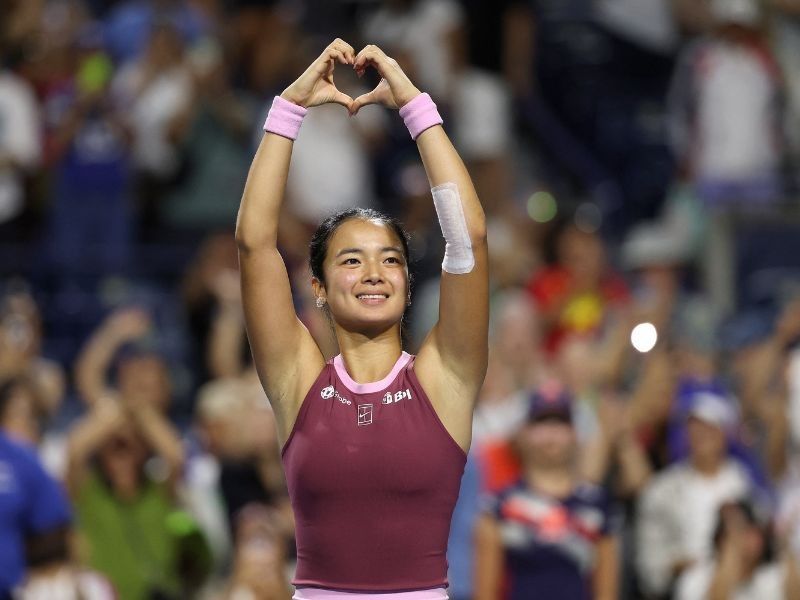
This should be a fascinating match.
On one side is Belinda Bencic, one of the smartest ball-strikers on the WTA Tour, an Olympic champion, former world No. 4, and a player who won this tournament more than a decade ago.
On the other is Alex Eala, a 21-year-old Filipina enjoying the best run of her professional career.
Seven straight singles victories.
A first WTA Tour championship.
A new career-high ranking.
Two gritty three-set victories in Toronto.
And now another opportunity to reach the quarterfinals of a WTA 1000 tournament.
Bencic will probably try to take time away from Alex.
Alex will try to create angles, attack second serves, and use her left-handed patterns to disrupt Bencic’s rhythm.
Both are excellent returners.
Both have shown they can survive close matches.
And both arrive after demanding three-set victories.
It has all the ingredients for a very competitive match.
Bencic may have the greater experience, but Alex currently has something every tennis player wants: momentum.
She keeps finding ways to win.
Now we find out whether she can do it one more time.
For Filipino fans, it looks like another late night—or very early morning—of tennis is coming.
And judging by the way Alex Eala has been playing lately, it might be worth staying awake for.