There are places that change so dramatically over time that you almost have to look at old photographs to believe they are the same community.
Canlubang is one of them.
Today, this huge barangay on the western side of Calamba is surrounded by industrial parks, subdivisions, schools, businesses and newer developments spreading toward the Laguna–Cavite area.
But for much of the 20th century, the name Canlubang brought up a very different image.
Sugarcane.
A massive estate.
Workers’ communities.
A sugar central.
Rail lines and agricultural roads.
Baseball fields.
Schools.
Company housing.
And one family whose name became deeply connected with the area’s modern history:
Yulo.
Every September, those layers of Canlubang’s past and present come together through the Kanlungan Festival.
Festival directories traditionally place the celebration on September 24 in Canlubang, Calamba, Laguna. The date isn’t random. September 24 is the birth anniversary of former Speaker and Chief Justice José Yulo Sr., whose family acquired the Canlubang Sugar Estate in 1948 and became closely identified with the community. (lawphil.net)
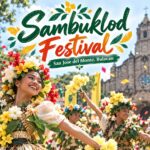
Modern editions of Kanlungan have included parades and the Indak Canlubang street-dancing competition, transforming Canlubang’s history into a colorful community celebration. A documented 2025 street-dance competition shows that this performance tradition remains active today. (youtube.com)
But Kanlungan is more than a day of dancers and costumes.
To really understand the festival, you have to understand how Canlubang went from agricultural estate to industrial and residential center—and why the word kanlungan is such an appropriate symbol for a place that generations of workers and families came to call home.
Content
Kanlungan Festival at a Glance
| Details | Information |
|---|---|
| Festival | Kanlungan Festival |
| Location | Barangay Canlubang, Calamba City, Laguna |
| Region | CALABARZON / Region IV-A |
| Main date | September 24 |
| Major civic connection | José Yulo Day |
| Festival character | Historical, cultural, civic and community-based |
| Signature modern attraction | Indak Canlubang street dancing |
| Historical industry | Sugar production |
| Major historical estate | Canlubang Sugar Estate |
| Figure closely associated with celebration | José Yulo Sr. |
| Meaning of Kanlungan | Shelter, refuge or place of protection |
| Patron saint of Canlubang | St. Joseph the Worker |
| Separate religious fiesta | May 1 |
| Barangay size | About 3,912 hectares |
| Current identity | Agricultural, residential, educational and industrial community |
The City Government of Calamba currently lists Canlubang as covering about 3,912 hectares with 21 sitios or communities, making it one of the city’s geographically significant barangays. (calambacity.gov.ph)
What Is Kanlungan Festival?
Kanlungan Festival is Canlubang’s September cultural celebration centered on the community’s history and identity.
Philippine festival calendars consistently identify:
September 24 — Kanlungan Festival, Canlubang, Calamba, Laguna
as the principal date. (wiki.arcsnet.dev)
The celebration has become particularly associated with the legacy of José Yulo Sr. and the community that developed around the Canlubang Sugar Estate.
Recent festival coverage describes Kanlungan as a tribute to Yulo and to Canlubang’s transformation as a community, while modern activities have included parades and street-dancing competitions. (youtube.com)
That makes Kanlungan different from a typical town fiesta.
There is no single agricultural product at the center of the modern festival.
There is no patron saint whose feast falls on September 24.
Instead, the subject is Canlubang itself.
Its people.
Its history.
Its workers.
Its old sugar-estate identity.
And the enormous changes that eventually turned an agricultural community into one of the most developed parts of Calamba.
What Does “Kanlungan” Mean?
Kanlungan is a beautiful Filipino word.
It means a place of shelter.
A refuge.
Somewhere that protects or receives people.
That definition already works naturally for a community festival.
Canlubang became home to generations of workers, migrants and families who settled around the sugar estate and, later, around the factories, schools, subdivisions and businesses that replaced or developed beside it.
But there is also an older, more unusual explanation connecting the word with Canlubang’s name.
Historical research quoting the 1953 Calamba Historical Data Papers says Canlubang was associated with the Tagalog word kanlungan, describing the area as an isolated refuge or “den” where bandits could once hide among heavily wooded land. (researchgate.net)
That old account should be treated as a historical place-name tradition rather than an unquestionable linguistic fact.
But it’s interesting.
A word once connected with hiding and remoteness eventually became something much warmer.
Shelter.
Home.
Community.
And that more positive meaning fits today’s festival perfectly.
Canlubang Was Once Very Different
It’s difficult to imagine now, especially if you know Canlubang mainly through industrial estates and modern developments.
But this area was once dominated by agriculture.
Sugarcane became the most important crop.
During the American colonial period, investors acquired thousands of hectares of former friar land in the Calamba and Biñan estates and developed a major sugar central in Canlubang. Historical scholarship describes the operation as one of the important early large-scale sugar enterprises developed in Laguna. (ucpress.edu)
The Calamba Sugar Estate was organized in the early 20th century, with the Canlubang sugar mill beginning operations in the 1910s.
Sugar didn’t simply become a crop.
It created an entire community.
Workers needed housing.
Children needed schools.
Families needed churches.
Goods had to be transported.
Sports and recreation became part of estate life.
Businesses appeared.
Canlubang slowly developed a social identity built around the sugar economy.
The Canlubang Sugar Estate
For decades, the sugar estate dominated the landscape.
Large areas were planted with cane.
Workers harvested and transported the crop.
The sugar central processed it.
The estate became known beyond Laguna and helped connect Canlubang with the larger history of Philippine sugar production.
And because plantation work required a large workforce, entire generations of families became connected with Canlubang through employment.
That relationship helps explain why older Canlubang residents often talk about the place not simply as somewhere their parents worked, but as a complete community.
People lived there.
Studied there.
Played sports there.
Went to church there.
Raised children there.
That is one reason Kanlungan feels like such an appropriate modern name.
The estate wasn’t only where people earned money.
For many families, it became home.
José Yulo and Canlubang
No discussion of Kanlungan Festival is complete without José Yulo Sr.
Yulo was one of the Philippines’ prominent lawyers and political figures of the 20th century.
He served in several major government roles, including Secretary of Justice, Speaker of the National Assembly and Chief Justice during the Japanese occupation period.
In 1948, the Canlubang estate was sold to Yulo.
Academic research on the development of suburban space around Canlubang records the transfer from the Madrigal family to José Yulo in September 1948. (researchgate.net)
The Yulo period became one of the defining chapters of modern Canlubang.
The estate was no longer only an agricultural business.
It increasingly developed as a planned worker community.
Why September 24?
Because José Yulo was born on:
September 24, 1894
His birthday became important enough locally that Congress eventually passed Republic Act No. 7851.
The law declares September 24 of every year a:
special nonworking holiday in Calamba, Laguna
to commemorate Yulo’s birth anniversary. (lawphil.net)
This law was approved in 1994.
That provides the strongest explanation for why Kanlungan Festival is traditionally celebrated on September 24.
The festival and José Yulo Day became closely linked.
In other words, Canlubang’s September celebration isn’t scheduled around a crop harvest or Catholic feast.
It’s centered on a person strongly associated with the community’s development.
Is Kanlungan Festival the Same as José Yulo Day?
They are closely connected, but the terms aren’t exactly interchangeable.
José Yulo Day is the legally established September 24 holiday in Calamba.
Kanlungan Festival is the cultural community celebration associated particularly with Canlubang.
The law commemorates Yulo.
The festival gives the community a much wider stage.
That stage can include:
local history,
street dancing,
young performers,
schools,
community organizations,
music,
parades,
and Canlubang identity.
So think of September 24 as the civic anniversary around which the cultural festival developed.
The Canlubang Worker Community
One reason Yulo’s name remains so strongly connected with Canlubang is the development of facilities around the estate.
Historical research notes that the Yulo era brought schools, community facilities, entertainment venues and a parish church into the estate environment. (researchgate.net)
This gave Canlubang a somewhat unusual structure.
It was agricultural.
But parts of it also functioned almost like a company town.
Workers didn’t necessarily commute from distant cities every day.
Many families lived in communities connected with the estate.
Children attended local schools.
People joined sports leagues.
Families worshipped together.
Over time, names such as Old Stable, Locomotive, Buntog, Carmel and other sitios became part of everyday Canlubang geography.
Many of these community names remain visible today.
The City Government of Calamba still lists 21 sitios within Barangay Canlubang, including Old Stable, Locomotive, Buntog, Carmel, Majada-In, Mangumit and others. (calambacity.gov.ph)
That’s living history.
St. Joseph the Worker Parish
One of the most important institutions that grew with the Canlubang community is St. Joseph the Worker Parish.
The parish itself says it was established around the idea of bringing Canlubang’s working community and their families closer to their faith.
In 2023, it celebrated its 75th year.
The parish describes St. Joseph the Worker as a particularly appropriate patron for Canlubang because he represents the dignity and Christian value of work. (sjwpcanlubang.com)
That connection is almost perfect for an old plantation and industrial community.
Farm workers.
Factory employees.
Drivers.
Mechanics.
Office workers.
Teachers.
Families whose lives were shaped by labor.
A parish dedicated to St. Joseph the Worker fits naturally into Canlubang’s history.
Kanlungan Festival Is Not Canlubang’s Patronal Fiesta
This is worth emphasizing because online festival lists can easily create confusion.
Canlubang’s official barangay profile lists its religious fiesta on:
May 1
That is the feast of St. Joseph the Worker. (calambacity.gov.ph)
The parish likewise identifies St. Joseph the Worker as Canlubang’s patron. (sjwpcanlubang.com)
So Canlubang essentially has two important community celebrations with different meanings.
May 1
Religious fiesta honoring St. Joseph the Worker.
September 24
José Yulo Day and Kanlungan Festival.
They may both celebrate Canlubang.
But they come from different traditions.
Indak Canlubang Street Dancing
For modern festival visitors, street dancing is likely to be the most exciting attraction.
The competition is commonly referred to as:
Indak Canlubang
Video documentation of the 2025 Kanlungan Festival confirms a full street-dancing competition involving colorful contingents performing through Canlubang. (youtube.com)
This is where Canlubang’s history becomes performance.
Instead of reading about sugarcane and workers in an old book, you see young dancers translate local stories into movement.
A routine can represent:
the old sugar fields,
estate workers,
harvest,
industry,
community life,
development,
unity,
or Canlubang’s transformation into a modern center.
And because festival choreography is theatrical, all of these everyday images become larger than life.
What Does Kanlungan Street Dancing Look Like?
There is no single permanent costume used every year.
That gives choreographers freedom.
Sugarcane naturally provides strong imagery.
Green leaves.
Golden-brown stalks.
Workers’ hats.
Harvest baskets.
Farm tools.
Then there is Canlubang’s later industrial story.
Designers may add metallic textures.
Factory-inspired shapes.
Modern colors.
Community symbols.
And because the festival name itself means shelter, some routines can also emphasize unity, home and belonging.
The result is much broader than a simple agricultural street dance.
Kanlungan tells the story of a place that changed.
From Sugarcane to Industry
Canlubang’s transformation accelerated dramatically during the second half of the 20th century.
Sugar remained important, but the economic landscape started changing.
Industrial estates appeared.
Road networks improved.
Factories arrived.
Residential development expanded.
The barangay’s location near Cavite, Cabuyao, Santa Rosa and Calamba’s major transport corridors made it increasingly attractive for new development.
The City Government of Calamba currently lists major industrial zones within Canlubang, including Silangan Industrial Park and Carmelray Industrial Park I. (calambacity.gov.ph)
That gives Kanlungan Festival an unusual historical contrast.
The dancers may represent cane cutters from the past.
But just beyond the festival route are modern industrial facilities.
Both belong to Canlubang.
The Rise of the Canlubang Urban Area
As the sugar economy declined and land use changed, parts of the old estate were converted into industrial, residential and commercial areas.
Canlubang gradually became part of the massive suburban growth spreading south of Metro Manila.
What was once far countryside became increasingly connected with Santa Rosa, Cabuyao, Silang and other rapidly developing areas.
New residents arrived.
Some had no direct connection with the sugar estate at all.
They came for:
factory jobs,
schools,
new subdivisions,
business opportunities,
and access to South Luzon transport networks.
This created an interesting cultural challenge.
How do you preserve an old community story when thousands of newer residents did not experience it?
Festivals can help.
Kanlungan as a History Lesson
This may be one of Kanlungan Festival’s most important roles today.
A teenager growing up in a modern Canlubang subdivision may never have seen the old sugar estate in full operation.
A family that moved into the barangay recently may know nothing about the Locomotive community or estate workers.
Someone might drive along C.A. Yulo Avenue every day without knowing who the Yulos were.
Then September arrives.
The festival creates a reason to ask.
Why is September 24 important?
Who was José Yulo?
Why are dancers carrying sugarcane?
Why is the festival called Kanlungan?
Why do so many old sitios have unusual names?
Once those questions begin, the history survives a little longer.
School Participation
Young people are especially important to Kanlungan.
Canlubang contains a large number of schools, from elementary campuses to secondary schools and colleges.
The City Government of Calamba lists institutions such as Canlubang Elementary School, Buntog National High School, Canlubang National High School, Kapayapaan Integrated School, Rizal Institute, Don Bosco College and others within the barangay. (calambacity.gov.ph)
Festival competitions give students opportunities in:
dance,
music,
film,
performance,
design,
and community history.
A school record from Canlubang even documents student recognition for winning a Kanlungan Festival short-film competition, showing how the modern festival has expanded beyond street dancing into youth creative activities. (scribd.com)
That’s an interesting evolution.
The old community told stories orally.
Today’s students can tell those stories through video.
Why Street Dancing Matters
It is easy to dismiss street dancing as entertainment.
But look at what it requires.
Students learn choreography.
Musicians rehearse.
Costume makers work.
Parents help.
Teachers coordinate.
Local artists create props.
Barangays and organizations contribute.
Then people line the streets and watch.
For a few hours, thousands of people pay attention to Canlubang’s own story instead of something happening somewhere else.
That’s cultural preservation in a very loud form.
José Yulo’s Political Career
Part of the reason September 24 has significance beyond Canlubang is that Yulo was a major national political figure.
His public career crossed several branches of government.
He served as:
Secretary of Justice,
Speaker of the National Assembly,
a legislator,
and Chief Justice.
Republic Act No. 7851 doesn’t mention the sugar estate in its text.
It simply establishes the holiday to commemorate his birth anniversary. (lawphil.net)
Canlubang gives the date its local meaning.
For residents, José Yulo isn’t remembered only as someone who once worked in Manila government.
His name became physically embedded in the community.
Roads.
Land.
The estate.
Schools and community institutions developed during the Canlubang era associated with his family.
That’s why Kanlungan is a particularly local way of remembering him.
A More Complicated History
It’s also worth recognizing that large plantation estates have complicated histories.
Sugar estates created employment and communities.
They also existed within systems of concentrated land ownership and labor relations that have generated disputes throughout Philippine history.
Academic studies of Canlubang discuss tensions involving land, workers, agrarian relations and later suburban development. (researchgate.net)
A good historical festival guide doesn’t need to turn into a political argument.
But it also shouldn’t pretend history is always simple.
Canlubang grew because of the estate.
Thousands of families built lives around it.
At the same time, land and labor remain important parts of the area’s historical story.
Both things can be true.
The Old Canlubang and the New Canlubang
Ask an older resident what Canlubang means and you may hear stories about:
sugarcane,
the mill,
worker housing,
baseball,
old schools,
company facilities,
and community events.
Ask a younger resident and you may hear:
industrial parks,
Nuvali,
subdivisions,
schools,
factories,
cafés,
and South Luzon commuting.
Neither answer is wrong.
That is exactly why Kanlungan Festival is interesting.
It sits between those two Canlubangs.
The festival can honor the old community while recognizing that the place has changed dramatically.
Why the Word “Kanlungan” Works Even Better Today
The old historical explanation associates kanlungan with refuge.
Today, the word feels broader.
Canlubang became a kanlungan for many kinds of people.
First:
farm and estate workers.
Then:
industrial employees.
Then:
families buying homes south of Metro Manila.
Students.
Entrepreneurs.
Commuters.
New migrants from other provinces.
Different generations arrived for different reasons.
But they all became part of the same enormous barangay.
In that sense, Kanlungan is no longer simply a festival name.
It describes how Canlubang grew.
Kanlungan Festival vs. Buhayani Festival
Because Canlubang belongs to Calamba City, visitors may confuse Kanlungan with Calamba’s better-known citywide festival.
They are completely different.
Buhayani Festival
Calamba City’s major June celebration honoring Dr. José Rizal and the city’s heritage.
Kanlungan Festival
Canlubang’s September celebration associated with José Yulo Day and the community’s local history.
Buhayani tells the story of Calamba as a city.
Kanlungan tells the story of Canlubang as a community within that city.
That difference matters.
Kanlungan Festival vs. St. Joseph the Worker Fiesta
Another distinction worth repeating.
May 1
Canlubang’s patronal fiesta honoring St. Joseph the Worker.
September 24
Kanlungan Festival / José Yulo Day.
The religious fiesta celebrates the patron saint.
Kanlungan focuses much more on history, heritage and community identity.
The two celebrations complement each other.
One reflects Canlubang’s faith.
The other reflects its civic memory.
What Happens During Kanlungan Festival?
The exact program changes.
Modern editions may include activities such as:
street dancing,
parades,
school competitions,
cultural presentations,
community events,
sports,
youth activities,
creative contests,
and evening entertainment.
The most visually prominent recent event is Indak Canlubang.
In 2025, the street-dancing competition took place as part of the Kanlungan Festival celebrations immediately around the September 24 period. (youtube.com)
Because barangay programs can change from year to year, visitors should always check the current official schedule rather than assume every event falls directly on September 24.
What Does Festival Day Feel Like?
Imagine arriving in Canlubang early.
Performers are already gathering.
One group is fixing props.
Another is putting on makeup.
A drumline tests its rhythm.
Parents are taking photos before costumes get sweaty.
Teachers are giving final reminders.
Traffic is beginning to slow.
Then the first contingent moves.
Drums get louder.
Dancers enter the road.
People crowd the sidewalks.
Modern buildings sit behind performances inspired by old agricultural life.
That contrast is very Canlubang.
A dancer representing a sugar worker may be performing only a few minutes away from an industrial park.
History isn’t hidden inside a museum.
For one day, it walks through the street.
Visiting Kanlungan Festival for the First Time
If your main priority is Indak Canlubang, arrive early.
Street-dancing routes can affect traffic in an already busy area.
Canlubang is huge, and saying you’re “in Canlubang” doesn’t necessarily mean you’re near the actual festival venue.
Check the year’s parade route before leaving.
Also remember that September 24 is a legally established special nonworking holiday in Calamba under Republic Act No. 7851. (lawphil.net)
That can affect:
government-office schedules,
school activities,
traffic patterns,
and local events.
Prepare for September Weather
Bring an umbrella.
You may need it for rain.
You may also need it for the sun.
September remains part of the wet season in Laguna.
Festival organizers can adjust schedules if weather becomes severe.
Keep your phone and camera protected.
Wear comfortable shoes.
And bring drinking water.
Watching festival street dancing often involves much more standing and walking than visitors expect.
Explore Canlubang’s Old Community
If you’re interested in history, don’t think only about the newest commercial developments.
Look for traces of older Canlubang.
Community names such as:
Old Stable,
Locomotive,
Buntog,
Carmel,
Majada-In,
Mangumit,
and Canlubang proper
still appear in the barangay’s official sitio list. (calambacity.gov.ph)
Even the names tell you something.
“Locomotive” immediately hints at the transportation infrastructure connected with estate life.
“Old Stable” evokes an agricultural past completely different from modern residential Canlubang.
Places preserve memory.
Sometimes the name is all that survives.
Visit St. Joseph the Worker Parish
Even though Kanlungan isn’t primarily a religious festival, the parish is one of the most historically meaningful institutions in Canlubang.
The church describes itself as having served generations of Canlubang families for baptisms, weddings, funerals, feast days and ordinary parish life for more than seven decades. (sjwpcanlubang.com)
It is also especially relevant because St. Joseph represents labor.
For a community historically built around workers, that connection is difficult to miss.
Canlubang Today
One of the most striking things about modern Canlubang is just how large and varied it has become.
The barangay covers roughly 3,912 hectares and contains 21 sitios.
Within its boundaries are:
residential communities,
schools,
industrial estates,
remaining agricultural areas,
commercial developments,
and large institutional properties. (calambacity.gov.ph)
That’s why calling Canlubang simply an “old sugar town” is no longer enough.
It isn’t a town at all in the political sense.
It is one barangay within Calamba.
But its scale, population, history and economic importance make it feel much larger.
Why Kanlungan Festival Matters
Development can erase memory surprisingly quickly.
A field becomes a subdivision.
A warehouse becomes a commercial area.
An old road receives a new name.
A factory closes.
Workers retire.
The next generation never sees what was there.
Then someone says:
“There used to be sugarcane here.”
And young residents find that difficult to imagine.
Kanlungan Festival gives Canlubang a reason to remember.
Not because every part of the past was perfect.
But because understanding how a place developed helps residents understand where they live now.
Canlubang didn’t suddenly appear as an industrial suburb.
It had another life before that.
The festival keeps that life visible.
Kanlungan Festival Frequently Asked Questions
Where is Kanlungan Festival celebrated?
Kanlungan Festival is celebrated in Barangay Canlubang, Calamba City, Laguna.
When is Kanlungan Festival?
Festival calendars traditionally list Kanlungan Festival on September 24. (wiki.arcsnet.dev)
Why is September 24 important in Canlubang?
September 24 is the birth anniversary of José Yulo Sr.
Republic Act No. 7851 declares September 24 every year a special nonworking holiday in Calamba in his memory. (lawphil.net)
Who was José Yulo?
José Yulo Sr. was a Filipino lawyer, politician and jurist who served in several high government positions, including Secretary of Justice, Speaker of the National Assembly and Chief Justice.
His family acquired the Canlubang Sugar Estate in 1948. (researchgate.net)
What does Kanlungan mean?
Kanlungan means shelter, refuge or a place that provides protection.
Historical local accounts also associate Canlubang’s name with the word kanlungan, although the exact origin should be treated as traditional place-name history rather than an absolutely proven etymology.
Is Kanlungan Festival a religious festival?
Not primarily.
It is mainly a civic, historical and cultural celebration associated with José Yulo Day and Canlubang’s community identity.
Who is Canlubang’s patron saint?
Canlubang’s patron is St. Joseph the Worker.
The parish specifically connects him with the dignity and value of work. (sjwpcanlubang.com)
When is Canlubang’s religious fiesta?
May 1.
The City Government of Calamba lists May 1 as Canlubang’s official barangay fiesta. (calambacity.gov.ph)
Is May 1 the same as Kanlungan Festival?
No.
May 1 is the St. Joseph the Worker patronal fiesta.
Kanlungan Festival is associated with September 24 and José Yulo Day.
Does Kanlungan Festival have street dancing?
Yes.
Recent editions include Indak Canlubang, a competitive street-dancing event. The 2025 competition is publicly documented as part of Kanlungan Festival. (youtube.com)
Why is sugar important to Canlubang?
Sugar production shaped much of Canlubang’s modern development.
The Calamba Sugar Estate and later Canlubang Sugar Estate created employment and communities that became central to the area’s 20th-century identity.
Is Canlubang still agricultural?
Partly.
The current City Government profile gives it agricultural zoning alongside growth-management areas, but Canlubang also contains large industrial parks, residential communities, schools and other urban development. (calambacity.gov.ph)
Kanlungan Festival 2026
This article is meant to remain useful beyond one edition, but travelers planning specifically for 2026 can already rely on one established date:
Thursday, September 24, 2026
That is José Yulo Day.
Republic Act No. 7851 makes September 24 an annual special nonworking holiday in Calamba, regardless of which day of the week it falls on. (lawphil.net)
It is also the date consistently associated with Kanlungan Festival in national festival calendars. (wiki.arcsnet.dev)
Recent history strongly suggests that street dancing will remain one of the major attractions, since Indak Canlubang was actively staged during the 2025 festival. (youtube.com)
As of September 14, 2026, however, I have not found a reliable complete official public timetable for every Kanlungan Festival 2026 event.
That means:
September 24 is established.
The exact 2026 parade time, Indak Canlubang schedule, competition venues and other community activities should still be checked against the latest Barangay Canlubang and Calamba City announcements before traveling.

Final Thoughts
Kanlungan Festival tells the story of a place that changed completely without completely losing its memory.
Canlubang was once known for sugarcane.
Workers lived around an estate.
A sugar central drove much of the local economy.
Children grew up in communities with names like Old Stable and Locomotive.
St. Joseph the Worker became patron of a population whose identity was deeply connected with labor.
José Yulo and his family became part of Canlubang’s 20th-century story.
Then everything changed.
Factories arrived.
Industrial estates expanded.
Subdivisions spread.
Schools multiplied.
Thousands of new residents moved in.
What once felt like a distant agricultural estate became part of one of Southern Luzon’s fastest-growing urban corridors.
And yet every September 24, Canlubang looks backward.
The drums start.
Young dancers fill the streets.
Old stories return.
Sugarcane appears again as costume and prop.
People remember José Yulo.
The community remembers where it came from.
And maybe that’s what Kanlungan means best today.
A shelter doesn’t have to remain unchanged.
People can come and go.
Buildings can rise.
Fields can disappear.
Generations can move on.
What matters is that somewhere underneath all that change, people still know which place they call home.
For generations of Canlubang residents, that place is their kanlungan.