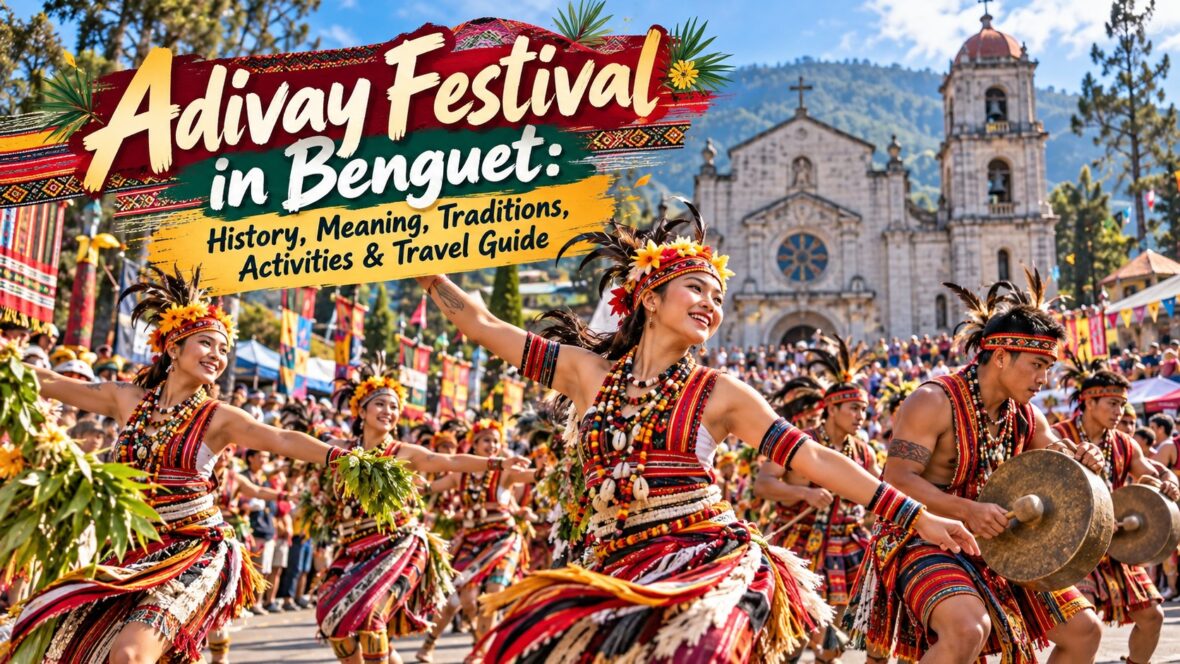
Every November, the province of Benguet in the Cordillera Administrative Region comes alive with colorful cultural performances, traditional music, agricultural exhibitions, and celebrations that bring together people from its different municipalities.
This is the Adivay Festival, one of the most meaningful cultural celebrations in Northern Luzon.
If you’ve visited Baguio City, you’re probably familiar with its famous Panagbenga Festival. But just a short distance away, in the neighboring province of Benguet, there’s another celebration that deserves a spot on every traveler’s festival calendar.
Unlike festivals that mainly focus on colorful street dancing and elaborate costumes, Adivay has a deeper emphasis on unity, thanksgiving, indigenous heritage, and community.
It’s a celebration of the people of Benguet, their traditions, their agricultural achievements, and the cultural identity that connects communities across the province.
One of the most anticipated parts of the celebration is the Grand Cañao, a traditional gathering that brings thousands of people together to celebrate their shared heritage.
But there’s much more to discover, from cultural dances and trade fairs to locally made products, traditional food, and activities showcasing the best of Benguet.
If you’re interested in Philippine festivals or planning a visit to the Cordillera region, here’s everything you need to know about the Adivay Festival, including its meaning, history, major activities, location, and travel tips.
Content
What Is the Adivay Festival?
The Adivay Festival is an annual cultural and agri-tourism celebration held in Benguet, a mountainous province in the Cordillera Administrative Region of the Philippines.
It brings together the province’s 13 municipalities to celebrate their shared history, cultural traditions, agricultural products, local industries, and achievements.
The festival also commemorates Benguet’s founding anniversary, which falls on November 23.
Adivay is particularly meaningful because it highlights the different indigenous communities that call Benguet home.
These include the Ibaloi, Kankanaey, and Kalanguya, among other communities that contribute to the province’s cultural identity.
Throughout the celebration, visitors can experience traditional music, cultural dance performances, agricultural and trade fairs, community gatherings, and activities that showcase Benguet’s heritage.
It’s a festival that combines culture, tourism, agriculture, and community pride in one major provincial celebration.
Adivay Festival at a Glance
| Details | Information |
|---|---|
| Festival Name | Adivay Festival |
| Location | Benguet, Philippines |
| Main Festival Center | La Trinidad, Benguet |
| Region | Cordillera Administrative Region |
| Month Celebrated | November |
| Important Date | November 23 |
| Occasion | Benguet Founding Anniversary |
| Meaning of Adivay | Coming together to celebrate |
| Festival Type | Cultural and Agri-Tourism Festival |
| First Celebration | February 25 – March 6, 2005 |
| Major Highlight | Grand Cañao |
| Participating Communities | Benguet’s 13 municipalities |
What Does Adivay Mean?
The word “Adivay” comes from the Ibaloi language, one of the indigenous languages spoken in Benguet.
It is commonly translated as “coming together” or “coming together to have fun.”
That simple meaning captures the entire spirit of the festival.
For the people of Benguet, Adivay represents the importance of gathering as a community, strengthening relationships, sharing blessings, and celebrating their common identity.
Interestingly, the concept also has corresponding terms in other languages spoken in the province.
In the provincial resolution that officially institutionalized the festival, the terms “alibay” among Kankanaey speakers and “allibay” among Kalanguya speakers were recognized alongside the Ibaloi word “adivay.”
These words reflect traditions of gathering, social interaction, sharing food, and strengthening relationships.
Instead of choosing different names for different communities, the province adopted Adivay as the common name of its annual celebration.
The festival therefore reflects unity without ignoring the distinct cultural identities of Benguet’s people.
And that’s what makes Adivay special.
It’s not just a celebration that brings tourists to the province. It’s a celebration that brings the people of Benguet together.
History of the Adivay Festival
The Adivay Festival may be relatively young compared with some of the Philippines’ centuries-old religious festivals, but its origins are closely connected with Benguet’s cultural heritage and tourism development.
According to the Benguet Provincial Library, the first Adivay Festival was held from February 25 to March 6, 2005.
It was originally conceptualized as an agri-tourism celebration that would highlight the province’s rich history, culture, arts, trade, industries, and tourism potential.
The first celebration was organized to complement the Panagbenga Festival of Baguio City.
At the time, Panagbenga had already become a major tourism attraction in Northern Luzon, drawing thousands of visitors to Baguio for its colorful flower floats, street dancing, and cultural activities.
The organizers of Adivay wanted to create another opportunity for visitors to discover the neighboring province of Benguet.
But rather than simply copying Panagbenga, Adivay developed its own character.
The festival focused on the traditions, achievements, agricultural products, and industries of Benguet’s communities.
It also emphasized cultural preservation and the importance of bringing together people from different parts of the province.
Adivay Becomes an Official Annual Festival
Following the success of the first celebration, the Sangguniang Panlalawigan of Benguet approved Resolution No. 06-55 on February 13, 2006.
This resolution officially institutionalized Adivay as an annual celebration of the province.
The resolution recognized the importance of cultural preservation, tourism promotion, environmental protection, agriculture, and community participation.
It also emphasized the need to strengthen cultural pride among younger generations.
Over time, the festival became associated with Benguet’s founding anniversary celebrations in November.
Today, Adivay is recognized as one of the province’s most important annual events and a significant celebration of Cordillera culture.
When Is the Adivay Festival Celebrated?
The Adivay Festival is celebrated every November in Benguet.
Although the exact schedule changes from year to year, the festivities often extend across several weeks.
The most important date to remember is November 23, which marks Benguet’s founding anniversary.
Major activities, particularly the Grand Parade and Grand Cañao, have traditionally been organized on or around this date.
In recent celebrations, the provincial government has also scheduled cultural performances, trade fairs, pageants, sports competitions, exhibitions, and other community programs throughout November.
For example, the festival has previously included month-long activities beginning in early November and continuing toward the end of the month.
If you’re planning a trip specifically to experience Adivay, it’s best to check the official schedule for the particular year you’re visiting.
This is especially important if you want to attend the Grand Cañao, since it is one of the festival’s most significant events.
Where Is the Adivay Festival Held?
Adivay is celebrated throughout the province of Benguet, but many of its major activities take place in La Trinidad, the provincial capital.
La Trinidad is located immediately north of Baguio City, making the festival relatively accessible to travelers visiting the country’s famous summer capital.
Over the years, two locations have become particularly associated with the celebration.
Benguet Provincial Capitol
The Benguet Provincial Capitol is located in Poblacion, La Trinidad.
It has traditionally served as an important venue for official ceremonies, festival openings, and gatherings involving provincial officials and representatives from participating municipalities.
During major celebrations, the surrounding area can become particularly busy with visitors and participants.
Benguet Sports Complex
The Benguet Sports Complex in Wangal, La Trinidad, has hosted several major Adivay activities.
These include cultural presentations, sports competitions, provincial gatherings, and the Grand Cañao.
During recent editions, the Grand Parade has also traveled from the Provincial Capitol area toward the sports complex.
However, routes and event venues can change, so visitors should confirm the latest arrangements before traveling.
Major Highlights and Activities of the Adivay Festival
One of the things I find interesting about Adivay is how much variety it offers.
It’s not the kind of festival where you only watch one parade and then head home.
Depending on the annual program, visitors can spend several days exploring different activities that showcase the culture, agriculture, traditions, and industries of Benguet.
Here are some of the major highlights associated with the festival.
1. Grand Cañao
The Grand Cañao is arguably the most culturally significant highlight of the Adivay Festival.
A cañao, sometimes written as canao or kanyaw, refers to traditional gatherings or rituals practiced among certain indigenous communities in the Cordillera.
Depending on the community and occasion, these gatherings may involve thanksgiving, ceremonial offerings, traditional dances, gong music, communal meals, and other customary practices.
During Adivay, the Grand Cañao becomes a province-wide celebration that brings together representatives of Benguet’s 13 municipalities.
It’s an opportunity for communities to express gratitude, renew relationships, and celebrate their shared heritage.
One of the most recognizable sights during the gathering is the performance of traditional dances accompanied by the rhythmic sound of gongs.
Participants may wear traditional woven clothing and accessories representing their cultural communities.
The celebration can also include ceremonial activities involving livestock, followed by communal food sharing.
In past celebrations, the program has featured the traditional depap, or pig-catching activity, and the owik, a ceremonial offering involving pigs.
These are culturally significant practices that should be understood within the context of the communities that observe them.
For visitors, the Grand Cañao provides an opportunity to learn about Benguet’s living traditions.
However, it’s important to remember that the event is not simply a tourist performance.
Many of its activities have deeper cultural and ceremonial meanings.
Visitors should observe respectfully, follow instructions from the organizers, and avoid disrupting any rituals.
2. Adivay Grand Parade
Another major highlight of the festival is the Grand Parade.
This event brings together representatives from Benguet’s different municipalities, along with provincial officials, community organizations, and other participants.
During previous celebrations, the parade has featured people wearing traditional clothing, cultural performances, music, and community delegations.
It’s a colorful gathering that showcases the diversity of Benguet.
In some editions, the procession has started at the Provincial Capitol and proceeded toward the Benguet Sports Complex in Wangal.
For photographers and travelers interested in local festivals, the parade offers opportunities to capture the colors, traditions, and energy of the celebration.
Just remember that the exact parade route can vary each year.
3. Cultural Dance Performances
Traditional dance is an important part of Adivay.
Benguet is home to several indigenous communities with distinctive cultural practices.
During the festival, cultural groups may perform dances that reflect their traditions, social gatherings, and community history.
The rhythmic sound of the gangsa, or gong, is one of the most recognizable elements of many Cordillera performances.
The music provides the rhythm for dancers dressed in traditional clothing, often featuring locally woven textiles.
One dance associated with Benguet cultural gatherings is the tayaw, sometimes written as tayao, which has featured prominently in previous Adivay celebrations.
These performances are particularly important because they help introduce younger generations to their heritage.
For visitors, they’re also a meaningful reminder of the cultural diversity found in Northern Luzon.
4. Adivay Agri-Tourism Fair
Benguet is one of the Philippines’ most important agricultural provinces.
Its cool mountain climate and fertile agricultural areas support the cultivation of highland vegetables and other crops.
That’s why the Agri-Tourism Fair has become such an important part of Adivay.
The event provides an opportunity for farmers, producers, entrepreneurs, and participating municipalities to showcase their products.
Depending on the annual program, visitors may encounter exhibits featuring freshly harvested vegetables, fruits, processed foods, flowers, handicrafts, and other locally produced items.
Past fairs have also featured booths inspired by traditional structures and landscapes representing Benguet’s municipalities.
Some exhibits highlight local tourism attractions and industries, helping visitors discover places beyond the usual tourist destinations.
The fair is particularly interesting if you want to learn more about Benguet’s agricultural economy.
5. Adivay Trade Fair
If you enjoy buying local products when traveling, the Adivay Trade Fair is another activity worth exploring.
Past editions have featured locally made products, crafts, clothing, food, and other merchandise from Benguet’s municipalities.
For visitors, it’s an opportunity to discover products that may not be readily available in ordinary shopping malls.
You may also get the chance to interact with local producers and learn more about how certain items are made.
The trade fair is more than a shopping activity.
It helps support small businesses, farmers, artisans, and entrepreneurs while promoting the province’s industries.
6. Mr. and Miss Benguet
Pageant competitions have also become part of the Adivay Festival’s modern activities.
The Mr. and Miss Benguet competition provides a platform for participants to represent their communities.
These events often highlight cultural identity, personal achievements, and community representation.
Traditional clothing presentations and other culturally inspired segments may also form part of the competition, depending on the annual program.
7. Indigenous Games and Sports Competitions
Aside from cultural performances, Adivay has also featured traditional games and modern sports competitions.
These activities encourage community participation and provide opportunities for participants from different municipalities to interact.
The depap, or traditional pig-catching activity, is among the distinctive competitions featured during past Grand Cañao celebrations.
Other programs have included team sports, recreational events, and competitions organized for different age groups.
The specific sports and activities vary each year.
8. Concerts and Community Programs
Over the years, Adivay has expanded to include additional activities such as musical performances, talent competitions, community programs, employment fairs, and tourism-related exhibitions.
These events help make the celebration enjoyable for different age groups.
Whether you’re interested in cultural heritage, agriculture, music, or simply exploring local products, there’s usually something to discover during the festival period.
The 13 Municipalities of Benguet
An important part of Adivay is the participation of Benguet’s 13 municipalities.
These are:
- Atok
- Bakun
- Bokod
- Buguias
- Itogon
- Kabayan
- Kapangan
- Kibungan
- La Trinidad
- Mankayan
- Sablan
- Tuba
- Tublay
Each municipality has its own history, agricultural products, tourism attractions, and cultural traditions.
During Adivay, their participation helps showcase the variety of communities that make up the province.
This is one of the reasons the festival is particularly meaningful.
Instead of celebrating only one town, Adivay brings together an entire province.
Traditional Food and Local Products During Adivay
Food is another interesting part of the festival experience.
Benguet has a rich agricultural heritage and several traditional food preparations associated with its indigenous communities.
Here are some products and dishes worth discovering during a visit.
Fresh Highland Vegetables
Benguet is often described as the Salad Bowl of the Philippines because of its significant production of highland vegetables.
Cabbage, carrots, potatoes, lettuce, broccoli, and other crops are grown in different parts of the province.
Agricultural exhibits and local markets provide an opportunity to appreciate the work of the province’s farmers.
Strawberries
La Trinidad is famous for its strawberry farms.
Visitors can look for locally grown strawberries and strawberry-based products, including jams and preserves, when available.
However, strawberry production is seasonal, so fresh harvests and picking activities are not guaranteed during every festival visit.
Pinikpikan
Pinikpikan is a traditional chicken dish associated with parts of the Cordillera region.
It has cultural significance in certain communities and is also prepared in different ways in modern kitchens and restaurants.
Travelers interested in regional cuisine may encounter versions of this dish in local establishments.
Etag
Etag is a traditional preserved meat product associated with Cordillera food culture.
It is typically prepared through salting and preservation processes, which may involve smoking or drying.
Etag can be used in various dishes and is sometimes combined with vegetables, beans, or other ingredients.
Tapuey
Tapuey is a traditional rice wine found in parts of the Cordillera.
It has cultural significance in certain gatherings and celebrations.
Visitors may encounter it during cultural or food-related activities, depending on the event arrangements.
Benguet Coffee
Benguet also has communities engaged in coffee production.
Local coffee products are worth exploring, especially for visitors interested in discovering more Philippine-grown coffee.
Handwoven Textiles and Handicrafts
Aside from food, Benguet is known for locally made handicrafts and woven products.
Depending on the exhibitors, festival trade fairs may feature textiles, accessories, baskets, souvenirs, and other handcrafted items.
Purchasing directly from local makers can be a meaningful way to support the communities that preserve these traditions.
Why Is the Adivay Festival Important?
Adivay is significant for several reasons.
First, it celebrates Benguet’s cultural heritage.
The festival provides opportunities for indigenous communities to share and preserve traditions that have been passed down through generations.
Second, it strengthens provincial unity.
By bringing together representatives from all 13 municipalities, Adivay encourages cooperation and a shared sense of belonging.
Third, it supports local livelihoods.
The agricultural and trade fairs help promote Benguet’s products, creating opportunities for farmers, entrepreneurs, artisans, and small businesses.
Fourth, it promotes tourism.
Benguet is often associated with Baguio City and La Trinidad’s strawberry farms, but the province has much more to offer.
Adivay introduces visitors to the cultural and economic identity of its different municipalities.
Finally, the festival reminds younger generations of the importance of their history.
Traditional dances, music, language, clothing, and ceremonial practices become part of a larger effort to keep cultural heritage alive.
Adivay Festival vs. Panagbenga Festival: What’s the Difference?
Since Adivay and Panagbenga are celebrated in neighboring destinations, it’s understandable why some travelers might confuse the two.
However, they are separate festivals with different histories, themes, and schedules.
| Details | Adivay Festival | Panagbenga Festival |
|---|---|---|
| Location | Benguet, mainly La Trinidad | Baguio City |
| Usual Month | November | February |
| Main Focus | Culture, agriculture, unity, provincial heritage | Flowers, creativity, and city celebration |
| Major Highlights | Grand Cañao, cultural events, trade fairs | Grand Street Dance Parade, Grand Float Parade |
| Communities Represented | Benguet’s 13 municipalities | Baguio and participating groups |
Panagbenga is famous for its colorful flower-covered floats and large street dancing competitions.
Adivay, on the other hand, places particular emphasis on the traditions, agricultural achievements, and provincial identity of Benguet.
Both are worth experiencing, but they offer different perspectives on the culture and celebrations of Northern Luzon.
How to Get to Adivay Festival in Benguet
If you’re planning to attend Adivay, La Trinidad is generally the most convenient destination because many of the major events are held there.
For travelers coming from Metro Manila and other parts of Luzon, the usual route involves traveling to Baguio City before continuing to La Trinidad.
Manila to Baguio by Bus
Several bus companies operate trips between Metro Manila and Baguio.
Travelers can choose from different departure terminals, depending on the bus operator.
Travel time usually ranges from around four to seven hours, but this can vary significantly depending on traffic, weather, and road conditions.
During busy weekends and holidays, trips may take longer.
It’s advisable to book your bus ticket ahead of time, especially if your travel dates coincide with the major festival activities.
Baguio to La Trinidad
Once you arrive in Baguio, you can continue to La Trinidad using local transportation.
Jeepneys serving La Trinidad are available from designated loading areas in Baguio, including routes associated with Magsaysay Avenue.
Taxis and other authorized local transport services are also options.
The journey is relatively short compared with the trip from Manila, although traffic can be heavy during peak hours and festival celebrations.
If you’re attending an event at the Benguet Sports Complex, make sure to confirm the exact venue and available transport routes.
By Private Car
Travelers driving from Metro Manila can use major expressways toward Baguio before continuing to La Trinidad.
The route commonly involves NLEX, SCTEX, and TPLEX, followed by roads leading toward Baguio and Benguet.
Check road conditions and navigation updates before traveling.
Parking near festival venues may be limited, especially during the Grand Parade and Grand Cañao.
Where to Stay During Adivay Festival
Visitors can consider staying in either La Trinidad or Baguio City.
Both locations offer advantages depending on your travel plans.
Staying in La Trinidad
Accommodation in La Trinidad may be convenient if attending the festival is your main priority.
You could be closer to the Provincial Capitol, Benguet Sports Complex, and other local venues.
This may help reduce travel time during major activities.
However, accommodation choices are generally more limited than in Baguio City.
Staying in Baguio
Baguio offers a wider selection of hotels, inns, guesthouses, and other accommodations.
It’s also a practical choice if you want to combine your festival visit with sightseeing, shopping, and dining.
Just remember to allow enough travel time between Baguio and La Trinidad.
Traffic can become heavy, especially during weekends and large public events.
Other Things to Do While Visiting Benguet
If you’re traveling to Benguet for Adivay, consider extending your stay to enjoy other attractions in the area.
One of the most popular places to visit is the La Trinidad Strawberry Farm, where visitors can explore the agricultural landscape and, when conditions allow, participate in strawberry-picking activities.
You can also spend some time exploring Baguio City, which offers scenic parks, cultural attractions, restaurants, markets, and other tourist destinations.
For travelers interested in highland agriculture, La Trinidad and surrounding areas provide opportunities to learn more about the farming communities that supply vegetables and other products to different parts of the Philippines.
If you have more time, you can explore other Benguet municipalities, although many destinations require longer drives and additional planning.
Tips for Attending the Adivay Festival
If you’re visiting for the first time, here are a few practical things to keep in mind.
Check the Official Schedule
The festival usually includes several activities held on different dates.
Some events may take place early in November, while major gatherings are traditionally organized around November 23.
Confirm the schedule before traveling.
Arrive Early for Major Events
The Grand Parade and Grand Cañao can attract large crowds.
Arriving early gives you more time to find the venue and settle into an appropriate viewing area.
Bring a Jacket
Benguet has a cooler mountain climate than many lowland provinces.
Early mornings and evenings can feel chilly, so bringing a light jacket is a good idea.
Wear Comfortable Shoes
You may spend a considerable amount of time walking between exhibits, public areas, and event venues.
Comfortable shoes will make the experience much easier.
Bring Some Cash
Although digital payment options may be available, smaller vendors often prefer cash.
Having smaller bills is useful when purchasing food and souvenirs.
Respect Cultural Traditions
Adivay is closely connected with indigenous heritage.
When attending ceremonies or cultural activities, follow the instructions of organizers and respect restricted areas.
Ask permission before photographing sensitive ceremonial activities.
Support Local Businesses
Consider purchasing food, agricultural products, crafts, and souvenirs from local vendors.
The festival provides an opportunity to contribute directly to Benguet’s local economy.
Monitor Weather and Traffic Conditions
Mountain weather can change quickly, and November may bring cool temperatures and occasional rainfall.
Check weather forecasts before heading out.
Traffic restrictions may also be implemented during large festival gatherings.
Is the Adivay Festival Free?
Many of Adivay’s public celebrations, cultural presentations, and exhibitions have traditionally been accessible to visitors.
However, admission arrangements may vary depending on the event.
Some competitions, concerts, special programs, or privately organized activities may have separate requirements.
If you are planning to attend a particular event, confirm whether admission is free, ticketed, or subject to registration.
Frequently Asked Questions About the Adivay Festival
What is the Adivay Festival known for?
The Adivay Festival is known for celebrating Benguet’s cultural heritage, agricultural products, and provincial unity. Its major highlights include the Grand Cañao, cultural performances, trade fairs, and community gatherings.
What is the meaning of Adivay?
Adivay is an Ibaloi word commonly translated as “coming together” or “coming together to have fun.”
Where is the Adivay Festival celebrated?
The festival takes place in Benguet, with major events generally held in La Trinidad, the provincial capital.
When is the Adivay Festival celebrated?
Adivay is traditionally celebrated in November, around Benguet’s founding anniversary on November 23.
When did the Adivay Festival start?
The first Adivay Festival was held from February 25 to March 6, 2005. It was officially institutionalized as an annual provincial celebration in 2006.
Why is the Adivay Festival celebrated?
The festival is celebrated to commemorate Benguet’s founding anniversary, strengthen unity among its communities, preserve indigenous traditions, and promote agriculture, tourism, and local industries.
What is the main highlight of Adivay?
The Grand Cañao is one of the festival’s most important cultural highlights. It involves a traditional gathering centered on community, thanksgiving, and cultural heritage.
What is the difference between Adivay and Panagbenga?
Adivay is Benguet’s cultural and agri-tourism festival, usually celebrated in November. Panagbenga is Baguio City’s flower festival, celebrated mainly in February.
How many municipalities participate in Adivay?
The festival brings together the 13 municipalities of Benguet.
Can tourists attend the Grand Cañao?
Visitors have attended public Grand Cañao celebrations in previous years. However, guests should follow event guidelines and respect any restricted ceremonial areas.
Is Adivay Festival worth visiting?
Yes, particularly for travelers interested in Cordillera culture, indigenous traditions, local food, agricultural tourism, and provincial celebrations.
Adivay Festival 2026: Latest Schedule and Updates
For travelers planning a visit in 2026, Adivay will coincide with Benguet’s 126th founding anniversary.
The province’s founding anniversary falls on Monday, November 23, 2026.
Based on previous celebrations, visitors can expect cultural activities, agricultural exhibitions, trade fairs, and other community events to be among the festival’s major attractions.
The Grand Parade and Grand Cañao have traditionally been held around November 23.
However, as of October 18, 2026, the complete official festival schedule, including event times and venues, has not been independently confirmed for this guide.
Visitors should check announcements from the Benguet Provincial Government and its tourism office before making travel arrangements around a particular activity.
This section can be updated once the final program is released.
Final Thoughts
The Adivay Festival is one of those celebrations that offers something more than a typical tourist experience.
Yes, there are colorful performances, traditional costumes, music, and plenty of activities to enjoy.
But what makes Adivay truly meaningful is the story behind the celebration.
It’s about people coming together.
It’s about preserving traditions, recognizing the contributions of different communities, and celebrating the culture and identity of Benguet.
From the Grand Cañao and traditional dances to agricultural exhibitions and locally made products, the festival provides an opportunity to experience the province beyond its familiar tourist attractions.
And if you’ve already visited Baguio City several times, attending Adivay is a great way to discover another side of the Cordillera region.
You’ll learn more about the people who call Benguet home, their history, their traditions, and the important role their communities continue to play in the province.
So, if you’re planning a trip to Northern Luzon in November, consider including the Adivay Festival in your itinerary.
It’s a meaningful way to celebrate culture, support local communities, and experience one of Benguet’s most important annual traditions.


